Rosenzweig, Dr SaulBiblio.com
6.913 Ergebnisse
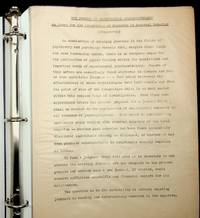
1930Best.-Nr. 27588various: various 1930. First Edition. Three Ring Binder. Very Good. First Edition. An archive of material which documents the attempted founding of a new journal "The Journal of Experimental Psychopathology" by American psychologist Saul Rosenzweig. The three page initial Prospectus explains the need for a journal focused on the "specialized but important domain of experimental psychopathology." A list of proposed consulting and corresponding editors and their addresses in 10 different fields is included and letters were sent out many acceptances from known names were received. Unfortunately another competing proposal was received by the National Research Council N.R.C. Committee from the Macy Foundation which was eventually accepted. A letter dated August 1 1938 communicates the bad news that Dr. Rosenzweig's proposal will be dropped. A second group of letters follows from contributing editors back to Rosenzweig expressing their condolences. Often this sort of activity happens behind the scenes - in this case we get to see both the timeline and some of the inner workings of the process. Three Ring Binder. "Saul Rosenzweig 1907–2004 was an American psychologist and therapist who studied subjects such as repression psychotherapy and aggression. Rosenzweig who with a co-author has been credited with being the first to attempt to "elicit repression" in a laboratory setting became well known after publishing a paper discussing "common factors" underlying competing approaches to psychotherapy.In the 1930s Rosenzweig studied repression. With G. Mason Rosenzweig criticized H. Meltzer's survey of studies of repression in an article published in the British Journal of Psychology. Rosenzweig and Mason argued that the studies reviewed by Meltzer worked with sensory stimuli unrelated to the theory of repression and "failed to develop under laboratory control the experiences which are subsequently to be tested for recall." Donald W. MacKinnon and William F. Dukes credit Rosenzweig and Mason with being "the first to make an explicit attempt to elicit repression under conditions of laboratory control and observation." Sigmund Freud was sent reprints of Rosenzweig's attempts to study repression but replied to Rosenzweig that while he had examined his "experimental studies for the verification of the psychoanalytic assertions with interest" he could not "put much value on these confirmations because the wealth of reliable observations on which these assertions rest make them independent of experimental verification." Rosenzweig became well known after publishing a paper discussing "common factors" underlying competing approaches to psychotherapy. He argued that all models of therapy could be equally successful due to competent therapists sharing common factors that aided their patients. His premise became known as the Dodo Bird Verdict or Dodo Bird Hypothesis — a reference to Lewis Carroll's Alice's Adventures in Wonderland 1865 in which a dodo bird declares at the end of a race designed to dry everyone off: "Everybody has won and all must have prizes." Rosenzweig's study of aggression led to the development of the Rosenzweig Picture-Frustration Study a test of latent hostility. The Rosenzweig Picture Frustration Study is usually considered a semi-projective technique and involves an examinee responding verbally to a semi-ambiguous picture scenario. Each of the three forms child adolescent and adult consists of 24 comic strip pictures that portray a situation that might induce frustration. The overall purpose of the study is to assess how the examinee responds to frustration and frustrating situations. The test assumes that the way that the examinee responds to each frustrating situation depicts how they behave in the face of frustration. The worth of this test is based on how aggression is conceptualized into three types. The first direction of aggression can be extragressive meaning that it is turned onto the environment. The second direction is intraggressive meaning that it is turned by the examinee onto the self. The final direction is imaggressive which means that it is evaded in an attempt to gloss over the frustration. In terms of reliability and validity the P-F Study interscorer reliability is in the range of .80 to .85. The test-retest reliability is fair to marginal. The test became popular in Europe and was featured in Stanley Kubrick's film A Clockwork Orange 1971. A collection of Rosenzweig's papers has been maintained in the Archives of the History of American Psychology at the University of Akron." Wikipedia. various unknown
1930Best.-Nr. 27588various: various 1930. First Edition. Three Ring Binder. Very Good. First Edition. An archive of material which documents the attempted founding of a new journal "The Journal of Experimental Psychopathology" by American psychologist Saul Rosenzweig. The three page initial Prospectus explains the need for a journal focused on the "specialized but important domain of experimental psychopathology." A list of proposed consulting and corresponding editors and their addresses in 10 different fields is included and letters were sent out many acceptances from known names were received. Unfortunately another competing proposal was received by the National Research Council N.R.C. Committee from the Macy Foundation which was eventually accepted. A letter dated August 1 1938 communicates the bad news that Dr. Rosenzweig's proposal will be dropped. A second group of letters follows from contributing editors back to Rosenzweig expressing their condolences. Often this sort of activity happens behind the scenes - in this case we get to see both the timeline and some of the inner workings of the process. Three Ring Binder. "Saul Rosenzweig 1907–2004 was an American psychologist and therapist who studied subjects such as repression psychotherapy and aggression. Rosenzweig who with a co-author has been credited with being the first to attempt to "elicit repression" in a laboratory setting became well known after publishing a paper discussing "common factors" underlying competing approaches to psychotherapy.In the 1930s Rosenzweig studied repression. With G. Mason Rosenzweig criticized H. Meltzer's survey of studies of repression in an article published in the British Journal of Psychology. Rosenzweig and Mason argued that the studies reviewed by Meltzer worked with sensory stimuli unrelated to the theory of repression and "failed to develop under laboratory control the experiences which are subsequently to be tested for recall." Donald W. MacKinnon and William F. Dukes credit Rosenzweig and Mason with being "the first to make an explicit attempt to elicit repression under conditions of laboratory control and observation." Sigmund Freud was sent reprints of Rosenzweig's attempts to study repression but replied to Rosenzweig that while he had examined his "experimental studies for the verification of the psychoanalytic assertions with interest" he could not "put much value on these confirmations because the wealth of reliable observations on which these assertions rest make them independent of experimental verification." Rosenzweig became well known after publishing a paper discussing "common factors" underlying competing approaches to psychotherapy. He argued that all models of therapy could be equally successful due to competent therapists sharing common factors that aided their patients. His premise became known as the Dodo Bird Verdict or Dodo Bird Hypothesis — a reference to Lewis Carroll's Alice's Adventures in Wonderland 1865 in which a dodo bird declares at the end of a race designed to dry everyone off: "Everybody has won and all must have prizes." Rosenzweig's study of aggression led to the development of the Rosenzweig Picture-Frustration Study a test of latent hostility. The Rosenzweig Picture Frustration Study is usually considered a semi-projective technique and involves an examinee responding verbally to a semi-ambiguous picture scenario. Each of the three forms child adolescent and adult consists of 24 comic strip pictures that portray a situation that might induce frustration. The overall purpose of the study is to assess how the examinee responds to frustration and frustrating situations. The test assumes that the way that the examinee responds to each frustrating situation depicts how they behave in the face of frustration. The worth of this test is based on how aggression is conceptualized into three types. The first direction of aggression can be extragressive meaning that it is turned onto the environment. The second direction is intraggressive meaning that it is turned by the examinee onto the self. The final direction is imaggressive which means that it is evaded in an attempt to gloss over the frustration. In terms of reliability and validity the P-F Study interscorer reliability is in the range of .80 to .85. The test-retest reliability is fair to marginal. The test became popular in Europe and was featured in Stanley Kubrick's film A Clockwork Orange 1971. A collection of Rosenzweig's papers has been maintained in the Archives of the History of American Psychology at the University of Akron." Wikipedia. various unknown books
2021Best.-Nr. Discovery-9780357122846CENGAGE NP 2021. Hardcover. New. CENGAGE NP hardcover
2021Best.-Nr. Discovery-9780357122846CENGAGE NP 2021. Hardcover. New. CENGAGE NP hardcover
2003Best.-Nr. 12036New York: The Library of America 2003. First edition of the Library of America release of the author's first three novels. Octavo original maroon cloth. Signed by both Saul Bellow and James Wood on the title page. James Wood served as editor. Fine in a fine dust jacket. Rare signed as the author was aged at this point and did not attend booksignings for the release of this edition. Looking back at his first two novels later in his career Bellow "distanced himself from them by calling Dangling Man his M.A. and The Victim his Ph.D." Like many of his works the protagonist is a young Jewish man. In a New York heat wave he is accosted in the park by a stranger who accuses him of ruining his life. "The best novel to come out of America-or England-for a generation" The New York Review of Books. The Library of America hardcover
1946Best.-Nr. 190London: John Lehmann 1946. First British edition of the author's first book. Octavo original cloth. Signed by Saul Bellow on the title page. Fine in a near fine dust jacket with the lightest of wear. Jacket design by Robert Medley. Saul Bellow is the only author to have received three National Book Awards for The Adventures of Augie March Herzog and Mr. Sammlers Planet in addition to both the Pulitzer and Nobel prizes. The Sunday Times praised these achievements when it revered "Bellows oeuvre as both timeless and ruthlessly contemporary. John Lehmann hardcover
1959Best.-Nr. 430938New York: Viking Press 1959. Hardcover. Fine/Near Fine. First edition first issue. Fine in just about fine dustwrapper. A curious and possibly unique variant or anomaly with the text block clearly bound directly to the front board presumably no other preliminary matter was gathered with the rest of the text block it is intriguing to conjecture whether this constitutes a state or issue point with this seemingly representing a very early copy a notion reinforced because the text block has the first issue topstain. Bellow's seriocomic novel of an eccentric American millionaire on a quest in Africa. A very nice copy very scarce in this condition in what is likely a rare or unique state. Viking Press hardcover
1959Best.-Nr. 430938New York: Viking Press 1959. Hardcover. Fine/Near Fine. First edition first issue. Fine in just about fine dustwrapper. A curious and possibly unique variant or anomaly with the text block clearly bound directly to the front board presumably no other preliminary matter was gathered with the rest of the text block it is intriguing to conjecture whether this constitutes a state or issue point with this seemingly representing a very early copy a notion reinforced because the text block has the first issue topstain. Bellow's seriocomic novel of an eccentric American millionaire on a quest in Africa. A very nice copy very scarce in this condition in what is likely a rare or unique state. Viking Press hardcover books
1978Best.-Nr. 511765New York: Alfred A. Knopf in association with the Whitney Museum of American Art 1978. Softcover. Fine. First edition wrappered issue. Quarto. 256pp. Illustrated with the art works of Steinberg. Pictorial wrappers. Slight rubbing on the wrappers very near fine. Inscribed by Steinberg to author Mary McCarthy on the half-title page in the year of publication: "For Mary and Jim from Saul and the dear memory of Harold. Oct 78." Jim is Jim West McCarthy's fourth and final husband. Alfred A. Knopf in association with the Whitney Museum of American Art unknown
1978Best.-Nr. 511765New York: Alfred A. Knopf in association with the Whitney Museum of American Art 1978. Softcover. Fine. First edition wrappered issue. Quarto. 256pp. Illustrated with the art works of Steinberg. Pictorial wrappers. Slight rubbing on the wrappers very near fine. Inscribed by Steinberg to author Mary McCarthy on the half-title page in the year of publication: "For Mary and Jim from Saul and the dear memory of Harold. Oct 78." Jim is Jim West McCarthy's fourth and final husband. Alfred A. Knopf in association with the Whitney Museum of American Art unknown books
1953Best.-Nr. 28407New York: The Viking Press 1953. Fourth printing 8vo pp. 6 536; original black and gray cloth stamped in orange on upper cover and spine top edge stained orange; dust jacket chipped at top of spine along top edge and at top outer corner never any loss of letterpress else very good. This copy inscribed: "To Phil Miller in him I didn't specially try to recruit with affection and good wishes Saul Bellow." The Adventures of Augie March was the winner of the National Book Award in 1954. The Viking Press unknown
1953Best.-Nr. 28407New York: The Viking Press 1953. Fourth printing 8vo pp. 6 536; original black and gray cloth stamped in orange on upper cover and spine top edge stained orange; dust jacket chipped at top of spine along top edge and at top outer corner never any loss of letterpress else very good. This copy inscribed: "To Phil Miller in him I didn't specially try to recruit with affection and good wishes Saul Bellow." The Adventures of Augie March was the winner of the National Book Award in 1954. The Viking Press unknown books
1981Best.-Nr. 314BASTEI-LÜBBE 1981-82. 1. softcover. Stahlauge 2300223004 BASTEI-LÜBBE paperback
1989Best.-Nr. 46206HEYNE WILHELM 1989. 3. softcover. HEYNE, WILHELM paperback
Best.-Nr. SKU0468976Pearson 2016-01-15. Paperback. Good. Textbook May Have Highlights Notes and/or Underlining BOOK ONLYNO ACCESS CODE NO CD Ships with Emailed Tracking Pearson paperback
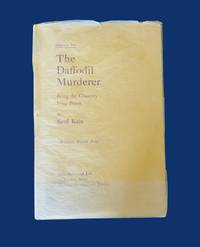
1913Best.-Nr. JM041First Edition. Octavo. Original mustard-yellow paper wrappers lettered in red. Complete with the rare fragile glassine dust wrapper and an early bookseller receipt. Author: KAIN Saul Siegfried Sassoon Binding: Original softcover mustard wrappers Year: 1913 Edition: First Edition Condition Cover: Good condition. Mustard paper wrappers are clean with no tears or creases. Glassine Jacket: Fragmented but present. The front panel and spine are fully intact. The rear panel is fragile with approximately two-thirds missing. Interior: Pages appear little used with square edges. Moderate to heavy foxing present across all internal pages. Ephemera: Includes an original loose 1947 receipt showing a previous purchase price of £3. Additional Details: Photographs of the cover glassine jacket internal foxing and the 1947 receipt are provided in the listing gallery. Synopsis and Historical Importance Published under the pseudonym Saul Kain a playful nod to the protagonist of John Masefield's The Everlasting Mercy The Daffodil Murderer 1913 holds immense historical importance as Siegfried Sassoon's very first commercially published trade edition. Prior to this Sassoon had only printed his verse in obscure privately circulated pamphlets. The book was conceived as a biting satirical parody of Masefield's smash-hit narrative poems which Sassoon felt were overly dramatic and full of manufactured gritty realism. The book itself mocks the literary establishment; it features a fake preface by an imaginary "William Butler" and a wry front cover blurb shouting "Brilliant Beyond Belief" for a fictional award called the "Chantrey Prize". Crucially writing this piece changed the trajectory of Sassoon's career. He later admitted in his autobiography The Weald of Youth that while burlesquing Masefield he suddenly discovered his own authentic poetic voice learning how to imbue real-world commonplace details with raw emotional warmth. Furthermore this specific piece caught the attention of Edward Marsh the influential editor of Georgian Poetry. Marsh quickly became Sassoon's literary mentor launching him into the forefront of the Edwardian and wartime poetry scenes. John Richmond Ltd paperback
1971Best.-Nr. 16512New York: Random House 1971. First Edition. Hardcover. Near Fine/Very Good. Signed by Alinsky on the front endpaper. Near Fine in a Very Good jacket unclipped $6.95 faded at the spine and with a chip near the center rubbed at the surface affecting some of the red ink. Black cloth with gilt lettering on the spine and red ink letter on the front board. Bound with some reading wear and a very slight forward lean clean internally. An attractive first printing of Alinsky's influential and controversial work on community organizing telling the "Have-Nots how they can organize to achieve real political power for the practice of true democracy. Random House hardcover
1971Best.-Nr. 16512New York: Random House 1971. First Edition. Hardcover. Near Fine/Very Good. Signed by Alinsky on the front endpaper. Near Fine in a Very Good jacket unclipped $6.95 faded at the spine and with a chip near the center rubbed at the surface affecting some of the red ink. Black cloth with gilt lettering on the spine and red ink letter on the front board. Bound with some reading wear and a very slight forward lean clean internally. An attractive first printing of Alinsky's influential and controversial work on community organizing telling the "Have-Nots how they can organize to achieve real political power for the practice of true democracy. Random House hardcover books
2008Best.-Nr. __0231145543Columbia Univ Pr 2008. Hardcover. New. second edition. 4000 pages. 11.75x9.50x10.00 inches. Columbia Univ Pr hardcover
Best.-Nr. 26064314-nnew. unknown
Best.-Nr. DADAX0198758324OXFORD UNIVERSITY PRESS 2016-12-06. Annotated. bundle. New. 9.90x4.60x7.10. Buy with confidence. Excellent Customer Service & Return policy. OXFORD UNIVERSITY PRESS unknown
1866Best.-Nr. mon0000016469The Religious Tract Society 1866. Unknown Binding. Acceptable. in x in x in. Hardcover. The Religious Tract Society unknown
2017Best.-Nr. SBG000153Howard Greenberg Gallery & Lumiere Press 2017. First Edition. Hardcover in slipcase. New. Howard Greenberg Gallery & Lumiere Press hardcover
1971Best.-Nr. 767H5077New York: Random House Books for Young Readers. Very Good in Good dust jacket. 1971. Reprint. Hardcover. 0394443411 . Fourth printing of the 1971 first edition. "Lest we forget. the very first radical known to man who rebelled against the establishment and did it so effectively that he at least won his own kingdom - Lucifer." - page ix. "The revolutionary force today has two targets moral as well as material. Its young protagonists are one moment reminiscent of the idealistic early Christians yet they also urge violence and cry 'Burn the system down!' They have no illusions about the system but plenty of illusions about the way to change the world. It is to this point that I have written this book." - page xiii. xxvi 196 pages. Several pencil markings have been erased otherwise contents clean bright and unmarked. Binding tight. Light wear to publisher's black cloth brilliantly lettered in gilt upon backstrip. Light wear to price-clipped dust jacket now preserved in archival-grade Brodart. A sound early copy of this influential work.; 8vo - over 7¾" - 9¾" tall; Rules for Radicals: A Practical Primer for Realistic Radicals Antifa . Random House Books for Young Readers hardcover
1947Best.-Nr. 1961New York: The Vanguard Press 1947. First edition of the author's second novel. Octavo original black cloth. Signed twice by the author. Signed "good wishes Saul Bellow" on the title page and again on a notecard on the front free endpaper. Light rubbing near fine in the original dust jacket with a few small chips to the spine. Looking back at his first two novels later in his career Bellow "distanced himself from them by calling Dangling Man his M.A. and The Victim his Ph.D." Like many of his works the protagonist is a young Jewish man. In a New York heat wave he is accosted in the park by a stranger who accuses him of ruining his life. "The best novel to come out of America-or England-for a generation" The New York Review of Books. The Vanguard Press hardcover