Bellow, Saul [Christopher Hitchens]Biblio.com

6930 resultados
1959ref. 39004New York: The Viking Press 1959. First edition of Bellow's classic fourth book. Octavo original half cloth. Association copy inscribed by the author on the title page to fellow writer Christopher Hitchens "For Christopher with good wishes Saul Bellow." Hitchens wrote "When I think of Bellow I think not just of a man whose genius for the vernacular could seem to restate Athenian philosophy as if run through a Damon Runyon synthesizer but of the author who came up with such graphic expressions for vulgarity and thuggery and stupidity—the debased currency of those too brutalized to have retained the capacity for wonder" Christopher Hitchens. Hitchens signature on the front free endpaper near fine in a near fine dust jacket with light rubbing. Jacket painting by Bill Preston. Housed in a custom half morocco clamshell box. A remarkable association. Saul Bellow is the only author to have received three National Book Awards for The Adventures of Augie March Herzog and Mr. Sammlers Planet in addition to both the Pulitzer and Nobel Prize. The Sunday Times praised these achievements when it revered "Bellows oeuvre as both timeless and ruthlessly contemporary." Henderson the Rain King was named one of the 100 greatest novels of the 20th century by Modern Library. The Viking Press hardcover
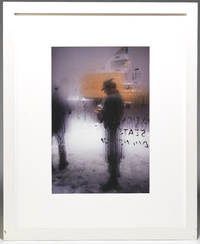
1960ref. 1306021960. Signed. LEITER Saul. Photograph: Untitled. ""Snow"". New York 1960 but printed later. Fujicolor Crystal Archive print signed in ink on print verso. Image measures 13-1/2 by 9 inches print measures14 by 11 inches; handsomely framed entire piece measures 21-3/4 by 17-1/2 inches. $18000.Original color photograph signed by Saul Leiter one of the masters of mid-twentieth century photography.""The American artist Saul Leiter 1923Ã2013 became enchanted by painting and photography as a teenager in Pittsburgh. After he relocated to New York City in 1946 his visionary imagination and tireless devotion to artistic practice pushed him to become one of the iconic photographers of the mid-twentieth century. An innate sense of curiosity made him a lifelong student of art of all kinds and he retained his spirit of exploration and spontaneity throughout his long career in both his fashion images and his personal work. Leiter began experimenting with color photography in New York in the late 1940s using slide film such as Kodachrome. The 2006 release of his first monograph Early Color revealed radically innovative compositions and a groundbreaking mastery of color that permanently changed the history of photography. Though Leiter sometimes defended the use of color in fine-art photography he refused to analyze or explain his own work. 'I don't have a philosophy' Leiter said. 'I have a camera.'"" Saul Leiter Foundation. ""Saul Leiter American painter and photographer was part of what was known as the New York school of photography of the 1940s and 50s and resided on East 10th Street between 2nd and 3rd Avenues for 61 years until his death in 2013. His photographs from the 1950s experimented with color unlike those of his contemporaries and many were street scenes of his East Village neighborhood. Also unlike many of his contemporaries the significance of this work has only recently come to be recognized and he is now duly credited as an early pioneer of color photography. The son of a well-known Talmudic scholar and rabbi Saul Leiter was born in Pittsburgh Pennsylvania on December 3 1923 and expected to follow in his father's footsteps. Much to his family's dismay he left religious school at the age of 23 and went to New York City to pursue painting. While at art school he befriended abstract-expressionist painter Richard Pousette-Dart who encouraged Leiter's experiments with photography. He also became acquainted with photographer W. Eugene Smith who would introduce him to members of what would be known as the New York school of photography and included such noted photographers as Diane Arbus Robert Frank William Klein and Richard Avedon. Leiter had begun to experiment with color photography by 1948 using an inexpensive 35mm camera and film which was sometimes past its date of expiration. The main subjects during this time in the 1950s were his friends and street scenes mostly in the East Village. He said that he was especially fond of photographing First Avenue due to the lighting along the thoroughfare as a result of the low buildings. His plays with focus light form reflection and composition generated an innovative and painterly quality to his work which makes his photos stand out from those of his contemporaries"" Sarah Bean Apmann. Provenance: from Howard Greenberg Gallery.Fine condition. unknown
1960ref. 1306021960. Signed. LEITER Saul. Photograph: Untitled. ""Snow"". New York 1960 but printed later. Fujicolor Crystal Archive print signed in ink on print verso. Image measures 13-1/2 by 9 inches print measures14 by 11 inches; handsomely framed entire piece measures 21-3/4 by 17-1/2 inches. $18000.Original color photograph signed by Saul Leiter one of the masters of mid-twentieth century photography.""The American artist Saul Leiter 1923Ã2013 became enchanted by painting and photography as a teenager in Pittsburgh. After he relocated to New York City in 1946 his visionary imagination and tireless devotion to artistic practice pushed him to become one of the iconic photographers of the mid-twentieth century. An innate sense of curiosity made him a lifelong student of art of all kinds and he retained his spirit of exploration and spontaneity throughout his long career in both his fashion images and his personal work. Leiter began experimenting with color photography in New York in the late 1940s using slide film such as Kodachrome. The 2006 release of his first monograph Early Color revealed radically innovative compositions and a groundbreaking mastery of color that permanently changed the history of photography. Though Leiter sometimes defended the use of color in fine-art photography he refused to analyze or explain his own work. 'I don't have a philosophy' Leiter said. 'I have a camera.'"" Saul Leiter Foundation. ""Saul Leiter American painter and photographer was part of what was known as the New York school of photography of the 1940s and 50s and resided on East 10th Street between 2nd and 3rd Avenues for 61 years until his death in 2013. His photographs from the 1950s experimented with color unlike those of his contemporaries and many were street scenes of his East Village neighborhood. Also unlike many of his contemporaries the significance of this work has only recently come to be recognized and he is now duly credited as an early pioneer of color photography. The son of a well-known Talmudic scholar and rabbi Saul Leiter was born in Pittsburgh Pennsylvania on December 3 1923 and expected to follow in his father's footsteps. Much to his family's dismay he left religious school at the age of 23 and went to New York City to pursue painting. While at art school he befriended abstract-expressionist painter Richard Pousette-Dart who encouraged Leiter's experiments with photography. He also became acquainted with photographer W. Eugene Smith who would introduce him to members of what would be known as the New York school of photography and included such noted photographers as Diane Arbus Robert Frank William Klein and Richard Avedon. Leiter had begun to experiment with color photography by 1948 using an inexpensive 35mm camera and film which was sometimes past its date of expiration. The main subjects during this time in the 1950s were his friends and street scenes mostly in the East Village. He said that he was especially fond of photographing First Avenue due to the lighting along the thoroughfare as a result of the low buildings. His plays with focus light form reflection and composition generated an innovative and painterly quality to his work which makes his photos stand out from those of his contemporaries"" Sarah Bean Apmann. Provenance: from Howard Greenberg Gallery.Fine condition. unknown books
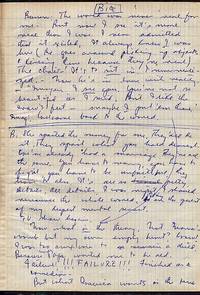
ref. 013988First Edition. hardcover. Near Fine and quite exceptional. An undated early holograph version of Saul Bellow's only full-length play contained in a ledger-type notebook 8-1/4" x 11-3/8" with marbled paper boards and a black cloth spine. Bellow has subtitled this as "A Work in Progress." Acts I and II of this version are complete in 71 pages with 4 pages of preliminary material for an Act III all handwritten by Bellow. The 1964 staged version was reduced to two acts. Bellow appears to have written out Acts I & II as a fair copy from previous versions and notes in preparation for completing the play with a new Act III. There are relatively few insertions and corrections in his text of the first two acts which take up about 75% of the notebook. The third act consists mostly of blank pages with 3 pages of rough notes and key speeches including what seem to be the climactic lines of his main character the comedian Bummidge who has been undergoing an obsessive self-analysis in the previous acts: "The world was never real for me. But now I see it's more real than I was. I never admitted that it existed. It always knew I was here he goes around picking up objects & kissing them because they're real. Now what is the theory. Not Momma's womb but my own empty heart" Laid in to the notebook is a SIGNED typed 12-page fragment of an earlier version of the play with Bellow's original title THE CRASH PROGRAM crossed out in ink and his new title THE LAST ANALYSIS written over it. Bellow manuscripts of this size and importance are seldom offered with most already housed in institutional collections. hardcover books
ref. 013988First Edition. hardcover. Near Fine and quite exceptional. An undated early holograph version of Saul Bellow's only full-length play contained in a ledger-type notebook 8-1/4" x 11-3/8" with marbled paper boards and a black cloth spine. Bellow has subtitled this as "A Work in Progress." Acts I and II of this version are complete in 71 pages with 4 pages of preliminary material for an Act III all handwritten by Bellow. The 1964 staged version was reduced to two acts. Bellow appears to have written out Acts I & II as a fair copy from previous versions and notes in preparation for completing the play with a new Act III. There are relatively few insertions and corrections in his text of the first two acts which take up about 75% of the notebook. The third act consists mostly of blank pages with 3 pages of rough notes and key speeches including what seem to be the climactic lines of his main character the comedian Bummidge who has been undergoing an obsessive self-analysis in the previous acts: "The world was never real for me. But now I see it's more real than I was. I never admitted that it existed. It always knew I was here he goes around picking up objects & kissing them because they're real. Now what is the theory. Not Momma's womb but my own empty heart" Laid in to the notebook is a SIGNED typed 12-page fragment of an earlier version of the play with Bellow's original title THE CRASH PROGRAM crossed out in ink and his new title THE LAST ANALYSIS written over it. Bellow manuscripts of this size and importance are seldom offered with most already housed in institutional collections. hardcover