SAUL GORDONBiblio.com
Saul MBiblio.com
Lines And Curves A Practical Geometry Handbook Pb 2004
ref. SBC 9780817641610Brand New. Book Condition New U.S. EDITION. We Do not Ship APO FPO AND PO BOX. Customer satisfaction guaranteed. PAPERBACK paperback
1956ref. Alibris.0044019PRENTICE HALL INC 1956. 6th print. Hard cover. Good. No dust jacket. STANDARD ANNOTATED REAL ESTATE FORMS BY SAUL GORDON-6th PRINTING 1956-PUBLISHED BY PRENTICE HALL INC-1343 PAGES-BOOK SIZE 6 1/4 X 9 1/4 REAL ESTATE FORMS BY GORDON. 1343 p. STANDARD ANNOTATED REAL ESTATE FORMS BY SAUL GORDON-6th PRINTING 1956-PUBLISHED BY PRENTICE HALL INC-1343 PAGES-BOOK SIZE 6 1/4 X 9 1/4 REAL ESTATE FORMS BY GORDON STANDARD ANNOTATED REAL ESTATE FORMS BY SAUL GORDON-6th PRINTING 1956-PUBLISHED BY PRENTICE HALL INC-1343 PAGES-BOOK SIZE 6 1/4 X 9 1/4 REAL ESTATE FORMS BY GORDON PRENTICE HALL INC hardcover
ref. SBC 9780817641610Brand New. Book Condition New U.S. EDITION. We Do not Ship APO FPO AND PO BOX. Customer satisfaction guaranteed. PAPERBACK paperback
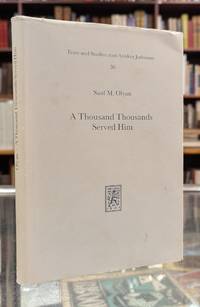
1993ref. 117360J.C.B. Mohr 1993. Hardcover. Fine/Very good. Jacket mildly soiled. J.C.B. Mohr hardcover
ref. mon0000376260Good. HARDBACK In unclipped dustjacket hardcover
ref. Alibris.0042786Chemical Pub. Co. Trade paperback. Good. No dust jacket. Handbook of food manufacture: Formulas and testing DR F Fiene & SAUL BLUMENTHAL-BOOK SIZE 6 X 9 Published by Chemical Pub. Co.softcover condition good-vintage no copyright-208 PAGES-CONTENTS-PREFACE-I. MILK AND MILK PRODUCTS-II. 208 p. Handbook of food manufacture: Formulas and testing DR F Fiene & SAUL BLUMENTHAL-BOOK SIZE 6 X 9 Published by Chemical Pub. Co.softcover condition good-vintage no copyright-208 PAGES-CONTENTS-PREFACE-I. MILK AND MILK PRODUCTS-II. CACAO C Handbook of food manufacture: Formulas and testing DR F Fiene & SAUL BLUMENTHAL-BOOK SIZE 6 X 9 Published by Chemical Pub. Co.softcover condition good-vintage no copyright-208 PAGES-CONTENTS-PREFACE-I. MILK AND MILK PRODUCTS-II. CACAO CHOCOLATE PRODUCTS COFFEE AND TEA-III. CANNED FRUITS VEGETABLES SOUPS AND DRIED FRUIT-IV. FOUNTAIN SUPPLIES CRUSHED FRUITS FLAVOR COMPOUNDS FOOD COLORS BEVERAGE PREPARATIONS-V. GELATIN AND PUDDING DESSERTS-VI. BAKERY PRODUCTS FOOD SPECIALTIES AND PREPARED CAKE FLOURS-VII. BAKERS' PIE FILLINGS-VIII. BAKING POWDERS-IX. MAYONNAISE SAUCES AND CONDIMENTS-X. ANALYSES AND TESTS-APPENDIX-WEIGHTS AND MEASURES- Chemical Pub. Co paperback
1953ref. 32980The Viking Press 1953. First. Black and gray cloth. Very good /Very good. First printing first issue with all necessary points very good hardcover shows tiny bumps to top corners bit of rubbing and soil to bottom edges of covers hint of toning to page edges and couple of tiny tears at page fore edges as well in very good dust jacket price at flap that shows some mild rubbing soil and toning along with edgewear that includes wrinkling closed tears one at middle of fore edge of front panel and tiny open chips at top corners and spine head. 536 pages. Still a good looking copy of this National Book Award winning work that is considered one of the great American novels. The Viking Press unknown
ref. 0850365929.Gpaperback. Good. Access codes and supplements are not guaranteed with used items. May be an ex-library book. paperback
ref. 0313300399.Ghardcover. Good. Access codes and supplements are not guaranteed with used items. May be an ex-library book. hardcover
ref. 8497935012.Gmass_market. Good. Access codes and supplements are not guaranteed with used items. May be an ex-library book. unknown
ref. 847432775X.Gpaperback. Good. Access codes and supplements are not guaranteed with used items. May be an ex-library book. paperback
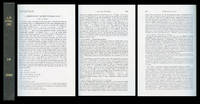
1959ref. 962Princeton: Association for Symbolic Logic 1959. 1st Edition. FULL VOLUME BOUND FIRST EDITION OF SAUL KRIPKE'S SEMINAL FIRST PAPER ON MODAL LOGIC "A Completeness Theorem in Modal Logic". The paper presents Kripke's important ideas on the semantics of modal logic or the logic of modal notions like necessity and possibility. Included are all 4 journal issues for 1959 one of which is inclusive of abstracts of 3 other papers Kripke sent to the Journal. Kripke was "universally hailed" for "A Completeness Theorem in Modal Logic" this paper In it he both proves the formal completeness of modal logic supplemented by first-order quantifiers and the sign of equality and "creates a semantics now called Kripke semantics" Hurley Logic 217. Kripke semantics "is a formals semantics for non-classical logic systems. first conceived for modal logics and later adapted to intuitionistic logic and other non-classical systems. The discovery of Kripke semantics was a breakthrough in the theory of non-classical logics because the model theory of such logics was almost non-existent before Kripke" Wikipedia. As the story goes in 1959 and at the age of seventeen Kripke wrote his completeness theorem in modal logic at age 17; he mailed the paper to the journal and it was sent out for comments to among a number of others the head of the Mathematics at Harvard. This person then wrote Kripke urging him to apply for a job at Harvard. The reply he received read: "My mother said that I should finish high school and go to college first" ibid. Kripke's initial intuitive idea was that a proposition is necessary if and only if it is true in all possible worlds. Kripke's paper begins: "The present paper attempts to state and prove a completeness theorem for the system S5 supplemented by first-order quantifiers and the sign of equality" Kripke JSL 241 1959 1. He then notes: ""The basis of the informal analysis which motivated these definitions is that a proposition is necessary if and only if it is true in all "possible worlds". It is not necessary for our present purposes to analyze the concept of a "possible world" any further. . In modal logic however we wish to know not only about the 6 real world but about other conceivable worlds" ibid. Shortly Kripke then wrote "In trying to construct a definition of universal logical validity it seems plausible to assume not only that the universe of discourse may contain an arbitrary number of elements and that predicates may be assigned any given interpretations in the actual world but also that any combination of possible worlds may be associated with the real world with respect to some group of predicates. In other words it is plausible to assume that no further restrictions need be placed on D G and K except the standard one that D be non-empty. This assumption leads directly to our definition of universal validity." ibid. The December issue of the journal is also bound in; it contains abstracts of the other Kripke papers received the Journal in 1959: "Distinguished Constituents" "Semantical Analysis of Modal Logic" "The Problem of Entailment". Also included are the two other issues of The Journal of Symbolic Logic from 1959 this to make a complete set. We separately offer Issue No. 4 alone. Saul Kripke 1940- is an American philosopher and logician who was awarded the Rolf Schock Prize in Logic and Philosophy in 2001. He is best known for five major contributions to philosophy beginning with this paper the starting point for Kripke Semantics. In 1962 Kripke graduated from Harvard University. Now associated with Princeton additional areas of note include his contributions to set theory his theory of truth and his interpretation of Wittgenstein's work. CONDITION & DETAILS: Princeton: Association for Symbolic Logic 1959. 4to. 9.75 x 7 inches. Light institutional stamps on text block and one small stamp at the foot of the front pastedown. Tightly bound in black cloth gilt-lettered at the spine. Bright and clean inside and out. Near fine condition. Association for Symbolic Logic hardcover
1975ref. 736New York: Journal of Philosophy 1975. 1st Edition. FIRST EDITION IN ORIGINAL WRAPS OF KRIPKE'S "FAMOUS AND HIGHLY INFLUENTIAL PAPER GREATLY SHAPING MOST LATER APPROACHES TO THEORIES OF TRUTH AND THE SEMANTIC PARADOXES" Stanford Encyclopedia of Philosophy Consequences of the Semantic Paradoxes. In his 1975 article "Outline of a Theory of Truth" Kripke showed that a language can consistently contain its own truth predicate which was deemed impossible by Alfred Tarski a pioneer in the area of formal theories of truth. The trick involves letting truth be a partially defined property over the set of grammatically well-formed sentences in the language. Kripke showed how to do this recursively by starting from the set of expressions in a language which do not contain the truth predicate defining a truth predicate over just that segment: this adds new sentences to the language and truth is in turn defined for all of them. Unlike Tarski's approach however Kripke's lets "truth" be the union of all of these definition-stages; after a denumerable infinity of steps the language reaches a "fixed point" such that using Kripke's method to expand the truth-predicate does not change the language any further. Such a fixed point can then be taken as the basic form of a natural language containing its own truth predicate. But this predicate is undefined for any sentences that do not so to speak "bottom out" in simpler sentences not containing a truth predicate. That is "'Snow is white' is true" is well-defined as is "'"Snow is white" is true' is true" and so forth but neither "The sentence is true" nor "This sentence is not true" receive truth-conditions; they are in Kripke's terms "ungrounded" Wikipedia. CONDITION & DETAILS: Bound in original wraps. New York: Journal of Philosophy. 8vo. 9 x 6 inches; 225 x 150mm. Two small library stamps on the front wrap see photo. Very slight edge wear. Near fine condition. Journal of Philosophy paperback
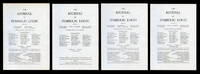
1959ref. 731Princeton: Association for Symbolic Logic 1959. 1st Edition. FIRST EDITION FIRST IMPRESSION IN PRISTINE ORIGINAL WRAPS OF SAUL KRIPKE'S SEMINAL FIRST PAPER ON MODAL LOGIC "A Completeness Theorem in Modal Logic". The paper presents Kripke's important ideas on the semantics of modal logic or the logic of modal notions like necessity and possibility. Included are all 4 Journal issues for 1959 one of which is inclusive of abstracts of 3 other papers Kripke sent to the Journal. "Universally hailed" for this work in this paper Kripke both proves the formal completeness of modal logic supplemented by first-order quantifiers and the sign of equality and "creates a semantics now called Kripke semantics" Hurley Logic: The Essentials 217. Kripke semantics "is a formals semantics for non-classical logic systems. first conceived for modal logics and later adapted to intuitionistic logic and other non-classical systems. The discovery of Kripke semantics was a breakthrough in the theory of non-classical logics because the model theory of such logics was almost non-existent before Kripke algebraic semantics existed but were considered 'syntax in disguise'. Wikipedia. Saul Kripke grew up in Omaha Nebraska and in 1959 he mailed this paper to The Journal of Symbolic Logic. As the story goes the Kripke wrote his completeness theorem in modal logic at age 17; the paper was sent out for comments to among a number of others the head of the Harvard mathematics department. This person then wrote Kripke urging him to apply for a job at Harvard. The reply he received read: "My mother said that I should finish high school and go to college first" ibid. Kripke's initial intuitive idea was that a proposition is necessary if and only if it is true in all possible worlds. In this paper Kripke begins by stating: "The present paper attempts to state and prove a completeness theorem for the system S5 supplemented by first-order quantifiers and the sign of equality" Kripke JSL 241 1959 1. He then notes: ""The basis of the informal analysis which motivated these definitions is that a proposition is necessary if and only if it is true in all "possible worlds". It is not necessary for our present purposes to analyze the concept of a "possible world" any further. . In modal logic however we wish to know not only about the 6 real world but about other conceivable worlds" Kripke 2 Shortly Kripke then wrote "In trying to construct a definition of universal logical validity it seems plausible to assume not only that the universe of discourse may contain an arbitrary number of elements and that predicates may be assigned any given interpretations in the actual world but also that any combination of possible worlds may be associated with the real world with respect to some group of predicates. In other words it is plausible to assume that no further restrictions need be placed on D G and K except the standard one that D be non-empty. This assumption leads directly to our definition of universal validity." Kripke 3. The December issue of the Journal is also included as it contains abstracts of other Kripke papers received by the Journal in 1959: "Distinguished Constituents" "Semantical Analysis of Modal Logic" "The Problem of Entailment". Also included are the three other issues of The Journal of Symbolic Logic from 1959 this to make a complete set. All four issues are in near fine condition. Saul Kripke 1940- is an American philosopher and logician who was awarded the Rolf Schock Prize in Logic and Philosophy in 2001. He is best known for five major contributions to philosophy beginning with this paper the starting point for Kripke Semantics. In 1962 Kripke graduated from Harvard University where he remained until 1968 first as a member of the Harvard Society of Fellows and then as a lecturer. Subsequently his 1970 lectures "Naming and Necessity" was a focal point for restructuring the philosophy of language. Now associated with Princeton additional areas of note include his contributions to set theory his theory of truth and his interpretation of Wittgenstein's work. CONDITION & DETAILS: Four first edition first impression issues in original wraps. New Jersey: The Association for Symbolic Logic. Octavo. 10 x 7 inches; 250 x 150mm. All four issues are in near fine condition both inside and out. Association for Symbolic Logic paperback
1949ref. 032620262Harper and Brothers 1949. First Edition. Paperback. Fair /None. 12x9x0. Hardcover; no dust jacket. First Edition. 1st printing no later printings indicated. Solid binding. All pages present and intact. Front cover has some spots; back cover soiled. Ships in a box. Fast shipping from NYC! Harper and Brothers paperback
ref. 18933253like new. unknown
ref. 0062770489.Gpaperback. Good. Access codes and supplements are not guaranteed with used items. May be an ex-library book. paperback
ref. B02OS-00392Franklin Library. Collectible - Very Good. First edition copy. Collectible - Very Good. domestic fiction novel Franklin Library unknown
2022ref. 2-150152240XDe Gruyter 2022. Paperback. New. 130 pages. 9.45x6.69x0.47 inches. De Gruyter paperback
ref. 8483462206.Gmass_market. Good. Access codes and supplements are not guaranteed with used items. May be an ex-library book. unknown
ref. 0385232772.Ghardcover. Good. Access codes and supplements are not guaranteed with used items. May be an ex-library book. hardcover
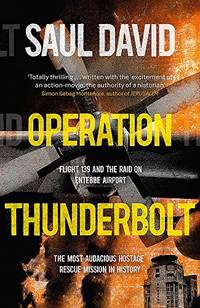
2015ref. 2-1444762516Hodder General 2015. Hardcover. New. 9.45x6.46x1.57 inches. Hodder General hardcover
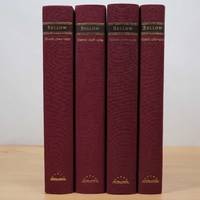
ref. 073026002The Library of America. First Edition. Hardcover. Good. This listing is for four Saul Bellow volumes from The Library of America. The pictures included are of the actual books for sale and can be viewed for assessing condition. Stated first printings no slipcases included. The Library of America hardcover
1948ref. 033050Great Britain: John Lehmann 1948. Book. Very Good. Hardcover. First English Edition. 256pp. Blue Cloth. gilt letteriong on the spine. Discoloration on the bottom of the spine otherwise internally near fine unmarked. Unclipped pictorial jacket desigend by Edwaard Bawden has 1" triangular chip on the bottom of the spine and a lesser chip on the upper spine edge. in mylar sleeve."Allbee is the anti-Semite a suffering and insufferable creep endowed at times with an insane lucidity of perception. He appears from nowhere down-and-out to accuse Leventhal of having contrived his ruin in revenge for an anti-Semitic remark Allbee once made at a party. He blames Leventhal for all his ills from the death of his wife to his inability to find employment haunts Leventhal in parks and restaurants and moves into his apartment where he finally attempts suicide. The two men are locked in a death struggle for the impossible meaning of innocence for their own and each others soul. On trial here are not only Jew and Gentile but Man. Size: Octavo. John Lehmann Hardcover
ref. 0367604051.Gpaperback. Good. Access codes and supplements are not guaranteed with used items. May be an ex-library book. paperback
ref. 1469292505.GaudioCD. Good. Access codes and supplements are not guaranteed with used items. May be an ex-library book. unknown