Rosenthal, Saul HBiblio.com

6 887 résultats
1989réf. Q-0874774950Tarcher 1989-07-31. Mass Market Paperback. New. In shrink wrap. Looks like an interesting title! Tarcher paperback
2000réf. Q-1585420549TarcherPerigee 2000-09-11. Paperback. New. New. In shrink wrap. Looks like an interesting title! TarcherPerigee paperback
2007réf. Q-1587368374Wheatmark 2007-08-15. Paperback. New. In shrink wrap. Looks like an interesting title! Wheatmark paperback
réf. 1413403867.Gpaperback. Good. Access codes and supplements are not guaranteed with used items. May be an ex-library book. paperback
réf. 1599260816.Gpaperback. Good. Access codes and supplements are not guaranteed with used items. May be an ex-library book. paperback
réf. 0874779987New. New. Satisfaction Guaranteed or your money back. unknown
1999réf. Q-0874779987Tarcher 1999-10-25. Hardcover. New. In shrink wrap. Looks like an interesting title! Tarcher hardcover
1999réf. 10041Los Angeles California U.S.A.: J P Tarcher. New. Hardcover. FREE UPGRADE to Courier/Priority Shipping Upon Request - IN STOCK AND IMMEDIATELY AVAILABLE FOR SHIPMENT - FLAWLESS COPY AVOID WEEKS OF DELAY ELSEWHERE. -- clean and crisp tight and bright pages with no writing or markings to the text. -- with a bonus offer--; 010041 . 1999. 0874779987 . J P Tarcher hardcover
réf. 1587362570.Gpaperback. Good. Access codes and supplements are not guaranteed with used items. May be an ex-library book. paperback
1993205 pages. "Prepared in conjuction with the exhibition Both Art and Life: Gemini G.E.L. at 25, at the Newport Harbor Art Museum, Newport Beach, California, September 22-November 29, 1992." - from copyright page. Printed in Japan on glossy stock. Wonderfully illustrated in color and black and white. Interviews, works and photographs of: John Baldessary, Jonathan Borofsky, Richard Diebenkorn, Mark de Suvero, Jasper John, Ellsworth Kelly, Edward Kienholz, Nancy Reddin Kienholz, Roy Lichtenstein, Malcolm Morley, Claes Oldenburg, Ken Price, Robert Rauschenberg, Richard Serra, Saul Steinberg. Book clean, bright and unmarked with very light wear. Moderate wear to dust jacket which is sunned at spine and top of front panel. A quality copy. Book
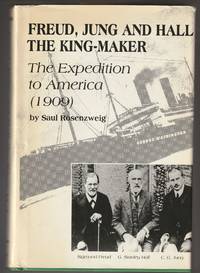
1992réf. 85461Seattle: Rana House Press 1992. Cloth/dust jacket and Mylar wrapped Octavo. Hardcover. Good/good. green cloth gilt lettering and ornament mylar wrapped dust jacket unclipped 477 pp front end paper inscribed by author dj slightly soiled and creased. Rana House Press hardcover
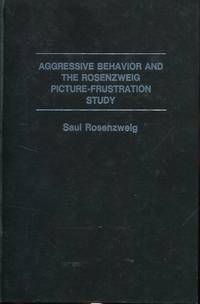
1978réf. SKU1084952Praeger 1978. First Edition. hardcover. Very Good. 9x6x0. Praeger 1978. Hard cover first edition. VG condition with no dust jacket 164 pages. Praeger hardcover
réf. Z1-J-031-01419Praeger. Used - Good. Ships from UK in 48 hours or less usually same day. Your purchase helps support Sri Lankan Children's Charity 'The Rainbow Centre'. Ex-library so some stamps and wear but in good overall condition. 100% money back guarantee. We are a world class secondhand bookstore based in Hertfordshire United Kingdom and specialize in high quality textbooks across an enormous variety of subjects. We aim to provide a vast range of textbooks rare and collectible books at a great price. Our donations to The Rainbow Centre have helped provide an education and a safe haven to hundreds of children who live in appalling conditions. We provide a 100% money back guarantee and are dedicated to providing our customers with the highest standards of service in the bookselling industry. Praeger unknown
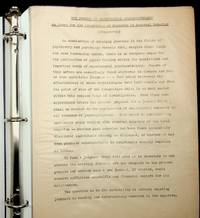
1930réf. 27588various: various 1930. First Edition. Three Ring Binder. Very Good. First Edition. An archive of material which documents the attempted founding of a new journal "The Journal of Experimental Psychopathology" by American psychologist Saul Rosenzweig. The three page initial Prospectus explains the need for a journal focused on the "specialized but important domain of experimental psychopathology." A list of proposed consulting and corresponding editors and their addresses in 10 different fields is included and letters were sent out many acceptances from known names were received. Unfortunately another competing proposal was received by the National Research Council N.R.C. Committee from the Macy Foundation which was eventually accepted. A letter dated August 1 1938 communicates the bad news that Dr. Rosenzweig's proposal will be dropped. A second group of letters follows from contributing editors back to Rosenzweig expressing their condolences. Often this sort of activity happens behind the scenes - in this case we get to see both the timeline and some of the inner workings of the process. Three Ring Binder. "Saul Rosenzweig 1907–2004 was an American psychologist and therapist who studied subjects such as repression psychotherapy and aggression. Rosenzweig who with a co-author has been credited with being the first to attempt to "elicit repression" in a laboratory setting became well known after publishing a paper discussing "common factors" underlying competing approaches to psychotherapy.In the 1930s Rosenzweig studied repression. With G. Mason Rosenzweig criticized H. Meltzer's survey of studies of repression in an article published in the British Journal of Psychology. Rosenzweig and Mason argued that the studies reviewed by Meltzer worked with sensory stimuli unrelated to the theory of repression and "failed to develop under laboratory control the experiences which are subsequently to be tested for recall." Donald W. MacKinnon and William F. Dukes credit Rosenzweig and Mason with being "the first to make an explicit attempt to elicit repression under conditions of laboratory control and observation." Sigmund Freud was sent reprints of Rosenzweig's attempts to study repression but replied to Rosenzweig that while he had examined his "experimental studies for the verification of the psychoanalytic assertions with interest" he could not "put much value on these confirmations because the wealth of reliable observations on which these assertions rest make them independent of experimental verification." Rosenzweig became well known after publishing a paper discussing "common factors" underlying competing approaches to psychotherapy. He argued that all models of therapy could be equally successful due to competent therapists sharing common factors that aided their patients. His premise became known as the Dodo Bird Verdict or Dodo Bird Hypothesis — a reference to Lewis Carroll's Alice's Adventures in Wonderland 1865 in which a dodo bird declares at the end of a race designed to dry everyone off: "Everybody has won and all must have prizes." Rosenzweig's study of aggression led to the development of the Rosenzweig Picture-Frustration Study a test of latent hostility. The Rosenzweig Picture Frustration Study is usually considered a semi-projective technique and involves an examinee responding verbally to a semi-ambiguous picture scenario. Each of the three forms child adolescent and adult consists of 24 comic strip pictures that portray a situation that might induce frustration. The overall purpose of the study is to assess how the examinee responds to frustration and frustrating situations. The test assumes that the way that the examinee responds to each frustrating situation depicts how they behave in the face of frustration. The worth of this test is based on how aggression is conceptualized into three types. The first direction of aggression can be extragressive meaning that it is turned onto the environment. The second direction is intraggressive meaning that it is turned by the examinee onto the self. The final direction is imaggressive which means that it is evaded in an attempt to gloss over the frustration. In terms of reliability and validity the P-F Study interscorer reliability is in the range of .80 to .85. The test-retest reliability is fair to marginal. The test became popular in Europe and was featured in Stanley Kubrick's film A Clockwork Orange 1971. A collection of Rosenzweig's papers has been maintained in the Archives of the History of American Psychology at the University of Akron." Wikipedia. various unknown
réf. 0889371105New. hardcover. New. Satisfaction Guaranteed or your money back. hardcover
1993réf. Q-0889371105Hogrefe & Huber Pub 1993-12-01. Hardcover. New. In shrink wrap. Looks like an interesting title! Hogrefe & Huber Pub hardcover
1947réf. 582626Pittsburgh: Published as a separate and in the Journal of Psychology 1947. Softcover. Near Fine. First separate revised edition. Octavo. P.165-208. Stapled printed buff wrappers. Signature and stamp of a noted psychologist Henry Guze a little edgewear else near fine. In original envelope addressed from Rosenzweig to Guze. The envelope is worn. Published as a separate and in the Journal of Psychology unknown
1994réf. Q-0930172051Rana House 1994-01-01. Paperback. New. In shrink wrap. Looks like an interesting title! Rana House paperback
1994réf. 127643Rana House. New. Paperback. FREE UPGRADE to Courier/Priority Shipping Upon Request - IN STOCK AND IMMEDIATELY AVAILABLE FOR SHIPMENT - Flawless copy brand new pristine never opened -- with a bonus offer--; 1909 . 1994. 0930172051 . Rana House paperback
1930réf. 27588various: various 1930. First Edition. Three Ring Binder. Very Good. First Edition. An archive of material which documents the attempted founding of a new journal "The Journal of Experimental Psychopathology" by American psychologist Saul Rosenzweig. The three page initial Prospectus explains the need for a journal focused on the "specialized but important domain of experimental psychopathology." A list of proposed consulting and corresponding editors and their addresses in 10 different fields is included and letters were sent out many acceptances from known names were received. Unfortunately another competing proposal was received by the National Research Council N.R.C. Committee from the Macy Foundation which was eventually accepted. A letter dated August 1 1938 communicates the bad news that Dr. Rosenzweig's proposal will be dropped. A second group of letters follows from contributing editors back to Rosenzweig expressing their condolences. Often this sort of activity happens behind the scenes - in this case we get to see both the timeline and some of the inner workings of the process. Three Ring Binder. "Saul Rosenzweig 1907–2004 was an American psychologist and therapist who studied subjects such as repression psychotherapy and aggression. Rosenzweig who with a co-author has been credited with being the first to attempt to "elicit repression" in a laboratory setting became well known after publishing a paper discussing "common factors" underlying competing approaches to psychotherapy.In the 1930s Rosenzweig studied repression. With G. Mason Rosenzweig criticized H. Meltzer's survey of studies of repression in an article published in the British Journal of Psychology. Rosenzweig and Mason argued that the studies reviewed by Meltzer worked with sensory stimuli unrelated to the theory of repression and "failed to develop under laboratory control the experiences which are subsequently to be tested for recall." Donald W. MacKinnon and William F. Dukes credit Rosenzweig and Mason with being "the first to make an explicit attempt to elicit repression under conditions of laboratory control and observation." Sigmund Freud was sent reprints of Rosenzweig's attempts to study repression but replied to Rosenzweig that while he had examined his "experimental studies for the verification of the psychoanalytic assertions with interest" he could not "put much value on these confirmations because the wealth of reliable observations on which these assertions rest make them independent of experimental verification." Rosenzweig became well known after publishing a paper discussing "common factors" underlying competing approaches to psychotherapy. He argued that all models of therapy could be equally successful due to competent therapists sharing common factors that aided their patients. His premise became known as the Dodo Bird Verdict or Dodo Bird Hypothesis — a reference to Lewis Carroll's Alice's Adventures in Wonderland 1865 in which a dodo bird declares at the end of a race designed to dry everyone off: "Everybody has won and all must have prizes." Rosenzweig's study of aggression led to the development of the Rosenzweig Picture-Frustration Study a test of latent hostility. The Rosenzweig Picture Frustration Study is usually considered a semi-projective technique and involves an examinee responding verbally to a semi-ambiguous picture scenario. Each of the three forms child adolescent and adult consists of 24 comic strip pictures that portray a situation that might induce frustration. The overall purpose of the study is to assess how the examinee responds to frustration and frustrating situations. The test assumes that the way that the examinee responds to each frustrating situation depicts how they behave in the face of frustration. The worth of this test is based on how aggression is conceptualized into three types. The first direction of aggression can be extragressive meaning that it is turned onto the environment. The second direction is intraggressive meaning that it is turned by the examinee onto the self. The final direction is imaggressive which means that it is evaded in an attempt to gloss over the frustration. In terms of reliability and validity the P-F Study interscorer reliability is in the range of .80 to .85. The test-retest reliability is fair to marginal. The test became popular in Europe and was featured in Stanley Kubrick's film A Clockwork Orange 1971. A collection of Rosenzweig's papers has been maintained in the Archives of the History of American Psychology at the University of Akron." Wikipedia. various unknown books
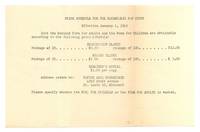
1949réf. 556190Saint Louis Missouri: Saul Rosenzweig 1949. Unbound. Near Fine. Price list. Half-sheet measuring 8½" x 5½" mimeographed recto only. Folded twice for mailing else near fine. Saul Rosenzweig unknown books
1992réf. 55564Seattle:: Hogrefe & Huber Publishers. Fine in Near Fine dust jacket. 1992. Hardcover. 0889371105 . First printing. Fine in a near fine one very small chip at the base of the spine dust jacket. . Hogrefe & Huber Publishers, hardcover books
1992réf. 014472Athens OH: Hogrefe & Huber 1992. 1st Edition. Hardcover. Near Fine/Near Fine. 8vo. 450pp. Sharp Stated First Edition First Printing with full number sequence. Bound in green cloth with titles and decoration in gilt. Square tight and clean throughout with little or no wear. Very attractive unclipped dust-jacket $27.50 has a short closed tear on the rear bottom edge and mild edge-wear and toning. Still bright with no chipping or creases. A solid collectable copy of an uncommon title. Hogrefe & Huber hardcover books
1947réf. 582626Pittsburgh: Published as a separate and in the Journal of Psychology 1947. Softcover. Near Fine. First separate revised edition. Octavo. P.165-208. Stapled printed buff wrappers. Signature and stamp of a noted psychologist Henry Guze a little edgewear else near fine. In original envelope addressed from Rosenzweig to Guze. The envelope is worn. Published as a separate and in the Journal of Psychology unknown books
réf. 52413707-6Thomas Publisher Limited Charles C. Used - Good. Former library copy. Pages intact with minimal writing/highlighting. The binding may be loose and creased. Dust jackets/supplements are not included. Includes library markings. Stock photo provided. Product includes identifying sticker. Better World Books: Buy Books. Do Good. Thomas Publisher, Limited, Charles C unknown