SASSOON, Siegfried, as Saul KainBiblio.com
6 852 résultats
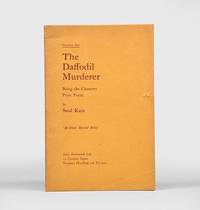
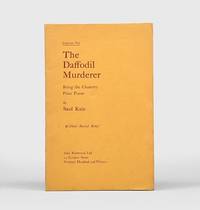
1913réf. 150527London: John Richmond Ltd 1913. Presentation copy of Sassoon's pseudonymous parody inscribed to the distinguished antiquarian bookseller and scholar Percy Muir First edition first impression presentation copy inscribed by the author on the half-title: "P. H. Muir from Siegfried Sassoon 4.10.29"; one of 1000 copies printed highly uncommon in such condition. A pseudonymous parody of John Masefield's early narrative poems The Daffodil Murderer was published as the winner of the entirely fictional "Chantrey Prize" and wryly advertised as "Brilliant Beyond Belief" on the front wrapper. The recipient of this copy was Percy Muir 1894-1979 the distinguished antiquarian bookseller and scholar of children's books. Sassoon inscribed this copy to Muir in the year before Muir joined the London antiquarian booksellers Elkin Mathews Limited. Muir joined the firm in 1930 and remained with them until his death. Muir was president of the Antiquarian Booksellers Association from 1945-1947 and chaired the first conference of the International League of Antiquarian Booksellers ILAB in 1947. He became president of the ILAB from 1950-1952 and was subsequently elected the first Life President of Honour. His major work English Children's Books was published in 1954. Sassoon's poem is frequently cited as a parody of John Masefield's long narrative poem The Everlasting Mercy published in 1911. Masefield's work was read in pubs denounced from pulpits and branded in the words of Lord Alfred Douglas "nine-tenths sheer filth". The original publishers were sufficiently worried about prosecution to leave blank spaces where Masefield had written the word "bloody" and it was later claimed by Robert Graves that Masefield's innovative diction emboldened Shaw to use the word in Pygmalion. J. M. Barrie called the work "the finest literature" Edmund Gosse noted that in it was "a happy blending of the traditional and the revolutionary" and Masefield was duly awarded the Royal Society of Literature's Edmond de Polignac prize for 1911. Masefield had hit a rich-seam in poetry and followed The Everlasting Mercy with The Widow in the Bye Street published in 1912 Dauber published in 1912 and The Daffodil Fields published in 1913. Sassoon appears to have been rather frustrated at literature's latest craze and he sat down to write his own version and created a parody of Masefield's general style diction and subjects across The Everlasting Mercy The Widow in the Bye Street and The Daffodil Fields. There were two results of Sassoon's parody. The first was that in many ways it had helped Sassoon find a poetic voice. In The Weald of Youth Sassoon describes how in December 1912 the thought struck him: "Why not amuse myself by scribbling a few pages of parody I may as well say at once that the immediate result was far beyond what I had intended. I began his story in crudest imitation of Masefield's manner. Stimulating my pencil with an occasional dose of The Everlasting Mercy I found myself corking down the 'human document' with astonishing facility. After the first fifty lines or so I dropped the pretence that I was improvising an exuberant skit. While continuing to burlesque Masefield for all I was worth I was really feeling what I wrote - and doing it not only with abundant delight but a sense of descriptive energy quite unlike anything I had experienced before. Never before had I been able to imbue commonplace details with warmth of poetic emotion. I felt that. I had found a new pair of poetic legs and the fact that they had been graciously presented to me by John Masefield made no difference to my sense of self-satisfaction". The other result of publishing The Daffodil Murderer was that it brought Sassoon to the attention of Edward Marsh - the editor of Georgian Poetry - and Marsh soon became Sassoon's mentor. Despite the parody Sassoon and Masefield met during November 1918. Masefield's Great War poem Reynard the Fox undoubtedly owes some inspiration from Sassoon Masefield advised Sassoon on a forthcoming lecture tour of the United States Masefield sent letters introducing Sassoon to some of his closest American friends Sassoon dedicated the American edition of Picture-Show to Masefield Sassoon was invited to one of Masefield's festivals of spoken poetry in 1930 and in 1957 Sassoon was the recipient of the Queen's Medal for Poetry an idea devised by Masefield. Octavo. Original yellow wrappers lettered in dark red. Housed in a custom green cloth case. Foxing to edges and leaves else an exceptional near-fine copy of a fragile book rarely seen in such bright condition. Keynes A10. hardcover
1913réf. 153720London: John Richmond Ltd 1913. His pseudonymous parody inscribed to Lady Ottoline Morrell First edition first impression presentation copy with a significant association inscribed by the author on the half-title: "To O.M. from 'S.K.'" Ottoline Morrell from Saul Kain. Perhaps the most important support that Lady Ottoline Morrell ever offered to a poet or artist was her friendship for Siegfried Sassoon during the First World War. She became aware of him when she read his poem "To Victory" in The Times on 15 January 1916 and traced him through Edmund Gosse. Like her he was an admirer of the Ballets Russes and she wrote of her pleasure at finding "in the dark prison-like days a sympathetic desire - to fly out beyond into the beauty and colour and freedom that one so longs for" Egremont p. 81. They continued to correspond frequently and Sassoon sent her his war poems as he wrote them in return for which she sent writings of her own. Morrell was of significant influence when Sassoon recuperated at the Morrells' country house Garsington Manor in spring 1917. Morrell's pacifism helped Sassoon's disillusionment with the war and shortly after his visit Sassoon published his infamous "Soldier's Declaration". This pseudonymous parody of John Masefield's early narrative poems was published as the winner of the fictional "Chantrey Prize" and wryly advertised as "Brilliant Beyond Belief" on the front wrapper. Masefield's narrative poem The Everlasting Mercy published in 1911 work was read in pubs denounced from pulpits and branded in the words of Lord Alfred Douglas "nine-tenths sheer filth". Sassoon appears to have been rather frustrated at literature's latest craze and he sat down to write his own version and created a parody of Masefield's general style diction and subjects. There were two results of Sassoon's parody. The first was that in many ways it had helped Sassoon find a poetic voice. In The Weald of Youth Sassoon describes how in December 1912 the thought struck him: "Why not amuse myself by scribbling a few pages of parody I may as well say at once that the immediate result was far beyond what I had intended . . . After the first fifty lines or so I dropped the pretence that I was improvising an exuberant skit. While continuing to burlesque Masefield for all I was worth I was really feeling what I wrote - and doing it not only with abundant delight but a sense of descriptive energy quite unlike anything I had experienced before". The other result of publishing The Daffodil Murderer was that it brought Sassoon to the attention of Edward Marsh - the editor of Georgian Poetry - and Marsh soon became Sassoon's mentor. Octavo. Original yellow wrappers lettered in dark red. Housed in a custom red cloth case. Bookplate of Henry Lewis Batterman Jr. to case. Closed tears and creases to wrappers some internal creases; else a near-fine copy. Keynes A10; Max Egremont Siegfried Sassoon 2005. hardcover
2000réf. 16024Tempus, 2000, gr. in-8°, 224 pp, nombreuses illustrations. Texte en anglais
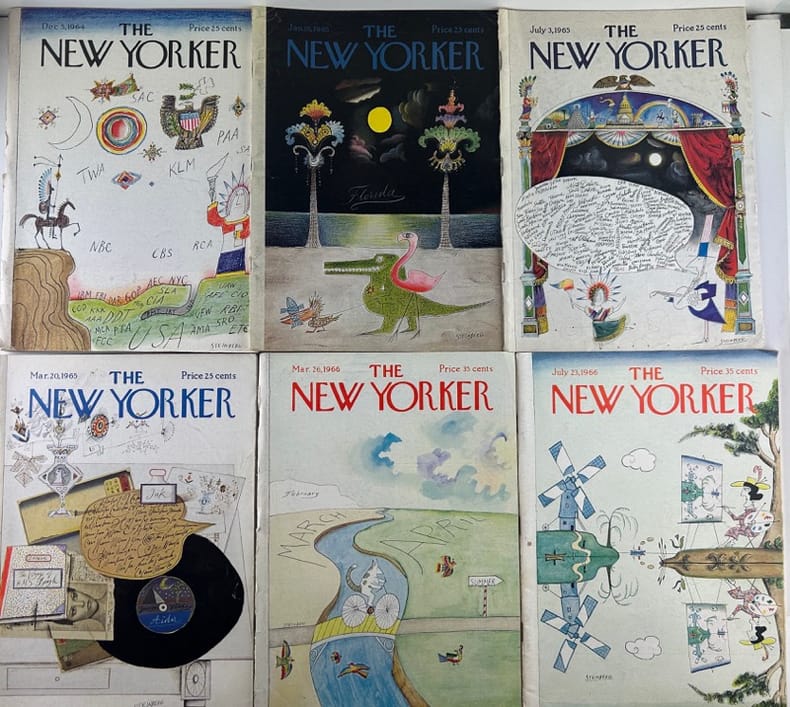
réf. 86238New-York Dec. 5, 1964 / Jan.16, 1965/ Mar.20, 1965 / Jul. 3, 1965 / Mar. 26, 1966 / July 23, 1966 / Sept. 17, 1966 / Oct. 15, 1966 / Mar.4, 1967 (bad condition) / July 1, 1967 / Aug. 26, 1967 / Nov. 11, 1967 / May 4, 1968 / July 5, 1969 / Jan. 31, 1970 / July 18, 1970 / Sept. 25, 1971 / Dec. 4, 1971 / Feb. 5, 1972 / July 22, 1972 / Oct. 21, 1972 / Aug. 27, 1973 / Mar. 18, 1974. Good general condition.
réf. 552151P., Le 3 colonnes, 2014 In-4, softcover, ix-149pp.
réf. 61437Claude Lefrancq broche
1983réf. RO20259714GALLIMARD. 1983. In-12. Broché. Etat d'usage, Couv. convenable, Dos satisfaisant, Intérieur frais. 233 pages. . . . Classification Dewey : 820-Littératures anglaise et anglo-saxonne
1962réf. 37641962 Paris, Gallimard, nrf, 1962, 12x19. Broché, sous couverture imprimée colorée. EDITION ORIGINALE FRANCAISE. Un des 41 exemplaires du tirage de tête sur vélin pur fil Lafuma-Navarre (22). Très bon exemplaire. Envoi de photographies sur demande.
réf. 49022VPSL
1985réf. 18176ed. The Dial Press/Doubleday, New York 1985 in-8 cartonnage ed., jaquette illustree conservee legerement defraichie, edition originale (il n’est pas annonce de grand papier), joint carte de visite de l’auteur avec quelques lignes manuscrites de sa main
1996réf. 171215Bantam Books (Transworld Publishers a division of the Random House Group) 1996 400 pages 18x11x3cm. 1996. Broché. 400 pages.
1986réf. RO60090667SEIX BARRAL/ BIBLIOTECA DE BOLSILLO. 1986. In-12. Broché. Etat d'usage, Couv. légèrement passée, Dos satisfaisant, Intérieur frais. 156 pages. Premier plat illustré en couleurs. Texte en espagnol.. . . . Classification Dewey : 860-Littératures espagnole et portugaise
2024réf. RO20280041FIFTY ONE PUBLICATION. 2024. In-8. Broché. Bon état, Couv. convenable, Dos satisfaisant, Intérieur frais. 139 PAGES - Abondamment illustré de planches photos en noir/blanc - Plats avec rabats : le rabat du 1er plat se découpe en deux cartes postales en noir/blanc. . . . Classification Dewey : 770-Photographie
réf. 3096Collection PANIQUES - PRESSES DE LA CITE (1986) - Broché de 284 pages - Couverture photo - Traduit par Maurice-Bernard ENDREBE - Très bon état
réf. 39128Paris - Marseille Editions Rivages 1994 in 8 (22x14,5) 1 volume broché, couverture à rabats illustrée en couleurs, 301 pages [5]. Traduit de l'anglais par Henri Robillot de Massembre. Bel exemplaire ( Photographies sur demande / We can send pictures of this book on simple request )
réf. 32691Broché couverture à rabats, 22X14 cm, 1994, 302 pages, éditions rivages. Très bon état.
réf. 42726Rivages PHOTOS SUR DEMANDE
réf. A1336Rivages une page a été cornée.
réf. A5159Rivages pliures au dos
réf. BAZ11051Rivages BROCHE,TRES BON ETAT
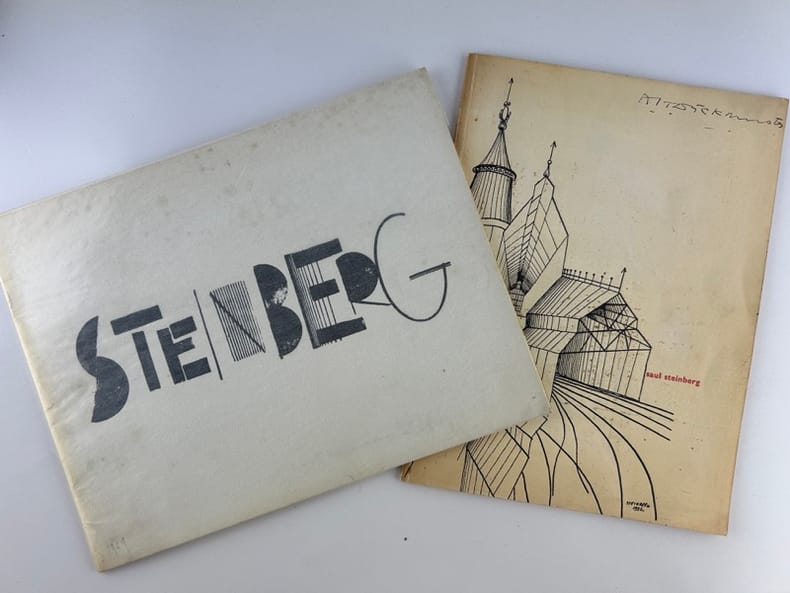
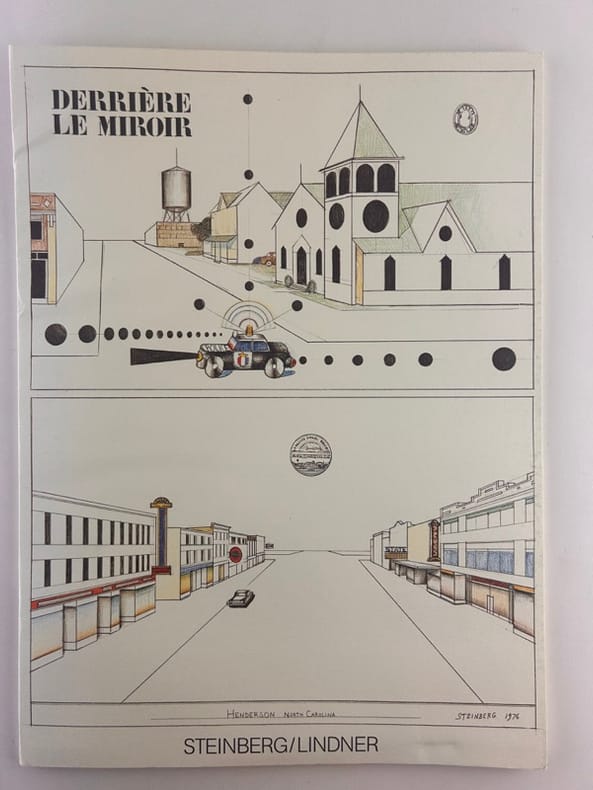
réf. 86007Paris Maeght 280x380mm, en feuilles, 36p. Edition originale. Très bon état. 24 reproductions dont 11 en couleurs : 12 de Lindner et 12 de Steinberg.
1988réf. 198001988 Paris, Flammarion,1988. 21,8 cm X 28,1 cm. reliure d'éditeur cartonnée & illustrée, jaquette illustrée.
réf. 57595, Thames and Hudson 2022, 2022 Paperback, 296 pages, English, 210 x 150 mm, New, with illustrations in colour and b/w. ISBN 9780500296431.