Morson, Gary SaulBiblio.com

6.836 Ergebnisse
Best.-Nr. 0300100701.Ghardcover. Good. Access codes and supplements are not guaranteed with used items. May be an ex-library book. hardcover
2010Best.-Nr. Q-1556529511Chicago Review Press 2010-09-01. Paperback. New. In shrink wrap. Looks like an interesting title! Chicago Review Press paperback
Best.-Nr. 21876186-nnew. unknown
Best.-Nr. 21876186like new. unknown
Best.-Nr. SONG1849467315Bloomsbury 2015-03-26. paperback. Used: Good. 6.69x2.22x9.61. Buy with confidence. Excellent Customer Service & Return policy. Bloomsbury paperback
Best.-Nr. DADAX1849467315Bloomsbury 2015-03-26. paperback. New. 6.69x2.22x9.61. Buy with confidence. Excellent Customer Service & Return policy. Bloomsbury paperback
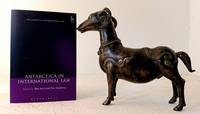
2015Best.-Nr. 363248Oxford England / Portland Oregon: Hart Publishing 2015. First Edition. Softcover. Fine. Large 8vo 9" - 10. Sterling condition softcover copy with unfurled tips tight binding and clean internals showing only very slight shelf- and edge-wear to the glossy card-stock wraps. Edited by ben Saul and Tim Stephens and with an extensive raft of documents dating to the 1950s pertaining to the legal status of Antarctica. From the publisher's blurb "Antarctica one of the worlds last great wildernesses presents special challenges for international law. Fears that Antarctica would become a front in the Cold War catalysed agreement on the 1959 Antarctic Treaty which neither legitimised nor challenged the existing sovereign claims to the continent. The unique Antarctic Treaty System has provided the foundation for peaceful harmonious and effective governance. There are however new anxieties about the frozen continent and the Southern Ocean. Antarctica already feels the effects of climate change and ocean acidification. Claimant states assert rights to the Antarctic continental shelf and interest in Antarctic resources grows. Tourism brings new environmental and safety risks. China and other powers are increasing their activities with some questioning the consensus of the Antarctic club. Security concerns are increasingly discussed despite Antarcticas dedication to peaceful purposes. This book brings together the main primary international materials concerning the regulation and governance of Antarctica including multilateral and bilateral treaties United Nations materials soft laws and judicial decisions. It covers the spectrum of Antarctic issues from environmental protection to scientific cooperation to tourism. As it shows Antarctic law has constantly adapted to meet new challenges and is a sophisticated inclusive dynamic and responsive regime. Some pages also contain page numbers of original documents." Volume contains scholarly apparatus in the form of e.g. notes index and bibliography.Member I.O.B.A. C.B.A. and adherent to the highest ethical standards. Additional postage may be required for oversize or especially heavy volumes and for sets. Hart Publishing paperback
2015Best.-Nr. 2999Oxford and Portland: Hart 2015. First Edition. Near fine. Softcover : pp. v lxxii 1062 2 blank : black and purple covers. Would be fine but for very minor rubbing to edge. Hart unknown
2015Best.-Nr. x-1849467315Hart Pub Ltd 2015. Paperback. New. 932 pages. 9.50x6.50x2.25 inches. Hart Pub Ltd paperback
Best.-Nr. 1250242843.GaudioCD. Good. Access codes and supplements are not guaranteed with used items. May be an ex-library book. unknown
Best.-Nr. 6207047982.Gpaperback. Good. Access codes and supplements are not guaranteed with used items. May be an ex-library book. paperback
2019Best.-Nr. 2-6139439663Editorial Académica Española 2019. Paperback. New. 56 pages. Spanish language. 8.66x5.91x0.13 inches. Editorial Académica Española paperback
Best.-Nr. 20898622-nnew. unknown
Best.-Nr. 20898622like new. unknown
Best.-Nr. 20579101-nnew. unknown
Best.-Nr. 20579101like new. unknown
Best.-Nr. ria9780199550678_inpPaperback / softback. New. New Book; Fast Shipping from UK; Not signed; Not First Edition; This fresh interpretation of apartheid South Africa integrates histories of resistance with the analysis of power - asking not only why apartheid was defeated but how it came to survive for so long. paperback
Best.-Nr. 0199550670.Gpaperback. Good. Access codes and supplements are not guaranteed with used items. May be an ex-library book. paperback
2014Best.-Nr. x-0199550662OUP Oxford 2014. Hardcover. New. 384 pages. 8.00x5.00x1.00 inches. OUP Oxford hardcover
Best.-Nr. A9780199550678Paperback / softback. New. This fresh interpretation of apartheid South Africa integrates histories of resistance with the analysis of power - asking not only why apartheid was defeated but how it came to survive for so long. paperback
Best.-Nr. 697366507Oxford University Press OUP . Hardback. New. pp. 328 Oxford University Press OUP hardcover
Best.-Nr. 3845490640.Gpaperback. Good. Access codes and supplements are not guaranteed with used items. May be an ex-library book. paperback
1990Best.-Nr. 231402PN. New. 1990. Soft Cover. Date is original print. This is a reprint edition . PN paperback
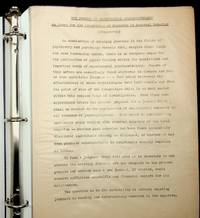
1930Best.-Nr. 27588various: various 1930. First Edition. Three Ring Binder. Very Good. First Edition. An archive of material which documents the attempted founding of a new journal "The Journal of Experimental Psychopathology" by American psychologist Saul Rosenzweig. The three page initial Prospectus explains the need for a journal focused on the "specialized but important domain of experimental psychopathology." A list of proposed consulting and corresponding editors and their addresses in 10 different fields is included and letters were sent out many acceptances from known names were received. Unfortunately another competing proposal was received by the National Research Council N.R.C. Committee from the Macy Foundation which was eventually accepted. A letter dated August 1 1938 communicates the bad news that Dr. Rosenzweig's proposal will be dropped. A second group of letters follows from contributing editors back to Rosenzweig expressing their condolences. Often this sort of activity happens behind the scenes - in this case we get to see both the timeline and some of the inner workings of the process. Three Ring Binder. "Saul Rosenzweig 1907–2004 was an American psychologist and therapist who studied subjects such as repression psychotherapy and aggression. Rosenzweig who with a co-author has been credited with being the first to attempt to "elicit repression" in a laboratory setting became well known after publishing a paper discussing "common factors" underlying competing approaches to psychotherapy.In the 1930s Rosenzweig studied repression. With G. Mason Rosenzweig criticized H. Meltzer's survey of studies of repression in an article published in the British Journal of Psychology. Rosenzweig and Mason argued that the studies reviewed by Meltzer worked with sensory stimuli unrelated to the theory of repression and "failed to develop under laboratory control the experiences which are subsequently to be tested for recall." Donald W. MacKinnon and William F. Dukes credit Rosenzweig and Mason with being "the first to make an explicit attempt to elicit repression under conditions of laboratory control and observation." Sigmund Freud was sent reprints of Rosenzweig's attempts to study repression but replied to Rosenzweig that while he had examined his "experimental studies for the verification of the psychoanalytic assertions with interest" he could not "put much value on these confirmations because the wealth of reliable observations on which these assertions rest make them independent of experimental verification." Rosenzweig became well known after publishing a paper discussing "common factors" underlying competing approaches to psychotherapy. He argued that all models of therapy could be equally successful due to competent therapists sharing common factors that aided their patients. His premise became known as the Dodo Bird Verdict or Dodo Bird Hypothesis — a reference to Lewis Carroll's Alice's Adventures in Wonderland 1865 in which a dodo bird declares at the end of a race designed to dry everyone off: "Everybody has won and all must have prizes." Rosenzweig's study of aggression led to the development of the Rosenzweig Picture-Frustration Study a test of latent hostility. The Rosenzweig Picture Frustration Study is usually considered a semi-projective technique and involves an examinee responding verbally to a semi-ambiguous picture scenario. Each of the three forms child adolescent and adult consists of 24 comic strip pictures that portray a situation that might induce frustration. The overall purpose of the study is to assess how the examinee responds to frustration and frustrating situations. The test assumes that the way that the examinee responds to each frustrating situation depicts how they behave in the face of frustration. The worth of this test is based on how aggression is conceptualized into three types. The first direction of aggression can be extragressive meaning that it is turned onto the environment. The second direction is intraggressive meaning that it is turned by the examinee onto the self. The final direction is imaggressive which means that it is evaded in an attempt to gloss over the frustration. In terms of reliability and validity the P-F Study interscorer reliability is in the range of .80 to .85. The test-retest reliability is fair to marginal. The test became popular in Europe and was featured in Stanley Kubrick's film A Clockwork Orange 1971. A collection of Rosenzweig's papers has been maintained in the Archives of the History of American Psychology at the University of Akron." Wikipedia. various unknown
1930Best.-Nr. 27588various: various 1930. First Edition. Three Ring Binder. Very Good. First Edition. An archive of material which documents the attempted founding of a new journal "The Journal of Experimental Psychopathology" by American psychologist Saul Rosenzweig. The three page initial Prospectus explains the need for a journal focused on the "specialized but important domain of experimental psychopathology." A list of proposed consulting and corresponding editors and their addresses in 10 different fields is included and letters were sent out many acceptances from known names were received. Unfortunately another competing proposal was received by the National Research Council N.R.C. Committee from the Macy Foundation which was eventually accepted. A letter dated August 1 1938 communicates the bad news that Dr. Rosenzweig's proposal will be dropped. A second group of letters follows from contributing editors back to Rosenzweig expressing their condolences. Often this sort of activity happens behind the scenes - in this case we get to see both the timeline and some of the inner workings of the process. Three Ring Binder. "Saul Rosenzweig 1907–2004 was an American psychologist and therapist who studied subjects such as repression psychotherapy and aggression. Rosenzweig who with a co-author has been credited with being the first to attempt to "elicit repression" in a laboratory setting became well known after publishing a paper discussing "common factors" underlying competing approaches to psychotherapy.In the 1930s Rosenzweig studied repression. With G. Mason Rosenzweig criticized H. Meltzer's survey of studies of repression in an article published in the British Journal of Psychology. Rosenzweig and Mason argued that the studies reviewed by Meltzer worked with sensory stimuli unrelated to the theory of repression and "failed to develop under laboratory control the experiences which are subsequently to be tested for recall." Donald W. MacKinnon and William F. Dukes credit Rosenzweig and Mason with being "the first to make an explicit attempt to elicit repression under conditions of laboratory control and observation." Sigmund Freud was sent reprints of Rosenzweig's attempts to study repression but replied to Rosenzweig that while he had examined his "experimental studies for the verification of the psychoanalytic assertions with interest" he could not "put much value on these confirmations because the wealth of reliable observations on which these assertions rest make them independent of experimental verification." Rosenzweig became well known after publishing a paper discussing "common factors" underlying competing approaches to psychotherapy. He argued that all models of therapy could be equally successful due to competent therapists sharing common factors that aided their patients. His premise became known as the Dodo Bird Verdict or Dodo Bird Hypothesis — a reference to Lewis Carroll's Alice's Adventures in Wonderland 1865 in which a dodo bird declares at the end of a race designed to dry everyone off: "Everybody has won and all must have prizes." Rosenzweig's study of aggression led to the development of the Rosenzweig Picture-Frustration Study a test of latent hostility. The Rosenzweig Picture Frustration Study is usually considered a semi-projective technique and involves an examinee responding verbally to a semi-ambiguous picture scenario. Each of the three forms child adolescent and adult consists of 24 comic strip pictures that portray a situation that might induce frustration. The overall purpose of the study is to assess how the examinee responds to frustration and frustrating situations. The test assumes that the way that the examinee responds to each frustrating situation depicts how they behave in the face of frustration. The worth of this test is based on how aggression is conceptualized into three types. The first direction of aggression can be extragressive meaning that it is turned onto the environment. The second direction is intraggressive meaning that it is turned by the examinee onto the self. The final direction is imaggressive which means that it is evaded in an attempt to gloss over the frustration. In terms of reliability and validity the P-F Study interscorer reliability is in the range of .80 to .85. The test-retest reliability is fair to marginal. The test became popular in Europe and was featured in Stanley Kubrick's film A Clockwork Orange 1971. A collection of Rosenzweig's papers has been maintained in the Archives of the History of American Psychology at the University of Akron." Wikipedia. various unknown books