31 836 résultats
1951réf. 14778ASSOCIATION COPY THE STARS LIKE DUST Doubleday 1951 first edition near fine in like dust-wrapper. Inscribed by the author to fellow SF writer Hal Clement along with with Clements bookplate on the f.p.d. Great association copy from one Grandmaster to another. Can't get much better than that! Doubleday unknown books
1813réf. 840F11DLondon: J. Nichols and Son et al. 1813 . Leather. Very Good Indeed. 9" by 6". Not Stated. An exceptionally bright example of the scarce 1813 twenty-one volume set of the plays of Shakespeare supplemented with a wealth of comments and critical notices. The very scarce complete 1813 twenty-one volume edition of the plays of Shakespeare. Referred to as the Reed Edition of 1813 this is also known as Johnson-Steevens-Reed 6 the "sixth edition" by Johnson-Steevens or the "second variorum edition".With notes by Samuel Johnson and George Steevens this edition was revised and augmented by Isaac Reed.Consisting of:Volume I - Prefatory material and critical analysis by Reed Richardson and Malone. Illustrated with a portrait frontispiece and four plates.Volume II - Essays by Farmer Colman lists of Editions lists of Criticism Commendatory verses Malones "Attempt to Ascertain the Order of Shakespeare's Plays" Malone's essay on Ford's pamphlet Steevens's remarks on the same.Volume III - Malone's Historical Account of the English Stage and the Further Historical Account by Chalmers. With four folding plates.Volume IV - The Tempest; Two Gentlemen of Verona; Midsummer Night's Dream. Volume V - Merry Wives of Windsor; Twelfth Night.Volume VI - Much Ado About Nothing; Measure for Measure.Volume VII - Love's Labour's Lost; Merchant of Venice.Volume VIII - As You Like It; All's Well That Ends Well.Volume IX - Taming of the Shrew; Winter's Tale.Volume X - Macbeth; King John.Volume XI - King Richard II; King Henry IV Part 1. With a folding plate.Volume XII - King Henry IV Part 2; King Henry V.Volume XIII - King Henry VI Part 1; King Henry IV Part 2.Volume XIV - King Henry VI Part 3; Dissertation &c.; King Richard III.Volume XV - King Henry VIII; Troilus and Cressida.Volume XVI - Coriolanus; Julius Caesar.Volume XVII - Antony and Cleopatra; King Lear.Volume XVIII - Hamlet; Cymbeline.Volume XIX - Timon of Athens; Othello.Volume XX - Romeo and Juliet; Comedy of Errors. Volume XXI - Titus Andronicus; Pericles and Dissertations; Addenda and Glossarial Index.Illustrated with five plates four folding letterpresses and one further folding plate. Collated complete.With a half title to each volume and the inscription of Arnold Blake 1886 to the half title of volume I.An exceptional example of this impressive work. Rebacked in full calf bindings retaining the original boards. Endpapers renewed. A touch of fading and light marks to back strips otherwise externally excellent. Internally firmly bound. Inscription to volume I half title with leaf detaching to tail. Offsetting and light spotting to pages facing plates with pages otherwise generally clean and bright. Very Good Indeed J. Nichols and Son et al. hardcover
1702réf. 47776Oxoniae (Oxford), E Theatro Sheldoniano, 1702. Folio. Contemporary full calf, raised bands, rectangular blindtooled frames and central panel ""mirror"" on covers, Cambridge-style binding. leather at joints cracked, but cords intact so that covers not loose. Corners a bit bumped. Light wear to spine ends. Spine a bit rubbed. Pastedowns and flyleaves with browning. Title-page with large engraved vignette (Sheldon Theater). (12),494,(2) pp. With numerous textdiagrams. Very light browning to titlepage and a few marginal brownspots to last leaf, a fine clean copy, printed on good paper with wide margins.On the verso of the title-page is pasted the book plate of Sir William Baird of Newbaith. He habitually pasted his armorial bookplate on the verso of the title-pages of the books in his large and fine library.
1702réf. 47776Oxoniae Oxford E Theatro Sheldoniano 1702. Folio. Contemporary full calf raised bands rectangular blindtooled frames and central panel "mirror" on covers Cambridge-style binding. leather at joints cracked but cords intact so that covers not loose. Corners a bit bumped. Light wear to spine ends. Spine a bit rubbed. Pastedowns and flyleaves with browning. Title-page with large engraved vignette Sheldon Theater. 124942 pp. With numerous textdiagrams. Very light browning to titlepage and a few marginal brownspots to last leaf a fine clean copy printed on good paper with wide margins.On the verso of the title-page is pasted the book plate of Sir William Baird of Newbaith. He habitually pasted his armorial bookplate on the verso of the title-pages of the books in his large and fine library. First edition of the first text book of astronomy based on Newtonian principles. Apart from its importance in the remodeling of astronomy in conformity with physical theory the work is of the utmost importance as a source book - it contains the FIRST PRINTING OF NEWTON'S PAPER ON LUNAR THEORY "Lunae Theoria Newtoniana" pp. 332-336 as well as the FIRST EXPOSITION OF NEWTON'S CLASSICAL SCHOLIA which Newton himself considered an important part of his philosophy.Gregory a Scottish mathematician who taught at Edinburgh and Oxford was one of Newton's closest friends and associates. Newton thought highly of his work and communicated for insertion it in his Lunar Theory. He also permitted Gregory to use the material of that which is known as his "Classical Scholia" which are incorporated into Gregory's preface. "Newtonian scholars have long been aware of a set of draft Scholia to Propositions IV to IX of Book III of the "Principia". These were composed in the 1690's as part of an unimplemented plan for a second edition of the work. Since they describe supposed anticipation of Newton's doctrines in the thought of Greco-Roman antiquity they have been known as the 'classical' Scholia. Newton's thoughts on these matters were not however kept completely concealed. HE PERMITTED DAVID GREGORY TO USE THE MATERIAL EXTENSIVELY in a long historical preface to his "Astronomiae Physicae & Geometricae Elementa" 1702 IF WITHOUT ATTRIBUTION. It was also available to Maclaurin for his much later work." McGuire & Rattansi in "Newton and the Pipes of Pan" 1966."It was the first textbook composed on gravitational principles and remodeling astronomy in conformity with physical theory. Newton thought highly of it and communicated for insertion in it p. 332 his 'lunar theory' long the guide of practical astronomers in determining the Moon's motions. The discussion in the preface in which the doctrine of gravitation was brought into credit on the score of its antiquity likewise emanated from Newton." DNB."His thick folio text on foundations of astronomy Astronomiae.elementa 1702 is a well-documented but unimaginative attempt to graft the gravitational synthesis propounded in the first book and especially the third book of Newton's Principia onto the findings of traditional astronomy. While respected as a source book it is now chiefly remembered for the remarks by Newton on the prisca sapientia of the ancients and their "knowledge" of the inverse-square law of universal gravitation and for the Latin version of Newton's short paper on lunar theory which it reproduces." DSB.Babson No. 71. - Houzeau & Lancaster 9240. hardcover
1820réf. 12893London: R. Ackermann 101 Strand 1820. First edition early issue with the plates unnumbered. 24 hand-colored aquatint plates after M. Schuetz 1 map. xiv 2 1-178 pp. 1 vols. Folio 13 1/4 x 11 in. Contemporary polished calf spine gilt all edges gilt rebacked corners somewhat rubbed offsetting from plates and text very good attractive copy. First edition early issue with the plates unnumbered. 24 hand-colored aquatint plates after M. Schuetz 1 map. xiv 2 1-178 pp. 1 vols. Folio 13 1/4 x 11 in. One of Ackermann's most breathtaking color plate books - these exquisite views of the Rhine are justly prized for their matchless beauty. Abbey Travel 217; Martin Hardie pp. 107-8 312; Prideaux p. 337; Tooley 1954 # 234 R. Ackermann, 101, Strand unknown
1820réf. 12893London: R. Ackermann 101 Strand 1820. First edition early issue with the plates unnumbered. 24 hand-colored aquatint plates after M. Schuetz 1 map. xiv 2 1-178 pp. 1 vols. Folio 13 1/4 x 11 in. Contemporary polished calf spine gilt all edges gilt rebacked corners somewhat rubbed offsetting from plates and text very good attractive copy. First edition early issue with the plates unnumbered. 24 hand-colored aquatint plates after M. Schuetz 1 map. xiv 2 1-178 pp. 1 vols. Folio 13 1/4 x 11 in. One of Ackermann's most breathtaking color plate books - these exquisite views of the Rhine are justly prized for their matchless beauty. Abbey Travel 217; Martin Hardie pp. 107-8 312; Prideaux p. 337; Tooley 1954 # 234 R. Ackermann, 101, Strand unknown books
réf. 309871Goshen CT: The Angler's & Shooter's Press 1981. No. 2 of 5 Out-of-Series Copies of the Large Paper De Luxe Edition on handmade Crown & Sceptre paper. With photoengraved frontispiece and an additional engraved title page specially produced by Richard Benson with calligraphy by Stephen Harvard and illustrations printed by The Meriden Gravure Company. 1 vols. 8vo. Original full red morocco with a six-color morocco onlay on upper cover panelled spine with gilt title t.e.g. others uncut by Gray Parrot with his label on rear pastedown. Very fine in original morocco-backed folding case. No. 2 of 5 Out-of-Series Copies of the Large Paper De Luxe Edition on handmade Crown & Sceptre paper. With photoengraved frontispiece and an additional engraved title page specially produced by Richard Benson with calligraphy by Stephen Harvard and illustrations printed by The Meriden Gravure Company. 1 vols. 8vo. In addition to the regular edition of 1250 numbered copies of this bibliography now recognized as a landmark volume in the history of American sporting publications there was a large paper state comprising the De Luxe edition of 26 lettered copies bound in black morocco and then five copies bound in red morocco out of series for the authors. Provenance: Harry Marschalk's copy signed by him with a note about the five special copies The Angler's & Shooter's Press unknown
réf. 309871Goshen CT: The Angler's & Shooter's Press 1981. No. 2 of 5 Out-of-Series Copies of the Large Paper De Luxe Edition on handmade Crown & Sceptre paper. With photoengraved frontispiece and an additional engraved title page specially produced by Richard Benson with calligraphy by Stephen Harvard and illustrations printed by The Meriden Gravure Company. 1 vols. 8vo. Original full red morocco with a six-color morocco onlay on upper cover panelled spine with gilt title t.e.g. others uncut by Gray Parrot with his label on rear pastedown. Very fine in original morocco-backed folding case. No. 2 of 5 Out-of-Series Copies of the Large Paper De Luxe Edition on handmade Crown & Sceptre paper. With photoengraved frontispiece and an additional engraved title page specially produced by Richard Benson with calligraphy by Stephen Harvard and illustrations printed by The Meriden Gravure Company. 1 vols. 8vo. In addition to the regular edition of 1250 numbered copies of this bibliography now recognized as a landmark volume in the history of American sporting publications there was a large paper state comprising the De Luxe edition of 26 lettered copies bound in black morocco and then five copies bound in red morocco out of series for the authors. Provenance: Harry Marschalk's copy signed by him with a note about the five special copies The Angler's & Shooter's Press unknown books
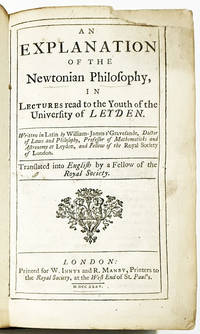
1735réf. Newton1735NEWTON Isaac An Explanation of the Newtonian Philosophy in Lectures read to the Youth of the University of Leyden. Written in Latin by William-James Gravesande . translated into English by a Fellow of the Royal Society. London: W Innys and Manby printers to the Royal Society W Innys and Manby printers to the Royal Society 1735. With 17 folding copperplates one of which being soiled and creased along the blank outer margin. 8vo xvi 406pp 13 index; polished calf worn rebacked title-page clipped at top margin to remove a name. Overall a very good copy of a scarce work. First edition PRE-DATING JOHN NEWBERY'S EDITION FOR CHILDREN by more than 25 years issued which he issued under the pseudonym Tom Telescope. W Innys and Manby, printers to the Royal Society, hardcover
1735réf. Newton1735NEWTON Isaac An Explanation of the Newtonian Philosophy in Lectures read to the Youth of the University of Leyden. Written in Latin by William-James Gravesande . translated into English by a Fellow of the Royal Society. London: W Innys and Manby printers to the Royal Society W Innys and Manby printers to the Royal Society 1735. With 17 folding copperplates one of which being soiled and creased along the blank outer margin. 8vo xvi 406pp 13 index; polished calf worn rebacked title-page clipped at top margin to remove a name. Overall a very good copy of a scarce work. First edition PRE-DATING JOHN NEWBERY'S EDITION FOR CHILDREN by more than 25 years issued which he issued under the pseudonym Tom Telescope. W Innys and Manby, printers to the Royal Society, hardcover books
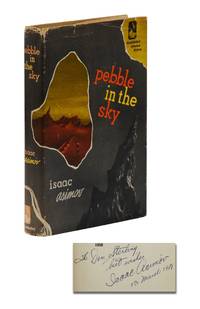
1950réf. 140946409Garden City New York: Doubleday & Company Inc 1950. First Edition. Very Good/Very Good. First edition first printing of Isaac Asimov's first novel. Signed by Asimov on the title page and inscribed "To Don Sterling best wishes 13 March 1981." Bound in publisher's original gray cloth lettered in orange on the spine. Very Good with lean to binding light wear at extremities and scattered foxing to cloth. Minor offsetting to ensheets. In a Very Good unclipped dust jacket with fading moderate wear and small damp stain to foot of spine; toning and tape repairs to verso. Signed first editions are scarce. Doubleday & Company, Inc unknown
1950réf. 140946409Garden City New York: Doubleday & Company Inc 1950. First Edition. Very Good/Very Good. First edition first printing of Isaac Asimov's first novel. Signed by Asimov on the title page and inscribed "To Don Sterling best wishes 13 March 1981." Bound in publisher's original gray cloth lettered in orange on the spine. Very Good with lean to binding light wear at extremities and scattered foxing to cloth. Minor offsetting to ensheets. In a Very Good unclipped dust jacket with fading moderate wear and small damp stain to foot of spine; toning and tape repairs to verso. Signed first editions are scarce. Doubleday & Company, Inc unknown books
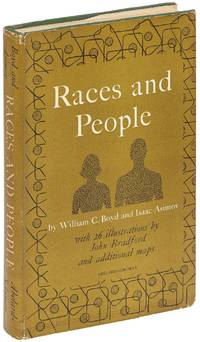
1955réf. 468623New York: Abelard-Schuman 1955. Hardcover. Fine/Near Fine. First edition. With 26 illustrations by John Bradford with additional maps. Octavo. 189pp. Light dampstaining on the boards very good in price-clipped very good dust jacket with a corresponding light stain mostly on the rear panel and with small internal repairs at the spine ends. Exploration of race by two white academic writers aimed at young adult readers Asimov's second book for the YA market. Inscribed by Asimov to a fellow science fiction legend: "For John Campbell who may disagree with everything. Isaac." Campbell was the influential editor of Astounding Science Fiction later renamed as Analog Science Fiction and Fact and wrote his own science fiction titles most notably Who Goes There which was adapted into several film versions as The Thing. Asimov's inscription is prescient and recognizes the contrarian nature of Campbell who Asimov fell out with not long afterwards because of Campbell's obsession with pseudoscience. Campbell’s essays in support of segregation and comments about slavery and race alienated him from many in the sci-fi community. An uncommon title with a poignant and important association. Abelard-Schuman hardcover
1955réf. 468623New York: Abelard-Schuman 1955. Hardcover. Fine/Near Fine. First edition. With 26 illustrations by John Bradford with additional maps. Octavo. 189pp. Light dampstaining on the boards very good in price-clipped very good dust jacket with a corresponding light stain mostly on the rear panel and with small internal repairs at the spine ends. Exploration of race by two white academic writers aimed at young adult readers Asimov's second book for the YA market. Inscribed by Asimov to a fellow science fiction legend: "For John Campbell who may disagree with everything. Isaac." Campbell was the influential editor of Astounding Science Fiction later renamed as Analog Science Fiction and Fact and wrote his own science fiction titles most notably Who Goes There which was adapted into several film versions as The Thing. Asimov's inscription is prescient and recognizes the contrarian nature of Campbell who Asimov fell out with not long afterwards because of Campbell's obsession with pseudoscience. Campbell’s essays in support of segregation and comments about slavery and race alienated him from many in the sci-fi community. An uncommon title with a poignant and important association. Abelard-Schuman hardcover books
1822réf. 19114Glasgow: Andreae et Joannis M. Duncan 1822. FIRST GLASGOW EDITION. Numerous text diagrams and illustrations. Contemporary calf all covers with blind-stamped floral border within gilt floral borders within gilt-lined borders spines in compartments with gilt decoration spine labels; first few leaves of each volume spotted otherwise an excellent set. First Glasgow reprint of the first Jesuit edition printed in Geneva from 1739-1742. This edition of Newton’s Principia was edited by John Martin Frederick Wright of Trinity College who contributed additional commentary. Babson notes that Glasgow’s printing of this edition of the complete text was a great credit to the university whereas Cambridge was “satisfied with reprints of the first three sections of the first book.” Babson 32; Gray 17; Wallis 17. Andreae et Joannis M. Duncan unknown
1822réf. 19114Glasgow: Andreae et Joannis M. Duncan 1822. FIRST GLASGOW EDITION. Numerous text diagrams and illustrations. Contemporary calf all covers with blind-stamped floral border within gilt floral borders within gilt-lined borders spines in compartments with gilt decoration spine labels; first few leaves of each volume spotted otherwise an excellent set. First Glasgow reprint of the first Jesuit edition printed in Geneva from 1739-1742. This edition of Newton’s Principia was edited by John Martin Frederick Wright of Trinity College who contributed additional commentary. Babson notes that Glasgow’s printing of this edition of the complete text was a great credit to the university whereas Cambridge was “satisfied with reprints of the first three sections of the first book.” Babson 32; Gray 17; Wallis 17. Andreae et Joannis M. Duncan unknown books
réf. 04274London: Allen & Co. 1807. A Study the Inhabitants of the Roundhouse and the Regular Attendants at the Police-Court" A Journey in Caricature through Early Nineteenth Century England. WOODWARD. George Moutard. Eccentric Excursions or Literary & Pictorial Sketches of Countenance Character & Country in different parts of England & South Wales. Interspersed with Curious Anecdotes Embellished with upwards of One Hundred Characteristic & Illustrative Prints. London: Allen & Co. 1807 but ca. 1813. Later issue first published in 1796. Quarto 10 3/16 x 8 3/8 in; 259 x 213 mm. iv v 6-217 1 list of plates pp. Engraved title-page included in pagination Hand colored frontispiece and 100 hand-colored etched plates on ninety-nine leaves by Isaac Cruikshank after Woodward including three folding plates Plates 1 2 and 3. The text is watermarked "W. Balston 1813". Bound by Rivière & Son stamp-signed on verso of front endpaper ca. 1890. Full maroon morocco covers with double-gilt borders spine with five raised bands decoratively tooled and lettered in gilt in compartments gilt ruled board-edges decorative gilt turn-ins marbled end-papers top edge gilt others uncut. Occasional toning or foxing a few leaves with neatly repaired or strengthened edges. Overall an excellent copy of this journey in caricature through early nineteenth century England. Originally published in 1796 with subsequent issues in 1797 1798 1799 1801 1807. 1814 1815 1816 1818 Eccentric Excursions is quite rare in all yet curiously is rarer still in the later issues. This satire amongst Moutard's earliest work enthusiastically depicts all types: high- and low-born rural and urban lawyers and peddlers coaching scenes misadventures on ice-skates Oxford dons gypsies etc. "The first and most celebrated of Woodward's books. The text describes an idiosyncratic ramble around the counties of England and Wales." Gordon p. 15. George Moutard Woodward 1760-1809 was "prolific and popular designer of social caricature much in the style of Banbury etched chiefly by Thomas Rowlandson and Isaac Cruikshank.his caricatures display a wealth of imagination and insight into character.extremely entertaining" DNB. "Another popular caricaturist of the day was George Moutard Woodward commonly called 'Mustard George.' Woodward according to his friend Henry Angelo was the son of a land agent and spent his youth in a country town where nothing was less known than everything pertaining to the arts. 'A caricaturist in a country town' said Mustard George 'like a bull in a china shop cannot live without noise; so having made a little noise in my native place I persuaded my father to let me seek my fortune in town.' Thanks to a small allowance from his father supplemented by his own earnings George was able to enjoy life in his own Bohemian fashion and ultimately took up his quarters at the 'Brown Bear' Bow Street where he was able to study the inhabitants of the roundhouse and the regular attendants at the police-court. At the 'Brown Bear' he died suddenly departing in character with a glass of brandy in his hand and was long mourned by his tavern associates. In his Eccentric Excursions which appeared in volume form in 1796 the designs engraved by Isaac Cruikshank there are several domestic subjects such as The Polite Congregation Showing Family Pictures and The Formal Introduction. Among other popular designs by Woodward are Raffling for a Coffin The Club of Quidnuncs Babes in the Wood A Goldfinch and his Mistress.and a series called Six Ways of Carrying a Stick. The majority are marred by extravagant hideousness but Angelo was of opinion that 'had this low humourist studied drawing and been temperate in his habits such was the fecundity of his imagination and perception of character that he might rivalled even Hogarth" Paston Social Caricature in the Eighteenth Century pp. 137-138. Gordon BC-26; Widener 207; Not in Abbey or Tooley. London: Allen & Co., 1807 unknown
réf. 04274London: Allen & Co. 1807. A Study the Inhabitants of the Roundhouse and the Regular Attendants at the Police-Court" A Journey in Caricature through Early Nineteenth Century England. WOODWARD. George Moutard. Eccentric Excursions or Literary & Pictorial Sketches of Countenance Character & Country in different parts of England & South Wales. Interspersed with Curious Anecdotes Embellished with upwards of One Hundred Characteristic & Illustrative Prints. London: Allen & Co. 1807 but ca. 1813. Later issue first published in 1796. Quarto 10 3/16 x 8 3/8 in; 259 x 213 mm. iv v 6-217 1 list of plates pp. Engraved title-page included in pagination Hand colored frontispiece and 100 hand-colored etched plates on ninety-nine leaves by Isaac Cruikshank after Woodward including three folding plates Plates 1 2 and 3. The text is watermarked "W. Balston 1813". Bound by Rivière & Son stamp-signed on verso of front endpaper ca. 1890. Full maroon morocco covers with double-gilt borders spine with five raised bands decoratively tooled and lettered in gilt in compartments gilt ruled board-edges decorative gilt turn-ins marbled end-papers top edge gilt others uncut. Occasional toning or foxing a few leaves with neatly repaired or strengthened edges. Overall an excellent copy of this journey in caricature through early nineteenth century England. Originally published in 1796 with subsequent issues in 1797 1798 1799 1801 1807. 1814 1815 1816 1818 Eccentric Excursions is quite rare in all yet curiously is rarer still in the later issues. This satire amongst Moutard's earliest work enthusiastically depicts all types: high- and low-born rural and urban lawyers and peddlers coaching scenes misadventures on ice-skates Oxford dons gypsies etc. "The first and most celebrated of Woodward's books. The text describes an idiosyncratic ramble around the counties of England and Wales." Gordon p. 15. George Moutard Woodward 1760-1809 was "prolific and popular designer of social caricature much in the style of Banbury etched chiefly by Thomas Rowlandson and Isaac Cruikshank.his caricatures display a wealth of imagination and insight into character.extremely entertaining" DNB. "Another popular caricaturist of the day was George Moutard Woodward commonly called 'Mustard George.' Woodward according to his friend Henry Angelo was the son of a land agent and spent his youth in a country town where nothing was less known than everything pertaining to the arts. 'A caricaturist in a country town' said Mustard George 'like a bull in a china shop cannot live without noise; so having made a little noise in my native place I persuaded my father to let me seek my fortune in town.' Thanks to a small allowance from his father supplemented by his own earnings George was able to enjoy life in his own Bohemian fashion and ultimately took up his quarters at the 'Brown Bear' Bow Street where he was able to study the inhabitants of the roundhouse and the regular attendants at the police-court. At the 'Brown Bear' he died suddenly departing in character with a glass of brandy in his hand and was long mourned by his tavern associates. In his Eccentric Excursions which appeared in volume form in 1796 the designs engraved by Isaac Cruikshank there are several domestic subjects such as The Polite Congregation Showing Family Pictures and The Formal Introduction. Among other popular designs by Woodward are Raffling for a Coffin The Club of Quidnuncs Babes in the Wood A Goldfinch and his Mistress.and a series called Six Ways of Carrying a Stick. The majority are marred by extravagant hideousness but Angelo was of opinion that 'had this low humourist studied drawing and been temperate in his habits such was the fecundity of his imagination and perception of character that he might rivalled even Hogarth" Paston Social Caricature in the Eighteenth Century pp. 137-138. Gordon BC-26; Widener 207; Not in Abbey or Tooley. London: Allen & Co., 1807 unknown books
réf. 39272In-8° (197 x 116 mm), veau marbré de l'époque, dos lisse orné de compartiments fleuronnés et cloisonnés, palettes en tête et pied, pièce de titre de maroquin havane, double filet d'encadrement sur les plats, tranches rouges, xvi, 1-128, (8), 129-368 pages, (1) feuillet de "fautes à corriger". Amsterdam, Marc-Michel Rey, 1771.
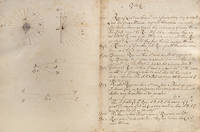
réf. 115619England late 18th century. . 100-leaf manuscript rectos and most versos filled wax seal remnants to front pastedown leaves wavy at the edges some spotting and marks to contents; contemporary calf-backed blue paper boards gilt floral tools to spine compartments binding marked and worn with spine cords partially exposed and loss of the blue paper morocco label lacking naphthalene smell good condition housed in a black cloth folding case. An unusual late 18th century manuscript on classical physics that cites Isaac Newton Blaise Pascal William Harvey Henry Power and others. The text approximately 200 pages presents an ordered and detailed account of a number of related topics: optics; hydrostatics and pneumatics; mechanics including simple machines such as the lever and screw the behaviour of descending bodies and pendulums; phosphorus and its chemical transformations; and fortifications and architecture. The notes are dense but generally neat and legible with carefully prepared diagrams so this seems to be a fair copy rather than a working notebook. Newton is cited in the section on light and colour: 'What Sir I.N. has said by way of in the last edit of his Opticks will appear to be an established truth from most if not all the following examples some of which he mentions himself". And Harvey in a short section on chemical transformations: "Harvey had says he the opportunity as well as the curiosity upon several occasions to examine the weight of when some of them taken up in places very distant from one another.'. The origin of much of the material is unclear though the long section on hydrostaticks was taken from Hydrostatical and Pneumatical Lectures by Roger Cotes 1682-1716 originally published privately in 1738 and with a second edition at Cambridge in 1747. Cotes was 'probably the most talented British mathematician of the generation after Newton'. He was nominated as the first Plumian professor of astronomy at Cambridge in 1706 and 'his appointment was favoured by his influential mentor Richard Bentley master of Trinity; by Newton's successor as Lucasian professor William Whiston who claimed to be in mathematics "a child to Mr Cotes" Whiston 133; and by Newton himself. In 1709 Cotes became heavily involved in the work for which he is best remembered namely the revisions for the second edition of Newton's Philosophia naturalis principia mathematica the first being out of print' Oxford Dictionary of National Biography. Cotes died young and Newton was reported to have said that 'if he had lived we might have known something'. A number of Cotes's lectures and mathematical analyses were published posthumously by his executor Robert Smith the Hydrostatical and Pneumatical Lectures being one of them. It is tempting to question whether other portions of the present manuscript are also based on Cotes's work and further academic scrutiny might be fruitful. England, late 18th century. hardcover
1997réf. 46687HEYNE WILHELM 1997. 1. hardcover. Roboter-Foundation Elias Lije Baley & R. Daneel Olivaw Limitierte Sonderausgabe! FOUNDATION EDITION HEYNE, WILHELM hardcover
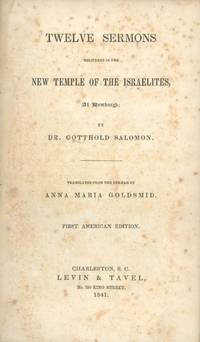
1841réf. 43466Charleston S. C.: Levin & Tavel 1841. with no dust jacket. 1st American Edition Original Publisher's Cloth Small 8vo 2 236 pages followed by several unnumbered pages of publisher's advertisements. Singerman 0761 Rosenbach 483. Jacob Rader Marcus the dean of historians of American Jewish history suggests in his work UNITED STATES JEWRY 1776-1985 Detroit 1989 that "The motive that prompted Nathaniel Levin and a Charleston associate to reprint an English translation of the sermons of Gotthold Salomon was apologetic.The book was Twelve Sermons Delivered in the New Temple of the Israelites at Hamburgh. The Hamburg temple in Germany was a liberal Jewish synagog one of the first in Europe. An English translation had been made of the sermons at London in 1839 by Anna Maria Goldsmid the daughter of Sir Isaac Lyon Goldsmid the Anglo-Jewish emancipator and religious liberal. The American reprint appeared two years later. Both editions were intended not only to edify Jews but also to interest and attract non-Jews. It was Levin's hope that these sermons would remove unjust prejudices against the Jew and would present 'the lofty character of the Israelite in its true colors.' A book of this sort would help the Jews put their best foot forward." Interestingly this 1st American edition of Twelve Sermons contains a new preface extolling the religious liberty of America and highlighting the refuge it afforded to the Jews. The new preface is merely signed "L" certainly referring authorship by Isaac Leeser and further supported by the fact that volume is preceded by two pages of advertisements for works by Leeser even though his works had no connection to the Charleston Publisher of this work. That Leeser who would become American Orthodoxy's greatest warrior against the Reform would offer a preface to and advertise his works in a collection of sermons from the breakaway Liberal Hamburg Temple in Germany suggests that he did not yet see the coming threat from the Reform movement. At the time of printing in Charleston Gustavus Poznanski 5 years into his term as rabbi and still somewhat traditional was just starting to make what felt like radical reforms as he "excised the Resurrection of the Dead and abolished the Second day of festivals five years before the same was done at the Breslau conference." America's first Reform import from Germany and it's first synagogue established as Reformed Har Sinai Congregation in Baltimore was still a year away from birth. Indeed the official term "Reform" did even come into use to describe Liberal Judaism except as a general adjective until 1845 even in Germany. Leeser's involvement in this publication merits further study as it is not mentioned in the bibliographies nor in Sussman's comprehensive "Isaac Leeser and the Making of American Judaism." Indeed in the 1840s at the time of this printing "there was a major split in Congregation Beth Elohim which many historians of American Jewish history see as the beginning of the American Reform movement. The conflict began after the introduction of an organ into the synagogue when it was rebuilt following a fire in 1840. The series of conflicts between Reform and Traditionalist elements in Beth Elohim resulted in a complicated dispute between the President who favored Reform and the Board of Trustees which was controlled by the Traditionalists. The President refused to call the Board of Trustees to meet as was required by the synagogue's constitution because he knew they would admit new traditionalist members and obtain control of the congregation. The Board ignored him and met on their own a move which the Reformers challenged in court. The resulting case State v. Ancker has become known as an early example of U. S. Courts refusing to intervene in complex religious questions" Wikipedia. Salomon 1784-1862 was the preacher of the new Reform Hamburg Temple. His "sermons modeled like those of other preachers on Protestant examples were praised by his contemporaries notably H. Heine." Goldsmid 1805-1889 a daughter of Sir Isaac Lyon Goldsmid was a London author poetess translator educator and communal worker JE. Includes bibliographical references. SUBJECTS: Jewish sermons. OCLC: 5001081. OCLC lists 11 copies worldwide. The National Library of Israel keeps their copy in their Rare Collection. Binding split front board detached lacks backstrip foxing to first several leaves Good Condition thus. A scarce and important publication associated with the early beginnings of the Reform movement in Charleston and with Leeser's first years of scholarly output. B KH-9-29A-BDZS--'elx. Charleston, S. C.: Levin & Tavel unknown
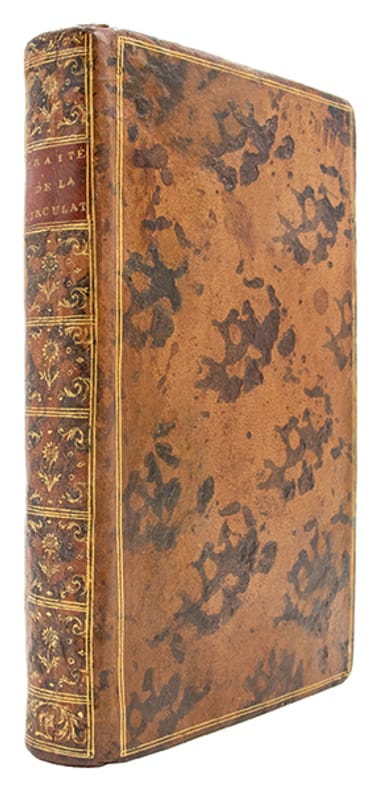
1771réf. 14425A Amsterdam, chez Marc Michel Rey, 1771. In-8 de XVI-368-(9) pp., veau marbré, dos orné à nerfs, pièce de titre en maroquin rouge, tranches rouges (reliure de l'époque).
1756réf. 140742London, T.Osborne and J. Shifton, 1756. Engraved frontispiece, title in red and black with engraved vignette, 8 leaves, 748 pp. with engraved head-piece, 2 leaves (index), 114 plates, of which 14 folding. / Mit gest. Frontispiz, Titelblatt in Rotschwarz-Druck mit gest. Vignette, 8 Bll., 748 S. Mit 1 breiten gestochenen Kopfleiste, 2 Bll. Index, 114 Kupfertafeln, davon 14 gefaltet. Folio, full contemporary calf, gilt spine, six raised bands.
réf. 023366West Bloomfield: Phantasia Press 1985 A deluxe limited edition of only 35 lettered and signed copies; this being the letter K. Signed by Isaac Asimov directly on the colophon page. Bound in full black morocco with leather appliqués on the front cover depicting the sun and the heads of two robots. Silver lettering on spine. A trace of rubbing to bottom edge else book in fine as new condition. Phantasia Press hardcover