[Williams, Isaac]Biblio.com

31 210 résultats
1839réf. 74099London: J. G. F. & J. Rivington 1839. 12mo. bound in 6's. viii 352 pp. Blue diced cloth with blind decorative boards and gilt lettering to spine. Discolouration to boards and bumping to extremities. Bookplates and some previous owner's Percival F. Hinton and J. O. Edwards. inscriptions from 1843/1848 to front endpapers. A few spots to endleaves and the occasional spot or pencil note within. . Good. Original Cloth. 1839. J. G. F. & J. Rivington 1839 hardcover
1847réf. 033332London: James Burns. viii 136pp hardback faded blue cloth gilt well illustrated with eng. plates opposite verses with illustrated margins some pages loose author neatly written in ink to title page backstrip torn along edge note on Copac reads that most copies of this edition were surpressed on account of imperfections with the engravings fair . Fair. Hardcover. 1st Edition. 1847. James Burns hardcover
1846réf. 041557Oxford: John Henry Parker 1846. 405 pages. Later beautiful full dark blue Moroccan leather with raised spine bands and gilt lettering/decoration. Brown leather spine labels. Marbled end leaves with gilt tooled decoration to the leather wrap overs. Light scattered rubbing on leather mostly along joints and spine ends. Small crack on top joint near crown. Old inked price on blank front fly leaf. A little scattered foxing mostly in blank spaces of plates. Volume remains tight. . Third Edition. Full Leather. Good/No Dust Jacket. John Henry Parker
1971réf. 20055New York: Farrar Straus and Giroux 1971. First edition. With imaginative pencil drawings throughout by Margot Zemach. 8vo publisher’s original brown cloth lettered in gilt on the spine. In the publisher's dustjacket illustrated by Zemach. 80. A very nice copy clean and fresh the dustjacket is slightly faded at the spine and turnovers and and has a closed tear at the head of the dustjacket upper hinge. A STORY OF ENCHANTMENT AND MAGIC FOR CHILDREN. Singer’s story is sure to captivate young reader’s with its spiritual tests and mysterious characters and adventures. “Long ago in the days of the saintly Bal Shem lives a boy Joseph of Singer’s magical tale. Orphaned and alone Joseph finds his life transformed when an angel he meets in the wild forest gives him an amulet that will bring him whatever he desires: a prayer book bountiful meals even an eagle which carries him to the kingdom of Good King Maltuch. Before he can win the hand of the Princess Chassidah Joseph comes face to face with good and evil in this world and in the world to come.”-Publisher Farrar, Straus and Giroux hardcover
1815réf. 275647New York: New-York Courier 1815. First. pamphlet. 21 pages printed with text in double columns. Original pamphlet sewn dampstain at upper corner and rough at edges but well inside the ample margins; some pages still un-opened. New York: At the Office of the New-York Courier 1815. First edition. A very good copy of this exceedingly scarce pamphlet. OCLC lists only 13 copies including those at Columbia Cornell Yale Harvard and the New York Historical Society. Attributed to Isaac Bronson by F. Redlich in "The Molding of American Banking" 1868 volume 1 page 308. "Isaac Bronson was a highly successful financier of the Jacksonian era who was also one of the period's most original and influential banking theorists. Bronson accumulated his very considerable fortune in New York primarily by judicious personal money-lending operations on long-term bonds and mortgages at a cautious 7 per cent annual return supplemented by successful ventures in land speculation. In addition to wealth he had by the 1830's acquired a weighty reputation for sober financial conservatism and was regarded as an authoritative exponent of sound banking principles. Prominent in the financial community he had long thrown his weight as a sound banking theorist against the "wild-cat" practices of the then rampant state banks." --Venit A. 1945. The Journal of Economic History New-York Courier unknown
1815réf. 275647New York: New-York Courier 1815. First. pamphlet. 21 pages printed with text in double columns. Original pamphlet sewn dampstain at upper corner and rough at edges but well inside the ample margins; some pages still un-opened. New York: At the Office of the New-York Courier 1815. First edition. A very good copy of this exceedingly scarce pamphlet. OCLC lists only 13 copies including those at Columbia Cornell Yale Harvard and the New York Historical Society. Attributed to Isaac Bronson by F. Redlich in "The Molding of American Banking" 1868 volume 1 page 308. "Isaac Bronson was a highly successful financier of the Jacksonian era who was also one of the period's most original and influential banking theorists. Bronson accumulated his very considerable fortune in New York primarily by judicious personal money-lending operations on long-term bonds and mortgages at a cautious 7 per cent annual return supplemented by successful ventures in land speculation. In addition to wealth he had by the 1830's acquired a weighty reputation for sober financial conservatism and was regarded as an authoritative exponent of sound banking principles. Prominent in the financial community he had long thrown his weight as a sound banking theorist against the "wild-cat" practices of the then rampant state banks." --Venit A. 1945. The Journal of Economic History New-York Courier unknown books
1943réf. 10688THE BEAST in Astounding Science Fiction for November 1943 Street & Smith first edition wear to the spine else good to very good in full color pictorial wraps. Also contains original contributions by George O. Smith RECOIL Lewis Padgett GALLEGHER PLUS Isaac Asimov DEATH SENTENCE Murray Leinster .IF YOU CAN GET IT John W. Campbell et.al. Astounding / Street & Smith paperback books
1930réf. mon0000976506Experimenter Publications Inc. 1930. Softcover. Very Good. in x in x in. Brown paper wraps glued to spine with light edgewear. Rubbing to front cover. Pages clean with age toning. Experimenter Publications Inc. paperback
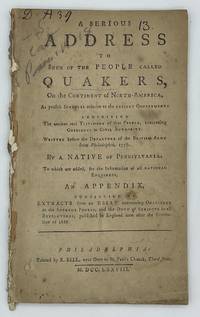
1778réf. 10698Philadelphia: Printed by R. Bell 1778. 8vo disbound pamphlet 2 36 pp Lacking four leaves at the end including pages 37 to 42 of the appendix. A rare pamphlet calling for Quakers to support the Continental Congress and pay war taxes. Evans 15843 which notes that "This edition was bought up and suppressed by the Quakers and only a few copies escaped destruction." Toning to pages foxing to first and last leaf some tearing along spine bit of chipping to lower margin of title page inscriptions to upper margin of title page. Printed by R. Bell unknown
réf. DADAX0425197514New unknown
1911réf. R260150627HACHETTE. 1911. In-12. Cartonnage d'éditeurs. Etat d'usage, Couv. convenable, Dos fané, Intérieur frais. 167 pages. Toile verte, titres noirs. Nombreuses illustrations et cartes en noir et blanc dans le texte.. . . . Classification Dewey : 840-Littératures des langues romanes. Littérature française
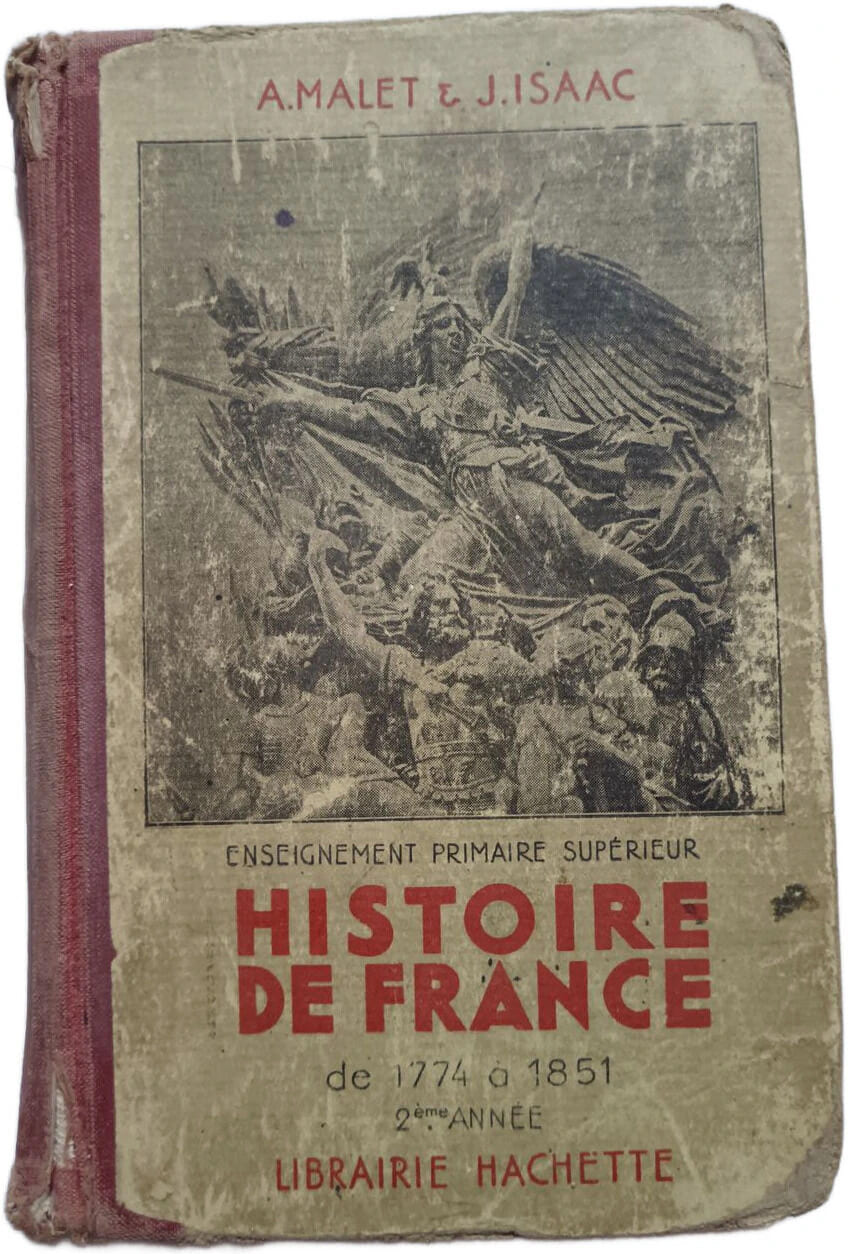
1937réf. 022593Librairie Hachette Paris 1937 408 pages en format -12 - ouvrage enrichi de 267 gravures et de 54 plans et cartes - reliure rigide en percaline rouge au dos et plats avec illustration
1938réf. 025090Librairie Hachette Paris 1938 578 pages en format -12 - ouvrage orné de 270 gravures et de 42 cartes - reliure rigide en percaline claire avec titres sur fond jaune
1934réf. 025475Librairie Hachette Paris 1934 668 pages en format petit -12 - nombreuses illustrations - reliure rigide en percaline claire avec titres en jaune
1948réf. 029242Librairie Hachette reliure Rigide Décorative Paris 1948 cours d' histoire Malet Isaac - orné de 265 gravures et de 45 cartes - 883 pages en format -12 - reliure rigide en percaline
1930réf. 017502Librairie Hachette reliure Rigide Décorative Paris 1930 849 pages en format 12 - 18 cm - 265 gravures et 45 cartes - reliure rigide en percaline
réf. 500264061Librairie hachette Sans date.
1936réf. 500473131Librairie Hachette 1936 1936.
1928réf. LFA-126733362Un ouvrage de 339 pages, format 125 x 185 mm, illustré, relié cartonnage, publié en 1928, Librairie Hachette, bon état
1983Collana "Biblioteca Internazionale di Cultura", 9. Un volume di 199 pagine, brossura editoriale illustrata. Dimensioni: 17x24 cm. Ottime condizioni. Prima edizione. Testi di Paolo Rossi, Chiara Giuntini, Giambattista Gori, Maurizio Mamiani, Walter Bernardi, Ferdinando Abbri, Antonio Di Meo, Felice Mondella, Stefano Poggi, Paolo Casini.
réf. 036501561X.Ghardcover. Good. Access codes and supplements are not guaranteed with used items. May be an ex-library book. hardcover
1966réf. 4864London: Sidgwick & Jackson. Fair in Fair dust jacket. 1966. First Edition Thus. Hardcover. Ex-library "Otago Hospital Board Patients' Library". Library stamps and markings. Slight undulations to pages throughout from damp damage. Heavy shelfwear to tail edges of boards. Dust wrapper in adhesive plastic jacket. 2" chip to dust wrapper and plastic jacket in front panel and front flap. Rear flap of dust wrapper pasted to rear endpaper.; Omnibus edition of three of the Foundation series novels. 189 172 187 pages. Maroon papered boards with gilt lettering on spine. ; Ex-Library; 12mo 7" - 7½" tall . Sidgwick & Jackson hardcover
1710réf. 11775Hanoviae Hannover: NP 1710. Second revised. Hardcover. fair. Folio. 7 pp .L.3-343 f.9 1 L. 11 f . 3/4 calf over brown blind-embossed cloth boards with gilt lettering. Marbled end papers. 2 Title pages Hebrew and Latin. Dedication in Latin. Commentary on the Hebrew Bible by renowned Medieval Jewish philosopher Don Isaac Abarbanel 1437-1508 see below. Age wear to binding. Front board detached but present. Rear endpaper reinforced with gray binder's tape along gutter. Publisher's mark on Title and endpaper. Minor browning throughout with sporadic foxing. In Hebrew. Binding in fair inside in good condition. On the author Source: Public Domain: Isaac ben Judah or Yitzchak ben Yehuda Abravanel 1437 - 1508 was a Jewish statesman philosopher Bible commentator and financier. In many works he is referred to solely by his last name which is variously spelled as Abravanel Abarbanel and Abrabanel. Many Torah and Talmud scholars today simply refer to him as "The Abarbanel". He was born in Lisbon Portugal. He died in Venice and was buried in Padua next to Rabbi Judah Minz Rabbi of Padua. Isaac Abravanel developed many works during his lifetime which are often categorized into three groups: exegesis philosophy and apologetics. Exegesis refers to biblical commentary his philosophy dealt with the sciences and how the general field relates to the Jewish religion and traditions and apologetics defends the Jewish idea of the coming of the Messiah. Abravanel’s exegetic writings were different from the usual biblical commentaries because he took social and political issues of the times into consideration. He believed that mere commentary was not enough but that the actual lives of the Jewish people must be deliberated on as well when discussing such an important topic as the Bible. He also took the time to include an introduction concerning the character of each book he commented on as well as its date of composition and the intention of the original author in order to make the works more accessible to the average reader. Christian scholars appreciated the convenience of Abravanel's commentaries and often used them when preparing their own exegetical writing. This may have had something to do with Abravanel’s openness towards the Christian religion since he worked closely with Messianic ideas found within Judaism. Because of this Abravanel’s works were translated and distributed within the world of Christian scholarship. Ozar Hasefer p164 item #65. NP hardcover
1755réf. 37868Salzburg: Meshulam Zalman b. Aaron 1755. Revised. Hardcover. g. Folio. 15 leaves. Contemporary brown leather with gold tooling on the spine. Red edges and decorated floral endpapers. Illustrated title page with Moses and Aaron on the sides with depictions of the scenes from Genesis of Jacob stealing the blessing the binding of Isaac and Jacob's ladder on the bottom. Revised edition of the 1695 Amsterdam Haggadah illustrated by the convert to Judaism Abraham b. Jacob. These woodcut illustrations are largely based on the work of the early 17th century Swiss Christian biblical artist Matthaeus Merian. Of particular note are the illustrations of Abraham smashing his father's idols the four sons and the drowning of the Egyptians. Includes the "Zevach Pesach" commentary of Isaac Abarbanel as well as a mystical commentary. The songs Adir Hu Ahad mi Yodaya and Had Gadya are translated into Judeo-German. Revised edition offers a larger and clearer print. This edition should not be confused with the Furth Haggadah printed in the same year also with the Abarbanel commentary. Text in Hebrew and Judeo-German. Inscription on front free endpaper. Name of previous owner on title page. Boards bowed chipped and scratched. Hole in center of title page. Staining chipping and creasing to leaves. Numerous leaves are strengthened. Overall in good condition. Yaari 138; Yudlov 216. Meshulam Zalman b. Aaron hardcover
1710réf. 11775Hanoviae Hannover: NP 1710. Second revised. Hardcover. fair. Folio. 7 pp .L.3-343 f.9 1 L. 11 f . 3/4 calf over brown blind-embossed cloth boards with gilt lettering. Marbled end papers. 2 Title pages Hebrew and Latin. Dedication in Latin. Commentary on the Hebrew Bible by renowned Medieval Jewish philosopher Don Isaac Abarbanel 1437-1508 see below. Age wear to binding. Front board detached but present. Rear endpaper reinforced with gray binder's tape along gutter. Publisher's mark on Title and endpaper. Minor browning throughout with sporadic foxing. In Hebrew. Binding in fair inside in good condition. On the author Source: Public Domain: Isaac ben Judah or Yitzchak ben Yehuda Abravanel 1437 - 1508 was a Jewish statesman philosopher Bible commentator and financier. In many works he is referred to solely by his last name which is variously spelled as Abravanel Abarbanel and Abrabanel. Many Torah and Talmud scholars today simply refer to him as "The Abarbanel". He was born in Lisbon Portugal. He died in Venice and was buried in Padua next to Rabbi Judah Minz Rabbi of Padua. Isaac Abravanel developed many works during his lifetime which are often categorized into three groups: exegesis philosophy and apologetics. Exegesis refers to biblical commentary his philosophy dealt with the sciences and how the general field relates to the Jewish religion and traditions and apologetics defends the Jewish idea of the coming of the Messiah. Abravanel’s exegetic writings were different from the usual biblical commentaries because he took social and political issues of the times into consideration. He believed that mere commentary was not enough but that the actual lives of the Jewish people must be deliberated on as well when discussing such an important topic as the Bible. He also took the time to include an introduction concerning the character of each book he commented on as well as its date of composition and the intention of the original author in order to make the works more accessible to the average reader. Christian scholars appreciated the convenience of Abravanel's commentaries and often used them when preparing their own exegetical writing. This may have had something to do with Abravanel’s openness towards the Christian religion since he worked closely with Messianic ideas found within Judaism. Because of this Abravanel’s works were translated and distributed within the world of Christian scholarship. Ozar Hasefer p164 item #65. NP hardcover books