Abarbanel, IsaacABAA
31 210 résultats
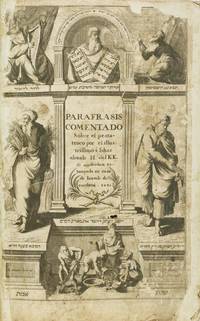
1755réf. 37868Salzburg: Meshulam Zalman b. Aaron 1755. Revised. Hardcover. g. Folio. 15 leaves. Contemporary brown leather with gold tooling on the spine. Red edges and decorated floral endpapers. Illustrated title page with Moses and Aaron on the sides with depictions of the scenes from Genesis of Jacob stealing the blessing the binding of Isaac and Jacob's ladder on the bottom. Revised edition of the 1695 Amsterdam Haggadah illustrated by the convert to Judaism Abraham b. Jacob. These woodcut illustrations are largely based on the work of the early 17th century Swiss Christian biblical artist Matthaeus Merian. Of particular note are the illustrations of Abraham smashing his father's idols the four sons and the drowning of the Egyptians. Includes the "Zevach Pesach" commentary of Isaac Abarbanel as well as a mystical commentary. The songs Adir Hu Ahad mi Yodaya and Had Gadya are translated into Judeo-German. Revised edition offers a larger and clearer print. This edition should not be confused with the Furth Haggadah printed in the same year also with the Abarbanel commentary. Text in Hebrew and Judeo-German. Inscription on front free endpaper. Name of previous owner on title page. Boards bowed chipped and scratched. Hole in center of title page. Staining chipping and creasing to leaves. Numerous leaves are strengthened. Overall in good condition. Yaari 138; Yudlov 216. Meshulam Zalman b. Aaron hardcover books
2012réf. S7642Mount Athos 2012. In Greek. First critical edition by Marcel Pirard. Cloth 25 cm 888 pp.; net weight 1800 gr. ISBN: 9789608753792. Ἡ ἑλληνικὴ μετάφÏαση ἀπὸ τὴ συÏιακὴ γλώσσα τῶν Ἀσκητικῶν Λόγων τοῦ Ἀββᾶ Ἰσαὰκ τοῦ ΣÏÏου á¼ÎºÏ€Î¿Î½Î®Î¸Î·ÎºÎµ τὸν 9ο αἰώνα στὴ Mονὴ τοῦ Ἁγίου Σάββα ἀπὸ τοὺς μοναχοὺς ἈβÏάμιο καὶ ΠατÏίκιο. ΚυκλοφόÏησε εá½ÏÏτατα καὶ á¼Ï€Î·ÏÎασε καίÏια τὴ νηπτικὴ παÏάδοση τῆς Ἐκκλησίας. Ἡ συλλογὴ διασώζεται σὲ πλῆθος χειÏόγÏαφων κωδίκων μὲ á¼€Ïκετὲς διαφοÏὲς Î¼ÎµÏ„Î±Î¾Ï τους. Τὸ 1770 á¼ÎºÎ´ÏŒÎ¸Î·ÎºÎµ σὲ βιβλίο ἀπὸ τὸν ÎικηφόÏο Θεοτόκη μὲ βάση δÏο κώδικες. Τὸ κείμενο τοῦ Θεοτόκη á¼Ï€Î±Î½ÎµÎ¾ÎµÎ´ÏŒÎ¸Î· τὸ 1895 ἀπὸ τὸν Ἰωακεὶμ ΣπετσιÎÏη καὶ τὸ 1871 σὲ δημώδη γλώσσα ἀπὸ τὸν Καλλίνικο ΠαντοκÏατοÏινό. Ἡ Μονὴ ἸβήÏων ἀνέθεσε στὸν φιλόλογο ΜάÏκελλο ΠιÏá½°Ï νὰ á¼ÎºÏ€Î¿Î½Î®ÏƒÎµÎ¹ μία κÏιτικὴ ἔκδοση αá½Ï„ῶν τῶν Λόγων μὲ βάση τὴ σÏνολη ἑλληνικὴ χειÏόγÏαφη παÏάδοση. Γιὰ Ï€Ïώτη λοιπὸν φοÏá½° παÏουσιάζονται οἱ "Ἀσκητικοὶ λόγοι" ὑπὸ μοÏφὴν κÏιτικῆς á¼ÎºÎ´ÏŒÏƒÎµÏ‰Ï‚. Ἐπίσης παÏατίθεται ὑπόμνημα μὲ ἀναγωγὲς στὶς συÏιακὲς πηγές καθὼς καὶ ὑπόμνημα Testimonia μὲ παÏαπομπὲς λέξεων ἢ φÏάσεων σὲ πηγὲς τῆς á¼ÎºÎºÎ»Î·ÏƒÎ¹Î±ÏƒÏ„ικῆς καὶ τῆς θÏÏαθεν γÏαμματείας. Στὴν á¼ÎºÏ„ενῆ εἰσαγωγὴ πεÏιλαμβάνονται: α Bίος τοῦ ἀββᾶ Ἰσαάκ β Πηγὲς τοῦ á¼”Ïγου καὶ θεολογία τῶν πηγῶν γ ΠεÏὶ τοῦ συÏιακοῦ Ï€ÏωτοτÏπου τῶν á¼€Ïχαίων μεταφÏάσεων καὶ τῆς γλώσσας τῆς ἑλληνικῆς μετάφÏασης δ ἹστοÏία τοῦ ἑλληνικοῦ κειμένου μὲ πεÏιγÏαφὴ τῶν χειÏόγÏαφων κωδίκων. Τέλος συμπεÏιλαμβάνεται παÏάÏτημα μὲ πέντε κείμενα τὰ á½Ï€Î¿á¿–α φÎÏονται ὡς κείμενα τοῦ ἀββᾶ Ἰσαάκ. The "Ascetic Homilies" were translated into Greek in the 9th ce. by the monks Abramius and Patricius at the monastery of St. Sabbas. Their wide circulation in the monasteries had a major impact on the neptic tradition of the Orthodox Church. The collection of these Homilies survives in numerous manuscripts with several differences. The first printed publication in Greek was done in 1770 by Nikephorus Theotokes who used two handwritten codes. A re-edition emerged in 1895 by Joachim Spetsieres and one more in 1871by Callinicus Pantocratorinos. The Holy Monastery of Iveron at Mount Athos commissioned scholar Marcel Pirard to prepare a critical edition based on the entire greek handwritten tradition. So we have now the first critical greek edition of the "Homilies". The extensive introduction includes: a A biography of Saint Isaac b Sources of the work and theology of the sources c comments on the original Syrian text the ancient translations and the translation into Greek d a history of the Greek text with description of the manuscripts. Finally the volume includes an annex with five texts of an anonymous author considered as texts written by Saint Isaac. CONTENTS: Î Ïόλογος ΙεÏάς Μονής ΙβήÏων - Σημείωμα κÏÎ¹Ï„Î¹ÎºÎ¿Ï εκδότη - ΣυντομογÏαφίες // ΜΕΡΟΣ ΠΡΩΤΟ - Βίος του αββά Ισαάκ - Πηγές του ÎÏγου - Θεολογία των πηγών - Το συÏιακό Ï€Ïωτότυπο και οι αÏχαίες μεταφÏάσεις - Η γλώσσα της ελληνικής μεταφÏάσεως - ΠεÏί πνευματικής οÏολογίας // ΜΕΡΟΣ ΔΕΥΤΕΡΟ - ΙστοÏία του ÎµÎ»Î»Î·Î½Î¹ÎºÎ¿Ï κειμένου - Η άμεση παÏάδοσι - Η Ï€Î»Î®Ïης συλλογή - Κατάλογος των χειÏογÏάφων - Σχέσεις των χειÏογÏάφων - ΕξωτεÏικά τεκμήÏια - ΕσωτεÏικά τεκμήÏια - Η οικογένεια α - Ο κώδικας Ρ/Î¡Ï - Η οικογένεια β - Η ÎºÎ¿Ïυφή της πλήÏους συλλογής - Η επιλεκτική συλλογή - Κατάλογος των χειÏογÏάφων - Σχέσεις των χειÏογÏάφων - ΕξωτεÏικά τεκμήÏια - ΕσωτεÏικά τεκμήÏια - Η έμμεση παÏάδοσι - Οι εκδόσεις - Εκδοτικές αÏχÎÏ‚ - Πίνακας των διακÏιτικών συμβόλων Σίγλα // ΚΡΙΤΙΚΟ ÎšÎ•Î™ÎœÎ•ÎΟ - Ο φόβος του Î˜ÎµÎ¿Ï - Η ÎµÏ…Ï‡Î±Ïιστία του λαμβάνοντος - Όταν μη εισέλθωσιν έξωθεν - Η ψυχή η τον Θεό αγαπώσα - Πολλήν ο Θεός δέδωκε - Το εν τινι συμπτώματι - ΜακάÏιος άνθÏωπος - Έστιν αμαÏτία - Την ανδÏείαν - Δει τον μοναχόν - Ο συνελθών τω Î½Î¿Î Î±Ï…Ï„Î¿Ï - Λέγω σοι Ï€Ïάγμα - ΤÏεις είσι τάξεις - Γίνεται ελπίς - Εκ της εÏγασίας της βιαίας - ΆνθÏωπος πολυμÎÏιμνος - Μη νομίσης ω άνθÏωπε - Εν μια των ημεÏών απήλθον - Δόξα τω εκχέαντι - Έως αν αληθώς - Πάν Ï€Ïάγμα υψηλότεÏον - Πάσης φÏσεως - Η ÎºÏ…Ïιακή μυστήÏιον έστι - Ει κατά μονάς υπάÏχεις - Η αγάπη θÎÏμη εστί - Η άσκησις Î¼Î®Ï„Î·Ï του Î±Î³Î¹Î±ÏƒÎ¼Î¿Ï - Ποίω δεσμώ συνέχεται η καÏδία - Έχει έθος πάλιν ο διάβολος - Εν πολλώ καιÏÏŽ πειÏαζόμενος - Σημείον εστί της ακηδίας - Î Ïοσφιλή έσεσθαι τα δυσχεÏή - Η Î±Ïετή η σωματική - Διότι γνωÏίζω σε αγαπώντα - Ουχί ως νομίζεις συ - Η πίστις εστίν η θÏÏα - Έστι γνώσις Ï€ÏοηγουμÎνη - Ουκ εστίν έννοια αγαθή - Μη νομίσης ότι παÏÏησιασθήσεται - Î Ïώτη έννοια - Ίδωμεν ω αγαπητοί - ΆνθÏωπος ζηλωτής - Η ψυχή εν ταις Ï„Ïίβοις - Η γνώσις αναστÏεφομÎνη - Το βεβαιωθήναι τινά - Ουκ εστί δυνατόν τοις έχουσι - Το Ï€ÏοκÏίνειν το αγαθόν - Όσον καταφÏονήσει - ΓÎÏων τις ÎγÏαψεν - Ο λόγος του ΚυÏίου αληθινός - Εν παντί ÎºÎ±Î¹ÏÏŽ - Εκ της αγάπης ης έδειξαν - ΆνθÏωπος όσον εστίν - Ευλογημένη η τιμή του ΚυÏίου - Μη ψηφίσης αÏγίαν την έκτασιν - Αδελφέ επειδή ηναγκάσθην - Îους - αίσθησις πνευματική - Αλήθεια έστιν αίσθησις - Άκουσον αγαπητέ - Î Ïόσεχε σεαυτώ ω αγαπητέ - Εν πάση Î³Î±Ï τη φÏσει - Διάνοια μεν συνηγμένη - Τελειότης παντός δÏόμου - Ω Î¬Î½Î¸Ïωπε ελάχιστε - ΙσχυÏός έστιν αληθώς - Όσον εστί τις εν τη ακτημοσÏνη - Όταν θέλησις στήναι - Καλώς ότι εκ του ευαγγελίου - Θέλω ανοίξαι το στόμα μου // ANNEX - Κείμενα φεÏόμενα ως του αββά Ισαάκ: 1. Ο ÎºÏ‰Î»Ïων το στόμα Î±Ï…Ï„Î¿Ï - 2. Όταν αγαπήσωμεν φυγείν - 3. Τίς των αδελφών ÎγÏαψε - 4. Αυτή εστίν η τάξις - 5. Η επιστολή σου ω Άγιε - ΕπίγÏαμμα πεÏί σιωπής και ησυχίας // ΠΙÎΑΚΕΣ: Των incipit με αντιστοιχία Λόγων και Επιστολών - ΚυÏίων ονομάτων. . . IMPORTANT: The price does NOT include the shipping cost which depends on actual weight and destination. You will receive a message after placing the order with the exact cost and the options available; then you will have to approve / reject this cost; you may also ask about this cost before placing the order at dem.siatras@gmail.com . Hiera Mone Iveron hardcover
réf. 9781536132465NOVA SCIENCE PUBLISHERS INC
1931réf. 000776Ariel 1931. Book. Hardcover. Collection of religious poems. A VERY GOOD COPY INSCRIBED by Abelson on front endpaper " to my very dear old friend Mr. Isaac Allen." Some sunning to spine and edges. Ariel hardcover
réf. 1379637899.Ghardcover. Good. Access codes and supplements are not guaranteed with used items. May be an ex-library book. hardcover
réf. 1016825757.Ghardcover. Good. Access codes and supplements are not guaranteed with used items. May be an ex-library book. hardcover
2010réf. DADAX3838391357LAP Lambert Academic Publishing 2010-08-25. paperback. New. 5.91x0.19x8.66. Buy with confidence. Excellent Customer Service & Return policy. LAP Lambert Academic Publishing paperback
réf. 3838391357.Gpaperback. Good. Access codes and supplements are not guaranteed with used items. May be an ex-library book. paperback
réf. 49987308like new. unknown
2025réf. x-103299813XRoutledge 2025. Hardcover. New. 250 pages. 9.18x6.12x9.45 inches. Routledge hardcover
réf. 1020801891.Ghardcover. Good. Access codes and supplements are not guaranteed with used items. May be an ex-library book. hardcover
réf. elala2345Metz: Ephraim Hadamar 1829. The most important and influential work on ethics in fifteenth century Jewish literature. The author was one of the leading Talmudic scholars of his day. Zedner p. 381. Friedberg p. 620 no. 2216. 3 Volumes. 8vo. ff. 18 819. engraved frontis. contempoary calf bindings worn but solid some scattered foxing Metz: Ephraim Hadamar, 1829 unknown
réf. 55265Amsterdam: Estampado en caza de Iaacob de Cordova 5441. First edition. Hardcover. g to vg-. Large quarto. 5 634pp. Re-backed in modern spine with raised bands blind-stamped tooling and the original gilt-stamped leather label pasted on. Retains original leather boards. Edges of the book block in red. Engraved title page. Text throughout printed in a two-column format with decorative woodcut initials and tailpieces. This work is a paraphrased translation of the Pentateuch the Five Books of Moses into Spanish by Rabbi Isaac Aboab da Fonseca 1605-1693 seamlessly incorporating and utilizing past rabbinic commentary and midrash into the text. The previous commentaries referenced by Aboab throughout are usually attributed to the views of "sages" or "theologians" without specifically citing the individual source. The book was important for the ex-converso Sephardic Jewish community of Amsterdam as many of these Jews who had in more recent years reconnected with there Jewish heritage after a period of more than one hundred years living as Catholics on the Iberian peninsula could not read Hebrew. This publication is one of a large number of works of Judaica including bibles and prayer books published from the 16th - early 18th centuries which catered to that community. The author a respected scholar and prominent member of the Sephardic community was himself from a Portuguese Jewish family which had previously been forcibly converted to Christianity. The work is considered to be Aboab's magnum opus and was the standard by which all other similar works of the period were judged. The engravings which surround the text on the title page by Jan van den Aveele c. 1650 - 1727 depict a number of biblical scenes and figures and contain some Hebrew text. The prologue contains approbations including some Hebrew text from three other prominent religious figures in the community: Jacob ben Aaron Sasportas 1610 - 1698 Immanuel Abenatar Melo and Selomoh de Oliveira. Text throughout in Spanish. Binding with some light rubbing to the extremities and some period abrasions to the covers. Interior with some light water staining to the interior covers and free endpapers. Text pages throughout with some sporadic minor to light foxing and water stains with a few small instances of worming or other holes. Title page with a small hole at the center and a closed tear at the bottom. The initial 7 printed leaves have been repaired and/or reinforced to one degree or another mostly in the margins. In the case of the title page laid down this has resulted in some minor loss of image to the edges of the leaf and some loss of text along the left margin of the prologue leaf and on p.1 and 3. Pages throughout on the whole in good shape. Binding in very good- interior in good condition overall. About the author: Isaac Aboab da Fonseca 1605-1693 was a leading Rabbi and scholar of the Portuguese Jewish community of Amsterdam in the 17th century. He was born in the Portuguese town of Castro Daire as Simão da Fonseca and was a member of the large and prominent Aboab family which was comprised of many noted rabbis scholars physicians and merchants over the centuries. He was born into a family of conversos but still constant anti-Semitic persecution caused the family to immigrate to Amsterdam when Isaac was seven years old. There they reestablished their Jewish roots. From 1642-1654 he was appointed to be the head of the Jewish community in Recife Brazil during the brief period of Dutch control. He served as Rabbi of the Kahal Zur Israel Synagogue the first synagogue in the Americas. Upon the retaking of the colony by the Portuguese Aboab came back to Amsterdam and in 1656 he was one of several prominent religious leaders of the Portuguese-Jewish community of Amsterdam to excommunicate the famed philosopher Baruch Spinoza. References: Darlow and Moule #8481; Kayserling p.4. Estampado en caza de Iaacob de Cordova hardcover
réf. 55265Amsterdam: Estampado en caza de Iaacob de Cordova 5441. First edition. Hardcover. g to vg-. Large quarto. 5 634pp. Re-backed in modern spine with raised bands blind-stamped tooling and the original gilt-stamped leather label pasted on. Retains original leather boards. Edges of the book block in red. Engraved title page. Text throughout printed in a two-column format with decorative woodcut initials and tailpieces. This work is a paraphrased translation of the Pentateuch the Five Books of Moses into Spanish by Rabbi Isaac Aboab da Fonseca 1605-1693 seamlessly incorporating and utilizing past rabbinic commentary and midrash into the text. The previous commentaries referenced by Aboab throughout are usually attributed to the views of "sages" or "theologians" without specifically citing the individual source. The book was important for the ex-converso Sephardic Jewish community of Amsterdam as many of these Jews who had in more recent years reconnected with there Jewish heritage after a period of more than one hundred years living as Catholics on the Iberian peninsula could not read Hebrew. This publication is one of a large number of works of Judaica including bibles and prayer books published from the 16th - early 18th centuries which catered to that community. The author a respected scholar and prominent member of the Sephardic community was himself from a Portuguese Jewish family which had previously been forcibly converted to Christianity. The work is considered to be Aboab's magnum opus and was the standard by which all other similar works of the period were judged. The engravings which surround the text on the title page by Jan van den Aveele c. 1650 - 1727 depict a number of biblical scenes and figures and contain some Hebrew text. The prologue contains approbations including some Hebrew text from three other prominent religious figures in the community: Jacob ben Aaron Sasportas 1610 - 1698 Immanuel Abenatar Melo and Selomoh de Oliveira. Text throughout in Spanish. Binding with some light rubbing to the extremities and some period abrasions to the covers. Interior with some light water staining to the interior covers and free endpapers. Text pages throughout with some sporadic minor to light foxing and water stains with a few small instances of worming or other holes. Title page with a small hole at the center and a closed tear at the bottom. The initial 7 printed leaves have been repaired and/or reinforced to one degree or another mostly in the margins. In the case of the title page laid down this has resulted in some minor loss of image to the edges of the leaf and some loss of text along the left margin of the prologue leaf and on p.1 and 3. Pages throughout on the whole in good shape. Binding in very good- interior in good condition overall. About the author: Isaac Aboab da Fonseca 1605-1693 was a leading Rabbi and scholar of the Portuguese Jewish community of Amsterdam in the 17th century. He was born in the Portuguese town of Castro Daire as Simão da Fonseca and was a member of the large and prominent Aboab family which was comprised of many noted rabbis scholars physicians and merchants over the centuries. He was born into a family of conversos but still constant anti-Semitic persecution caused the family to immigrate to Amsterdam when Isaac was seven years old. There they reestablished their Jewish roots. From 1642-1654 he was appointed to be the head of the Jewish community in Recife Brazil during the brief period of Dutch control. He served as Rabbi of the Kahal Zur Israel Synagogue the first synagogue in the Americas. Upon the retaking of the colony by the Portuguese Aboab came back to Amsterdam and in 1656 he was one of several prominent religious leaders of the Portuguese-Jewish community of Amsterdam to excommunicate the famed philosopher Baruch Spinoza. References: Darlow and Moule #8481; Kayserling p.4. Estampado en caza de Iaacob de Cordova hardcover books
1848réf. 47660Krotoschin Krotoszyn: B. L. Monasch & Sohn 1848. First German edition. Hardcover. g to vg. Octavo. viii 315 1 558 392pp. Bound in modern brown half-cloth over decorative paper-covered boards with gilt lettering and decorative ruling on spine. Light brown endpapers. The author Isaac Aboab lived in Toledo at the end of the 14th century. His Hebrew work Menorath HaMe'or "The Candelabrum of Light" is a classic ethical work. It became immensely popular among the Jews in the Middle Ages with more than seventy editions printed. Originally written in Hebrew it was translated into Spanish Ladino Yiddish and German with the 1st edition printed in Constantinople in 1514. "Developing the image of the seven-branched candlestick cf. Num. 4:9 Isaac divides his work into seven nerot "lamps". These in turn are subdivided into main divisions parts and chapters. Using the three parts of Psalms 34:15 as general headings he assigns the seven lamps to them in the following manner: a "Depart from evil" 1 guard against envy lust ambition; 2 be wary of sins attendant upon speech. b "Do good" 3 observance of mitzvot such as circumcision rearing of children prayer festivals honoring parents founding a family charity justice; 4 study of Torah; 5 repentance. c "Seek peace and pursue it" 6 peace and love for fellowman; and 7 humility. Into this rather loose framework lsaac fitted a wealth of aggadic material culled from the Talmud and the vast midrashic literature. His use of passages from aggadic works now lost and the variants in the talmudic and midrashic texts he cites make the Menorat ha-Ma'or of great importance for establishing the text of the Talmud used in the Spanish-North African academies as distinct from that of the Franco-German school. Isaac is selective in using esoteric texts and he fights shy of statements that may provoke doubt and heresy." -see:encyclopedia dot com. The translation by R. J. Fürstenthal was completed by Benzion Behrend. Block somewhat browned with sporadic light foxing. Water stain at lower foredge and bottom visible for about fifty pages. Binding in overall very good interior in good condition. B. L. Monasch & Sohn hardcover
1848réf. 47660Krotoschin Krotoszyn: B. L. Monasch & Sohn 1848. First German edition. Hardcover. g to vg. Octavo. viii 315 1 558 392pp. Bound in modern brown half-cloth over decorative paper-covered boards with gilt lettering and decorative ruling on spine. Light brown endpapers. The author Isaac Aboab lived in Toledo at the end of the 14th century. His Hebrew work Menorath HaMe'or "The Candelabrum of Light" is a classic ethical work. It became immensely popular among the Jews in the Middle Ages with more than seventy editions printed. Originally written in Hebrew it was translated into Spanish Ladino Yiddish and German with the 1st edition printed in Constantinople in 1514. "Developing the image of the seven-branched candlestick cf. Num. 4:9 Isaac divides his work into seven nerot "lamps". These in turn are subdivided into main divisions parts and chapters. Using the three parts of Psalms 34:15 as general headings he assigns the seven lamps to them in the following manner: a "Depart from evil" 1 guard against envy lust ambition; 2 be wary of sins attendant upon speech. b "Do good" 3 observance of mitzvot such as circumcision rearing of children prayer festivals honoring parents founding a family charity justice; 4 study of Torah; 5 repentance. c "Seek peace and pursue it" 6 peace and love for fellowman; and 7 humility. Into this rather loose framework lsaac fitted a wealth of aggadic material culled from the Talmud and the vast midrashic literature. His use of passages from aggadic works now lost and the variants in the talmudic and midrashic texts he cites make the Menorat ha-Ma'or of great importance for establishing the text of the Talmud used in the Spanish-North African academies as distinct from that of the Franco-German school. Isaac is selective in using esoteric texts and he fights shy of statements that may provoke doubt and heresy." -see:encyclopedia dot com. The translation by R. J. Fürstenthal was completed by Benzion Behrend. Block somewhat browned with sporadic light foxing. Water stain at lower foredge and bottom visible for about fifty pages. Binding in overall very good interior in good condition. B. L. Monasch & Sohn hardcover books
réf. 419742Verdier Paris 1999 In-8 ( 220 X 140 mm ) de 535 pages, broché sous couverture illustrée. Bel exemplaire.
réf. 21852Venise, Alde, 1645. Petit in-8, [2]-261-[1] ff. [i.e. [2]-241-[1] ff.] signatures : A-Z8 AA-GG8 HH4, parchemin souple (quelques petites taches et épidermures).
réf. 5933264Short description: In Russian. Abramsky, Isaac Pavlovich. Loch beard. Moscow: Pravda, 1962. You are welcome to reach out to us for a detailed description of the copies currently available. Delivery of this book may take longer than usual including extended processing and pre-shipping time, no expedited shipping is available. Please advise us if you have a set date or a deadline to receive your order.SKU5933264
réf. 0967451280.Ghardcover. Good. Access codes and supplements are not guaranteed with used items. May be an ex-library book. hardcover
réf. 699731753Other. New. pp. 133 unknown
réf. A9781258027315Hardback. New. hardcover
réf. B9781258027315Hardback. New. hardcover
réf. 0666614792.Ghardcover. Good. Access codes and supplements are not guaranteed with used items. May be an ex-library book. hardcover