1.641 Ergebnisse
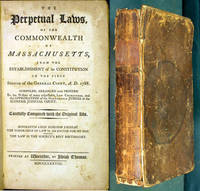
1788Best.-Nr. 27177Printed at Worcester Mass.: Isaiah Thomas 1788. First edition. Full calf. Boards quite tender though holding worn circular stain to front board chips to rear board leather separating spine label lacking head and tail bands chipped dampstain to free front endpaper scattered foxing and toning small worm hole to rear pastedown impressions quite strong with only the odd crease. A good copy. 8 5-389 pp. 5. 8vo 21 cm. p. 231 mis-numbered 431. Lacking only the final rear blank. The first true compilation of the complete laws of Massachusetts published the same year as the ratification of the Constitution. Called the "Baskerville of America" by Ben Franklin Isaiah Thomas 1749-1831 founder of the American Antiquarian Society was an anti-British radical and leading publisher as well as the author of History of Printing in America with a Biography of Printers and an Account of Newspapers 1810. Signed by C. H. Witt. Evans 21245. Sabin 45932. ESTCW6813. Barlow 1592. Rich 348. Isaiah Thomas hardcover books
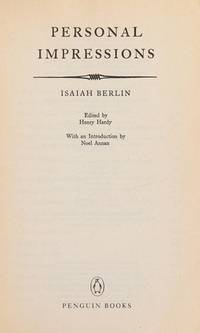
Best.-Nr. ANAIS-0195002725Oxford University Press. paperback. Good. 9.5X6.5X1.5. Buy with confidence. Excellent Customer Service & Return policy. Oxford University Press paperback
Best.-Nr. 64452[Nürnberg, Anton Koberger, 1487]. Fol. Mit einer goldgehöhten Anfangsinitiale u. einem Textholzschnitt. Durchg. m. eingemalten Initialen in Rot u. Blau sowie rubriziert. 82 nn. Bll. (Got. Typ., 2 Kol., 72-73 Zeilen, Text von Kommentar umgeben), Geheftet (ausgebunden; ohne Einband).
Best.-Nr. DADAX0851106471New unknown
Best.-Nr. Z1-C-085-04912Princeton University Press. Used - Good. Ships from UK in 48 hours or less usually same day. Your purchase helps support Sri Lankan Children's Charity 'The Rainbow Centre'. Ex-library so some stamps and wear but in good overall condition. 100% money back guarantee. We are a world class secondhand bookstore based in Hertfordshire United Kingdom and specialize in high quality textbooks across an enormous variety of subjects. We aim to provide a vast range of textbooks rare and collectible books at a great price. Our donations to The Rainbow Centre have helped provide an education and a safe haven to hundreds of children who live in appalling conditions. We provide a 100% money back guarantee and are dedicated to providing our customers with the highest standards of service in the bookselling industry. Princeton University Press unknown
1969Best.-Nr. SONG0195002725OXFORD UNIVERSITY PRESS 1969-05-15. First Paperback Edition. paperback. Used: Good. 5.06x0.75x7.69. Buy with confidence. Excellent Customer Service & Return policy. OXFORD UNIVERSITY PRESS paperback
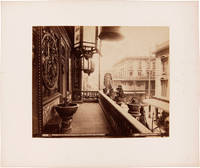
1885Best.-Nr. 58913San Francisco: Taber Photo. ca. 1885. San Francisco Chinatown Before the Earthquake and Fire Two photographs of elegant Chinese restaurants in pre-earthquake San Francisco Chinatown likely taken in the mid-1880s. The first photograph depicts the Woey Sin Low restaurant's third-floor balcony looking past hanging glass lanterns and an ornately carved wooden window onto the corner of Dupont and Clay Streets. In front of the restaurant a hanging banner reads "BÄobàn jiǔxí" advertising that the establishment can host and arrange banquets. The second photograph has been identified as the grand dining room at another restaurant just around the corner on Washington Street called Bun Sun Low. After a fire in 1885 Bun Sun Low's dining room was renovated into the dramatic space pictured here with hanging chandeliers and lanterns and intricate carvings adorning the doors windows walls and even ceiling. Despite the caption some uncertainty exists as to the identification of this second photograph – a different image of what is clearly the same room is held at the New York Public Library which states that the restaurant in the image was located on Dupont Street rather than Washington suggesting it may in fact be a lower floor dining room of the Woey Sin Low restaurant depicted in the previous photo. Both restaurants were long-running fixtures of Chinatown in operation from the 1870s and present in Langley's directories from the 1880s. As neither establishment survived the earthquake and subsequent fires of 1906 it may not be possible to definitively identify the restaurant shown in the interior view. Both images were published by the prolific photography company of Isaiah West Taber which is the source of many wonderful if often dubiously attributed pre-earthquake images of San Francisco. The catastrophe that leveled these beautiful restaurants was equally disastrous for Taber – his entire considerable stock of photo negatives was destroyed in the same event. An interior and exterior glimpse at some of the finest Chinese dining San Francisco had to offer in the Gilded Age as well as evidence of the interest in the activities and aesthetics of Chinatown held by many Americans. Images a bit faded. Mounts lightly soiled and wavy. Upper left corner of mount of second image with a small chip. Overall very good. unknown
1885Best.-Nr. 58913San Francisco: Taber Photo. ca. 1885. San Francisco Chinatown Before the Earthquake and Fire Two photographs of elegant Chinese restaurants in pre-earthquake San Francisco Chinatown likely taken in the mid-1880s. The first photograph depicts the Woey Sin Low restaurant's third-floor balcony looking past hanging glass lanterns and an ornately carved wooden window onto the corner of Dupont and Clay Streets. In front of the restaurant a hanging banner reads "BÄobàn jiǔxí" advertising that the establishment can host and arrange banquets. The second photograph has been identified as the grand dining room at another restaurant just around the corner on Washington Street called Bun Sun Low. After a fire in 1885 Bun Sun Low's dining room was renovated into the dramatic space pictured here with hanging chandeliers and lanterns and intricate carvings adorning the doors windows walls and even ceiling. Despite the caption some uncertainty exists as to the identification of this second photograph – a different image of what is clearly the same room is held at the New York Public Library which states that the restaurant in the image was located on Dupont Street rather than Washington suggesting it may in fact be a lower floor dining room of the Woey Sin Low restaurant depicted in the previous photo. Both restaurants were long-running fixtures of Chinatown in operation from the 1870s and present in Langley's directories from the 1880s. As neither establishment survived the earthquake and subsequent fires of 1906 it may not be possible to definitively identify the restaurant shown in the interior view. Both images were published by the prolific photography company of Isaiah West Taber which is the source of many wonderful if often dubiously attributed pre-earthquake images of San Francisco. The catastrophe that leveled these beautiful restaurants was equally disastrous for Taber – his entire considerable stock of photo negatives was destroyed in the same event. An interior and exterior glimpse at some of the finest Chinese dining San Francisco had to offer in the Gilded Age as well as evidence of the interest in the activities and aesthetics of Chinatown held by many Americans. Images a bit faded. Mounts lightly soiled and wavy. Upper left corner of mount of second image with a small chip. Overall very good. unknown books
1880Best.-Nr. 364056San Francisco: Taber Photo 1880. Ephemera. Fine. A terrific 19th century Chinatown albumen photograph that offers an interesting contrast to Taber's many well-known photographs of Cheong Wo & Co. a butcher shop that was located nearby. This view was just a half-block away at the corner of Washington Street and the Washington Place alley. The shops in this photo are grittier and less-well tended. Taber managed to catch a poultry butcher at the far left in a beam of light. Directly in front of him a fast-moving pedestrian is just a blur. A number of Chinese men stand on the sidewalk or walk down the alley. Instead of the elaborate displays of Cheong Wo most of the merchants on this street have only small round tables of goods in front of their stores. Piles of crates and boxes line one side of the alley. Taber's 1889 catalog of images includes four labeled "provision market." One is identified as negative 2869; that may be the same as this image with two numbers transposed. The albumen print measures 9-1/2 by 7-1/2 inches and is captioned in the image in a narrow strip along the bottom of the print. A very good print a bit over exposed in the center where sunlight falls on the alley some prints have better contrast in this portion of the image. There is a bit of discoloration on the left margin of the photograph which is otherwise near fine. Never mounted. Taber Photo unknown
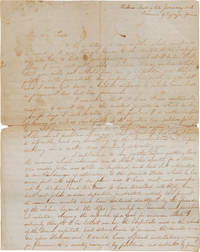
1836Best.-Nr. 52182Bilbao; Castro Urdiales; Santander. January - February 1836. An American Traveller in Spain An engaging account of travels along the north coast of Spain in the Basque country during the First Carlist War the civil war fought between the conservative followers of Carlos V and the liberal defenders of the succession of the infant Isabel II between 1833 and 1840. The Basque region was a Carlist stronghold and Townsend's account includes descriptions of encounters with the forces supporting Carlos as well as being a narrative of the journey around the region from Bayonne to Santander. The diary was composed in three separate parts from different locations in the Basque region in January and February of 1836 and is addressed to his sister. Isaiah Townsend Jr. descended from a prestigious New York family that included Solomon Townsend industrialist and state politician after the Revolution and his father Isaiah Sr. a prominent Albany merchant. On a prior Grand Tour of Europe in 1831 and 1832 he met David Baillie Warden author of Bibliotheca Americana with whom he would become great friends and whose library Townsend would broker to the New York State Library in 1844. A well-written travel diary by a notable New Yorker and close acquaintance to an important American bibliophile filled with fascinating detail about the Basque area and the events of the day. Loose gatherings. Previously folded with some separations and paper loss along old folds slightly affecting text. Written in a small but legible hand. Very good. unknown
1836Best.-Nr. 52182Bilbao; Castro Urdiales; Santander. January - February 1836. An American Traveller in Spain An engaging account of travels along the north coast of Spain in the Basque country during the First Carlist War the civil war fought between the conservative followers of Carlos V and the liberal defenders of the succession of the infant Isabel II between 1833 and 1840. The Basque region was a Carlist stronghold and Townsend's account includes descriptions of encounters with the forces supporting Carlos as well as being a narrative of the journey around the region from Bayonne to Santander. The diary was composed in three separate parts from different locations in the Basque region in January and February of 1836 and is addressed to his sister. Isaiah Townsend Jr. descended from a prestigious New York family that included Solomon Townsend industrialist and state politician after the Revolution and his father Isaiah Sr. a prominent Albany merchant. On a prior Grand Tour of Europe in 1831 and 1832 he met David Baillie Warden author of Bibliotheca Americana with whom he would become great friends and whose library Townsend would broker to the New York State Library in 1844. A well-written travel diary by a notable New Yorker and close acquaintance to an important American bibliophile filled with fascinating detail about the Basque area and the events of the day. Loose gatherings. Previously folded with some separations and paper loss along old folds slightly affecting text. Written in a small but legible hand. Very good. unknown books
2002Best.-Nr. 128587Oxford University Press. New. Paperback. IN STOCK AND IMMEDIATELY AVAILABLE FOR SHIPMENT - FLAWLESS COPY BRAND NEW PRISTINE NEVER OPENED; - . -- with a bonus offer-- . 2002. 019924989X . Oxford University Press paperback
1998Best.-Nr. 53570New York: Farrar Straus & Giroux. New. Paperback. FREE UPGRADE to Courier/Priority Shipping Upon Request – – IN STOCK AND IMMEDIATELY AVAILABLE FOR SHIPMENT - FLAWLESS COPY BRAND NEW PRISTINE NEVER OPENED -- - 278 pages. -- with a bonus offer-- . 1998. 0374525692 . Farrar Straus & Giroux paperback
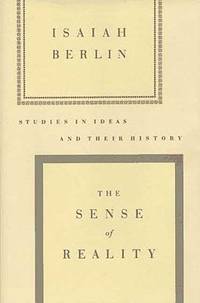
2000Best.-Nr. 52124London England: Pimlico. New. Paperback. FREE UPGRADE to Courier/Priority Shipping Upon Request – – IN STOCK AND IMMEDIATELY AVAILABLE FOR SHIPMENT - Text pristine clean & unmarked - 382 pages. Book Description: "Isaiah Berlin was deeply admired during his life but his full contribution was perhaps underestimated because of his preference for the long essay form. The efforts of Henry Hardy to edit Berlin's work and reintroduce it to a broad eager readership have gone far to remedy this. Now Princeton is pleased to return to print under one cover Berlin's essays on Vico Hamann and Herder. These essays on three relatively uncelebrated thinkers are not marginal ruminations but rather among Berlin's most important studies in the history of ideas. They are integral to his central project: the critical recovery of the ideas of the Counter-Enlightenment and the explanation of its appeal and consequences--both positive and often tragic. " -- with a bonus offer-- . 2000. 0712664920 . Pimlico paperback
1981Best.-Nr. 12442New York New York U.S.A.: Viking Press. As New. Paperback. FREE UPGRADE to Courier/Priority Shipping Upon Request - IN STOCK AND IMMEDIATELY AVAILABLE FOR SHIPMENT - -- with a bonus offer--; 012442; PHILOSOPHY ADDRESSES ESSAYS LECTURES . 1981. 0140058052 . Viking Press paperback
1966Best.-Nr. 18451Simon & Schuster / Essandess. As New. Paperback. FREE UPGRADE to Courier/Priority Shipping Upon Request - IN STOCK AND IMMEDIATELY AVAILABLE FOR SHIPMENT - AS NEW THE TEXT BLOCK IS PRISTINE CLEAN UNMARKED AND IN EXCELLENT CONDITION - -- with a bonus offer--; 018451 . 1966. Simon & Schuster / Essandess paperback
1997Best.-Nr. 10675Gordonsville Virginia U.S.A.: Farrar Straus & Giroux. New. Hardcover. FREE UPGRADE to Courier/Priority Shipping Upon Request - IN STOCK AND IMMEDIATELY AVAILABLE FOR SHIPMENT - FLAWLESS COPY BRAND NEW PRISTINE NEVER OPENED -- with a bonus offer--; 010675; PHILOSOPHY ADDRESSES ESSAYS LECTURES THOUGHT . 1997. 0374260923 . Farrar Straus & Giroux hardcover
Best.-Nr. 222098Oxford 1987. unbound. 3 pages front and back on "Headington House" stationery 8.25 x 5.75 inches Oxford April 28 1987. Written to noted Civil Rights attorney Howard N. Meyer responding to an article that Meyer had written about Wilson and "Patriotic Gore" in small part: ".There was an element of permanent as it were un-critical radicalism in Wilson - hatred of establishments suspicion of the motives of all public men natural reaction to slogans and clarion calls and eloquence in political or national causes within the framework of the establishments of what he regarded as hopelessly bourgeois countries - he thought that all wars certainly since Napoleon were monstrous bloodshed of a horrible kind in the interests of groups disguised as ideals - all that he got from Marx and similar writers - this applied to both World Wars and obviously to the Civil War and rather more plausibly to Vietnam. He obviously did not mind sheer killing as such because that does not emerge in for example 'To the Finland Station' - it was only towards the end of his life partly under the influence of Solzhenitsyn and other irrefutable evidence that he turned against the Soviet Union and became nauseated by Stalin and everything to do with him - and his distaste even turned to the once-hallowed Lenin. I had a conversation with him in which he reminded me that I had said that he was too nice about Lenin - he agreed and the Introduction to the second or a later edition of 'To the Finland Station' altered this approach.I realize and from my knowledge of Edmund whose memory I still revere and of whom I am deeply fond. His loss of faith in Russia which began after his visit in the thirties but still persisted when I first met him was I suppose true of an entire generation of American leftists and British ones too; It was a marvelous mass delusion which I think perhaps has no parallel in history. Of course he must have been right in part about the crushing of the Southern states the exploitation and the bullying.but this should not have extended to respect for his violent and irrational political prejudices ferocious suspicion and desire to discredit honorable human motives just wars general idealism above all Lincoln's reputation. He simply wanted to attack icons and fetishes as such - and in the course of this said a great many untrue unjust and silly things." This letter contains much more fine content and is effectively an unpublished essay and critique of one of the most distinguished writers of the 20th century. Horizontal folds tiny stains and a paperclip impression in the top margins. Still very good condition. Russian-British philosopher and historian of ideas regarded as one of the leading thinkers of the twentieth century and as the dominant liberal scholar of his generation. unknown
Best.-Nr. 222098Oxford 1987. unbound. 3 pages front and back on "Headington House" stationery 8.25 x 5.75 inches Oxford April 28 1987. Written to noted Civil Rights attorney Howard N. Meyer responding to an article that Meyer had written about Wilson and "Patriotic Gore" in small part: ".There was an element of permanent as it were un-critical radicalism in Wilson - hatred of establishments suspicion of the motives of all public men natural reaction to slogans and clarion calls and eloquence in political or national causes within the framework of the establishments of what he regarded as hopelessly bourgeois countries - he thought that all wars certainly since Napoleon were monstrous bloodshed of a horrible kind in the interests of groups disguised as ideals - all that he got from Marx and similar writers - this applied to both World Wars and obviously to the Civil War and rather more plausibly to Vietnam. He obviously did not mind sheer killing as such because that does not emerge in for example 'To the Finland Station' - it was only towards the end of his life partly under the influence of Solzhenitsyn and other irrefutable evidence that he turned against the Soviet Union and became nauseated by Stalin and everything to do with him - and his distaste even turned to the once-hallowed Lenin. I had a conversation with him in which he reminded me that I had said that he was too nice about Lenin - he agreed and the Introduction to the second or a later edition of 'To the Finland Station' altered this approach.I realize and from my knowledge of Edmund whose memory I still revere and of whom I am deeply fond. His loss of faith in Russia which began after his visit in the thirties but still persisted when I first met him was I suppose true of an entire generation of American leftists and British ones too; It was a marvelous mass delusion which I think perhaps has no parallel in history. Of course he must have been right in part about the crushing of the Southern states the exploitation and the bullying.but this should not have extended to respect for his violent and irrational political prejudices ferocious suspicion and desire to discredit honorable human motives just wars general idealism above all Lincoln's reputation. He simply wanted to attack icons and fetishes as such - and in the course of this said a great many untrue unjust and silly things." This letter contains much more fine content and is effectively an unpublished essay and critique of one of the most distinguished writers of the 20th century. Horizontal folds tiny stains and a paperclip impression in the top margins. Still very good condition. Russian-British philosopher and historian of ideas regarded as one of the leading thinkers of the twentieth century and as the dominant liberal scholar of his generation. unknown books
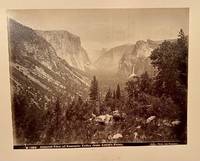
1890Best.-Nr. 223061890. Oblong 4to. 10.5" x 15.5". With 26 albumen prints mounted recto only on thick card landscape and portrait format approximately from 195 x 260 to 124 x 200 mm. or the reverse. 12 captioned in the negative by Taber's studio 3 captioned in the negative by Pollock's studio 14 photographs captioned on the mount in ink in French. The photographs are beautifully presented in a contemporary red morocco binding likely collected by a French traveller. Leather slightly mottled with a few faint marks neatly recolored in places mounts slightly foxed and cockled a few photographs with marginal silver mirroring or faint surface abrasions. Else a near fine copy. An excellent photographic record of San Francisco and Yosemite by the multitalented photographer Isiah West Taber. The album also contains evocative images of New York Washington DC and Niagara Falls with some by the Boston-based photographer Charles Pollock. The adventurous Taber 1830-1912 arrived in San Francisco at the beginning of the gold rush in 1849. Quickly deciding there was more money in trade than digging for gold Taber eventually established his photography studio in San Francisco during which time he acquired the entire archive of the landscape photographer Carleton Watkins. In 1888 he was appointed a Yosemite commissioner in appreciation of his work to spread its beauty. Sadly Taber's studio was destroyed in the 1906 San Francisco earthquake and fired with an estimated loss of about 20 tons of view negatives and 80 tons of portrait negatives; he never reopened his gallery. The photograph album shows images of San Francisco including Market Street Cliff House and an attractive birdseye view. In Yosemite the photographs by Taber show El Capitan Table Rock and Mariposa Grove. The section of photographs of East Coast America includes the White House Capitol Brooklyn Bridge and Niagara in both summer and winter. Three images of New York are by Pollock 1828-1900 who specialized in celebrity portraiture. unknown
1876Best.-Nr. 054986Viyana - Vienna Wien: Adolf Holshausen Matbaasi / Amerikan Kitab-i Mukaddes Sirketi = Adolf Holzhausen Printing House on behalf of the American Bible Society 1876. 1st Edition . Hardcover. Fine. 8vo - over 7¾ - 9¾" tall. Original cloth bdg. with gilt lettering in a very calligraphic style on the front board embossed decoratively. Demy 8vo. 22 x 14 cm. In Ottoman script Old Turkish with Arabic letters. 107 p. Slightly fading on cloth and sporadically foxing on endpapers otherwise a fine copy. Extremely rare first and only edition of this early Wien imprint of the "Book of Isaiah" translated into Ottoman script. It is the earliest example of three imprints in Adolf Holzhausen Printing House of Wien in the Ottoman Turkish language according to the Özege catalogue. Adolf Holzhausen 1868-1931 was an Austrian publisher and bookseller. He was the son of Adolf Holzhausen the Elder 1827-1892 the head of the Viennese court and the university's book printing company. He was trained in the family business his father had owned the Manzsche book printing company since 1858. Holzhausen learned the typesetting of oriental scripts and also provided the company with oriental letters. He later founded the university book printing company and his own publishing house which mainly published art books and historical works. After the First World War he was promoted to the head of the Military Geography Institute. Also he suggested that Austrian educational book publishers worked together. Özege 18043.; TBTK 10281.; Only one copy in OCLC in Bogaziçi University Library of Turkey: 949512980. Adolf Holshausen Matbaasi / Amerikan Kitab-i Mukaddes Sirketi [= Adolf Holzhausen Printing House on behalf of the American Bible hardcover
1850Best.-Nr. 62042Wien: Carl Gerold 1850. 8vo. 226 pp. Contemporary quarter sheep over marbled boards. Ex-institutional library of Bibliothek der Musse Riga with usual markings. Rubbing to spine and board edges. Internally clean. Bookplate to the front pastedown of Manoug Parikian British concert violinist and professor at the Royal Academy of Music London. Loosely inserted are three TLS by Isaiah Berlin dated 1972-73 on 'Headington House Oxford' letterhead in which he thanks Parikian for the loan of the book and then apologises for not returning it in a timely manner as the book had become buried somewhere in his library. The author Wilhelm von Lenz was born in Riga and studied with Liszt and Chopin in Paris. He is best known for his research on Beethoven. The final chapter in this book deals with Beethoven's violin concerto as performed in St. Petersburg by Vieuxtemps. Text in German. . Good. 1/4 Sheep. 1850. Carl Gerold 1850 unknown
1982Best.-Nr. 51679Penguin Books. As New. 1982. Paperback. 0140063137 . FREE UPGRADE to Courier/Priority Shipping Upon Request IN STOCK AND IMMEDIATELY AVAILABLE FOR SHIPMENT - Text pristine clean & unmarked - 210 pages. -- with a bonus offer-- . Penguin Books paperback
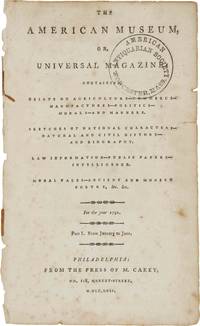
1798Best.-Nr. 68486N.p. likely Boston. ca. 1798. Bookplate of Isaiah Thomas Engraved by Paul Revere A fine example of the second bookplate engraved by Paul Revere for his friend and fellow patriot the printer-publisher Isaiah Thomas. This example is mounted on the verso of the general titlepage of part I of Mathew Carey's periodical the American Museum for the year 1792. The titlepage bears the institutional stamp of the American Antiquarian Society AAS founded in 1812 by Isaiah Thomas whose initial gift of some 2600 titles served as the cornerstone of the society's library and Thomas continued to donate books to AAS until his death in 1831. "Isaiah Thomas 1749–1831 was a good friend of Revere's as well as a longtime business partner and Masonic brother. Like Revere Thomas was of the mechanic class and a member of the Sons of Liberty. He received no formal education but again like Revere he succeeded in his trade through his own initiative eventually becoming one of the wealthiest men in the early republic. Thomas hired Revere to design an armorial bookplate which he used frequently to identify his bound books and newspapers as his property. Thomas became an obsessive amasser of books and his collection forms the heart of the library he founded in 1812—the American Antiquarian Society" - Hewes & Wolverton. The bookplate is in the Jacobean style and features a symmetrical cartouche surrounded by scrolls and swags. At center is a shaded cross featuring five crescent moons. Atop the cartouche is the bust of a collared greyhound and below a ribbon scroll that reads "Nec Elatus Nec Dejectus." At bottom the name "Isaiah Thomas" appears in script. According to Brigham the present bookplate though unsigned "was probably engraved by Revere" as it "is distinctly in Revere's style" and features "in the upper left corner the abbreviation 'No' with a superior 'o' directly above two parallel lines" which he notes is "a characteristic of Revere's bookplates and also of his colonial paper currency." This was apparently the second bookplate designed by Paul Revere for Isaiah Thomas. The first which had been Chippendale in style was practically identical to the one engraved by Revere for Gardiner Chandler save for the name and coat of arms and for this reason it seems was rejected by Thomas who commissioned Revere to make a new one. According to Brigham that first bookplate is known to survive in only one copy at the American Antiquarian Society. In all Brigham lists only eleven bookplates in his bibliography of Revere's engravings: four which were signed by Revere another four "which were unquestionably his work" two "which were probably his work" as here and one which was "probably by his father Apollos Rivoire." A particularly fine example of this bookplate showcasing the engraver's craftsmanship produced by Paul Revere for his friend fellow patriot printer and the founder of the American Antiquarian Society Isaiah Thomas. Light tanning to bookplate and title leaf. Title leaf lightly foxed a few pinholes and a one-inch closed tear to outer margin of title leaf not affecting bookplate. Institutional stamp of the American Antiquarian Society to titlepage. Overall about very good. BRIGHAM PAUL REVERE'S ENGRAVINGS pp.158-166 and plate 53. SHADWELL AMERICAN PRINTMAKING 47a. ALLEN AMERICAN BOOK-PLATES 853 incorrectly attributed to Thomas Johnson. Lauren B. Hewes & Nan Wolverton eds. Beyond Midnight: Paul Revere Worcester: American Antiquarian Society 2019 p.90 checklist no. 78. unknown
1798Best.-Nr. 68486N.p. likely Boston. ca. 1798. Bookplate of Isaiah Thomas Engraved by Paul Revere A fine example of the second bookplate engraved by Paul Revere for his friend and fellow patriot the printer-publisher Isaiah Thomas. This example is mounted on the verso of the general titlepage of part I of Mathew Carey's periodical the American Museum for the year 1792. The titlepage bears the institutional stamp of the American Antiquarian Society AAS founded in 1812 by Isaiah Thomas whose initial gift of some 2600 titles served as the cornerstone of the society's library and Thomas continued to donate books to AAS until his death in 1831. "Isaiah Thomas 1749–1831 was a good friend of Revere's as well as a longtime business partner and Masonic brother. Like Revere Thomas was of the mechanic class and a member of the Sons of Liberty. He received no formal education but again like Revere he succeeded in his trade through his own initiative eventually becoming one of the wealthiest men in the early republic. Thomas hired Revere to design an armorial bookplate which he used frequently to identify his bound books and newspapers as his property. Thomas became an obsessive amasser of books and his collection forms the heart of the library he founded in 1812—the American Antiquarian Society" - Hewes & Wolverton. The bookplate is in the Jacobean style and features a symmetrical cartouche surrounded by scrolls and swags. At center is a shaded cross featuring five crescent moons. Atop the cartouche is the bust of a collared greyhound and below a ribbon scroll that reads "Nec Elatus Nec Dejectus." At bottom the name "Isaiah Thomas" appears in script. According to Brigham the present bookplate though unsigned "was probably engraved by Revere" as it "is distinctly in Revere's style" and features "in the upper left corner the abbreviation 'No' with a superior 'o' directly above two parallel lines" which he notes is "a characteristic of Revere's bookplates and also of his colonial paper currency." This was apparently the second bookplate designed by Paul Revere for Isaiah Thomas. The first which had been Chippendale in style was practically identical to the one engraved by Revere for Gardiner Chandler save for the name and coat of arms and for this reason it seems was rejected by Thomas who commissioned Revere to make a new one. According to Brigham that first bookplate is known to survive in only one copy at the American Antiquarian Society. In all Brigham lists only eleven bookplates in his bibliography of Revere's engravings: four which were signed by Revere another four "which were unquestionably his work" two "which were probably his work" as here and one which was "probably by his father Apollos Rivoire." A particularly fine example of this bookplate showcasing the engraver's craftsmanship produced by Paul Revere for his friend fellow patriot printer and the founder of the American Antiquarian Society Isaiah Thomas. Light tanning to bookplate and title leaf. Title leaf lightly foxed a few pinholes and a one-inch closed tear to outer margin of title leaf not affecting bookplate. Institutional stamp of the American Antiquarian Society to titlepage. Overall about very good. BRIGHAM PAUL REVERE'S ENGRAVINGS pp.158-166 and plate 53. SHADWELL AMERICAN PRINTMAKING 47a. ALLEN AMERICAN BOOK-PLATES 853 incorrectly attributed to Thomas Johnson. Lauren B. Hewes & Nan Wolverton eds. Beyond Midnight: Paul Revere Worcester: American Antiquarian Society 2019 p.90 checklist no. 78. unknown books