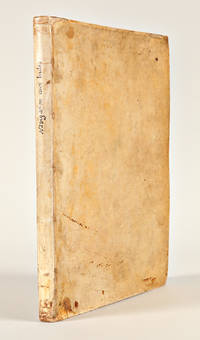
1789réf. 247021Paris: Chez Barrois 1789. First edition in French. Avec trente-quatre planches. 34 finely etched plates by Copia EXQUISITELY COLORED by a contemporary hand. 4 324; 4 295 pp. 2 vols. 8vo. Contemporary tan polished calf triple gilt-filet borders smooth spines richly gilt with 2 black leather spine label by Bozerien jeune. First edition in French. Avec trente-quatre planches. 34 finely etched plates by Copia EXQUISITELY COLORED by a contemporary hand. 4 324; 4 295 pp. 2 vols. 8vo. An extremely rare if not unique copy of Engel's classic treatise on acting with the plates colored by hand. This is the very scarce first French edition of Engel's famous Ideen Zu Einer Mimik first printed in German in 1785-86 and one of the most important works on the theory and psycho-physiology of acting. Engel 1741-1802 was a German philosopher who was professor of moral philosophy in the Joachimstal Gymnasium in Berlin and following that tutor to the crown prince of Prussia the future Frederik William III. In 1787 he became director of the Royal Theater in Berlin where he wrote many plays which enjoyed considerable success as well as many essays on aesthetic subjects ONE OF A VERY FEW COPIES WITH HAND-COLORED PLATES. Cohen-De Ricci 346-347; Brunet III 982; Magriel p. 179 Chez Barrois unknown books
1860réf. 1726401860. CHEVREUL Michel-Eugène and M. JACOB editors. Le teinturier universel: echo des applications des Matières colorantes. 96 fascicles in four volumes. 192; 192; 192; 192 pp. together with 192 specimens of various dyes on paper cotton silk rope and leather. Folio 310 x 228 mm. bound in original printed wrappers together in a new red cloth box. Paris: Teinturier Universel 1860-1864. Complete set containing every issue from 1 année no. 1 1 avril 1860 through 4 année no. 24 15 mars 1864. The periodical was issued semi-monthly; each issue includes lecture notes from M.E. Chevreul's "Cours de teintures des Gobelins" here in its first printing. Chevreul's colour studies made him one of the most influential scientists in France during the nineteenth century. From 1824 he was director of dyeing at the Manufactures Royales des Gobelins where he taught chemistry for nearly sixty years. "Chevreul's immediate task at Gobelins was to work on the improvement of colour intensity and fastness in wools. He had been selected for this position because he was an outstanding chemist; and his initial studies were on the chemical aspects of dyes and dyeing attempting to place the art of dyeing on a more rational basis than the complicated and empirical procedures then employed.Chevreul rendered an important service to the dye industry during the years prior to the advent of synthetic dyestuff" DSB. With nearly two hundred specimens of various colour dyes on paper cotton silk rope and a few illustrating the tanning and colouring of leather. The final volume investigates a large number of contrasting colours on the same type of sample Échantillon de Papier. Fragile spines somewhat worn but an excellent copy in original condition with many gatherings unopened. A desirable copy of a rare and important work. Bibliotheca Tinctoria 1218. hardcover books
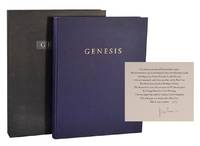
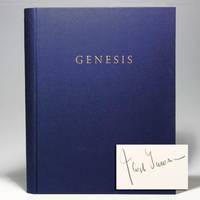
réf. 211191New York: Limited Editions Club 1989. First edition. Large folio hardcover. Number 184 of only 400 copies printed on handmade paper by Cartiere Enrio Magnani. Features eight stunning color silkscreen illustrations by Jacob Lawrence. A clean and tight very near fine copy in blue cloth boards and in a near fine black linen covered clamshell box lined with suede but that has some slight sunning and other very minor wear and with laid in newsletter for the Limited Editions Club. Signed by Lawrence on the colophon page. A very nice copy of one of the most sought after books from this long running Please note that this is a very heavy and oversized book and will require extra shipping. Limited Editions Club unknown books
réf. 020738New York: Limited Editions Club 1989. hardcover. Fine in a Fine suede-lined linen clamshell box with leather label. Jacob Lawrence. Large folio bound in full midnight blue Japanese cotton. Copy #160 of only 400 numbered copies SIGNED on the colophon by Jacob Lawrence who has contributed 8 ORIGINAL SILKSCREENS to this massive 16" x 22" and truly magnificent work one of the high points of the press. These silkscreens are identical except for not being individually signed to the very few portfolios of 8 prints currently selling for upwards of fifty thousand dollars. According to the publisher anywhere from 17 to 21 screens were required to bring out the coloring of each illustration making a total of 144 separate stencils all of which were destroyed after the strictly limited number of some 400 original sets of prints had been achieved on the fine Whatman paper specified by the Osiris Printing Studio in New York. The text was printed on a heavy handmade paper from Cartiere Enrico Magnani of Pescia Italy. Monthly Letter laid in. A gorgeous book. Limited Editions Club hardcover books
1772réf. 46993Mannheim: Churfurstl. Hof-und Academie-Buchdruckerey 1772. Rare Account of Lower California by a German Jesuit First printing of this rare and important account of Lower California by the German Jesuit Jacob Baegert. Baegert lived in Baja California for seventeen years 1751-68 and spent most of his time at the Mission of San Luis Gonzaga leaving after the expulsion of the Jesuits in 1767. He provides some important details on the culture of the Indians of Baja California including the Pericues Guiacuras and Cochiemes. Part one is an overview of California its climate and products; part two describes the inhabitants; and the third part contains an account of the introduction of Christianity to California. Wagner states that the German Jesuits were especially dissatisfied toward the end of the Jesuit regime in California and Baegert's bitterness is evident in his book: ".it was a land full of ferocious beasts and even more ferocious Indians the soil was poor the water undrinkable and there was no fuel to be had." The fine and important map was made by fellow Jesuit Ferdinand Consak and is described by Streeter as "most helpful in giving the location of the many Jesuit missions in Lower California. It also shows the route along the west coast of Mexico followed by Baegert in going to California in 1751 and his route out in 1768 after the expulsion of the Jesuits." The top right corner of the territory present-day Arizona is labeled rather ominously "Los Apaches Barbari." The excellent plates which were apparently not issued with all copies depict male and female California Indians. A prime early account of Baja California with an important map and plates of the region. 163581pp. plus two engraved plates on one sheet and folding map. Small octavo. Modern half vellum and marbled boards spine gilt. A bit of light age toning an occasional light fox mark. Three small purple ink spots in lower portion of map. Near fine. HOWES B29 "b." HILL 46. COWAN p.27. SABIN 4363. BELL B5. STREETER SALE 2442. BARRETT 129. WAGNER SPANISH SOUTHWEST 157. WAGNER NORTHWEST COAST pp.154-155 item 631. MEADOWS BAJA CALIFORNIA 1. GRAFF 137. PILLING PROOF SHEETS 203. PALAU 358393. hardcover books
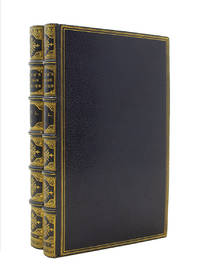
1823réf. 68858London: Published by C. Baldwyn 1823. CRUIKSHANK George. . GRIMM Wilhelm. ZAEHNSDORF binder. German Popular Stories. Translated from the Kinder und Haus Marchen Collected by M.M. Grimm from Oral Tradition. London: Published by C. Baldwyn 1823. Full description: GRIMM Jacob and Wilhelm. CRUIKSHANK George illustrator. German Popular Stories Translated from the Kinder und Haus Marchen Collected by M.M. Grimm from Oral Tradition. London: Published by C. Baldwyn 1823; James Robins & Co. London and Joseph Robins Junr. & Co. Dublin 1826. First English edition with the second issue title-page for Volume I with an umlaut over the "a" in "Märchen" in the title. "A few copies of the engraved title were printed off before the umlaut was added in 'Märchen'" Otherwise with the following first issue points: With a list of plates on page 218; the title to the tale of "The Travelling Musicians" on p. 9 has no additional words; in the "Notes" at the end of the volume the note referring to "Preface p. vii" comes last; and Baldwyn's advertisement at the end begins "On the First of November was published Price 5s. No. XII. Completing the Sixth Volume of The Retrospective Review." Two twelvemo volumes 7 3/8 x 4 3/8 inches; 190 x 110 mm. 2 xii 240 12 publisher's advertisements; 2 iv 256 1 1 printer's imprint 1 ads 1 blank 12 publisher's advertisements pp. Half-titles in each volume. With twenty-two etched plates by George Cruikshank including two vignette title-pages. The plates in Volume I are printed in brown and black in Volume II. Bound by F. Bedford in full navy crushed levant morocco. Covers triple-ruled in gilt. Spines tooled and lettered in gilt in compartments board edges ruled in gilt turn-ins decoratively tooled in gilt. Top edge gilt others uncut. Maroon coated endpapers. Leaves D2 and D3 in volumes I and B10 and page iv in Volume II with small closed tears to fore-edge margins invisibly repaired and not affecting text. Text is very clean and margins are large. The drab printed pictorial front and back wrappers for Volume I along with the spine are bound in to the end of volume I. The printed paper spine label from volume II is bound in to the end of that volume. Overall an about fine set. "The stories that we know today as Grimm's Fairy Tales were collected from oral tradition by the brothers Jacob and Wilhelm Grimm philologists and pioneer folklorists. They began to publish the results of their work in 1812 in Germany under the title Kinder- und Haus-Märchen. The tales first appeared in English in 1823 with the publication of the first volume of German Popular Stories. The translator was Edgar Taylor and the book's publication was an auspicious event for at least two reasons. It launched an era in which folklore and the fairy tale would stimulate writers to produce an increasingly imaginative literature for children. And German Popular Stories also put before the public the remarkable illustrations-perhaps his best work-of George Cruikshank. The illustrations evoke wonderfully the grotesque awesome yet matter-of-fact qualities of witch and goblin of Frog Prince Rapunzel Rumpelstiltskin and all the other characters that people the tales. As illustrations to these fairy tales Cruikshank's etchings have never been surpassed" Morgan Library Early Children's Books. Cohn 369. Morgan Library Early Children's Books 197. Ray The Illustrator and the Book in England 112. HBS 68858. $10000. Published by C. Baldwyn unknown books
réf. 140947127New York: The Limited Editions Club 1989. Limited Edition. Fine. Copy number 384 of a limited 400 copies signed by Jacob Lawrence. Bound in publisher's blue cloth stamped in gilt on the upper board. Housed in the publisher's navy blue coarse linen velvet lined solander case with title label stamped in gilt. Illustrated with eight original silkscreens by Jacob Lawrence printed on fine Whatman paper by Osiris Printing. 23.5 x 18" elephant folio. Light rubbing to covers else Fine in a Near Fine case with slight wear to corners trivial fading and trivial wear to cloth. A monumental fine press edition of Genesis enhanced with vivid wildly expressive illustrations by Harlem Renaissance artist Jacob Lawrence that express the narrative of the King James Version. The Limited Editions Club unknown books
réf. 324488New York: The Limited Editions Club 1989. Edition limited to 400 numbered copies signed by Lawrence. This is number 341. Illustrated with eight original silkscreens by Jacob Lawrence printed on fine Whatman paper by Osiris Printing. Original prospectus laid in. Folio. Original blue cloth clamshell box by Karl Folkes at the Spectrum Bindery and John Isakovics of Jovonis Bindery. Fine. Edition limited to 400 numbered copies signed by Lawrence. This is number 341. Illustrated with eight original silkscreens by Jacob Lawrence printed on fine Whatman paper by Osiris Printing. Original prospectus laid in. Folio. The prints illustrate and accompany the King James version of the book of Genesis. "The silk-screen stencils of Jacob Lawrence's paintings were expertly processed in New York City. Anywhere from 17 to 21 screens were required to bring out the coloring of each illustration making a total of 144 separate stencils all of which were destroyed after the strictly limited number of some 400 original sets of prints had been achieved on the fine Whatman paper. Jacob Lawrence one of the great figurative painters of the 20th century. rose to fame in 1941 after creating one of the most original and forceful series of narrative works in the history of American art - the 'Migration of the Negro.' He was the first African American artist to be represented by a major New York gallery and one of the first to have a solo exhibit at the Metropolitan Museum of Art" Regina Hackett. The Limited Editions Club unknown books
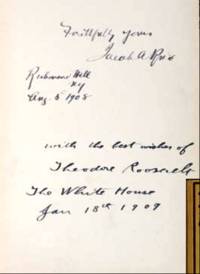
1904réf. 014375New York: The Outlook Company 1904. First Edition. Hardcover. Hinges cracked and neatly repaired. Still Near Fine. Second Printing in publisher's original decorated cloth. Illustrated with plates. This copy virtually unique as it is INSCRIBED and SIGNED by both the author and the subject as President. Riis's inscription is dated 5 August 1908. Roosevelt writes: "with the best wishes of/Theodore Roosevelt/The White House/Jan. 18th 1909." The addition of "The White House" by Roosevelt is notable as prior to his administration the residence was known as the "President's Palace" the "President's House" and the "Executive Mansion." It was Roosevelt who officially named it "The White House" in 1901. Of the many books signed by Roosevelt we have both handled and seen we have never before encountered one in which he has noted his official residence along with his signature. Jacob Riis among the most dedicated advocates for America's oppressed and downtrodden arrived in New York from his native Denmark at the age of 21 in 1870. A pioneer in photojournalism Riis photographed and wrote about the slums and tenements of a New York in the dawn of a new century. Riis came to Roosevelt's attention through his 1890 book HOW THE OTHER HALF LIVES. As Commissioner of the New York City Police Department Roosevelt accompanied Riis on his evening travels through the slums and witnessed firsthand the inhumane conditions endured by many of New York's inhabitants. In his 1901 book MAKING OF AN AMERICAN Riis wrote of Roosevelt: "It could not have been long after I wrote HOW THE OTHER HALF LIVES that he came to the Evening Sun office one day looking for me. I was out and he left his card merely writing on the back of it that he had read my book and had 'come to help.' That was all and it tells the whole story of the man. I loved him from the day I first saw him; nor ever in all the years that have passed has he failed of the promise made then. No one ever helped as he did. For two years we were brothers on Mulberry Street." Roosevelt in turn wrote of Riis after his death: "It is difficult for me to write of Jacob Riis only from the public standpoint. He was one of my truest and closest friends. I have ever prized the fact that once in speaking of me he said 'since I met him he has been my brother.' I have not only admired and respected him beyond measure but I have loved him dearly . and I mourn him as if he were one of my own family." The Outlook Company hardcover books
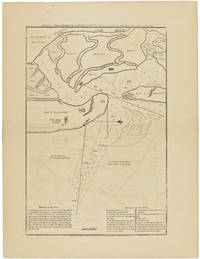
1776réf. 47955London: Sayer & Bennett 1776. An Important Revolutionary-Era Florida Map A highly important chart of the entrance into the St. Mary's River showing the soundings shoals and navigational details as well as Tiger Island Marteirs Islands part of Amelia and Cumberland Islands and the ruins of Fort William which was built by James Oglethorpe. It shows settlements and named plantations including that of the Countess Dowager of Egmont with the slave quarters labeled in the map key. The map also includes a key to the rivers buildings etc. indicated on the map and sailing directions into the harbor. This chart was originally published in the second part of The North-American Pilot. In 1776 shortly after news of American Independence reached Great Britain publishers Sayer & Bennett issued a second part to their previously published North-American Pilot to encompass the coastline of the American colonies. The maps issued here include famed cartographic productions by John Gascoigne Joshua Fisher Anthony Smith and others. Many maps include additions reflecting the early battles of the war such as the plan of Charlestown showing the attack on Fort Sullivan. This second part of The North-American Pilot was first published in 1776 and subsequently reissued with additional maps in 1777. Single sheet 29 x 22 inches. Some light toning and offsetting. Very good. SELLERS & VAN EE 1632. unknown books
1609réf. 38891Amsterdam: Cornille Nicolas 1609. A Pioneering Dutch Voyage to the Indies Second French edition following the first French edition of 1601 of this important voyages narrative describing the initial Dutch exploration and expansion to the East Indies a significant element in a global commercial enterprise which was to develop throughout the 17th century. Van Neck who represented the Verre Company commanded three ships which were part of the first successful Dutch trading voyage to the region. The other two ships were commanded by Wybrand Van Warwijck and Jacob Van Heemskerk. Van Neck's vessel became separated from the other two after rounding the Cape of Good Hope and the three did not reunite again until his arrival in Java in late December 1598. Unlike his Dutch predecessor Cornelis Houtman who three years earlier had seized the port of Bantam Van Neck dealt diplomatically with the natives. "Rather than rejecting the inflated prices asked by the local ruler he offered to pay over the odds in order to cement a lasting relationship.Van Neck's was the most profitable of the pre-VOC Dutch East India Company voyages. Despite the apparently high price paid for spices he netted a profit of 300 per cent on his overall costs. In 1601 fourteen fleets comprising sixty-five ships sailed for the East Indies but by that time competition between rival Dutch operators as well as with the Portuguese had inflated prices and none were as successful as Van Neck's first enterprise" - Howgego. While focused on activity in the East Indies EUROPEAN AMERICANA notes that the text includes references to Brazil and tobacco from the West Indies. The second part of this 1609 French edition which has its own titlepage is an eight-page appendix of words spoken in Java and Malay including word lists in French printed in roman type Malay in italic type and Javanese in civilité. Two parts. 228 leaves second part with its own titlepage. Folio. Modern three-quarter morocco and marbled boards spine gilt. A few leaves with worm tracks expertly repaired. Very good. EUROPEAN AMERICANA 609/93. TIELE 786. TIELE-MULLER 129. HOWGEGO N13. JCB 3II:64. hardcover books
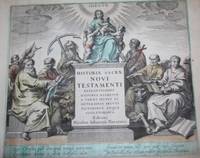
réf. 005220Amsterdam: Edente Nicolao Iohannis Piscatore. First Edition. Full Vellum. Ribbon ties. Very Good. One later title bearing the date of 1638; the only copy found on line bearing the primary title is dated 1674. 4to oblong 30 by 38 cm. Partially hand-colored title page 206 copper engraved plates not counting five later title pages and 101 manuscript leaves. In essence then this is two works -- a printed illustrated plate book and a highly scarce one at that and a manuscript commentary on the plates. The captions of the printed plates are in Latin while the manuscript text is in Dutch. The manuscript portion is beautiful with an abundance of ornate letter devices virtually one on each manuscript leaf and the writing besides being rendered generally with a calligraphic hand. These Dutch exegeses are written in a vernacular non-stilted manner. Not referenced in Brunet nor Landwehr. We could locate only one copy of the Visscher work on OCLC. It is at the Herzogin Anna Amalia Bibliothek-Klassik in Weimar Germany. It would appear that copy has the same number of plates as ours yet given the higgely piggely ordering of the plates which are often numbered within a series yet there are several instances of numbers missing we can not state with confidence that our printed matter is identical with that of the German library. In terms of the printed work contained herein it is arguable that this is in fact a collection of smaller works as there are other printed title pages. Contraverting this view is that it was not uncommon in the seventeenth century for something issued as a single work to have multiple title pages as was often the case with bibles. In the present work the other printed titles include "Memorabilium Novi Testamenti In Templo Gestorum Icones Tre Decim Elegentissimi AC Ornatissimi"; "Vita Passio et Resurrectio Jesu Christi . . . " ab Adriano Collart and this bearing a date of 1638; "Acta Apostolorum Elegantissimis Iconibus Summo Artificio Delineata a Duobus Praestantissimis Pictoribus Belgis . . . "; "XII. Fidei Apostolicae Symbola Iconibus Artificiosissimis"; manuscript title "Martelisatie der Apostolen"; and "Visiones Apocalyticae Exhibitae Johanni Apostolo in Insula Pathmo Elegentissimis Iconibus Expressae". There are also manuscript title pages among them "De Seven Wonderen der Weerelt" or "The Seven Wonders of the World" which is curiously followed by eight plates of eight different wonders. The bulk of the work as suggested both by the primary title and subsequent title pages covers scenes from the new testament but the first six plates depict the first six days of creation as recounted in Genesis. Notwithstanding the religious thrust of the plates many of them have an appeal that may excite even those not moved by pietistic imagery. More than anything many of the plates provide a window to the landscape society economy and culture of the seventeenth century Low Lands. A good number of the plates have fantastical imagery as well. Finally the plates represent a Baroque artistry tour de force. Rebacked. The older vellum of the boards is soiled and has some smallish chips and edge tears. Browning to the pages. A few tape repairs and some leaves with roughness along their edges. Edente Nicolao Iohannis Piscatore unknown books
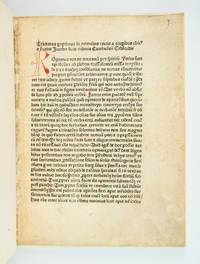
1477réf. ST21103Blaubeuren: Conrad Mancz ca. 1477. Second Edition in Latin. 278 x 205 mm. 11 x 8". 20 leaves. COMPLETE. Single column 32 lines in gothic type. Modern stiff vellum flat spine. Capitals struck in red nine hand-drawn two- to four-line initials in red. Front pastedown with engraved armorial bookplate of Boies Penrose II and with armorial morocco bookplate and paper library label of Eric Hyde Lord Sexton FSA. Goff J-22; BMC II 565; ISTC ij00022000. See Wetzer und Welte's Kirchenlexikon VI 1168. Rear cover with minor soiling first leaf tipped onto tab and with repairs along gutter first two leaves a bit soiled and foxed last two leaves with neat old repairs to lower fore-edge corner the text as a whole with slight softening because of exposure to damp. Not without obvious defects but still an incunable appealing for its content rarity and provenance as well as for its generous margins and unworn binding. One of just three copies in North America located by ISTC this is the extremely rare Blaubeuren edition of a work that offers guidance on dealing with ghostly apparitions a topic not often dealt with in incunabular printing. "On Souls Stripped of their Bodies or On the Apparitions and Receptacles of Souls" was written in the late 1450s in response to a plea for advice from a Franciscan monastery in Leipzig that was experiencing what appeared to be supernatural disturbances instigated by a ghost or demon. A Carthusian prior who also served as rector and professor of canon law at the University of Erfurt Jacobus de Clusa also known as Jacob of Jüterbogk or Jacob of Paradiso 1381-1465 was known for his numerous writings on moral theology. First issued in 1475 in German and in Latin the present response to the concerned Franciscans became the most widely read of his works. According to Wetzer & Welte Jacobus considers in the book "such apparitions to be quite possible particularly in places where the deceased had sinned as they may hope to be released from Purgatory sooner through the intercession of surviving relatives or friends. Consequently he offers advice to the latter on this matter. 'If souls ask for intercession' he says 'it should be granted but one must not give way to idle fantasies.' He identifies the most effective means of aid as: Masses almsgiving prayers fasting and good works. In this context he discusses the state of the soul after death in a clear and illuminating manner. 'Immediately after death' he states 'the particular judgment takes place at the very spot where death occurred; for God is everywhere.' He designates four places to which departed souls may go: a. the Empyrean Heaven; b. the underworld "infernus sub terra"; c. Limbo of the Infants "limbus puerorum"; d. Purgatory. In his view escaping Purgatory entirely is very difficult." This open discussion of what happens to the soul after death and the possibility of the existence of ghosts was unsurprisingly appealing to a wide audience particularly as it came from a respected theologian. ISTC indicates that ours is the second incunabular edition following the first printing in Esslingen ca. 1474--all early printings are now uncommon in commerce. This is one of 24 works issued between 1473 and 1478 by Conrad Mancz the only 15th century printer in Blaubeuren a small city near Ulm. Jacobus de Clusa was the author of three of these publications the other two being books of sermons. Our copy was owned by Philadelphia bibliophile Boies Penrose II 1902-76 before its acquisition by Eric Hyde Lord Sexton 1902-80 an avid collector of early printing who amassed a library of incunabula from 114 different printing locations. This volume sold at his 1981 sale at Christie's for $2200. ISTC identifies the Sexton copy as one of three in North America the others being at the Huntington and the Beinecke. Searches of RBH and ABSA find just one other copy of the Blaubeuren edition at auction since 1928 that one appearing at Doerling in 1981 where it fetched 6500 Deutsche marks $2879. Conrad Mancz unknown books
1644réf. 1238251644. Paris: Rolet le Duc 1644. Two books in one: 8vo 4 leaves 164 pp; 1 leaf Extraict du Privilege du Roy; 10 leaves 717 71 Appendix Table pp. Contemporary limp vellum with hand lettered label on backstrip. Very early illegible ownership inscription on the rear pastedown. Bookplate of A.R.A. Hobson on verso of first title page. § Second edition of Naudé's celebrated treatise on library management "reveuë corrigée & augmentée" by Naudé himself a work of the greatest importance in the history of book collecting and libraries complete with the 'Extraict du Privilege du Roi' an unsigned leaf following L2 p. 164 which is said to be missing from most copies. Together with Jacob's treatise the first comprehensive account of libraries ancient and modern and including some on which notices can be found nowhere else. The account of British libraries occupies 65 pages. Since the Hobson sale only one copy has sold at auction the Bergé copy of the Naudé only for 12000 euros. Of the Jacob Hill notes: As is usual when the two parts are bound together the title-page to the second part has been excised. Hobson also notes: "Lacks the inserted title to part II as often." Peignot 33: "la seconde edition est la meilleure". See Breslauer and Folter 53. Tumarkin 1191: "See Balsamo. where Naudé's humanist message is shown to bear the stamp of. Montaigne Charron Descartes and even Giordarno Bruno's Eroicifurori. unknown books
1968réf. 387331968. Jacob Francois 1920- ; Monod Jacques 1910-75; Lwoff Andre 1902-94; & Brenner Sydney 1927- . Group of 22 offprints mimeographs etc. on molecular biology and bacterial genetics together with 2 related papers by other authors. Various sizes. 1947-1968. Together in one volume cloth "Institut Pasteur" in gilt on the spine. Overall good to very good; see detailed condition descriptions below. From the library of G. G. and Elinor Meynell authors of Theory and Practice in Experimental Biology 1970 with their address label on the front endpaper and ownership signatures on several of the offprints. First / First Separate Editions. Jacob Monod and Lwoff all colleagues at the Institut Pasteur received the 1965 Nobel Prize in physiology / medicine for their discoveries concerning genetic control of enzyme and virus synthesis-discoveries that "opened up a new field of research that deserved to be called 'molecular biology'" Magill The Nobel Prize Winners: Physiology or Medicine II p. 921. Their work answered the fundamental question of how the hereditary information contained in DNA can be translated into the chemical processes that synthesize cellular proteins this question had been posed most succinctly and explicitly in Francis Crick's theoretical paper "On protein synthesis" 1957 which laid the groundwork for over a decade's worth of research in this area. Brenner another key figure in this field worked with Jacob and Matthew Meselson on providing experimental evidence for messenger RNA; he was awarded a share of the 2002 Nobel Prize for his discoveries concerning genetic regulation of organ development and programmed cell death. The collection we are offering here focuses largely on the Nobel Prize-winning work done by the Institut Pasteur group-Lwoff Jacob and Monod-in the 1950s and 1960s. The work can be divided into four sections: 1 lysogeny and bacterial conjugation 2 expression of the genetic material via messenger RNA 3 the regulation of the genetic activity of bacterial cells by operons 4 the organization of bacterial genetic material. In the following paragraphs we will attempt to highlight the more important papers in this remarkable collection; however all the papers here touch upon these central questions of molecular biology. Lysogeny defined as the hereditary ability to produce the bacteriophage virus is a peculiar type of infection in which the phage becomes part of the genetic material of a bacterial cell; in this non-infective form prophage it can then be inherited by succeeding generations of cells becoming virulent only when some environmental stimulus causes the bacterium to produce and release phage. "Lysogeny brought a model for the interrelation between a virus and a cell. And also a model for the possible mode of action of carcinogenic agents which could disturb something in this balance" Judson p. 368. Lwoff studied this phenomenon intensively in the late 1940s and early 1950s successfully demonstrating the genetic nature of lysogeny which was disputed by several scientists including Delbruck and discovering how it is induced. In 1953 he published an important review of the subject "Lysogeny" Bacteriological Review 17; see no. 2 below. Lysogeny was also studied by Jacob and Elie Wollman whose paper "Induction of phage development in lysogenic bacteria" CSH Symposia on Quant. Biol. 18 1953; see no. 5 below summarizes what had been learned about lysogeny as of that date. Lwoff's work on lysogeny inspired Jacob and Wollman to investigate the phenomenon of bacterial conjugation the transfer of genetic information from a male donor bacterium to a female recipient resulting in genetic recombination to see if they could discover where in the bacterium's genetic material the prophage was located. In 1955 working with a highly recombinant strain of E. coli K12 discovered by William Hayes Jacob and Wollman performed what came to be known as their "coitus interruptus" experiment in which they used a Waring blender to interrupt the mating bacteria at various stages of their conjugation. They found that the donor cell's genetic characteristics were not transferred all at once but rather sequentially over time-a discovery of great importance. "Wollman and Jacob had stumbled upon a way to measure off the genes on the bacterial chromosome as directly and physically as a child squeezes toothpaste onto a brush or a carpenter unrolls a coiled steel tape measure. As they saw instantly and reported in a note in mid-June 1955 in the weekly Comptes rendus of the Academie des Sciences "Sur le mecanisme du transfert de materiel genetique au cours de la recombinaison chez E. coli K12"; see no. 6 below they had the means to make a genetic map of biochemical characteristics expressed in units of time" Judson p. 385. In 1956 Wollman and Jacob published the first albeit rudimentary timed map of the K12 strain of E. coli in a paper published in France. This map was printed again in their English-language paper "Conjugation and genetic recombination in E. coli K-12" CSH Symposia on Quant. Biol. 21 1956; see no. 8 below which also contained the first publication of Thomas Anderson's famous electron micrograph of two conjugated bacteria. In 1958 Jacob delivered his paper "Transfer and expression of genetic information in E. coli K12" see no. 9 below at a symposium in Brussels; this paper together with one given by Jacob's sometime colleague Arthur Pardee "ranged over the whole matter of transfer of genes between bacteria and the regulation of their expression" Judson p. 400. Jacob and Wollman had originally represented the hereditary material in linear form while stating that the genetic map could be formally represented as a circle. In 1963 at a Cold Spring Harbor conference the researcher J. Cairns provided physical evidence that the E. coli chromosome was circular; at this same conference Jacob Brenner and co-author Francois Cuzin presented their paper "On the regulation of DNA replication in bacteria" CSH Symposia on Quant. Biol. 28; see no. 16 below containing their "replicon model of chromosome replication in bacteria a model that almost required circularity of chromosomal and F factor DNA" Brock p. 103. Experimental proof of the existence of messenger RNA the substance responsible for coding protein synthesis was announced in Brenner Jacob and Meselson's landmark paper "An unstable intermediate carrying information from genes to ribosomes for protein synthesis" Nature 190 1961; see no. 1 below. The theoretical groundwork for messenger RNA had been laid in Crick's "On protein synthesis" 1957; demonstration of the substance's existence had been foreshadowed by Volkin and Astrachan's discovery of a high-turnover unstable RNA distinct from the ribosomal and transfer varieties 1956 and by the famous "PaJaMo" experiment demonstrating the negative control mechanism of enzyme induction 1958. However it was not until the spring of 1960 that these previous findings were combined by Brenner Jacob and Francis Crick into a biological model setting forth the exact means of communication between gene and cytoplasm while eliminating the various problems associated with earlier ribosome-based theories of gene expression. As Brock puts it the ribosome was now seen as "simply a nonspecific translation machine something like a computer whose behavior depended on what software it contained" Brock p. 306. Working with Matthew Meselson who had developed experimental techniques for tagging and separating ribosomes Brenner and Jacob performed the critical experiment described in their paper which provided direct evidence for the existence of an unstable rapidly turning over messenger RNA. The concept of the operon-a group of adjacent genes functioning as a unit under the control of another gene the operator gene-developed between 1958 and 1960 on the basis of work done by Monod and Jacob who were investigating the repressor model of gene regulation. Jacob developed the idea that gene regulation was based on a repression system that operated like an on-off switch and that "genetic units of a higher order existed . . . that contained several genes subject to unitary expression. . . . On the basis of these ideas and observations Jacob and Monod developed the concept of two kinds of genes structural which coded for the synthesis of proteins and regulatory which did not" Brock p. 300. In October 1959 Jacob and Monod published the theoretical basis for the operon in "Genes de structure et genes de regulation dans la biosynthese des proteines" C. r. Acad. Sci. 249; see no. 11 below. Their paper "established the sharp distinction between the familiar genes that determined protein structures and the new class of genes that regulated. It even looked to them then as though the product of the regulatory gene were not a protein by RNA. But the fact to be underlined they said was that in every known case when several structural genes had their expression controlled by the same regulatory gene-'that is to say in all probability by a unique repressor'-the structural genes were grouped tightly together. . . . The best fit to the evidence was that the group of genes had among them a single element: the operator target of the repressor" Judson p. 410. The Jacob/Monod operon model of gene expression was further explored in their 1961 paper "On the regulation of gene activity CSH Symposia on Quant. Biol. 26; see no. 14 below which presented a more detailed examination of the mechanics of protein synthesis. For further information see Judson The Eighth Day of Creation 2nd ed. and Brock The Emergence of Bacterial Genetics; specific references are given below. 1. Brenner Sydney; Jacob Francois; & Meselson Matthew. An unstable intermediate carrying information from genes to ribosomes for protein synthesis. Offprint from Nature 190 May 13 1961. 576-581pp. Diagrams. Without wrappers as issued. Light toning. Ownership signature of E. W. Meynell on the first page. Garrson-Morton 256.10. Brock ch. 10.12. Judson pp. 414-27. 2. Lwoff Andre. Lysogeny. Offprint from Bacteriological Review 17 1953. 269-337pp. Without wrappers. Small stamp on first page. Brock ch. 7.4. 3. Monod Jacques. Inhibition de l'adaptation enzymatique chez une bacterie E. coli infectee par un bacteriophage. Offprint from C. r. Acad. Sci. 224 1947. 2 2 blankpp. Without wrappers. Light browning creased horizontally with small tear along crease. Ownership stamp and ms. annotations of A. A. Miles. 4. Lwoff & Siminovitch Louis. Induction de la lyse d'une bacterie lysogene sans production de bactÈrophage. Offprint from C. r. Acad. Sci. 233 1951. 3pp. Fore-edge frayed marginal tear affecting a few words. A. A. Miles's signature. 5. Jacob Francois & Wollman Elie. Induction of phage development in lysogenic bacteria. Offprint from CSH Symposia on Quant. Biol. 18 1953. 101-121pp. Without wrappers. Light soiling a few annotations. Owner's name on first page. Judson p. 382. 6. Wollman & Jacob. Sur le mecanisme du transfert de materiel genetique au cours de la recombinaison chez E. coli K12. Offprint from C. r. Acad. Sci. 240 1955. 3pp. Without wrappers. Creased horizontally light toning. Ownership signature of Elinor Meynell. Brock ch. 5.7. 7. Jacob; Alfoldi Lajos; & Wollman Elie. Zygose letale dans des croisements entre souches colicinogenes et non colicinogËnes d'E. coli. Offprint from C. r. Acad. Sci. 244 1957. 3pp. Without wrappers. Small marginal tears. Elinor Meynell signature. 8. Wollman; Jacob & Hayes W. Conjugation and genetic recombination in E. coli K-12. Offprint from CSH Symposia on Quant. Biol. 21 1956. 141-162pp. Without wrappers. Brock ch. 5.11. 9. Jacob. Transfer and expression of genetic information in E. coli K12. Manuscript for the Symposium of the Society for Cell Biology Brussels 1958. 29 3pp. Dittoed table. Mimeographed. Without wrappers. Edges a bit frayed. E. Meynell signature. Judson p. 400. 10. Jacob & Fuerst Clarence R. The mechanism of lysis by phage studied with defective lysogenic bacteria. Offprint from J. Gen. Microbiol. 18 1958. 518-526pp. Without wrappers. E. Meynell signature. 11. Jacob & Monod. Genes de structure et genes de regulation dans la biosynthese des proteines. Offprint from C. r. Acad. Sci. 249 1959. 3pp. Without wrappers. Creased horizontally. E. Meynell signature. Brock ch. 10.10. Judson p. 410. 12. Changeux Jean-Pierre. Sur l'expression biochimique de determinants genetiques d'E. coli introduits chez Salmonella typhimurium. Offprint from C. r. Acad. Sci. 250 1960. 3pp. Creased horizontally. Meynell signature. 13. Jacob. Comments. Offprint from Cancer Research 20 1960. 695-697pp. Without wrappers. 14. Jacob & Monod. On the regulation of gene activity. Offprint from CSH Symposia on Quant. Biol. 26 1961. 193-211pp. Without wrappers. Meynell signature. Brock ch. 10.13. 15. Jacob & Monod. Elements of regulatory circuits in bacteria. Unesco Symposium on Biological Organization. Paris 1962. Mimeographed. 27pp. plus tables and figures. Without wrappers. Light browning. 16. Jacob; Brenner Sydney; & Cuzin Francois. On the regulation of DNA replication in bacteria. Offprint from CSH Symposia on Quant. Biol. 28 1963. 329-348pp. Without wrappers. Meynell signature. Brock ch. 5.11. 17. Jacob & Ryter Antoinette. Etude au microscope Èlectronique des relations entre mÈsosomes et noyaux chez Bacillus subtilis. Offprint from C. r. Acad. Sci. 257 1963. 4pp. Plate. Without wrappers. Meynell signature. 18. Lennox Edwin S. ; Novick Aaron; & Jacob. Relation between repression level and rate of enzyme synthesis. Offprint from Colloques Internationaux du Centre Nat. de la Recherche Scientifique. No. 124. Mecanismes de regulation des activites cellulaires chez les microorganisms 1965. 209-219pp. Orig. wrappers. Meynell signature. 19. Sebald Madeleine & Schaeffer Pierre. Toxinogenese et sporulation chez Clostridium histolyticum. Offprint from C. r. Acad. Sci. 260 1965. 3pp. Without wrappers. 20. Jacob & Ryter. Segregation des noyaux chez Bacillus subtilis au cours de la germination des spores. Offprint from C. r. Acad. Sci. 263 1966. 4pp. Plate. Without wrappers. Meynell signature. 21. Jacob & Ryter. Segregation des noyaux pendant la croissance et la germination de B. subtilis. Offprint from C. r. Acad. Sci. 264 1967. 3pp. Plate. Without wrappers. 22. Jacob. Genetics of the bacterial cell. Offprint from Science 152 1966. 9pp. Orig. printed self-wrappers. Nobel address. Meynell signature. 23. Jacob; Pereira da Silva Luiz; & Eisen Harvey. Sur la rÈplication du bacteriophage l. Offprint from C. r. Acad. Sci. 266 1968. 3pp. Without wrappers. 24. Ryter A.; Hirota Y.; & Jacob. DNA-Membrane complex and nuclear segregation in bacteria. Offprint from CSH Symposia on Quant. Biol. 33 1968. 669-676pp. . unknown books
1812réf. 283558Berlin: In der Realschulbuchhandlung 1812. First. hardcover. good. 2 384 lx pages. Short thick 12mo bound in 20th century gray boards with paper spine label. The text block has extensive expert repairs at margins and Japanese tissue overlays to re-enforce the numerous torn and chipped pages; approximately 12 leaves have actual loss of text although some pages are missing lacking the entire 23 page prologue and last 4 pages of text which contain half of tale 84 and all of tales 85-86 and the errata leaf. Some occasional staining and light penciling. Berlin: In der Realschulbuchhandlung 1812. First edition. The first volume only others followed in 1815 & 1822 of the first edition of Grimm's Fairy Tales. A flawed copy but extraordinarily scarce nonetheless and containing classics such as Hansel & Gretel Rapunzel Little Red Riding Hood and Snow White. In der Realschulbuchhandlung unknown books
1709réf. 32891709. Woodcut device on title two folding printed tables & one folding woodcut plate. Diagrams in the text. 2 p.l. 306 35 1 pp. 4to cont. speckled sheep upper joint with short crack bookplate on blank portion of title patched minor foxing spine gilt red leather lettering piece on spine. Basel: impensis Thurnisiorum Fratrum 1713. bound with: BERNOULLI Nicolaus I. Dissertatio Inauguralis Mathematico-Juridica. De Usu Artis Conjectandi in Jure. 56 pp. 4to. Basel: J.C. Mechel 1709. A most attractive sammelband. I. First edition of “the first systematic attempt to place the theory of probability on a firm basis and is still the foundation of much modern practice in all fields where probability is concerned — insurance statistics and mathematical heredity tables.”–Printing & the Mind of Man 179. II. First edition. Nicolaus I 1687-1759 nephew of Jacob I and Johann I and editor of the Ars Conjectandi obtained the degree of doctor of jurisprudence with this dissertation on the application of the calculus of probability to questions of law. I believe this to be an important contribution to probability. Very good copies. ⧠I. Dibner Heralds of Science 110. D.S.B. II pp. 46-51. Evans Epochal Achievements 8. Horblit 12. Sparrow Milestones of Science 21. II. D.S.B. II pp. 56-57. Keynes “Bibliography” in A Treatise on Probability p. 435. unknown books
1609réf. 51636Amsterdam: Cornille Nicolas 1609-1610. Three of the Most Important Early Dutch Voyages to the East Three highly important Dutch voyages all in their second French editions and bound together as issued in 1610. These three voyages represent the initial Dutch exploration and expansion to the East Indies a significant element in a global commercial enterprise which was to develop throughout the 17th century. The foundational accounts in the present volume originally issued together by Amsterdam printer Cornille Nicolas include: 1 Lodewijcksz Willem: PREMIER LIVRE DE L'HISTOIRE DE LA NAVIGATION AUX INDES ORIENTALES PAR LES HOLLANDOIS. Amsterdam: Cornille Nicolas 1609. 53 leaves. Titlepage with engraved map forty-five in-text engravings including three maps seventeen in-text woodcut illustrations and one plate on separate leaf following printed text. Moderate soiling on titlepage slight edge wear to first few leaves. Second French edition following the first French edition of 1598. Lodewijcksz gives an account of the first Dutch expedition to the East Indies under Cornelis Houtman from 1595 to 1597. The information collected by Houtman on the spice trade convinced the Dutch they could compete with Portugal's monopoly in the East Indies and his narrative served to initiate the explosion of Dutch trading at the turn of the century. "Like the English Houtman's men suffered so severely from scurvy that they had to put in at the Cape of Good Hope and at Antongil Bay in Madagascar to recuperate. But they then sailed straight across the Indian Ocean to the Straits of Sunda and dropped anchor at Bantam in Java without the loss of a ship. At this port the center of the Javanese pepper trade a long time was spent. Both natives and Portuguese showed considerable hostility and Houtman and some of his men were imprisoned. However the Dutch succeeded in making a commercial treaty and departed with a good cargo. They proceeded eastward to Bali and then returned along the south coast of Java thereby acquiring a more correct impression of the width of the island than had prevailed and laid the ghost of Java's being the northern part of the Southern Continent.the Dutch skipper had enough to show for his venture to inspire the merchants of Amsterdam with a determination to exploit the trade" - Penrose. 2 Neck Jacob Cornelissoon van: LE SECOND LIVRE IOURNAL OU COMPTOIR CONTENANT LE VRAY DISCOURS ET NARRATION HISTORIQUE. Amsterdam: Cornille Nicolas 1609. Two parts. 224 leaves. Titlepages with engraved illustrations twenty-two in-text engravings including one map two in-text woodcuts. Leaves D2 and D3 lacking provided in facsimile. Second French edition following the first French edition of 1601. Van Neck who represented the Verre Company commanded three ships which were part of the first successful Dutch trading voyage to the region. The other two ships were commanded by Wybrand Van Warwijck and Jacob Van Heemskerk. Van Neck's vessel became separated from the other two after rounding the Cape of Good Hope and the three did not reunite again until his arrival in Java in late December 1598. Unlike his Dutch predecessor Cornelis Houtman who three years earlier had seized the port of Bantam Van Neck dealt diplomatically with the natives. "Rather than rejecting the inflated prices asked by the local ruler he offered to pay over the odds in order to cement a lasting relationship.Van Neck's was the most profitable of the pre-VOC Dutch East India Company voyages. Despite the apparently high price paid for spices he netted a profit of 300 per cent on his overall costs. In 1601 fourteen fleets comprising sixty-five ships sailed for the East Indies but by that time competition between rival Dutch operators as well as with the Portuguese had inflated prices and none were as successful as Van Neck's first enterprise" - Howgego. While focused on activity in the East Indies EUROPEAN AMERICANA notes the text includes references to Brazil and tobacco from the West Indies. The second part of this 1609 French edition an eight-page appendix of words spoken in Java and Malay includes word lists in French printed in roman type Malay in italic type and Javanese in civilité. 3 Noort Olivier van: DESCRIPTION DU PENIBLE VOYAGE FAIT ENTOUR DE L'UNIVERS OV GLOBE TERRESTRE. PAR SR. OLIVIER DU NORT D'UTRECHT GENERAL DE QUATRE NAVIRES ASSAVOIR. Amsterdam: Widow of Cornille Nicolas 1610. 2611pp. Engraved titlepage vignette. Twenty-five in-text engravings including three maps. Second French edition following the first French printing of 1602. Van Noort a former innkeeper in Rotterdam sponsored by a group of Dutch merchants accomplished the fourth circumnavigation of the globe after Magellan Drake and Cavendish. He was the first Dutch explorer to do so making the trip from 1598 to 1601. The voyage was particularly arduous. Half the crew mutinied his ships were constantly harassed and most of those that didn't mutiny perished from disease. He returned to Holland "with only one battered ship and eight crew left although some accounts suggest that forty-five crew survived. His voyage contributed little to the geographical knowledge of the time but had some effect in opening the way to the establishment of the Dutch in the East Indies.Van Noort's achievement however captured the imagination of his countrymen and the published accounts sold well the first appearing only eighteen days after his return. A more complete edition appeared later that year followed by two amended editions in 1602" Howgego. Three of the most important pioneering French voyages to the Far East bound together as issued. Three volumes bound in one. Described in greater detail below. Folio. Contemporary vellum over boards rebacked with original spine preserved. Bookplate on front pastedown. Light soiling and repairs to titlepages; minor soiling otherwise. Very good. Lodewijcksz: EUROPEAN AMERICANA 609/71. TIELE-MULLER 115. JCB 3II:63. HOWGEGO H105 Houtman. Penrose TRAVEL AND DISCOVERY IN THE RENAISSANCE 1952 p.204. Neck: EUROPEAN AMERICANA 609/93. TIELE 786. TIELE-MULLER 129. HOWGEGO N13. Noort: EUROPEAN AMERICANA 610/79. SABIN 55438. BORBA DE MORAES p.617. W. Klooster THE DUTCH IN THE AMERICAS 1600-1800 p.12. TIELE 806. JCB 3II:71. HOWGEGO N37. hardcover books
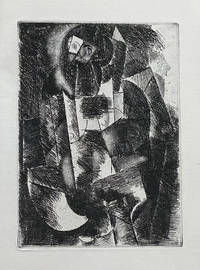
1914réf. N - 2024 - 115Max Jacob. Illustrated with three cubist etchings by Picasso in full page from 1913. Max Jacob three-act play reflect the author mystic quest and his research into the cabala and astrology Picasso completed the illustrations during the winter of 1913/14 making three etchings and dry points one for each act to which he gave the titles: Femme Nue plate 1 Nature Morte au Crâne plate 2 and Femme plate 3. This book is second illustrated book published by Daniel-Henry Kahnweiler created in collaboration with Picasso. Signed by the Picasso and Jacob in the justification page and marked as number "40" of 85 copies on "Holland van Gelder" total edition 106 copies. The book is complete in the original glassine light offsetting is present in the text page near the first illustration. Ref Cramer #3. Very good conditions. Daniel- Henry Kahnweiler, Editeur hardcover books
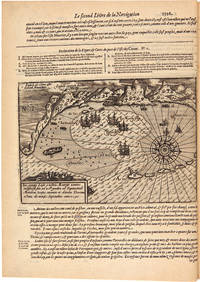
1619réf. 54737Leiden: Nicolaus a Geelkercken 1619. A New Passage to the Pacific and State-Sponsored Piracy Scarce first Latin edition of one of the bestsellers of illustrated 17th-century travel literature which reports Le Maire's critical DISCOVERY of TIERRA del FUEGO an alternate route to the Pacific and also recounts the Pacific pillaging of the veteran East Indies sailor-turned-pirate Joris van Spilbergen. In addition the work includes valuable early information on ports along the Pacific coast of the Americas and is also of interest for the 17th-century Dutch presence in Brazil. Rich in ethnographic detail the numerous illustrations in the SPECULUM ORIENTALIS. include images of oversized penguins llamas and an Andean condor with a nine-foot wing span. Naval battles beleaguered Spanish settlements and newly discovered islands are also depicted in detail making this a valuable compendium of adventure on the high seas during the Age of Discovery. In 1614 the VOC commissioned Spilbergen to sail to the Moluccas with nearly 700 men. Despite the ostensible commercial nature of his expedition Spilbergen's six vessels were heavily armed anticipating encounters with silver-laden Spanish vessels. Spilbergen spent two years calling at various Spanish and Portuguese ports along both coasts of South America failing to capture any great amounts of silver or silk from Manila but burning several settlements and emerging triumphant from a naval skirmish just south of Lima. By contrast Le Maire's less mercenary expedition resulted in important discoveries; his exploration of Tierra del Fuego and the Tuamotou Archipelago called into doubt the existence of a massive southern continent providing a catalyst for Tasman's discovery of New Zealand and Australia. The two expeditions crossed paths in the Dutch East Indies in 1616. Spilbergen's fleet of six ships was fitted out and armed to combat the Spanish colonies attacking Spanish settlements and shipping along their route. They sailed to Brazil then through the Straits of Magellan and north along the coast of America as far as California. After sailing east to the Philippines they went on to Batavia in search of a Spanish fleet reportedly planning to attack Dutch settlements in the Moluccas but they never found a fleet. On his arrival at Batavia Spilbergen encountered Le Maire and Schouten whose voyage for the newly-formed Compagnie Australe had embarked in 1615 a year after Spilbergen's. Le Maire and Schouten traveled via the newly-discovered Le Maire Strait but on their arrival at Batavia they were arrested for breaching the monopoly granted to the Dutch East India Company of the Strait of Magellan. Spilbergen took Le Maire Schouten and their crews on board and escorted them back to the Netherlands virtually as prisoners. Le Maire grew ill and died en route. This work is remarkable as an early document on Dutch navigation to the Brazilian coasts. Its great value lies in Spilbergen's detailed account of their stay in the Ilha Grande from October 1614 to January 1615 and in São Vicente in 1615. Plate 2 depicting the disordered landing of Dutch vessels in São Vicente clearly documents the way of life of the indigenous peoples under Portuguese occupancy. Colonial religious structures appear alongside typical Native American hammocks and traditional Brazilian costumes and methods of animal husbandry are evident. This illustration with its explanatory text is particularly important as 17th-century ethnographic documents about the future São Paulo are very rare. One of the large folding maps remains important for illustrating Le Maire and Schouten's route across the Pacific. Other maps show the Straits of Magellan and Manila the Moluccas and various ports on the Pacific coast of America. The SPECULUM ORIENTALIS. was originally published in Dutch the same year as this Latin edition with identical plates. Translations in other languages followed rapidly: German in 1620 Frankfurt and French in 1621 Amsterdam. The work was not translated into English until the 1906 Hakluyt Society edition with the title The East and West Indian Mirror. Oblong quarto. Contemporary Dutch vellum. Old stains and soiling to boards manuscript "33" in ink on spine edges rubbed boards slightly bowed. Modern bookplate on front pastedown. Minor toning and foxing tiny reinforcement at mounting stub on verso of each large folding map some offsetting. Overall very good. In a blue cloth box gilt leather label. LANDWEHR VOC 361 mistaking the first edition of the Dutch: it is 1619 as his excellent collation obviously attests not 1617. BORBA DE MORAES II:276. HOWGEGO S159. W. Klooster THE DUTCH IN THE AMERICAS 1600-1800 cat. 24 p.12. BLAIR-ROBERTSON XV pp.328-30; illustrated XVIII p.224. LeCLERC 1994. SABIN 2288. RODRIGUEZ 2288. EUROPEAN AMERICANA 619/133. J. de VilliersThe East and West Indian Mirror Hakluyt Society 1906. JCB II:143. Lach ASIA IN THE MAKING OF EUROPE III pp.445-48. Schilder AUSTRALIA UNVEILED Ch. V pp.32-37. TIELE 66. hardcover books
1990réf. 324836New York: The Limited Editions Club 1990. Number 27 of 50 copies. 8 large colour silkscreen studies Signed by the Artist. 2 text leaves. All loose as issued. Printed by George Drexel Osiris Screen Printing New York on Whatman Print Matte paper. Folio 25 x 19 inches. Laid into black cloth clamshell dropbox with red morocco label inset on upper cover. Fine. Number 27 of 50 copies. 8 large colour silkscreen studies Signed by the Artist. 2 text leaves. All loose as issued. Printed by George Drexel Osiris Screen Printing New York on Whatman Print Matte paper. Folio 25 x 19 inches. The prints illustrate the King James version of the Book of Genesis. Bearing captions lithographed from mylars handwritten by the artist this "exhibition portfolio" format is much larger than the regular edition of Eight Studies for the Book of Genesis. Each print signed and inscribed "HC" in pencil lower margin. Printed by Stone Press Editions Seattle with the blind stamp lower right. Published by the Limited Editions Club New York. With the title and colophon pages. Superb clean impressions with bright and vibrant colors. Nesbett L90-2 The Limited Editions Club unknown books
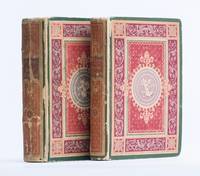
1837réf. 3089Göttingen: Dieterichsche Buchhandlung 1837. 1837 first enlarged "Grosse Ausgabe. original boards. Very Good. AN EXTRAORDINARY PRESENTATION COPY INSCRIBED BY WILHELM GRIMM TO ONE OF THE WOMEN WHO CONTRIBUTED TALES. A remarkable survival connecting the published Grimm canon directly to one of the women who helped create it this copy bears both Wilhelm Grimm's presentation inscription to Amalie Hassenpflug and her own ownership signature: her stories entered the collection without her name while here in her own hand it survives. The copy thus materially preserves the collaborative and often obscured role of women behind one of the most influential works in the history of children's literature. Inscribed volumes are exceedingly rare: From the collection of Justin G. Schiller widely recognized as the leading authority on rare children's books. Schiller has noted that in his fifty-plus years active in the rare book world this was only the second time he had handled an inscribed volume of Grimm's tales both of which were inscribed to Amalie Hassenpflug. This copy has the added benefit of having Amalie's ownership inscription as well which the other inscribed copy did not have. The Inscription and recipient: Wilhelm Grimm inscribed the first volume "Dem lieben Malchen Hassenpflug / von seinem Treuen Freunde / Wilhelm Grimm. / Göttingen 23 October 1837. " "dear Malchen Hassenpflug from her true friend": an association that reaches directly into the origins of one of the foundational works of world literature. Amalie Hassenpflug 1800-1871 and her sisters Marie and Jeanette belonged to the circle of women who supplied the Grimms with stories that entered the Kinder- und Hausmärchen and Amalie herself is credited with contributing approximately ten tales. Their role illuminates a larger story about women authorship and the construction of the literary canon: the familiar image of the brothers gathering ancient stories directly from anonymous peasants obscures the collaborative networks through which many tales actually reached them. Later scholarship has recovered just how thoroughly the identities of these women could disappear from the record. The mysterious "Alte Marie" "Old Marie" long believed an elderly servant was eventually identified as Amalie's sister Marie Hassenpflug now recognized as the source of more than twenty tales including versions of Little Red Riding Hood and Sleeping Beauty. Wilhelm Grimm who played the principal editorial role in shaping these narratives presented this copy to one of the storytellers who supplied his material: a contributor whose own name appears nowhere in the printed attribution but who would place it in this copy herself. With Amalie Hassenpflug's ownership signature; her name in a book she helped create: Amalie Hassenpflug's ownership signature gives this copy a further dimension. Although credited by later scholarship with contributing approximately ten tales to the Kinder- und Hausmärchen she is nowhere named as a contributor in the published work. Here in her own copy her name appears in her own hand. Together with Wilhelm Grimm's presentation inscription the signature makes unusually tangible the collaborative origins of the collection: the printed book names the Grimms; this copy also preserves the name of one of the women whose storytelling helped create it. The Edition: The 1837 edition the first "Grosse Ausgabe" marks an important stage in the evolution of the Kinder- und Hausmärchen. Newly enlarged to 167 fairy tales and nine Kinderlegenden it was the first edition designated the "Grosse Ausgabe" and the first published by Dieterich in Göttingen rather than Reimer in Berlin distinguishing the complete collection from the smaller selection intended for children. Wilhelm presented the volumes on 23 October 1837 during the Göttingen Seven crisis that culminated in the dismissal of Jacob and Wilhelm from the university that December. Wilhelm's inscription is in ink on the pastedown of volume 1; Amalie's ownership signature is in ink of the first blank of volume 2. Both signatures are exceptionally strong. -------- Kinder- und Hausmärchen Children's and Household Tales. Göttingen: Dieterichsche Buchhandlung 1837 Edition: Third edition overall; first enlarged "Grosse Ausgabe". Two volumes small octavo original publisher's decorative colored lithographic paper over boards by H. Asmus. Each volume with steel-engraved frontispiece designed by Ludwig Emil Grimm and a decorative half-title lithographed in color by H. Delius. Spines faded scuffing and wear to extremities. Dieterichsche Buchhandlung unknown books