54 699 résultats
réf. 25839Oak Knoll Pr. Hardcover. Very Good. Oak Knoll Pr. Hardcover. Very Good. Oak Knoll Pr hardcover
1775réf. 1087571775. London: T. Payne 1775/1776. 3 vols 4to xx 516; 2 vi 535; viii 602 pp with 31 engravings on the 30 listed plates. A very good and attractive set in clean condition bound in original calf with gilt decorated rules to covers and gilt decoration to spine panels with six compartments and red and black labels. § Second edition of Vol. 1 and 2 1775 and only edition of Vol. 3 1796. The three maps are lacking. All other illustrations are present in good condition but including usual offsetting and a few showing minor mottling and browning. Plate XI stated in the List of Plates to be a Bartolozzi engraved plate designed by Cypriani from an original onyx Camaio by the Greek artist Tryphon is the correct plate although in fact it bears no plate No. and the imprint "G. B. Cipriani Del I.K. Sherwin Sculp." Although Bartolozzi normally signs his studio's plates J. K. Sherwin was an apprentice of Bartolozzi's and presumably was allowed to sign his engraving in this instance. The plate's design matches "The Marriage of Eros and Psyche" from Tryphon's Camaio in the Duke of Marlborough's Collection see e.g Wikipaedia: "The Marlborough Gem". Bentley BB 439. Essick CBI p. 117 entry C. unknown
1775réf. 1087571775. London: T. Payne 1775/1776. 3 vols 4to xx 516; 2 vi 535; viii 602 pp with 31 engravings on the 30 listed plates. A very good and attractive set in clean condition bound in original calf with gilt decorated rules to covers and gilt decoration to spine panels with six compartments and red and black labels. § Second edition of Vol. 1 and 2 1775 and only edition of Vol. 3 1796. The three maps are lacking. All other illustrations are present in good condition but including usual offsetting and a few showing minor mottling and browning. Plate XI stated in the List of Plates to be a Bartolozzi engraved plate designed by Cypriani from an original onyx Camaio by the Greek artist Tryphon is the correct plate although in fact it bears no plate No. and the imprint "G. B. Cipriani Del I.K. Sherwin Sculp." Although Bartolozzi normally signs his studio's plates J. K. Sherwin was an apprentice of Bartolozzi's and presumably was allowed to sign his engraving in this instance. The plate's design matches "The Marriage of Eros and Psyche" from Tryphon's Camaio in the Duke of Marlborough's Collection see e.g Wikipaedia: "The Marlborough Gem". Bentley BB 439. Essick CBI p. 117 entry C. unknown books
réf. 51-4602Amsterdam: Evert Cloppenburgh 1643. Small thick 4to. 18.5 x 24 cm. Contemporary stiff vellum. Full page portrait of Cats after Michiel Jansz van Mierevelt with tear without loss. Numerous half page engravings and etchings; few pages with wormholes. 2 manuscript leaves 66 772 10 136pp.OCLC Number: 922084251.Fort in-4° vélin rigide du temps. Reliure manipulée. Galeries marginales de ver en fin d'ouvrage.Poésies de Jacob Cats illustrées de nombreux cuivres à mi-page.La première édition est de Dordrecht 1634.Expertise by Expertise by Jean-Paul VEYSSIERE libraire – expert. Membre de la LILA-ILAB;Expert CNES assesseur près la commission de conciliation et d'expertise douani Amsterdam: Evert Cloppenburgh, 1643. hardcover
réf. 51-3444Amsterdam and Leiden: Putte Deyster Cornelis 1745-1769. Small 8vo. 10 x 16cm. 5 vols. Uniformly bound in contemporary tree calf.; gilt spines; 5 raised bands.Numerous engravings. Dutch descripton follows: Zinne-en minne-beelden selfstryd tooneel der mannelyke agtbaarheidt Galathea of Herdersklagt Klagende MaegdenLeidenwed. en zoon van Jan van der Dyster17455 vol. in-8° deel 2: Huwelyk dat is het gantsche beleyt des echten staats. Amsterdam Abraham Cornelis 1766. deel 3: 's Werelts Begin Midden Eynde beslooten in den trou-ring met de proef-steen. Amsterdam Hendrik vander Putte z.d. deel 4: Ouderdom buyten leven en hof gedachten op nieuw vermeerderd met des Auteurs tachtig jarig leven en bedenkingen op Zorgvliet. deel 5: Gedachten op slapeloose nachten. Leyden Hendrik vander Deyster 1769. Mooie reeks met talrijke kopergravures. Uniform gebonden in kalfsleder ruggen rijk versierd met goud. Amsterdam and Leiden: Putte, Deyster, Cornelis, 1745-1769. hardcover
1822réf. 51718New York: E. Bliss and E. White 1822. Hardcover. Very good. Large Octavo. vii 528 3 plates viii 535pp. 3 plates. Rebound in modern orange-brown buckram cloth with gilt lettering on spines. Black top edges. Gray endpapers. With a contribution of one of the most distinguished medical doctors in the field of public health: "Observations on the climate and diseases of the Island of Curacao" by Dutch-born Jewish-American physician Daniel Levy Maduro Peixotto. Having received his early education in Curacao he graduated from Columbia College at the age of sixteen. Dr. Peixotto became a pioneer in the field of preventive medicine. Peixotto became an editor of the New York Medical and Physical Journal in 1826 together with Drs. Beck and Bell and the sole editor of the journal in 1829. Among many other accolades Dr. Peixotto was appointed Professor of the Theory and Practice of Medicine and Obstetrics and he was elected honorary member of the Medical Society of lower Canada. This is his first published work. "This work shall consist exclusively of original materials and will be divided into three principal parts: 1. Original Communication on Medicine and the collateral branches of Science 2. Reviews of Original Publication. This portion of the work to be devoted to a critical examination and analysis of American Medical and Philosophical writings. 3. Medical and Philosophical Intelligence. In the composition of this portion of the Journal the principal new publications both of Europe and America will be carefully searched and every improvement diligently and promptly noted." Prospectus. Also contains articles on "Observations on Phlegmasia Dolens by John W. Francis Facts and Observations relating to Yellow Fever in Staten Island New York during the autumn of 1821 by Joseph Bayley observations on the use of Emetics in Constipation of the Bowels by David Hosack Rules to prevent and Exterminate Contagious Fevers by John Haygarth and many others. Illustrated with three lithographic plates depicting medical conditions in each volume. Plates with damp-staining. Vol. 1 with tables of meteorological observations for September October and November 1822 Same months of 1823 in volume 2 obituary notice to correspondents and index at rear notice to correspondents and index in 1823 volume as well. Light shelf wear with moderate foxing. E. Bliss and E. White hardcover
1822réf. 51718New York: E. Bliss and E. White 1822. Hardcover. Very good. Large Octavo. vii 528 3 plates viii 535pp. 3 plates. Rebound in modern orange-brown buckram cloth with gilt lettering on spines. Black top edges. Gray endpapers. With a contribution of one of the most distinguished medical doctors in the field of public health: "Observations on the climate and diseases of the Island of Curacao" by Dutch-born Jewish-American physician Daniel Levy Maduro Peixotto. Having received his early education in Curacao he graduated from Columbia College at the age of sixteen. Dr. Peixotto became a pioneer in the field of preventive medicine. Peixotto became an editor of the New York Medical and Physical Journal in 1826 together with Drs. Beck and Bell and the sole editor of the journal in 1829. Among many other accolades Dr. Peixotto was appointed Professor of the Theory and Practice of Medicine and Obstetrics and he was elected honorary member of the Medical Society of lower Canada. This is his first published work. "This work shall consist exclusively of original materials and will be divided into three principal parts: 1. Original Communication on Medicine and the collateral branches of Science 2. Reviews of Original Publication. This portion of the work to be devoted to a critical examination and analysis of American Medical and Philosophical writings. 3. Medical and Philosophical Intelligence. In the composition of this portion of the Journal the principal new publications both of Europe and America will be carefully searched and every improvement diligently and promptly noted." Prospectus. Also contains articles on "Observations on Phlegmasia Dolens by John W. Francis Facts and Observations relating to Yellow Fever in Staten Island New York during the autumn of 1821 by Joseph Bayley observations on the use of Emetics in Constipation of the Bowels by David Hosack Rules to prevent and Exterminate Contagious Fevers by John Haygarth and many others. Illustrated with three lithographic plates depicting medical conditions in each volume. Plates with damp-staining. Vol. 1 with tables of meteorological observations for September October and November 1822 Same months of 1823 in volume 2 obituary notice to correspondents and index at rear notice to correspondents and index in 1823 volume as well. Light shelf wear with moderate foxing. E. Bliss and E. White hardcover books
1702réf. 18008Utrecht: Guilielmi van de Water 1702. First Edition. Full calf in period style. Very good bright copy. 4to 44 pp. 3 engraved plates. This was the author's dissertation. It contains the discovery of the circle of anastomoses present in the eye of many mammals but not usually occurring in man. The book also contains Hovius' observations on the influx and efflux of fluids in the eye. Becker # 196. Guilielmi van de Water unknown books
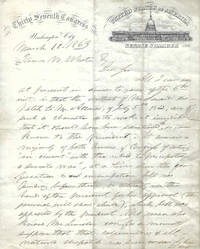
réf. 31330Quarto three pages written on Thirty-Seventh Congress Senate Chamber Illustrated Letterhead formerly folded in very good clean and legible condition. Unpublished letter by Senator Jacob Howard defending Lincoln's Knowledge of William Sewrd's July 5 1862 letter to Charles Francis Adams. An important Reconstruction-era letter written by Jacob M. Howard U.S. Senator from Michigan in which Howard writes at length regarding President Abraham Lincoln and the Emancipation Proclamation especially concerning a letter written by Secretary of State William H. Seward to American Minister to Great Britain Charles Francis Adams July 5th 1862 concerning the Emancipation Proclamation. During his tenure as Secretary of State Seward was at times criticized for transmitting important dispatches to foreign representatives without submitting them to President Lincoln especially to Minister Adams who was a close friend of Seward's. The letter of July 5th became a particular point of contention with content related to the preliminary Emancipation Proclamation which was publicly printed in the Diplomatic Correspondence. Here Howard defends Lincoln who disclaimed any knowledge of it at the time. "Dear Sir All I can say at present in answer to yours of the 6th inst. is that the contents of Mr. Seward's dispatch to Mr. Adams of July 5th 1862 are of such a character as to make it incredible that it should have been sanctioned by or even known to the president. It accuses a majority of both houses of Congress of acting "in concert" with the rebels to "precipitate a servile war" at a time when the confiscation act & emancipation bill was pending before them or actually in the hands of the president for his approval the journal will show which which bill was approved by the president. No man who knows Mr. Lincoln can for a moment suppose that that calumnious & ill natured dispatch was seen by him before it was sent. If the controversy were mine I would ask for no further evidence to overcome the denial of the Times. Again on the 22d Sept the president issued his proclamation announcing his purpose to emancipate the slaves of rebels on the first of Jan '63 This carried the emancipation policy much further than the confiscation act had done – or rather threatened to carry it much further. And with that proclamation in print before him Mr S at the opening of the last session deliberately printed & laid before the world that strange dispatch. Can any further proof be necessary whether to demonstrate the ignorance of Mr. Lincoln of the contents of the dispatch or the animus of its author towards him & towards a majority of Congress There are reasons for your not publishing this note & you will therefore not do so. For the present you have materials enough in the facts I allude to to make out your case against the Times without invoking other aid. … J. M. Howard" Jacob Merritt Howard 1805 – 1871 was born in Shaftsbury Vermont. He graduated from Williams College in 1830 and then studied law in Ware Massachusetts. Two years later he moved to Detroit Michigan where he was admitted to the bar in 1833. In 1835 he married Catherine A. Shaw with whom he had five children. In 1838 Howard was elected as a Whig to the lower house of the state legislature where he was active in revising the state's legal code in investigating Michigan's wildcat banks and in drafting railroad legislation. In 1841 he was elected to Congress. Throughout his tenure as a congressman Howard was an outspoken opponent of slavery. After completing his term he returned to private practice in Michigan. In 1850 when arguing a fugitive slave case before the U.S. circuit court he publicly denounced the Fugitive Slave Law and predicted that the country would eventually come to armed conflict over the issue of slavery. In 1854 Howard joined the new Republican party. He was one of the leading members of the Jackson Michigan convention held on July 6 that organized the new party. As chair of the Committee on Resolutions Howard drafted the party platform which deplored slavery as a social evil and opposed its expansion into the territories. He was reputed to have given the new party its name. The same year he was elected the state attorney general as a Republican. Howard served in this position from 1855 to 1861 when he was elected U.S. senator to replace Kinsley S. Bingham who had died in office. Known in Michigan as "Honest Jake" Howard was considered to be one of the "better constitutional lawyers in the Senate chamber." In the wartime debates in the Senate Howard consistently voted for Radical measures approved President Abraham Lincoln's emergency actions during the secession crisis and advocated "severe exemplary and speedy punishment" of the rebels. He was especially vocal on all matters pertaining to the confiscation of rebel property and the emancipation of slaves. He was one of the most forceful advocates of the 1863 Conscription Act and he served on the Committee on Military Affairs. As a member of the Committee on the Judiciary he drafted a portion of the Thirteenth Amendment. He also made several important speeches in favor of the Civil Rights Act of 1866. Howard opposed President Lincoln's Reconstruction program to readmit southern states on the "10 percent plan" 1863 which stipulated that 10 percent of the state's population had to take an oath of loyalty to the government to qualify for readmission. Howard contended that the federal government had a right to extend military rule over the defeated southern states and advocated extreme retaliatory measures. He argued forcefully that Congress and not the president had the power to judge the proper time and manner of readmitting the seceded states and that Congress also possessed the power to reorganize states upon readmission. Howard served on the Joint Committee on Reconstruction and traveled to Virginia North Carolina and South Carolina to investigate postwar conditions there. Upon Howard's return to Washington the committee submitted a proposal to Congress to amend the Constitution. The committee's proposals actively supported by Howard on the Senate floor passed both Houses of Congress as the Fourteenth Amendment. Although Howard had confidence in Andrew Johnson during the first year of Johnson's term he soon lost faith in the president. When Johnson tried to remove Secretary of War Edwin B. Stanton Howard reacted with outrage and authored the committee's report censuring the decision. During President Johnson's impeachment trial Howard voted to convict. Howard chaired the Committee on the Pacific Railroad from its creation in 1864 until 1871. President Ulysses S. Grant offered him the presidency of the Southern Claims Commission but he declined the post. At the end of his congressional career in 1871 Howard returned to Detroit where he died. In public Howard's image was grave and somewhat portly; his speaking style according to his eulogist Chief Justice John A. Campbell was eloquent but ponderous. Privately however he was a genial pleasant man with a keen sense of humor. According to George W. Julian in reminiscences about the Senate during the Civil War Howard "ranked among the first lawyers and most faithful men in the body and no man had a clearer grasp of the issues of the war." American National Biography vol.11 p. 304. This letter was sold by Anderson Galleries New York November 1927 in their sale of The Lincoln Collection of Emanuel Hertz Sale 2193 15 November 1927 Lot 128.
réf. 31330Quarto three pages written on Thirty-Seventh Congress Senate Chamber Illustrated Letterhead formerly folded in very good clean and legible condition. Unpublished letter by Senator Jacob Howard defending Lincoln's Knowledge of William Sewrd's July 5 1862 letter to Charles Francis Adams. An important Reconstruction-era letter written by Jacob M. Howard U.S. Senator from Michigan in which Howard writes at length regarding President Abraham Lincoln and the Emancipation Proclamation especially concerning a letter written by Secretary of State William H. Seward to American Minister to Great Britain Charles Francis Adams July 5th 1862 concerning the Emancipation Proclamation. During his tenure as Secretary of State Seward was at times criticized for transmitting important dispatches to foreign representatives without submitting them to President Lincoln especially to Minister Adams who was a close friend of Seward's. The letter of July 5th became a particular point of contention with content related to the preliminary Emancipation Proclamation which was publicly printed in the Diplomatic Correspondence. Here Howard defends Lincoln who disclaimed any knowledge of it at the time. "Dear Sir All I can say at present in answer to yours of the 6th inst. is that the contents of Mr. Seward's dispatch to Mr. Adams of July 5th 1862 are of such a character as to make it incredible that it should have been sanctioned by or even known to the president. It accuses a majority of both houses of Congress of acting "in concert" with the rebels to "precipitate a servile war" at a time when the confiscation act & emancipation bill was pending before them or actually in the hands of the president for his approval the journal will show which which bill was approved by the president. No man who knows Mr. Lincoln can for a moment suppose that that calumnious & ill natured dispatch was seen by him before it was sent. If the controversy were mine I would ask for no further evidence to overcome the denial of the Times. Again on the 22d Sept the president issued his proclamation announcing his purpose to emancipate the slaves of rebels on the first of Jan '63 This carried the emancipation policy much further than the confiscation act had done – or rather threatened to carry it much further. And with that proclamation in print before him Mr S at the opening of the last session deliberately printed & laid before the world that strange dispatch. Can any further proof be necessary whether to demonstrate the ignorance of Mr. Lincoln of the contents of the dispatch or the animus of its author towards him & towards a majority of Congress There are reasons for your not publishing this note & you will therefore not do so. For the present you have materials enough in the facts I allude to to make out your case against the Times without invoking other aid. … J. M. Howard" Jacob Merritt Howard 1805 – 1871 was born in Shaftsbury Vermont. He graduated from Williams College in 1830 and then studied law in Ware Massachusetts. Two years later he moved to Detroit Michigan where he was admitted to the bar in 1833. In 1835 he married Catherine A. Shaw with whom he had five children. In 1838 Howard was elected as a Whig to the lower house of the state legislature where he was active in revising the state's legal code in investigating Michigan's wildcat banks and in drafting railroad legislation. In 1841 he was elected to Congress. Throughout his tenure as a congressman Howard was an outspoken opponent of slavery. After completing his term he returned to private practice in Michigan. In 1850 when arguing a fugitive slave case before the U.S. circuit court he publicly denounced the Fugitive Slave Law and predicted that the country would eventually come to armed conflict over the issue of slavery. In 1854 Howard joined the new Republican party. He was one of the leading members of the Jackson Michigan convention held on July 6 that organized the new party. As chair of the Committee on Resolutions Howard drafted the party platform which deplored slavery as a social evil and opposed its expansion into the territories. He was reputed to have given the new party its name. The same year he was elected the state attorney general as a Republican. Howard served in this position from 1855 to 1861 when he was elected U.S. senator to replace Kinsley S. Bingham who had died in office. Known in Michigan as "Honest Jake" Howard was considered to be one of the "better constitutional lawyers in the Senate chamber." In the wartime debates in the Senate Howard consistently voted for Radical measures approved President Abraham Lincoln's emergency actions during the secession crisis and advocated "severe exemplary and speedy punishment" of the rebels. He was especially vocal on all matters pertaining to the confiscation of rebel property and the emancipation of slaves. He was one of the most forceful advocates of the 1863 Conscription Act and he served on the Committee on Military Affairs. As a member of the Committee on the Judiciary he drafted a portion of the Thirteenth Amendment. He also made several important speeches in favor of the Civil Rights Act of 1866. Howard opposed President Lincoln's Reconstruction program to readmit southern states on the "10 percent plan" 1863 which stipulated that 10 percent of the state's population had to take an oath of loyalty to the government to qualify for readmission. Howard contended that the federal government had a right to extend military rule over the defeated southern states and advocated extreme retaliatory measures. He argued forcefully that Congress and not the president had the power to judge the proper time and manner of readmitting the seceded states and that Congress also possessed the power to reorganize states upon readmission. Howard served on the Joint Committee on Reconstruction and traveled to Virginia North Carolina and South Carolina to investigate postwar conditions there. Upon Howard's return to Washington the committee submitted a proposal to Congress to amend the Constitution. The committee's proposals actively supported by Howard on the Senate floor passed both Houses of Congress as the Fourteenth Amendment. Although Howard had confidence in Andrew Johnson during the first year of Johnson's term he soon lost faith in the president. When Johnson tried to remove Secretary of War Edwin B. Stanton Howard reacted with outrage and authored the committee's report censuring the decision. During President Johnson's impeachment trial Howard voted to convict. Howard chaired the Committee on the Pacific Railroad from its creation in 1864 until 1871. President Ulysses S. Grant offered him the presidency of the Southern Claims Commission but he declined the post. At the end of his congressional career in 1871 Howard returned to Detroit where he died. In public Howard's image was grave and somewhat portly; his speaking style according to his eulogist Chief Justice John A. Campbell was eloquent but ponderous. Privately however he was a genial pleasant man with a keen sense of humor. According to George W. Julian in reminiscences about the Senate during the Civil War Howard "ranked among the first lawyers and most faithful men in the body and no man had a clearer grasp of the issues of the war." American National Biography vol.11 p. 304. This letter was sold by Anderson Galleries New York November 1927 in their sale of The Lincoln Collection of Emanuel Hertz Sale 2193 15 November 1927 Lot 128. books
1690réf. 129107Norimbergae Sumptibus Johannis Andreae Endteri Filiorum 1690. First Edition. Hardback. Finely and period sympathetically bound in modern aniline calf over marble boards. Raised bands with a contrasting Morocco gilt-blocked label. An exceptional copy - scans and additional bibliographic detail on request. ; 254 pages; Physical desc. : 1 v various pagings : frontis; coats of arms geneal tables ; 33cm 20 . Subjects: Great Britain - Kings and rulers - Genealogy. Notes: ""Appendix ad Historiam genealogicam regum pariumque Magnae Britanniae anno superiore editam "" inserted at end has special t. P. : 1691. Norimbergae, Sumptibus Johannis Andreae Endteri Filiorum hardcover
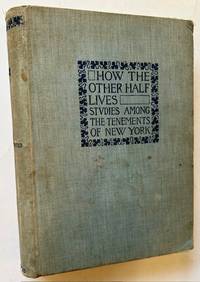
1890réf. 24769New York: Charles Scribners Sons 1890. Cloth. Very Good. A solid copy of the 1890 1st edition in its variant gray cloth binding with blue titling and decorative blue bordering. Tight and VG with bumping to the tips and light spotting along the panels. One signature loose pgs. 195-208 but still holding. Thick octavo dozens of evocative illustrations complementing Riis's timeless text "chiefly from photographs taken by the author". Beyond dispute one of the great records of late 19th century poverty in New York and a landmark document of economic inequality. Charles Scribners Sons unknown
1903réf. 21285Philadelphia: George W. Jacobs & Co 1903. Cloth. Near Fine. WARMLY INSCRIBED BY JACOB RIIS on the front free endpaper. A tight well-preserved copy to boot of the May 1903 1st edition. Clean and Near Fine in its navy-blue cloth with bright gilt-titling along the spine. Light scuffing to the rear panel otherwise very sharp. 12mo top-edge gilt 190 pgs. George W. Jacobs & Co unknown
1890réf. 24769New York: Charles Scribners Sons 1890. Cloth. Very Good. A solid copy of the 1890 1st edition in its variant gray cloth binding with blue titling and decorative blue bordering. Tight and VG with bumping to the tips and light spotting along the panels. One signature loose pgs. 195-208 but still holding. Thick octavo dozens of evocative illustrations complementing Riis's timeless text "chiefly from photographs taken by the author". Beyond dispute one of the great records of late 19th century poverty in New York and a landmark document of economic inequality. Charles Scribners Sons unknown books
1903réf. 21285Philadelphia: George W. Jacobs & Co 1903. Cloth. Near Fine. WARMLY INSCRIBED BY JACOB RIIS on the front free endpaper. A tight well-preserved copy to boot of the May 1903 1st edition. Clean and Near Fine in its navy-blue cloth with bright gilt-titling along the spine. Light scuffing to the rear panel otherwise very sharp. 12mo top-edge gilt 190 pgs. George W. Jacobs & Co unknown books
1807réf. 111927J. Walker W.J. and J. Richardson et al. 1807. Hardcover. Very good/No jacket. Six volumes. 3/4 leather. With 41 plates of engravings. Covers shelfworn with some nicks on the spines and edges. Mild foxing. J. Walker, W.J. and J. Richardson, et al. hardcover
1793réf. 3647Leonard Worchester Isaiah Thomas: Worcester Massachusetts 1793. First Edition. First edition. This book measures approximately 5.5" x 9" with 91 numbered pages. This book is in poor condition. Lacking front and rear boards and several pages at the rear. Large piece of the right side of the title page is missing. Heavy foxing and staining throughout textblock. This book contains early and rare American music composed by Jacob French a singer and one of the first American composers sometimes called "Yankee tunesmiths". Please view the many other rare titles available for purchase at our store. We are always interested in purchasing individual or collections of fine books. Inventory # N1-15. Worcester Massachusetts unknown
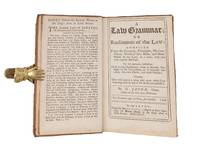
1744réf. 834131744. 12mo. 6-1/2" x 4". Rare. 12mo. 6-1/2" x 4". Rare. A Superb Copy with Distinguished Country-House Provenance: From the Library at Ombersley Court Barons Sandys Jacob Giles 1686-1744. A Law Grammar; Or Rudiments of the Law: Compiled From The Grounds Principles Maxims Terms Words of Art Rules and Moot Points of Our Law In a New Easy And Very Concise Method. For the Particular Instruction of All Young Gentlemen Either at Schools Colleges Or the Universities Or if Privately Educated Attornies Clerks And Other Persons; Whereby They Will Acquire a Great Deal More Useful Law-Learning Than by Any of the Books Yet Publish'd. London: Printed by Henry Lintot Assignee of Edw. Sayer Esq; for Aaron Ward At the King's Arms in Little Britain 1744. 12mo. ii iv 138 6 pp. Publisher advertisement facing title page. 6-1/2" x 4"; 10 cm x 16.5 cm. Contemporary sheep boards ruled in blind spine with raised bands and blind fillets. Moderate rubbing and wear to extremities small nicks and scuffs to boards corners bumped joints and hinges starting. Penciled shelf mark to front free endpaper. Light toning somewhat heavier in places. A very good copy the text notably fresh. $1250. First edition. A compact but ambitious introduction to English law designed for a wide readership extending from university students to attorneys' clerks and the "privately educated." Characteristic of Jacob's practical and commercial sensibility the work distills foundational doctrines terminology and maxims into an accessible format; it proved enduringly popular reaching eleven subsequent editions by 1792. It belongs with his other successful efforts to democratize legal knowledge including The Common Law Common-Placed 1726 and Every Man His Own Lawyer 1736. From the library of the Barons Sandys second and third creations housed at Ombersley Court Worcestershire-one of the notable country-house libraries of England. The original owner was likely Samuel Sandys 1st Baron Sandys 1695-1770 Whig politician Chancellor of the Exchequer and Justice in Eyre. Though not formally trained in the law Sandys occupied offices in which a practical command of legal principles was advantageous making a manual of this kind entirely apposite. Rare in commerce; the second copy we have handled. English Short-Title Catalogue. unknown
1736réf. 331455London: Nutt and Gosling 1736. hardcover. very good. Unpaginated with text printed in double column. Tall thick folio bound in older full calf rubbed and scuffed with wear at corners and repairs at joints; pages are all clean and neat. Published in the Savoy: printed by E. and R. Nutt and R. Gosling London 1736. A very good copy of this scarce book. Nutt and Gosling unknown
1744réf. 834131744. 12mo. 6-1/2" x 4". Rare. 12mo. 6-1/2" x 4". Rare. A Superb Copy with Distinguished Country-House Provenance: From the Library at Ombersley Court Barons Sandys Jacob Giles 1686-1744. A Law Grammar; Or Rudiments of the Law: Compiled From The Grounds Principles Maxims Terms Words of Art Rules and Moot Points of Our Law In a New Easy And Very Concise Method. For the Particular Instruction of All Young Gentlemen Either at Schools Colleges Or the Universities Or if Privately Educated Attornies Clerks And Other Persons; Whereby They Will Acquire a Great Deal More Useful Law-Learning Than by Any of the Books Yet Publish'd. London: Printed by Henry Lintot Assignee of Edw. Sayer Esq; for Aaron Ward At the King's Arms in Little Britain 1744. 12mo. ii iv 138 6 pp. Publisher advertisement facing title page. 6-1/2" x 4"; 10 cm x 16.5 cm. Contemporary sheep boards ruled in blind spine with raised bands and blind fillets. Moderate rubbing and wear to extremities small nicks and scuffs to boards corners bumped joints and hinges starting. Penciled shelf mark to front free endpaper. Light toning somewhat heavier in places. A very good copy the text notably fresh. $1250. First edition. A compact but ambitious introduction to English law designed for a wide readership extending from university students to attorneys' clerks and the "privately educated." Characteristic of Jacob's practical and commercial sensibility the work distills foundational doctrines terminology and maxims into an accessible format; it proved enduringly popular reaching eleven subsequent editions by 1792. It belongs with his other successful efforts to democratize legal knowledge including The Common Law Common-Placed 1726 and Every Man His Own Lawyer 1736. From the library of the Barons Sandys second and third creations housed at Ombersley Court Worcestershire-one of the notable country-house libraries of England. The original owner was likely Samuel Sandys 1st Baron Sandys 1695-1770 Whig politician Chancellor of the Exchequer and Justice in Eyre. Though not formally trained in the law Sandys occupied offices in which a practical command of legal principles was advantageous making a manual of this kind entirely apposite. Rare in commerce; the second copy we have handled. English Short-Title Catalogue. unknown books
1736réf. 331455London: Nutt and Gosling 1736. hardcover. very good. Unpaginated with text printed in double column. Tall thick folio bound in older full calf rubbed and scuffed with wear at corners and repairs at joints; pages are all clean and neat. Published in the Savoy: printed by E. and R. Nutt and R. Gosling London 1736. A very good copy of this scarce book. Nutt and Gosling unknown books
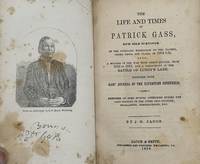
1859réf. 62094Wellsburg VA: Jacob & Smith Publishers and Printers 1859. First edition. 12mo. 280 pp. Frontispiece portrait and three plates. The story of the Corps of Discovery and its exploration of Jefferson's Louisiana Purchase seen through the lens of this biography of the last surviving member of the expedition. "The biography of its citizens is the history of a nation and we trust that the reputations of history will not suffer from one departure in permitting the humble biography of a hero of the ranks to stand by those of the great and title" from the preface. Howes J-31. Graff 2183. Wagner-Camp 6:10: "Gass became one of the best-known members of the expedition for several reasons: his key role as sergeant brought his name up frequently in the journals of Lewis and Clark his account was the first to be published he was the first to have a biography written about him and finally he outlived the other members of the Corps of Discovery by decades dying at the age of ninety-nine in 1870." Plates with foxing text toned but a very good copy. 20th-century green three-quarter leather and cloth gilt rules and title on spine. 9761. Jacob & Smith, Publishers and Printers unknown
1859réf. 62094Wellsburg VA: Jacob & Smith Publishers and Printers 1859. First edition. 12mo. 280 pp. Frontispiece portrait and three plates. The story of the Corps of Discovery and its exploration of Jefferson's Louisiana Purchase seen through the lens of this biography of the last surviving member of the expedition. "The biography of its citizens is the history of a nation and we trust that the reputations of history will not suffer from one departure in permitting the humble biography of a hero of the ranks to stand by those of the great and title" from the preface. Howes J-31. Graff 2183. Wagner-Camp 6:10: "Gass became one of the best-known members of the expedition for several reasons: his key role as sergeant brought his name up frequently in the journals of Lewis and Clark his account was the first to be published he was the first to have a biography written about him and finally he outlived the other members of the Corps of Discovery by decades dying at the age of ninety-nine in 1870." Plates with foxing text toned but a very good copy. 20th-century green three-quarter leather and cloth gilt rules and title on spine. 9761. Jacob & Smith, Publishers and Printers unknown books
1834réf. 33065Berlin: Herausgabe der Mischna 1834. First edition. Hardcover. g. Complete 6 volume set. 4to. Three-quarter blue cloth over marbled paper boards with raised bands and red title-labels. Marbled edges all around. Marbled endpapers. Mishnah with Judeo-German translation and the classic commentaries of R. Obadiah Bartenura and R. Yom-Tov Lipmann Heller. This project was headed by the pioneering Jewish historian Isaac Marcus Jost. The Mishnah had previously been translated into German by Johann Rabe in the Onolzbach 1760-63 edition and into Judeo-German in the Vienna edition started in 1817. Text in Hebrew and Judeo-German with a German introduction. Several backstrips chipped. Edges rubbed. Volume 1 front free endpaper detached but still present. Some foxing to page margins. Overall in good- condition. Herausgabe der Mischna hardcover
1834réf. 33065Berlin: Herausgabe der Mischna 1834. First edition. Hardcover. g. Complete 6 volume set. 4to. Three-quarter blue cloth over marbled paper boards with raised bands and red title-labels. Marbled edges all around. Marbled endpapers. Mishnah with Judeo-German translation and the classic commentaries of R. Obadiah Bartenura and R. Yom-Tov Lipmann Heller. This project was headed by the pioneering Jewish historian Isaac Marcus Jost. The Mishnah had previously been translated into German by Johann Rabe in the Onolzbach 1760-63 edition and into Judeo-German in the Vienna edition started in 1817. Text in Hebrew and Judeo-German with a German introduction. Several backstrips chipped. Edges rubbed. Volume 1 front free endpaper detached but still present. Some foxing to page margins. Overall in good- condition. Herausgabe der Mischna hardcover books