3.645 Ergebnisse
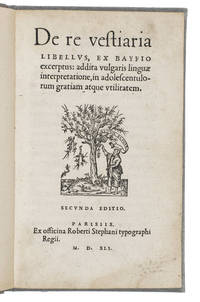
1541Best.-Nr. 734Paris 1541. Small 8vo ca. 16.5 x 10.5 cm. Roberti Stephani Robert Estienne Modern blueish-grey paper over boards with the title printed in black on the spine red sprinkled edges. With a woodcut printer's device on the title-page. 68 11 1 blank pp. Early edition of one of the very first children's books ever printed. The work contains a description of textiles and ancient Roman dress and was specifically meant for the entertainment and edification of children. Although the title page states that it is the second edition it is actually the third printed by Estienne. It is nearly identical to the second but uses small caps for the first word of every chapter to make the structure of the text clearer.The work is the first part of a series on Roman antiquities written by Lazare de Baïf 1496-1547 in the late 1520s. It discusses ancient Roman hats and shoes carpets and rugs and the colours of wool and other textiles with French translations of many of the terms. De Baïf's work was edited and abridged by Charles Estienne 1505-1564 scholar physician and younger brother of printer Robert Estienne 1503-1559. It was a huge success with more than a dozen editions recorded for the first ten years and was followed up by the Estiennes with several other similar children's books.De Baïf was a humanist poet and wealthy diplomat. He was the French ambassador in Venice and Germany. He hired Charles Estienne as a Latin tutor for his son Jean-Antoine de Baïf 1532-1589 who later became a poet. Estienne initially abridged De Baïf's works to provide simplified Latin readings for his student but soon published it for the enjoyment of other children as well. He was an elegant writer of Latin verse and is commended by poet Joachim du Bellay as having introduced a few valuable words into the French language.A water stain in the lower outer corner of the leaves and a small hole in the lower margin of page 6-8. Otherwise in good condition.l Adams B45; Renouard p. 52 no. 14; Pettegree & Walsby 2532; USTC 88432 5 copies; WorldCat 13027853 22013234 490273577 1138872963 404265647 165959673 954853987 1015429473; cf. BM Catalogue of French books p. 39 other ed.; Schreiber 50 other ed. ABE CAT Costumes & Uniforms ART ARCHITECTURE & PHOTOGRAPHY EARLY PRINTING & MANUSCRIPTS EDUCATION & LEARNING EUROPE HISTORY LITERATURE & LINGUISTICS Children's Books Classical Antiquity Costumes Fashion & Uniforms Early Printing - 16th century Education & Pedagogy French Literature hardcover
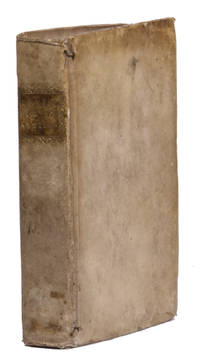
1537Best.-Nr. 15514Basilae, Apud Hier Frobenium et Nic. Episcopium, 1537. 4 parties en 1 vol. in-4 (150 x 215 mm) de 319 pp. (chiffrées 323) 8 pp. d'index (sig. a-z4, A-Q4), vélin souple, titre manuscrit en long sur le dos lisse, nom de l'auteur manuscrit sur le plat supérieur, lacets (reliure de l'époque).
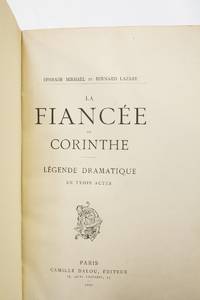
1888Best.-Nr. 69138Camille Dalou | Paris 1888 | 20 x 27.50 cm | relié
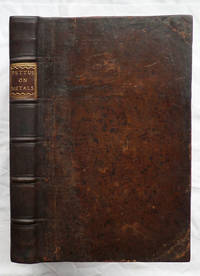
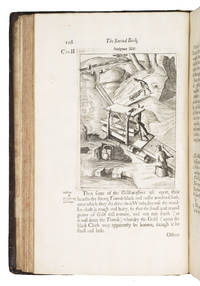
1683Best.-Nr. 006801London West-end of Thames-street.: Published for the Author by Thomas Dawks 1683. 1st Edition . Hardcover. Very Good. Folio - over 12 - 15" tall. A landmark English translation of Lazarus Ercker's metallurgical treatise expanded by Sir John Pettus. Uncommon. VG 1st ed 1683 43 Sculptures. Two parts bound as 1 re-spined to style raised bands blind tooling gilt title to red morocco label over contemporary calf boards tips repaired. Internally 12 4 preface 18 9 1 errata 345 pp 1. 2 A2-Z 81-133 pp 43 of 44 copper-engraved illustrations lacks the portrait frontis 173 ornate initial letters bookplate to fpd Arthur Dalrymple occasional light spotting and edge browning text block edges sprinkled red. 352217 mm. ESTC R5570. Ferguson I pp.185-186; Wellcome II p.527; Wing P1906; cf. Hoover 633. The first part is the first edition in English of Lazarus Ercker's 1574 treatise on ores. The second part is a dictionary of metallurgical terms compiled by Pettus. Having spent more than £20000 on the royalist cause during the Civil War Pettus appears to have been imprisoned for debt several times in later life and it has been suggested that Fleta Minor was composed in Fleet Prison. Title continues: in two parts : the first contains assays of Lazarus Erckern chief prover or assay-master general of the empire of Germany in V. books originally written by him in the Teutonick language and now translated into English ; the second contains essays on metallick words as a dictionary to many pleasing discourses by Sir John Pettus . ; One of the earliest comprehensive manuals on metallurgy available in English bridging alchemy and modern chemistry. Published for the Author, by Thomas Dawks, hardcover
1888Best.-Nr. 69138Paris: Camille Dalou 1888. Fine. Camille Dalou Paris 1888 20 x 27.50 cm relié Gilbert Lély ""Ephraïm Mikhaël"" Nos Poètes 15 Feb. 1925 cited in Ephraïm Mikhaël Poèmes en vers et en prose edited by Matthew Screech Droz 1994 Camille Dalou unknown
1655Best.-Nr. B6712London: Peter-Cole. Translated by Nicholas Culpeper Abdiah Cole and William Rowland. 1655. A very good example of one of Riviere’s most noted works on early medicine. General age toning. Interior is clean. . Binding: Full contemporary speckled calf boards expert 19th century rebacking. Spine with 5 raised bands in 6 compartments. Title in gilt lettering in red label in 2. Compartments with gilt rules and motifs. Marbled paste-in and free endpapers. All edges cut. Notes: Lazare Riviere 1589 – 1655 was a prominent French physician credited with making influential contributions to early medicine. His Praxis Medica Cum Theoria was a series of 17 books discussing different fields of medicine and medical theories of the time. Size: Quarto276x181mm. Illustration: Elaborate half-title. With frontispiece of translators’ portraits. Title printer’s notice author’s note contents from 1 – 645 physical dictionary. Category: Book Medical; Peter-Cole. Translated by Nicholas Culpeper, Abdiah Cole, and William Rowland. hardcover
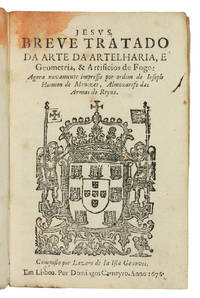
1676Best.-Nr. ABC_47162Lisbon 1676. Small 8vo. Domingos Carneyro Contemporary limp vellum with manuscript title on spine lacking ties. With woodcut arms of Portugal on the title-page. 96 pp. Extremely rare first Portuguese translation of a brief treatise on the "art of artillery" by the Genovese artillerist De la Isla who served in the Spanish Armada. First published in Spanish in 1595/96 by Madrigal in Madrid Breve tratado del arte de artillería geometría y artificios de fuego. Although Vicente Alvarez published a Spanish-language edition at Lisbon in 1609 the present edition appears to be the first in the Portuguese language. The present translation by José Homem de Menezes provided a textbook for the training of engineers and artillerymen in Portugal. We have located only one other copies at the Portuguese National Library in Lisbon and have found no record of an other copy in auction catalogues.With the bookplate of the Portuguese architect and collector José Maria Nepomuceno 1836-95 on the front paste-down; his stamp to verso of title-page. Later in the collection of Thomas Fremantle 3rd Baron Cottesloe 1862-1956 commander of the Territorial Army and president of the Society for Army History Research. Light water-stains throughout with some red discoloration of the head margin from the red top edge.l Carvalho Dic. bibl. militar Portuguez p. 172 under "Menezes José Homem de" note: "é muito raro"; Catalogo .dos Marquezes de Castello Melhor 1878 1655 2 copies; Inocêncio vol 5 1860 169; Trindade Catalogo da livraria do José Maria Nepomuceno Lisbon 1897 p. 123 no. 898 this copy "muito raro"; Pinto de Matos Manual bibliographico Portuguez p. 360 under "Homem de Menezes"; Porbase 1 copy and 1 microfilm copy at the BNP; cf. Cockle 670 1595 ed.; Palau 121967 Spanish 1595 and 1603 eds. does note the Portuguese ed. in the Catalogo . dos Marquezes. see above.; WorldCat eds. in Spanish also very rare: 4 copies. EUROPE MILITARY HISTORY SCIENCE & TECHNOLOGY Armory Military Science & Technology Military History 17th Century Portugal Technology hardcover
1684Best.-Nr. 61343Franckfurt, Zunner, 1684 (+) Franckfurt am Mayn, Zunner, 1684. 4to (215 x 185 mm). Recently bound in a magnificent pastiche-binding of brown half calf with five raised bands and gilt red leather title-label to elaborately gilt spine. Vellum corners. The frontispiece/engraved half title trimmed with loss to upper and lower part of the plate. Closed tear to outer margin. Title-page closely trimmed with loss to first line of title. A few leaves with marginal repairs. Light occassional browning throughout, otherwise internally nice and clean. (14), 220, 123, (5), 68 pp. + folded frontispiece/engraved half title. 41 woodcut in text depicting various processes of mining and metallurgy.
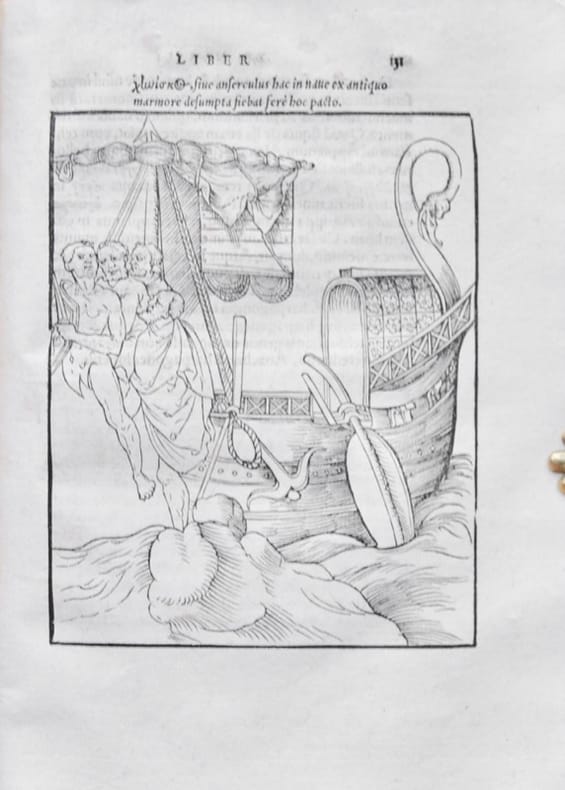
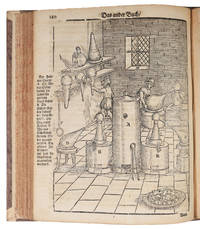
1684Best.-Nr. 61343Franckfurt Zunner 1684 Franckfurt am Mayn Zunner 1684. 4to 215 x 185 mm. Recently bound in a magnificent pastiche-binding of brown half calf with five raised bands and gilt red leather title-label to elaborately gilt spine. Vellum corners. The frontispiece/engraved half title trimmed with loss to upper and lower part of the plate. Closed tear to outer margin. Title-page closely trimmed with loss to first line of title. A few leaves with marginal repairs. Light occassional browning throughout otherwise internally nice and clean. 14 220 123 5 68 pp. folded frontispiece/engraved half title. 41 woodcut in text depicting various processes of mining and metallurgy. Second edition including Berward’s lexicon of mining terms of Ercker’s seminal and beautifully illustrated work on mining and metallurgy – of immense importance to and influence upon the subject throughout the 16th and 17th centuries. Its detailed approach has made it a key reference in the history of science and technology and its practical focus contributed to the economic development of mining regions. "Ercker's treatise is the most authoritative contemporary work on 16th-century metallurgy and assaying. Ercker gave a systematic review of methods of testing alloys and minerals and of obtaining and refining various metals as well as methods of manufacturing acids salts and other chemical compounds including saltpeter. He described the apparatus and laboratory equipment used in metallurgy and assaying and gave a detailed account of laboratory methods all of which he himself had used." Norman "Erker's Beschreibung may be regarded as the first manual of analytical and metallurgical chemistry. The only one of Ercker’s works to contain many drawings it presents a systematic review of the methods of testing alloys and minerals of silver gold copper antimony mercury bismuth and lead; of obtaining and refining these metals as well as of obtaining acids salts and other compounds. The last chapter is devoted to saltpeter. Ercker's account of the fact that zinc precipitates other metals from solutions is to be found only in the 1684 and later editions" DSB. “Considering the importance of Ercker’s tratise it is remarkable how little is on record about him. He was inspector-general of the mine of Hungary Transylvania and the Tyrol which position he held under three consecutive emperors in the sixteenth century. He book was highly prized at the time for it was a record of practical experiences and was not burdened with theories and hypotheses. Ferguson. Ferguson 1 244. The 1736-edition.Duveen p. 195. hardcover
1672Best.-Nr. 2295WITH 41 WOODCUTS OF MINING AND METALLURGICAL APPARATUS Frankfurt Paul Hummen for Johann David Zunners 1672. Small folio 18 x 29.5 cm. Engraved frontispiece signed P. Kilian 6 ff. 332 pp. 2 ff.; Appendix: 2 ff. 47 pp. Bound in contemporary stiff vellum covers and spine ruled. Ownership inscription of frontispiece shaved in right and lower margin as often; some waterstain on frontispiece title and scattered leaves strictly in margin; a single word scored on p. 143 i.e. 145r and replaced in pen at an early date; a burn affecting partial letters on pp. 157/58; p. 45 in appendix torn in blank gutter and re-margined. Generally good. Scarce augmented edition of this illustrated technological classic "second only to Agricola in the number of original contributions to the literature of mining and metallurgy and the beauty of the graphic treatment of the crafts" Dibner 89 1574. It is testimony to the work's usefulness as a practical handbook that it continued to be used well into the 18th century. "It presents a systematic review of the methods of testing alloys and minerals of silver gold copper antimony mercury bismuth and lead; of obtaining and refining these metals as well as of obtaining acids salts and other compounds. The last chapter is devoted to saltpeter. Ercker described laboratory procedures and equipment gave an account of preparing the cupel of constructing furnaces and of the assaying balance and the method of operating it" DSB. "Ercker's treatise is the most authoritative contemporary work on 16th-century metallurgy and assaying. Ercker gave a systematic review of methods of testing alloys and minerals and of obtaining and refining various metals as well as methods of manufacturing acids salts and other chemical compounds including saltpeter. He described the apparatus and laboratory equipment used in metallurgy and assaying and gave a detailed account of laboratory methods all of which he himself had used" Norman. First published in 1574 in Prague this is a work of considerable rarity which when it appears on the market commands a daunting price. It had a number of 16th- and 17th-century reprints though the present edition is the first augmented edition augmented with Berward's lexicon. It has the same number of woodcuts as the 1598 edition 41. Ferguson I.243-4; Hoover 283 misreporting prelims: 7 including frontispiece is correct. Paul Hummen for Johann David Zunners
1672Best.-Nr. 2295WITH 41 WOODCUTS OF MINING AND METALLURGICAL APPARATUS Frankfurt Paul Hummen for Johann David Zunners 1672. Small folio 18 x 29.5 cm. Engraved frontispiece signed P. Kilian 6 ff. 332 pp. 2 ff.; Appendix: 2 ff. 47 pp. Bound in contemporary stiff vellum covers and spine ruled. Ownership inscription of frontispiece shaved in right and lower margin as often; some waterstain on frontispiece title and scattered leaves strictly in margin; a single word scored on p. 143 i.e. 145r and replaced in pen at an early date; a burn affecting partial letters on pp. 157/58; p. 45 in appendix torn in blank gutter and re-margined. Generally good. Scarce augmented edition of this illustrated technological classic "second only to Agricola in the number of original contributions to the literature of mining and metallurgy and the beauty of the graphic treatment of the crafts" Dibner 89 1574. It is testimony to the work's usefulness as a practical handbook that it continued to be used well into the 18th century. "It presents a systematic review of the methods of testing alloys and minerals of silver gold copper antimony mercury bismuth and lead; of obtaining and refining these metals as well as of obtaining acids salts and other compounds. The last chapter is devoted to saltpeter. Ercker described laboratory procedures and equipment gave an account of preparing the cupel of constructing furnaces and of the assaying balance and the method of operating it" DSB. "Ercker's treatise is the most authoritative contemporary work on 16th-century metallurgy and assaying. Ercker gave a systematic review of methods of testing alloys and minerals and of obtaining and refining various metals as well as methods of manufacturing acids salts and other chemical compounds including saltpeter. He described the apparatus and laboratory equipment used in metallurgy and assaying and gave a detailed account of laboratory methods all of which he himself had used" Norman. First published in 1574 in Prague this is a work of considerable rarity which when it appears on the market commands a daunting price. It had a number of 16th- and 17th-century reprints though the present edition is the first augmented edition augmented with Berward's lexicon. It has the same number of woodcuts as the 1598 edition 41. Ferguson I.243-4; Hoover 283 misreporting prelims: 7 including frontispiece is correct. Paul Hummen for Johann David Zunners books
1539Best.-Nr. 495Lyon 1539. 8vo. Sebastian Gryphius Later vellum with a brown morocco label on the spine with the author and title lettered in gold red sprinkled edges. With a woodcut printer's device on the title-page and final page of the first 3 works each work with a decorated woodcut initial. 4 works in 1 volume. 65 11 3 blank 1; 54 7 2 blank 1; 97 15 pp.; 18 119 1 blank ll. Early edition of one of the first children's books ever published together with the second and third part of the series. Charles Estienne 1504-1564 served as private tutor to Jan Antoine de Baïf son of the humanist and diplomat Lazare de Baïf ca. 1496-1547. He planned a series of books that were to be instructive but also specially written to entertain children and give them pleasure in learning. This was a radical Renaissance notion at a time when most school books merely contained standard texts often from classical antiquity that children were to memorise and recite. The first two parts of the series were abridged adaptations for children with French glossaries of the popular works on classical antiquity by De Baïf respectively on Roman dress and Roman vessels. The third part of the series was from Estienne's own hand. It gives the names and descriptions of plants and trees with French translations of all botanical terms. First published at Paris by Robert Estienne in 1535 all three children's books were first published at Lyon by the scholarly publisher Sebastian Gryphius in 1536. The present copies are the second Lyon editions.The final work is first edition of a scholarly text book on weights and measures including weights of money based on information drawn from written sources throughout history. It was compiled by Robert Ceneau 1583-1560 who was the bishop of Vence Riets and Avranches respectively.With ink annotations on the front end papers. The vellum is somewhat soiled. The work is somewhat browned throughout occasionally foxed and water stained. Otherwise in good condition.l Ad 1: Adams B 44; Pettegree & Walsby 2529; USTC 79950 11 copies; ad 2: Adams B 56; Pettegree & Walsby 2530; USTC 79830 7 copies; ad 3: Adams S1732; Durling 1395; Hunt 45; USTC 79951 15 copies; ad 4: Adams C 1253; STC French p. 97; USTC 146886 23 copies. EARLY PRINTING & MANUSCRIPTS EDUCATION & LEARNING HISTORY NATURAL HISTORY / Botany Children's Books Classical Antiquity Early Printing - 16th century Education & Pedagogy Floras & General Botany hardcover
Best.-Nr. 106082Gedruckt zu Franckfurt am Mayn, durch Johan Feyerabendt, 1598, 1 volume in-4 de 285x195x25 mm environ, 1f. blanc, 4ff. (titre en rouge et noir avec belle vignette, 134 feuillets (un numéro pour 2 pages), 3 ff. (BeschluB, Register, colophon), demi basane brune, dos à nerfs portant titres en noir sur pièce de titre papier ancien, orné de caissons à froid. Notre exemplaire date de 1598, troisième édition. Illustrations dans le texte de 41 figures gravées sur bois dans le texte+ une vignette de titre gravée sur bois et une gravure sur bois d'armoiries sur la feuille de dédicace, texte agrémenté de délicates lettrines et fins culs-de-lampe. Rousseurs et pages brunies, ex-libris manuscrit ancien sur la page de titre, cartonnage frotté, une galerie de ver sur une coiffe et petite déchirure sur l'autre coiffe, petite déchirure marginale p. 129, intérieur bien conservé, exemplaire complet.
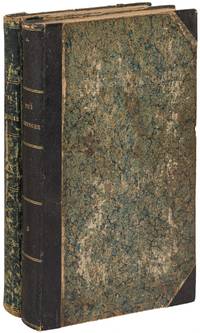
1846Best.-Nr. 450418Published by the Brook Farm Phalanx. New York: Burgess Stringer and Company. Boston: Redding and Company 1846. Hardcover. Very Good. Two volumes. Quartos 8¼" x 11¼". Both volumes are complete with 26 weekly issues. Vol. II: pp. iv 412 December 13 1845 – June 6 1846; Vol. III: pp. iv 412 June 13 1846 – December 5 1846. Bound in contemporary half morocco and marbled paper over boards gilt spines edges lightly sprinkled. Contemporary ownership signature of “W.B. Brown” on the front free endpaper of each volume. Both volumes are in very good condition with overall rubbing and some scuffing on the spine of vol. II scattered foxing and two early stitched repairs: on the lower corner of one leaf in vol. II pp. 201-202 and diagonally across one leaf in vol. III pp. 399-400. Two well-preserved volumes of George Ripley’s pioneering and important radical magazine. Published and printed at the utopian Brook Farm community in West Roxbury Massachusetts the magazine was well ahead of its time particularly in its advocacy of women's rights and featured in its pages many of the country's best critical and literary figures. As noted in a recent exhibition at Yale University America and the Utopian Dream the Brook Farm community was founded by George and Sophia Ripley in 1841 and “began as a product of the transcendentalist movement and a showplace for Christian socialism. The commune had more than 120 members at its highest point” including a young Nathaniel Hawthorne “and was widely regarded as an intellectual center. After four years of existence however the members changed its purpose to that of a Fourierist phalanx. When the headquarters of Fourierism moved from New York City to Brook Farm in 1845 the Fourierist Magazine the Phalanx was renamed the Harbinger to be published on the Brook Farm printing press.” The Harbinger received the full-time attention of Ripley and his associates Charles A. Dana and John S. Dwight. Dana later achieved celebrity as editor of the New York Sun and Dwight went on to become one of the earliest and foremost music critics in the United States. The magazine offered an alternative to transcendentalists who admired Emerson’s romantic perfectionism but rejected his belief in renovation through individualism and self-culture. The contributors to the Harbinger instead emphasized social reform and cooperation which would elevate the individual while benefiting the entire community; the magazine quickly became the most important "Associationist" journal in America. Also included among the many notable contributors in addition to Ripley Dana and Dwight are Albert Brisbane who first introduced the theories of Charles Fourier in the United States; William H. Channing a key figure in the early years of the woman's rights movement; and M.E. Lazarus an important American individualist anarchist who advocated for free love. The original owner of both volumes “W.B. Brown" was related to John Stillman Brown a Unitarian minister and member of Brook Farm who acted as instructor in Theosophical and Practical Agriculture. J.S. Brown was the husband of Mary Ripley George Ripley's cousin. Volume three has two additional small owner's signatures written in light pencil on the outer margin of p. 70: "Mary G. Brown"; and p. 68: "E.H. Brown". An attractive scarce set of two consecutive volumes in the original bindings. Published by the Brook Farm Phalanx. New York: Burgess, Stringer, and Company. Boston: Redding and Company hardcover
1846Best.-Nr. 450418Published by the Brook Farm Phalanx. New York: Burgess Stringer and Company. Boston: Redding and Company 1846. Hardcover. Very Good. Two volumes. Quartos 8¼" x 11¼". Both volumes are complete with 26 weekly issues. Vol. II: pp. iv 412 December 13 1845 – June 6 1846; Vol. III: pp. iv 412 June 13 1846 – December 5 1846. Bound in contemporary half morocco and marbled paper over boards gilt spines edges lightly sprinkled. Contemporary ownership signature of “W.B. Brown” on the front free endpaper of each volume. Both volumes are in very good condition with overall rubbing and some scuffing on the spine of vol. II scattered foxing and two early stitched repairs: on the lower corner of one leaf in vol. II pp. 201-202 and diagonally across one leaf in vol. III pp. 399-400. Two well-preserved volumes of George Ripley’s pioneering and important radical magazine. Published and printed at the utopian Brook Farm community in West Roxbury Massachusetts the magazine was well ahead of its time particularly in its advocacy of women's rights and featured in its pages many of the country's best critical and literary figures. As noted in a recent exhibition at Yale University America and the Utopian Dream the Brook Farm community was founded by George and Sophia Ripley in 1841 and “began as a product of the transcendentalist movement and a showplace for Christian socialism. The commune had more than 120 members at its highest point” including a young Nathaniel Hawthorne “and was widely regarded as an intellectual center. After four years of existence however the members changed its purpose to that of a Fourierist phalanx. When the headquarters of Fourierism moved from New York City to Brook Farm in 1845 the Fourierist Magazine the Phalanx was renamed the Harbinger to be published on the Brook Farm printing press.” The Harbinger received the full-time attention of Ripley and his associates Charles A. Dana and John S. Dwight. Dana later achieved celebrity as editor of the New York Sun and Dwight went on to become one of the earliest and foremost music critics in the United States. The magazine offered an alternative to transcendentalists who admired Emerson’s romantic perfectionism but rejected his belief in renovation through individualism and self-culture. The contributors to the Harbinger instead emphasized social reform and cooperation which would elevate the individual while benefiting the entire community; the magazine quickly became the most important "Associationist" journal in America. Also included among the many notable contributors in addition to Ripley Dana and Dwight are Albert Brisbane who first introduced the theories of Charles Fourier in the United States; William H. Channing a key figure in the early years of the woman's rights movement; and M.E. Lazarus an important American individualist anarchist who advocated for free love. The original owner of both volumes “W.B. Brown" was related to John Stillman Brown a Unitarian minister and member of Brook Farm who acted as instructor in Theosophical and Practical Agriculture. J.S. Brown was the husband of Mary Ripley George Ripley's cousin. Volume three has two additional small owner's signatures written in light pencil on the outer margin of p. 70: "Mary G. Brown"; and p. 68: "E.H. Brown". An attractive scarce set of two consecutive volumes in the original bindings. Published by the Brook Farm Phalanx. New York: Burgess, Stringer, and Company. Boston: Redding and Company hardcover books
1684Best.-Nr. 3378Frankfurt: Johann David Zunner 1684. First printed in 1574 this is the second edition to include Christian Berward's important lexicon of mining terms "Interpres Phraseologiae Metallurgicae. Hardcover. Fine. Complete with the engraved title page which has been folded at the bottom to avoid trimming by the binder. Bound in 18th c. quarter vellum and marbled boards with some minor wear. The contents are in very fine condition. Small adhesion scar to title. Illustrated with 41 large woodcuts. "Ercker's treatise is the most authoritative contemporary work on 16th-century metallurgy and assaying. Ercker gave a systematic review of methods of testing alloys and minerals and of obtaining and refining various metals as well as methods of manufacturing acids salts and other chemical compounds including saltpeter. He described the apparatus and laboratory equipment used in metallurgy and assaying and gave a detailed account of laboratory methods all of which he himself had used." Norman "Erker's Beschreibung may be regarded as the first manual of analytical and metallurgical chemistry. The only one of Ercker's works to contain many drawings it presents a systematic review of the methods of testing alloys and minerals of silver gold copper antimony mercury bismuth and lead; of obtaining and refining these metals as well as of obtaining acids salts and other compounds. The last chapter is devoted to saltpeter. Ercker's account of the fact that zinc precipitates other metals from solutions is to be found only in the 1684 and later editions" DSB. Johann David Zunner hardcover
1684Best.-Nr. 3378Frankfurt: Johann David Zunner 1684. First printed in 1574 this is the second edition to include Christian Berward's important lexicon of mining terms "Interpres Phraseologiae Metallurgicae. Hardcover. Fine. Complete with the engraved title page which has been folded at the bottom to avoid trimming by the binder. Bound in 18th c. quarter vellum and marbled boards with some minor wear. The contents are in very fine condition. Small adhesion scar to title. Illustrated with 41 large woodcuts. "Ercker's treatise is the most authoritative contemporary work on 16th-century metallurgy and assaying. Ercker gave a systematic review of methods of testing alloys and minerals and of obtaining and refining various metals as well as methods of manufacturing acids salts and other chemical compounds including saltpeter. He described the apparatus and laboratory equipment used in metallurgy and assaying and gave a detailed account of laboratory methods all of which he himself had used." Norman "Erker's Beschreibung may be regarded as the first manual of analytical and metallurgical chemistry. The only one of Ercker's works to contain many drawings it presents a systematic review of the methods of testing alloys and minerals of silver gold copper antimony mercury bismuth and lead; of obtaining and refining these metals as well as of obtaining acids salts and other compounds. The last chapter is devoted to saltpeter. Ercker's account of the fact that zinc precipitates other metals from solutions is to be found only in the 1684 and later editions" DSB. Johann David Zunner hardcover books
1888Best.-Nr. 69140S. n. | s. l. 1888 | 24.50 x 31.50 cm | relié
1888Best.-Nr. 69140s. l.: S. n. 1888. Fine. S. n. s. l. 1888 24.50 x 31.50 cm relié Gilbert Lély ""Ephraïm Mikhaël"" Nos Poètes 15 Feb. 1925 cited in Ephraïm Mikhaël Poèmes en vers et en prose edited by Matthew Screech Droz 1994 S. n. unknown
1683Best.-Nr. 3497London: printed for the author by Thomas Dawks 1683. Contemporary mottled calf rebacked with lighter brown calf spine elaborately gold-tooled and with a red morocco title label lettered in gold gold-tooled board edges red sprinkled edges. Folio. With an engraved portrait of the author as a frontispiece a separate title-page for part 2 and 43 large engravings in text on mining distilling and working metals 41 in part 1 and 2 in part 2. Further with elaborately decorated woodcut initials throughout. 2 parts in 1 volume. First edition of the English translation and adaptation of an important work by one of the foremost metallurgists of the 17th century. The first part is the first English adaption of the celebrated practical manual on mining and metals by Lazarus Ercker ca. 1530-1594 Bohemian metallurgist courier for mining affairs under Emperor Maximilian II and under Rudolf II he was assay master of the mint in Prague. Ecker's work was first published in 1574 and went through several subsequent editions 8th ed. 1672 was retitled Aula subterranea alias Probierbuch. Pettus translated and adapted Ecker's original work. The title Pettus chose for the work Fleta Minor hinted to his imprisonment in the Fleet having fought for Charles I in the Civil War. The illustrations to the work were re-drawn on copper after Ercker's original woodcuts but all workmen were put into contemporary English costume. The second part also is of great importance as it is the first edition of the first English dictionary of mining terms.Sir John Pettus 1613-1690 was an English royalist politician and natural philosopher. Pettus was an expert on metallurgy and became a deputy governor of the royal mines in England and Wales under Charles I and II. He is known for the first English translation of the work of the German metallurgist Lazarus Ercker.With the large book plate of R.C. Sticht depicting a mining scene mounted on the front pastedown and some occasional manuscript annotations in pencil in the margins. Binding rebacked showing minor signs of wear along the edges corners and joints of the boards internally with some minor foxing in the margins. Otherwise in very good condition.l Duveen 468; Ferguson II pp. 185-186 first part in the ed. of 1686; Honeyman 2461; USTC 3107029; Wing P 1907. printed, for the author, by Thomas Dawks, unknown