[Mendelssohn, Moses]. - Meyer, Herrmann M. ZAntiquariat.de

7 746 résultats
1965réf. 26905Berlin, Walter de Gruyter, 1965. Gr.-8°. Mit 8 Tafelabbildungen. XXI S., 1 Bl., 343 (1) S., OLwd. m. OCellophanumschlag in OKart.-Schuber.
1901réf. 052829Constantinople: I. Camondo & Cie Constantinople Letterhead. 17 Janvier 1901 1901. No Binding. Very Good. Original autograph letter signed ALS by P.pon "We hereby declare that Ms. L. Cassinelli occupied our house located in Pera Rue Hodja Ali No 19. On December 1 1887 and left him on September 30 1899. That during all time he did not pay me the tax. P. pon de la succession de feu le Comte A. de Camondo. i.e. On behalf of the succession of Count Abraham Salomon Camondo 1781-1873. Probably it's signed by his advocate of Moise de Camondo. Recipient is not defined. Letter indicates one of Camondo family's houses in Pera Constantinople. 265x21 cm. Completely in French. 14 lines. On a paper watermarked "William Brown & Co. London". William Brown and Co. were located in London in this 'St. Mary Axe and 40 to 41 Old Broad Street London E.C.' address according to Grace's guide to British industrial industry; they worked on 'Lithographic and Letterpress Printers'. 1887 Registered as a Limited Company. Count Moïse de Camondo 1860-1935 was an Ottoman Empire-born French banker and art collector. He was a member of the prominent Camondo family. As a child Camondo moved with his family from their home in Constantinople Ottoman Empire to Paris around 1869 where he grew up and continued the career of his father Nissim de Camondo 1830-1889 as a banker. He was born into a Sephardic Jewish family that owned one of the largest banks in the Ottoman Empire established in France since 1869. Starting in 1911 he completely rebuilt the family's Parisian mansion on the Parc Monceau in order to house his collection of 18th-century French furniture and artwork. Working closely with the architect René Sergent he created a palatial home conforming to certain 18th-century traditions even planning the room dimensions to match exactly the objects in his collection. The entryway is inspired by the Petit Trianon of Versailles. The home includes a kosher kitchen with separate sections for meat and dairy. The dining room includes a beautifully-carved green marble fountain in the shape of a shell with a dolphin spigot for the ritual washing of hands before eating a meal. Some highlights of his collection include a French silver service that had been ordered by Russian Empress Catherine the Great a set of Buffon porcelain with exact reproductions of ornithological drawings from the Sèvres manufacturer and perhaps the only existing complete set of Gobelin royal tapestry sketches. He married Irène Cahen d'Anvers daughter of Louis Cahen d'Anvers in 1891. They separated in August 1897 after her affair with de Camondo's stable master Count Charles Sampieri whom she would later marry and divorce. The children Nissim and Beatrice remained with de Camondo. The mansion was completed in 1914 but his son did not reside there very long as he rejoined the French Army to fight in The Great War. It had been de Camondo's great hope that his son whom he adored would take over the family empire. Following Nissim's death in 1917 de Camondo closed all banking activities. He largely withdrew from society and devoted himself primarily to his collection and to hosting dinners for a club of gourmets at regular intervals. Camondo died in 1935 and the museum opened the following year. He donated the home to Paris's Decorative Arts society as a museum Musée Nissim de Camondo in honor of the loss of his son Nissim in World War I. In addition to the collection the meticulously-restored service areas elevator and woodwork of the mansion are noteworthy. During the German occupation of France during World War II his daughter Béatrice his son-of-law Léon Reinach and their children Fanny and Bertrand were deported from France and died in the Auschwitz concentration camp. As a result the de Camondo family died out. I. Camondo & Cie, Constantinople Letterhead., 17 Janvier 1901 unknown
réf. 219420Paris, chez l'éditeur, s.d. (1818-1819) 2 tomes en un vol. in-8, faux-titre, 192 pp., 400 pp., avec un frontispice dépliant colorié (pour le tome II), demi-basane fauve racinée, dos lisse orné de guirlandes et fleurons dorés, pièces de titre et de tomaison, tranches marbrées (reliure de l'époque). Coiffes rognées, un mors fendu, un mors présentant une réparation maladroite.
1822réf. 46405442Paris, chez l’éditeur rue Montmartre n° 154, au premier, (1822) ; petit in-8, broché, couv. beige ornée. VI pp. (catalogue), 2 ff. (fx-titre et titre), 246 pp. - Frontispice dépliant gravé et colorié et 2e titre gravé et illustré d’une vignette.ÉDITION ORIGINALE. Quérard Supercheries II, 732 nous apprend que sous le pseudonyme de Le Joyeux de Saint-Acre se cache un certain J. M. Mossé, ou plutôt Moses, marchand de meubles et homme de lettres. La France Littéraire V, 330 précise qu’il est né à Avignon, d’une famille juive et mort à Paris en 1825. Il a beaucoup produit, un peu à la façon et dans le (non) style de Cuisin et vendait lui-même ses livres avec ses meubles et avait créé à cet effet un réseau de distribution chez les commerçants de province. Le petit catalogue en-tête ne concerne que les livres du même auteur-éditeur. Quérard précise encore que ce Moses avait été un temps employé dans les bureaux de la préfecture de l’Aube et qu’il avait essayé de faire paraître un journal à Carcassonne. En 1812 il était à Paris et donnait des articles au Mercure. Dans sa Bibliographie vauclusienne, Barjavel le nomme J. M. Mossé et le fait naître à Carpentras vers 1780 : “Israélite (...) enlevé à sa famille vers l’âge de 7 ans, par ordre du greffier de la rectorie qu’animait un faux zèle catholique (il suffisait alors, pour qu’un enfant israélite fut légalement arraché à ses père et mère que le premier venu eût affirmé l’avoir baptisé), ne fut rendu à ses parents et sur leurs réclamations, qu’à l’époque où fut proclamée l’émancipation politique de ses coreligionnaires (...) Mossé s’est suicidé à paris peu avant 1830” Barjavel II p. 204.
réf. L14609Musée d'art et d'histoire du Judaïsme/Flammarion, 2015. In-4 reliure éditeur illustrée. Catalogue de l'exposition qui a eu lieu du 14 octobre 2015 au 21 février 2016. Nombreuses contributions, très importante iconographie. Glossaire, bibliographie, etc. E.O.
réf. L8495Ed. Rieder, 1927. In-12 br. Coll. " Judaïsme ". E.O. sur papier d'édition.
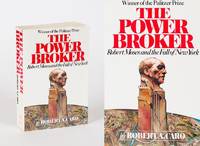
1974réf. 43904AB1974. New York and Toronto Random House 1974. 15.5 cm x 23 cm 1246 XXXIV pages. With index. With many photographs and several maps. Original softcover. Excellent condition with only very minor signs of external wear. Inscription by preowner. Otherwise clean inside with solid binding. Includes the following: Part 1 The Idealist / Part II The Reformer / Part III The Rise to Power / Part IV The Use of Power / Part V The Love of Power / Part VI The Lust for Power / Part VII The Loss of Power. "One of the most acclaimed books of our time winner of both the Pulitzer and the Francis Parkman prizes The Power Broker tells the hidden story behind the shaping and mis-shaping of twentieth-century New York city and state and makes public what few have known: that Robert Moses was for almost half a century the single most powerful man of our time in New York the shaper not only of the city's politics but of its physical structure and the problems of urban decline that plague us today." Publisher "The book focuses on the creation and use of power in local and state politics as witnessed through Moses' use of unelected positions to design and implement dozens of highways and bridges sometimes at great cost to the communities he nominally served. It has been repeatedly named one of the best biographies of the 20th century and has been highly influential on city planners and politicians throughout the United States." Wikepedia paperback
2001réf. LFA-126739973N° 184 (Janvier 2001): 82 pages, format 220 x 295 mm, illustré, broché couverture couleurs, bon état
2001réf. LFA-126739981N° 192 (Octobre 2001): 66 pages, format 220 x 295 mm, illustré, broché couverture couleurs, bon état
1924réf. 51673Ashland OR: Daily Tidings Press ca. 1924. 8vo. 32 pp unpaginated. Photo illustrated throughout. Colour-illustrated pictorial textured brown softcovers Arts & Crafts cover art on front by Johnny Gruelle slight shelfwear very slight spot on fore-edge back cover NF copy. First edition of this scarce land promotion brochure extolling the virtues of logging mining and agriculture in Jackson County Oregon. Included as well are descriptions of the cities and towns of Medford Ashland Jacksonville Gold Hill Central Point Eagle Point Rogue River Talent and Phoenix Oregon detailing their potential for economic opportunity and growth. Of particular interest is the beautiful cover art by Johnny Gruelle best remembered for his ever popular Raggedy Ann Series. In this case he had teamed up with Chicago Tribune columnist Bert Moses to create this promotional piece with intent to show the rustic charm of Southern Oregon. Gruelle his son Worth and their dog Rags are shown with local Jack Hughes holding their large catch of salmon on the Rogue River. See: Patricia Hall Raggedy Ann and Johnny Gruelle: A Bibliography p. 113. Daily Tidings Press, paperback
réf. 12563Textes de Joseph Delteil, Fernand Divoire, Rachilde, André Salmon, Maurice Garçon, Paul Reboux, Titaÿna, Paul Poiret, Jules Romains, etc. Dessins et peintures de Van Dongen, Moïse Kisling, Poliakoff, Luc-Albert Moreau, etc. Photographies de Germaine Krull, Titaÿna, Tabard, Nadar, Gilbert René, etc. Couverture un peu usagée et fendue à la pliure centrale, papier partiellement gondolé mais propre ; exemplaire cependant convenable. Rare.
réf. 4586In-4° en feuilles sous chemise de plastique transparent. Très propre.
réf. 201414226Paris, Albin Michel, 2000 ; in-8, 515 pp., br. Avec jaquette.
1987réf. 306581San Antonio TX: Coledge of New Thinkers LLC 1987. Trade paperback. Near fine. Essays on the Bible from the "M" in the Chicano press M & A Editions which Sandoval ran with his wife the Chicana poet Angela de Hoyos. No copies located in OCLC. 32 22 leaves printed rectos or front side only. Illustrated in color. A near fine copy in wrappers. This version is identified as "v5" on the title page possibly indicating the 5th version of the book. Coledge of New Thinkers LLC unknown
réf. 200616131, 1969 ; in-8, 217 pp., broché. 1ère thèse: sur l'approximation d'équations et inéquations aux dérivées partielles non linéaires de type monotone et 2ème thèse: propositions données par la faculté.
1908réf. 63654New Haven: Yale Publishing Company 1908. First Edition. First printing. Small octavo; blue cloth gilt; xii192pp. Titling just a shade dulled on spine else a tight clean Near Fine copy lacking the dustwrapper. First book publication of Sinclair Lewis as "H.S. Lewis" following numerous magazine appearances. Edited and with a contribution by Robert Moses who graduated Yale in 1909 and went on to become a hugely influential figure in New York City urban planning. Yale Publishing Company unknown
réf. 1359435565.Ghardcover. Good. Access codes and supplements are not guaranteed with used items. May be an ex-library book. hardcover
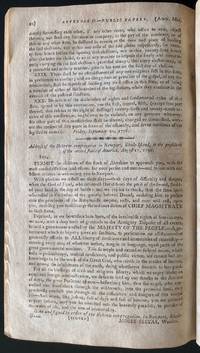
1791réf. 43202Philadelphia: Mathew Carey; Carey Stewart and Co. No. 188 Market-street 1791. Original Sewn Binding without outer wrappers or boards 8vo pages 285-344 1-48 1-40 1-48 total 196 pages with different sections correctly paginated for this issue. With Moses Seixas’ famous letter to President George Washington Seixas wrote to President Washington on behalf of the Newport congregation whose home is the Touro Synagogue the oldest synagogue still standing in America. This letter which appears on p 40 of Appendix II and Washington's reply comprise one of the most famous statements on religious freedom of this period. Here published in America’s first literary magazine George Washington’s famous phrase describing a government that "gives to bigotry no sanction and to persecution no assistance" was originally coined by Seixas in this very letter. It is a moving Biblically toned greeting to the president and was repeated by Washington in his reply assuring it a place among the most cherished in the American historical vocabulary. George Washington's visit to Newport Rhode Island August 17-18 1790 ranks among the seminal episodes in the history of American Jewish religious liberty. Washington left Rhode Island off his travel itinerary the previous year in response to the state's failure to ratify the Constitution. By 1790 after becoming the last state to ratify Washington visited Newport along with members of his administration including Thomas Jefferson. Moses Seixas 1744-1809 a Newport merchant warden of Kaal Kadosh Yeshuat Israel Newport Hebrew Congregation and a prominent Mason was one of the civic leaders who met with Washington. Seixas had a long history as a revolutionary patriot: he remained in the city after it was occupied by the British during the war and signed a document during the occupation pledging loyalty to the patriotic cause. Additionally his brother Rabbi Gershon Mendes Seixas minister of New York's Shearith Israel Congregation known as the "patriot rabbi" was one of fourteen clerygymen officiating at Washington's 1789 Presidential inauguration. Finally as a fellow Mason he and Washington would have had a natural connection. Seixas' eloquent message reads in part: "Deprived as we heretofore have been of the invaluable rights of free Citizens we now with a deep sense of gratitude to the Almighty Disposer of all events behold a Government erected by the MAJESTY OF THE PEOPLE – a Government which to bigotry gives no sanction to persecution no assistance – but generously affording to ALL Liberty of conscience and immunities of Citizenship: – deeming every one of whatever Nation tongue or language equal parts of the great governmental Machine: – This so ample and extensive Federal Union whose basis is Philanthropy Mutual confidence and Public Virtue we cannot but acknowledge to be the work of the Great God who ruleth in the Armies of Heaven and among the Inhabitants of the Earth doing whatever seemeth him good." Grounding religious freedom in natural rights and echoing Seixas' words Washington later replied with an echo of Seixas' language regarding religious freedom: "The Citizens of the United States of America have a right to applaud themselves for having given to mankind examples of an enlarged and liberal policy: a policy worthy of imitation. All possess alike liberty of conscience and immunities of citizenship. It is now no more that toleration is spoken of as if it was by the indulgence of one class of people that another enjoyed the exercise of their inherent natural rights. For happily the Government of the United States which gives to bigotry no sanction to persecution no assistance requires only that they who live under its protection should demean themselves as good citizens in giving it on all occasions their effectual support." See JE Vol. IX pp. 294-295; EJ. Vol. XIV p. 1117; J.L. Blau and S.W. Baron The Jews of the United States 1790-1840 A Documentary History Vol. 1 1963 pp. 8-10. Other pieces of interest include notes on the slave trade by Benjamin Franklin and notes on the Revolutionary War. “The American Museum or Repository of Ancient and Modern Fugutive Pieces &c. Prose and Poetical “title changed to “The American Museum or Universal Magazine” in January 1790 was America's first literary magazine featuring early printings of the US Constitution the Bill of Rights various State constitutions Alexander Hamilton's Report on Manufactures and parts of the Federalist Papers. Complete issue in original sewn binding. Overall condition is very good with scattered darkening and foxing though paper and binding remain nice and strong with clean crisp edges including the notable page containing the address to Washington A Cornerstone of American Judaica. BAMR-69-7A. Philadelphia: Mathew Carey; Carey, Stewart, and Co. No. 188 Market-street unknown
1813réf. 10952Philadelphia: J. W. Campbell & M. Carey 1813. Boards. Good binding. 12mo. 310 pp. First edition. In publisher's boards backed in muslin with printed title label. Spine and board edges are rubbed; front board with a vertical crease from fold; a solidly bound copy with light to moderate foxing scattered throughout. Campbell 1779-1842 was a Petersburg VA bookstore owner and historian. He was father of Charles Campbell who was himself a history of colonial Virginia. Another edition of this present work with the same collation and pagination errors bears a Petersburg imprint. Howes's entry suggests that this Philadelphia imprint was first. In addition to Campbell's history the book also contains the "Constitution of Virginia" p. 226-237 and concludes with a "Sketch of the History of the Church in Virginia" attributed to Moses Hoge by the cataloguer at the American Antiquarian Society. An uncommon and early Virginia history all the more uncommon in publisher's binding. This copy with a previous owner name of Elihu B. Taft Burlington VT 1870 on the front pastedown; this above the 20th century bookplate of John W. Hancock. An appealing copy. Howes C-100; Shaw & Shoemaker 28070; Sabin 10259; Haynes 2834. J. W. Campbell, & M. Carey unknown
1909réf. 481511909. NEW YORK REGIMENTAL. YOUNG Moses G. ed. A Condensed History of the 143d Regiment New York Volunteer Infantry of the Civil War 1861-1865. Together with a Register or Roster of All the Members of the Regiment and the War Record of Each Member as Recorded in the Adjutant-General's Office at Albany N.Y. Newburgh NY 1909. 239pp. Portrait frontis. portraits. Orig. cloth. Front hinge a bit tender. Near fine. Dornbusch I-545. unknown
cm. 17 x 24, 184 pp. con 247 ill. n.t. Gabinetto disegni e stampe degli Uffizi - Cataloghi La generosa donazione degli eredi di Moses Levy consente di percorrere ? attraverso la mostra e questo catalogo che contiene il corpus della sua produzione incisoria ? l?intricata vicenda di un artista che aveva interpretato la pratica dell?incisione come luogo ideale per accogliere le proprie riflessioni in forma di immagine. The generous donation of Moses Levy?s heirs ? through the exhibition and this catalogue containing the corpus of his engravings ? allows us to follow the complicated course of an artist who interpreted the practice of engraving as an ideal place to receive ones reflections in the form of images. 485 gr. 184 p.
réf. 38719571-nnew. unknown
réf. 38719571like new. unknown