Odelola, MosesBiblio.com
11 055 résultats
réf. 6207030400.Gpaperback. Good. Access codes and supplements are not guaranteed with used items. May be an ex-library book. paperback
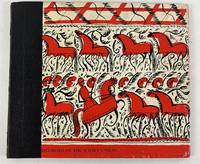
1947réf. 1414648Disc Company of America c1947. Collection of folk music recorded live in the Soviet Union in late 1940s. Three 10 in. records in original hard-cover portfolio. Records in Very Good condition with a few fingerprints but no visible defects. Portfolio shows mild shelf wear. Shelved at Rockville Room E. This set comes from the collection of famed folklorist and anthropologist Harold Courlander who was involved with Folkway Records as an editor and producer. "Disc Company of America" aka "Disc Records" was founded by Moses Asch in 1946 but went bankrupt in 1948 paving the way for the "Folkways" label. 1414648. Special Collections - Upstairs. Disc Company of America unknown
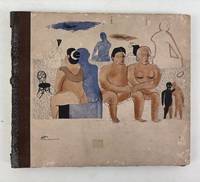
1947réf. 1414650Disc Company of America c1947. Collection of Haitian folk music from the "Disc Ethnic Series" recorded in late 1940s. Four 10 in. records in original "Disc Records" hard-cover portfolio. Records in Very Good condition with a few fingerprints but no visible defects. Portfolio shows moderate shelf wear with loss of spine material. Shelved at Rockville Room E. This set comes from the personal collection of famed folklorist and anthropologist Harold Courlander who was involved with Disc Records and Folkway Records as an editor and producer. The labels on the records read "Recorded under the personal supervision of Harold Courlander." "Disc Company of America" aka "Disc Records" was founded by Moses Asch in 1946 but went bankrupt in 1948 paving the way for the "Folkways" label. 1414650. Special Collections - Upstairs. Disc Company of America unknown
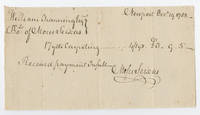
1788réf. 25418Seixas' 1790 letter of welcome elicited the first president's most compelling statement on religious liberty "to bigotry no sanction." In this 1788 receipt Seixas signs a receipt documenting payment for carpet by William Channing the state's new attorney general. MOSES SEIXAS. Manuscript Document Signed to William Channing December 18 1788. Receipt for carpeting. 1 p. 7¼ x 4 in. Complete Transcript Newport Decr 19 1788 William Channing Esq Bot Bought of Moses Seixas / 17 yds Carpeting . . . . . . . . . . .4/1 yd. £3.9. 5. Received payment In full / Moses Seixas Docketing on verso in another hand: Moses Seixas Moses Mendes Seixas 1744-1809 was born in New York into a Jewish family. His father immigrated from Portugal to New York about 1730 and became a merchant. The family moved to Newport Rhode Island in 1765. Moses Seixas married Jochebed Levy in 1770 and they had eight children. He was one of the organizers and first cashier of the Bank of Rhode Island which conducted business in his house until 1818. After the British occupied Newport during the Revolutionary War Seixas remained in Newport but was among the signers of a document supporting the patriot cause. In 1790 he was the president of the Congregation Yeshuat Israel later Touro Synagogue in Newport. He was also a charter member and first grand master of St. John's Lodge of Free and Accepted Masons in Newport. William Channing 1751-1793 was born in Newport Rhode Island and graduated from the College of New Jersey Princeton in 1769. In 1773 he married Lucy Ellery daughter of William Ellery a Newport lawyer who signed the Declaration of Independence and they had nine children. Channing was elected Attorney General of Rhode Island in 1777 and when Rhode Island ratified the U.S. Constitution in 1790 Channing became the first federal District Attorney. One of his sons was the famous Unitarian preacher William Ellery Channing 1780-1742. Historical Background From 15 Sephardic families who arrived in 1658 Newport Rhode Island's Jewish community grew to be the largest in the colonies. Many Jews left during the Revolutionary War when Newport was occupied by the British. A significant number returned when the British left in 1779. By the time Rhode Island became a state there were approximately 300 Jews in the thriving Newport community. Starting while on his way to New York to assume the presidency in April of 1789 George Washington received many messages from civic fraternal and religious organizations offering congratulations praise of his deeds in war peace and politics prayers on behalf of congregations or constituents. Washington's replies justly count among his most famous pronouncements setting a boldly inclusive tone that helped our new nation survive and expand. After the first session of the first Congress Washington set out on a tour of the New England states except for Rhode Island which had yet to ratify the Constitution. It finally did so in May of 1790 and three days after the second session of Congress adjourned Washington Jefferson and others set out to visit Newport. On August 18 Washington and his entourage were greeted with four addresses written as open letters and read in a public ceremony. First the town then from all the Christian clergy then the Masonic order and finally from the Hebrew Congregation. Moses Seixas on behalf of the Congregation Kahal Kadosh Yeshuat Israel congratulated Washington on his ascendancy to the Presidency. He invoked the language of the Revolution in arguing that Jews should be entitled to the same privileges as an American of any other religious denomination. Having been previously "deprived…of the invaluable rights of free Citizens" Seixas expressed his hopes for the success of the new "government erected by the majesty of the people a government which to bigotry gives no sanction—to persecution no assistance; but generously affording to all liberty of conscience." Seixas' letter moved President Washington who echoed Seixas' words and built on them to make his most celebrated statement on religious freedom. He responded as soon as he returned to the capital New York assuring the Hebrew congregation that "happily the Government of the United States which gives to bigotry no sanction to persecution no assistance requires only that they who live under its protection should demean themselves as good citizens in giving it on all occasions their effectual support. It would be inconsistent with the frankness of my character not to avow that I am pleased with your favorable opinion of my Administration and fervent wishes for my felicity. May the Children of the Stock of Abraham who dwell in this land continue to merit and enjoy the good will of the other Inhabitants; while every one shall sit in safety under his own vine and fig tree and there shall be none to make him afraid." Washington's addresses responding to religious congregations included those of Baptist Congregational Dutch Reformed Episcopalian German Lutheran German Reformed Jewish Protestant Presbyterian Quaker Roman Catholic and other denominations. Today we understand that Washington and his fellow Founding Fathers were oblivious to the realities of other kinds of oppression. Knowing what we know now how can we still value these slave-owners' declamations on freedom While acknowledging Washington's ownership of his full share of the universal biases of his age we can and should still treasure his "to bigotry no sanction" letter as a powerful testament to the promise of America. In the 218 years since Washington responded to Seixas' address has anyone come up with a better definition of the benefits and responsibilities of American citizenship Washington's original letter was acquired by the Morris Morgenstern Foundation in 1948 and is on long-term loan to the National Museum of American Jewish History in Philadelphia. Seixas' letter to Washington is in the Library of Congress and Seixas' retained copy was acquired by the Morgenstern Foundation in 1949 and is with Washington's letter. Condition Fine condition with intersecting folds and slight bit of foxing.
1788réf. 25418Seixas' 1790 letter of welcome elicited the first president's most compelling statement on religious liberty "to bigotry no sanction." In this 1788 receipt Seixas signs a receipt documenting payment for carpet by William Channing the state's new attorney general. MOSES SEIXAS.Manuscript Document Signed to William Channing December 18 1788. Receipt for carpeting. 1 p. 7¼ x 4 in. Complete Transcript Newport Decr 19 1788 William Channing Esq Bot Bought of Moses Seixas / 17 yds Carpeting . . . . . . . . . . .4/1 yd. £3.9. 5. Received payment In full / Moses Seixas Docketing on verso in another hand: Moses Seixas Moses Mendes Seixas 1744-1809 was born in New York into a Jewish family. His father immigrated from Portugal to New York about 1730 and became a merchant. The family moved to Newport Rhode Island in 1765. Moses Seixas married Jochebed Levy in 1770 and they had eight children. He was one of the organizers and first cashier of the Bank of Rhode Island which conducted business in his house until 1818. After the British occupied Newport during the Revolutionary War Seixas remained in Newport but was among the signers of a document supporting the patriot cause. In 1790 he was the president of the Congregation Yeshuat Israel later Touro Synagogue in Newport. He was also a charter member and first grand master of St. John's Lodge of Free and Accepted Masons in Newport. William Channing 1751-1793 was born in Newport Rhode Island and graduated from the College of New Jersey Princeton in 1769. In 1773 he married Lucy Ellery daughter of William Ellery a Newport lawyer who signed the Declaration of Independence and they had nine children. Channing was elected Attorney General of Rhode Island in 1777 and when Rhode Island ratified the U.S. Constitution in 1790 Channing became the first federal District Attorney. One of his sons was the famous Unitarian preacher William Ellery Channing 1780-1742. Historical Background From 15 Sephardic families who arrived in 1658 Newport Rhode Island's Jewish community grew to be the largest in the colonies. Many Jews left during the Revolutionary War when Newport was occupied by the British. A significant number returned when the British left in 1779. By the time Rhode Island became a state there were approximately 300 Jews in the thriving Newport community. Starting while on his way to New York to assume the presidency in April of 1789 George Washington received many messages from civic fraternal and religious organizations offering congratulations praise of his deeds in war peace and politics prayers on behalf of congregations or constituents. Washington's replies justly count among his most famous pronouncements setting a boldly inclusive tone that helped our new nation survive and expand. After the first session of the first Congress Washington set out on a tour of the New England states except for Rhode Island which had yet to ratify the Constitution. It finally did so in May of 1790 and three days after the second session of Congress adjourned Washington Jefferson and others set out to visit Newport. On August 18 Washington and his entourage were greeted with four addresses written as open letters and read in a public ceremony. First the town then from all the Christian clergy then the Masonic order and finally from the Hebrew Congregation. Moses Seixas on behalf of the Congregation Kahal Kadosh Yeshuat Israel congratulated Washington on his ascendancy to the Presidency. He invoked the language of the Revolution in arguing that Jews should be entitled to the same privileges as an American of any other religious denomination. Having been previously "deprived…of the invaluable rights of free Citizens" Seixas expressed his hopes for the success of the new "government erected by the majesty of the people a government which to bigotry gives no sanction—to persecution no assistance; but generously affording to all liberty of conscience." Seixas' letter moved President Washington who echoed Seixas' words and built on them to make his most celebrated statement on religious freedom. He responded as soon as he returned to the capital New York assuring the Hebrew congregation that "happily the Government of the United States which gives to bigotry no sanction to persecution no assistance requires only that they who live under its protection should demean themselves as good citizens in giving it on all occasions their effectual support. It would be inconsistent with the frankness of my character not to avow that I am pleased with your favorable opinion of my Administration and fervent wishes for my felicity. May the Children of the Stock of Abraham who dwell in this land continue to merit and enjoy the good will of the other Inhabitants; while every one shall sit in safety under his own vine and fig tree and there shall be none to make him afraid." Washington's addresses responding to religious congregations included those of Baptist Congregational Dutch Reformed Episcopalian German Lutheran German Reformed Jewish Protestant Presbyterian Quaker Roman Catholic and other denominations. Today we understand that Washington and his fellow Founding Fathers were oblivious to the realities of other kinds of oppression. Knowing what we know now how can we still value these slave-owners' declamations on freedom While acknowledging Washington's ownership of his full share of the universal biases of his age we can and should still treasure his "to bigotry no sanction" letter as a powerful testament to the promise of America. In the 218 years since Washington responded to Seixas' address has anyone come up with a better definition of the benefits and responsibilities of American citizenship Washington's original letter was acquired by the Morris Morgenstern Foundation in 1948 and is on long-term loan to the National Museum of American Jewish History in Philadelphia. Seixas' letter to Washington is in the Library of Congress and Seixas' retained copy was acquired by the Morgenstern Foundation in 1949 and is with Washington's letter. Condition Fine condition with intersecting folds and slight bit of foxing. books
réf. 2602H-13999A-1408DFundacion Felipe Antonio Custer. Hardcover. Very Good. 12x9x1. This Hard to Find Out of Print Book is in Very Good condition. See our picture for exact item you will receive. All items ship within 24 hours. Packaging is 100% Recyclable. Most items purchased from Charitable organizations. A portion of each sale is also donated to a monthly charity check your package for this month's charity. Reuse-Recycle-Rebook! Fundacion Felipe Antonio Custer hardcover
2009réf. Q-0399251812Philomel Books 2009-09-17. Hardcover. New. In shrink wrap. Looks like an interesting title! Philomel Books hardcover
réf. 9681200039.Gpaperback. Good. Access codes and supplements are not guaranteed with used items. May be an ex-library book. paperback
1979réf. 182269El Colegio De Mexico 1979. tapa blanda. 2ª Mano - Bueno/2ª Mano. El Colegio De Mexico. 1979. Nueva serie 10. col. centro de estudios históricos Tapa blanda 22x16cm 391pp. El Colegio De Mexico unknown
2015réf. 306312Holguín Cuba: Casa Editora Cuadernos Papiro 2015. 23 leaves plus covers. 9-1/4 by 14-1/4 inches. An edition of 100 copies. One of the outstanding artist's books from Cuadernos Papiro. Poems printed letterpress on various types of handmade paper including leaves of recycled papers and papers dyed with tobacco. The text is interleaved with multimedia illustrations by Javier E. Díaz Zaldívar that incorporate drawing collage and block prints. OCLC: BLSTP CUT DEIAI DLC FXG IND IQU IUL JHE LAF LRU MZA NOC NUI NYP VJA VWM ZCU. Near fine. With "certificado de autenticación" number 038 of 100 and dated January 25 2015 laid in as issued. Casa Editora Cuadernos Papiro unknown
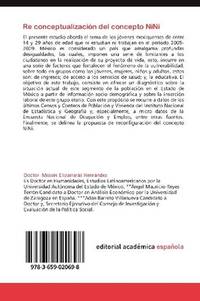
réf. 3659020699.Gpaperback. Good. Access codes and supplements are not guaranteed with used items. May be an ex-library book. paperback
réf. A9780762309559Hardback. New. Each of the articles in this volume authored by researchers from around the world focuses on new and emerging issues in business and organizational ethics. In every case the authors offer creative insights and new perspectives. hardcover
2002réf. DADAX0762309555Emerald Group Publishing Limited 2002-09-26. hardcover. New. 6.14x0.47x9.21. Buy with confidence. Excellent Customer Service & Return policy. Emerald Group Publishing Limited hardcover
2002réf. SONG0762309555Emerald Group Publishing Limited 2002-09-26. hardcover. Used: Good. 6.14x0.47x9.21. Buy with confidence. Excellent Customer Service & Return policy. Emerald Group Publishing Limited hardcover
réf. 0875630340.Gpaperback. Good. Access codes and supplements are not guaranteed with used items. May be an ex-library book. paperback
réf. Bloomsbury-9780842028370Rowman & Littlefield. Paperback. New. 184 pages Rowman & Littlefield paperback
réf. Bloomsbury-9780842028363Rowman & Littlefield. Hardback. New. 184 pages Rowman & Littlefield hardcover
réf. Bloomsbury-9780842028370Rowman & Littlefield. Paperback. New. 184 pages Rowman & Littlefield paperback
réf. Bloomsbury-9780842028363Rowman & Littlefield. Hardback. New. 184 pages Rowman & Littlefield hardcover
1999réf. x-0842028366Scholarly Resources Inc 1999. Hardcover. New. 184 pages. 12.25x5.75x0.75 inches. Scholarly Resources Inc hardcover
réf. ria9780842028363_inpHardcover. New. New Book; Fast Shipping from UK; Not signed; Not First Edition; This new book provides a first-hand grassroots look at life in Cuba including very vivid descriptions of its people and places. Real Life in Castro's Cuba illuminates the human face of Cuba which over the years has largely been hidde hardcover
réf. ria9780842028370_inpPaperback. New. New Book; Fast Shipping from UK; Not signed; Not First Edition; This new book provides a first-hand grassroots look at life in Cuba including very vivid descriptions of its people and places. Real Life in Castro's Cuba illuminates the human face of Cuba which over the years has largely been hidde paperback
réf. B9780842028370Paperback / softback. New. Looks at life in Cuba including descriptions of its people and places. This book illuminates the human face of Cuba which over the years has largely been hidden. paperback
1999réf. x-0842028374Scholarly Resources Inc 1999. Paperback. New. ca res. please inc. 7.25% tax edition. 184 pages. 12.00x5.50x0.50 inches. Scholarly Resources Inc paperback
réf. 6989692Rowman & Littlefield Publishers Incorporated . Hardback. New. pp. 200 Rowman & Littlefield Publishers, Incorporated hardcover