Bagby, George W [Moses Adams]Biblio.com
9.830 resultados
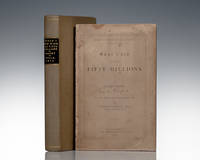
1874ref. 147740Philadelphia: J.B. Lippincott & Co 1874. Rare first edition of this satirical novel from popular Virginia physician essayist and author George W. Bagby. Sextodecimo original wrappers. In very good condition. Toning to the wrappers with rubbing to the extremities small losses to the bottom right corner of the front wrapper losses to the spine. Ownership signature and annotation to the front wrapper of P.V. Daniel Jr. son of the Virginia jurist and cousin of John M. Daniel who is the subject of a Bagby essay. Housed in a custom folding chemise and cloth slipcase. George W. Bagby was an American writer humorist and physician best known for his satirical works and his contributions to 19th-century American literature. Born in Virginia Bagby practiced medicine but became more widely recognized for his wit and humor which he often incorporated into his literary output. His most famous work What I Did with My Fifty Millions humorously critiques the nature of sudden wealth and the moral dilemmas associated with it. In addition to his novels Bagby wrote numerous essays short stories and columns often focusing on social and cultural issues of the time. His style is characterized by light-hearted satire and a keen eye for the absurdities of contemporary life. J.B. Lippincott & Co hardcover
1973ref. 84794Harry N. Abrams Inc. As New. 1973. Hardcover. 0810901668 . FREE UPGRADE to Courier/Priority Shipping Upon Request - IN STOCK AND IMMEDIATELY AVAILABLE FOR SHIPMENT - AS NEW THE TEXT BLOCK IS PRISTINE CLEAN UNMARKED AND IN EXCELLENT CONDITION - - 357 pages 253 illustrations; 4to oblong. Anna Mary Robertson Moses Catalogue Raisonne Catalog Raisonné Complete Works Life and Work Raisonnee Harry N. Abrams, Inc. hardcover
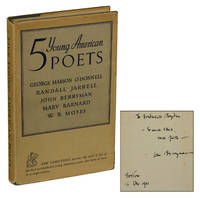
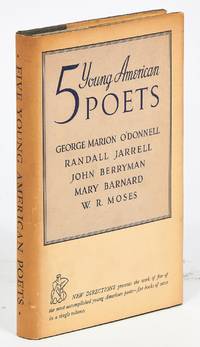
1940ref. 180216005New York: New Directions 1940. First Edition. Hardcover. Very Good. First edition. Signed by John Berryman on front paste down and inscribed to novelist Frederick Boyden "so much skill much faith - signed John Berryman Boston 16 Dec 1941." 221 pp. Blue cloth with gilt lettering. Near Fine in Very Good price-clipped dust jacket that is rubbed along edges slightly chipped at head and tail closed tear along front flap fold a few faint stains. The very first book appearance of John Berryman and quite rare signed by him as well as poet/ novelist/essayist Randall Jarrell and poet/translator of Sappho Mary Barnard. New Directions hardcover
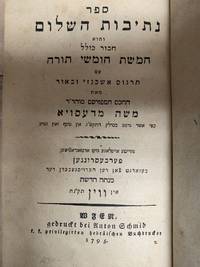
1795ref. RB007Vienna: Anton Schmid 1795. Second. Good. 1795 rare copy of Netivot Ha-shalom The Paths of Peace. A German translation in the Hebrew alphabet of the book of Genesis by Moses Mendelssohn 1729-1786. It includes the Hebrew text of the Bible and a commentary by Mendelssohn. The last 200 pages of the book is the Aramaic text of Onkelos commentary of Rashi and the Haftaroth. This book is a former synagogue copy and in great shape for a book 230 years old. Binding still tight. Although there is wear on the pages it is very readable. Inside front and back covers are 3 off-white blank rectangular stickers one has been torn off leaving residue Markings on both sides of the page preceding the title page. Purple synagogue stamp at top of page prior to the text. That page has a 1-inch tear at the top middle edge. There is another stamp on the bottom right corner of pages 81b and 88b. Light penciled lines about one inch long on 5 pages of the introduction at least one other page of the book has similar marks. About 20 pages with the reverse page's text legible but still readable. Lh Anton Schmid unknown
1879ref. 024517Portland ME: Chisholm Brothers 1879 1879. Hardcover. VG. 8vo - over 7¾" - 9¾" tall. VIEWS in THE WHITE MOUNTAINS 1st Folio Format 1879. PREFACE CONTENTS; Mount Kearsarge Mount Washington from Intervale The Frankenstein Trestle The Old Willey House The Willey-Brook Bridge The Great Railway Cut The White-Mountain Notch from Elephant's Head The Crawford House from Elephant's Head The Fabyan House Jacob's Ladder on the Mount-Washington Railway Lizzie Bourne's Monument The Summit House Mount Washington The Presidential Range from the Glen House The Glen-Ellis Falls The Crystal Cascade. The Glen House View from Bethlehem Echo Lake Franconia Notch The Franconia Notch Echo Lake and the Profile House The Profile or Old Man of the Mountains The Flume. SCARCE: 50 pages with 22 Photo Illustrations each followed by a lengthy description by Francis Moses Sweetser . This is the coveted Deluxe Folio size Largest of 4 Editions 24mo. 16 mo. 8vo. & Folio published in this scarce series with 10-22 Photo Illustrations in each. Also included are the 1 2 & 3 star Editions/Variants these all have 11 views each. Each of these Star Edition corresponded to a different area of the White Mountains with different views but also having a few in common List is available to concerned buyer. Dark Green Cloth Gilt Titles with black decorations and rules. Very Good overall Spine and covers are mildly worn. NOTE: 3 books are bound in dark green cloth while the 3-Star edition is in light green cloth. Many photos available please ask. Portland, ME: Chisholm Brothers, 1879 hardcover
ref. 113472Amsterdam Joan and Cornelius Blaeu 1640. . First edition; small 4to 21 x 16 cm; modern grey cloth with gilt floral device to upper cover printer's device to title page woodcut floriated initials and tailpieces two woodcut diagrams and two tables small loss to upper right corner of title and some loss to margins of index leaf very minor worming to upper right corner throughout chips to edges of the last leaf faint waterstains throughout; text in Latin and Hebrew; a very good copy. First edition of Gentius's Latin translation of 'Hilkhot De'ot' from the first book of Maimonides's 'Mishneh Torah' with a commentary. 'Hilkhot De'ot' is part of the monumental work 'Mishneh Tora'. Book one 'Sefer Madah' is comprised of several chapters in which Maimonides outlines the rules of ethical behaviour in relation to the halakhic law interestingly applying Aristotelian virtues to a Jewish legal context. This is Gentius's first publication and one of the earliest translations of a complete section of Maimonides's extensive compendium of Jewish law into Latin beautifully printed in parallel with the original Hebrew. Georgius Gentius 1618-1687 was a German Lutheran orientalist who studied in Leiden and later with Amsterdam rabbis; two of them R. Isaac da Fonseca Aboab and R. Moses d'Aguilar contributed to this edition with two laudatory poems. In the introduction Gentius praises Maimonides. This edition is beautifully illustrated with attractive diagrams and tables showing the relationship between vices and virtues. Heller The Seventeenth Century Hebrew Book Vol. 1 pp. 564-565. Amsterdam, Joan and Cornelius Blaeu, 1640. hardcover
1954ref. 44457s.l. Paris: Aux dépens d'un amateur Bernard Klein 1954. Fine. Aux dépens d'un amateur Bernard Klein s.l. Paris 1954 28.50 x 38.50 cm en feuilles sous chemise et étui. First edition with 25 illustrations in black and white and colors by Moïse Kisling one of 35 numbered copies on Japon super nacré paper the tirage de tête. Preface by André Salmon. This copy as called for by the justification is complete with its suite of color hors-texte illustrations on Hollande paper its suite of color hors-texte illustrations on Arches its suite of textual illustrations in black and white on China paper one unpublished plate a suite of plates not used for the final work on Hollande paper and a cancelled copper plate. The illustrations by Moïse Kisling consist of: one painted folded cover a color portrait frontispiece 11 illustrations hors-texte in colors and 12 textual illustrations in black and white. A fine copy. Aux dépens d'un amateur (Bernard Klein) unknown
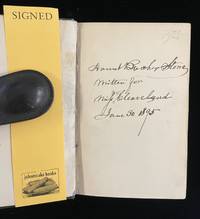
1894ref. 013411Boston: Houghton Mifflin 1894. Later Edition. Hardcover. Very Good. A later printing 1894 of "A New Edition with Illustrations and a Bibliography of the Work by George Bullen" 1878. 8vo publishers plain green cloth black-endpapers with evidence of past reinforcement of hinges front and rear. Hartford bookstore ticket rear pastedown. Inscribed: "Harriet Beecher Stowe/ written for/ Miss Cleaveland/ June 30 1895" PROVENANCE: Heirs of the Cleaveland family whose genealogy goes back to colonial Connecticut. Penciled in the inscription before "Miss Cleaveland" are the letters "EW" which identifies the inscribee as Elizabeth Whittlesey Cleaveland one of Elisha Whittlesey Cleaveland's daughters and great great granddaughter of Moses Cleaveland 1754 - 1806 Connecticut lawyer politician soldier and surveyor who founded the city of Cleveland Ohio while surveying the Connecticut Western Reserve in 1796. During the American Revolution he served as the brigadier general of the Connecticut militia. Both Stowe and the inscribee were born in Connecticut where they both died Stowe's inscription here is in a shaky hand and dated a year and a day before her death on July 1 1896 at the age of 85. Houghton, Mifflin hardcover
1940ref. 417914Norfolk Connecticut: New Directions 1940. Hardcover. Fine/Very Good. First edition. Fine in modestly age-toned very good or better dust jacket. The first commercial book appearance of these five poets preceding Berryman's and Jarrell's own separate first books by two years. Inscribed by John Berryman to a philosophy professor at Columbia University: "To Irwin Edman: On page 45 a paper on aesthetics long overdue. with sincere regard John Berryman. Boston 18 Oct 1941." Laid in is the front of the original mailing parcel hand-addressed by Berryman to Edman with his name repeated in the return address. Page 45 contains Berryman’s introduction to the selection of his poems entitled “A Note on Poetry.” Both Edman and Berryman both belonged to the Boar’s Head Society at Columbia a social group devoted to poetry. Berryman graduated from Columbia in 1936 so indeed his paper whatever it was was long overdue. New Directions hardcover
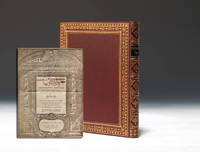
1695ref. 871351695. JUDAICA ALSHEKH Moses. Romemot El. Amsterdam: Printed in the house of David de Castro Tartas published by Eliezer ben Haninah 1695. Small quarto period-style full red morocco gilt elaborately gilt-decorated spine and covers raised bands black morocco spine label; ff. 94. $3500.Second edition the first Amsterdam edition of AlshekhÕs esteemed commentary on the Psalms beautifully bound.Alshekh d. after 1593 rabbi and Bible commentator was born in Adrianople studied in Salonika and then emigrated to Erez Israel settling in Safed where he gained prominence as an halakhic authority a teacher in two talmudic academies and a preacher. He was active in communal affairs and was a member of the rabbinical court of Joseph Caro who ordained him. This is the text that Hayyim Alshekh published in Venice in 1605 claiming that it was his fatherÕs authoritative text and not merely a preliminary draft which had been published a decade earlier in Constantinople under the title Tappuhei Zahav. AlshekhÕs Biblical commentaries which are permeated with religious-ethical and religious-philosophical ideas supported by ample quotations from talmudic and midrashic sources became quite popular and have often been reprinted.With an introduction by the publisher citing Ephraim Luntschitz on the importance of the work and quoting the authorÕs intentions in originally presenting this book to the public. Approbation on last leaf by Moses Judah ben Kalonymus Kohen known as Leib Harif the Ashkenazic Rabbi of Amsterdam. In addition the publisher adds after the first approbation: ÒAlso by the authority and with the permission of the great sage the head of the rabbinical court of the Sephardim our master and teacher Jacob Sasportas who has not however added his signature to the approbation due to a lack of time.Ó The importance of receiving even without an actual signed approbation the blessing or perceived blessing of both the Ashkenazic and Sephardic authorities suggests the sharp divide between the two Amsterdam Jewish communities. With three leaves of text ff. 10-12 replaced in neat facsimile. Vinograd Amsterdam 637. Steinschneider 6431:13. A few early ink marginalia.Tiny repair to corner of title page not affecting border and first two leaves. A splendidly bound volume. hardcover
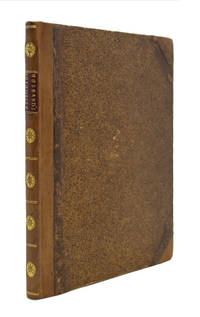
1650ref. 68492London: Printed by T.N. for Robert Bostock 1650. First and only edition. Small quarto 7 1/8 x 5 1/2 inches; 180 x 139 mm. 8 100 2 pp. Bound without final blank. With engraved initials head and tail pieces. Newer half calf over contemporary speckled paper boards. Spine stamped in gilt. Red morocco spine label lettered in gilt. Some minor toning and foxing throughout. Top margin trimmed close occasionally affecting running headline. Previous owner's morocco bookplate on front pastedown. Overall a very good copy. "In early modern marriage conduct books wives are advised to submit to their husbands and husbands are advised as the 'lords of the house' to keep order by rebuking and controlling their wives. Most marriage books however do not condone wife beating. Moses a Vauts was one of the few who supported wife beating. In The Husband's Authority Unvail'd. wherein it is moderately discussed whether it be fit or lawfull for a good Man to beat his bad Wife he states 'If Wives will invent strange new Fashions and frisking strains of Disobedience. why should not their Husbands suit them with new Forms of Discipline" Vauts also declares 'It were well and better the wife could not deserve Blows; but if they be due or needful or best for her why should they be denied her'" Custome is an Idiot: Jacobean Pamphlet Literature on Women. Edited by Susan Gushee O'Malley ESTC R205920. HBS 68492. $3500. Printed by T.N. for Robert Bostock unknown
1971ref. C86513Abrams. As New. Hardcover. FREE UPGRADE to Courier/Priority Shipping Upon Request - IN STOCK AND IMMEDIATELY AVAILABLE FOR SHIPMENT - AS NEW THE TEXT BLOCK IS PRISTINE CLEAN UNMARKED AND IN EXCELLENT CONDITION - - 323 pages; 656 plates. Catalogue Raisonné Catalogue Raisonne Catalog Raisonnee Complete Works -- with a bonus offer-- - May be EITHER: out of print OOP and extremely rare in this pristine condition; signed by author or contributor; or a first or special edition; inquire for details . 1971. Abrams hardcover
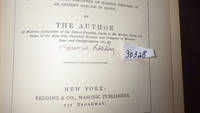
1880ref. 30328HARDBACK NODJ ISSUED 1880 ON COPYRITE PG 1ST Edition THICK Embossed boards with gilt lettering and decoration. Spine cover ends and corners show very little wear. Spine cover is faded SLITELY.Text block is clean and unmarked. All OUTER edges are red stained with lettered Gold Gilt Titles Interior VG/ VG AS-IS WITH RED THIN STAIN TO OUTER EDGE FEW PGS NOJACKET THICK BROWN PURPLE embossed Cover with Bright Gold Gilt DECORATIONS CVR LITE rub wear Scuffing 517 pgs Interior nice condition light Wear FOX Interior nice tight Clean light Fox OUTER PGS EDGES LITE RED . & Tragic Death of Philosopher Pythagoras. Roman Catholic Church has relentlessly persecuted Tortured & Burnt them at the Stake. Recent remarkable discovery of Masonic emblems on an ancient obelisk in Egypt." Redding & Co. Publ, NY, Masonic publishers hardcover
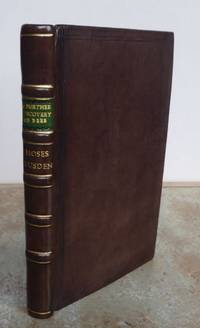
1679ref. 53656London printed for the author and are to be sold at his house next the sign of the Kings Arms in the Bowling-Alley near the Abby in Westminster: and by Henry Million bookseller at the Bible in the Old-Bayley 1679. TITLE CONTINUED: Also proper directions to all such as keep bees as well to prevent their robbing in straw-hives as their killing in the colonies. By Moses Rusden an apothecary; bee-master to the King's most excellent Majesty. Published by His Majesties especial command and approved by the Royal Society at Gresham Coll. FIRST EDITION 1679. Small 8vo approximately 170 x 95 mm 6½ x 4 inches engraved frontispiece by Henry Million plus 3 folding plates pages: 24 1-144 last page blank rebound in full modern calf gilt lettered green label author's gilt name and gilt rules to spine between raised bands new brown endpapers. Neat vertical repair to inner margin on blank side of frontispiece with pale browning to foot title page and frontispiece lightly dusty old ink name to top of title page 2 outer margins neatly replaced 1 outer margin slightly trimmed varying pale brown staining some with tide mark to lower part of pages 81-100 all text legible see attached images 1 corner neatly repaired pale age-browning to margins a few margins lightly soiled not affecting text old ink stain to first pastedown and small ink splash to last free endpaper 2 leaves lightly dusty. A very good copy with some minor repairs and staining. Moses Rusden was appointed Beemaster to the King at the instigation of John Evelyn who had a copy of this title in his library. Rusden firmly believed that a hive was led by a King and not a Queen. In 1679 Rusden improved Geddie's hive and put a frame in it for the bees to fasten their combs upon. See: British Bee Books A Bibliography 1500-1976 page 61 No. 55; Walker Catalogue of Bee Books page 61; Geoffrey Keynes John Evelyn A Study in Bibliophily page 300 No. 83; Catalogue of the Pepys Library at Magdalene College Cambridge Volume 7 Alphabet section page 208 No. 542; ESTC R11920. MORE IMAGES ATTACHED TO THIS LISTING ALL ZOOMABLE FURTHER IMAGES ON REQUEST. Postage at cost and all parcels sent fully tracked and fully insured. London, printed for the author, and are to be sold at his house next the sign of the Kings Arms in the Bowling-Alley, near the hardcover
ref. #[61010]Austrian Empire Vienna d.d. 10 November 1867. Full purple velvet decorated with the gilt coat-of-arms of the Emperor on the front cover 38x18 cm. 7 pages. Handwritten caligraphic text on vellum and gold embossed lavishly decorated printed margins. With a hand painted coat-of-arms in colour and the original signature of Franz Joseph I. The imperial wax seal is attached by the gold binding rope in a disc shaped copper case. Seal in mint condition. Charter and wax seal are encased in a large flat contemporary metal box. All in excellent condition. The patent explains that Moise started his military career in 1836 with the 17th Infantry Regiment. He became "unter-lieutenant " in the 4th "Grenz-Infanterie-Regimente" in 1843 he became "ober-lieutenant" in 1848 and was transferred to the 11nd Infantry-Regiment. In 1849 he was appointed "hauptmann" and in 1859 to Major with the 16th Infantry Regiment and in 1865 he finally became "oberst-lieutenant". In 1848 he was active at the Commando of the Operations Corps at Pfonzo later at the 3rd Army Corps Commando as adjudant. He participated in the move of the Corps from Roveredo to Verona. He proved his worth when he lead the attack against the height of Val Fredda and in battles around Rivoli. For these activities and his service for the headquarters of the Reserve-Corps in Hungary he recieved the "Militär-Verdienstkreuz mit der Kriegsdekoration". He furthermore served as General-Commando-Adjudant in Graz as Gouvernements-Adjudant in Triest and finally as part of the ministry of war where he was active in the war year of 1866 in which year the Austrian-Prussian war Seven Weeks war took place. H164 hardcover
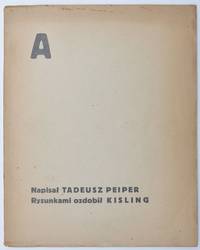
1924ref. 1362Krakow: Wydawnictwo Zwrotnicy 1924. First edition. In publisher’s printed wrappers. Illustrated with four full-page reproductions of etchings by Moise Kisling. Modernist layout. Cover slightly tanned due to acidic paper and very slightly chipped at the extremities. In fine condition. First edition. In publisher’s printed wrappers. Illustrated with four full-page reproductions of etchings by Moise Kisling. Modernist layout. 30 2 p. Tadeusz Peiper’s poems illustrated by the Polish-born French painter Moise Kisling. Peiper 1891–1969 was a Polish poet and art critic. He was the founder and chief figure of the Polish literary avant-garde movement the Awangarda Krakowska centred around the periodical “Zwrotnica” Switch which he founded in 1921 after his return from Madrid where he lived from 1915. This book contains poems that he wrote between 1914 and 1923. His works are considered as the most notable pieces of the constructivist Polish poetry. Illustrated with four full-page reproductions of etchings by Moise Kisling 1891–1953. . [Wydawnictwo Zwrotnicy] unknown
1852ref. 266899Boston 1852. unbound. Partial unsigned manuscript consisting of four pages 9.75 x 7.75 inches labeled "2" through "5" of a more extensive document all in the hand of Moses G. Farmer from 1852-1853 discussing the earliest trial-runs of the first ever Electric Fire Alarm System implemented in Boston. Though placed into service on April 28th 1852 Farmer's notes in diary form start on June 21st assessing the system while constantly citing ways to improve his new invention in very small part: ".Wednesday June 23 an alarm at 2:15.could not be easily read and caused a delay of 8 or 10 minutes.Saturday July 9th the circuit wheel of the key board needed repairs - the connector melted off by strong battery. July 10th Great Fire in Fort Hill. Alarm first came from Lower Boston plain. They tried to give it from Fort Hill & Persshar St. but both turned together turned too fast while ringing for So. Boston alarm came from Broad St. a delay in the time alarm of about 7 minutes.Friday Aug 6th Wanted! A Battery! Easy of manipulation. Constant & enduring in its operation. Powerful & certain in its effects & of small.cost! Sunday Aug 8th An alarm from D-7 at 12M. The operator did not understand it being the first one from that box & did not strike till the alarm came from I-4 at 12:15 P.M.Says he will recognize it next time. Oct 17th tried to raise an alarm from D-3 - S-3 4 & 5 but could not the lightning assertors were the cause of the difficulty.Friday Oct. 29th Put my newly invented battery on the South Boston signal circuit first time. Nov. 22nd Proceeded to try experiments on the velocity of sound for Captain C Wilkes.put my new battery on all signal circuit. Monday Dec. 20th Bad luck within two days at Three alarms. At one alarm the operator forgot to connect the South circuit. At Another the South end bells struck all sorts of ways on account of the key board running too fast. Atmospheric electricity probably had something to do with raising a false alarm at South End yesterday. Note: this is possibly the earliest recorded false alarm! Jan 11th 1853 Patent for my battery granted today. Sat. Jan. 15th 1853 Key board out of order. Made a substitute & had I repaired. Monday Jan. 17th Found wire broken at So. Williams St. did not intercept the circuit." This item has natural folds but is still in near fine condition. American electrical engineer and inventor of the Electric Fire Alarm System and several forms of the Incandescent Electric Light. He also patented an early light bulb which was later bought by Thomas Edison. Though a true pioneer of many aspects of 19th century electrical invention he and his wife were Spiritualists and felt that their talents were God-given and that they shouldn't take credit for any of his inventions. As a result he failed to carry his ideas to commercial success. unknown
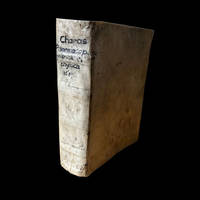
1683ref. 52Early Latin Edition of Charas' Pharmacopoea Regia Charas Moses. Pharmacopoea Regia Galenica et Chymica. Books 1 and 2. Joannis Ludovici Du-Four. Geneve. 1683. Collected pharmacopeia of noted French pharmacist Moses Charas 1618 – 98 who worked at the Jardin Royal du Plantes Medicinal today's Jardin des Plantes when its original purpose was to supply the medical needs of the French royal family. A protestant Charas ended up in England by way of the Netherlands and served as Royal Pharmacist to King Charles II. Eventually converting to Catholicism to escape persecution in Spain Charas was appointed as a member of the Royal Academy of Science in 1692 following his return to France in recognition of the importance of his pharmacological formulations. An interesting figure in the history of science and medicine Charas' recipes include instructions for alchemically derived elixirs including laudanum with attention to the astrological rulerships as well as the possible extractions of useful substances from plants animals and minerals as well as human blood and urine. Originally published in French in 1672 with a second edition in 1682 this early Latin edition predates the collected complete works of Charas also published by Du-Four in 1684. It contains numerous misprints such as numbering many pages in the 400s of Book I as in the 300s and repeating the numbering for pg 200 as 199 in Book 2. Also the final five plates depicting and explaining various distillation apparatuses are printed in the wrong order. The last auction sale of this edition was through Sotheby-Parke-Bernet in 1980 per RBH. 12 copies OCLC as of March 2025. 4 496 404 28 index 5 plates. Vellum bound. Front board bowed. Back board vellum repaired peeling at spine. Some soiling and toning to boards. Title inked to spine. Text block dyed. Pages toned. Top fore corner of title pg missing with text unaffected. Some wear to edges. Includes five illustrated plates of distillation apparatuses. Good. $4500 Joannis Ludovici Du-Four hardcover
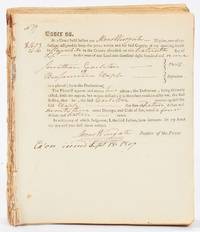
1810ref. 413795Haverhill Massachusetts 1810. Softcover. Near Fine. Partially printed letterpress documents. 154 documents p. 5 28-177 all but the first five documents are hand-numbered by Wingate. Each document is filled out in the hand of Moses Wingate in his capacity as Justice of the Peace of Haverhill. Formerly bound with sewing and glue marks along the spine otherwise the documents themselves are mostly near fine or better with a few of them exhibiting small chips or tears. Each document contains the names of the adversaries and usually the decision by default which is filled out and Signed by Moses Wingate. A few have extensive notes on the verso but most are straightforward defaults. We suspect most of the plaintiffs were businessmen or shopkeepers and most of the defendants were defaulters on small accounts. Wingate born in 1769 was a distinguished resident of Haverhill in Essex County near the New Hampshire border who lived to more than 100 dying in 1870 and who cast a vote in every presidential election from Washington to Grant. He was at various times a member of the Massachusetts State House of Representatives and Senate and Justice of the Peace of Haverhill for nearly half a century. Among the plaintiffs here represented is publisher and printer Daniel Appleton founder of the important publisher D. Appleton and Company; as well as members of the locally prominent Carlton Minot Emerson Ingersoll and Whittier families John Greenleaf Whittier was born in Haverhill in 1807; at least three different Whittiers are named here presumably relatives. An interesting historical insight into business and justice in the early days of the Republic. unknown
1971ref. 86513Abrams. As New. 1971. Hardcover. FREE UPGRADE to Courier/Priority Shipping Upon Request - IN STOCK AND IMMEDIATELY AVAILABLE FOR SHIPMENT - AS NEW THE TEXT BLOCK IS PRISTINE CLEAN UNMARKED AND IN EXCELLENT CONDITION - - 323 pages; 656 plates. Catalogue Raisonné Catalogue Raisonne Catalog Raisonnee Complete Works Abrams hardcover
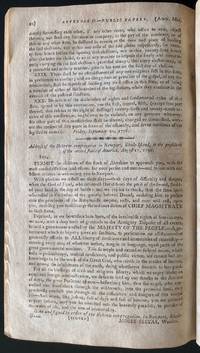
1791ref. 43202Philadelphia: Mathew Carey; Carey Stewart and Co. No. 188 Market-street 1791. Original Sewn Binding without outer wrappers or boards 8vo pages 285-344 1-48 1-40 1-48 total 196 pages with different sections correctly paginated for this issue. With Moses Seixas’ famous letter to President George Washington Seixas wrote to President Washington on behalf of the Newport congregation whose home is the Touro Synagogue the oldest synagogue still standing in America. This letter which appears on p 40 of Appendix II and Washington's reply comprise one of the most famous statements on religious freedom of this period. Here published in America’s first literary magazine George Washington’s famous phrase describing a government that "gives to bigotry no sanction and to persecution no assistance" was originally coined by Seixas in this very letter. It is a moving Biblically toned greeting to the president and was repeated by Washington in his reply assuring it a place among the most cherished in the American historical vocabulary. George Washington's visit to Newport Rhode Island August 17-18 1790 ranks among the seminal episodes in the history of American Jewish religious liberty. Washington left Rhode Island off his travel itinerary the previous year in response to the state's failure to ratify the Constitution. By 1790 after becoming the last state to ratify Washington visited Newport along with members of his administration including Thomas Jefferson. Moses Seixas 1744-1809 a Newport merchant warden of Kaal Kadosh Yeshuat Israel Newport Hebrew Congregation and a prominent Mason was one of the civic leaders who met with Washington. Seixas had a long history as a revolutionary patriot: he remained in the city after it was occupied by the British during the war and signed a document during the occupation pledging loyalty to the patriotic cause. Additionally his brother Rabbi Gershon Mendes Seixas minister of New York's Shearith Israel Congregation known as the "patriot rabbi" was one of fourteen clerygymen officiating at Washington's 1789 Presidential inauguration. Finally as a fellow Mason he and Washington would have had a natural connection. Seixas' eloquent message reads in part: "Deprived as we heretofore have been of the invaluable rights of free Citizens we now with a deep sense of gratitude to the Almighty Disposer of all events behold a Government erected by the MAJESTY OF THE PEOPLE – a Government which to bigotry gives no sanction to persecution no assistance – but generously affording to ALL Liberty of conscience and immunities of Citizenship: – deeming every one of whatever Nation tongue or language equal parts of the great governmental Machine: – This so ample and extensive Federal Union whose basis is Philanthropy Mutual confidence and Public Virtue we cannot but acknowledge to be the work of the Great God who ruleth in the Armies of Heaven and among the Inhabitants of the Earth doing whatever seemeth him good." Grounding religious freedom in natural rights and echoing Seixas' words Washington later replied with an echo of Seixas' language regarding religious freedom: "The Citizens of the United States of America have a right to applaud themselves for having given to mankind examples of an enlarged and liberal policy: a policy worthy of imitation. All possess alike liberty of conscience and immunities of citizenship. It is now no more that toleration is spoken of as if it was by the indulgence of one class of people that another enjoyed the exercise of their inherent natural rights. For happily the Government of the United States which gives to bigotry no sanction to persecution no assistance requires only that they who live under its protection should demean themselves as good citizens in giving it on all occasions their effectual support." See JE Vol. IX pp. 294-295; EJ. Vol. XIV p. 1117; J.L. Blau and S.W. Baron The Jews of the United States 1790-1840 A Documentary History Vol. 1 1963 pp. 8-10. Other pieces of interest include notes on the slave trade by Benjamin Franklin and notes on the Revolutionary War. “The American Museum or Repository of Ancient and Modern Fugutive Pieces &c. Prose and Poetical “title changed to “The American Museum or Universal Magazine” in January 1790 was America's first literary magazine featuring early printings of the US Constitution the Bill of Rights various State constitutions Alexander Hamilton's Report on Manufactures and parts of the Federalist Papers. Complete issue in original sewn binding. Overall condition is very good with scattered darkening and foxing though paper and binding remain nice and strong with clean crisp edges including the notable page containing the address to Washington A Cornerstone of American Judaica. BAMR-69-7A. Philadelphia: Mathew Carey; Carey, Stewart, and Co. No. 188 Market-street unknown
1971ref. C129893Jean Kisling. As New. Hardcover. FREE UPGRADE to Courier/Priority Shipping Upon Request - IN STOCK AND IMMEDIATELY AVAILABLE FOR SHIPMENT - AS NEW THE TEXT BLOCK IS PRISTINE CLEAN UNMARKED AND IN EXCELLENT CONDITION - - . Catalogue Raisonné Catalogue Raisonne Catalog Raisonnee Complete Works -- with a bonus offer-- - May be EITHER: out of print OOP and extremely rare in this pristine condition; signed by author or contributor; or a first or special edition; inquire for details . 1971. Jean Kisling hardcover
ref. 81390Berlin Christian Friedrich Voss beides 1755. Kl.8° 1 Bl. Titelvignette 108 S.; Titelvignette 210 S. Paginierungssprung von Seite 143 auf 145 3 Bl. HPerg. d. Zeit Berieben mit handschriftlichem verblasstem Schild a. Rücken. Auf Vorsatz Bibliothekskleber Bibliotheksstempel Bibliothek des Rabbiner-Seminars Berlin a. Titelblatt verso. Etwas angeschmutzt u. fingerfleckig min. wasserrändig u. stockfleckig. Der Band umfasst die ersten beiden Schriften des jüdisch-deutschen Philosophen. «Philosophische Gespräche» Goed. IV/1 488 6. Meyer Mendelssohn 112; «Ueber die Empfindungen» Goed. IV/1 487 1. Meyer Mendelssohn 79Auf dem Vorsatz zwei hübsche Marginalien von alter Hand: «Der Verfasser Herr Moses solle ein gelehrter Jude und Buchhalter bey einem jüdischen Kaufmann in Berlin seyn.»Und von anderer Hand: «Zustehende Bücher sind von Herrn Moses Mendelssohn.»«Ueber die Empfindungen» Erste Ausgabe der zweiten Veröffentlichung Mendelssohns ein theoretisches Hauptwerk zur Ästhetik der Aufklärungsepoche. Bekannt geworden ist vor allem die ausführliche Diskussion des Selbstmordes und die Problematik seiner theatralischen Inszenierung auf der "Schaubühne". - Moses Mendelssohn 1729 in Dessau; gestorben 1786 in Berlin deutscher Philosoph der Aufklärung und gilt als Wegbereiter der jüdischen Aufklärung - Haskala. 010 Berlin, Christian Friedrich Voss, beides 1755 unknown
ref. 52511New York City 1808. Fine. Folio 16 by 10 in. - lightly folded once horizontally and twice vertically. 4pp; approx. 1000 words of text on first three pages with address at final page; ruled in light brown ink. A few oxidation spots small tear along central fold at final page above dress no loss of text else clean and fine written in a strong neat hand. Dated November 2 1808 New York City: Moses Gomez 1744/45-1826 son of Rebecca Gomez née De Lucena; the second wife of Mordecai Gomez and a manufacturer of chocolate here acknowledges receipt of $1852.17 from the executors of his mother's estate thereby releasing any additional claim on the estate. This payment was prompted by the death two months earlier of Moses' brother Abraham the eldest living son of Rebecca. The proceeds from the sale of her Nassau property are to be equally divided with Moses' half-sister Rachel Waage the daughter of Mordecai Gomez by his first wife. Moses Gomez refers to the death of his widowed mother Rebecca who in her lifetime had published a last will and testament dated July 21 1798 and died in 1801. In her will she appointed her grandsons Abraham Gomez Jr. and Herman Henricks and friend attorney Henry Kermit executors. Her property on Nassau Street was to be divided among her heirs. Moses Gomez states that according to Rebecca's will during the lifetime of her eldest son Abraham the Nassau property should be leased out from year to year with the monies going to his support and ultimately to pay his funeral expenses. Upon his death the house was be sold. One of the executors of Rebecca's estate Herman Harmon Henricks 1771-1838 was Moses' nephew the son of his sister Eve and was a prominent member of the Henricks copper mining family. Signatures: Moses Gomez twice the second after a brief addendum; Witnesses: John Severidge jun.; Daniel Mack jun. for the addendum. J.R. Rosenbloom A Biographical Dictionary of Early American Jews Univ. Kentucky 1960 p.46; cf. L. Hershkowitz Wills of Early New York Jews pp. 84-91 the will of Mordecai Gomez. unknown
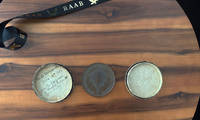
1509ref. 3366415/09/1866. Acquired from the direct descendants of the commander of the vessel that received the medal in Russia it was not known to have survived and has never before been offered for sale Emperor Alexander II issued the Emancipation Manifesto on March 3 1861 which granted freedom to over 23 million serfs. This reform is known as the Emancipation Edict. The Emancipation Proclamation was issued by President Abraham Lincoln on January 1 1863. It declared that all persons held as slaves within the rebellious Confederate states ""are and henceforward shall be free."" The Union victory in the Civil War finalized in 1865 ensured this would become the law of the land. Lincoln and Alexander had something else in common. Lincoln was assassinated in April 1865 by John Wilkes Booth in an act of political violence. The attempted assassination of Alexander II in 1866 was a failed act of political violence by Dmitry Karakozov a young revolutionary. Karakozov's aim was to kill the Tsar and spark a revolution believing the Emperor had betrayed the people's expectations after his emancipation of serfs in 1861. Another attempt around 20 years later would be successful. In 1866 President Andrew Johnson sent Assistant Secretary of the Navy Gustavus Vasa Fox who had played a leading role in the expedition to relieve Fort Sumter in April 1861 on a mission to Russia primarily to deliver a resolution from Congress congratulating Emperor Alexander II on his survival of the assassination attempt. The mission also aimed to gather information on European naval capabilities and explore potential trade opportunities including the sale of the ironclad monitor USS Miantonomoh. The mission was a major event marking a high point in Russian-American friendship and was met with grand receptions in St. Petersburg and Moscow. In the process Johnson sent the ironclad Miantonomoh itself on a world tour with the destination of Russia - first across the Atlantic and through the North Sea the Baltic and then through the Mediterranean in 1866 and 1867. The commander of this vessel was Moses Stuyvesant graduate of the Naval Academy and hero of the Civil War. He had been on two sunk vessels including one taken down by a Confederate Ironclad. But the mission had two messages: to congratulate Russia on the freeing of the serfs and the Tsar on surviving the assassination attempt. The resolution read: “JOINT RESOLUTION relative to the attempted assassination of the Emperor of Russia. “Be it resolved by the Senate and House of Representatives of the United States of America in Congress assembled That the Congress of the United States of America has learned with deep regret of the attempt made upon the life of the Emperor of Russia by an enemy of emancipation. The Congress sends greeting to his Imperial Majesty and to the Russian nation and congratulates the twenty millions of serfs upon the providential escape from danger of the sovereign to whose head and heart they owe the blessings of their freedom. “Sec. 2. And be it further resolved That the President of the United States be requested to forward a copy of this resolution to the Emperor of Russia. “Approved May 16 1866.” In mid Summer the Miantonomoh arrived in the harbor of Cronstadt on the 17th of August and the Tsar sent an address acknowledging the visit of Mr Fox. On Saturday September 15 the fleet went to push off from Russia. Mr. Fox left Petersburg after a farewell breakfast given on Russian yacht Rurik at which the Russian Lieutenant Greig presented the Americans with a symbol of their newly instituted freedoms from slavery in both countries: a medal struck in memory of the enfranchisement of the serfs in Russia. Grieg said ""The friendship of the two nations. among the causes to which is due this mutual spirit is the great event emancipation which has been accomplished almost simultaneously in the two countries - there by a sanguinary struggle here by the path of peace."" He then presents the ""medal struck in memory of the enfranchisement of the peasants.He will see on it the likeness of our sovereign and the effigy of a nobleman and of peasant."" This is that very medal given by the Russians to the Americans to commemorate the freedom of their former slaves presented to the Americans depicting the scene of Alexander II on one side as Grieg says in a case on the inside of which Stuyvesant as commander of the expedition has signed his name and dated it September 15 1866 the day of the presentation of the medal and Grieg's speech and written ""From the Emperor of Russia Alex III"" instead of II. The bronze medal reads: ""FEBRUARY 19 1861 Cut to N. Kozin from the model of count F. Tolstoy. Engraver: Nikolai Kozin"" It is not known how many were made. A small number have reached the market but none akin to this: with the important symbolism of a state gift congratulating a nation on emancipation. This was a gift of one slave-freeing nation to another in the immediate aftermath of those actions. This medal was not known to have survived and comes from the direct descendants of Stuyvesant who received it September 5 1866. <img class=""alignnone wp-image-25018 size-post-window"" src=""https://cdn.raabcollection.com/wp-content/uploads/20231204144051/Folder-site-11-1600x1327.jpg"" alt="""" width=""1600"" height=""1327"" /> unknown