28 067 résultats
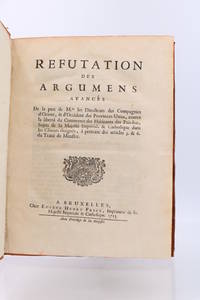
1723réf. 90242Brussels The Hague: Eugène Henry FricxThomam Johnson Mathieu Roguet 1723. Fine. Companies that are hardly the best of friends. Eugène Henry Fricx Thomam Johnson Mathieu Roguet Brussels The Hague 1723-1725 18.5 x 24.5 cm 3 volumes reliés en 1 First editions of each of the pamphlets.Contemporary full speckled calf binding smooth spine richly gilt in the grotesque style beige calf lettering piece patterned paper endpapers and pastedowns worn corners red edges period binding.Some rubbing to the spine.Founded in December 1722 by the Holy Roman Emperor Charles VI the Imperial Company of Commerce and Navigation established Ostend in the Austrian Netherlands roughly present-day Belgium as its home port and warehouse. However neighbouring powers in particular the two Dutch East India Companies and the English East India Company strongly opposed this new enterprise which threatened their commercial interests.This collection comprises three treatises relating to this commercial dispute: 1 MAC NENY Patrice Refutation des argumens avancés De la part de Mrs les Directeurs des Compagnies d'Orient & d'Occident des Provinces-unies contre la liberté du Commerce des habitants des Païs-bas Sujets de Sa Majesté Imperiale & Catholique dans les Climats éloignés à pretexte des articles 5. & 6. du Traité de Munster. Printed in Brussels by Eugène Henry Fricx 1723 4to 1 n.p.l. 71 pp.Not in Goldsmith nor Kress. 2 WESTERVEEN Abraham. Dissertatio secunda De Jure quod competit Societati privilegiatae foederati Belgii Ad Navigationem & Commercia Indiarum Orientalium ; Adversus Incolas Belgii Hispanici hodie dicti Austriaci Hagæ Comitum The Hague Apud Thomam Johnson 1724 4to 2 n.p.l. title leaves 63 pp.Goldsmith 6293. 3 FORMAN Charles. Lettre à Monsieur Guillaume Pulteney Membre du Conseil Privé de Sa Majesté Britannique &c. Dans laquelle on démontre que la Compagnie Imperiale de Commerce & de Navigation doit être pernicieuse à la Grande-Bretagne & aux Provinces-Unies. Traduites de l'Anglois par F.M.J. printed in The Hague by Mathieu Roguet 1725 4to 2 n.p.l. 28 pp. It was not until the Treaty of Vienna in 1731 that an agreement was reached whereby the Ostend Company would cease trading in the East Indies. Provenance: Printed stamp of the library of the Princes of Starhemberg at Eferding Castle on the front free endpaper with the shelfmark XI 13 in blue pencil. Eugène Henry FricxThomam Johnson Mathieu Roguet unknown
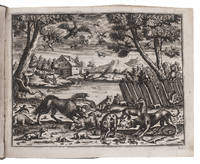
1709réf. KAHFNW706ETUNürnberg 1709. 8vo. Johann Leonhard Buggel Contemporary but not uniform vellum sewn on 3 cords with a hollow back vol. I with dark blue edges with a manuscript title in Latin at the head of the spine: Tractatus de insectis aliisque animalibus nocivis extirpandis; vol. II with a manuscript title in German at the head of the spine: Von schadliechen Ungedierter Außrottung II. Each volume with a folding illustrated engraved title-page and a folding letterpress title-page a larger folding engraved plate in volume II woodcut tailpieces and decorated initials headpieces built up from typographic ornaments. Set in fraktur types with incidental Schwabacher and roman types. 2 volumes. 22 699 = 697 23; 38 944 48 pp. plus 2 folding letterpress title-pages and the 3 engravings. First edition rarely found complete of a detailed account of animals that are harmful to people and to their livestock the treatment of bites illnesses and poisonings they cause and instructions for their extermination. It covers animals on land in water in the air and underground. The large folding plate in vol. II shows 38 insects including 14 caterpillars and the two engraved title-pages for volumes I and II show well over 50 vol. I about 25 vol. II animals not counting a large group of ants and many birds in the distance in the former. The book also provides information about uses of the dead harmful animals for making clothes and medicines and includes many medicinal recipes. The animals discussed include wolves foxes mad dogs birds including birds of prey snakes frogs toads rats mice moles beetles caterpillars bed bugs lice fleas and other insects spiders snails and other molluscs various kinds of worms and even a dragon and basilisk the latter illustrated in the engraved title-page to volume I: it looks more cock-like than snake-like so most people would now call it a cockatrice but the two have long been used almost interchangeably. Krafft notes that dragons are rarely or never found in Germany but says one was found in Bohemia a few years ago and that they are more common in Nubia Libya and the largest ones in "Indien" probably meaning the East Indies and perhaps based on reports of the Komodo dragon.With an owner's inscription of Stefan von Clodt 1674-1737 Vicar General and Provost of Michaelsberg in Fulda on the title-page of vol. I. Somewhat browned vol. I only slightly and with an occasional small stain but still in good condition. The binding of vol. I is in very good condition with only a few small worm holes in the hinges; vol. II is rubbed and damaged lacking the lowest 3 cm of the backstrip. A very detailed source of information on animals regarded as pests from both a medical and a farming and gardening perspective.l Lindner Jagdliteratur 11.1171.01 & 11.1173.01; VD18 11041935 = 90643208 & 90643224; cf. Horn & Schenkling 12340 with 1713 ed. of vol. I. ABE CAT Agriculture hardcover
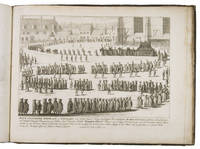
1765réf. ABC_50341Leeuwarden 1765. Oblong folio. Abraham Ferwerda Contemporary gold-tooled marbled calf with a red morocco title label on the spine lettered in gold gold-tooled board edges red and blue painted edges. With an engraved coat-of-arms as a headpiece and 22 full-page engraved plates by Rienk Jelgerhuis. 10 pp. A rare first and only edition of this finely illustrated funeral publication published on the occasion of the solemn obsequies of Maria Louisa of Hesse-Kassel 1688-1765 Princess Consort of Orange as the wife of Johan Willem Friso 1687-1711. She served as regent during two important periods in Dutch history governing on behalf of her son William IV 1711-1751 and later her grandson William V 1748-1806.The publication offers a detailed visual record of the elaborate state funeral held at Leeuwarden in June 1765 in which court officials military contingents civic representatives and members of the nobility participated in a carefully ordered procession that emphasised rank hierarchy and dynastic continuity. Such ceremonial prints functioned both as commemorative objects and as instruments of public representation reinforcing the status of the House of Orange-Nassau within the political culture of the Republic.The engravings are by Rienk Jelgerhuis 1729-1806 a prolific Dutch painter and draughtsman renowned particularly for his portraiture and precise observational skill here applied to the structured depiction of ceremonial pageantry. The work was published by Abraham Ferwerda 1716-1783 bookseller and printer at Leeuwarden an important figure in Frisian print culture and the founder of the Leeuwarder courant 1752 one of the earliest and longest-running newspapers in the Netherlands.The present copy comes from the library of Ferdinand Caspar Koch 1873-1957 who assembled a collection of early travellers diaries topographical works and books on uniforms and other military subjects.With the bookplate and label of "Mr. F.C. Koch Rotterdam" mounted on the front pastedown. The boards are somewhat worn the leather along the front joint is split the leather of the lower inner corner of the front board is torn off but is included separately the leather on the bottom edge of the back board has been reinforced. The work is very slightly foxed with occasional finger soiling. Otherwise in good condition.l Landwehr Splendid ceremonies 235; Muller II 4160; STCN 157102602 5 copies; WorldCat 81530279 68886850 7 copies. hardcover
1616réf. ABC_48242Amsterdam 1616. Oblong 4to ca. 16 x 21 cm. Abraham Goos in de Kalverstraet 19th-century quarter calf with a manuscript number on the spine "32" sprinkled paper sides. With an engraved title page signed by P.Serwouter scul. bottom right after D.Vinck Boons bottom left 23 full page maps several decorated woodcut initials and woodcut tailpieces. 7 "305" =294 2 1 blank pp. Rare first edition of one of the first atlases of the Low Countries with 23 very detailed maps. It is the only atlas published by the mapmaker Abraham Goos himself. At the time the present atlas was published the Seven United provinces The Northern Netherlands were still together with the 10 provinces of the Spanish or Habsburg Low Countries. The atlas includes two maps of the Low Countries as a whole one map of each of the seventeen provinces except Drenthe which is included in the map of Overijssel four additional maps of Holland and one additional map of Brabant. Gooss maps were also used for the Atlas Minor published by Johannes Janssonius in 1628.The maps are elegantly designed with decorative title cartouches finely engraved and set in a decorative oval rectangular frame while the corners are decorated in a Renaissance style. The work was reprinted by Janssonius in 1625 and Doncker in 1685. Only the first edition was printed by Goos himself. Koeman recognizes only one Goos issue but Van der Krogt's reissue of Koeman's Atlantes Nederlandici distinguishes two of which ours is the second. The two issues are nearly identical but the second can be recognised by the imprint which includes Goos's new address "inde Kalverstraet" and the addition of the text "cum privilegio" to the maps which Goos added after receiving his privilege for this atlas on 24 December 1615 and an honorarium of 120 guilders from the States General on 8 January 1616. Generally 20 of the 23 maps of the second issue have this addition but in the present copy it is 17: the text is not present on maps 3-5 8 and 11-12.The text was written by the poet and translator Reinier Telle 1559-1618 who based it mainly on Ludovicos Guicciardinis Beschrijvinghe van alle de Nederlanden translated by Telle in 1613. Telles text was in turn the main source for the text in De Vyerighe Colom; finally that text was again used for a new edition of Guicciardinis work published by Jacob van Meurs in 1660.Abraham Goos ca. 1590-before 1643 was born in Antwerp as the son of Margaretha van den Keere the sister of the famous mapmaker Hendrik van den Keere. In 1600 Goos moved to Amsterdam where he soon was employed and trained by the Hondius family and by Willem Jansz. Blaeu. He had his own shop named "In t vergulde Caertboeck" first located op den Dam later around 1615 in the Kalverstraat. Pieter Goos Abrahams son later became famous for his sea atlases and pilot guides.With an erased ownerships entry at the head of the half-title and 18th-century annotations on pp. 136-138. The edges and corners of the boards are scuffed the boards have been rubbed with some loss of material. The first few leaves are somewhat browned a repaired hole in the lower margin of the title page false folds in the half title some marginal small tears small holes in 2 leaves with some loss of text a repaired tear in the last leaf a water stain in the outer half of the last few leaves. Otherwise in good condition.l Krogt P. van der Koemans Atlantes Neerlandici IIIB § 363 pp. 612-615 no. 363:01B; Koeman Atlantes Neerl. II p. 121 Goo 1; STCN 853385556; USTC 1032942; cf. for the text: Fontaine Verwey H. de la Reinier Telle hekeldichter pamfletschrijver vertaler in: Uit de wereld van het boek III pp. 55-86 esp. 68. hardcover
2017réf. Atlantic-9780128046777Elsevier 2017. 1. Hardcover. New. Elsevier hardcover
2017réf. Atlantic-9780128046777Elsevier 2017. 1. Hardcover. New. Elsevier hardcover
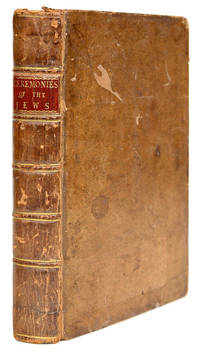
réf. 94056London Printed for J. Wilcox 1738. . First edition 8vo 20.5 x 13 cm; xiv 96; 291 7 pp.; contemporary polished calf gilt contrasting red morocco lettering-piece early inked initials letters and shelfmark to front pastedown nineteenth-century ink inscription to rear pastedown; slightly rubbed with a small chip to head of spine and some light scuffing to boards one or two paper-flaws to page numbers small hole to I2 barely touching a single character of text occasional mark light damp-staining to rear endpapers else a very crisp and clean copy. The earliest translation to English of the Jewish prayer-book. This comprehensive and occasionally rather critical study of Jewish life and practices is dominated by the first English translation of any part of the Siddur the definitive Jewish prayer-book. Translated by Abraham Mears under the pseudonym of Gamaleil Ben Pedahzur according to Roth an apostate member of the English Ashkenazi community it was intended as an exposition of Judaism rather than a service book but in providing phonetic translations of the Hebrew title of each prayer Mears explicitly promotes its use 'to Beginners in the Hebrew Tongue' and 'all Persons that resort to the Synagogues'. The transliterated Hebrew title for each prayer is found in the margins enabling the curious non-Hebrew reading Christian to attend and follow a synagogue service. The transliteration of the Hebrew characters provides a clue as to how Hebrew was pronounced in the eighteenth-century Ashkenazi community of London. The book was not intended for liturgical use but rather for scholarly readership so it is not in effect a prayer-book. It reflects the growing interest in Judaism on the part of non-Jewish Englishmen of the eighteenth century. ESTC T86072; Roth B8:6. London, Printed for J. Wilcox, 1738. hardcover
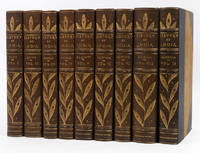
réf. 119698London The Grolier Society 1906-07. . The extra-illustrated 'Connoisseur Edition' no. 3 of 200 copies; 9 vols 4to 26.5 x 19.5 cm; extra-illustrated with numerous plates and illustrations some colour edges untrimmed; original half green morocco marbled boards spines lettered in gilt and decorated with gilt foliage motif top edges gilt spines a touch faded one small chip to head of vol. 5 otherwise a fine set. A beautifully bound set of this survey of Indian history. This limited edition is extra-illustrated with many of the plates duplicated in black & white or colour. Each volume has its own author: vol. I by Romesh Chunder Dutt; vol. II by Vincent A. Smith vols III & IV by Stanley Lane-Poole vol. V by Sir Henry Miers Elliot vols VI & VII Sir William Wilson Hunter vol. VIII by Sir Alfred Comyn Lyall and vol. IX by A.V. Williams Jackson. Abraham Valentine Williams Jackson 1862-1937 was an American specialist on Indo-European languages particularly those in Zoroastrian manuscripts. He visited India in 1901 and was received warmly the Parsees. London, The Grolier Society, 1906-07. hardcover
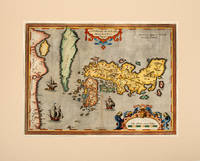
réf. 112503Antwerp Christopher Plantin for the author 1598. . Double-page copper engraved map with later hand-colouring centre fold as issued cartouches for title and scale French text on verso; sheet size: 42 x 53 cm. Minor stains to fold. Mounted size: 52cm by 65.5cm. Well-preserved example of Ortelius' map of Japan taken from the fifth final and most complete French edition of Theatre de l'Univers. Enriched with decorative cartouches and ships. Abraham Ortelius 1527-1598 was a cartographer and publisher he was born and died in Antwerp. Koeman III Ort 32. Antwerp, Christopher Plantin for the author, 1598. unknown
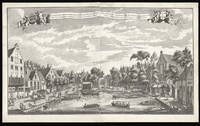
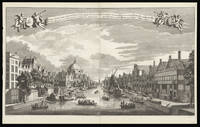
1720réf. 14403Amsterdam: Leon Schenk Abraham Rademaker c1720. 560 by 960mm. 22 by 37.75 inches. Engraving with etching on two sheets joined. A view of the Overtoom in the eighteenth century. By the eighteenth century numerous country villas had been built along the Overtoom one of the main canal's linking Amsterdam with river Schinkel as well as pleasure gardens and numerous ale houses and shops. The Overtoom gained its name from the machine for moving a boat from one body of water to another where the level varied. Rather than with the aid of a lock in other canal systems the boat would be physically pulled across the land. The machine is depicted to the right of the print consisting of two large wheels it can be seen pulling a small boat onto the canal. Leonard Schenk fl.1720-1746 engraver mapmaker and publisher in Amsterdam. Abraham Rademaker 1677 21 January 1735 was an 18th-century painter and printmaker from the Northern Netherlands. Rademaker was born in Lisse. According to the RKD he was a versatile artist who painted Italianate landscapes but is known mostly for his many cityscapes and drawings of buildings that were made into print. R.W.P. de Vries auction 1925: 288. Leon Schenk, Abraham Rademaker, unknown
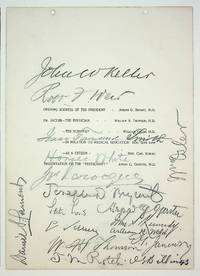
1900réf. 1680New York: Tiffany & Co. program/menu The Knickerbocker Press Festschrift 1900. First editions. RARE PROGRAM/MENU FOR DINNER IN HONOR OF ABRAHAM JACOBI'S 70TH BIRTHDAY--SIGNED BY JACOBI AND 17 NOTABLE ATTENDEES TOGETHER WITH BOUND PUBLISHED PROCEEDINGS AND FESTSCHRIFT VOLUME PRESENTED TO HONOREE. 1 Program of "Dinner in Honor of Doctor Abraham Jacobi on the Seventieth Anniversary of His Birthday Saturday May the Fifth Nineteen Hundred at Delmonico's." Three leaves 15.8x22.3 cm printed on fine card stock by Tiffany & Co. each with 2 small holes at top for binding by ribbon. Menu program cover with engraved portrait of Jacobi with his pencil signature below and program with pencil signature of 17 attendies. Framed in 41.5x66.5 cm dark wooden frame with ribbon tie in pouch attached to back of frame. Browning to page edges otherwise very good. SIGNERS OF THE PROGRAM: John Shaw Billings 1838 - 1913 was an American librarian building designer and surgeon who modernized the Library of the Surgeon General's Office in the United States Army. His work with Andrew Carnegie led to the development and his service as the first director of the New York Public Library. Billings oversaw the building of the Surgeon General's Library which was the nation's first comprehensive library for medicine. Joseph Decatur Bryant 1845 - 1914 was a surgeon New York City Health Commissioner Surgeon-General of the National Guard Surgeons and physician to Grover Cleveland and John D. Rockefeller. He also held a series of academic positions at Bellevue Hospital Medical College culminating with the title of professor of the principles and practice of surgery and professor of operative and clinical surgery at New York University and Bellevue Hospital Medical College. Arpad Geyza Charles Gerster 1848-1923 A surgeon who practiced at Mt. Sinai in New York City in the late 1890s and early 1900s. Hungarian by birth he was also a sportsman linguist and an artist. Gerster's vivid often humorous observations of nature and people his delight in the outdoors and his drawings and etchings offer a larger portrait of the Adirondack region in the age of William West Durant Great Camps railroads and the beginning of the conservation movement. Abraham Jacobi 1830 - 1919 was a German physician and pioneer of pediatrics. He was a key figure in the movement to improve child healthcare and welfare in the United States and opened the first children's clinic in the country. To date he is the only foreign-born president of the American Medical Association. He is regarded as the Father of American Pediatrics. Edward Gamaliel Janeway 1841 - 1911 was an American physician who served as Health Commissioner of New York and as president of the New York Medical Journal Association in the late nineteenth century. He was considered "one of America's premier internists in the late nineteenth and early twentieth centuries". John W. Keller 1856 -1919 was a New York newspaper man member of Tammany Hall and in 1900 was a delegate to the National Democratic Convention and his name was presented by the New York delegation for the Vice Presidency. From 1898 to 1902 he was Commissioner of Public Charities in New York city. John Stewart Kennedy 1830 - 1909 was a Scottish-born American businessman financier and philanthropist. He was a member of the Jekyll Island Club also known as The Millionaires' Club on Jekyll Island Georgia along with J.P. Morgan and William Rockefeller among others. Daniel Scott Lamont 1851 - 1905 was the United States Secretary of War during Grover Cleveland's second term. After his service as Secretary of War Lamont was vice president of the Northern Pacific Railway Company from 1898 to 1904. In August 1904 he was supported by the New York Times as a candidate for Governor of New York. Joseph Larocque 1831 - 1908 was a New York City lawyer and president of the New York City Bar Association. Larocque was a director of several companies including the American Cotton Oil Company the Commonwealth Insurance Company of New York Niagara Falls Power Company and Plaza Bank. He also served on the boards of a number of New York City institutions including the Metropolitan Museum of Art the Century Club and Columbia University. Seth Low 1850 - 1916 was an American educator and political figure who served as the mayor of Brooklyn from 1881 to 1885 the president of Columbia University from 1890 to 1901 a diplomatic representative of the United States and the mayor of New York City from 1902 to 1903. William Osler 1849 - 1919 was a Canadian physician and one of the founding professors of Johns Hopkins Hospital. In 1889 he became the first Physician-in-Chief of the new Johns Hopkins Hospital in Baltimore Maryland. In 1893 Osler was instrumental in creating the Johns Hopkins School of Medicine and became one of the school's first professors of medicine. Thomas Morgan Rotch 1849 - 1914 graduated from Harvard College in 1870 and from Harvard Medical School in 1874. He was the president of the American Pediatric Society for 1890”"91 and America's first full professor of pediatrics. Carl Schurz 1829 - 1906 was a German-American revolutionary and an American statesman journalist and reformer. He migrated to the United States after the German revolutions of 1848”"1849 and became a prominent member of the new Republican Party. In 1868 he was elected to the United States Senate from Missouri becoming the first German American in that body. He supported William Jennings Bryan's anti-imperialist campaign in the 1900 presidential election. Schurz lived in a summer cottage in Northwest Bay on Lake George New York which was built by his good friend Abraham Jacobi. Isaac Townsend Smith 1813 - 1906 was one of the incorporators of the Metropolitan Savings Bank of New York and was for many years its president. He was also Commissioner of Immigration for the state of New York and a presidential elector in 1864 when Abraham Lincoln was reelected. For the following 50 years Smith was in intimate touch with the Siamese government as its financial agent Consul and Consul General. William Hanna Thomson 1833 - 1918 was assistant physician at Quarantine Hospital in New York and physician to the Charity Hospital consulting physician to Roosevelt Hospital and Bellevue Hospital Professor of Medicine at New York University Medical College a member of the New York Neurological Society and President of the New York Academy of Medicine during 1899”"1900. Robert Fulton Weir 1837 - 1927 professor of surgery in the College of Physicians and Surgeons from 1873 to 1903 and President of The New York Academy of Medicine from 1900 to 1903. His wide experience was gained chiefly in the Civil War in which he served as surgeon in charge of the hospital of Frederick Maryland one of the largest Government hospitals from 1862 to 1865. William Henry Welch 1850 - 934 was an American physician pathologist bacteriologist and medical school administrator. He was one of the founding professors at the Johns Hopkins Hospital and the first dean of the Johns Hopkins School of Medicine. He was also the founder of the Johns Hopkins School of Hygiene and Public Health the first school of public health in the country. Horace White 1865 - 943 was a member of the New York State Senate from 1896 to 1908 and Lieutenant Governor of New York from 1909 to 1910. White who was the nephew of Cornell's first President Andrew Dickson White left three-quarters of his estate to the university and that fund had grown to $1.5 million by 1973. 2 Proceedings and Addresses at the Complimentary Dinner Tendered to Dr. A. Jacobi on the Occasion of the Seventieth Anniversary of His Birthday May 5 Nineteen Hundred. 18.5x25.5 cm hardcover black cloth binding gilt title to cover covers with beveled edges top edge gilt floral endpapers engraved frontispiece including portrait of Jacobi reproducing first leaf of dinner program 74 pp including the following: i Introductory Note by the committee of physicians and laymen convened to celebrate Jacobi's 70th birthday "a fit occasion for a hearty manifestation of the esteem in which Dr. Jacobi is held and for a recognition of the services he has rendered in various relations--during the course of almost fifty years”"as a physician educator and civic worker. It was felt also that such an occasion would afford an appropriate setting for the unusual honor to be paid Dr. Jacobi in the presentation of a 'Festschrift' comprising original contributions to medical literature dedicated to him by fifty physicians and scientists including many of the most prominent in all parts of the world." ii Address of Dr. Joseph D. Bryant Chairman; iii Poem of Dr. S. Weir Mitchell: 'Abraham Jacobi Medicus Magister Amicus'; iv Address of Dr. William H. Thomson: 'Jacobi the Physician'; v Address of Dr. William Osler: 'The Scientist'; vi Address of the Honorable Seth Low: 'In Relation to Medical Education'; vii Address of the Honorable Carl Schurz: 'The Citizen'; viii Address of Dr. Arpad G. Gerster: Presentation of the 'Jacobi Festschrift "Mr. Chairman I hold in my hand a volume containing the scientific contributions of fifty-three medical men of note men representing two continents and eleven nations"; ix Remarks of Dr. Francis Foerster presenting the address of the German Hospital; x Remarks of Dr. Emil Gruening presenting the resolutions for Mount Sinai Hospital; 10 Address of Dr. Jacobi: The Guest of the Evening; xi Letters and Telegrams Received; xii Subscribers to the Dinner. Very good in custom archival mylar cover. 3 "Festschrift" in honor of Abraham Jacobi. To Commemorate the seventieth Anniversary of his Birth May Sixth 1900. 16.5x16 cm hardcover green cloth binding with printed gray paper covers paper title label to spine top edge gilt institutional library bookplate to front paste-down engraved frontispiece portrait of Jacobi with tissue guard i-xiii 496 pp 12 plates 2 folding charts. 55 contributions by 57 authors including George Adami Theodor Escherich Eduard Henoch Luther Emmett Holt Henry Koplik William Osler Thomas Morgan Rotch and William Henry Welch. Topics include infectious diease cancer neurology seizures metabolic disease congenital heart disease urology/nephrology and toxicology. Most papers in English several in German or French language. Covers worn library numbers bottom of spine front hinge split offsetting of frontispiece to title page browning to page edges. Binding tight pages unmarked good in custom archival mylar cover. Tiffany & Co. (program/menu), The Knickerbocker Press (Festschrift)
1900réf. 1680New York: Tiffany & Co. program/menu The Knickerbocker Press Festschrift 1900. First editions. RARE PROGRAM/MENU FOR DINNER IN HONOR OF ABRAHAM JACOBI'S 70TH BIRTHDAY--SIGNED BY JACOBI AND 17 NOTABLE ATTENDEES TOGETHER WITH BOUND PUBLISHED PROCEEDINGS AND FESTSCHRIFT VOLUME PRESENTED TO HONOREE. 1 Program of "Dinner in Honor of Doctor Abraham Jacobi on the Seventieth Anniversary of His Birthday Saturday May the Fifth Nineteen Hundred at Delmonico's." Three leaves 15.8x22.3 cm printed on fine card stock by Tiffany & Co. each with 2 small holes at top for binding by ribbon. Menu program cover with engraved portrait of Jacobi with his pencil signature below and program with pencil signature of 17 attendies. Framed in 41.5x66.5 cm dark wooden frame with ribbon tie in pouch attached to back of frame. Browning to page edges otherwise very good. SIGNERS OF THE PROGRAM: John Shaw Billings 1838 - 1913 was an American librarian building designer and surgeon who modernized the Library of the Surgeon General's Office in the United States Army. His work with Andrew Carnegie led to the development and his service as the first director of the New York Public Library. Billings oversaw the building of the Surgeon General's Library which was the nation's first comprehensive library for medicine. Joseph Decatur Bryant 1845 - 1914 was a surgeon New York City Health Commissioner Surgeon-General of the National Guard Surgeons and physician to Grover Cleveland and John D. Rockefeller. He also held a series of academic positions at Bellevue Hospital Medical College culminating with the title of professor of the principles and practice of surgery and professor of operative and clinical surgery at New York University and Bellevue Hospital Medical College. Arpad Geyza Charles Gerster 1848-1923 A surgeon who practiced at Mt. Sinai in New York City in the late 1890s and early 1900s. Hungarian by birth he was also a sportsman linguist and an artist. Gerster's vivid often humorous observations of nature and people his delight in the outdoors and his drawings and etchings offer a larger portrait of the Adirondack region in the age of William West Durant Great Camps railroads and the beginning of the conservation movement. Abraham Jacobi 1830 - 1919 was a German physician and pioneer of pediatrics. He was a key figure in the movement to improve child healthcare and welfare in the United States and opened the first children's clinic in the country. To date he is the only foreign-born president of the American Medical Association. He is regarded as the Father of American Pediatrics. Edward Gamaliel Janeway 1841 - 1911 was an American physician who served as Health Commissioner of New York and as president of the New York Medical Journal Association in the late nineteenth century. He was considered "one of America's premier internists in the late nineteenth and early twentieth centuries". John W. Keller 1856 -1919 was a New York newspaper man member of Tammany Hall and in 1900 was a delegate to the National Democratic Convention and his name was presented by the New York delegation for the Vice Presidency. From 1898 to 1902 he was Commissioner of Public Charities in New York city. John Stewart Kennedy 1830 - 1909 was a Scottish-born American businessman financier and philanthropist. He was a member of the Jekyll Island Club also known as The Millionaires' Club on Jekyll Island Georgia along with J.P. Morgan and William Rockefeller among others. Daniel Scott Lamont 1851 - 1905 was the United States Secretary of War during Grover Cleveland's second term. After his service as Secretary of War Lamont was vice president of the Northern Pacific Railway Company from 1898 to 1904. In August 1904 he was supported by the New York Times as a candidate for Governor of New York. Joseph Larocque 1831 - 1908 was a New York City lawyer and president of the New York City Bar Association. Larocque was a director of several companies including the American Cotton Oil Company the Commonwealth Insurance Company of New York Niagara Falls Power Company and Plaza Bank. He also served on the boards of a number of New York City institutions including the Metropolitan Museum of Art the Century Club and Columbia University. Seth Low 1850 - 1916 was an American educator and political figure who served as the mayor of Brooklyn from 1881 to 1885 the president of Columbia University from 1890 to 1901 a diplomatic representative of the United States and the mayor of New York City from 1902 to 1903. William Osler 1849 - 1919 was a Canadian physician and one of the founding professors of Johns Hopkins Hospital. In 1889 he became the first Physician-in-Chief of the new Johns Hopkins Hospital in Baltimore Maryland. In 1893 Osler was instrumental in creating the Johns Hopkins School of Medicine and became one of the school's first professors of medicine. Thomas Morgan Rotch 1849 - 1914 graduated from Harvard College in 1870 and from Harvard Medical School in 1874. He was the president of the American Pediatric Society for 1890”"91 and America's first full professor of pediatrics. Carl Schurz 1829 - 1906 was a German-American revolutionary and an American statesman journalist and reformer. He migrated to the United States after the German revolutions of 1848”"1849 and became a prominent member of the new Republican Party. In 1868 he was elected to the United States Senate from Missouri becoming the first German American in that body. He supported William Jennings Bryan's anti-imperialist campaign in the 1900 presidential election. Schurz lived in a summer cottage in Northwest Bay on Lake George New York which was built by his good friend Abraham Jacobi. Isaac Townsend Smith 1813 - 1906 was one of the incorporators of the Metropolitan Savings Bank of New York and was for many years its president. He was also Commissioner of Immigration for the state of New York and a presidential elector in 1864 when Abraham Lincoln was reelected. For the following 50 years Smith was in intimate touch with the Siamese government as its financial agent Consul and Consul General. William Hanna Thomson 1833 - 1918 was assistant physician at Quarantine Hospital in New York and physician to the Charity Hospital consulting physician to Roosevelt Hospital and Bellevue Hospital Professor of Medicine at New York University Medical College a member of the New York Neurological Society and President of the New York Academy of Medicine during 1899”"1900. Robert Fulton Weir 1837 - 1927 professor of surgery in the College of Physicians and Surgeons from 1873 to 1903 and President of The New York Academy of Medicine from 1900 to 1903. His wide experience was gained chiefly in the Civil War in which he served as surgeon in charge of the hospital of Frederick Maryland one of the largest Government hospitals from 1862 to 1865. William Henry Welch 1850 - 934 was an American physician pathologist bacteriologist and medical school administrator. He was one of the founding professors at the Johns Hopkins Hospital and the first dean of the Johns Hopkins School of Medicine. He was also the founder of the Johns Hopkins School of Hygiene and Public Health the first school of public health in the country. Horace White 1865 - 943 was a member of the New York State Senate from 1896 to 1908 and Lieutenant Governor of New York from 1909 to 1910. White who was the nephew of Cornell's first President Andrew Dickson White left three-quarters of his estate to the university and that fund had grown to $1.5 million by 1973. 2 Proceedings and Addresses at the Complimentary Dinner Tendered to Dr. A. Jacobi on the Occasion of the Seventieth Anniversary of His Birthday May 5 Nineteen Hundred. 18.5x25.5 cm hardcover black cloth binding gilt title to cover covers with beveled edges top edge gilt floral endpapers engraved frontispiece including portrait of Jacobi reproducing first leaf of dinner program 74 pp including the following: i Introductory Note by the committee of physicians and laymen convened to celebrate Jacobi's 70th birthday "a fit occasion for a hearty manifestation of the esteem in which Dr. Jacobi is held and for a recognition of the services he has rendered in various relations--during the course of almost fifty years”"as a physician educator and civic worker. It was felt also that such an occasion would afford an appropriate setting for the unusual honor to be paid Dr. Jacobi in the presentation of a 'Festschrift' comprising original contributions to medical literature dedicated to him by fifty physicians and scientists including many of the most prominent in all parts of the world." ii Address of Dr. Joseph D. Bryant Chairman; iii Poem of Dr. S. Weir Mitchell: 'Abraham Jacobi Medicus Magister Amicus'; iv Address of Dr. William H. Thomson: 'Jacobi the Physician'; v Address of Dr. William Osler: 'The Scientist'; vi Address of the Honorable Seth Low: 'In Relation to Medical Education'; vii Address of the Honorable Carl Schurz: 'The Citizen'; viii Address of Dr. Arpad G. Gerster: Presentation of the 'Jacobi Festschrift "Mr. Chairman I hold in my hand a volume containing the scientific contributions of fifty-three medical men of note men representing two continents and eleven nations"; ix Remarks of Dr. Francis Foerster presenting the address of the German Hospital; x Remarks of Dr. Emil Gruening presenting the resolutions for Mount Sinai Hospital; 10 Address of Dr. Jacobi: The Guest of the Evening; xi Letters and Telegrams Received; xii Subscribers to the Dinner. Very good in custom archival mylar cover. 3 "Festschrift" in honor of Abraham Jacobi. To Commemorate the seventieth Anniversary of his Birth May Sixth 1900. 16.5x16 cm hardcover green cloth binding with printed gray paper covers paper title label to spine top edge gilt institutional library bookplate to front paste-down engraved frontispiece portrait of Jacobi with tissue guard i-xiii 496 pp 12 plates 2 folding charts. 55 contributions by 57 authors including George Adami Theodor Escherich Eduard Henoch Luther Emmett Holt Henry Koplik William Osler Thomas Morgan Rotch and William Henry Welch. Topics include infectious diease cancer neurology seizures metabolic disease congenital heart disease urology/nephrology and toxicology. Most papers in English several in German or French language. Covers worn library numbers bottom of spine front hinge split offsetting of frontispiece to title page browning to page edges. Binding tight pages unmarked good in custom archival mylar cover. Tiffany & Co. (program/menu), The Knickerbocker Press (Festschrift) books
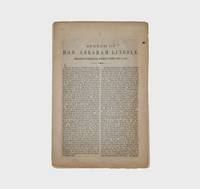
1858réf. 376861Springfield IL 1858. 8pp. printed in double columns. 8vo. Unbound. Minor toning. Housed in a cloth box. 8pp. printed in double columns. 8vo. The only separate printing of this address given by Lincoln at Springfield Illinois. Lincoln's speech which preceded his debates with Douglas puts forth the great themes that marked his political philosophy during the last ten years of his life. More importantly it firmly placed Lincoln as against the expansion of slavery and Douglas on the opposite side of the issue. By targeting Douglas a strategy that resurrected Lincoln's political career he made his fellow Illinoisan out to be the embodiment of the wicked forces safeguarding slavery's expansion . This speech is Lincoln's opening salvo against Douglas for the 1858 senate campaign: 'Free men of Illinois - free men of everywhere - judge ye between him and me'" Abraham Lincoln: His Life in Print p. 67 Urging that slavery be placed on course for "ultimate extinction" he repeats his "House Divided" warning first given at the State Republican Convention a month earlier. He insists that the Kansas-Nebraska bill was "the beginning of a conspiracy" to nationalize slavery. Attacking Douglas and defending himself against the charge that he would "invite a war of sections" he stands on "the principles of our Declaration of Independence." Though African Americans are not the equal of whites "in all respects" the Declaration "does mean to declare that all men are equal in some respects; they are equal in the right to 'life liberty and the pursuit of happiness.'" Most significantly "In the right to put into his mouth the bread that his own hands have earned he is the equal of every other man white or black." A scarce Lincoln speech. Monaghan 12; Byrd 2960 unknown
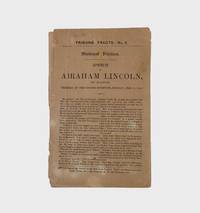
1860réf. 376855New York: Office of the New York Tribune 1860. First edition Monaghan's first issue. 1 2-15 1pp. With New York Tribune ads and subscription terms on verso of the terminal leaf. 8vo. Stitched self-wrappers toning. First edition Monaghan's first issue. 1 2-15 1pp. With New York Tribune ads and subscription terms on verso of the terminal leaf. 8vo. This address made at the Cooper Institute in New York on February 27 1860 catapulted Lincoln into the public eye and made him a viable presidential candidate. Indeed many historians have considered it the key to his success in the 1860 election and it is probably the most important speech Lincoln made after the Gettysburg Address and his inaugural addresses. The Cooper Union address was months in preparation; Lincoln was fully aware of its importance in moving himself from a regional favorite son to a viable national candidate. In the event some 1500 people including many prominent political figures attended on a snowy new York evening. The speech divides into three major parts. In the first Lincoln addressed the spread of slavery arguing that the framers of the constitution had been opposed to it and that the Federal government could regulate the question. In the second he argued that the Republicans were not a sectional Northern party and attacked the threats of southern Democrats to secede if the Republicans should win the election. Finally he addressed his fellow Republicans calling on them to act carefully and do "nothing through passion and ill temper.Let us have faith that right makes might and in that faith let us to the end dare to do our duty as we understand it." The Cooper Union speech was a resounding success. Horace Greeley described it as "one of the happiest and most convincing political arguments ever made in this City. No man ever made such an impression on his first appeal to a New York audience." Greeley quickly issued the speech in the form of this "Tribune Tract." It includes a final page of advertisements for other Tribune publications. The speech was later widely reprinted and made Lincoln nationally famous. This printing differs from other editions by its inclusion of a speech by James Doolittle Senator from Wisconsin and the message of Samuel Medary Democratic governor of the Kansas Territory vetoing the Kansas abolition bill. "The Cooper Union address tested whether Lincoln's appeal could extend from the podium to the page and from the rollicking campaigns of the rural West to the urban East. Cooper Union held the promise of transforming Lincoln from a regional phenomenon to a national figure. Lincoln knew it and rose to the occasion" Harold Holzer Lincoln at the Copper Union: The Speech That Made Abraham Lincoln President. Monaghan 50 Office of the New York Tribune unknown
1858réf. 376861Springfield IL 1858. 8pp. printed in double columns. 8vo. Unbound. Minor toning. Housed in a cloth box. 8pp. printed in double columns. 8vo. The only separate printing of this address given by Lincoln at Springfield Illinois. Lincoln's speech which preceded his debates with Douglas puts forth the great themes that marked his political philosophy during the last ten years of his life. More importantly it firmly placed Lincoln as against the expansion of slavery and Douglas on the opposite side of the issue. By targeting Douglas a strategy that resurrected Lincoln's political career he made his fellow Illinoisan out to be the embodiment of the wicked forces safeguarding slavery's expansion . This speech is Lincoln's opening salvo against Douglas for the 1858 senate campaign: 'Free men of Illinois - free men of everywhere - judge ye between him and me'" Abraham Lincoln: His Life in Print p. 67 Urging that slavery be placed on course for "ultimate extinction" he repeats his "House Divided" warning first given at the State Republican Convention a month earlier. He insists that the Kansas-Nebraska bill was "the beginning of a conspiracy" to nationalize slavery. Attacking Douglas and defending himself against the charge that he would "invite a war of sections" he stands on "the principles of our Declaration of Independence." Though African Americans are not the equal of whites "in all respects" the Declaration "does mean to declare that all men are equal in some respects; they are equal in the right to 'life liberty and the pursuit of happiness.'" Most significantly "In the right to put into his mouth the bread that his own hands have earned he is the equal of every other man white or black." A scarce Lincoln speech. Monaghan 12; Byrd 2960 unknown books
1860réf. 376855New York: Office of the New York Tribune 1860. First edition Monaghan's first issue. 1 2-15 1pp. With New York Tribune ads and subscription terms on verso of the terminal leaf. 8vo. Stitched self-wrappers toning. First edition Monaghan's first issue. 1 2-15 1pp. With New York Tribune ads and subscription terms on verso of the terminal leaf. 8vo. This address made at the Cooper Institute in New York on February 27 1860 catapulted Lincoln into the public eye and made him a viable presidential candidate. Indeed many historians have considered it the key to his success in the 1860 election and it is probably the most important speech Lincoln made after the Gettysburg Address and his inaugural addresses. The Cooper Union address was months in preparation; Lincoln was fully aware of its importance in moving himself from a regional favorite son to a viable national candidate. In the event some 1500 people including many prominent political figures attended on a snowy new York evening. The speech divides into three major parts. In the first Lincoln addressed the spread of slavery arguing that the framers of the constitution had been opposed to it and that the Federal government could regulate the question. In the second he argued that the Republicans were not a sectional Northern party and attacked the threats of southern Democrats to secede if the Republicans should win the election. Finally he addressed his fellow Republicans calling on them to act carefully and do "nothing through passion and ill temper.Let us have faith that right makes might and in that faith let us to the end dare to do our duty as we understand it." The Cooper Union speech was a resounding success. Horace Greeley described it as "one of the happiest and most convincing political arguments ever made in this City. No man ever made such an impression on his first appeal to a New York audience." Greeley quickly issued the speech in the form of this "Tribune Tract." It includes a final page of advertisements for other Tribune publications. The speech was later widely reprinted and made Lincoln nationally famous. This printing differs from other editions by its inclusion of a speech by James Doolittle Senator from Wisconsin and the message of Samuel Medary Democratic governor of the Kansas Territory vetoing the Kansas abolition bill. "The Cooper Union address tested whether Lincoln's appeal could extend from the podium to the page and from the rollicking campaigns of the rural West to the urban East. Cooper Union held the promise of transforming Lincoln from a regional phenomenon to a national figure. Lincoln knew it and rose to the occasion" Harold Holzer Lincoln at the Copper Union: The Speech That Made Abraham Lincoln President. Monaghan 50 Office of the New York Tribune unknown books
1767réf. JC14337London: Printed by T. Jones. and Sold by T. Payne. / Printed by W. Oliver. and Sold by T. Payne and Son. et al 1767-8. First Edition. Hardcover. Very Good. Contemporary specked calf ornate gilt-stamped border on boards gilt-stamped lettering and ornament in spine compartments 5 raised bands; complete set of 9 volumes published and bound as Volume I Parts i-ii Volume II Parts i-iii Volume III Parts i-iv 8vo; pp. xlvi 384; 384; 315; 335; 540 3 blank errata; 403; 432; 462; 505 1 errata. Volumes I-II bound as the first 5 volumes of this set printed by T. Jones 1768 and with the armorial bookplate of Reverend John St. John of Farley; Volume III the last 4 volumes of this set printed by W. Oliver 1767. Several boards detached. Nevertheless a nice set of the rare first edition difficult to find in a straight run. Images available upon request. Printed by T. Jones... and Sold by T. Payne... / Printed by W. Oliver... and Sold by T. Payne and Son... [et al] hardcover
1767réf. JC14337London: Printed by T. Jones. and Sold by T. Payne. / Printed by W. Oliver. and Sold by T. Payne and Son. et al 1767-8. First Edition. Hardcover. Very Good. Contemporary specked calf ornate gilt-stamped border on boards gilt-stamped lettering and ornament in spine compartments 5 raised bands; complete set of 9 volumes published and bound as Volume I Parts i-ii Volume II Parts i-iii Volume III Parts i-iv 8vo; pp. xlvi 384; 384; 315; 335; 540 3 blank errata; 403; 432; 462; 505 1 errata. Volumes I-II bound as the first 5 volumes of this set printed by T. Jones 1768 and with the armorial bookplate of Reverend John St. John of Farley; Volume III the last 4 volumes of this set printed by W. Oliver 1767. Several boards detached. Nevertheless a nice set of the rare first edition difficult to find in a straight run. Images available upon request. Printed by T. Jones... and Sold by T. Payne... / Printed by W. Oliver... and Sold by T. Payne and Son... [et al] hardcover books
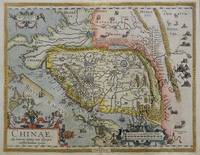
1584réf. 61175hand-coloured copper engraving. verso: Spanish text. EXTREMELY RARE. The first European map of China appeared in Abraham Ortelius's atlas " Theatrum Orbis Terrarum" showing the area of Canton Mindanao no Luzon some islands to the North but only CuboCebu is marked and part of Japan – Spanish edition. An extremely important map for the Philippines here in the first state: there is no indication yet of' 'Las Philippinas' as will be shown later in the second state on the long elongated island just north of Borneo in the position and orientation of Palawan but apparently not based on Spanish knowledge. Ortelius was a notable Dutch cartographer and the publication of this atlas in 1570 marked an epoch in the history of cartography. It was the first uniformly sized systematic collection of maps of the countries of the world based only on contemporary knowledge since the days of Ptolemy & in that sense may be called the first modern atlas; although that term itself was not used until 20 years later by Mercator. The Theatrum was re-issued in 42 editions with 5 supplements with text in Latin Dutch German French Spanish Italian & English between the years 1570-1612. The protrusion of a Southern landmass initially called 'Beach' by Marco Polo is shown South of "Java Major" alluding to Australia. Reference: Tooley Mapmakers S.38; Koeman III Ort 29 B; Walter Japan Nr. 11F; Karrow Mapmakers Nr. 1/152; Landmarks of Mapmaking pict. p. 21; Phillips Atlases 396; OAG Japan a cartographic vision pl. 11F; Suárez: Early Mapping… p. 170-1; Karrow Mapmakers p. 479; Lietz Insulae Indiae Orientalis 36th IMCoS Symposium Manila 2018 Gallery of Prints & Ayala Museum p.12. Condition: Very good. published in Antwerp.
réf. 25123Charles II on his way back to the throne: a lavishly illustrated contemporary account of his triumphant 1660 journey through Holland and departure from Scheveningen for England marking the dramatic beginning of the Restoration.An important and lavishly illustrated contemporary account of Charles IIs celebrated visit to the Dutch Republic in May 1660 immediately before his restoration to the English throne. After years of exile on the Continent Charles travelled from Breda through the Dutch Republic to Scheveningen from where he embarked for England. His departure marked the dramatic conclusion of the English Interregnum and the beginning of the Restoration monarchy.The work records the elaborate receptions banquets processions and ceremonies organised in Charless honour. Particularly important are the six large engravings documenting events at Delft The Hague and Scheveningen. They provide a vivid visual record of the political theatre surrounding the Restoration and of the crucial Dutch role in Charles IIs return to power. The contemporary vellum binding and the presence of the separately published celebratory poem Anglia triumphans make this an especially attractive historical ensemble.Folio. 4 108 pp. Contemporary full vellum. Illustrated with an engraved portrait and six large engraved plates showing the festivities and ceremonies at Delft The Hague and Scheveningen engraved by Philippe and Mathem after Jacob Toorenvliet. Bound with: Robert Keuchenius Anglia triumphans sive in inaugurationem Caroli II poemation. The Hague Adriaen Vlacq 1660. 36 pp.NL Folio 4 108 pag. Gebonden in eigentijdse geheel perkamenten band. Geillustreerd met portret en 6 grote gravures Delft Den Haag en Scheveningen door Philippe en Mathem naar Toorenvliet. Gebonden met: Rob. Keuchenius 'Anglia triumphans sive in inaugurationem . Caroli II . poemation. Den Haag Vlacq 1660 36 pag. hardcover
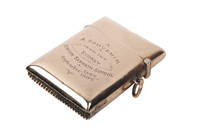
1905réf. 5000696Sydney 1905. In exemplary original condition. 9 carat gold matchbox 15 gr; 45 x 30 mm; monogrammed on the back with interwoven letters "M.A.C." A remarkable memento of the pioneer Jewish educator Maurice Moses Abraham Cohen 1851-1923. Objects from the Australian Jewish community at the start of the 20th century prior to the great waves of Jewish immigration are very scarce. The monogrammed initials on this attractive presentation piece identify it as a gift from the Sydney Jewish Sabbath School to M.A. Cohen the School's first principal. Born in Ukraine to a Sephardic family Cohen was a talented linguist. Educated in England after spells in India and Afghanistan he travelled to Australia in 1887 where he took up a role as the first headmaster of the Jewish Sunday School just then established in Sydney within the Great Synagogue Australia's finest synagogue. He went on to become head of the NSW Jewish Board of Education. At one time he was editor of Sydney's first Jewish weekly newspaper the Australian Jewish Weekly as well as a lecturer on Hebrew at a number of theological colleges in Australia. Cohen was one of the first European Australians to call attention to the plight of the Australian Aboriginal peoples and to argue for compensation and land rights even risking his position as editor of the Australian Hebrew Newspaper with his fiery opinion pieces on the subject. He also argued for increased non-discriminatory immigration drawing from all cultures and vehemently opposed the White Australia Policy. The Australian Jewish Historical Society "The First Jewish Educator for Sydney": online resource. So-called "Vesta" cases named for the Roman goddess of fire and the hearth are small portable boxes made to contain matches and keep them dry. More commonly made of tin or sometimes enamel or silver with later examples sometimes carrying advertising or being highly decorated gold examples from this period represent a high standard and were very suitable for presentation pieces; this fine example was perhaps made to join a pocket watch on its gold chain. . unknown
1720réf. 14409Amsterdam: Leonard Schenk c1720. 558 by 950mm 22 by 37.5 inches. Engraving with etching on two sheets joined. The most prominent feature of the of this view is The Ronde Lutherse Kerk or Koepelkerk is a former Lutheran church. The church was built in neo-classical style and has a characteristic copper dome. It was built in 1671 by Dutch Golden Age architect Adriaan Dortsman who also built Museum Van Loon a magnificent private residence at the Keizersgracht. When the Lutherans left the building in 1935 it became a concert hall. In 1993 the interior and characteristic green-colored copper dome were destroyed by fire. After a renovation period of 16 months the church was fully restored. Further down the canal the imposing Roonports tower can be seen. Leonard Schenk fl.1720-1746 an Jan Schenk 1698-1752 were brothers working as engravers and publisher's in Amsterdam. Abraham Rademaker 1677 21 January 1735 was an 18th-century painter and printmaker from the Northern Netherlands. Rademaker was born in Lisse. According to the RKD he was a versatile artist who painted Italianate landscapes but is known mostly for his many cityscapes and drawings of buildings that were made into print. R.W.P. de Vries auction 1925: 284 Leonard Schenk, unknown
1757réf. 47855London.: Printed for and sold by the author near the George in Portland Street Cavendish Square; by Mr. Brotherton over against the Royal-Exchange; Mr Buckland at the Buck in Pater-Noster Row; H. Piers and Partner at the Bible and Crown in High Holborn. 1757 - 1758. Later calf-backed marbled boards spine with compartments and black morocco label bearing titles in gilt board edges tooled in gilt. 3 vols. in 1. Folio 400 x 260 mm. Two vols with Title page Preface and a Description of the Plates each followed by 60 full page copper plate engravings all plates numbered signed and with imprints dated '1757'; final vol with Title page Introduction iii - viii Description of the plates beginning 'Of the Orders in General' pp. 1 - 16 followed by 65 numbered plates. PROVENANCE: Label of Doddington Library to front pastedown. Abraham Swan's extensive two volume study of domestic architectural designs 'A Collection of Designs' bound here with his seminal work on staircases 'The British Architect . ' .The two volume 'Collection of Designs' - the second of three pattern books published by Swan a carpenter and joiner - was his attempt to provide an inexpensive pattern book of inexpensive designs. Swan made his intentions of quantity over quality clear in his Preface: 'I hope that whatever defects may be observed in any of them will be candidly excused considering what a number of designs are contained in these two volumes and that they are all of my own contriving and drawing.' 'The first volume contains 4 engravings of the staircase at Blair Castle Perthshire which Swan designed for the Duke of Atholl 1757. Two Chinese Bridges for the grounds at Blair appear in the second volume. Swan's designs belong to the 'rococo' taste popular in the mid-18th century'. Weinreb.Swan's comprehensive work 'The British Architect' - first published 1745 here in the 3rd edition - was destined to be the first architectural book published in America. The title page of the earlier edition described the author as 'Abraham Swan Carpenter' later changed to 'Abraham Swan Architect.' The work includes the following: 'I. An easier more intelligible and expeditious Method of drawing the Five Orders than has been hitherto been published by a Scale of Twelve equal Parts free from those troublesome Divisions call'd Aliquot Parts. Shewing also how to glue up their Columns and Capitals.II. Likewise Stair-Cases those most useful ornamental and necessary Parts of a Building though never before sufficiently described in any Book Ancient or Modern; shewing their most convenient Situation and the Form of their Ascending in the most grand Manner: With a great Variety of curious Ornaments whereby any Gentleman may fix on what will suit him best there being Examples of all Kinds; and necessary Directions for such Persons as are unacquainted with the Branch.III. Designs of Arches Doors and Windows.IV. A great Variety of New and Curious Chimney-Pieces in the most elegant and modern Taste.V. Corbels Shields and other beautiful Decorations.VI. Several useful and necessary Rules of Carpentry; with the Manner of Truss'd Roofs and the Nature of a splay'd circular Soffit both in a streight and circular Wall never published before. Together with Raking Cornices Groins and Angle Brackets described.' From the title-page.Across all three volumes the title page imprint has been altered Meadows and Hitch and Hawes erased and replaced in ink manuscript with 'Mr Brotherton' and 'Buckland at the Buck'.'This is one of the books that had great influence on the builders and architects of eighteenth-century America.' Fowler.Park 80 / 79 first edition 1745 but citing other eds. including the present; RIBA Early Printed Books 3220; Fowler 341 second American edition 1794; Weinreb 1:166; Millard Architectural Collection Vol. 2 82; Berlin 2285. Printed for and sold by the author, near the George in Portland Street, Cavendish Square; by Mr. Brotherton, over against the Ro hardcover
réf. 15778Folio half perkament 20 100 14 30 6 20 p. ill. Titelpagina van het derde werk mist verder goed exemplaar. Lit: Tiele 51 als Hollandsche Arkadia Drie van de topografische plaatwerken van Rademaker met resp. 100 30 en 20 gravures. Alle drie in eerste druk met mooie frisse drukken. Alle drie werken hebben uitvoerige gedichten door G. Tysens met beschrijvingen van de afgebeelde gebouwen. Er bestaan herdrukken uit de 18de eeuw en in 1807 verscheen nog een verzameluitgave van dertien werken van Rademaker Stoopendaal De Leth Brouërius van Niedek e.a. onder de titel ‘Hollandsche Arkadia in 600 en meer afbeeldingen van land- en watergezichten. Dit betrof: 1. Overtoom; 2. De Amstel; 3. De Vechtstroom; 4. Het Watergraafs- of Diemermeer; 5. De trekvaart van Amsterdam tot Polanen; 6. Alkmaar; 7. Het zegepralent Kennemerlant; 8. Rhijnland; 9. Oudewater; 10. Den Haag; 11. Vlaardingen; 12. Delft; 13. Dordrecht. unknown
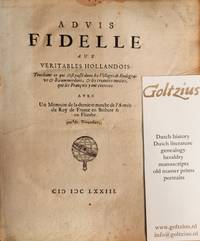
réf. #[54630]4° 2202 pag. contemporain perkament geillustreerd met 8 geetste platen over twee pagina's de laatste twee met elk 2 afbeeldingen door Romeyn de Hooghe. Enkele wormgaatjes in bovenmarge. C2020 l Landwehr 30; Hollstein 90-96; Willems 1874 De Hooghe's schitterende prenten in het 'Advis fidelle' behoren niet alleen tot de hoogtepunten van zijn werk maar ook tot de artistieke hoogtepunten van dit tijdperk. Ze tonen de wreedheden waaraan Franse solda unknown