ORTELIUS, AbrahamBiblio.com
27.626 risultati
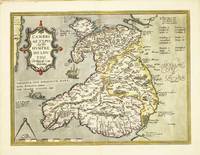
rif. 10630Amsterdam: 1573-87. No binding. Very Good. 370 x 495 mm. fine recent full wash colour with French text to the verso in good condition. 'The first separate map of the whole of Wales in its second state it was compiled in 1568 by Humphrey Llwyd 1527-68 or Lhuyd a Welshman from Denbigh' Roberts. It was first published in the 'Theatrum Orbis Terrarum' by Abraham Ortelius in 1573 but according to Karrow was engraved by 1572. A letter from October 1572 written by the diplomat and historian Daniel Rogers and asks Ortelius to send him two copies so that he may augment them 'with the ancient castles neglected by Fludd Lluyd but noticed by a friend of mine' Karrow. It illustrates the three main regions of Venedotia Gwynedd Povisia Powys and Dehenbartia Deheubarth. Placenames are provided in Welsh English and Latin. Provenance: acquired from Doreen Green 1990; private collection. Booth 1977 no. 2; Evans 1964 pp. 4-5; Karrow 1993 50/1.1; Parker 2017 p. 87; Roberts 1994 1; Van Den Broecke 1996 no. 21. 1573-[87] unknown
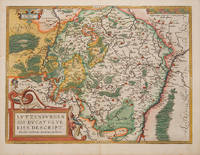
rif. 115615Antwerp Christopher Plantin for the author 1598. . Double-page copper engraved map with later hand-colouring centre fold as issued cartouches for titles and publishing privilege French text on verso; sheet size: 41.8 x 53 cm. Well-preserved example of Ortelius' map of Luxembourg. Taken from the fifth final and most complete French edition of Theatre de l'Univers. Enriched with decorative cartouches. Abraham Ortelius 1527-1598 was a cartographer and publisher he was born and died in Antwerp. Koeman III Ort 32. Antwerp, Christopher Plantin for the author, 1598. unknown
rif. Z1-C-055-01270Nabu Press. Used - Like New. Used - Like New. This is a reproduction of an out of print title. This book may have occasional imperfections such as missing or blurred pages poor pictures errant marks etc. that were either part of the original artifact or were introduced by the scanning process. Ships from UK in 48 hours or less usually same day. Your purchase helps support Sri Lankan Children's Charity 'The Rainbow Centre'. 100% money back guarantee. We are a world class secondhand bookstore based in Hertfordshire United Kingdom and specialize in high quality textbooks across an enormous variety of subjects. We aim to provide a vast range of textbooks rare and collectible books at a great price. Our donations to The Rainbow Centre have helped provide an education and a safe haven to hundreds of children who live in appalling conditions. We provide a 100% money back guarantee and are dedicated to providing our customers with the highest standards of service in the bookselling industry. Nabu Press unknown
rif. Z1-V-018-02031General Books. Used - Good. Ships from UK in 48 hours or less usually same day. Your purchase helps support Sri Lankan Children's Charity 'The Rainbow Centre'. Ex-library so some stamps and wear but in good overall condition. 100% money back guarantee. We are a world class secondhand bookstore based in Hertfordshire United Kingdom and specialize in high quality textbooks across an enormous variety of subjects. We aim to provide a vast range of textbooks rare and collectible books at a great price. Our donations to The Rainbow Centre have helped provide an education and a safe haven to hundreds of children who live in appalling conditions. We provide a 100% money back guarantee and are dedicated to providing our customers with the highest standards of service in the bookselling industry. General Books unknown
rif. 43469A Lausanne, Au Café littéraire, 1792. In-8°, 288p. Cartonnage marbré de l'époque, dos toilé, titre doré.
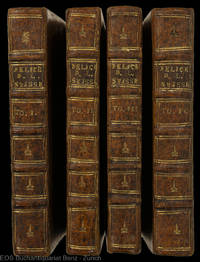
1714rif. 7878CB1714. 4 Bände. Leiden Pierre van der Aa 1714. Kl.-8°. 18 Bl. 220 recte 224 S.; 2 Bl. S. 221228 233434; 2 Bl. S. 435676; 2 Bl. S. 6771027. Mit gest. Titelblatt doppelblattseitig 1 gest. Frontispiz doppelblattseitig 68 davon 50 gef. und 5 von 6 gef. Kupferkarten. Lederbände der Zeit mit reicher Rückenvergoldung. Lonchamp 812. Haller I 718. Barth 17210. Feller/Bonjour 529. e-hls für den Autor. Erste Ausgabe. Abraham Ruchat 16801750 veröffentlichte das vorliegende Werk unter dem Pseudonym Gottlieb Kypseler von Münster. In der Vorrede beschreibt er sein Anliegen die West- und Deutschschweizer einander näherzubringen. Ruchat geboren in Vevey gilt als der erste bekannte Geschichtsschreiber der Waadt. Er studierte in Lausanne Bern Berlin und Leiden Theologie und war ab 1721 als Professor für Redekunst in Lausanne tätig. Es fehlt die Gesamtkarte der Schweiz ansonsten ein sehr gutes Exemplar. Das Papier vereinzelt stockfleckig. Die Vorsätze leimschattig. Die schönen Einbände minim berieben. unknown
1778rif. 7902CB1778. Nouvelle édition. 2 Bände. Neuchâtel Fauche 1778. 4°. 4 IV 454 2 S.; 4 391 1 S. Mit 2 gest. Frontisp. und 77 Kupfertafeln davon 15 gef. Lederbände der Zeit mit Rückenschild und Rückenvergoldung. Haller I 718. Brunet VI 25894. Haller I 718. Wäber I 38. Lonchamp 2560. Vierte nach Haller und Wäber die «beste» Ausgabe. «Diese Ausgabe ist vollkommen umgearbeitet und weit richtiger als die vorigen» Haller. Die Kupfer mit zahlreichen Orten der ganzen Schweiz diverse Karten und paläontologische sowie archäologische Darstellungen. Das Papier durchgehend gebräunt und stockfleckig. Die Einbände berieben. unknown
1667rif. 1000441667. Paris Abraham Bosse 1667. Engraved frontispiece 87220pp. With an engraved dedication page. 8vo. Contemporary full mottled calf spine and corners expertly restored. Some browning. Bound in at the end the last 20 pages are: 1 - A. Bosse au lecteur sur les causes qu'il croit avoir euës de discontinuer le cours de ses leçons geometrales et perspectives dedans l'Academie Royale de la Peinture et de la Sculpture & mesme de s'en retirer. Paris A. Bosse 1667. 15pp. And: 2 - Discours tendant a desabuser ceux qui ont creu que l'Auteur d'un Traité qui a pour Titre Entretiens sur les vies et sur les ouvrages des plus excellens peintres anciens et modernes; avoit pretendu m'attaquer dans sa Préface. Paris A. Bosse 1667. 4pp. This scarce book is written in the form of a dialogue between Ariste an amateur who would like to build an architect a painter a "disciple" and the author himself. All the representatives of these different arts are asking for Bosse's advice. This allows Bosse to express once again his ideas regarding perspective in painting and architecture. Abraham Bosse who was born in Tours in 1602 is best known as an engraver but he was also the first professor of perspective at the newly founded Académie Royale from 1648 to 1661 when he was forced to leave due to disagreements with other Académicians. The two addresses that follow the book explain why in Bosse's own opinion he had been forced to leave his lob at the Académie and they also respond to comments made about Bosse by Félibien in the preface to the first part of the latter's Entretiens published a year earlier. c.f. Cicognara 91; Berlin cat. 2381; Abraham Bosse Savant Graveur # 310 311 & 312. unknown
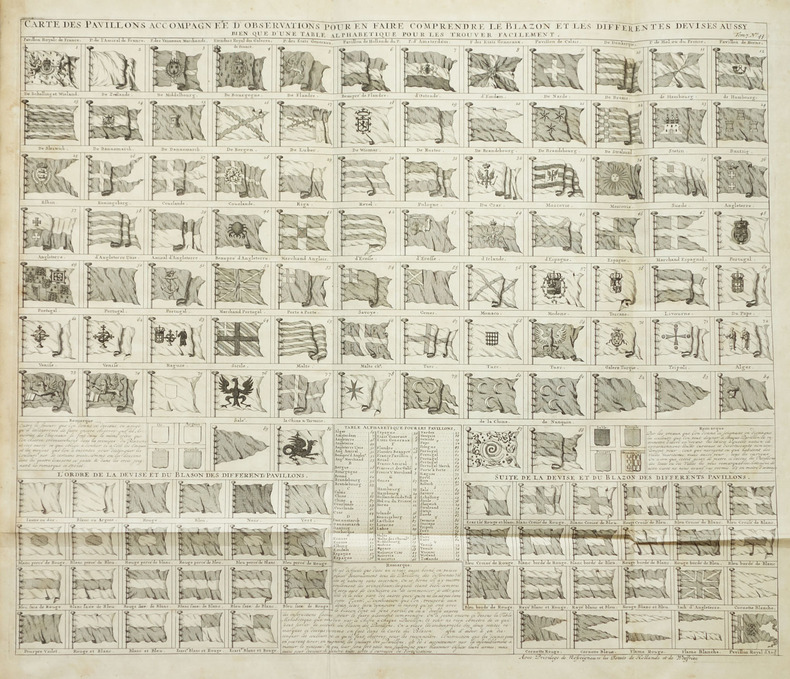
1720rif. LBW-2016Amsterdam, circa 1720. 490 x 585 mm.
1863rif. 22448.01New York N.Y. 1863. No binding. Fine. New York Journal of Commerce. Newspaper. New York Journal of Commerce. New York N.Y. January 3 1863. 4 pp. 24 x 32 1/2 in. An early report of the Emancipation Proclamation where the editors describe Lincoln's bold move as ""a farce coming in after a long tragedy.Most of the people regard it as a very foolish piece of business."" Historical BackgroundThe Emancipation Proclamation was the single most important act of Lincoln's presidency. Its text reveals the major themes of the Civil War: the importance of slavery to the war effort on both sides; the courting of border states; Lincoln's hopes that the rebellious states could somehow be convinced to reenter the Union; the role of black soldiers; Constitutional and popular constraints on emancipation; the place of African Americans in the United States and America's place in a worldwide movement toward the abolition of slavery. In sounding the death knell for slavery and the ""Slave power"" the President took a decisive stand on the most contentious issue in American history and the United States joined other western nations in embracing a future of free labor.In addition to the moral impact of this ""sincerely believed.act of justice"" the Proclamation aided the Union cause tangibly and decisively. Because it focused on territory still held by the Confederacy only small numbers of slaves compared to the total slave population were immediately freed. However the Proclamation deprived the South of essential labor by giving all slaves a reason to escape to Union lines. Failing that it freed slaves immediately upon the Union Army's occupation of Confederate territory. The Proclamation also encouraged the enlistment of black soldiers who made a crucial contribution to the Union war effort. Moreover England and France who had already abolished slavery were restrained from supporting the Confederacy which would have been in their own economic interests. Lincoln summed up the Proclamation's importance in 1864: ""no human power can subdue this rebellion without using the Emancipation lever as I have done.""Nonetheless the editors of the Journal of Commerce disagreed and their opinion reflects the truly controversial nature of the act for many contemporary Americans.
1863rif. 22448.01New York N.Y. 1863. No binding. Fine. New York Journal of Commerce. Newspaper. New York Journal of Commerce. New York N.Y. January 3 1863. 4 pp. 24 x 32 1/2 in. An early report of the Emancipation Proclamation where the editors describe Lincoln's bold move as ""a farce coming in after a long tragedy.Most of the people regard it as a very foolish piece of business."" Historical BackgroundThe Emancipation Proclamation was the single most important act of Lincoln's presidency. Its text reveals the major themes of the Civil War: the importance of slavery to the war effort on both sides; the courting of border states; Lincoln's hopes that the rebellious states could somehow be convinced to reenter the Union; the role of black soldiers; Constitutional and popular constraints on emancipation; the place of African Americans in the United States and America's place in a worldwide movement toward the abolition of slavery. In sounding the death knell for slavery and the ""Slave power"" the President took a decisive stand on the most contentious issue in American history and the United States joined other western nations in embracing a future of free labor.In addition to the moral impact of this ""sincerely believed.act of justice"" the Proclamation aided the Union cause tangibly and decisively. Because it focused on territory still held by the Confederacy only small numbers of slaves compared to the total slave population were immediately freed. However the Proclamation deprived the South of essential labor by giving all slaves a reason to escape to Union lines. Failing that it freed slaves immediately upon the Union Army's occupation of Confederate territory. The Proclamation also encouraged the enlistment of black soldiers who made a crucial contribution to the Union war effort. Moreover England and France who had already abolished slavery were restrained from supporting the Confederacy which would have been in their own economic interests. Lincoln summed up the Proclamation's importance in 1864: ""no human power can subdue this rebellion without using the Emancipation lever as I have done.""Nonetheless the editors of the Journal of Commerce disagreed and their opinion reflects the truly controversial nature of the act for many contemporary Americans. books
1995rif. 131763L. Milch 1995. Paperback. Very Good. 6x1x9. 8.5 " x 11" slender softcover with 1/2" x 1/4" stain to the bottom of the front cover and label denoting donation to the title page. Otherwise tight and unmarked looks unread. 128 pages illustrated. Please email for photos. L. Milch paperback
rif. Z1-AA-009-00173CRC Press. Used - Good. Ships from UK in 48 hours or less usually same day. Your purchase helps support Sri Lankan Children's Charity 'The Rainbow Centre'. Ex-library so some stamps and wear but in good overall condition. 100% money back guarantee. We are a world class secondhand bookstore based in Hertfordshire United Kingdom and specialize in high quality textbooks across an enormous variety of subjects. We aim to provide a vast range of textbooks rare and collectible books at a great price. Our donations to The Rainbow Centre have helped provide an education and a safe haven to hundreds of children who live in appalling conditions. We provide a 100% money back guarantee and are dedicated to providing our customers with the highest standards of service in the bookselling industry. CRC Press unknown
1866rif. 1009808vo one sheet printed on both sides. Even toning and aging small closed tear to the upper margin; otherwise very good. This is a rather scarce government document that informs the military that the "Thirteenth Amendment" has passed and slavery is officially abolished. Article XIII states "Neither slavery nor involuntary servitude except as a punishment for a crime whereby the party shall have been duly convicted shall exist within the United States or any place subject to their jurisdiction." This document is signed in type by William H. Seward 1801-1872 as the Secretary of State. Congress would follow with a Civil Rights Act of 1866 to give African Americans the same rights as all citizens but this small printed document presenting the essence of the "Thirteenth Amendment" is an important piece of history. ANB.
1866rif. 1009808vo one sheet printed on both sides. Even toning and aging small closed tear to the upper margin; otherwise very good. This is a rather scarce government document that informs the military that the "Thirteenth Amendment" has passed and slavery is officially abolished. Article XIII states "Neither slavery nor involuntary servitude except as a punishment for a crime whereby the party shall have been duly convicted shall exist within the United States or any place subject to their jurisdiction." This document is signed in type by William H. Seward 1801-1872 as the Secretary of State. Congress would follow with a Civil Rights Act of 1866 to give African Americans the same rights as all citizens but this small printed document presenting the essence of the "Thirteenth Amendment" is an important piece of history. ANB. books
1928rif. 151527Boston and New York: Houghton Mifflin Company 1928. First edition of this complex and revealing biography of one of the most popular Presidents of the United States. Octavo two volumes bound in three quarter morocco with gilt titles and tooling to the spine in six compartments within raised gilt bands marbled endpapers top edge gilt illustrated tissue-guarded frontispiece to each volume. In near fine condition bookplate to each pastedown. Praised for his biographies of Chief Justice John Marshall and President Abraham Lincoln American historian and United States Senator Albert J. Beveridge has introduced the public to the realities of the lives of revered historical figures. Using analysis and thorough investigation Beveridge was able to contextualize the actions of America's sixteenth president with his traditions and influences in his four-volume biography 'Abraham Lincoln 1809-1858' published post-humously in 1928. His contributions to historical study cannot be understated and the American Historical Association's Beveridge Award exists to demonstrate as much. Houghton Mifflin Company unknown
1979rif. 35142DEUTSCHER TASCHENBUCH VERLAG 07/1979. 4. softcover. Dracula DEUTSCHER TASCHENBUCH VERLAG paperback
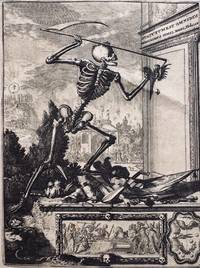
1702rif. 251118002Amsterdam: George Gallet 1702. 1st Edition. Hardcover. Good. De Chertablon. SCARCE EMBLEMATA 1ST EDITION IN GERMAN ON PREPARING FOR DEATH TO REACH HEAVENLY SALVATION THROUGH JESUS TRANSLATED TITLE : Dying and inheriting that is the most beautiful preparation for death. Or the surest way to die and inherit salvation by contemplating the bitter suffering and death of our only and dearest Savior Jesus Christ Condition: GOOD COMPLETE ORIGINAL I see no other copy currently for sale and this title scarcely comes up for auction. Worldcat shows only a handful of copies held by institutions. ABOUT THE BOOK Published in 1702 by George Gallet in Amsterdam. First edition in German. Text primarily in Gothic. In contemporary full dark brown calf. Covers with blind stamped bordering and five raised spine bands. All edges speckled red. Quarto 10.5" x 8.5". Collated and complete: 22 108 pp. and all 42 copper engraved plates. A few embellished initials and chapter headers. Title page in red and black. Wide-margined thick pages. IMPORTANCE The book is an emblemata of the German Baroque literature movement of the seventeenth century through early eighteenth century. It is comprised mostly of plates of a man on his deathbed awaiting his fate on the recto of leaves and scripture from the Bible and description of the plate scene on the verso. The engravings by De Chertablon are striking in composition highly detailed and rich with religious and moral symbolism. Only two plates are actual 'Dance of Death' images the others show dynamic scenes surrounding the dying person. The remarkable thing about the depictions is that personified Death does not appear as usual as a skeleton or a mummy but as an angel. He often points to a painting in the background held by putti which depicts scenes from the Life and Passion of Christ. In a few striking scenes the path to salvation appears closed. In one instance the devil presents a list of all the sins the dying man has committed. Unlike the majority of scenes there are no angels pointing the way to salvation. The foreboding description for this scene says that faith and belief are not enough for heavenly salvation: you will be judged by your acts and deeds while on Earth. ABOUT THE AUTHOR Abraham a Sancta Clara born Johann Ulrich Megerle; 1644 - 1709 was an Augustinian friar. He gained a great reputation for pulpit eloquence early on. He was appointed imperial court preacher of Vienna in 1669. The people flocked to hear him attracted by the force and simplicity of his language the grotesqueness of his humor and the impartial severity with which he lashed the follies of all social classes. CONDITION REPORT GOOD for a 320-year-old book Exterior and binding: Some spine lean and front hinge cracked. Rear hinge starting to crack at its head. Binding and boards holding firm but strained in places. Heavily rubbed and worn leather that is dry and cracking and pitting. Has a beautiful texture of authentic aging. Spine label mostly perished. Multiple pen-tip sized wormholes on covers. Interior: Grubby endpapers. Toned pages. Mostly light to scattered foxing on the text block itself; heavier foxing along the gutters at times. Browning and dust along page margins. A single pen-tip sized wormhole throughout the entire text block gradually expanding to more same sized holes toward the last quartile of the book. The final leaf has about 12 pin-tipped sized holes. These holes slightly affect text and images. The plate impressions are strong and are visible on the verso and form an unintended but quite nice bordering of the descriptive text. No writing beyond a few scribbles in red on front pastedown. No marginalia or underlining. A few margin tears. All in all a beautifully illustrated scarce work of religious emblemata depicting deathbed scenes and the path to heavenly salvation. George Gallet hardcover
1764rif. 1509200002Printed by Hugh Gaine at his book-store and printing office at the Bible & Crown in Hanover-Square. M DCC 1764-01-01. First Edition. Hardcover. Good. Volume 1 only. Large folio. 38 cm. Vol. I. Bound in publisher's full sheep. Bound by Rob. McAlprine signed by him. Red morocco spine label. Scuffs/rubbing to cover. Creasing to title page. Engraving of Royal arms on title Reilly 862. iv 840 i.e. 838 2 p. Contains an Act for reversing the attainder of Jacob Leisler etc at appendix which Evans states if often absent. Printed by Hugh Gaine, at his book-store and printing office at the Bible & Crown, in Hanover-Square. M, DCC, hardcover
1670rif. 21606A Amsterdam : chez Jean Schipper 1670. Cm. 232 pp. 16 371 5. Bell’antiporta allegorica incisa 5 figure nel testo a mezza o piena pagina ed una tavola ripiegata f.t. Un piccolo difetto al piatto posteriore ma bell’esemplare nella sua prima legatura in pergamena con titoli ms. al dorso. Prima edizione francese dopo l’originale olandese del 1651 di questo testo fondamentale sulla religione indiana. Il pastore protestante olandese Roger fu il primo attraverso quest’opera a far conoscere in Europa la religione induista. Il prezioso insieme di notizie fa raccolto in dieci anni di permanenza sulle coste dell’India Orientale dal 1640 al 1650. Il testo termina con un estratto dalla "Chine illustree" di Kircher. Cfr. Graesse VI 147. Raro soprattutto in tale ottimo stato di conservazione. chez Jean Schipper, unknown
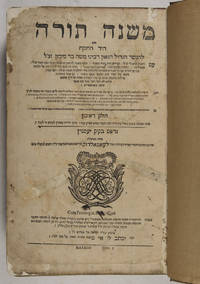
1739rif. 27896Jessnitz Saxony-Anhalt: Bi-defus Yisrael bar Avraham 1739. Hardcover. Good. Four volumes folio published between 1739 and 1742. Woodcut printer's device at titles; woodcut endpieces in first volume. Hebrew text opens from right to left; leaf numbers in Hebrew characters. Hebrew chronograms yield Jewish dates of publication 5499-5502. Brown library buckram scuffed at extremities spines lettered in gilt. Endleaves renewed. A good set. See foliation and condition notes for each volume below. Scarce eighteenth-century edition of this seminal compendium of Jewish law halakhah. Compiled between 1170 and 1180 while Maimonides was living in Egypt the Mishneh Torah is regarded as the author's magnum opus. It is the only Medieval-era work that surveys the full panoply of Jewish observance including those laws that are only applicable when the Jerusalem Temple is in existence. The present edition is the first to contain Judah Rosanes' commentary Mishneh le-melekh. "Mishneh Torah" The Repetition of the Law is an appellation originally applied to the biblical book of Deuteronomy; the subtitle "ha-Yad ha-Hazakah" The Book of the Strong Hand plays on its subdivision into fourteen books: the numerical value fourteen is represented in Hebrew letters as Yud 10 Dalet 4 which forms the word "yad" hand. Maimonides sought to provide a complete statement of the Oral Law so that a person who mastered first the Written Torah and then the Mishneh Torah would be in no need of any other book. Contemporary reaction was mixed with strong and immediate opposition focusing on the absence of sources and the belief that the work appeared to be intended to supersede study of the Talmud itself. Maimonides responded to these criticisms and the Mishneh Torah endures as an influential work in Jewish religious thought. According to several authorities a decision may not be rendered in opposition to a view of Maimonides even where he apparently militated against the sense of a Talmudic passage for in such cases the presumption was that the words of the Talmud were incorrectly interpreted. Likewise: One must follow Maimonides even when the latter opposed his teachers since he surely knew their views and if he decided against them he must have disapproved their interpretation. Vol. 1: 1 title 8 234 102 3 ff. Repairs at title page with very slight loss of text at verso following leaf and the final leaf. Text embrowned often heavily in first half with some light marginal dampstains throughout. Old manuscript entries in Hebrew at title in at least three hands. Vol. 2: 1 title 148 112 2 ff. Marginal repairs to first and last two leaves no loss of text. Moderately dampstained throughout with some mild embrowning. Old manuscript entries in Hebrew at title in at least two hands; three old stamps at title including at least one censor's approbation. Vol. 3: 1 title 221 169 ff. Repairs at bottom margin to title with loss of some text below imprint and at final lines of rabbinic approbations at verso and at bottom margin following leaf with some text loss and obscuration by translucent paper tape. Small marginal repair at final leaf. Light dampstaining in first half; remaining text with mild embrowning. Old manuscript entries in Hebrew at title in at least two hands; two old stamps at title including at least one censor's approbation. Vol. 4: 1 title 135 138-154 157 1 ff. Marginal repairs to title and final leaf no loss of text. Sporadic light embrowning and marginal stains. Old manuscript entry in Hebrew at title. A complete set with only minimal text loss in a few places -- a very usable scholar's copy. References: Vinograd Jessnitz 46; Fürst 2: p. 295; Zenker p. 583 Title in Hebrew: משנה תורה ×”×•× היד החזקה להנשר הגדול ×”×’×ון רבינו משה בר מימון זצ׳׳ל ×¢× השגת הר×ב׳׳ד זצ׳׳ל ופירוש הרב מגיד משנה וכסף משנה להג×ון המשביר רבינו יוסף ק×רו זצ׳׳ל ומגדל עוז והגהות מימונייות ופירוש רבינו עובדי והרב המוסמך מדר׳׳ל ן׳ חביב על הלכות קידוש החדש ×¢× כל הצורות השייכות להלכות ×לו ולהלכות שבת וסוכה ×•×¢× מורה ×ž×§×•× על דברי הרב המגיד וכסף משנה ×’× שתי מפתחות גדולות ורחבות ×חת על סדר ×”×¤×¨×§×™× ×•×חת על דרך ××œ×¤× ביתה ×œ× חסר דבר מכל כפי ×שר נדפס ב××ž×©×˜×¨×“× Rabbi Moses Maimonides the Rambam was a 12th century Jewish philosopher and halachic legal scholar. A highly controversial figure both during his lifetime and after his death he is generally acknowledged as the preeminent Jewish thinker of the Middle Ages. He was born in Córdoba Spain but fled as a child from the Almohad persecution. He eventually settled in Egypt where he served as a rabbi physician and philosopher. His fourteen-volume Mishneh Torah his only work not in Arabic still carries canonical authority particularly within the Yemenite Jewish community as the codification of Talmudic law. His other works include "Kitab al-Siraj" a commentary on the Mishnah "Kitab al-Fara'I" a book on precepts and the celebrated philosophical work "Dalalat al-Ha'irin" known in Hebrew as the "Moreh Nevukhim" The Guide to the Perplexed. In this latter work Maimonides attempted a philosophical/theological reconciliation of the Hebrew Bible and Greek knowledge. This work came to play a central role in all subsequent major controversies over philosophy within the Jewish community during the Middle Ages. Bi-defus Yisrael bar Avraham hardcover
1739rif. 27896Jessnitz Saxony-Anhalt: Bi-defus Yisrael bar Avraham 1739. Hardcover. Good. Four volumes folio published between 1739 and 1742. Woodcut printer's device at titles; woodcut endpieces in first volume. Hebrew text opens from right to left; leaf numbers in Hebrew characters. Hebrew chronograms yield Jewish dates of publication 5499-5502. Brown library buckram scuffed at extremities spines lettered in gilt. Endleaves renewed. A good set. See foliation and condition notes for each volume below. Scarce eighteenth-century edition of this seminal compendium of Jewish law halakhah. Compiled between 1170 and 1180 while Maimonides was living in Egypt the Mishneh Torah is regarded as the author's magnum opus. It is the only Medieval-era work that surveys the full panoply of Jewish observance including those laws that are only applicable when the Jerusalem Temple is in existence. The present edition is the first to contain Judah Rosanes' commentary Mishneh le-melekh. "Mishneh Torah" The Repetition of the Law is an appellation originally applied to the biblical book of Deuteronomy; the subtitle "ha-Yad ha-Hazakah" The Book of the Strong Hand plays on its subdivision into fourteen books: the numerical value fourteen is represented in Hebrew letters as Yud 10 Dalet 4 which forms the word "yad" hand. Maimonides sought to provide a complete statement of the Oral Law so that a person who mastered first the Written Torah and then the Mishneh Torah would be in no need of any other book. Contemporary reaction was mixed with strong and immediate opposition focusing on the absence of sources and the belief that the work appeared to be intended to supersede study of the Talmud itself. Maimonides responded to these criticisms and the Mishneh Torah endures as an influential work in Jewish religious thought. According to several authorities a decision may not be rendered in opposition to a view of Maimonides even where he apparently militated against the sense of a Talmudic passage for in such cases the presumption was that the words of the Talmud were incorrectly interpreted. Likewise: One must follow Maimonides even when the latter opposed his teachers since he surely knew their views and if he decided against them he must have disapproved their interpretation. Vol. 1: 1 title 8 234 102 3 ff. Repairs at title page with very slight loss of text at verso following leaf and the final leaf. Text embrowned often heavily in first half with some light marginal dampstains throughout. Old manuscript entries in Hebrew at title in at least three hands. Vol. 2: 1 title 148 112 2 ff. Marginal repairs to first and last two leaves no loss of text. Moderately dampstained throughout with some mild embrowning. Old manuscript entries in Hebrew at title in at least two hands; three old stamps at title including at least one censor's approbation. Vol. 3: 1 title 221 169 ff. Repairs at bottom margin to title with loss of some text below imprint and at final lines of rabbinic approbations at verso and at bottom margin following leaf with some text loss and obscuration by translucent paper tape. Small marginal repair at final leaf. Light dampstaining in first half; remaining text with mild embrowning. Old manuscript entries in Hebrew at title in at least two hands; two old stamps at title including at least one censor's approbation. Vol. 4: 1 title 135 138-154 157 1 ff. Marginal repairs to title and final leaf no loss of text. Sporadic light embrowning and marginal stains. Old manuscript entry in Hebrew at title. A complete set with only minimal text loss in a few places -- a very usable scholar's copy. References: Vinograd Jessnitz 46; Fürst 2: p. 295; Zenker p. 583 Title in Hebrew: משנה תורה ×”×•× היד החזקה להנשר הגדול ×”×’×ון רבינו משה בר מימון זצ׳׳ל ×¢× השגת הר×ב׳׳ד זצ׳׳ל ופירוש הרב מגיד משנה וכסף משנה להג×ון המשביר רבינו יוסף ק×רו זצ׳׳ל ומגדל עוז והגהות מימונייות ופירוש רבינו עובדי והרב המוסמך מדר׳׳ל ן׳ חביב על הלכות קידוש החדש ×¢× כל הצורות השייכות להלכות ×לו ולהלכות שבת וסוכה ×•×¢× מורה ×ž×§×•× על דברי הרב המגיד וכסף משנה ×’× שתי מפתחות גדולות ורחבות ×חת על סדר ×”×¤×¨×§×™× ×•×חת על דרך ××œ×¤× ביתה ×œ× חסר דבר מכל כפי ×שר נדפס ב××ž×©×˜×¨×“× Rabbi Moses Maimonides the Rambam was a 12th century Jewish philosopher and halachic legal scholar. A highly controversial figure both during his lifetime and after his death he is generally acknowledged as the preeminent Jewish thinker of the Middle Ages. He was born in Córdoba Spain but fled as a child from the Almohad persecution. He eventually settled in Egypt where he served as a rabbi physician and philosopher. His fourteen-volume Mishneh Torah his only work not in Arabic still carries canonical authority particularly within the Yemenite Jewish community as the codification of Talmudic law. His other works include "Kitab al-Siraj" a commentary on the Mishnah "Kitab al-Fara'I" a book on precepts and the celebrated philosophical work "Dalalat al-Ha'irin" known in Hebrew as the "Moreh Nevukhim" The Guide to the Perplexed. In this latter work Maimonides attempted a philosophical/theological reconciliation of the Hebrew Bible and Greek knowledge. This work came to play a central role in all subsequent major controversies over philosophy within the Jewish community during the Middle Ages. Bi-defus Yisrael bar Avraham hardcover books
rif. 71131, Amsterdam, J. Lindenbergh, , 1721 Origineel lederen band, rug beschadigd, compleet met wereldkaart, 482 pagina's, titelprent door Romeyn de Hooghe met 139 prachtige kopergravures (17 x 20 cm) en vele iets kleinere kopergravures en de prachtige grote wereldkaart (46 x 42 cm) en grote kaart Middellandsche Zee en het fraaie gezicht op de tempel. .
1877rif. 4837Miller's Bible and Publishing House 23,5 30,5 Montréal, Canada / Philadelphia 1877 Fort volume in-4, reliure de plein cuir vert sombre, dos à quatre nerfs et à six caissons ornés, deux portant le titre doré "Holy Bible", plats bisautés encadrés d'un triple filet et d'une guirlande dorés, entrelacs dorés au centre, dentelle sur les chasses, tranches dorées, VII-1011 p., Marriages (1 p.), Births (1 p.), Memoranda (1 p.), Family portraits (4 p., soit 16 emplacements de portraits en oval) et 4 p. non paginées, 9 gravures hors texte, dont celle de Gustave Doré "Daniel the Statesman-Prophet". La première traduction en anglais de la Bible hébraïque (Ancien Testament) a été, sur le sol américain, éditée et publiée à Philadelphie en 1854. Notre réédition date de 1877-78 (année hébraïque 5638 comme l'indique la page de titre). Isaac Leeser (1806-1868) est né en Allemagne et a émigré aux Etats-Unis en 1824. Il a été le rabbin de la Synagogue Mikweh Israel à Philadelphie et le créateur du premier périodique juif au Etats-Unis (The Occident). Il a été un promoteur très actif de la culture juive aux Etats-Unis, face au risque d'assimilation ou de protestantisation. Il rappelle au début de la préface son objectif "a desire entertained for more than a quarter of a century, since the day he quitted school in his native land to come to this country, to present to his fellow-Israelites an English version, made by one of themselves, of the Holy Word of God." Sa traduction est une oeuvre de foi : "The translator is an Israelite in faith, in the full sense of the word : he believe in the Scriptures as they have been handed down to us". La traduction de Leeser s'est imposée comme un "standard" jusqu'aux travaux de la Jewish Publication Society (JPS). La page de titre porte la mention "Abraham de Sola, LLD. Montréal, Canada". De Sola (1825-1882), ministre de la Synagogue espagnole et portugaise de Montréal, fut un des continuateurs de Leeser. Coiffes abîmées, mors fendus en tête et en queue, légère déreliure entre les pages VIIet VII, coins un peu émoussés, petite réparation en bas des pages 17-18-19-20, bon intérieur.(EvB19) PHOTOS NUMERIQUES DISPONIBLES PAR EMAIL SUR SIMPLE DEMANDE-DIGITAL PHOTOGRAPS MAY BE AVAILABLE ON REQUEST
1877rif. 4837Miller's Bible and Publishing House 23,5 30,5 Montréal, Canada / Philadelphia 1877 Fort volume in-4, reliure de plein cuir vert sombre, dos à quatre nerfs et à six caissons ornés, deux portant le titre doré "Holy Bible", plats bisautés encadrés d'un triple filet et d'une guirlande dorés, entrelacs dorés au centre, dentelle sur les chasses, tranches dorées, VII-1011 p., Marriages (1 p.), Births (1 p.), Memoranda (1 p.), Family portraits (4 p., soit 16 emplacements de portraits en oval) et 4 p. non paginées, 9 gravures hors texte, dont celle de Gustave Doré "Daniel the Statesman-Prophet". La première traduction en anglais de la Bible hébraïque (Ancien Testament) a été, sur le sol américain, éditée et publiée à Philadelphie en 1854. Notre réédition date de 1877-78 (année hébraïque 5638 comme l'indique la page de titre). Isaac Leeser (1806-1868) est né en Allemagne et a émigré aux Etats-Unis en 1824. Il a été le rabbin de la Synagogue Mikweh Israel à Philadelphie et le créateur du premier périodique juif au Etats-Unis (The Occident). Il a été un promoteur très actif de la culture juive aux Etats-Unis, face au risque d'assimilation ou de protestantisation. Il rappelle au début de la préface son objectif "a desire entertained for more than a quarter of a century, since the day he quitted school in his native land to come to this country, to present to his fellow-Israelites an English version, made by one of themselves, of the Holy Word of God." Sa traduction est une oeuvre de foi : "The translator is an Israelite in faith, in the full sense of the word : he believe in the Scriptures as they have been handed down to us". La traduction de Leeser s'est imposée comme un "standard" jusqu'aux travaux de la Jewish Publication Society (JPS). La page de titre porte la mention "Abraham de Sola, LLD. Montréal, Canada". De Sola (1825-1882), ministre de la Synagogue espagnole et portugaise de Montréal, fut un des continuateurs de Leeser. Coiffes abîmées, mors fendus en tête et en queue, légère déreliure entre les pages VIIet VII, coins un peu émoussés, petite réparation en bas des pages 17-18-19-20, bon intérieur.(EvB19) PHOTOS NUMERIQUES DISPONIBLES PAR EMAIL SUR SIMPLE DEMANDE-DIGITAL PHOTOGRAPS MAY BE AVAILABLE ON REQUEST