ABRAHAM BAR HIYYA.Livre Rare Book

28.131 Ergebnisse
Best.-Nr. LCS-18054Superbe exemplaire conservé dans sa reliure de l’époque en peau de truie estampée à froid sur ais de bois. Basel, H. Petri, 1546. 2 textes en 1 volume in-4 de : I/ (3) ff., (1) f.bl., 351 pp., (1) p. avec la marque ; II/ (4) ff. (sur 5, relié sans le titre latin de la 2e partie), (1) f.bl., 207 pp., (1) p. avec la marque. Hebrew and Roman letters, illustration: woodcut figures and diagrams. Reliure en peau de truie de l’époque estampée à froid sur ais de bois. Les plats sont ornés d’une plaque à froid avec une frise comportant des scènes bibliques en encadrement. Le plat supérieur est monogrammé et daté « I S 1558 ». Dos à nerfs comportant le titre manuscrit. Superbe reliure allemande de l’époque. 195 x 140 mm.
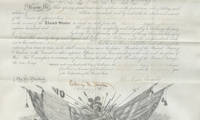
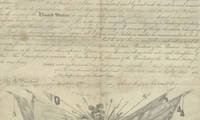
1862Best.-Nr. 3568928/02/1862. He was later promoted to Lt. Colonel for gallantry in action at the Battle of Groveton Document signed with fine engravings of an eagle flags and cannons Washington February 28 1862 naming Percy B. Spear a Commissary of Subsistence of Volunteers with the rank of Captain effective November 30 1861. The document is countersigned by Secretary of War Edwin M. Stanton. The appointment is listed in the U.S. Army Register. The Civil War Commissary Department was responsible for procuring storing and distributing food to soldiers. The rations managed by the department included such things as pork beef bread coffee and soap. But Spear did not serve solely as a Commissary for the entire war. He would soon serve an aide-de-camp in the Fifth Corps in the Gettysburg campaign with Gen. James Barnes mentioning him with distinction in dispatches. Spear ended the war as a Brevet Major. In July 1865 he was appointed Lt. Colonel of Volunteers for meritorious service and for gallantry in action at the Battle of Groveton in 1862. After the war he was again named Commissary of Subsistence this time at the recommendation of Gen. George G. Meade. <img class=""alignnone wp-image-25018 size-post-window"" src=""https://cdn.raabcollection.com/wp-content/uploads/20231204144051/Folder-site-11-1600x1327.jpg"" alt="""" width=""1600"" height=""1327"" /> unknown
1862Best.-Nr. 3568928/02/1862. He was later promoted to Lt. Colonel for gallantry in action at the Battle of Groveton Document signed with fine engravings of an eagle flags and cannons Washington February 28 1862 naming Percy B. Spear a Commissary of Subsistence of Volunteers with the rank of Captain effective November 30 1861. The document is countersigned by Secretary of War Edwin M. Stanton. The appointment is listed in the U.S. Army Register. The Civil War Commissary Department was responsible for procuring storing and distributing food to soldiers. The rations managed by the department included such things as pork beef bread coffee and soap. But Spear did not serve solely as a Commissary for the entire war. He would soon serve an aide-de-camp in the Fifth Corps in the Gettysburg campaign with Gen. James Barnes mentioning him with distinction in dispatches. Spear ended the war as a Brevet Major. In July 1865 he was appointed Lt. Colonel of Volunteers for meritorious service and for gallantry in action at the Battle of Groveton in 1862. After the war he was again named Commissary of Subsistence this time at the recommendation of Gen. George G. Meade. <img class=""alignnone wp-image-25018 size-post-window"" src=""https://cdn.raabcollection.com/wp-content/uploads/20231204144051/Folder-site-11-1600x1327.jpg"" alt="""" width=""1600"" height=""1327"" /> unknown books
1737Best.-Nr. 40577London: Chez Jean Brindley Libraire de S. A. R. Monseigeur le Prince de Galles dans New Bond-street 1737. Folio. 17 7/8 x 11 1/4 inches. Complete second edition. 43 double-page engravings after Abraham van Diepenbeke including 42 numbered 1-42 and the unnumbered 1658 title with Anvers imprint. Engraved head-piece to first dedication. Numerous woodcut illustrations throughout the text and woodcut historiated and inhabited initials head- and tail-pieces and printer's ornaments. 12 1-236. 248 pp. Letterpress title with London imprint and four dedications to Henriette Cavendishe-Holles the King of Grande-Bretagne Charles Vicomte de Mansfield and to Cavaliers. Avertissement avant-propos four livres plus an Abbrege de la Cavalerie conclusion additions table des chapitres. Text in French. Contemporary brown full morocco paneled blind with gilt filets on board edges and gilt dentelles seven raised bands forming eight compartments on a richly gilt spine with gilt-lettered red morocco titling-pieces in second and third compartments and gilt foliate tooling in rest marbled endpapers on laid paper all edges gilt Cavendish's classic 1737 treatise on equestrianism with 43 splendid double-page engravings: "The illustrations are among the most beautiful to ever grace equestrian literature." Ramsay Though considered a country of horse lovers England only produced one early master of classical riding: William Cavendish Duke of Newcastle who was a Royalist living in exile until the restoration of King Charles II. During his exile Cavendish opened a riding school in Belgium and wrote the present work La Méthode et Invention Nouvelle de Dresser les Chevaux. This text was the first of Cavendish's two important books on breeding and training horses and was translated into French from his English manuscript and published in Antwerp in two issues: 1657 and 1658 though many of the 1657 title-pages have been altered by hand to read 1658. The first printing was largely incinerated by a fire in the bookseller's shop and is all but impossible to acquire. Brunet Offered here is the second edition of Cavendish's first book a work long cherished by bibliophiles for its typographical excellence and the masterful quality of its illustrations. It is a work that has been esteemed by countless generations of horsemen and revered by such master riders as La Guérinière Comte d'Aure and Steinbrecht. It is a landmark of equestrianism. Steinkraus Cavendish's book has been called the only really outstanding work on the subject written by an Englishman. Toole-Stott In it Cavendish discusses a wide variety of equine subjects including the recognition of the age and disposition of a horse; the characteristics of various types of horses such as the Spanish the Barb the English horse and the Arabian; methods of maintenance; and instructions on proper riding: "You must in all Airs follow the strength spirit and disposition of the horse and do nothing against nature; for art is but to set nature in order and nothing else." Of the 43 wonderful double-page engraved plates after Abraham van Diepenbeke 24 depict the multiple stages Cavendish and his assistant Captain Mazin employed in training horses in complicated maneuvers. The quality of the impressions in the present 1737 edition surpasses even those of the original edition. Steinkraus This was the first edition of La Méthode et Invention Nouvelle de Dresser les Chevaux to be published in England with engravings pulled from the original 1658 copperplates which were acquired by the publisher Jean Brindley. Brunet I 1700. Graesse II 93. Huth 23. Lowndes 1663. Mennessier de la Lance II p. 250. Nissen ZBI 848. Podeschi Mellon Books on the Horse and Horsemanship pp. 26 49. Ramsay "Early Dressage Literature to 1800" IOBA 6.9.03. Steinkraus Introduction to A General System of Horsemanship 2000. Wing N884-87. Chez Jean Brindley, Libraire de S. A. R. Monseigeur le Prince de Galles, dans New Bond-street unknown
1737Best.-Nr. 40577London: Chez Jean Brindley Libraire de S. A. R. Monseigeur le Prince de Galles dans New Bond-street 1737. Folio. 17 7/8 x 11 1/4 inches. Complete second edition. 43 double-page engravings after Abraham van Diepenbeke including 42 numbered 1-42 and the unnumbered 1658 title with Anvers imprint. Engraved head-piece to first dedication. Numerous woodcut illustrations throughout the text and woodcut historiated and inhabited initials head- and tail-pieces and printer's ornaments. 12 1-236. 248 pp. Letterpress title with London imprint and four dedications to Henriette Cavendishe-Holles the King of Grande-Bretagne Charles Vicomte de Mansfield and to Cavaliers. Avertissement avant-propos four livres plus an Abbrege de la Cavalerie conclusion additions table des chapitres. Text in French. Contemporary brown full morocco paneled blind with gilt filets on board edges and gilt dentelles seven raised bands forming eight compartments on a richly gilt spine with gilt-lettered red morocco titling-pieces in second and third compartments and gilt foliate tooling in rest marbled endpapers on laid paper all edges gilt Cavendish's classic 1737 treatise on equestrianism with 43 splendid double-page engravings: "The illustrations are among the most beautiful to ever grace equestrian literature." Ramsay Though considered a country of horse lovers England only produced one early master of classical riding: William Cavendish Duke of Newcastle who was a Royalist living in exile until the restoration of King Charles II. During his exile Cavendish opened a riding school in Belgium and wrote the present work La Méthode et Invention Nouvelle de Dresser les Chevaux. This text was the first of Cavendish's two important books on breeding and training horses and was translated into French from his English manuscript and published in Antwerp in two issues: 1657 and 1658 though many of the 1657 title-pages have been altered by hand to read 1658. The first printing was largely incinerated by a fire in the bookseller's shop and is all but impossible to acquire. Brunet Offered here is the second edition of Cavendish's first book a work long cherished by bibliophiles for its typographical excellence and the masterful quality of its illustrations. It is a work that has been esteemed by countless generations of horsemen and revered by such master riders as La Guérinière Comte d'Aure and Steinbrecht. It is a landmark of equestrianism. Steinkraus Cavendish's book has been called the only really outstanding work on the subject written by an Englishman. Toole-Stott In it Cavendish discusses a wide variety of equine subjects including the recognition of the age and disposition of a horse; the characteristics of various types of horses such as the Spanish the Barb the English horse and the Arabian; methods of maintenance; and instructions on proper riding: "You must in all Airs follow the strength spirit and disposition of the horse and do nothing against nature; for art is but to set nature in order and nothing else." Of the 43 wonderful double-page engraved plates after Abraham van Diepenbeke 24 depict the multiple stages Cavendish and his assistant Captain Mazin employed in training horses in complicated maneuvers. The quality of the impressions in the present 1737 edition surpasses even those of the original edition. Steinkraus This was the first edition of La Méthode et Invention Nouvelle de Dresser les Chevaux to be published in England with engravings pulled from the original 1658 copperplates which were acquired by the publisher Jean Brindley. Brunet I 1700. Graesse II 93. Huth 23. Lowndes 1663. Mennessier de la Lance II p. 250. Nissen ZBI 848. Podeschi Mellon Books on the Horse and Horsemanship pp. 26 49. Ramsay "Early Dressage Literature to 1800" IOBA 6.9.03. Steinkraus Introduction to A General System of Horsemanship 2000. Wing N884-87. Chez Jean Brindley, Libraire de S. A. R. Monseigeur le Prince de Galles, dans New Bond-street unknown books
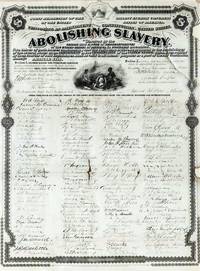
1868Best.-Nr. 019219Chicago: Western Bank Note & Engraving Co. 1868. First Edition. Document. Recently backed with thin paper with several professional repairs of chips and tears. Very Good . Large folio 16-1/4" x 21-3/4" finely engraved and printed on good quality paper with elaborate decorative borders with a "US" monogram to upper corners a bold calligraphic heading with "ABOLISHING SLAVERY" in prominent decorated letters; at top center is a small vignette of the pyramid and all-seeing eye above an oval vignette of a slave family with child mourning over a cameo portrait of Lincoln. This is followed by the engraved signatures of President Lincoln Vice President Hamlin Schuyler Colfax and J. W. Forney Speaker and Secretary of the Senate and 164 Senators and Congressmen. An exceedingly rare and beautiful printing of the Thirteenth Amendment abolishing slavery: "Neither slavery nor involuntary servitude . Shall exist within the United States." This elaborately engraved Reconstruction-era broadside is based on the special "souvenir" copies on parchment signed by Lincoln and the others of which only a handful are known to have been made. The Thirteenth Amendment represents the first substantive change to how America interpreted those liberties guaranteed by the Bill of Rights since its ratification in 1791. The Emancipation Proclamation only freed the slaves in the openly rebellious states. The Amendment effectively put an end to slavery once and for all upon its passage on 1 February 1865. Western Bank Note & Engraving Co. unknown
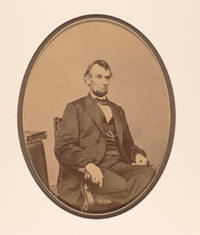
1864Best.-Nr. 42820809Oval albumen print 8 x 6 in. original printed mount trimmed at bottom removing caption signed "BRADY & CO. PHOTOGRAPHERS." Browning and offsetting to mount light toning to image. Very good. Matted and framed. The classic Brady $5 bill photograph. This celebrated portrait the basis for the five-dollar bill engraving used for most of the 20th century is one of seven poses taken by Anthony Berger at Mathew Brady's Washington D. C. studio on February 9 1864. The most prolific photographer of Lincoln Brady himself did not actually operate his cameras during the war years instead training and employing men like Alexander Gardner and his successor Anthony Berger who took this picture to operate the camera. Lincoln's son Robert Todd Lincoln declared this famous portrait to be "the most satisfactory likeness" of Abraham Lincoln. Mathew Brady Gallery
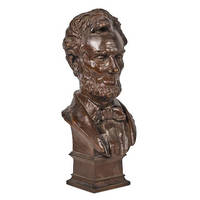
Best.-Nr. 133797Patinated bronze portrait bust of Abraham Lincoln marked "GEO. E. BISSELL Sc GORHAM CO. FOUNDERS copyrighted" and stamped "G 47." This is one of a series of popular desktop busts of Lincoln produced by the Gorham foundry in the early part of the 20th century. In fine condition. The piece measures 18 inches in height. An exceptional piece of American history. unknown
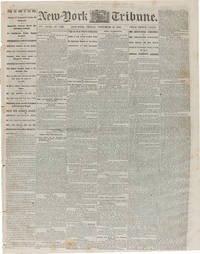
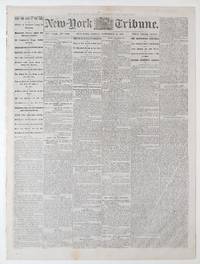
1863Best.-Nr. 56893New York. November 20 1863. The Gettysburg Address Published in New York the Day After the Event The complete issue of the New-York Tribune printing the Gettysburg Address on the morning of November 20 1863 the first possible date of the speech's printing. The previous day Lincoln delivered his great address at the dedication of a cemetery on the Gettysburg battlefield four months after the bloody and pivotal conflict that turned the tide of the Civil War in favor of the Union. Lincoln's speech was preceded by an address from Edward Everett the most famous orator of his day. Everett's speech took between ninety minutes and two hours to deliver and today is largely forgotten. Lincoln's speech delivered in only a few minutes stands as a supreme distillation of American values and of the sacrifices necessary for the survival of liberty and freedom. Much controversy surrounds the circumstances and content of the address as it was actually delivered at Gettysburg. The words spoken in the speech differ in the versions appearing in newspapers and the text which appeared in Washington several days later published as The Gettysburg Solemnities and known in only four copies which is now taken as the closest version to Lincoln's final intent because of its correspondence to the known manuscript versions. Interestingly and according to Carbonell the text of the first appearance of the speech in book form published a few days later as An Oration Delivered on the Battlefield of Gettysburg Monaghan 193 is taken largely from this New-York Tribune printing. As it appears here the address corresponds closely to the transcription printed in the same day's edition of the New York Times with slight variations in punctuation and capitalization e.g. "Four score and seven years ago our fathers brought forth on this continent a new Nation." in the Tribune versus "Fourscore and seven years ago our Fathers brought forth on this Continent a new nation." in the Times. The address is printed on the first page at the bottom of the fifth column running to the top of the sixth. Significantly it notes the five places during Lincoln's speech where applause broke out thereby providing an important historical record of the reception of the speech as it was delivered by Lincoln. It is noted that the conclusion of the speech was met with "long continued applause" and that "three cheers were here given for the President and the Governors of the States." Lincoln's speech is preceded by the opening prayer of the Rev. Thomas H. Stockton and followed by Everett's speech which occupies the rest of the sixth column and the vast majority of space on page two. War news occupies the other column space on the front page. Together with examples from other newspapers of November 20 1863 this issue of the New-York Tribune represents the first appearance of any version of the Gettysburg Address in print although at some variance with the version Lincoln eventually disseminated. The exact order in which the morning editions of November 20 were printed is practically impossible to determine at this point and as Carbonell states "will almost certainly never be known." Rightfully so Carbonell includes all November 20 morning newspaper printings of the Gettysburg Address as his first entry with no priority. Suffice to say this is as early a printing of one of the foundational documents of American life as one can ever encounter. "Lincoln's speech composed on the train on the way to Gettysburg and written down according to tradition on scratch-paper and the backs of envelopes comprised ten sentences and took only a few minutes to deliver. From the first words—'Four score and seven years ago'—to the last—'that government of the people by the people and for the people shall not perish from the earth'—it is immortal one of the supreme utterances of the principles of democratic freedom" - PRINTING AND THE MIND OF MAN. A handsome copy of this rare and important document. Large folio newspaper. Disbound from a volume. Minor chipping along spine edge. Trimmed closely along top and bottom edges likely when previously bound in a run of the newspaper. One soft horizontal center fold. Withal very good. A perfect candidate for display. CARBONELL 1. GROLIER AMERICAN 100 72 ref. STREETER SALE 1748 ref. PRINTING AND THE MIND OF MAN 351 ref. HOWES E233 ref. MONAGHAN 192 ref. Paul M. Angle "Four Lincoln Firsts" in Papers of the Bibliographical Society of America Vol. 36 no. 1 First Quarter 1942 pp.13-17. For an outstanding analysis of the structure and importance of the Gettysburg Address see Garry Wills Lincoln at Gettysburg New York 1992. unknown
1863Best.-Nr. 56893New York. November 20 1863. The Gettysburg Address Published in New York the Day After the Event The complete issue of the New-York Tribune printing the Gettysburg Address on the morning of November 20 1863 the first possible date of the speech's printing. The previous day Lincoln delivered his great address at the dedication of a cemetery on the Gettysburg battlefield four months after the bloody and pivotal conflict that turned the tide of the Civil War in favor of the Union. Lincoln's speech was preceded by an address from Edward Everett the most famous orator of his day. Everett's speech took between ninety minutes and two hours to deliver and today is largely forgotten. Lincoln's speech delivered in only a few minutes stands as a supreme distillation of American values and of the sacrifices necessary for the survival of liberty and freedom. Much controversy surrounds the circumstances and content of the address as it was actually delivered at Gettysburg. The words spoken in the speech differ in the versions appearing in newspapers and the text which appeared in Washington several days later published as The Gettysburg Solemnities and known in only four copies which is now taken as the closest version to Lincoln's final intent because of its correspondence to the known manuscript versions. Interestingly and according to Carbonell the text of the first appearance of the speech in book form published a few days later as An Oration Delivered on the Battlefield of Gettysburg Monaghan 193 is taken largely from this New-York Tribune printing. As it appears here the address corresponds closely to the transcription printed in the same day's edition of the New York Times with slight variations in punctuation and capitalization e.g. "Four score and seven years ago our fathers brought forth on this continent a new Nation." in the Tribune versus "Fourscore and seven years ago our Fathers brought forth on this Continent a new nation." in the Times. The address is printed on the first page at the bottom of the fifth column running to the top of the sixth. Significantly it notes the five places during Lincoln's speech where applause broke out thereby providing an important historical record of the reception of the speech as it was delivered by Lincoln. It is noted that the conclusion of the speech was met with "long continued applause" and that "three cheers were here given for the President and the Governors of the States." Lincoln's speech is preceded by the opening prayer of the Rev. Thomas H. Stockton and followed by Everett's speech which occupies the rest of the sixth column and the vast majority of space on page two. War news occupies the other column space on the front page. Together with examples from other newspapers of November 20 1863 this issue of the New-York Tribune represents the first appearance of any version of the Gettysburg Address in print although at some variance with the version Lincoln eventually disseminated. The exact order in which the morning editions of November 20 were printed is practically impossible to determine at this point and as Carbonell states "will almost certainly never be known." Rightfully so Carbonell includes all November 20 morning newspaper printings of the Gettysburg Address as his first entry with no priority. Suffice to say this is as early a printing of one of the foundational documents of American life as one can ever encounter. "Lincoln's speech composed on the train on the way to Gettysburg and written down according to tradition on scratch-paper and the backs of envelopes comprised ten sentences and took only a few minutes to deliver. From the first words—'Four score and seven years ago'—to the last—'that government of the people by the people and for the people shall not perish from the earth'—it is immortal one of the supreme utterances of the principles of democratic freedom" - PRINTING AND THE MIND OF MAN. A handsome copy of this rare and important document. Large folio newspaper. Disbound from a volume. Minor chipping along spine edge. Trimmed closely along top and bottom edges likely when previously bound in a run of the newspaper. One soft horizontal center fold. Withal very good. A perfect candidate for display. CARBONELL 1. GROLIER AMERICAN 100 72 ref. STREETER SALE 1748 ref. PRINTING AND THE MIND OF MAN 351 ref. HOWES E233 ref. MONAGHAN 192 ref. Paul M. Angle "Four Lincoln Firsts" in Papers of the Bibliographical Society of America Vol. 36 no. 1 First Quarter 1942 pp.13-17. For an outstanding analysis of the structure and importance of the Gettysburg Address see Garry Wills Lincoln at Gettysburg New York 1992. unknown books
Best.-Nr. 600008"Abraham Lincoln" in black ink Washington February 10 1862. Folio. Partially printed document on vellum accomplished in a secretarial hand. Blue wafer seal intact. Lincoln's signature is dark. Appointment of Ethan Allen Hitchcock to the rank of Major General of Volunteers. Boldly co-signed by Edwin Stanton Secretary of War and Adjutant General L. Thomas a few small holes at the folds else fine fresh and dark. Lincoln 1809-65 16th President of the United States 1861-65 and one of the most important figures in American history. Hitchcock 1798-1870 Graduated West Point in 1817; served in Florida war; later with Winfield Scott in Mexico. He was commissioned Major-General of Volunteers as per this document in 1862 and rendered many valuable services to Lincoln's administration and the Union Army see Basler's Lincoln for numerous references to him. Signed by Authors. F. Soft cover. hardcover
1861Best.-Nr. 69112Washington. March 19 1861. A Fine Commission on Vellum Signed in Full by Lincoln Less Than a Month Before Ft. Sumter A very fine military commission printed on vellum and signed by Lincoln in the tense weeks leading to the outbreak of hostilities at Fort Sumter in April. After South Carolina officially adopted the Ordinance of Secession on December 20 hopes for a peaceful cure to the nation's ills were slim. Small skirmishes and strategic maneuvers punctuated by more and more states joining the Confederacy made the imminent need for an empowered military and more military officers abundantly clear by March. This document appoints Thomas G. Baylor as a Second Lieutenant in the Ordnance Department on March 19 and is evidence of that need. Baylor 1837–1890 born in Virginia graduated from West Point in 1857 and was positioned at the Fort Monroe Arsenal from 1858–1861. Baylor took command of that Union stronghold behind Confederate lines on August 15 and remained its leader until October 20 1863. He was then appointed Chief Ordnance Officer of the Army of the Cumberland and was acting Chief Ordnance Officer of the Military Division of the Mississippi until August 1864. During this time he fought at Missionary Ridge and was on Sherman's staff throughout the Carolina and Georgia campaigns. He was Brevetted Major for his services at Atlanta then Lieutenant-Colonel for "gallant services in the capture of Savannah" eventually reaching the rank of Brevet Colonel. After Savannah he returned to command of the Fort Monroe Arsenal which he retained until 1876. From his West Point eulogy: "Colonel Baylor's record of thirty-three years' service in the Army is an exceptional one. A Southerner by birth and lineage he continued loyal to the flag throughout the Civil War in which he bore a conspicuous part although against influences that would have tested the firmness of most men but the lack of sympathy if not hostility from friends and relatives never made him falter in his faith and he went to the grave a gallant soldier and a loyal gentleman." Strong old folds light soiling. Near fine. Twenty-Second Annual Reunion of the Association Graduates of the Untied States Military Academy at West Point New York June 12th 1891 Saginaw MI: Seemann & Peters 1891 pp.18-19. hardcover
1863Best.-Nr. 372898New York 1863. 8pp. printed in six columns on a single folded sheet. Large folio. Disbound. Natural paper flaw to first leaf not affecting text of the Gettysburg Address. Cloth portfolio. 8pp. printed in six columns on a single folded sheet. Large folio. The complete issue of the New-York Tribune printing the Gettysburg Address on the morning of Nov. 20 1863 the first possible date of the speech's printing. The previous day Lincoln delivered his great address at the dedication of a cemetery on the Gettysburg battlefield four months after the bloody and pivotal battle that turned the tide of the Civil War in favor of the Union. Lincoln's speech was preceded by an address from Edward Everett the most famous orator of his day. Everett's speech took between ninety minutes and two hours to deliver and today is largely forgotten. Lincoln's speech delivered in only a few minutes stands as a supreme distillation of American values and of the sacrifices necessary for the survival of liberty and freedom. Much controversy surrounds the circumstances and content of the address as it was actually delivered at Gettysburg. The words spoken in the speech differ in the versions appearing in newspapers and the text which appeared in Washington several days later published as The Gettysburg Solemnities and known in only four copies which is now taken as the closest version to Lincoln's final intent because of its correspondence to the known manuscript versions. Interestingly and according to Carbonell the text of the first appearance of the speech in book form published a few days later as An Oration Delivered on the Battlefield of Gettysburg is taken largely from this New York Tribune printing. As it appears here the address corresponds closely to the transcription printed in the same day's edition of the New York Times with slight variations in punctuation and capitalization "Four score and seven years ago our fathers brought forth on this continent a new Nation." in the Tribune versus "Fourscore and seven years ago our Fathers brought forth on this Continent a new nation." in the Times e.g. The address is printed on the first page at the bottom of the fifth column running to the top of the sixth. Significantly it notes the five places during Lincoln's speech where applause broke out thereby providing an important historical record of the reception of the speech as it was delivered by Lincoln. It is noted that the conclusion of the speech was met with "long continued applause" and that "three cheers were here given for the President and the Governors of the States." Lincoln's speech is preceded by the opening prayer of the Rev. Thomas H. Stockton and followed by Everett's speech which occupies the rest of the sixth column and the vast majority of space on page two. War news occupies the other column space on the front page. Together with examples from other newspapers of Nov. 20 1863 this issue of the New-York Tribune represents the first appearance of any version of the Gettysburg Address in print although at some variance with the version Lincoln eventually disseminated. The exact order in which the morning editions of November 20 were printed is practically impossible to determine at this point and as Carbonell states "will almost certainly never be known." Rightfully so Carbonell includes all November 20 morning newspaper printings of the Gettysburg Address as his first entry with no priority. Suffice to say this is as early a printing of one of the foundational documents of American life as one can ever encounter. "Lincoln's speech composed on the train on the way to Gettysburg and written down according to tradition on scratch-paper and the backs of envelopes comprised ten sentences and took only a few minutes to deliver. From the first words - 'Four score and seven years ago' - to the last - 'that government of the people by the people and for the people shall not perish from the earth' - it is immortal one of the supreme utterances of the principles of democratic freedom" PMM. Carbonell 1. Grolier American 100 72 ref. Streeter Sale 1748 ref. PMM 351 ref. Howes E233 ref. Monaghan 192 ref. Paul M. Angle "Four Lincoln Firsts" in Papers of the Bibliographical Society 36 Spring 1942 pp.13-17 unknown
Best.-Nr. 600008"Abraham Lincoln" in black ink Washington February 10 1862. Folio. Partially printed document on vellum accomplished in a secretarial hand. Blue wafer seal intact. Lincoln's signature is dark. Appointment of Ethan Allen Hitchcock to the rank of Major General of Volunteers. Boldly co-signed by Edwin Stanton Secretary of War and Adjutant General L. Thomas a few small holes at the folds else fine fresh and dark. Lincoln 1809-65 16th President of the United States 1861-65 and one of the most important figures in American history. Hitchcock 1798-1870 Graduated West Point in 1817; served in Florida war; later with Winfield Scott in Mexico. He was commissioned Major-General of Volunteers as per this document in 1862 and rendered many valuable services to Lincoln's administration and the Union Army see Basler's Lincoln for numerous references to him. Signed by Authors. F. Soft cover. hardcover books
1863Best.-Nr. 372898New York 1863. 8pp. printed in six columns on a single folded sheet. Large folio. Disbound. Natural paper flaw to first leaf not affecting text of the Gettysburg Address. Cloth portfolio. 8pp. printed in six columns on a single folded sheet. Large folio. The complete issue of the New-York Tribune printing the Gettysburg Address on the morning of Nov. 20 1863 the first possible date of the speech's printing. The previous day Lincoln delivered his great address at the dedication of a cemetery on the Gettysburg battlefield four months after the bloody and pivotal battle that turned the tide of the Civil War in favor of the Union. Lincoln's speech was preceded by an address from Edward Everett the most famous orator of his day. Everett's speech took between ninety minutes and two hours to deliver and today is largely forgotten. Lincoln's speech delivered in only a few minutes stands as a supreme distillation of American values and of the sacrifices necessary for the survival of liberty and freedom. Much controversy surrounds the circumstances and content of the address as it was actually delivered at Gettysburg. The words spoken in the speech differ in the versions appearing in newspapers and the text which appeared in Washington several days later published as The Gettysburg Solemnities and known in only four copies which is now taken as the closest version to Lincoln's final intent because of its correspondence to the known manuscript versions. Interestingly and according to Carbonell the text of the first appearance of the speech in book form published a few days later as An Oration Delivered on the Battlefield of Gettysburg is taken largely from this New York Tribune printing. As it appears here the address corresponds closely to the transcription printed in the same day's edition of the New York Times with slight variations in punctuation and capitalization "Four score and seven years ago our fathers brought forth on this continent a new Nation." in the Tribune versus "Fourscore and seven years ago our Fathers brought forth on this Continent a new nation." in the Times e.g. The address is printed on the first page at the bottom of the fifth column running to the top of the sixth. Significantly it notes the five places during Lincoln's speech where applause broke out thereby providing an important historical record of the reception of the speech as it was delivered by Lincoln. It is noted that the conclusion of the speech was met with "long continued applause" and that "three cheers were here given for the President and the Governors of the States." Lincoln's speech is preceded by the opening prayer of the Rev. Thomas H. Stockton and followed by Everett's speech which occupies the rest of the sixth column and the vast majority of space on page two. War news occupies the other column space on the front page. Together with examples from other newspapers of Nov. 20 1863 this issue of the New-York Tribune represents the first appearance of any version of the Gettysburg Address in print although at some variance with the version Lincoln eventually disseminated. The exact order in which the morning editions of November 20 were printed is practically impossible to determine at this point and as Carbonell states "will almost certainly never be known." Rightfully so Carbonell includes all November 20 morning newspaper printings of the Gettysburg Address as his first entry with no priority. Suffice to say this is as early a printing of one of the foundational documents of American life as one can ever encounter. "Lincoln's speech composed on the train on the way to Gettysburg and written down according to tradition on scratch-paper and the backs of envelopes comprised ten sentences and took only a few minutes to deliver. From the first words - 'Four score and seven years ago' - to the last - 'that government of the people by the people and for the people shall not perish from the earth' - it is immortal one of the supreme utterances of the principles of democratic freedom" PMM. Carbonell 1. Grolier American 100 72 ref. Streeter Sale 1748 ref. PMM 351 ref. Howes E233 ref. Monaghan 192 ref. Paul M. Angle "Four Lincoln Firsts" in Papers of the Bibliographical Society 36 Spring 1942 pp.13-17 unknown books
1861Best.-Nr. 69112Washington. March 19 1861. A Fine Commission on Vellum Signed in Full by Lincoln Less Than a Month Before Ft. Sumter A very fine military commission printed on vellum and signed by Lincoln in the tense weeks leading to the outbreak of hostilities at Fort Sumter in April. After South Carolina officially adopted the Ordinance of Secession on December 20 hopes for a peaceful cure to the nation's ills were slim. Small skirmishes and strategic maneuvers punctuated by more and more states joining the Confederacy made the imminent need for an empowered military and more military officers abundantly clear by March. This document appoints Thomas G. Baylor as a Second Lieutenant in the Ordnance Department on March 19 and is evidence of that need. Baylor 1837–1890 born in Virginia graduated from West Point in 1857 and was positioned at the Fort Monroe Arsenal from 1858–1861. Baylor took command of that Union stronghold behind Confederate lines on August 15 and remained its leader until October 20 1863. He was then appointed Chief Ordnance Officer of the Army of the Cumberland and was acting Chief Ordnance Officer of the Military Division of the Mississippi until August 1864. During this time he fought at Missionary Ridge and was on Sherman's staff throughout the Carolina and Georgia campaigns. He was Brevetted Major for his services at Atlanta then Lieutenant-Colonel for "gallant services in the capture of Savannah" eventually reaching the rank of Brevet Colonel. After Savannah he returned to command of the Fort Monroe Arsenal which he retained until 1876. From his West Point eulogy: "Colonel Baylor's record of thirty-three years' service in the Army is an exceptional one. A Southerner by birth and lineage he continued loyal to the flag throughout the Civil War in which he bore a conspicuous part although against influences that would have tested the firmness of most men but the lack of sympathy if not hostility from friends and relatives never made him falter in his faith and he went to the grave a gallant soldier and a loyal gentleman." Strong old folds light soiling. Near fine. Twenty-Second Annual Reunion of the Association Graduates of the Untied States Military Academy at West Point New York June 12th 1891 Saginaw MI: Seemann & Peters 1891 pp.18-19. hardcover books
1696Best.-Nr. 40906Leiden and Utrecht: Pieter vander Aa and François Halma 1696. Two volumes folio. 15 5/16 x 10 1/4 inches. Half title title printed in red and black with engraved vignette. Engraved additional title and 243 engraved plates. Contemporary Dutch blindstamped vellum with arabesque design. Provenance: Karl Magnussun bookplate – John David Drummond 8th Earl of Perth Viscount Strathallan First expanded edition of one of the most attractive Dutch florilegia of the seventeenth century. Munting was professor of botany at the University of Groningen and took over and enlarged the botanic garden founded by his father Henricus. The present work depicts some of the exotic and remarkable plants growing in the garden. It is one of the earliest and most important documents concerning Japanese flora and its importation into the West predating Thunbergs works by almost one hundred years. "Munting wrote a number of works on medical-botanical topics but his posthumously published opus magnum the Naauwkeurige enjoyed particular success at least in part due to the novelty of the plates which in a radical departure from the iconography of the traditional florilegium presented its plant species against a charming series of landscape backgrounds . The illustrations are remarkable for their elegance and originality" Oak Spring Flora. The initial botanical line drawings are now known to have been by about ten different but unidentified artists. Some time after Munting's death and in preparation for their publication these line drawings had tone and the pictorial back- and fore-grounds added by Jan Goeree 1670-1731 under the supervision of the publishers. The engraving and etching was then carried out by Jacob Gole and Joseph Mulder engraver of many of plates in Maria Sibylla Merians work on the insects of Surinam. Hunt 396; Nissen BBI 1428; Tomasi Oak Spring Flora 45 latin edition; Pritzel 6556; Brunet 1947. Pieter vander Aa and François Halma unknown
1696Best.-Nr. 40906Leiden and Utrecht: Pieter vander Aa and François Halma 1696. Two volumes folio. 15 5/16 x 10 1/4 inches. Half title title printed in red and black with engraved vignette. Engraved additional title and 243 engraved plates. Contemporary Dutch blindstamped vellum with arabesque design. Provenance: Karl Magnussun bookplate – John David Drummond 8th Earl of Perth Viscount Strathallan First expanded edition of one of the most attractive Dutch florilegia of the seventeenth century. Munting was professor of botany at the University of Groningen and took over and enlarged the botanic garden founded by his father Henricus. The present work depicts some of the exotic and remarkable plants growing in the garden. It is one of the earliest and most important documents concerning Japanese flora and its importation into the West predating Thunbergs works by almost one hundred years. "Munting wrote a number of works on medical-botanical topics but his posthumously published opus magnum the Naauwkeurige enjoyed particular success at least in part due to the novelty of the plates which in a radical departure from the iconography of the traditional florilegium presented its plant species against a charming series of landscape backgrounds . The illustrations are remarkable for their elegance and originality" Oak Spring Flora. The initial botanical line drawings are now known to have been by about ten different but unidentified artists. Some time after Munting's death and in preparation for their publication these line drawings had tone and the pictorial back- and fore-grounds added by Jan Goeree 1670-1731 under the supervision of the publishers. The engraving and etching was then carried out by Jacob Gole and Joseph Mulder engraver of many of plates in Maria Sibylla Merians work on the insects of Surinam. Hunt 396; Nissen BBI 1428; Tomasi Oak Spring Flora 45 latin edition; Pritzel 6556; Brunet 1947. Pieter vander Aa and François Halma unknown books
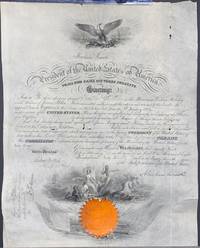
1863Best.-Nr. 8667One partially printed vellum leaf dated February 21 1863 of the appointment of James Alden Jr. as a Captain in the Navy. Signed by President Abraham Lincoln and the Secretary of the Navy Gideon Welles. Orange embossed seal of the Department of the Navy to bottom. Previous owner's repair to upper right corner see image. Loses at folds see image. James Alden Jr. had an impressive career in the United States Navy having been appointed by Lincoln in aiding to split the Confederacy apart along the Mississippi River ultimately helping in the Battle of Vicksburg. Alden whose direct descendant came to America on the Mayflower assisted in the Mexican-American War before joining the Union during the Civil War. The paper measures approximately 14.5 x 17.75 in 37 x 45 cm.
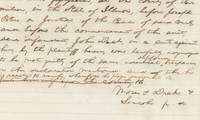
1857Best.-Nr. 3563230/10/1857. John V. Drake and John C. Moses practiced law in Danville Illinois. They worked on cases appearing before the Vermilion County Circuit Court. When Abraham Lincoln had a case appearing in that court he would sometimes affiliate himself with Drake and Moses. Lincoln was before that court in October and November 1857. Hezekiah Ballah sued John Deck and Zachariah Deck in a case heard in the Vermilion County Circuit Court. This was an action of trespass for castrating seventeen buck sheep and cutting up eight other ewes wethers and lambs. The Decks retained Lincoln who worked together with Drake and Moses in the case in October 1857. The Decks pleaded not guilty. Moreover John Deck also pleaded that he had been acquitted of the charge in Justice of the Peace court. The jury found the Decks not guilty. Hearing the case was Judge David Davis who Lincoln would one day name to the U.S. Supreme Court. Autograph document signed a draft pleading completely in Lincoln’s hand Vermilion County Circuit Court October 1857 being the pleading informing the Court that Deck had previously been acquitted of the same offense. The name of the case was John Deck impleaded with Zachariah Deck ads vs Hezekiah Ballah and it was filed In Trespass. “And the said defendant John Deck comes and defends the force and injury…and says plaintiff actio non fails to act when there is a duty to act because he defendant says he is not guilty in manner and form as is in the declaration alleged; and of this he puts himself upon the country etc. citizens in a court or jury. Moses & Drake & Lincoln p.d.” Lincoln adds below: “And for further plea in this behalf defendant John Deck says plaintiff actio non because he says that heretofore to wit on the __ day of __ in the year of our Lord one thousand eight hundred and fifty seven at the county of Vermillion in the state of Illinois before Joseph Peters a Justice of the Peace of said county and before commencement of this suit said defendant John Deck in a suit against him by the plaintiff herein was lawfully judged to be not guilty of the same identical supposed trespass in this declaration mentioned and this he is ready to verify therefore he prays judgment etc. Moses & Drake & Lincoln p.d.” The case is listed at lawofficeofabrahamlincoln.org. An interesting pleading where Lincoln’s client has already been acquitted of the same offense. <img class=""alignnone wp-image-25018 size-post-window"" src=""https://cdn.raabcollection.com/wp-content/uploads/20231204144051/Folder-site-11-1600x1327.jpg"" alt="""" width=""1600"" height=""1327"" /> unknown
1861Best.-Nr. 3768907/08/1861. He names G.A. Pierce an assistant quartermaster with the rank of Captain who would serve under General Ulysses S. Grant at Fort Donelson Shiloh and Vicksburg Gilbert Ashville Pierce was a Union Army officer during the Civil War who later became a U.S. Senator and Governor of the Dakota Territory. He served as a captain assistant quartermaster and eventually lieutenant colonel and inspector in the Quartermaster's Department. Pierce entered the service as a second lieutenant in Company H 9th Indiana Volunteer Infantry on April 23 1861. He was promoted by President Abraham Lincoln to captain and assistant quartermaster on August 7 1861. Pierce served under General Ulysses S. Grant at Paducah Fort Donelson Shiloh Grand Gulf and Vicksburg. He was advanced to lieutenant colonel in the Quartermaster's Department on September 12 1863 and later served as a colonel and inspector until mustering out in October 1865. After the war he was admitted to the bar in 1865 and then served in the Indiana House of Representatives starting in 1869. He was appointed Governor of the Dakota Territory by President Chester A. Arthur in 1884 serving until 1886. Pierce was elected as a Republican senator from North Dakota serving from 1889 to 1891. He died in 1901 at age 62. This is the document that launched Pierce’s remarkable career. Document signed by President Lincoln with engravings of flags cannons and an imposing eagle Washington August 7 1861 being Pierce’s original commission as “Assistant Quartermaster with the rank of Captain.” <img class=""alignnone wp-image-25018 size-post-window"" src=""https://cdn.raabcollection.com/wp-content/uploads/20231204144051/Folder-site-11-1600x1327.jpg"" alt=""historical memorabilia dealer"" width=""1600"" height=""1327"" /> unknown
1857Best.-Nr. 3563230/10/1857. John V. Drake and John C. Moses practiced law in Danville Illinois. They worked on cases appearing before the Vermilion County Circuit Court. When Abraham Lincoln had a case appearing in that court he would sometimes affiliate himself with Drake and Moses. Lincoln was before that court in October and November 1857. Hezekiah Ballah sued John Deck and Zachariah Deck in a case heard in the Vermilion County Circuit Court. This was an action of trespass for castrating seventeen buck sheep and cutting up eight other ewes wethers and lambs. The Decks retained Lincoln who worked together with Drake and Moses in the case in October 1857. The Decks pleaded not guilty. Moreover John Deck also pleaded that he had been acquitted of the charge in Justice of the Peace court. The jury found the Decks not guilty. Hearing the case was Judge David Davis who Lincoln would one day name to the U.S. Supreme Court. Autograph document signed a draft pleading completely in Lincoln’s hand Vermilion County Circuit Court October 1857 being the pleading informing the Court that Deck had previously been acquitted of the same offense. The name of the case was John Deck impleaded with Zachariah Deck ads vs Hezekiah Ballah and it was filed In Trespass. “And the said defendant John Deck comes and defends the force and injury…and says plaintiff actio non fails to act when there is a duty to act because he defendant says he is not guilty in manner and form as is in the declaration alleged; and of this he puts himself upon the country etc. citizens in a court or jury. Moses & Drake & Lincoln p.d.” Lincoln adds below: “And for further plea in this behalf defendant John Deck says plaintiff actio non because he says that heretofore to wit on the __ day of __ in the year of our Lord one thousand eight hundred and fifty seven at the county of Vermillion in the state of Illinois before Joseph Peters a Justice of the Peace of said county and before commencement of this suit said defendant John Deck in a suit against him by the plaintiff herein was lawfully judged to be not guilty of the same identical supposed trespass in this declaration mentioned and this he is ready to verify therefore he prays judgment etc. Moses & Drake & Lincoln p.d.” The case is listed at lawofficeofabrahamlincoln.org. An interesting pleading where Lincoln’s client has already been acquitted of the same offense. <img class=""alignnone wp-image-25018 size-post-window"" src=""https://cdn.raabcollection.com/wp-content/uploads/20231204144051/Folder-site-11-1600x1327.jpg"" alt="""" width=""1600"" height=""1327"" /> unknown books
1861Best.-Nr. 3768907/08/1861. He names G.A. Pierce an assistant quartermaster with the rank of Captain who would serve under General Ulysses S. Grant at Fort Donelson Shiloh and Vicksburg Gilbert Ashville Pierce was a Union Army officer during the Civil War who later became a U.S. Senator and Governor of the Dakota Territory. He served as a captain assistant quartermaster and eventually lieutenant colonel and inspector in the Quartermaster's Department. Pierce entered the service as a second lieutenant in Company H 9th Indiana Volunteer Infantry on April 23 1861. He was promoted by President Abraham Lincoln to captain and assistant quartermaster on August 7 1861. Pierce served under General Ulysses S. Grant at Paducah Fort Donelson Shiloh Grand Gulf and Vicksburg. He was advanced to lieutenant colonel in the Quartermaster's Department on September 12 1863 and later served as a colonel and inspector until mustering out in October 1865. After the war he was admitted to the bar in 1865 and then served in the Indiana House of Representatives starting in 1869. He was appointed Governor of the Dakota Territory by President Chester A. Arthur in 1884 serving until 1886. Pierce was elected as a Republican senator from North Dakota serving from 1889 to 1891. He died in 1901 at age 62. This is the document that launched Pierce’s remarkable career. Document signed by President Lincoln with engravings of flags cannons and an imposing eagle Washington August 7 1861 being Pierce’s original commission as “Assistant Quartermaster with the rank of Captain.” <img class=""alignnone wp-image-25018 size-post-window"" src=""https://cdn.raabcollection.com/wp-content/uploads/20231204144051/Folder-site-11-1600x1327.jpg"" alt=""historical memorabilia dealer"" width=""1600"" height=""1327"" /> unknown books
1719Best.-Nr. 62639/62640original outline-colour copper engravings enhanced hand-colour. EXTREMELY RARE stunning World map in 2 sheets from the extensive multi-volume 'Atlas Historique' vol. 6 no. 30 p. 117; published by Chatelain Amsterdam. One of the most informative decorative and impressive maps centered on the Pacific available. Printed on four large sheets the overall map is of wall-chart proportions and a veritable pictorial encyclopaedia of the World including the Philippines; many famous voyagers' tracks/routes are indicated. A great example of early 18th Century craftsmanship! Condition: 1st sheet - folds as issued small tear on lower centrefold; 2nd sheet - folds as issued; due to imperfect printing the neatlines are not perfectly parallel neither horizontally nor vertically. Otherwise Excellent condition. References: Not in Quirino; Phillips 579; Goss Kartenkunst Taf. 7.5; Ders. North America map 52; Portinaro/Knirsch p. 216/7 all 3 with crude but col. image.; Tooley California No. 80; Tooley Early Maps of Australia No. 66; Wagner NW Coast America Nr. 511; Lowery No. 291 only Northern part; Lietz Insulae India Orientalis p. 132 Chatelain, Amsterdam.
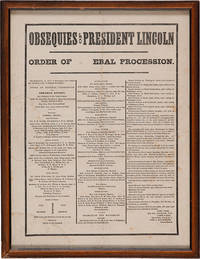
1865Best.-Nr. 55213N.p. but almost certainly Springfield Il. ca. May 3 1865. The Program for Lincoln's Official Funeral Procession in Springfield on May 4 1865: The Saddest Day in American History Likely a proof copy of the exceedingly rare broadside announcing the funeral procession for President Abraham Lincoln in Springfield in early May 1865. Struck down by assassin John Wilkes Booth on April 15 1865 Lincoln's body lay in state in the White House on April 18 and a ceremonial funeral service took place in Washington D.C. around noon on April 19. Two days later President Lincoln's casket was loaded on a funeral train headed for Springfield Illinois stopping at Baltimore Harrisburg Philadelphia New York City Albany Buffalo Cleveland Columbus Indianapolis Michigan City and Chicago before arriving in Lincoln's adopted hometown early on the morning of May 3. At this time Springfield's population numbered around 15000 but Lincoln's funeral train pulled into a town swollen with over 100000 visiting mourners. Immediately upon arrival Lincoln's coffin was transferred by hearse to Representatives' Hall inside the Illinois Old State Capitol. For the next twenty-four hours from about ten o'clock in the morning on May 3 to the same time the next day about 75000 mourners were allowed to pass by the open coffin of the slain president to pay last respects. According to the present broadside President Lincoln's funeral procession left the Old State Capitol "on Thursday the 4th Inst. at 10 o'clock a.m. precisely." The funeral party of over 10000 people then turned right on 7th Street to pass by the Lincoln family home and then right up Cook Street to proceed past the Governor's Mansion before heading north to Oak Ridge Cemetery. This broadside printing of the order of the procession for Lincoln's Springfield funeral was probably printed the afternoon of May 3 or possibly even the morning of May 4 the day of the funeral. Surrounded by a heavy black band the broadside lists all the persons and units involved in the procession along with their places and the rules for the day. The entire procession was divided into eight divisions with Gen. Joseph Hooker acting as Marshal in Chief. The first three divisions of the military escort represented all the elements of the Army and Navy. After them came the attending clergy and Lincoln's attending physicians. Next was the casket itself the only wheeled vehicle in the procession with the pall bearers to each side followed by Lincoln's horse and then the immediate family. Three more military divisions followed interspersed with government officials ambassadors and state officials followed by delegations from Springfield and other Illinois towns. Next were representatives of various organizations delegations from colleges lawyers doctors and the press Masons Odd Fellows and firemen all interspersed with two more military divisions. The final segment of the funeral procession was designated for "Citizens at large" and "Colored Persons." The broadside gives directions for locations for the forming up of each group. Only marshals were allowed to be on horseback; all others walked. Bands were under the direction of the Committee on Music. Other particular directions follow including regulations for the colors of the various scarves worn by the marshals. The text of the document ends with directions to keep the streets through which the procession passes "clear from sidewalk to sidewalk." This broadside must have been widely distributed to assist the mourners in Springfield but like all such ephemeral pieces few copies have survived. OCLC locates only six at Indiana University the Abraham Lincoln Memorial Library the Boston Athenaeum the Chapin Library at Williams College the John Hay Library at Brown University and the Library Company of Philadelphia. The latter location also attributes the place of printing to Springfield. There is also a copy at the Library of Congress and a copy formerly owned by noted collector James Copley and previously sold by this firm. The present copy is likely an early printer's proof of the broadside as it lacks the first three letters of the word "FUNERAL" in the title. The Library of Congress copy is also likely a proof with its variant title omitting the words "ORDER OF." Both copies also lack the letter "e" in "Order" in the first sentence of text. These errors speak to the haste and stress under which this broadside was surely produced perhaps the day before or the very morning of the day when America's greatest president the Savior of the Union and Illinois' favorite son was laid to rest in a city teeming with seven times its own population in attendance. A remarkable and moving document reflecting a moment of national grief perhaps only approached by the John F. Kennedy funeral and memorializing the day when America's first assassinated president was solemnly committed to the earth. Broadside 12 x 9 inches. Printed in three columns edged with a printed black border. Old folds center vertical fold with some separation. Moderate staining. Still very good. Framed. OCLC 5023077 79462381. unknown