ABRAHAM LINCOLNABAA
27.520 risultati
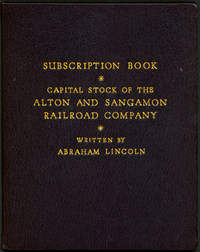
1851rif. 27561A list of stockholders entirely in Lincoln's hand filed as evidence in his first significant railroad case. Lincoln's own appearance in the shareholder list represents only the second known instance of a stock purchase by the future president. The Illinois Supreme Court's ultimate ruling in favor of Lincoln and the railroad set an important legal precedent upholding the binding nature of a stockholder's contractual and financial obligations. "The decision subsequently cited in twenty-five other cases throughout the United States helped establish the principle that corporation charters could be altered in the public interest and it established Lincoln as one of the most prominent and successful Illinois practitioners of railroad law" Donald p.155. ABRAHAM LINCOLN. Autograph Manuscript Signed by Lincoln in text constituting his official transcript of the "Subscription Book of the Capital Stock of the Alton and Sangamon Rail Road Company" incorporated February 27 1847 transcribed in early 1851. Comprising a cover sheet titled in Lincoln's hand the joint stock subscription statement and list of 91 shareholders with the number of shares subscribed and leaf with Lincoln's legal docket: "Alton and Sangamon Railroad Company vs. James A. Barret. Copy of contents of subscription book." 8 pp. 6 x 8¼ x ¼ in. With Lincoln's original stock certificate for the six shares noted in his manuscript. One of only two instances of his owning a stock and the only certificate of his known to survive. Historical Background The Alton and Sangamon Rail Road Company was chartered in 1847 to construct a line from Alton via New Berlin to Springfield. In 1850 however the Illinois General Assembly approved a more direct route bypassing the landholdings of some investors. Claiming breach of contract James A. Barret refused to make further installment payments for his 30 shares of stock as did several others who no longer stood to benefit from the new line. In 1851 Lincoln was hired to compel the defaulting shareholders to pay the balance of their promised investment. The tactical details are spelled out in a February 19 1851 letter from Lincoln to William Martin a commissioner for the sale of the company's stock. Four suits were to be brought against stockholders who had subscribed to the initial offering but had then failed to make the additional installment payments. In preparation Lincoln listed the essential documents he would need in order to win a judgment. "We must prove" he advised Martin "that the defendant is a Stockholder" "that the calls have been made" and "that due notice of the calls has been given." To show that the defendants were in fact stockholders Lincoln explained he needed to produce "the subscription book with the defendant's name and proof of the genuineness of the signature together with any competent parole or evidence that he made the advance payment" Basler 2:99. Lincoln's meticulous transcript of the subscription book was a key piece of the evidence filed in Sangamon Circuit Court on February 22 1851. The book includes Barret's name and the subscription statement transcribed by Lincoln on page two is explicit about the shareholders' obligations. We the subscribers to the Capital Stock of the Alton and Sangamon Rail Road Company.do hereby agree.to pay the balance of the installments due on said stock by us subscribed when the same may be called for by the board of Directors of said Company when duly organized in conformity with the Charter approved February 27th 1847. "A. Lincoln" with six shares for $600 is prominent among the 91 subscriber names. The only other known record of a Lincoln stock purchase dates from 1836 when he bought one share in the Beardstown and Sangamon Canal. In June of 1847 as head of a committee to promote subscriptions for the projected railroad Lincoln wrote an open letter to the "People of Sangamon County" appealing for their support. Railroad construction was booming and Lincoln anticipated that a line between Springfield and Alton would prove a lucrative investment for himself and his state. "The whole is a matter of pecuniary interest" he argued. "The proper question for us is whether with reference to the present and the future and to direct and indirect results it is our interest to subscribe. If it can be shown that it is we hope few will refuse" Basler 1:396-398. The list of subscribers is itself of considerable interest. It includes John Hay 1775-1865 the grandfather of Lincoln's later secretary John Hay 2 shares Ninian W. Edwards 1809-1889 husband of Mary Todd Lincoln's sister 20 shares John T. Stuart 1807-1885 Lincoln's law partner 5 shares Henry Yates 1786-1865 father of Illinois governor Richard Yates 10 shares Noah W. Matheny 1815-1877 clerk of Sangamon County and others. In the subscription book Henry Yates hedging his bets has added a condition beneath his name: "if the Road intersects the M. & S R R at New Berlin." Lincoln was mindful of the critical issues raised by the Alton and Sangamon lawsuits and "took extraordinary pains to construct an airtight case for his client" Donald p.155. To Martin he pointed out the legal issues adding "I have labored hard to find the law" in preparation for the trials. In the end two of the defaulting stockholders paid their delinquent calls. The suits against James A. Barret and Joseph Klein came to trial in the Sangamon Circuit Court in August of 1851 with Lincoln handling both the trials and the appeals for the railroad. Lincoln's preparation proved its worth the rulings were in favor of the railroad. "Illinois Supreme Court Justice Samuel H. Treat ruled that public utility superseded private profit. If Barret had won the case other stockholders would balk at fulfilling their obligations. The rule of caveat emptor protected corporate management from stockholder's personal interests and encouraged subsequent investment" Lincoln Legal Briefs Oct-Dec 1990 no. 16 online. At the time he transcribed this document Lincoln was an attorney on the 8th Judicial Circuit and also managed a thriving appellate and federal court practice. He handled a number of railroad-related cases representing both private individuals as well as the railroads themselves. He was not as some have argued a hired gun for corporate interests. Rather as his law partner William Herndon described him Lincoln was "purely and entirely a case lawyer." The fact that Lincoln despite his commitment to railroading often handled suits against the carriers casts light on his understanding of the lawyer's role in societyHe simply could not afford to take only one side in legal disputes. Nor did Lincoln pursue some political or philosophical agenda through litigation. He was not concerned with developing a consistent legal ideology. His business as Donald reminds us "was law not morality." James W. Ely "Lincoln as Railroad Attorney" Indiana Historical Society Symposium April 15-16 2005 Though a prominent lawyer Lincoln was still smarting over recent political defeats. Elected to the U.S. Congress in 1846 he had served out his term but his outspoken opposition to the Mexican-American War had cost him any chance at a second term. He subsequently failed in his attempt to become commissioner of the General Land Office. Lincoln declined an appointment as governor of the Oregon Territory instead returning to his law practice with William H. Herndon in Springfield Illinois. He would not attempt a political comeback until 1854. The rail line was ultimately highly profitable. Lincoln's overriding belief in the broader benefits of internal improvements is best expressed in a speech he delivered before Congress in 1848. Let the nation take hold of the larger works and the states the smaller ones; and thus working in a meeting direction discreetly but steadily and firmly what is made unequal in one place may be equalized in another extravagance avoided and the whole country put on that career of prosperity which shall correspond with it's extent of territory it's natural resources and the intelligence and enterprize of it's people. Reference "Barret v. Alton & Sangamon Railroad" in Daniel W. Stowell et al. eds. The Papers of Abraham Lincoln: Legal Documents and Cases 4 vols. Charlottesville: University of Virginia Press 2008 2:172-210. books
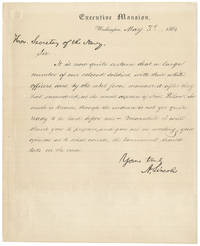
1864rif. 24088President Abraham Lincoln seeks counsel from his cabinet on the appropriate response to the massacre at Fort Pillow Tennessee three weeks earlier. More than 400 African-American Union troops and their white officers were slain many of them after surrendering. ABRAHAM LINCOLN. Letter Signed to Gideon Welles May 3 1864 Washington D.C. 1 p. 8 x 10 in. With: FORT PILLOW MASSACRE LYMAN TRUMBULL. Signed Presentation Copy. Reports of the Committee on the Conduct of the War: Fort Pillow Massacre. Returned Prisoners. 8vo. Illustrated with 8 portraits on 4 pages of woodcut engravings after photographic portraits of Belle Island POWs. Contemporary green cloth gilt with morocco spine label gilt-lettered. First Edition. Washington D.C. 1864. Inscribed on front fly leaf: "Lyman Trumbull to D.J. Ely". The cover title of sammelband that contains two Senate Reports related to Confederate atrocities: 1. U.S. Congress. May 5 1864. - Ordered to be printed.Joint Resolution directing the Committee on the Conduct of the War to examine into the recent attack on Fort Pillow. Senate Report 38th Congress 1st Session. Senate Rep. Com. No. 63. Nevins I: 204. 2. U.S. Congress. May 9 1864 - Ordered That the report.be printed in connexion with the report of the committee in relation to the Fort Pillow massacre.Joint Resolution directing the Committee on the Conduct and Expenditures of the War. Senate Report 38th Congress 1st Session. Senate Rep. Com. No. 68. On April 12 1864 1500 Confederate troops under Nathan Bedford Forrest attacked a Union outpost at Fort Pillow Tennessee. After four hours of intense fighting Forrest demanded the garrison surrender. Although outnumbered almost three to one the Union troops inside the fort at first refused. Confederate forces eventually captured the position. According to survivors Confederate troops motivated by racial hatred proceeded to kill Union prisoners as they pleaded for their lives. It is unclear how many were killed after the surrender but first-hand accounts suggest that the numbers were high. Of 262 black soldiers at Fort Pillow only 58 survived to be taken prisoner; of 395 white soldiers 168 survived as prisoners. On May 3 President Lincoln sent a letter like this one to each of the members of his cabinet. Three days later Lincoln held a cabinet meeting at which each cabinet member read his opinion on the appropriate response. All agreed that the U.S. government should demand "an explanation" from the Confederacy. Seward Chase Stanton and Welles advised holding Confederate prisoners equal in numbers to the Union troops massacred as hostages; if the Confederate government avowed the massacre those prisoners would be executed. Usher Bates and Blair strongly disagreed with Blair pointing out that such a response "would not be justified by the rules of civilized warfare." Bates concurred noting that "retaliation is not mere justice. It is avowedly revenge; and it is wholly unjustifiable in law and conscience." Little formal action beyond a Congressional investigation took place. Perhaps the greatest impact that Fort Pillow had was on the morale of black troops. Knowing what their fate would be if captured on the field by Confederate soldiers black Union soldiers charged into battle with the war cry "Remember Fort Pillow!" Complete Transcript Executive Mansion Washington May 3d 1864 Hon. Secretary of the Navy. Sir: It is now quite certain that a large number of our colored soldiers with their white officers were by the rebel force massacred after they had surrendered at the recent capture of Fort-Pillow. So much is known though the evidence is not quite ready to be laid before me. Meanwhile I will thank you to prepare and give me in writing your opinion as to what course the Government should take in this case. Yours truly A. Lincoln With abolitionist Senator Lyman Trumbull's signed presentation copy of Congressional reports. Condition: very good. books
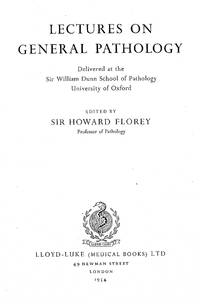
1954rif. 1822London: Lloyd-Luke 1954. First edition. PATHOLOGY LECTURES BY OXFORD SCHOLARS EDITED BY NOBELIST DEVELOPER OF PENICILLIN: HIS LIBRARY DONATION. 9 1/2 inches tall hardcover black cloth binding gilt title to spine ink inscription top of front paste-down ""Ex dono Howard Gualteri Florey Equitis Aurati honoris causa socy" From the gift of Howard Walter Florey honorary member Knight of the Golden Horde" i-xiii 733 pp many illustrations color plates. Faint residue of library sticker bottom of spine residue of removed bookplate from front paste-down handstamp "27 JAN 1965" to back paste-down no other library markings except ink gift inscription noted above. HOWARD WALTER FLOREY 1898 – 1968 editor of this book was an Australian pharmacologist and pathologist who shared the Nobel Prize in Physiology or Medicine in 1945 with Ernst Chain and Sir Alexander Fleming for his role in the development of penicillin. Although Fleming received most of the credit for the discovery of penicillin it was Florey and his team at the University of Oxford who made it into a useful and effective drug ten years after Fleming had abandoned its development. They developed techniques for growing purifying and manufacturing the drug tested it for toxicity and efficacy on animals and carried out the first clinical trials. In 1935 he became the director of the Sir William Dunn School of Pathology at Oxford. He assembled a multidisciplinary staff that could tackle major research projects. In addition to his work on penicillin he researched many other subjects most notably lysozyme contraception and cephalosporins. Florey's discoveries are estimated to have saved over 80 million lives and he is regarded by the Australian scientific and medical community as one of its greatest figures. THIS COMPILATION OF LECTURES BY OXFORD FACULTY includes ten by Florey including microscopy inflammation and regeneration. Lloyd-Luke hardcover books
1836rif. 24346.991836. No binding. Fine. Autograph Letter Signed to Mary S. Owens December 13 1836 2 pp. 9 3/4 x 7 3/4 in. ""Write back as soon as you get this and if possible say something that will please me for really I have not been pleased since I left you.""Here Lincoln perfectly demonstrates what Owens later described as deficiencies ""in those little links which make up the chain of a woman's happiness."" Rather than expressing his feelings for Owens Lincoln complains about his health and discusses political issues swirling in the Illinois General Assembly. Although inept at love the letter offers rare insight into the young representative's thoughts on a variety of political issues. In this highly important letter to Mary Owens a self-absorbed Lincoln complains to his potential spouse of his health both physical and mental and discusses political issues to the point that he describes his own letter as ""dry and stupid."" Perhaps more revealing than he realized it illustrates the tension in Lincoln's early life between matters of the head with which he was comfortable and matters of the heart with which he clearly was not. Complete Transcript Vandalia Decr 13. 1836Mary I have been sick ever since my arrival here or I should have written sooner. It is but little difference however as I have verry little even yet to write. And more the longer I can avoid the mortification of looking in the Post Office for your letter and not finding it the better. You see I am mad about that old letter yet. I dont like verry well to risk you again. I'll try you once more anyhow. The new State House is not yet finished and consequently the legislature is doing little or nothing. The Governor delivered an inflamitory political message and it is expected there will be some sparring between the parties about it as soon as the two Houses get to business. Taylor delivered up his petitions for the New County to one of our members this morning. I am told that he despairs of its success on account of all the members from Morgan County opposing it. There are names enough on the petitions I think to justify the members from our county in going for it; but if the members from Morgan oppose it which they say they will the chance will be bad. Our chance to take the seat of Government to Springfield is better than I expected. An Internal Improvement Convention was held here since we met which recommended a loan of several millions of dollars on the faith of the state to construct Rail Roads. Some of the legislature are for it and some against it; which has the majority I can <2> not tell. There is great strife and struggling for the office of U.S. Senator here at this time. It is probable we shall ease their pains in a few days. The opposition men have no candidate of their own and consequently they smile as complacently at the angry snarls of the contending Van Buren candidates and their respective friends as the Christian does at Satan's rage. You recollect I mentioned in the outset of this letter that I had been unwell. That is the fact though I belive I am about well now; but that with other things I can not account for have conspired and have gotten my spirits so low that I feel that I would rather be any place in the world than here. I really can not endure the thought of staying here ten weeks. Write back as soon as you get this and if possible say something that will please me for really I have not been pleased since I left you. This letter is so dry and stupid that I am ashamed to send it but with my present feelings I can not do any better. Give my respects to Mr & Mrs Abell and family. Your friend LincolnMiss Mary S. OwensHistoric BackgroundThis is one of the ten oldest Lincoln letters known to have survived. Although 11 leaves 9 of which are in institutions from Lincoln's educational sum book a few documents written or signed by Abraham Lincoln in 1832 relating to his service in the Black Hawk War again mos. See website for full description books
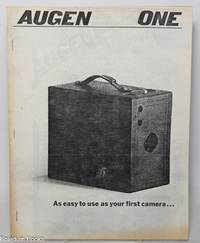
1984rif. 342765Los Angeles 1984. unpaginated toned and lightly shelfworn staplebound Xerox zine otherwise very good condition. Issue one theme is "The Cartoon unknown books
rif. 328532framed. near fine. Signed Portrait Photograph of Abraham Fortas which reads "For. with all good wishes: Abe Fortas". Circa 1965. Please inquire for more information. Abraham Fortas was an American lawyer and jurist who served as an associate justice of the Supreme Court of the United States from 1965 to 1969. Born and raised in Memphis Tennessee Fortas graduated from Rhodes College and Yale Law School. He later became a law professor at Yale Law School and then an advisor for the U.S. Securities and Exchange Commission. Fortas worked at the Department of the Interior under President Franklin D. Roosevelt and was appointed by President Harry S. Truman to delegations that helped set up the United Nations in 1945. unknown books
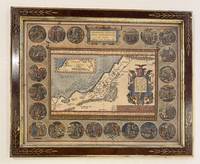
1603rif. 328971Antwerp: Ortelius Abraham 1603. unbound. Map. Engraving with hand coloring. 17 3/8 x 21 1/2" Framed in Eli Wilner carved frame. Beautiful map of the Holy Land bordered by 22 medallions depicting Abraham's wanderings. An inset map shows the path Abraham took. Ortelius used both Ptolemy and the Bible as sources for the map and based the medallion scenes on drawings by Maarten de Vos also of Antwerp. Latin text on verso. Expert repair to lower margin minor scattered stains in margins. Abraham Ortelius 1527 - 1598 a Flemish cartographer and geographer is widely regarded as one of the important and influential cartographers in history. He is known for his "Theatrum Orbis Terrarum" which was the first modern atlas. Van den Broecke 183.2 1603Lv; Laor 547C. Antwerp 1603 Ortelius, Abraham unknown books
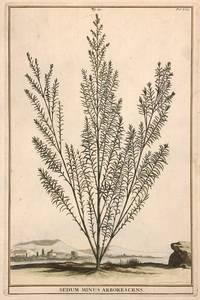
1696rif. 324020Leyden and Utrecht: Pieter Vander Aa 1696. unbound. Botanical. Copper plate engraving with hand coloring. Image measures 12" x 7 3/4". Handsome image of a plant belonging to the sedum genus commonly known as stonecrops. Abraham Munting 1626-1683 taught medicine and botany at the Academy of Groningem in the Netherlands. He had a particular interest in the uses of plants especially medicinally. This engraving is from "Naauwkeurige Beschryving Der Aardgewassen". Aging around edges and minor foxing. Please visit our gallery for more Munting prints. Pieter Vander Aa unknown books
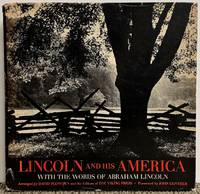
1970rif. 329928New York: Viking 1970. hardcover. very good/very good-. Profusely illustrated in black and white. 352 pages. Large thick 4to green cloth d.w. worn price-clipped. New York: Viking 1970. Sunned spine/edges spine ends worn. Very good in a very good- dust wrapper. Viking unknown books
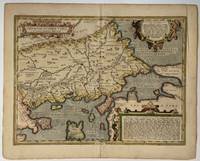
1630rif. 324748Antwerp: Abraham Ortelius 1630. unbound. Map. Engraving with hand color. Image measures 14" x 18 3/4". This beautiful map by Abraham Ortelius depicts the Balkan Peninsula or the Balkans extending from The Sea of Marmara Istanbul and the Bosporus Strait westward to Macedonia including Bulgaria. Portions of the Black Sea and the Thrakikon Pelagos are also shown. Topographical and geographical features such as mountains forests and cities are beautifully rendered in profile. Ortelius based this map on the 1560 South-East Europe map by Gastaldi and on on information from numerous ancient sources specifically Herodotus Plinius Strabo Appianus Virgilius Plutarchus and Sidonius. A beautifully engraved title cartouche adorns the top left of the map. Two additional cartouches containing text are also included in the top and bottom right. This map was published in the 1630 edition of Ortelius's famous "Theatrum Orbis Terrarum" which is historically considered the first modern atlas. Based on the Latin text on verso only 300 copies of this particular atlas were ever printed van der Broecke 214. The map is in good condition with minor wear and toning along the original centerfold. Printers crease to right margin not affecting the image. Latin text on verso. Abraham Ortelius 1527 - 1598 a Flemish cartographer and geographer is widely regarded as one of the important and influential cartographers in history. He is known for his "Theatrum Orbis Terrarum" which was the first modern atlas. Van den Broecke #214 Abraham Ortelius unknown books
2009rif. 324952Norwalk: Easton 2009. Limited. hardcover. fine. Full black leather with gilt decoration & lettering photographic label inset on cover silk moire end-leaves all edges gilt. Norwalk: Easton Press 2009. Limited Edition. Fine. Collectors Edition. Signed by Aldrin on preliminary page. A certificate of authenticity is laid-in along with a color photo of the astronaut standing on the moon near the American flag. Easton unknown books
1969rif. 323972New York: Ktav 1969. hardcover. fine. 5 volumes. Chapters by many authors. 8vo blue cloth. New York: Ktav Publishing with American Jewish Historical Society 1969. A fine set. Volume I: The Colonial Period; Volume II: The Early Republic; Volume III: The Emerging Community; Volume IV: The Era of Immigration; Volume V: At Home in America Ktav unknown books
1945rif. 324015Girard: Haldeman-Julius 1945. First. paperback. very good-. Illustrated. Thin 4to printed gray wrappers worn and chipped at the spine and discolored at edges. Girard: Haldeman-Julius 1945. A very good- copy. Autographed on the front cover with an additional presentation on the title page. Haldeman-Julius unknown books
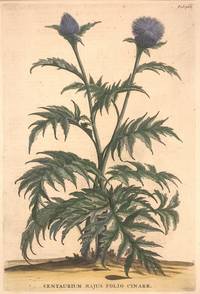
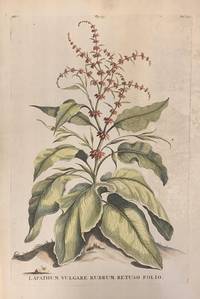
1696rif. 324021Leyden and Utrecht: Pieter Vander Aa 1696. unbound. Botanical. Copper plate engraving with hand coloring. Image measures 12 1/2" x 8 1/2". Fine print of a purple thistle-like flowering plant with jagged leaves. Abraham Munting 1626-1683 taught medicine and botany at the Academy of Groningem in the Netherlands. He had a particular interest in the uses of plants especially medicinally. This engraving is from "Naauwkeurige Beschryving Der Aardgewassen". Aging around edges and minor foxing. Please visit our gallery for more Munting prints. Pieter Vander Aa unknown books
1696rif. 324022Leyden and Utrecht: Pieter Vander Aa 1696. unbound. Botanical. Copper plate engraving with hand coloring. Image measures 12 1/2" x 8 1/2". Beautiful print of a flowering Rumex acutus plant. Abraham Munting 1626-1683 taught medicine and botany at the Academy of Groningem in the Netherlands. He had a particular interest in the uses of plants especially medicinally. This engraving is from "Naauwkeurige Beschryving Der Aardgewassen". Aging around edges and minor foxing. Please visit our gallery for more Munting prints. Pieter Vander Aa unknown books
1730rif. 320794Amsterdam: Henri Abraham Chatelain 1730. unbound. View. Uncolored engraving. Image measures 12" x 21.5". Handsome antique brown frame 18 3/4 x 21" not examined out of frame. This striking view by Henri Abraham Chatelain depicts the interior of the temple of Mecca. Features the interior prayer scene of the temple with a key below the map noting the locations mapped on the map. Issued in the 1730 edition of Chatelain's "Atlas Historique" one of the most widely distributed and lavishly illustrated work of its kind in the 18th century. Henri Abraham Chatelain 1684 - 1743 was a Dutch cartographer pastor best known for his seminal seven volume "Atlas Historique". This is a beautiful example of his work. Henri Abraham Chatelain unknown books
1953rif. 312727New Brunswick: Rutgers University Press 1953. hardcover. very good. Edited by Roy P. Basler. Frontispiece illustrated in black and white. Volume 3 of 9. ix 555 pages. Thick 8vo grey cloth blue spine labels. New Brunswick: Rutgers University Press 1953. History Book Club Edition. Spine toned internally clean and tight. A very good copy. Rutgers University Press unknown books
1953rif. 312726New Brunswick: Rutgers University Press 1953. hardcover. very good. Edited by Roy P. Basler. Frontispiece and charts illustrated in black and white. Volume 2 of 9. ix 553 pages. Thick 8vo grey cloth blue spine labels. New Brunswick: Rutgers University Press 1953. History Book Club Edition. Spine toned and slightly dented internally clean and tight. A very good copy. Rutgers University Press unknown books
1933rif. 304386London: William Heinemann Medical Books 1933. hardcover. very good. Frontis illustrated largely with b/w portraits. 498 pages. 4to navy cloth. London: William Heinemann Medical Books 1933. A very good copy--shelfworn with light bumping to corners spotting to top outer edge. William Heinemann Medical Books unknown books
1603rif. 299083Antwerp: Abraham Ortelius 1603. unbound. Map. Engraving with hand coloring. Image measures 14" x 18 3/4". Staining toning and chips to margins but otherwise is good condition. Friuli is the northeast Italian region bordering Austria Slovenia and the Adriatic Sea. It's home to the sharp-peaked Dolomite Mountains and vineyards producing white wines. Ortelius' 1603 edition extends from Venice north to the Italian Alps and east to Trieste and Istria. Lovely depiction of Venice floating on several islands. Abraham Ortelius 1527--1598 a Flemish cartographer and geographer is widely regarded as one of the important and influential cartographers in history. He is known for his "Theatrum Orbis Terrarum" which was the first modern atlas. Van Den Broecke 119 Abraham Ortelius unknown books
2005rif. 298835Millwood: Haybarn Editions 2005. hardcover. fine. Ed Colker. Translated by Melvin Konner with illustrations by Ed Colker including 1 loose color lithograph titled and initialed by Colker in pencil. 36 pages in white paper wrappers protected in publisher's tan cloth clamshell case. Millwood New York: Haybarn Press 2005. Limited edition. Published in honor of the 92nd birthday of Sutzkever the foremost living Yiddish poet. One of the 100 portfolios numbered and signed by both the translator & the artist. Haybarn Editions unknown books
1971rif. 292077New York: Arno Press 1971. hardcover. near fine/near fine. A few Illus. 72pp. 8vo rebound in full red leather with gilt decorations spine lightly sunned slipcase. New York: Arno Press 1971. A near fine copy. Arno Press unknown books
rif. 292160hardcover. near fine. 67pp. 8vo cloth. Hartford: Privately Printed 1922. Near Fine. unknown books
1972rif. 288317Ithaca: Cornell University Press 1972. First. hardcover. near fine/near fine. 450 pages. Black cloth backed boards dust wrapper. First edition. Ithaca: Cornell University Press 1972. A near fine copy in a near fine wrapper. Cornell University Press unknown books
1999rif. 286977Lanham: Rowan & Littlefield 1999. paperback. very good. Illus. 4to pr. wrs. Lanham: Rowan & Littlefield 1999. Very good Rowan & Littlefield unknown books