27.626 Ergebnisse
1981Best.-Nr. 080634Harpercollins 1981. 1st Edition 1st Printing. Hardcover. Very Good/Very Good. Very good clean tight condition. First edition first printing. Text is free of marks. Dust jacket in very good condition and is price-clipped. Professional book dealer since 1999. All orders are processed promptly and carefully packaged. Harpercollins hardcover
Best.-Nr. 1022731807.Gpaperback. Good. Access codes and supplements are not guaranteed with used items. May be an ex-library book. paperback

Best.-Nr. 13956Walkowitz Abraham American born Russia 1878-1965. UNTITLED BATHING FIGURES. Watercolor on paper not dated. Signed within the image lower right. 5 1/4 x 8 3/4 inches the full sheet framed to 11 3/4 x 16 3/4 inches. Provenance: James R. Bakker Antiques Inc. Cambridge Massachusetts February 12 1988 lot 96 to Private Collection Rye Beach New Hampshire. In excellent condition with faint traces of old hinging adhesive top verso. A vigorous 20th Century Modernist composition with the colors fresh.Walkowitz is best known for his many studies of the dancer Isadora Duncan. unknown
Best.-Nr. 0813512980.Ghardcover. Good. Access codes and supplements are not guaranteed with used items. May be an ex-library book. hardcover
Best.-Nr. 3030640450.Ghardcover. Good. Access codes and supplements are not guaranteed with used items. May be an ex-library book. hardcover
Best.-Nr. 0195613848.Gpaperback. Good. Access codes and supplements are not guaranteed with used items. May be an ex-library book. paperback
Best.-Nr. 3030420469.Gpaperback. Good. Access codes and supplements are not guaranteed with used items. May be an ex-library book. paperback
Best.-Nr. 6128776920VDM Verlag Dr. Mueller Aktiengesellschaft & Co. KG . Papeback. New. pp. 104 VDM Verlag Dr. Mueller Aktiengesellschaft & Co. KG unknown
Best.-Nr. 076186458X.Gpaperback. Good. Access codes and supplements are not guaranteed with used items. May be an ex-library book. paperback
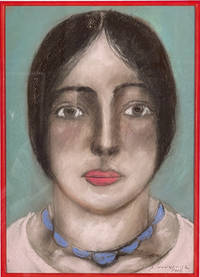
Best.-Nr. 13927Walkowitz Abraham American born Ukraine 1878-1965. PORTRAIT OF ISADORA DUNCAN. Pastel on paper 1928. Signed lower right. 12 x 8 1/4 inches framed to 17 x 13 inches. The verso of the frame also has a label signed by Walkowitz. Walkowitz grew up in New York; in 1906 he went to Paris to study painting at the Academy Julien. The painter Max Weber introduced him to Isadora Duncan in Rodin's studio. His interest in Duncan as a subject began then and lasted beyond her death in 1927; he made more than 5000 drawings and paintings including more than a few pastel portraits like this one and a great many pieces of her performing. As with this piece done after her death it is likely that many of the works were done from memory rather than from life. "He was also able to draw from the same subject repeatedly and extract a different experience with each observation" Wikipedia article. In this his use of Duncan as a subject seems similar to Giorgio Morandi's repeated use of a handful of cups bottles and bowls to create a large number of still-life paintings drawings and prints each of which has something new to offer.Walkowitz was at the center of American Modernism part of Stieglitz's circle at 291 from 1911 to 1917 and a participant in the Armory Show.The following from the Wikipedia article on Walkowitz is a discussion of his Duncan drawings:In 1927 Isadora Duncan echoed the lines of Walt Whitman in her essay I See America Dancing writing "When I read this poem of Whitman’s I Hear America Singing I too had a Vision: the Vision of America dancing a dance that would be the worthy expression of the song Walt heard when he heard America singing."4 Duncan was the quintessence of modernism shedding the rigid shackles of the balletic form and exploring movement through a combination of classical sculpture and her own inner sources. She described this search: "I spent long days and nights in the studio seeking that dance which might be the divine expression of the human spirit through the body’s movement."5 For Duncan dance was a distinctly personal expression of beauty through movement and she maintained that the ability to produce such movement was inherently contained within the body.Abraham Walkowitz was one of many artists captivated by this new form of movement. The Duncan drawings can be interpreted as representations of Walkowitz's loftiest goals. Composing thousands of these drawings would prove to be one of the most effective outlets for his artistic agenda due to the similarities between the artistic ideals and preferred aesthetic shared by Walkowitz and Duncan. He was also able to draw from the same subject repeatedly and extract a different experience with each observation. Sculptors most readily recognized this trait in Duncan; there was a particular quality of her dance which appeared readily artistic yet not static. Dance critic Walter Terry described it in 1963 as "Although her dance inarguably sprang from her inner sources and resources of motor power and emotional drive the overt aspects of her dance were clearly colored by Greek art and the sculptor’s concept of the body in arrested gesture promising further action. These influences may be seen clearly in photographs of her and in the art works she inspired."6Isadora Duncan #29 c. 1915In each drawing a new observation is recorded from the same subject. In the Foreword to A Demonstration of Objective Abstract and Non-Objective Art Walkowitz wrote in 1913 "I do not avoid objectivity nor seek subjectivity but try to find an equivalent for whatever is the effect of my relation to a thing or to a part of a thing or to an afterthought of it. I am seeking to attune my art to what I feel to be the keynote of an experience."7 The relaxed fluidity of his action drawings represent Duncan as subject but ultimately reconceive the unbound movement of her dance and translates the ideas into line and shape ending with a completely new composition.His interest in recording the "keynote" of experience rather than producing an objective representation of a subject is central to the composition of the Duncan drawings. The fluidity of the lines function simultaneously as recognizable shapes of the human body but also trace the pathways of the dancer's movements. Duncan herself wrote in 1920 ".there are those who convert the body into a luminous fluidity surrendering it to the inspiration of the soul."4 Placed into a different context this passage could function as a description of Walkowitz's art; it is in fact taken from her essay The Philosopher’s Stone of Dancing wherein she discusses techniques to most effectively express the purest form of movement.Walkowitz's dedication to Duncan as a subject extended well past her untimely death in 1927. The works reveal shared convictions toward modernism and breaking links with the past. In 1958 Walkowitz told Lerner "She Duncan had no laws. She did not dance according to the rules. She created. Her body was music. It was a body electric like Walt Whitman. His body electrics. One of our greatest men America's greatest is Walt Whitman. Leaves of Grass is to me the Bible."8 unknown
Best.-Nr. 0198529791.Ghardcover. Good. Access codes and supplements are not guaranteed with used items. May be an ex-library book. hardcover
Best.-Nr. 0060104767.Ghardcover. Good. Access codes and supplements are not guaranteed with used items. May be an ex-library book. hardcover
Best.-Nr. 0470398795.Gpaperback. Good. Access codes and supplements are not guaranteed with used items. May be an ex-library book. paperback
Best.-Nr. 014309968X.Gpaperback. Good. Access codes and supplements are not guaranteed with used items. May be an ex-library book. paperback
Best.-Nr. 0805201491.Gpaperback. Good. Access codes and supplements are not guaranteed with used items. May be an ex-library book. paperback
Best.-Nr. 0691101183.Gpaperback. Good. Access codes and supplements are not guaranteed with used items. May be an ex-library book. paperback
Best.-Nr. 1849023778.Ghardcover. Good. Access codes and supplements are not guaranteed with used items. May be an ex-library book. hardcover
1985Best.-Nr. Q-019284010xOxford University Press 1985-02-28. Paperback. New. In shrink wrap. Looks like an interesting title! Oxford University Press paperback
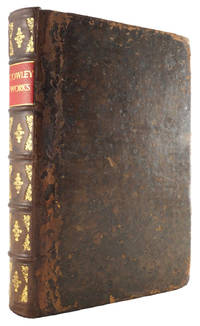
1669Best.-Nr. 4024London: Printed by J. M. for Henry Herringman 1669. Folio pp. xlii 41 1 80 4 58 61-70 154 23 1 148 frontispiece portrait. Contemporary mottled calf. Lightly toned a bit of soiling and spotting. Rubbed rebacked to style with gilt decoration and red label hinges relined no rear flyleaf. Ink inscription of 'Mary Ever' to flyleaf. The second edition - following two issues the previous year - of the influential and popular collected works of Abraham Cowley 1618-1667. It 'reprints the contents of Poems 1656 together with the two prose tracts of 1661 and the 1663 Verses with some additional poems published and unpublished; the most significant new material is Several discourses by way of essays in verse and prose a collection of prose essays interspersed and accompanied by poems dealing with such topics as 'Of Liberty' 'Of Agriculture' 'The Garden' addressed to Evelyn and 'Of Myself'' ODNB. ESTC R21122. Printed by J. M. for Henry Herringman unknown
1953Best.-Nr. S13292College Park MD:: The Physical Review 1953. 1953. 3 Offprints. Original wrappers. From the collection of Abraham Pais. Very good. INVENTORY: 1. KLEIN Abraham. Convergence of the Adiabatic Nuclear Potential. II. Offprint from: The Physical Review Vol. 92 No. 4 pp. 1017-1020 November 15 1953. Signed by Pais. 2. KLEIN Abraham. The Construction of Potentials in Quantum Field Theory. Offprint from: The Physical Review Vol. 91 No. 5 p. 1285 September 1 1953. Signed by Pais. 3. KLEIN Abraham. Invariant Operators of the Unitary Unimodular Group in n Dimensions. Offprint from: Journal of Mathematical Physics Volume 4 Number 10 pp. 1283-1284 October 1963. American theoretical physicist his studies took him to Brooklyn College then to Harvard where he obtained his masters and doctorate in 1950 under Julian Schwinger. The Physical Review, 1953. unknown
1965Best.-Nr. SKU1002546Horn and Wallace 1965. Good. 0x0x0. B0007EO3PM complete with map. Reprint facsimile edition of an 1870 book. Ex-Library. Horn and Wallace unknown
Best.-Nr. 37560822like new. unknown
Best.-Nr. 18785939like new. unknown
Best.-Nr. 45386183like new. unknown
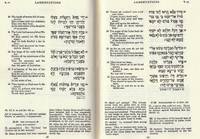
1974Best.-Nr. 010476Soncino Press Hindhead Surrey Printed by Novello and Company Limited Borough Green Kent 1946 1974 1974. Hardcover. Fine/No Jacket. 11th impression ; xiii 252 s. ; 22 cm OCLC 186570901 illustrated boards no dustjacket ; Text and translation in parallel columns ; FINE Soncino Press, Hindhead, Surrey, Printed by Novello and Company Limited, Borough Green, Kent, 1946, 1974 hardcover