28 034 résultats
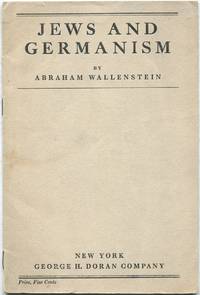
1917réf. 432387New York: George H. Doran Company 1917. Softcover. Near Fine. First edition. Octavo. 14pp. Stapled printed self-wrappers. Modest soiling on wrappers else near fine. George H. Doran Company unknown books
1917réf. 121427New York: George H. Doran Company 1917. Softcover. VG clean and tight. Ivory stapled wraps with black lettering and 14 pp. Wallenstein ponders the plight of the Jews newly under German rule particularly those in Poland the Ukraine and the Baltic States formerly part of the Russian Empire. George H. Doran Company paperback books
1918réf. 28068New York: H. Doran 1918. First U.S. Edition. First Printing. fair ex-lib. 20 cm 14 wraps library stamp on front cover covers worn torn and soiled. An important and prescient analysis. Wallenstein wonders if Jews moved to German control from Russian may have traded the witch for the devil. "The German liberators have totally ruined the Lithuanian Jews. " H. Doran paperback
1946réf. 35768New York: Machmadim Art 1946. Hardcover. g. Signed. 4to. vii unpaginated. Original red cloth with gold lettering on cover. A collection of 39 charming charcoal and pen drawings depicting Jewish life in the early 20th century by the famous Russian-American Jewish artist Abraham Walkowitz. Includes an English pamphlet by Isaac Lichtenstein which discusses Walkowitz's style and places him within the context of early modernist art. A powerful look into a now lost world that ranges from market place dealings to rabbis with Torah scrolls. This book was printed what after the Holocaust and can thus be seen as part of the beginning of the process of memorializing European Jewry. Text in Yiddish. Inscribed by author on front free endpaper. Some wear to spine and edges. Binding loose but still intact. Overall in good condition. Machmadim Art hardcover books
1945réf. 324015Girard: Haldeman-Julius 1945. First. paperback. very good-. Illustrated. Thin 4to printed gray wrappers worn and chipped at the spine and discolored at edges. Girard: Haldeman-Julius 1945. A very good- copy. Autographed on the front cover with an additional presentation on the title page. Haldeman-Julius unknown books
1945réf. 14114Girard KS: Haldeman-Julius Publications 1945. Signed. Softcover. VG scuffing to wraps. creasing to spine edges. curling to lower wrap corner & pgs. grey textured wraps w/ black printing. approx 42 unpaginated pgs. 30 bw plates. Front cover signed by Walkowitz; interior inscribed and signed by Walkowitz. Photo is of a previous copy; please inquire for an updated photo of this signed copy. This volume consists mostly of reproductions of the artist's work with several introductions as mentioned in the title a brief biography and a foreword by the artist. Complete title: With Introductions by Oscar Bluemner Jerome Mellquist Charles Caffin Sidney Janis James Johnson Sweeney and Henry McBride. Haldeman-Julius Publications paperback books
1989réf. 215607New York NY: Zabriskie Gallery 1989. Softcover. VG. Stapled wraps with bw illustration. 12 unnumbered pages. Bw illustrations. Catalog of an exhibition held February 21-March 25 1989. Zabriskie Gallery paperback books
1947réf. 1893Haldeman-Julius 1947. Paperback. Very Good. Signed by Walkowitz on front cover. Intro. by publisher. Haldeman-Julius paperback books
1951réf. 1892Girard Kansas: Haldeman-Julius 1951. Paperback. Articles by Ozenfont Van Vechten Venturi et. al. 40pp of drawings. Signed on the cover. Haldeman-Julius paperback books
réf. B61186-1Girard Kansas Haldeman-Julius Publications 1947. 12pp. 6 plates in text reproducing 270 drawings. Lrg. 4to. Wraps. Presentation inscription by Walkowitz on the title-page; also signed by him on the front cover. Slight splitting of wrappers at spine with chips at corners. Girard, Kansas (Haldeman-Julius Publications), 1947. paperback books
1946réf. 202144New York: Machmadim Art Editions 1946. First. hardcover. near fine. 7 pages of text in Hebrew followed by 48 black & white plates. Thin 4to flexible cloth. New York: Machmadim Art Editions 1946. First Edition. Presentation copy to Mr. and Mrs. Meyer Schapiro. Machmadim Art Editions unknown books
1948réf. 1894Girard Kansas: Haldeman-Julius 1948. Paperback. Very Good. 26pp of drawings by author/artist. Signed on front cover. Haldeman-Julius paperback books
1950réf. 1895Girard Kansas: Halderman-Julius 1950. Paperback. Very Good. Signed on cover by author. 20pp of drawings; articles by Carl Van Vechten Arnold Genthe et. al. Special section on Fascism & anti-war. Walkowitz is known for his drawings of Isadora Duncan. They have been collected in various institutions. Halderman-Julius paperback books
1945réf. 14114Girard KS: Haldeman-Julius Publications 1945. Signed. Softcover. VG scuffing to wraps. creasing to spine edges. curling to lower wrap corner & pgs. grey textured wraps w/ black printing. approx 42 unpaginated pgs. 30 bw plates. Front cover signed by Walkowitz; interior inscribed and signed by Walkowitz. Photo is of a previous copy; please inquire for an updated photo of this signed copy. This volume consists mostly of reproductions of the artist's work with several introductions as mentioned in the title a brief biography and a foreword by the artist. Complete title: With Introductions by Oscar Bluemner Jerome Mellquist Charles Caffin Sidney Janis James Johnson Sweeney and Henry McBride. Haldeman-Julius Publications paperback
réf. 18-7064New York NY: Zabriskie Gallery 1959. . Exhibition brochure. 8vo. 4 pp. Single-sided black and white glossy sheet folded over and into fourths. Good with creasing along page edges and marginal soiling from age. 1 black and white plate. Includes text by A. L. Chanin. Includes list of 30 exhibited works. Brochure created to announce exhibition of works by Abraham Walkowitz from January 5 through January 31 1959 in New York NY at Zabriskie Gallery. Scarce. From the Collection of the Art Historian Peter Selz. New York, NY: Zabriskie Gallery, 1959. unknown
1982réf. 65493Museum. As New. Paperback. FREE UPGRADE to Courier/Priority Shipping Upon Request – – IN STOCK AND IMMEDIATELY AVAILABLE FOR SHIPMENT - AS NEW THE TEXT BLOCK IS PRISTINE CLEAN UNMARKED AND IN EXCELLENT CONDITION - - 52 pp. With 39 ills. 27 x 23 cm. -- with a bonus offer-- . 1982. Museum paperback
1947réf. 1893Haldeman-Julius 1947. Paperback. Very Good. Signed by Walkowitz on front cover. Intro. by publisher. Haldeman-Julius paperback
1951réf. 1892Girard Kansas: Haldeman-Julius 1951. Paperback. Articles by Ozenfont Van Vechten Venturi et. al. 40pp of drawings. Signed on the cover. Haldeman-Julius paperback
réf. B61186-1Girard Kansas Haldeman-Julius Publications 1947. 12pp. 6 plates in text reproducing 270 drawings. Lrg. 4to. Wraps. Presentation inscription by Walkowitz on the title-page; also signed by him on the front cover. Slight splitting of wrappers at spine with chips at corners. Girard, Kansas (Haldeman-Julius Publications), 1947. paperback
1946réf. 35768New York: Machmadim Art 1946. Hardcover. g. Signed. 4to. vii unpaginated. Original red cloth with gold lettering on cover. A collection of 39 charming charcoal and pen drawings depicting Jewish life in the early 20th century by the famous Russian-American Jewish artist Abraham Walkowitz. Includes an English pamphlet by Isaac Lichtenstein which discusses Walkowitz's style and places him within the context of early modernist art. A powerful look into a now lost world that ranges from market place dealings to rabbis with Torah scrolls. This book was printed what after the Holocaust and can thus be seen as part of the beginning of the process of memorializing European Jewry. Text in Yiddish. Inscribed by author on front free endpaper. Some wear to spine and edges. Binding loose but still intact. Overall in good condition. Machmadim Art hardcover
1946réf. 202144New York: Machmadim Art Editions 1946. First. hardcover. near fine. 7 pages of text in Hebrew followed by 48 black & white plates. Thin 4to flexible cloth. New York: Machmadim Art Editions 1946. First Edition. Presentation copy to Mr. and Mrs. Meyer Schapiro. Machmadim Art Editions unknown
1948réf. 1894Girard Kansas: Haldeman-Julius 1948. Paperback. Very Good. 26pp of drawings by author/artist. Signed on front cover. Haldeman-Julius paperback
1950réf. GA180Girard KS: E. Haldeman-Julius Publications. 4to. With Introductions by Maria-Theresa Carl Van Vechten Mary Fanton Roberts Shaemas O'Sheel and Arnold Genthe. Included are Dance Sequence Drawings of Ballet Agna Enters Martha Graham a Group of Pupils of Isadora and Drawings Against War and Fascism by Walkowitz with an Introduction by Konrad Bercovici. Unpag. 32pp. 19 full-page plates with numerous sketches by Walkowitz. Stapled Wraps covers and pages yellowed; small tear front endpaper; very small bump bottom crease otherwise VG. Signed by Walkowitz on the cover and also inscribed to the American sculptor Hannah Small by him front endpaper. E. Haldeman-Julius Publications paperback
1950réf. 1895Girard Kansas: Halderman-Julius 1950. Paperback. Very Good. Signed on cover by author. 20pp of drawings; articles by Carl Van Vechten Arnold Genthe et. al. Special section on Fascism & anti-war. Walkowitz is known for his drawings of Isadora Duncan. They have been collected in various institutions. Halderman-Julius paperback
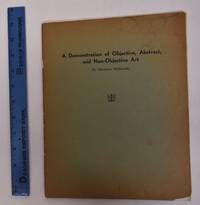
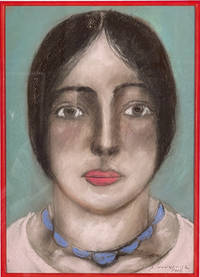
réf. 13927Walkowitz Abraham American born Ukraine 1878-1965. PORTRAIT OF ISADORA DUNCAN. Pastel on paper 1928. Signed lower right. 12 x 8 1/4 inches framed to 17 x 13 inches. The verso of the frame also has a label signed by Walkowitz. Walkowitz grew up in New York; in 1906 he went to Paris to study painting at the Academy Julien. The painter Max Weber introduced him to Isadora Duncan in Rodin's studio. His interest in Duncan as a subject began then and lasted beyond her death in 1927; he made more than 5000 drawings and paintings including more than a few pastel portraits like this one and a great many pieces of her performing. As with this piece done after her death it is likely that many of the works were done from memory rather than from life. "He was also able to draw from the same subject repeatedly and extract a different experience with each observation" Wikipedia article. In this his use of Duncan as a subject seems similar to Giorgio Morandi's repeated use of a handful of cups bottles and bowls to create a large number of still-life paintings drawings and prints each of which has something new to offer.Walkowitz was at the center of American Modernism part of Stieglitz's circle at 291 from 1911 to 1917 and a participant in the Armory Show.The following from the Wikipedia article on Walkowitz is a discussion of his Duncan drawings:In 1927 Isadora Duncan echoed the lines of Walt Whitman in her essay I See America Dancing writing "When I read this poem of Whitman’s I Hear America Singing I too had a Vision: the Vision of America dancing a dance that would be the worthy expression of the song Walt heard when he heard America singing."4 Duncan was the quintessence of modernism shedding the rigid shackles of the balletic form and exploring movement through a combination of classical sculpture and her own inner sources. She described this search: "I spent long days and nights in the studio seeking that dance which might be the divine expression of the human spirit through the body’s movement."5 For Duncan dance was a distinctly personal expression of beauty through movement and she maintained that the ability to produce such movement was inherently contained within the body.Abraham Walkowitz was one of many artists captivated by this new form of movement. The Duncan drawings can be interpreted as representations of Walkowitz's loftiest goals. Composing thousands of these drawings would prove to be one of the most effective outlets for his artistic agenda due to the similarities between the artistic ideals and preferred aesthetic shared by Walkowitz and Duncan. He was also able to draw from the same subject repeatedly and extract a different experience with each observation. Sculptors most readily recognized this trait in Duncan; there was a particular quality of her dance which appeared readily artistic yet not static. Dance critic Walter Terry described it in 1963 as "Although her dance inarguably sprang from her inner sources and resources of motor power and emotional drive the overt aspects of her dance were clearly colored by Greek art and the sculptor’s concept of the body in arrested gesture promising further action. These influences may be seen clearly in photographs of her and in the art works she inspired."6Isadora Duncan #29 c. 1915In each drawing a new observation is recorded from the same subject. In the Foreword to A Demonstration of Objective Abstract and Non-Objective Art Walkowitz wrote in 1913 "I do not avoid objectivity nor seek subjectivity but try to find an equivalent for whatever is the effect of my relation to a thing or to a part of a thing or to an afterthought of it. I am seeking to attune my art to what I feel to be the keynote of an experience."7 The relaxed fluidity of his action drawings represent Duncan as subject but ultimately reconceive the unbound movement of her dance and translates the ideas into line and shape ending with a completely new composition.His interest in recording the "keynote" of experience rather than producing an objective representation of a subject is central to the composition of the Duncan drawings. The fluidity of the lines function simultaneously as recognizable shapes of the human body but also trace the pathways of the dancer's movements. Duncan herself wrote in 1920 ".there are those who convert the body into a luminous fluidity surrendering it to the inspiration of the soul."4 Placed into a different context this passage could function as a description of Walkowitz's art; it is in fact taken from her essay The Philosopher’s Stone of Dancing wherein she discusses techniques to most effectively express the purest form of movement.Walkowitz's dedication to Duncan as a subject extended well past her untimely death in 1927. The works reveal shared convictions toward modernism and breaking links with the past. In 1958 Walkowitz told Lerner "She Duncan had no laws. She did not dance according to the rules. She created. Her body was music. It was a body electric like Walt Whitman. His body electrics. One of our greatest men America's greatest is Walt Whitman. Leaves of Grass is to me the Bible."8 unknown