Abraham CooperBiblio.com
28.131 risultati
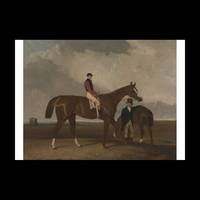
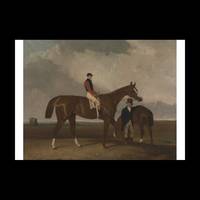
rif. 382797Contentum Ltd. Loose sheet. New. High-quality art print based on an original work from the Ycba. Created in the 19th century between 1836 and 1837. Professionally printed on premium fine-art paper Museum Etching museum quality in size A2. The artwork is printed with a white border museum-style presentation. Contentum Ltd. unknown
rif. 382796Contentum Ltd. Loose sheet. New. High-quality art print based on an original work from the Ycba. Created in the 19th century between 1836 and 1837. Professionally printed on premium fine-art paper Photo Rag Bright White premium quality in size A2. The artwork is printed with a white border museum-style presentation. Contentum Ltd. unknown
rif. 382794Contentum Ltd. Loose sheet. New. High-quality art print based on an original work from the Ycba. Created in the 19th century between 1836 and 1837. Professionally printed on premium fine-art paper Museum Etching museum quality in size A3. The artwork is printed with a white border museum-style presentation. Contentum Ltd. unknown
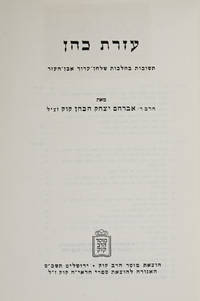
1969rif. 17948Jerusalem: Mossad Ha-Rav Kook 1969. Hardcover. vg. Small 4to. 485pp Hebrew pagination. 1/4 leather over brown cloth in original dust jacket. Ex-libris Rabbi Isaac David Essrig author of "The fountain of wisdom". Work by Rav Cook one of the most influential Rabbis of what now is considered "religious Zionism" see below. The topic of this book is the "Even Ha-'Ezer" - section of the "Shulkhan ha-Arukh" that deals with personal law marriage divorce sexual conduct etc. The "Shulkhan ha-Arukh" a.k.a. Shulchan Aruch meaning "set table" is the most authoritative compilation of Halakha Jewish Law. Staining and minor tears to dj. Age wear to binding. Inside clean and tight. In Hebrew. Very good condition. On the author from a public domain online encyclopedia: Abraham Isaac Kook 1864 - 1935 was the first Ashkenazi chief rabbi of the British Mandate for Palestine the founder of the now Religious Zionist "Yeshiva Merkaz HaRav" and a renowned Torah scholar. He was a master of Halakha in the strictest sense while at the same time possessing an unusual openness to new ideas especially in regards to the settling of Eretz Yisrael. This drew many religious and non-religious people to him but also led to widespread misunderstanding of his ideas. He wrote prolifically on both Halakha and Jewish thought and his books and personality continued to influence many even after his death in Jerusalem in 1935. Mossad Ha-Rav Kook hardcover
1969rif. 17948Jerusalem: Mossad Ha-Rav Kook 1969. Hardcover. vg. Small 4to. 485pp Hebrew pagination. 1/4 leather over brown cloth in original dust jacket. Ex-libris Rabbi Isaac David Essrig author of "The fountain of wisdom". Work by Rav Cook one of the most influential Rabbis of what now is considered "religious Zionism" see below. The topic of this book is the "Even Ha-'Ezer" - section of the "Shulkhan ha-Arukh" that deals with personal law marriage divorce sexual conduct etc. The "Shulkhan ha-Arukh" a.k.a. Shulchan Aruch meaning "set table" is the most authoritative compilation of Halakha Jewish Law. Staining and minor tears to dj. Age wear to binding. Inside clean and tight. In Hebrew. Very good condition. On the author from a public domain online encyclopedia: Abraham Isaac Kook 1864 - 1935 was the first Ashkenazi chief rabbi of the British Mandate for Palestine the founder of the now Religious Zionist "Yeshiva Merkaz HaRav" and a renowned Torah scholar. He was a master of Halakha in the strictest sense while at the same time possessing an unusual openness to new ideas especially in regards to the settling of Eretz Yisrael. This drew many religious and non-religious people to him but also led to widespread misunderstanding of his ideas. He wrote prolifically on both Halakha and Jewish thought and his books and personality continued to influence many even after his death in Jerusalem in 1935. Mossad Ha-Rav Kook hardcover books
rif. 25629‘Temple May 26’ no year. The interesting context of the present item is explained in a quotation from Antony Chessell’s 2009 biography of Hayward subtitled ‘one of the Two Best Read Men in England’ - the other was Macaulay subjoined to this entry. See also the entries for Hayward and Lewis in the Oxford DNB. 4pp 12mo. Bifolium. Sixty lines of text. In good condition lightly aged. Folded for postage. Addressed to ‘My dear Lewis’ and signed ‘A. Hayward’. He begins by expressing regret that ‘any misapprehension has arisen from the introduction of Sir J Graham’s name in the Memorandum. It certainly was not our intention to reiterate or revive directly or indirectly any charge against anyone. Sir R. Peel Sir J. Walsham & Mr Nott were involved in the charges as well as Sir J. Graham and yourself but as you are the sole prosecutor we to confine the arrangement exclusively to you.’ He continues on the same theme with reference to ‘Sir F. Thesiger’ ‘Charles Greville’ ‘the Adjutant General Macdonald’ ‘Lord John Manners’. Postscript: ‘I told you that Ferrand expressed himself perfectly satisfied and that there is not the remotest chance of his reviving the matter.’ The subject of the letter is Tory MP William Busfeild Ferrand 1809-1889. Chessell explains: ‘Two letters by Ferrand in The Times in August 1844 accused Sir James Graham Home Secretary under Sir Robert Peel from 1841 until 1846 and George Lewis of conspiring to produce a false report designed to discredit him as chairman of the Keighley Board of Guardians. This prompted Lewis to consider legal action but many other matters intervened and the final incentive to do so was only triggered in 1847. / ‘The Queen v. Ferrand Esq. M.P.’ was due to be heard in the Hilary Term between January and March 1847 but the trial was delayed to await Ferrand’s plea. In response Lewis denied any conspiracy between himself and Graham. Abraham Hayward who was not part of Lewis’s legal team then acted as an intermediary in persuading Ferrand to retract his letters. With Hayward acting for Lewis and Lord John Manners acting for Ferrand a statement was inserted in The Times on November 18th 1847 to include a formal memorandum in which Mr. Ferrand recognised that he had acted in haste and expressed regret that he had done so.’ ‘Temple May 26’ [no year]. unknown
rif. 25628‘Temple May 26’ no year. See Antony Chessell’s 2009 biography of Hayward subtitled ‘one of the Two Best Read Men in England’ - the other was Macaulay along with his entry and Lady Theresa Lewis's in the Oxford DNB. 2pp 12mo. In good condition lightly aged and folded for postage. Addressed to ‘Dear Lady Theresa’ and signed ‘A Hayward’. He begins by confirming a visit. ‘I sent you a little book to-day which has at least the merit of rarity as only fifty copies have been printed.’ ‘Temple May 26’ [no year]. unknown
rif. 66150-A-59619Janssoons van Waesberge Amsterdam 1734. Halfperkamenten bandjes met handgeschreven rugtitel gemarmerde platten. 155x105 cm. Eerste deel met frontispice titelpagina in rood en zwart. 309 1; 424 p. -Platten licht sleets en wat verkleurd maar al met al in prima conditie. Janssoons van Waesberge, Amsterdam, 1734 unknown
1983rif. 213523New York: Oxford University Press 1983. First Paperback Edition; First Printing. Softcover. Near Fine in wraps. Oxford University Press unknown
1982rif. 652583Oxford: Clarendon Press 1982. 1st Edition 1st Printing. Hardcover. Near Fine/Very Good. 552 pages in near fine condition. Pages are clean and unmarked. Previous owner's stamp and seal on the ffep. Bound in dark blue cloth with gilt titles on the spine. White dustjacket in very good condition with black and red titles. Lightly worn around the edges. Lightly scuffed. 1ST PRINTING. NPC. NF/VG Clarendon Press hardcover
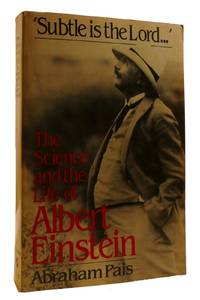
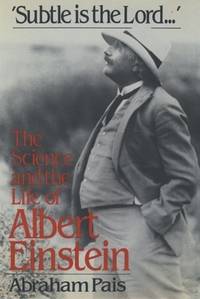
1982rif. 76386New York: Oxford University Press 1982. Presumed First U. S. Edition First printing. Hardcover. Very good/Good. xvi 552 8 pages. Frontis illustration. Footnotes. Appendices. Einstein Chronology. Name Index. Subject Index. DJ has wear tears soiling and chips. Abraham Pais May 19 1918 - July 28 2000 was a Dutch-born American physicist and science historian. Pais earned his Ph.D. from University of Utrecht just prior to a Nazi ban on Jewish participation in Dutch universities during World War II. When the Nazis began the forced relocation of Dutch Jews he went into hiding but was later arrested and saved only by the end of the war. He then served as an assistant to Niels Bohr in Denmark and was later a colleague of Albert Einstein at the Institute for Advanced Study in Princeton New Jersey. Pais wrote books documenting the lives of these two great physicists and the contributions they and others made to modern physics. He was a physics professor at Rockefeller University until his retirement. During World War II Pais's doctoral dissertation had attracted the attention of Niels Bohr who invited him to come to Denmark as his assistant. Pais was forced into hiding before he could leave the Netherlands. In 1946 following the war Pais was able to accept that invitation and served as a personal assistant to Bohr at his country home in Tisvilde for a year. In 1947 he accepted a position at the Institute for Advanced Study in the United States and thus became a colleague of Albert Einstein. "Subtle is the Lord—" won the 1983 U.S. National Book Award in Science. Since the death of Albert Einstein in 1955 there have been many books and articles written about the man and a number of attempts to "explain" relativity. Throughout the preparation of this book Pais has had complete access to the Einstein Archives and the invaluable guidance of the late Helen Dukas--formerly Einstein's private secretary. Written with Pais' intimate and incomparable knowledge of Einstein Subtle is the Lord will delight and inspire anyone fascinated by the man whose revolutionary ideas have defined modern physics. Subtle is the Lord is widely recognized as the definitive scientific biography of Albert Einstein. Pais was a distinguished physicist turned historian who knew Einstein both professionally and personally in the last years of his life. His biography combines a profound understanding of Einstein's work with personal recollections from their years of acquaintance illuminating the man through the development of his scientific thought. Pais examines the formulation of Einstein's theories of relativity his work on Brownian motion and his response to quantum theory with authority and precision. The profound transformation Einstein's ideas effected on the physics of the turn of the century is here laid out for the serious reader. Pais also fills many gaps in what we know of Einstein's life - his interest in philosophy his concern with Jewish destiny and his opinions of great figures from Newton to Freud. This remarkable volume written by a physicist who mingled in Einstein's scientific circle forms a timeless and classic biography of the towering figure of twentieth-century science. Albert Einstein 14 March 1879 - 18 April 1955 was a German-born theoretical physicist widely acknowledged to be one of the greatest physicists of all time. Einstein is best known for developing the theory of relativity but he also made important contributions to the development of the theory of quantum mechanics. Relativity and quantum mechanics are together the two pillars of modern physics. His mass-energy equivalence formula E = mc2 which arises from relativity theory has been dubbed "the world's most famous equation". His work is also known for its influence on the philosophy of science. He received the 1921 Nobel Prize in Physics "for his services to theoretical physics and especially for his discovery of the law of the photoelectric effect" a pivotal step in the development of quantum theory. His intellectual achievements and originality resulted in "Einstein" becoming synonymous with "genius" Oxford University Press hardcover
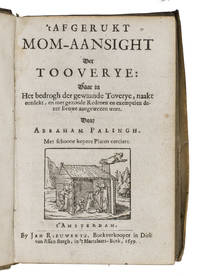
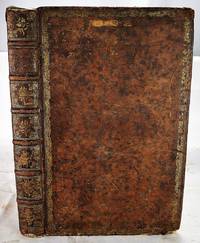
1659rif. ABC_47611Amsterdam: J. Rieuwertz 1659. Contemporary overlapping vellum. Small 8vo. With a woodcut title-vignette showing a witch on a broomstick leaving a house through the chimney 4.3 x 5.2 cm 13 etched full-page illustrations on 8 plates by Salomon Savry. An exceptionally rare first edition of a book focusing on the subjects of witchcraft sorcery demonology and black magic. The author passionately expresses his dissatisfaction with the brutalities inflicted upon individuals accused of being witches using vivid and disturbing illustrations as evidence. Notably the book features a captivating woodcut title vignette depicting a witch's daring escape through a chimney. In the image her legs hang from the opening inside the house while she simultaneously rises on her broom outside the chimney creating a striking visual effect. Abraham Palingh is a somewhat elusive figure in Early Modern Dutch literature and his book provides a fascinating insight into the attitudes of an educated man toward witchcraft. He claims that his 't Afgerukt Mom-aansight Der Tooverye is based on firsthand accounts. Information regarding the occurrence of harmful sorcery and attitudes towards sorcery in Amsterdam and Haarlem has been documented from the initial witchcraft trials to the point where such crimes were no longer a concern for the judiciary. Between 1542 and 1566 trials for harmful sorcery took place in Amsterdam while Haarlem witnessed similar trials in 1549. Historical accounts of both cities as well as Jacobus Scheltema's History of Witch Trials published in Haarlem in 1828 make mention of sorcery trials in Amsterdam. However these references often provide only superficial details despite the potential for valuable insights found in the actual procedural documents. Conversely little information about witchcraft in Haarlem can be gleaned from existing literature. Abraham Palingh author of 't Afrukt Mom-aansight der Tooverye published in Haarlem in 1659 briefly mentions a few cases of sorcery accusations that he claims to have personally known yet his accounts remain vague.The fine and copperplate illustrations were made by Salomon Savry 1594-1683. He was a recognised engraver of his time highly involved with the Amsterdam book industry of the seventeenth century. Some wear to binding. Ex libris from the library of Leontine Buijnsters-Smets. Light browning and foxing. Otherwise in very good condition.l Bibl. Med. Neerl. I p.150; Muller 539 1725 edition; Scheepers I 552; STCN 841091951 12 copies; Waller 1315 1725 edition; WorldCat 56854247 3 copies. J. Rieuwertz, hardcover
1619rif. 1516Hantvverpen Antwerp: Hieronymus Verdussen 1619. First Edition in book form. Near Fine. Bloemart Abraham. 4to 8 7/8 x 6 3/4 inches 251 x 171 mm. ix pp 51 sheets on cream laid paper text in Dutch gothic letters. 50 numbered full page copperplate engravings of Christian hermit saints 25 male 25 female printed recto with text pages on verso. Full-page frontispiece for the work and with an additional full-page frontispiece for each of the two sections. Full contemporary vellum untitled with some handling discoloration but the vellum remains supple and the binding is tight. Pages clean and bright with a couple of foxing spots and a small brown stain on the 2nd frontis titled "Sacra Eremus ascetarum"; toned page edges. Previous owner's name and date in ink on front flyleaf and small pencil and ink notations inside back cover; bookplate of Buijnsters Smets pasted inside front cover. De Backer/ Sommervogel VII 194-5; Hollstein 355-403; Roethlisberger 163 ill. 262-317 Full title: 't Bosch der Eremyten ende eremilinnen van Aegypten ende Palestinen met figuren van Abraham Blommaert door Ghristophorus a Sichem. Met kort verhael van een yders leven getrocken uyt het Vadersboeck door H. Jan van Gorcum Priesler ende H. R. Societatus sic Jesu. The Forest of the Hermits of Egypt and Palestine with illustrations by Abraham Blommaert engraved by Ghristophorus a Sichem. With brief stories of their lives taken from the book of the Fathers by H. Jan van Gorcum priest of the Society of Jesus. A fine series of engravings of the early Christian male and female hermits living in the Egyptian and Palestinian desert engraved in copper by Boetius A Balswert on drawings by Abraham Bloemart 1566 - 1651 the Dutch painter and engraver know mostly for his historical subjects and for being a central figure and teacher among the Utrecht Caravaggisti. Provenance: the library of the book- and art-historians Piet Buijnsters and Leontine Smets. Hieronymus Verdussen unknown
1619rif. 18555Very Good HC. Text in Dutch blackletter; tekst in het Nederlands gotisch. Full contemporary vellum; untitled; raised bands on spine; red edges; 50 numbered full page copperplate engravings of Christian eremite saints 25 male 25 female printed recto with text pages verso; full page frontispiece for work as well as full page frontispiece for female section. Vellum in very good condition with some handling discoloration remains supple; ties at cover fore edges lacking; tightly bound; few pencil notes on front pastedown; without free end papers; lacking frontispiece for male section leaf A!; facsimile laid in; few leaves with light damp stains or soiling mostly in margins otherwise light and clean interior; one leaf B3 with large chip at top fore corner not affecting portrait but with some text missing from marginal notation on verso see photo; all leaves remain supple. 25 x 18 cm; 51 text pages; 50 numbered plates 2 frontispiece plates; in 4s. Ref OCLC #901301549. Hantvverpen (Antwerp): Hieronymus Verdussen hardcover
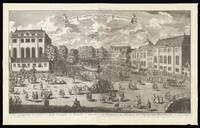
1752rif. 14421Amsterdam c1752. 565 by 935mm. 21.5 by 36.75 inches. Engraving with etching on two sheets joined. View of the Plantage Muidergracht and the Jonas Daniël Meijerplein. The view shown from the present day Mr. Visserplien the busy intersecti.on in central Amsterdam depicts the Portuguese Synagogue on the left and the High German or Great Synagogue. These momumental buildings now house the Jewish Historical Museum. The first Jews to settle in Amsterdam were the Sephardim who had been expelled from Portugal and Spain in 1493. They were joined in the following decades by the Ashkenazi from Central and Eastern Europe the first of whom had come from Germany in 1600. In those years the only available land for them was at the outskirts of the eastern side of the Centrum the island of Vlooienburg surrounded by the Amstel River and the canals so they settled along the island's main street Breestraat which quickly became known as Jodenbreestraat. The Great Synagogue now the Jewish Historical Museum and the Portuguese-Israelite Synagogue were opened in 1671 and 1675 respectively. The Portuguese Synagogue was the place where Spinoza was placed under the ban by the Sephardic Jewish community in 1656. Pieter Stevensz. van Gunst 1659-1732 also known as Pieter Stevens van Gunst or Petrus Stephani was a Dutch draughtsman copperplate engraver and printmaker active in Amsterdam London 1704 and the Dutch town of Nederhorst 1730-1731. Abraham Rademaker 1677 21 January 1735 was an 18th-century painter and printmaker from the Northern Netherlands. Rademaker was born in Lisse. According to the RKD he was a versatile artist who painted Italianate landscapes but is known mostly for his many cityscapes and drawings of buildings that were made into print. R.W.P. de Vries auction 1925: 295. unknown
1730rif. 14402Amsterdam c1730. 565 by 935mm. 22.25 by 36.75 inches. Engraving with etching on two sheets joined. View of the Plantage Muidergracht and the Jonas Daniël Meijerplein. The view shown from the present day Mr. Visserplien the busy intersecti.on in central Amsterdam depicts the Portuguese Synagogue on the left and the High German or Great Synagogue. These momumental buildings now house the Jewish Historical Museum. The first Jews to settle in Amsterdam were the Sephardim who had been expelled from Portugal and Spain in 1493. They were joined in the following decades by the Ashkenazi from Central and Eastern Europe the first of whom had come from Germany in 1600. In those years the only available land for them was at the outskirts of the eastern side of the Centrum the island of Vlooienburg surrounded by the Amstel River and the canals so they settled along the island's main street Breestraat which quickly became known as Jodenbreestraat. The Great Synagogue now the Jewish Historical Museum and the Portuguese-Israelite Synagogue were opened in 1671 and 1675 respectively. The Portuguese Synagogue was the place where Spinoza was placed under the ban by the Sephardic Jewish community in 1656. Pieter Stevensz. van Gunst 1659-1732 also known as Pieter Stevens van Gunst or Petrus Stephani was a Dutch draughtsman copperplate engraver and printmaker active in Amsterdam London 1704 and the Dutch town of Nederhorst 1730-1731. Abraham Rademaker 1677 21 January 1735 was an 18th-century painter and printmaker from the Northern Netherlands. Rademaker was born in Lisse. According to the RKD he was a versatile artist who painted Italianate landscapes but is known mostly for his many cityscapes and drawings of buildings that were made into print. R.W.P. de Vries auction 1925: 295. unknown
1721rif. 1906090004Amsterdam J. Lindenbergh 1721. First Edition. Hardcover. Good. Folio 42 x 28 cm. Bound in contemporary mottled calf. Shelf worn corners bumped. Joints cracked. Additional engraved titles 2 engraved portraits 2 double-page maps map of the world map of Greece and the Mediterranean. A total of 179 engravings within text and plates after works by Romein de Hooghe. Includes engraving of the Temple of Jerusalem. Scattered foxing. 10 482 p. Pages misnumbered. Dutch. Hollstein IX 2; Van Eeghen/ Van der Kellen 404; Klaversma/ Hannema 129. Amsterdam, J. Lindenbergh hardcover
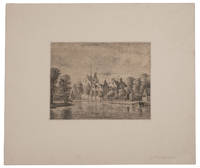
rif. 91MGUB7YLZSDNetherlands 1740. Mounted in passepartout. A view in brown ink with light and dark grey watercolour washes on laid paper 16.5 x 21.5 cm with a manuscript caption at the head. Attractive view in brown ink with grey washes of the picturesque Kostverloren manor on the Amstel River just outside Amsterdam. The manor was originally built at the end of the 15th century. In 1650 it was severely damaged by fire but it was soon restored. In 1822 Kostverloren was razed. The manor was famously depicted by Rembrandt Ruisdael and also by Abraham Rademaker 1676/77-1735 one of the most important topographic artists of his day. Rademakers drawing closely matches the present view in style and shows the exact same scene from the trees on the left to the smaller house on the right. The only difference is the season: the trees depicted here are much fuller.Slightly foxed but otherwise in good condition.l Cf. Blokland & Dumas de kasteeltekeningen van Abraham Rademaker C58. unknown
rif. #[61684]Copperplate engraving/etching of ''t Huis Oud Alkemade van voren' and ''t Huis Oud Alkemade van agteren' in the Dutch province of Zuid-Holland as it appeared in 1730. Two images on one page. Overall size: 255 x 178 mm; plate size: 166 x 110 mm. Very good state. Handlaid paper. Neatly fixed to a passepartout. l These prints were part of the book 'Het verheerlykt Nederland of Kabinet van Hedendaagsche gezigten van steden dorpen sloten adelyke huizen .' Amsterdam Tirion 1745-1774. unknown
rif. #[61678]Copperplate engraving/etching of ''t Huis Oud Alkemade van voren' and ''t Huis Oud Alkemade van agteren' in the Dutch province of Zuid-Holland as it appeared in 1730. Two images on one page. Overall size: 264 x 178 mm; plate size: 166 x 109 mm. Good state. Some age related discolouration. Dampstain in the upper and right margin. When placed in a neat passepartout these stains will be invisible. Handlaid paper with watermark. l These prints were part of the book 'Het verheerlykt Nederland of Kabinet van Hedendaagsche gezigten van steden dorpen sloten adelyke huizen .' Amsterdam Tirion 1745-1774. unknown
rif. 61727Copperplate etching of ''t Huis Vredestein in Gelderlant' in the Dutch province of Gelderland 1706-1725. Drawn and etched by A. Rademaker. Overall size: 189 x 154 mm; plate size: 85 x 114 mm. Good state. Some age related discolouration. Handlaid paper wih watermark. With explanatory caption in Dutch French and English. Handwritten on the back: 'Prov. Gelderland gem. M.ik'. This print was part of the book 'Kabinet van Nederlandsche Outheden en Gezichten . Amsterdam Willem Barents 1725'. unknown
rif. #[61726]Copperplate etching of ''t Huis Waerdenburg' in the Dutch province of Gelderland as it appeared in 1612. Drawn and etched by A. Rademaker. Overall size: 189 x 153 mm; plate size: 85 x 114 mm. Good state. Some age related discolouration. Handlaid paper. With explanatory caption in Dutch French and English. l This print was part of the book 'Kabinet van Nederlandsche Outheden en Gezichten . Amsterdam Willem Barents 1725'. unknown
rif. #[61724]Handcoloured copperplate etching of ''t Huis Wolfwaert van Vooren' in the Dutch province of Gelderland as it appeared in 1719. Drawn and etched by A. Rademaker. Overall size: 120 x 145 mm; plate size: 82 x 113 mm. Very good state. Some age related discolouration. Handlaid paper with watermark. Beautifully Handcoloured. l This print was part of the book 'Kabinet van Nederlandsche en Kleefsche Oudheden . Amsterdam issued by different publishers from 1725-1803'. unknown
rif. 61723Copperplate etching of ''t Huis Wolfswaert van Vooren' in the Dutch province of Gelderland as it appeared in 1719. Drawn and etched by A. Rademaker. Overall size: 186 x 154 mm; plate size: 81 x 115 mm. Very good state. Some age related discolouration. Handlaid paper with watermark. With explanatory caption in Dutch French and English. Handwritten on the back: ' Prov. Gelderl. gem. Beesd'. This print was part of the book 'Kabinet van Nederlandsche Outheden en Gezichten . Amsterdam Willem Barents 1725'. unknown
rif. #[61732]Two copperplate etchings of ''t Kasteel te Kuilenburg' in the Dutch province of Utrecht as it appeared in 1620. Drawn and etched by A. Rademaker. Overall size: 206 x 121 mm; plate size: 85 x 111/84 x 112 mm. Very good state. Some age related discolouration. Handlaid paper. l This print was part of the book 'Kabinet van Nederlandsche en Kleefsche Oudheden . Amsterdam issued by different publishers from 1725-1803'. unknown