120 Ergebnisse
Best.-Nr. 4741Paris, Firmin Didot Frères, s.d. Un volume grand in-8 demi maroquin prune à coins, dos à nerfs dos à nerfs orné, titre doré, double filets dorés sur les plats, tranches dorées, édition de luxe, [1f.]frontispice, [1f.]titre, XXXI+546+73pp., frises en encadrement du texte, lettrines, illustrations à pleine page. Bel exemplaire .
Best.-Nr. LFA-126744604Un ouvrage de 663 pages, format 235 x 290 mm, illustré, relié cartonnage dos cuir à cinq nerfs, s.d. (fin du XIXe siècle), Librairie de Firmin Didot Frères, Fils et Cie, bon état
1816Best.-Nr. 51902Paris, Didot 1816. 2, 584 Seiten, 8° (21,5 x 13 cm), marmorierter Lederband mit Marmorpapiervorsätzen sowie mit dezenter Filetenvergoldung und schwarzem Titelschild auf dem Rücken.
Best.-Nr. 0266060803.Gpaperback. Good. Access codes and supplements are not guaranteed with used items. May be an ex-library book. paperback
Best.-Nr. 110676Paris, Beltrand, 1929, 1 volume in-folio de 368x265 mm environ, 2ff.blancs, 5ff. (justificatif de tirage, faux-titre, titre), vii-51 pages, 2ff.blancs, en feuillets sous chemise et chemise-étui fermée par des liens. Exemplaire N° 176/200, tirage limité à 200 exemplaires sur les Presses à bras de Jacques Beltrand par Marcel Lacou, Emile Lainé & Marcel Vaganay, illustré de 29 magnifiques gouaches en couleurs de Maurice Denis gravées sur bois par Jacques Beltrand. Chemises et tranches insolées, quelques rousseurs et pages brunies, chemise-étui insolée avec mors en partie fendus, sinon bon état.
Best.-Nr. 10486In-12°, Broché, couverture unie et titrage en rouge, bel exemplaire, 173 pages..
1703Best.-Nr. 38281703 1703 - 1711 7 volumes in-12. Pour les tomes I, II, III, IV, VI : Chez Gaspard Migeot, Mons, 1703. Plein maroquin noir janséniste, titre et tomaison dorés, dentelles intérieure et sur les coupes, encadrement dun filet à froid sur les plats, tranches dorées, texte sur deux colonnes, sur papier réglé, 521, 467, 413, 491 et 424 pages. Pour les tomes V et 8 : chez Guillaume Desprez et Jean Baptiste Dessessartz, Paris, 1707 et 1711. Reliure du tome 8 : identique à ceux décrits précédemment, 402 pages. Reliure du tome V : plein veau brun, dos à nerfs décoré de caissons, pièces de titre et de tomaison en maroquin rouge, encadrement de filet à froid sur les plats, dentelles intérieure et sur les coupes, texte sur deux colonnes, 490 pages. Coins et coiffes frottés.
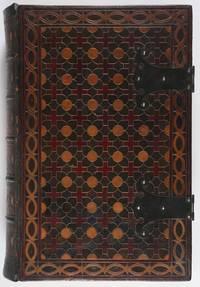
1701Best.-Nr. 53475Liege: Jean-François Broncart 1701. First edition thus. Hardcover. Very good. Two tomes each in two parts bound in one volume folio: 6 lxxix 1 blank 544; 1 title 1 blank 545-957 1 blank xx Cantique des cantiques 96 La sagesse; Ecclesiastique de Jesus fils de Sirach; 1 title 1 blank 468; 1 title 1 blank 430 16 Oratio Manassae; Liber Esdrae - tertius et quartus pp. Main titles for each tome in red and black; secondary titles in black only all four titles with engraved printer's device; each dated 1701. Text in two columns Latin and French. Illustrated with 6 engraved plates: frontispiece Johann Friederich Karg von Bebenburg; folding plate with 16 vignettes 4x4 depicting well-known biblical scenes; 4 folding maps The Holy Land; The Promised Land Apportioned by Tribe; Jerusalem in the Second Temple Era - after Lamy; The World Known to the Evangelists. Quarter-page engraved vignettes at the head of each of the 30 biblical books; historiated initials; printed marginalia. Exquisitely bound in the 19th century in levant morocco extra over wooden boards with mosaic compartments in crimson ochre; and dark brown bordered in fine gilt line; spine with raised bands lightly rubbed; pair of brass mounts finished in black with steel rivets at both covers clasps and catched perished. All edges gilt and elaborately gauffered in textured floral motif; gilt inner dentelles; decorative endleaves renewed in orange and black; crimson silk ribbon marker. The work of a master binder. Expertly repaired at spine caps. Occasional faint embrowning; marginal dampstains beginning in second half mostly at outer corners; expanding to fore-edge and darkening considerably in final 20 leaves. Overall a very good copy with crisp text throughout though incomplete: lacks Antoine Arnould's "Concorde des quatre Evangélistes" along with its accompanying Latin version and the concluding index. Amply margined copy of this sumptuous edition of the Bible comprising the Latin Sixto-clementine Vulgate and the Port-Royal French translation printed in parallel columns. Isaac-Louis Lemaistre de Sacy 1613-1684 was the principal translator of the French version which was edited and completed after his death by Pierre Thomas du Fossé 1634-1698 and Henri-Charles de Beaubrun 1655-1723 who also provide annotations throughout. According to Barbier the French controversialist Thierry de Viaixnes 1659-1735 who found himself often at odds with his superiors was the principal editor of the work; at the time of its preparation he was serving as director of an academy at Hautvilliers in the diocese of Rheims McClintock & Strong. Dedicated to Johann Friederich Karg von Bebenburg 1648-1719 whose signed portrait was drawn and engraved by C. Gustav of Amling. An advocate of maximal papal power Karg served as Privy Councilor of the Prince-Bishop of Bamberg and Würzburg Peter Philipp von Dernbach then of Elector Max Emanuel of Bavaria. He served as Dean of Our Lady in Munich and was entrusted by Emperor Leopold I with a legation to Pope Innocence XI. By these efforts he secured in 1688 the election of Prince Joseph Clemens of Bavaria as Archbishop of Cologne as a result of which he was made Chancellor and Minister of State here noted on the frontispiece. Provenance and annotations: Bookplate of Herman Blum Blumhaven Library & Gallery with his ticket below; two gilt-stamped ex-libris morocco labels: Henry W. Poor oval; Adolph Lewisohn octogonal. References: Darlow & Moule 3779; Deleveau & Hillard Bibles imprimées du XVe au XVIIe siècles conservées è Paris 605; ADB 15 1882 "Karg: Johann Friedrich; Jean-François Broncart hardcover books
1878Best.-Nr. 74449Paris, P. Lethielleux, Libraire-Editeur, 1878, in-8, demi-chagrin vert, plats percaline, titre à l'or, 170 pages. Bon état.
1930IN BUONO STATO
1701Best.-Nr. 53475Liege: Jean-François Broncart 1701. First edition thus. Hardcover. Very good. Two tomes each in two parts bound in one volume folio: 6 lxxix 1 blank 544; 1 title 1 blank 545-957 1 blank xx Cantique des cantiques 96 La sagesse; Ecclesiastique de Jesus fils de Sirach; 1 title 1 blank 468; 1 title 1 blank 430 16 Oratio Manassae; Liber Esdrae - tertius et quartus pp. Main titles for each tome in red and black; secondary titles in black only all four titles with engraved printer's device; each dated 1701. Text in two columns Latin and French. Illustrated with 6 engraved plates: frontispiece Johann Friederich Karg von Bebenburg; folding plate with 16 vignettes 4x4 depicting well-known biblical scenes; 4 folding maps The Holy Land; The Promised Land Apportioned by Tribe; Jerusalem in the Second Temple Era - after Lamy; The World Known to the Evangelists. Quarter-page engraved vignettes at the head of each of the 30 biblical books; historiated initials; printed marginalia. Exquisitely bound in the 19th century in levant morocco extra over wooden boards with mosaic compartments in crimson ochre; and dark brown bordered in fine gilt line; spine with raised bands lightly rubbed; pair of brass mounts finished in black with steel rivets at both covers clasps and catched perished. All edges gilt and elaborately gauffered in textured floral motif; gilt inner dentelles; decorative endleaves renewed in orange and black; crimson silk ribbon marker. The work of a master binder. Expertly repaired at spine caps. Occasional faint embrowning; marginal dampstains beginning in second half mostly at outer corners; expanding to fore-edge and darkening considerably in final 20 leaves. Overall a very good copy with crisp text throughout though incomplete: lacks Antoine Arnould's "Concorde des quatre Evangélistes" along with its accompanying Latin version and the concluding index. Amply margined copy of this sumptuous edition of the Bible comprising the Latin Sixto-clementine Vulgate and the Port-Royal French translation printed in parallel columns. Isaac-Louis Lemaistre de Sacy 1613-1684 was the principal translator of the French version which was edited and completed after his death by Pierre Thomas du Fossé 1634-1698 and Henri-Charles de Beaubrun 1655-1723 who also provide annotations throughout. According to Barbier the French controversialist Thierry de Viaixnes 1659-1735 who found himself often at odds with his superiors was the principal editor of the work; at the time of its preparation he was serving as director of an academy at Hautvilliers in the diocese of Rheims McClintock & Strong. Dedicated to Johann Friederich Karg von Bebenburg 1648-1719 whose signed portrait was drawn and engraved by C. Gustav of Amling. An advocate of maximal papal power Karg served as Privy Councilor of the Prince-Bishop of Bamberg and Würzburg Peter Philipp von Dernbach then of Elector Max Emanuel of Bavaria. He served as Dean of Our Lady in Munich and was entrusted by Emperor Leopold I with a legation to Pope Innocence XI. By these efforts he secured in 1688 the election of Prince Joseph Clemens of Bavaria as Archbishop of Cologne as a result of which he was made Chancellor and Minister of State here noted on the frontispiece. Provenance and annotations: Bookplate of Herman Blum Blumhaven Library & Gallery with his ticket below; two gilt-stamped ex-libris morocco labels: Henry W. Poor oval; Adolph Lewisohn octogonal. References: Darlow & Moule 3779; Deleveau & Hillard Bibles imprimées du XVe au XVIIe siècles conservées è Paris 605; ADB 15 1882 "Karg: Johann Friedrich; Jean-François Broncart hardcover
Best.-Nr. 0366711199.Gpaperback. Good. Access codes and supplements are not guaranteed with used items. May be an ex-library book. paperback
Best.-Nr. 0282444505.Gpaperback. Good. Access codes and supplements are not guaranteed with used items. May be an ex-library book. paperback
1724Best.-Nr. 2011170004Paris : G. Desprez et J. Desessartz 1724. First Edition. Hardcover. Acceptable. Tall folio 40 x 27 cm. Bound in contemporary boards rebacked on modern leather with most of original spine inlaid. Edges conserved. All edges red. Text printed in two columns. 10 855 1 xxx. Lacking final two leaves of the Table des Epitres et Evangiles Index. Title page creased with chip torn from bottom margin corner. Woodcut title vignette. Ref. Bibles Paris 535. Not in Darlow/Moule. Jansenist translation by Louis-Isaac Lemaistre de Sacy. Paris : G. Desprez et J. Desessartz hardcover
1909In 8, pp. 20 con foto in b/n n.t. Br. ed. Saggio relativo al lavoro della Commissio Vulgatae emendandae, voluta da papa Pio X per procedere ad una revisione del testo latino delle Scritture.
1662Best.-Nr. 21448Paris, Pierre le Petit, 1662 ; in-12, velin ivoire de l’époque, titre manuscrit au dos; [8], 417 pp.
1985Best.-Nr. 662171985 Chez Jean de Bonnot, tenant négoce de libraire à l'enseigne du canon - 1985 - 2 volumes In-4, reliure pleine peau noir de l'éditeur, titres et motifs dorés sur le dos, riche décor en creux avec motif doré sur les plats, tranche de tête dorée, papier vergé filigrané, texte sur deux colonnes - 903 et 942 pages - Illustrations de Gustave Doré
1885Best.-Nr. 9980Regensburg, Verlag G. J. Manz, 1885. 4°, 559 S., 554 S., 800 S., Die heiligen Schriften des alten und neuen Testaments nach der Vulgata. Zweiter, vierter, fünfter Band. ?bis Porphetie Isaias. Rücken an einem Band angerissen, Gelenke gelockert u.z.Tl. geplatzt, Einbände stark berieben und stark bestoßen, Flecken a. Schnitt, altersbedingte Bräunungen, gr. Fleck am Schnitt von Band 4, Gebr.sp., Halbleder
1988Best.-Nr. 3029988Freiburg, Herder 1988. 100 Seiten, Gr. 8° (25 x 16 cm), Orig.-Pappeinband.
1984Best.-Nr. 3029987Freiburg, Herder 1984. 118 Seiten, Gr. 8° (25 x 16 cm), Orig.-Pappeinband.
1966Old English poem. viii, 55 pages. Bibliography and Glossary. Slight foxing on covers.
Best.-Nr. 124923England c.1260-1275. . 579ll on very thin parchment; early foliation in roman numerals with errors top outer corner recto supplemented by modern foliation in pencil; horizontal catchword centre lower margin in quire 2 traces in quires 12 16 18 19 quires signed at the beginning very bottom inside corner in an Arabic numeral many trimmed presumably by the 19th-century binder ruled in lead sometimes with the top two middle two and bottom two horizontal lines full across full-length vertical bounding lines inside outside and between the columns and with an extra set of double rules at the top and bottom of the page justification 94-90 x 68-64 mm. Written by many scribes below the top line in very small formal gothic bookhands in two columns ff. 546-575v the Interpretation of Hebrew Names in three columns of 49-45 lines majuscules within the text stroked with red red and blue running titles and chapter numbers occasional red rubrics often blank spaces for the rubrics remain one-line alternately red and blue initials chapters begin with two-line with extensions up to fifteen lines alternately red and blue initials with pen decoration in the other colour approximately sixty-eight 6- to 25-line parted red and blue initials with red and/or blue pen work parted initials on f. i and iv verso opening prologue and Genesis extend the full-length of the page. With ten illuminated initials 7-lines high pink or mauve with white highlights infilled with pink and blue rinceaux some terminating with animal heads on highly polished gold grounds or on contrasting grounds of dark blue or pink heavily edged in black overall in very good condition f. 1 darkened and repaired in the inner margin f. 32 modern repair with slight loss of text f. 490 erasure with some damage to a few lines of text ff. 539-545 damage from damp top outer corner f. 544 top outer corner repaired with loss of text generous margins but trimmed some loss at the edges of the added text on ff. 544-545 the ink on some pages has faded or been abraded. Bound in early 19th-century red roan spine elaborately tooled in gilt and lettered 'Biblia/Sacra/M.S.S' expertly rebacked with old spine laid down boards with a single gilt rule speckled edges with yellow glazed endpapers lower board and edges lightly scuffed; a very handsome binding with 20th-century slipcase with paper label to spine lettered in ink and matching chemise. Dimensions 153 x 105 mm. Small portable Bibles containing the complete Old and New Testaments were one of the greatest achievements of 13th-century book production transforming the use and ownership of the Bible. This English example was copied by numerous scribes and decorated in a number of styles. The ten handsome illuminated initials decorate the Minor Prophets an unusual choice. Textual evidence links it to both the Dominicans and Franciscans. Notable here are the numerous additions that show how this was used including the contemporary table of introits and Mass lections and numerous marginal notes from the thirteenth to the fifteenth centuries. The first portable Bibles may have been copied in Paris at the end of the 1220s or early 1230s. Many of them were products of the commercial booksellers of Paris. English examples of this type of Bible however appear at almost the same time and 13th-century England was an important centre for the production of Bibles although in smaller numbers than France. However the text of English 13th-century Bibles is often quite distinct from contemporary Bibles from Paris. Centralised production in Paris resulted in numerous Bibles that share the same text the text modern scholars call the Paris Bible. In England a much more diffuse production meant that there is a much greater variety in the text of the Bibles; there is no 'typical' English text. The Psalms have been omitted here. This is fairly common in 13th-century Bibles and possibly more common in England than elsewhere. This Bible does show some influence of the Paris Bible. In particular the biblical books are arranged according to the 'new' Paris order the same order used today with the Gospels followed by the Pauline Epistles rather than by Acts and the books are divided according to the modern chapters although as noted above with many variations including some that Paul Saenger has identified as English Saenger 2013 and it includes the Interpretation of Hebrew Names. The many different scribes who copied this book and the variety of different styles found in the pen decoration are certainly of great interest. There are many intriguing bits of evidence that tell us how this Bible was put together. The rubricator for example made fairly frequent errors confusing prologues and biblical books and in one case inserting the wrong running title calling the book usually known as 2 Ezra in 13th-century Bibles and 3 Ezra by modern scholars Stegmüller 941 'Osee' i.e. the minor prophet Hosea. A corrector changed it to 'iosias' not the usual name for this book although it does begin 'Et fecit iosias ' The foliation in Roman numerals is also noteworthy most books in the Middle Ages do not include page or folio numbers with numerous mistakes in the series including large gaps despite the text being complete. Ten biblical books begin with finely executed illuminated initials by a well-trained but provincial or idiosyncratic artist freely interpreting more mainstream initials from commercial centres such as Oxford or Paris; most of the initials are pink or a distinctive mauve shade with white highlights infilled with tightly curled vine scrolls that terminate in simple leaves or animal-heads on contrasting grounds or on highly polished gold all heavily edged in black. The 'I' on f. 397v extends 30-lines and is infilled with a distinctive geometric lattice-pattern. The evidence of the script and decorations supports an origin in the second half of the thirteenth century probably c.1260-1275. It was used very early in its history in England and many small details fit best with an origin in England including the lack of a Psalter the Interpretation of Hebrew Names copied in three columns variations in the beginnings of some of the chapters Saenger 2013 p. 60 n. 104 and the quire structure especially the quires of sixteen and twenty leaves Ruzzier 2013 p. 116. None of these details by themselves would be an argument for an English origin but together they are highly suggestive. Moreover the main style of the penwork decoration although unusually exuberant and perhaps idiosyncratic and the style of the illuminated initials also suggest England. Evidence of the script however is more difficult to interpret. There are numerous hands in the volume and the rounded bookhands used by some of the scribes suggest they may have been from Southern France. It is worth remembering that Aquitaine was English throughout the thirteenth century. A full description with further information on the text and the provenance with a full bibliography is available on request. Branner Manuscript Painting in Paris during the Reign of St. Louis 1977; Burke Heraldic Register 1850 p. 83; De Hamel The Book. A History of the Bible 2001 chapter 5 'Portable Bibles of the Thirteenth Century'; Light The Bible and the Individual: The Thirteenth-Century Paris Bible. England, c.1260-1275]. hardcover
2009Best.-Nr. 1-1935302035Tan Books & Pub 2009. Leather Bound. New. lea edition. 1408 pages. 9.00x6.00x1.50 inches. Tan Books & Pub hardcover
2009Best.-Nr. 1-1935302027Tan Books & Pub 2009. Imitation Leather. New. 1408 pages. 8.80x6.00x1.50 inches. Tan Books & Pub hardcover
2009Best.-Nr. __1935302027Tan Books & Pub 2009. Imitation Leather. New. 1408 pages. 8.80x6.00x1.50 inches. Tan Books & Pub hardcover