by Dorina Maria Buda (Author)Biblio.com

901 resultados
ref. 23207941like new. unknown
ref. 208070849X.Gmass_market. Good. Access codes and supplements are not guaranteed with used items. May be an ex-library book. unknown
ref. 1633537188.Gpaperback. Good. Access codes and supplements are not guaranteed with used items. May be an ex-library book. paperback
ref. 68-7447Paris France: Buddha Bar 1998. Folio. Menu. Decorative boards with folded decorative page within. Very Good En Francais.Provenance: Collection of M. Denis Schneider ancien Chef de Cuisine 1980s - 1990s Copenhague Maison du Danemark. 142 Ave. des Champs-Elysees 75008 Paris. Paris, France: Buddha Bar, 1998. hardcover
ref. 6046134986.Gpaperback. Good. Access codes and supplements are not guaranteed with used items. May be an ex-library book. paperback
ref. 1633535231.Gpaperback. Good. Access codes and supplements are not guaranteed with used items. May be an ex-library book. paperback
ref. 51-0257Berkeley: Sky Walker and Ārif Press 1974. Folio. 17 x 11.5 inches on thick paper. Drawing on one side and text on the verso.In Buddhism Manjushri is the Bodhisatva Buddha-to-be of Wisdom although he is believed to have the enlightenment of a Buddha. He bestows intelligence wisdom mastery of the Teaching the power of exposition eloquence and memory. He is the principle guardian and patron of astrologers. Revered as the patron of arts and sciences he is traditionally invoked by writers for assistance. Authors often open their books with verses in his honor.Manjushri works with Lord Maitreya. The two are sometimes depicted in a triad with Gautama Buddha in which Manjushri represents the wisdom aspect and Maitreya the Compassion aspect of Buddhist teaching.The Sanskrit name Manjushri means "gentle glory" or "sweet glory." Manjushri is also known as Manjughosha meaning "sweet-voiced-one" or "gentle-voiced-one" and as Vagishvara "Lord of Speech".Manjushri is said to have the power of discriminating wisdom. He can discriminate between correct and incorrect views and between beneficial and non-beneficial actions that must be taken on one's spiritual path. He holds a sword that vanquishes ignorance. Manjushri's sword is also considered a sword of quick detachment and a symbol of enlightened will.In Buddhist art Manjushri is portrayed as a beautiful 16-year-old prince. He often holds in his left hand the stem of a blue lotus blossom. On the blossom rests one of the Prajnaparamita scriptures which deal with the realization of Prajna or wisdom. With his right hand he wields a flaming sword of wisdom to vanquish ignorance.DHIH is the bija or seed syllable of Manjushri. The essence of a cosmic being is concentrated in his bija. Manjushri's mantra can be given to help develop wisdom memory and the understanding of the scriptures.According to one Tibetan tradition the devotee should recite this mantra -OM AH RA PA TSA NA DHIH- 100 21 or at least 7 times. On the last repetition the final syllable DHIH is to be repeated as many times as possible.OM – also written Aum is a sacred and mystical syllable that originates from Hinduism but is now common in Buddhism Hinduism Sikhism Jainism and the Bön tradition. Interestingly it is considered that the Islamic “Amin” and Christian “Amen” are both derived from this syllable.AH – represents the direct understanding of the nature of phenomena.RA – represents the understanding of emptiness from the Hinayana point of view. These profound teachings of the ”Hinayana” emptiness are suitable for those practitioners that have problems in understanding emptiness in its ultimate nature.PA – represents meditation. There are 2 basic types of meditation: the non-conceptual without thinking meditation and the conceptual thinking.TSA – represents the importance of nirvana and samsara. The exact nature of both samsara and nirvana is emptiness. But if we don’t understand the exact nature of samsara it manifests to us in the form of 3 sufferings. It is essential to understand the importance of both nirvana and samsara.NA – represents karma action. In short it signifies that all the suffering we experience is the result of our previous non-virtuous actions negative karma and all our happiness results from our previous virtuous deeds positive karma. There are 2 basic kinds of karma: the collective karma and the individual karma. We need to understand that with each action of our speech body and mind we are sewing the seeds of our future experience.Dhi – represents the bija or seed syllable of Boddhisatva Manjushri. After chanting 108 dhihs envision the dhi on your tongue coming down and absorbing into the dhi on the moon disk at your heart which becomes very brilliant. Immeasurable red-light rays radiate from that seed syllable filling your entire physical body and purifying all negative karma actions sickness and obstacles.In short the view helps us recognize the correct path. Meditation is the actual practice through which we develop an experiential understanding of the path leading to a change in our mind and feelings. Activity combined with wisdom gives us the capacity to help sentient beings in an efficient way at the right time. Fruition is the happiness and courage resulting from accomplishing our virtuous intentions. Berkeley: Sky Walker and Ārif Press, 1974. unknown
ref. B9780578367866Paperback / softback. New. paperback
ref. 1642500194.Gpaperback. Good. Access codes and supplements are not guaranteed with used items. May be an ex-library book. paperback
ref. B9781998621408Hardback. New. hardcover
ref. B9789401087124Paperback / softback. New. paperback
ref. Juanpebooks067368WE ship worldwide. Brand new 100%guarentee unknown
ref. A9781032273136Hardback. New. Bringing affect and emotion to the forefront of tourism studies this book presents a new generation of scholars who consolidate emerging affective approaches and establish a route for scholarship that examines the roles of emotion and affect in tourism. hardcover
ref. 52518390like new. unknown
1965ref. mon0000119828New Directions Books 1965-01-01. Paperback. Good. 0.4000 in x 7.8000 in x 5.1000 in. Moderate aging throughout. Pages clean binding sound. Slight shelf wear to cover. New Directions Books paperback
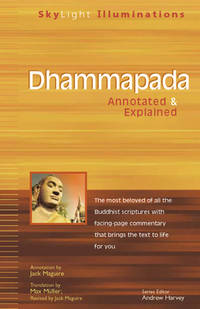
2005ref. 1561051506Skylight USA 2005. Edition Unstated. Softcover. Good Condition. Text appears to have multiple markings through out the book text. Cover has some wear and corner bumps. Spine is in very good condition. 129 pages. Multiple copies available this title. Quantity Available: 2. Shipped Weight: Under 1 kilo. Category: Education; ISBN: 189336142X. ISBN/EAN: 9781893361423. Pictures of this item not already displayed here available upon request. Inventory No: 1561051506. . 9781893361423 Skylight paperback
ref. 1998621405.Ghardcover. Good. Access codes and supplements are not guaranteed with used items. May be an ex-library book. hardcover
ref. 121Sepn65Paperback. Fair. Translated from the pali with an essay on buddha and the occident First printing sm. stain on cover and first 2 pages faded binding. paperback
1984ref. 122291Kyoto Japan: Ryukoka University 1984. First Edition. Paperback. Near Fine. 169 pages; 7 1/4 x 10 1/4" Translated and annotated by the Ryukoku University Translation Center under the direction of Meiji Ymada. Dark blue covers with gilt lettering on front cover and spine. Very light wear along spine and cover edges; "Errata" taped to first page 1" faded line on rear cover. Ryukoka University paperback
ref. 1478360755.Gpaperback. Good. Access codes and supplements are not guaranteed with used items. May be an ex-library book. paperback
ref. 8489836485.Gpaperback. Good. Access codes and supplements are not guaranteed with used items. May be an ex-library book. paperback
ref. 1834123364.Ghardcover. Good. Access codes and supplements are not guaranteed with used items. May be an ex-library book. hardcover
ref. 8173051283.Ghardcover. Good. Access codes and supplements are not guaranteed with used items. May be an ex-library book. hardcover
ref. 0282212329.Gpaperback. Good. Access codes and supplements are not guaranteed with used items. May be an ex-library book. paperback
ref. 29131904like new. unknown