828 resultados
1980ref. 304221-1Wien, Octopus 1980. 263 S. Mit Diagrammen und Tabellen. Original-Pappband mit Schutzumschlag.
1995ref. __3931095002Beyerlein Und Steinschulte 1995. Turtleback. New. 1197 pages. German language. 8.98x5.91x1.73 inches. Beyerlein Und Steinschulte unknown
ref. 11941721-nnew. unknown
ref. 11941721like new. unknown
1922ref. BUDD0061aMünchen, R. Piper 1922. Kl.-8°. XLII(2), 816(4) u. XIV(2), 919(5) S. OPappbde. m. rot- u. braungepr. Rü.- u. Deckeltitel u. umseit. Rotschnitt. Rü. gedunkelt, Einbde. angeschmutzt, Besitzereintrag, papierbed. leicht gebräunt, im Text sauberes u. schönes Ex. Bd.1: Erstes Halbhundert / Bd.2: Mittleres Halbhundert. - Karl Eugen Neumann (1865-1915) war mit seiner Übersetzung von großen Teilen des Pali-Kanons ins Deutsche der erste maßgebliche Übersetzer buddhistischer Schriften in eine europäische Sprache und somit ein Wegbereiter des Buddhismus im Westen und insbesondere im deutschsprachigen Raum. Er konvertierte um 1884 zum Buddhismus.
1921ref. 14804-2München, Piper 1921. Kl.8°. Original-Leinenband mit Goldschnitt.
1922ref. 23518München, Piper, 1922. Kl.-8°. OPp. (Gebrssprn., Rücken von Bd. 1 mit kl. Einrissen)
1922ref. 3756München, Piper, 1922. XLII (I), 816 (1) S., 1 Bl.; XIV (I), 919 S, 2 Bl.; XIII (I), 826 S., 2Bl., 3 Bände. 3. Auflage. Original-Pappband, dreiseitiger Farbschnitt. ZUSTAND 1.
1924ref. 165573München, Piper, 1924. XXI, 599 S., Kl.-8° OLeinen, mit goldgeprägten Rückentitel, Büttenpapier, umlaufender Goldschnitt, Lesebändchen
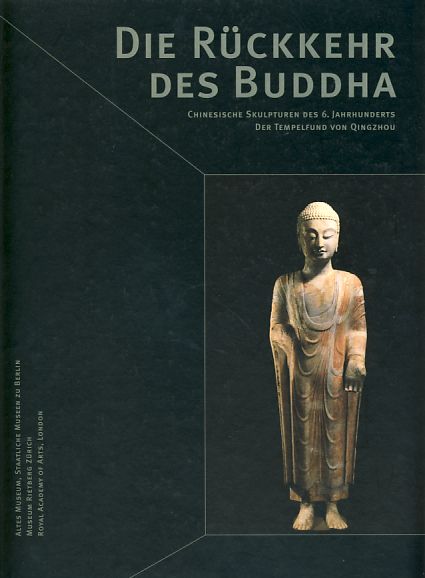
2001ref. 1161256Berlin : Altes Museum, Staatliche Museen zu Berlin, Zürich : Museum Rietberg, London : Royal Acad. of Arts, 2001. 236 S. : Ill., Illustrierter Orininalpappband
1927Very Good English Paperback. Pbo. Roy. 8vo. (24 x 17 cm). In German. [4], 93, [1] p. Die Sekten des alten Buddhismus.
1988ref. 135356Druck von K. K. Gyösei, Tokyo Nara 1988. 29 und 16 S., Abb. 25,5*18 cm. OBroschur.
1946ref. 27457Baden-Baden : Bühler 1946. 198 S. ; 8° Broschiert, Seiten alters- und papierbedingt gebräunt, sonst guter Zustand
1913ref. 45698Göttingen: Vandenhoeck & Ruprecht / Leipzig, Hinrichs. 1913. LXXIX, 360 S. Lex.-8°. EA. der Edition und Übersetzung. OBroschur.
2013ref. x-9401087121Springer 2013. Paperback. New. 324 pages. 9.25x6.10x0.77 inches. Springer paperback
1976ref. 145963Frankfurt [Main] : Angkor-Verl. [1976]. 187 S. : 1 Ill. 24,5*17,5 cm. OLeinenband, OSchu.
2004ref. LFA-126719716N° 293 (Mai 2004): 96 pages, format 215 x 285 mm, illustré, broché couverture couleurs, bon état
ref. 34109Turnhout, Brepols, 2001 Hardback, 230 p., 20 b/w ill., 210 x 295 mm. ISBN 9782503513140.
ref. 13432Paris, Auguste Duran, Libraire-Editeur, 1863. 1 volume in-8, 240 pp., reliure pleine peau verte, dos à nerfs, couverture conservée mais défraîchie, non coupé, très bon état.
ref. 108981 p.l. 38 folding leaves. 8vo 280 x 174 mm. orig. wrappers with cover wrappers old stitching. Thần Xá: An Thái French colonial period. An extremely rare woodcut book printed by nuns in a rural monastery in northern Vietnam. “An eponymous MahÄyÄna sutra that recounts the qualities vows and pure land of the buddha Bhaiṣajyaguru — the Master of Healing also known as the Medicine Buddha or the TathÄgata of Lapis-Lazuli Light. The scripture was most likely written in northern India during the early centuries of the Common Era. In this sutra Bhaiṣajyaguru vowed that his name if merely uttered would cure diseases free prisoners secure food and clothing for the impoverished and produce other similar benefits. He also vowed that his body would be as resplendent as lapis lazuli itself so that it might illuminate the world” Donald Lopez & Robert Buswell The Princeton Dictionary of Buddhism “Bhaiṣajyagurusūtra”. The Scripture of the Medicine Buddha T. 450 translated from Sanskrit into Chinese by Xuanzang 602–664 in the year 650 C.E. has been a popular text in East Asian and Tibetan Buddhist traditions. In our copy the sutra itself is bookended by a liturgical opening including the “Incense Praise” praises for the Buddha and a “sutra-opening gÄthÄ” and a final homage to the Medicine Buddha. According to the colophon bound at the beginning of the volume the scripture was printed for a specific occasion by three bhikkhuni or ordained Buddhist nuns affiliated with the An Thái temple 安泰寺 in the Thần Xá village ç¥žèˆæ‘ of the An Lại commune 安賴社 in the Thanh Khê canton 清溪 Äại An district 大安縣 Nam Äịnh province å—å®šçœ of northern Vietnam. Only the names of two of them are fully legible: they are Quảng Thuận 廣順 and Quảng Thành 廣æˆ. They printed and disseminated this Scripture of the Medicine Buddha with a sincere mind when the statues of three of their masters were completed and placed into stupas. In their colophon they traced the lineage of themselves and their masters to the bhikkhuni An Dương Tháp 安陽塔 dharma name Nguồn Hạnh æºå¹¸ and pseudonym Minh Lâm 明ç³. Despite the country’s long history of Buddhist and Confucian learning woodblock-printed books published within Vietnam itself are far fewer in number than their Chinese or Japanese counterparts. This scarcity is owed to the high cost of domestic production: according to the estimate of Kathlene Baldanza as late as the 19th century “the labor cost of printing in Vietnam was five to ten times higher than in China. Even ink and brushes were more expensive to produce in Vietnam.” Extensive international trade between northern Vietnam and southern China — where plentiful books were printed at very low costs — meant that “it was generally cheaper to purchase books from China than to buy them locally” “Publishing Book Culture and Reading Practices in Vietnam” Journal of Vietnamese Studies 13.3 2018 pp. 10–11. Beyond the limited cases of official and temple-based publishing Vietnamese publishers were pushed toward niche genres such as Sino-Vietnamese dictionaries ritual manuals or morality books. Regardless of genre woodblock-printed books from Vietnam are very difficult to find today outside a few major collections such as the Institute of Sino-Nôm Studies in Hanoi and l’École française d’Extrême-Orient in Paris. We will not focus on the humid climate of the country or the massive destruction of the nation’s cultural heritage during its long war of independence in the post World War II period. The catalogue of materials kept at the Institute of Sino-Nôm Studies mentions two copies VHv.1071 AC.116 of the Scripture of the Medicine Buddha printed in 1911 and it is unclear if those were printed with the same woodblocks as ours. We know for certain however that no material at the Institute of Sino-Nôm Studies gives the An Thái temple as the place of publication despite the large numbers of temples and monasteries listed. This copy being an example of Vietnamese women’s printing in a rural monastery is extremely rare. Fine copy. First leaf a little frayed and the outer wrappers are quite frayed. â§ Li Guimin æŽè²´æ°‘ “Zaizhi yu bianyi: Yuenan hanchuan fojiao dianji de zhuanhua å†è£½èˆ‡è®Šç•°â€”â€”è¶Šå—æ¼¢å‚³ä½›æ•™å…¸ç±çš„轉化” Foguang xuebao 佛光學報 7 No. 1 2021: pp. 111–37. Yuenan Hannan wenxian ziliaoku è¶Šå—æ¼¢å–ƒæ–‡ç»è³‡æ–™åº« Academia Sinica. unknown books
ref. 108981 p.l. 38 folding leaves. 8vo 280 x 174 mm. orig. wrappers with cover wrappers old stitching. Thần Xá: An Thái French colonial period. An extremely rare woodcut book printed by nuns in a rural monastery in northern Vietnam. “An eponymous MahÄyÄna sutra that recounts the qualities vows and pure land of the buddha Bhaiṣajyaguru — the Master of Healing also known as the Medicine Buddha or the TathÄgata of Lapis-Lazuli Light. The scripture was most likely written in northern India during the early centuries of the Common Era. In this sutra Bhaiṣajyaguru vowed that his name if merely uttered would cure diseases free prisoners secure food and clothing for the impoverished and produce other similar benefits. He also vowed that his body would be as resplendent as lapis lazuli itself so that it might illuminate the world” Donald Lopez & Robert Buswell The Princeton Dictionary of Buddhism “Bhaiṣajyagurusūtra”. The Scripture of the Medicine Buddha T. 450 translated from Sanskrit into Chinese by Xuanzang 602–664 in the year 650 C.E. has been a popular text in East Asian and Tibetan Buddhist traditions. In our copy the sutra itself is bookended by a liturgical opening including the “Incense Praise” praises for the Buddha and a “sutra-opening gÄthÄ” and a final homage to the Medicine Buddha. According to the colophon bound at the beginning of the volume the scripture was printed for a specific occasion by three bhikkhuni or ordained Buddhist nuns affiliated with the An Thái temple 安泰寺 in the Thần Xá village ç¥žèˆæ‘ of the An Lại commune 安賴社 in the Thanh Khê canton 清溪 Äại An district 大安縣 Nam Äịnh province å—å®šçœ of northern Vietnam. Only the names of two of them are fully legible: they are Quảng Thuận 廣順 and Quảng Thành 廣æˆ. They printed and disseminated this Scripture of the Medicine Buddha with a sincere mind when the statues of three of their masters were completed and placed into stupas. In their colophon they traced the lineage of themselves and their masters to the bhikkhuni An Dương Tháp 安陽塔 dharma name Nguồn Hạnh æºå¹¸ and pseudonym Minh Lâm 明ç³. Despite the country’s long history of Buddhist and Confucian learning woodblock-printed books published within Vietnam itself are far fewer in number than their Chinese or Japanese counterparts. This scarcity is owed to the high cost of domestic production: according to the estimate of Kathlene Baldanza as late as the 19th century “the labor cost of printing in Vietnam was five to ten times higher than in China. Even ink and brushes were more expensive to produce in Vietnam.” Extensive international trade between northern Vietnam and southern China — where plentiful books were printed at very low costs — meant that “it was generally cheaper to purchase books from China than to buy them locally” “Publishing Book Culture and Reading Practices in Vietnam” Journal of Vietnamese Studies 13.3 2018 pp. 10–11. Beyond the limited cases of official and temple-based publishing Vietnamese publishers were pushed toward niche genres such as Sino-Vietnamese dictionaries ritual manuals or morality books. Regardless of genre woodblock-printed books from Vietnam are very difficult to find today outside a few major collections such as the Institute of Sino-Nôm Studies in Hanoi and l’École française d’Extrême-Orient in Paris. We will not focus on the humid climate of the country or the massive destruction of the nation’s cultural heritage during its long war of independence in the post World War II period. The catalogue of materials kept at the Institute of Sino-Nôm Studies mentions two copies VHv.1071 AC.116 of the Scripture of the Medicine Buddha printed in 1911 and it is unclear if those were printed with the same woodblocks as ours. We know for certain however that no material at the Institute of Sino-Nôm Studies gives the An Thái temple as the place of publication despite the large numbers of temples and monasteries listed. This copy being an example of Vietnamese women’s printing in a rural monastery is extremely rare. Fine copy. First leaf a little frayed and the outer wrappers are quite frayed. â§ Li Guimin æŽè²´æ°‘ “Zaizhi yu bianyi: Yuenan hanchuan fojiao dianji de zhuanhua å†è£½èˆ‡è®Šç•°â€”â€”è¶Šå—æ¼¢å‚³ä½›æ•™å…¸ç±çš„轉化” Foguang xuebao 佛光學報 7 No. 1 2021: pp. 111–37. Yuenan Hannan wenxian ziliaoku è¶Šå—æ¼¢å–ƒæ–‡ç»è³‡æ–™åº« Academia Sinica. unknown
2019ref. x-3030134520Springer-Verlag New York Inc 2019. Paperback. New. 272 pages. 9.25x6.10x0.87 inches. Springer-Verlag New York Inc paperback
1943Pubblicazioni del Centro di Studi Italo-ungheresi di Bologna. n. 1. Direttore: prof. Emerico Varady. In 8°; pp. 79 con IV tavole in nero fuori testo di cui una più volte ripiegata; brossura editoriale; cucito. CONDIZIONI MOLTO BUONE (lieve ingiallitura della pagine dovuta alla qualità della carta - soprattutto quella lucida delle tavole)
1994ref. 31610[Bern ; München ; Wien] : Barth, 1994. 398 S. Ill. 8°. 2. Aufl. OPpbd. mit Rückengoldpräg. u. SU.
2003ref. 273651asInnsbruck, Dorje Ying Dharma Publishing, 1. Auflage, 2003. fester Pappband, mit Rahmen und Deckelillustration, etwas kl. DinA 5, 400 Seiten, einige Tafelseiten mit Farbabbildungen, Einband mit minimalen Gebrauchsspuren, SEHR gut erhalten / SEHR guter Zustand [2 Warenabbildungen]