Lane, Tora,Biblio.com

354 risultati
rif. 30621471like new. unknown
2010rif. DADAX3639273370VDM Verlag 2010-07-16. paperback. New. 5.91x0.43x8.66. Buy with confidence. Excellent Customer Service & Return policy. VDM Verlag paperback
1914Very Good Armenian Contemporary leather bdg. 16mo. (14 x 10 cm). In Armenian (Modern West Armenian). 238 p. [PSALMS IN ARMENIAN] Girk' Saghmosats'; Girk Arakats. A.B.C. 53,000. [A.B.S. 49,000 on colophon]. OCLC 988094270. The book of the Psalms in Armenian printed in Istanbul.
rif. 3639273370.Gpaperback. Good. Access codes and supplements are not guaranteed with used items. May be an ex-library book. paperback
rif. RELISPI/BOX88/AS5/180226-Hardcover. Very Good. THIS BOOK IS IN GOOD CONDITION . Sold by Kisharon Langdon the UK charity offering support and opportunities for people with autism and disability. hardcover
1888rif. 2091202133100050Igyo-kan 1888. Soft Cover. Fine. Volume: 1 Igyo-kan paperback
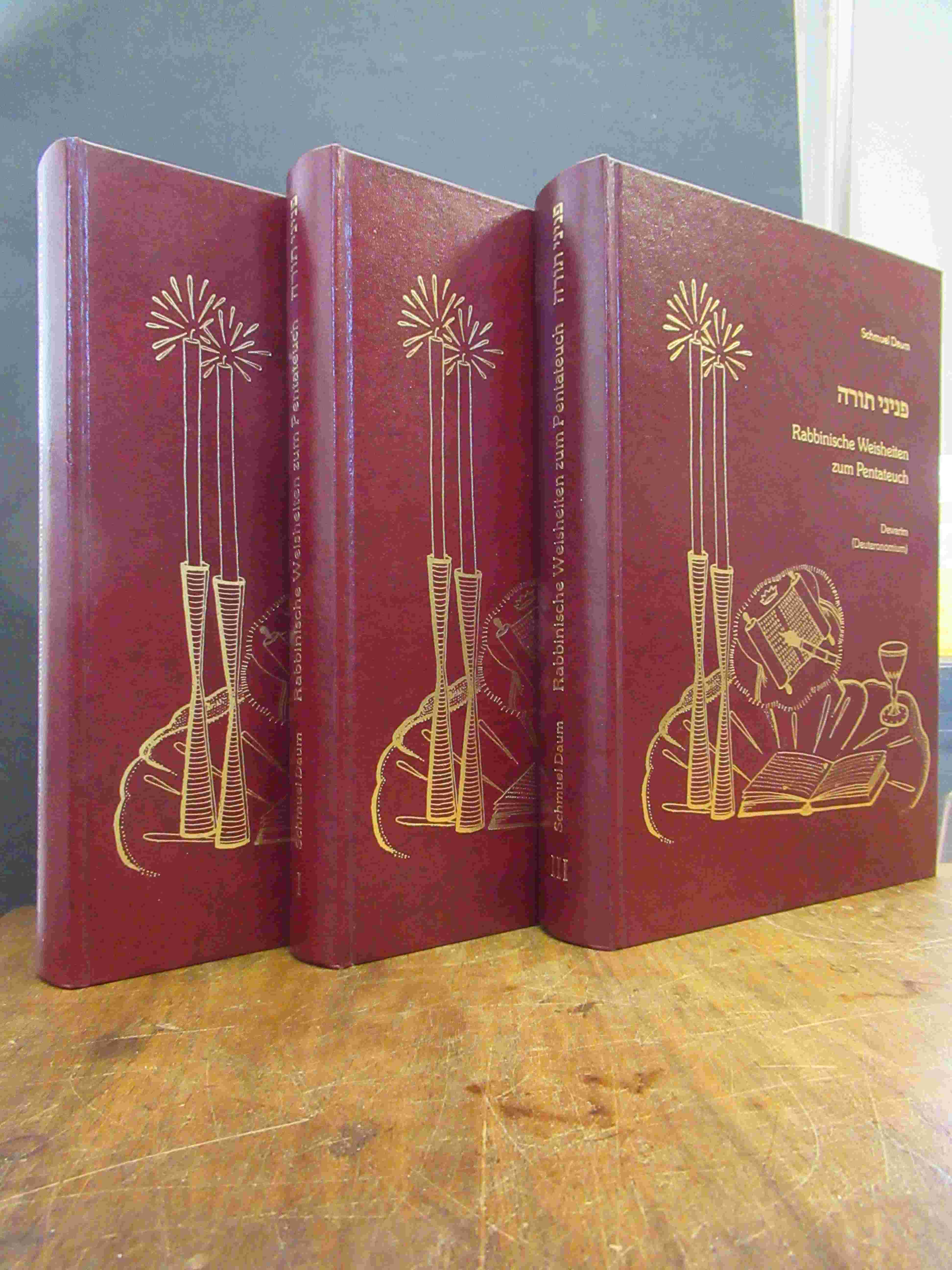
1985rif. 41483ABBasel, Viktor Goldschmidt Verlag, 1985-1988. gr.8°, 414 S./ 491 S. / 467 S., jeweils mit s/w-Abbildungen und Illustr., braunrote original Kunstledereinbände mit goldener Deckel- und Rückenbeschriftung und goldener Deckelillustration, Erstausgabe sehr schöne, saubere Exemplare
2004rif. 19039Berlin u. New York, de Gruyter, 2004. XII, 512 SS. 8°, Orig.- Lwdbd. Am Schnitt minimalst staubspurig.
1944rif. 2082402113504401Nishodo 1944. Soft Cover. Fine. Volume: 1 Nishodo paperback
19151st edition. Later boards. 8vo. 271 pages; 24 cm. In Hebrew. Goldman 772. Title translates as The Book of the Portion of Jacob. A collection of sermons organized by weekly Torah portion, and purporting to take one through the ancient quadrivium of meanings for each verse: The plain sense, the exegesis, the allusion and the mystical secret sense. SUBJECT (S) : Commentaries. Bible. Pentateuch. Sermons. OCLC lists 6 copies world wide. Ex-library with usual markings. Hinges starting. Other wise Good condition. (AMR-50-9)
19221st edition. 8vo. 32 pages. 22 cm. In Hebrew. Goldman 847. Title translates to The Book of the Right Hand of the Poor Man Rabbi Judah Braver of Akron, Ohios copy, with his stamp. Five sermons from Eisenstadt, a prolific man of Hebrew letters and a noted biographer of Orthodox rabbis. Published and sold in order to raise money for Orthodox scholars who were left destitute by WWI. Eisenstadt was rabbi to several communities in Brownsville, New York, and in this pamphlet declares the Brooklyn neighborhood, A great city of scholars and authors. SUBJECT (S) Jewish sermons, American. OCLC lists 7 copies worldwide. Very Good Condition. (AMR-50-13)
2018New Turkish Original bdg. HC. Roy. 8vo. (24 x 17 cm). In Turkish and Arabic. 2 volumes set: 1960, 568 p. "The Jews, as a monotheistic society, have lived in peace and security in the Muslim territory for centuries. Within the tolerant athmosphere they were active in any area as members of Islamic states. Saadia Gaon, who lived in the Islamic society in the 10th century, was one of the most important scholars of Jewish thought at the Middle Ages. He was an authority in both discipline of religion and literature by showing his competency through his dozens of works. He crowned his competency by becoming the president of the Talmud academy, guided the people in his time and also enlighted the next generation with his works. He tried to identify the rational basis of the essentials of the Jewish faith in his masterpiece Kitâbu'l Emânât ve'l 'Itikâdât and explored the consistency between the revelation and the reason. Gaon was born in Fayyum (upper Egypt) in 882 and died in Baghdad in 942. We have not enough knowledge about early life of Saadia. He left his home to study Tanakh with the scholars of Tiberias in Palestine at a young age and lived for sometime in Palestine territory. In 921 a controversy arose concerning the Hebrew calendar between the Talmudic academies in Babylonia and Palestine. Rabbi Aaron ben Meir, the Gaon (head) of the leading Talmudic academy in Palestine claimed that the Babylonian Gaonim made an error in calculation of the feast days. According to him the first day of Passover would be on a Sunday, while according to the Talmudic academies in Babylonia it would be on Tuesday. In this disputation Saadia supported the Babylonian Gaonim. He was in Aleppo, on his way from the East to Baghdad, when he learned of Ben Meir's claim of the Jewish calendar. Saadia addressed a warning to him and settled in Baghdad. He was knowledgeable about on astronomy and pointed to the mistakes made by Rabbi Aaron. In Baghdad, he wrote his "Sefer ha-Mo'adim" (Book of Festivals) and "Sefer ha Zikkarôn" (A Record Book) in which he refuted the claims of Ben Meir regarding the calendar. Finally the dispute was resolved and letters sent to all the Diaspora, and Babylonian Gaonim was restored the default with the great support given by Saadia. After this victory against Ben Meir, Saadia was acknowledged as a great scholar who has knowledge on religious matters and defender of Rabbinic Judaism. He received the honour of Alluf ( a title given to the scholars of the Babylonian Talmud academies who had the privilege of sitting in the first row) at the Pumbeditha Talmud Academy in Baghdad. Soon after, he became the gaon of the Sura Talmud Academy in Baghdad in 928. After accepting the role, he was known as Saadia Gaon. After two years, Saadia Gaon and the exilarch (Hebrew Rosh Galut, refers to the leaders of the Diaspora Jewish community in Babylonia) David ben Zakkai were of different opinions in an inheritance case. Saadia Gaon refused to sign the exilarch's verdict which was about that inheritence case because he thought it was unjust to sign it. After all was said and done he was dismissed from the presidency of academy by the exilarch. After seven years they were reconciled. Saadia Gaon retrieved his position; but he held it for only five more years. Finally Saadia Gaon died in Baghdad in 942 at the age of sixty. His Arabic translation and commentary of Torah gained prevalence among Jews living in the Islamic world, has earned a respected place among Rabbanim. After his era, many Jewish scholars have used this work in various ways especially Yemenite Jews called it Keter Torah (Taj), published it along with the masoratic Hebrew and Aramaic Targum texts and read it as the standard Arabic translation for centuries. ". (Muhammed Ali Bagir, Saadia Gaon'un hayati ve Arapça Tevrat tercümesi).
rif. ria9781498547758_inpHardcover. New. New Book; Fast Shipping from UK; Not signed; Not First Edition; This book presents an existentialist reading of Andrey Platonov’s perspective on the 1917 Russian Revolution. It brings the works of Platonov into a dialogue with the philosophy of Martin Heidegger Maurice Blanchot Georges Batai hardcover
1993rif. I6281Leiden : White Lotus 1993. Paperback. Good/no dj. 1.0. Tora Yoshida. Salt Production Techniques in Ancient China White Lotus paperback
rif. 1498547753.Ghardcover. Good. Access codes and supplements are not guaranteed with used items. May be an ex-library book. hardcover
rif. 34949111like new. unknown
rif. Bloomsbury-9781498547772Lexington Books. Paperback. New. 160 pages Lexington Books paperback
rif. Bloomsbury-9781498547772Lexington Books. Paperback. New. 160 pages Lexington Books paperback
1887rif. 106777BBBreslau, Wilh. Jacobsohn & Co., 1887. 8°. XX, 391, (5) S. Schwarzgepr. OLn. mit goldgepr. Rücken- und Deckeltitel und Goldschnitt. Neue Titelausgabe.
19201st edition. 8vo. 61, 61, 61. 23 cm. In Hebrew. Goldman 839. Title translates to The Book of the Staff of Judah Published in 6 parts. Sermons on the weekly Torah portion. R. Judah Leib Lazarov (1875-1939) was born in Kovno Province, Russia and studied in Jewish centers such as Telz, Mir, Volozhin and Radun. Prior to moving to the United States in 1898 where his career as a teacher flourished, he worked as a preacher in Lithuania. He was renowned for his scholarship and instrumental role in founding Hebrew schools. Lazarov took pains not to refer to himself as a Rov, i. E. , capable of making halakhic decisions, and insisted his role was simply that of a preacher. SUBJECTS(S) Jewish Sermons, Bible. OCLC lists 9 copies worldwide. Original paper wrappings. Flaking and edgewear. Otherwise Good condition. (AMR-50-8)
1839First edition. Period boards. 8vo. 322 pages, 27 cm. In Hebrew. Title translates to Commentary on the Torah by our Great and Embraced Rabbi Moses Bar Nahman. Rabbi Moshe ben Nahman, the 13th century Jewish leader and scholar known as Ramban, earned himself a place alongside Rashi as one of Judaism's primary Torah commentators. His commentary encompasses a vast panorama of Jewish learning, language, halakha, aggadah, philosophy, Kabbalah, and history. SUBJECTS: Bible. Pentateuch -- Commentaries. Bible. Pentateuch. Bible. Pentateuch -- Commentaries -- Early works to 1800. CD 000150436. OCLC lists 4 copies worldwide (HUC, Spertus, UC Berkeley, and GWU) . Ex-library with usual markings. Some pen on title page. Overall Very Good Condition. (HEB-48-52)
1907rif. 2091502135703520Choichi Naito 1907. Soft Cover. Fine. The book is in fine condition. Choichi Naito paperback
2018rif. x-1498547753Lexington Books 2018. Hardcover. New. 176 pages. 9.25x6.25x0.75 inches. Lexington Books hardcover
rif. 15623644-6BRILL. Used - Good. Former library copy. Pages intact with minimal writing/highlighting. The binding may be loose and creased. Dust jackets/supplements are not included. Includes library markings. Stock photo provided. Product includes identifying sticker. Better World Books: Buy Books. Do Good. BRILL unknown
2006rif. G1891662619I3N10Torah Aura Productions 2006. Paperback. Good. Former library book; Pages can have notes/highlighting. Spine may show signs of wear. ~ ThriftBooks: Read More Spend Less.Dust jacket quality is not guaranteed. Torah Aura Productions paperback