Lane, tora (Editor)Biblio.com

354 résultats
2015réf. x-1783482567Rowman & Littlefield Pub Inc 2015. Hardcover. New. 240 pages. 9.50x6.50x1.00 inches. Rowman & Littlefield Pub Inc hardcover
réf. 609191890 . 1890 unknown
1883First edition. Period boards. 8vo. 242 pages. 18cm. In Hebrew. Vinograd, Leghorn 1011. Includes Hebrew-Italian lexicon of difficult terms at rear. Title translates to: Words of Understanding: To Receive the Instruction of Wisdom, Justice, and Judgment, and Equity. This text is comprised of ninety-nine chapters, each beginning with a biblical verse in a large font followed by text in vocalized square letters in a smaller font and then a further explanation in rabbinic letters. SUBJECTS: Jewish ethics -- 1750- Jewish ethics. OCLC only lists 3 copies worldwide (Harvard, JTS, HUC) , none south or west of Cincinnati. Ex-library with usual markings. In Very Good Condition. (HEB-48-53A)
réf. PM3489ATENCION IMAGEN DIFERENTE. Completo en dos volumenes de gran formato encuadernados en estuche ilustrado. Buen estado. Frotaciones de uso en los bordes y esquinas del estuche. Libros muy limpios, contenido impecable. Edicion espanola. La Voz de la Torah I y II, Rab. E. Munk.z.l, Comentarios de las Haftaroth Rab. A. Goldman, Fundacion Samuel y Odette Levy, Paris. 2000. 944 y 1876 paginas. RARO. Fotos a peticion.
2015réf. x-113883288XRoutledge 2015. Hardcover. New. 214 pages. 9.25x6.25x0.75 inches. Routledge hardcover
2017réf. x-1472483243Routledge 2017. Hardcover. New. 296 pages. 9.25x6.25x0.75 inches. Routledge hardcover
2010réf. 7996Istanbul: Gozlem Gazetecilik 2010. Hardcover. New. In Turkish and Hebrew. Tevrat / TORA ve Aftara 5 VOLUMES SET 1. Beresit 2. Semot 3. Vayikra 4. Bamidbar 5. Devarim Turkce Ceviri ve Aciklamalariyla. Gozlem Gazetecilik hardcover
réf. Bloomsbury-9781498547758Lexington Books. Hardback. New. 160 pages Lexington Books hardcover
réf. Bloomsbury-9781498547758Lexington Books. Hardback. New. 160 pages Lexington Books hardcover
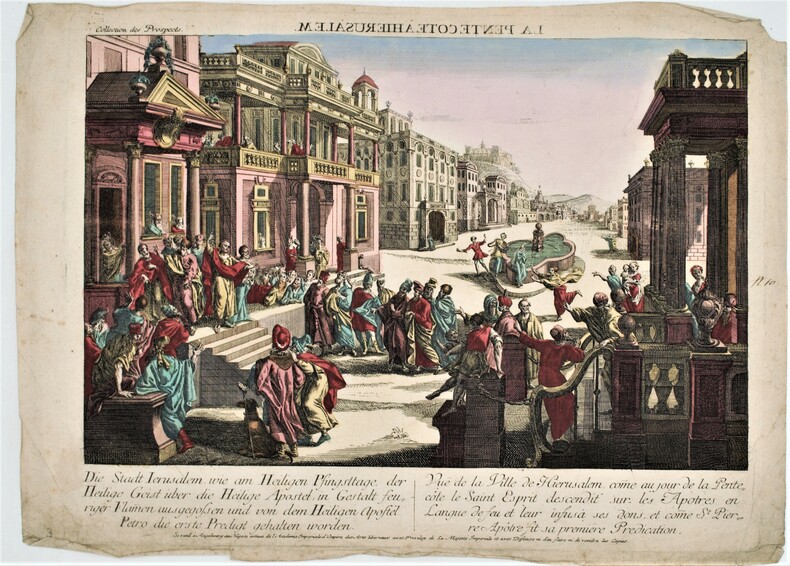
réf. PHO-1302Augsbourg , Académie Impériale des Arts Libéreaux au Négoce commun de l'Académie Impériale d'Empire des Arts Libereaux ,dimension feuille 485x360 et impression 440x315 , verso blanc ,titre en miroir dans la marge supérieure : La Pentecôte a Hierusalem , manque de papier sans atteinte en haut.
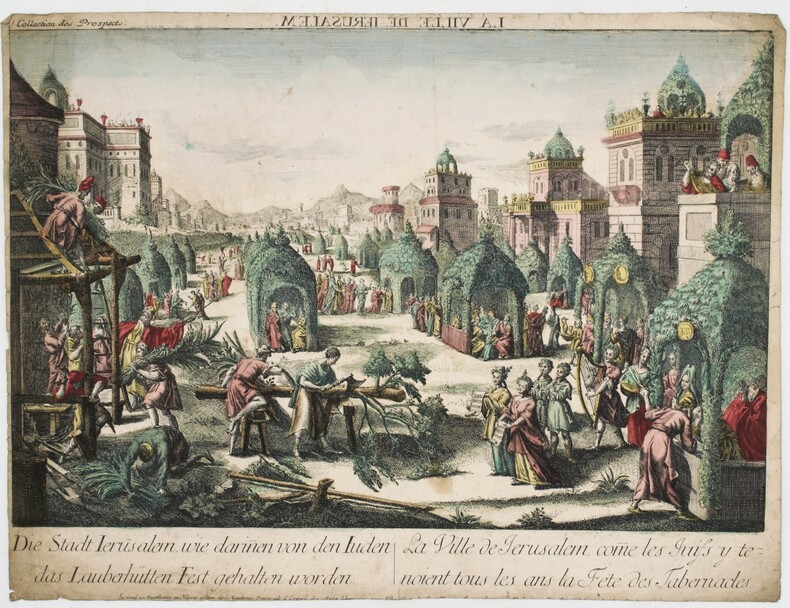
réf. PHO-1300Imprimée à Augsbourg dans la « Collection des Prospects »,430x322mm , gravure en couleurs d’époque , verso blanc, coupes courtes, bords légèrement salis Une belle vue de Jérusalem illustrant Souccot - également connue sous le nom de Fête des Tabernacles ou Fête des Cabanes.
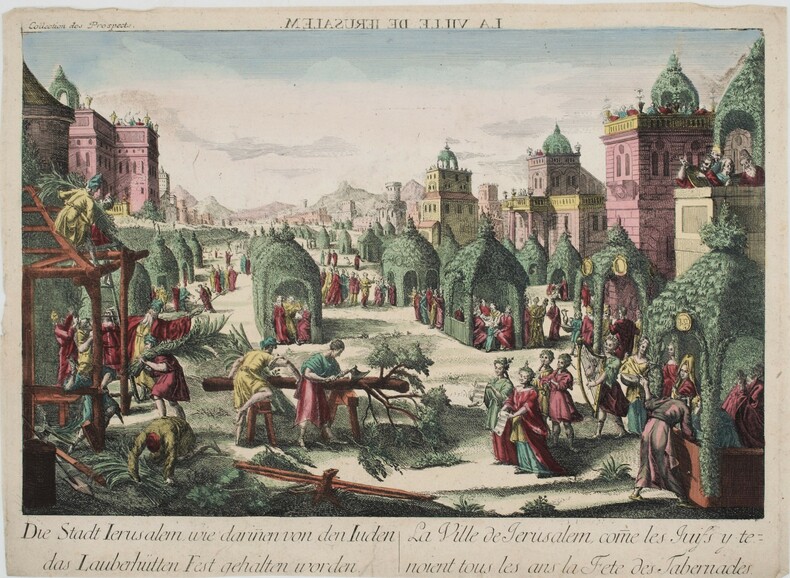
réf. PHO-1301Imprimée à Augsbourg dans la « Collection des Prospects »,430x322mm , gravure en couleurs d’époque , verso blanc . Une belle vue de Jérusalem illustrant Souccot - également connue sous le nom de Fête des Tabernacles ou Fête des Cabanes.
19201st edition. 8vo. Loosely bound in period boards. 407 pages. 23 cm. In Hebrew. Goldman 839. Title translates to The Book of the Staff of Judah Published in 6 parts. Sermons on the weekly Torah portion. R. Judah Leib Lazarov (1875-1939) was born in Kovno Province, Russia and studied in Jewish centers such as Telz, Mir, Volozhin and Radun. Prior to moving to the United States in 1898 where his career as a teacher flourished, he worked as a preacher in Lithuania. He was renowned for his scholarship and instrumental role in founding Hebrew schools. Lazarov took pains not to refer to himself as a Rov, i. E. , capable of making halakhic decisions, and insisted his role was simply that of a preacher. SUBJECTS(S) Jewish Sermons, Bible. OCLC lists 9 copies worldwide. Flaking and edgewear. Otherwise Good condition. (AMR-50-8A)
1906Period boards, 8vo, 154 pages, 18cm. In Hebrew. Title translates to Weights and Measures: For Torah Lessons that are Written and Oral. Coins, Measurements, and Weights from Conversations and Times - Arranged Alphabetically. Rav Sheftel (1844-1905) was Galician rabbi who, rubbed shoulders with the likes of Chaim Berlin and Abraham Kahana. As Kahana writes in the introduction, Sheftel possessed great knowledge of the Torah and Talmud and was respected by those who studied with him. OCLC lists two copies worldwide (JTS and Ohio State) . Pages are browning and becoming brittle, but still in good shape. Repair to binding. Overall Good Condition. (HEB-48-25)
1917réf. 2091502135300289Japan Industry Association Shinposha 1917. Soft Cover. Fine. Volume: 1 Japan Industry Association Shinposha paperback
1925réf. 2110502150311129Uta gei-jutsu-sha 1925. Soft Cover. Fine. Volume: 1 Uta gei-jutsu-sha paperback
2003réf. 5146015Gütersloh: Chr. Kaiser, Gütersloher Verlagshaus 1999-2003. Gr. 8° (22,5 x 18 cm). Fadengeheftete Orig.-Kunstlederbände mit goldgeprägtem Rückentitel und Lesebändchen. [Hardcover / fest gebunden].
réf. 2652Utrecht, Guilielmus, 1698. 10,5x17 cm. 1 frontispice gravé + Préface + 544 pages + Index. Reliure de l'époque en plein parchemin. Dos lisse portant le titre calligraphié à l'encre brune. Reliure en partie désolidarisée du corps de l'ouvrage, cependant cahiers bien cousus entre eux. Petites traces d'usage sur la reliure, sinon ouvrage propre et de présentation agréable.
1748First edition. Period boards. 8vo. 134 pages, 22 cm. In Hebrew. Title translates to Alshekh on the Torah. The Alshich (1508-1593) was born in the Ottoman Empire, and was the son of Hayyim Alshich. He is one of the few rabbis in Jewish history to receive the title of Hakadosh. He later moved to Safed where he became a student of Rabbi Joseph Caro. His students included Rabbi Hayim Vital and Rabbi Yom Tov Tzahalon. CD 000120874. SUBJECTS: Bible. Pentateuch -- Commentaries. OCLC lists 9 copies worldwide. Wear to boards. Pages are wavy but otherwise Good Condition. (HEB-48-50)
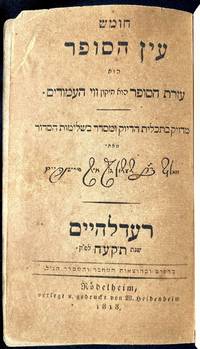
1821réf. 43558Redelhaim Roedelheim: W. Heidenheim 1821. 1st edition. Modern Cloth with gilt spines and marbled endpapers 12mo 17 cm. 5 volumes: Bereshit: VIII pages 1 64 3 24 4 54 leaves; Shemot: 1 65-119 8. 28 78 leaves. Vayikra: 1 119-159 24 80 leaves. Bamidbar: 1 159-215 2 16; 50 leaves. Devarim: 1 216-166 18 52 leaves. The Pentateuch in Hebrew published over the course of 1818-1821. Haftarot with special title pages and separate pagination are appended to each volume. Each volume contains liturgy for Shabbat and other occasions. Chumash Ein HaSofer was published "to assist the scribe and 'tikkun vavei ha'amudin.'" Printed in a layout similar to a Torah scroll with thousands ! of mesorah markings in the margins of the pages a list of letters written especially large or small and letters with dots. Mesorah ta'amim grammar and general laws about Safrus handwriting sacred religious texts such as Torah scrolls. Each volume thus includes the appropriate section of the Chumash the Haftarot as well as many important laws for Sofrim. Ein HaSofer was the work of renowned grammarian Rabbi Wolf Heidenheim who worked for several years to prepare this work for publication At the end of each of the five chumashim haftarot appear after a separate title page as well as the Shabbat Shacharit and Mussaf prayers including Yotzrot Siluk and Ofanim for special Shabbats. Shabbat prayers appear at the end of the fifth volume the rest of the volumes have just the piyutim without the prayers. Rabbi Wolf Binyamin Heidenheim 1757-1832 was a German scholar and grammarian who published many important works. His publications which are renowned for their accuracy remain popular until today. In 1818 he undertook to publish the Chumash Ein HaSofer with the objective of providing Sofrim with an extremely accurate text upon which to base their writing of the holy texts. OCLC: 52775573 A set with repairs and damaged spines sold for over $530 at auction in 2022. Toning and foxing otherwise Very Good Condition. An attractive set in modern cloth bindings. BER-1-6. Redelhaim [Roedelheim]: W. Heidenheim unknown
1902Very Good Turkish, Ottoman (1500-1928) Full leather bdg. Cr. 8vo. (19 x 13 cm). In Karamanlidika (Ottoman Turkish with Greek letters). 104 p. Partly uncut. Ai Kuriakai tou Etous: Yani senenin her kiryakisinde okunan Evangelion'un izahati içün. Phylladion (Juz): 5. Prep. by Savvas Dimitriadis. [In Greek] Sundays of the year: [In Turkish with Greek alphabet] Exegesis of the Gospel which is read every Sunday of the year. Sermons delivered by the doctor E. Emmanuelidis. Printed and published with the approval of the Patriarchate Ecclesiastical Commission. [In Greek:] "Act reasonably and speak practically" (S. Isidore de Peluse). Publisher: Savvas Dimitriadis. Paper 5: Imprimerie du Patriarchat, March 1902. [Published] 12 fascicles, nos 1-12 (November 1901- October 1902). 56 to 128 pages per booklet, with serial number and indication of the month of the year at the bottom of each title page. Contents: P. 1: Title.; P. 2: Notice saying that the Greek translation of these "Homilies" is reserved to the author (E. Emanuelidis).; P. 3: Preface by S. Dimitriadis which explains the need for each Christian to devote Sunday to meditate "these fragrant flowers of the Holy Orthodoxy". By publishing from November 1901 under the title "Ai Kuriakai tou Etous", Emmanuel Emmanuel's sermons, he rendered his orthodox brothers an appreciable service. Procopi (Ürgüb), March 1, 1902.; Homilies. Fifth of Twelve. First and Only Edition. Balta (XX Siecle) 5.; Dallegio & Salaville IV, 337.
1915Very Good Turkish, Ottoman (1500-1928) Original decorative and illustrated cloth bdg. Demy 8vo. (21 x 14 cm). In Turkish with Greek alphabet - Karamanlidika. 116 p., 18 unnumbered b/w plates. Anin celil zuhuru. Mattheaios Incili yirmi dördüncü babin tefsiri. [TURKISH WITH GREEK ALPHABET - KARAMANLIDIKA]. The Karamanlides or simply Karamanlides are Greek-Orthodoxes, Turkish-speaking people native to the Karaman and Cappadocia regions of Anatolia. Today, a majority of the population lives within Greece, though there is a notable diaspora in Western Europe and North America. Karamanlides were Greek-Orthodox Christians in Central Anatolia who had spoken Turkish as their primary language. The term is geographical, derived from the 13th-century Beylik of Karaman. This was the first Turkish kingdom to use Turkish as its official language and originally the term would only refer to the inhabitants of the town of Karaman or from the region of Karaman. After the Christians in the area were exchanged with a Muslim population of Greece in 1923, the title became a label for local Muslim inhabitants. Historically, the Karamanlides spoke Karamanli Turkish. Its vocabulary drew overwhelmingly from Turkic words with many Greek loan words. The language should not be confused with Cappadocian Greek, which was spoken in the same region during the same timeframe but is derived from the Greek language. While the official Ottoman Turkish was written in the Arabic script, the Karamanlides used the Greek alphabet for writing its form of Turkish. (Source: Wikipedia). Karamanli Turkish had its own literary tradition and produced numerous published works in print in the 19th century, some of them published by Evangelinos Misailidis, by the Anatoli or Misailidis publishing house (Misailidis 1986, p. 134). First Edition. Extremely rare.
2023réf. ASAP-9781839374142M.Hill Didactics Co. 2023. New. M.Hill Didactics Co. unknown
2023réf. ASAP-9781839374142M.Hill Didactics Co. 2023. New. M.Hill Didactics Co. unknown
1886réf. 71901886 Paris ED. Monnier, De Brunhoff et cie éditeur 1886 In4 format 32cmX22cm relié pleine toile bleue marine incrustée de bandes de toile beige et papier liège. reliure signée Armelle Guégant 114 pages nombreuses illustrations in et hors texte.