[Psalms, 1778]Biblio.com

342 Ergebnisse
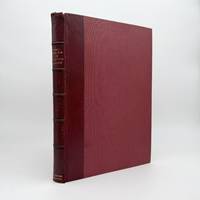
1776Best.-Nr. 1744London: Printed by Richard Hett for the Company of Stationers 1776. Hardcover. Very good. 8vo. 203 x 123 mm. 236 4 pp. Collation: A-P8 COMPLETE. Contemporary Liverpool binding of full red morocco elaborately gilt; wide gilt border of urns and flowers surrounding a black inlay gilt with the name of the first owner: "William Pole Esqr. / Mayor 1778." Marbled pastedowns and endpapers a.e.g. Trifle wear to binding extremities. Preserved in a dark brown cloth protective case. AN ELEGANT LIVERPOOL BINDING. While the workshop is still-unnamed twenty examples are known to us including two bindings that were bound for two different Liverpool Lord Mayors. ¶ 1. Psalms London 1778 -- bound for Robert Landor Church Warden of St. Paul's Church 1782 --> now Boston Athenaeum ¶ 2. Bible Oxford 1772 -- two volumes -- bound for presentation to Liverpool Mayor John Brown dated 1772 Lathrop Harper Cat. 239 item 101 --> Christie's London 25 June 1997 lot 154 ¶ 3. Bible Cambridge 1768 -- Earls of Derby Knowsley Hall Library Lancashire near Liverpool --> Sale Christie's London 1954 --> now Liverpool University Library Knowsley 705 ¶ 4. Bible Oxford 1772 -- two volumes as above -- Pierpont Morgan Library and Museum PML 12936 ¶ 5. Book of Common Prayer Cambridge 1770 -- Maggs Cat. 966 item 154 ¶ 6. Book of Common Prayer Oxford 1770 bound for presentation to George III -- Maggs Cat. 893 item 111 ¶ 7. Bible London 1767 bound for "MB" i.e. Maria Barclay presented to her in NYC by her son-in-law Col. Stephen Delancy ¶ 8. Book of Common Prayer Oxford 1773 bound for Liverpool attorneys Richard Gerard and James Clemens "Gent. Bailiffs 1773" formerly Alice Welsh Skilling and Raymond Skilling Collection Chicago Illinois sold Leslie Hindman auction 6 Nov 2013 Lot 216 ¶ 9. John Morrison The Advantages of an Alliance with the Great Mogul London 1774 British Library 280e18 ¶ 10. New Version of the Psalms London 1778 -- bound for Thomas Hutton Gent. Bailiff 1781 --> Clive Coates Helperby Hall Yorkshire --> now Richard Linenthal London ¶ 11-13. Three vols. at least from a collection of more than 300 Liverpool related items sold at Bonhams 11 Nov. 2015 lot 67 including Psalm and Common Prayer books bound for John Dixon St. Paul's Church Warden 1781; Thomas Hutton see No. 10 above and Joseph Birch Gent. Bailiffs; Charles Pole Edmund Rigby Gent. Bailiffs 1783 Richard Linenthal kindly drew my attention to this lot ¶ 14. Bible Cambridge 1768 two volumes -- bound for presentation to Liverpool slave trader John Sparling 1731-1800 --> Messrs. Peter Harrington as of 1/2020 ¶ 15. Book of Common Prayer Oxford 1793 early provenance indeterminate Maggs Catalogue 1075 Part II no. 240. NB: in their description Messrs. Maggs state that this binder was also responsible for the example published in their Catalogue 966 no. 191; I do not agree ¶ 16. The present binding executed in 1778 for William Pole Esq. Mayor of Liverpool from 1778-1779 dated 1778. Pole was Collector of Stamp Duties and Agent of the Sun Fire Office a long biographical note appears in pencil on first blank leaf -- subsequently in the library of noted Liverpool bibliophile and philanthropist Rev. Samuel Ashton Thompson Yates 1843-1903 with his armorial bookplate. ¶ 17-18. Bible London 1775 4to. Book of Common Prayer Cambridge 1781 bound with Psalms Cambridge 1785 formerly with Philadelphia Rare Books and Manuscripts. NB: the two volumes were bound by the bespoke workshop using two sets of tools. ¶ 19. Llyfr Wgeddi Gyffredin etc. Cambridge 1770 --> George III crowned initials added now British Library 222g9. ¶ 20. Book of Common Prayer Cambridge 1788 bound in 1791 for Henry Blundess Esq. Lord Mayor of Liverpool from 1791-1792 and 1793-1794 with Maggs 4/12/24. The work of an imitator of this binder greatly inferior in technical ability is found on a copy of the 1790 Oxford New Testament in the British Library C108c28 which is reproduced in the BL Bookbindings Database. The names of early Liverpool bookbinders are few but we have located two of them in Gore's 1766 "Liverpool Directory" namely Peter Wright on Bixteth Street and Richard Wright on George Street. The work of the present binder was not within the scope of Ramsden's "Bookbinders of the United Kingdom Outside London 1780-1840. It would appear that the Wrights continued working in Liverpool for some time. According to Ramsden the name Richard Wright appears in the 1777 and 1781 directories and Peter Wright in the 1790 directory. In the 1793 records of burials at Our Lady and St Nicholas Liverpool a certain William Wright is listed as a bookbinder on Sweeting Street. ¶ This edition of the Psalms is scarce: ESTC T206585 lists only 5 copies worldwide none in America. Printed by Richard Hett, for the Company of Stationers hardcover
1731Best.-Nr. 314639N.p. Watertown or Woburn Mass. 1731. Ink on paper 38 of 41 leaves paginated irregularly 1-60 with an index. Lacking three leaves near the beginning with six tunes as per the index. 1 vols. Small oblong 8vo. Original limp leather binding in Cambridge style worn restitched. Lower cover and index leaf detached. Ownership signature of Nathaniel Clark 1731/2; later provenance notes loosely inserted. Ink on paper 38 of 41 leaves paginated irregularly 1-60 with an index. Lacking three leaves near the beginning with six tunes as per the index. 1 vols. Small oblong 8vo. Fascinating early colonial American manuscript book of tunes with family provenance suggesting connections to Watertown and Woburn Mass. The manuscript is a compilation of psalm and hymn tunes with some material deriving from the two American tune books published in the 1720s. There are 24 compositions from Walter The Grounds and Rules of Music and 37 compositions from Tufts An Introduction to the Art of Singing Psalm Tunes. Two are American compositions and are marked "new" in the manuscript: Psalm 100 and Southwell which figures in both Walter and Tufts. There are 60 compositions all but one of which are sacred. The one secular song is "The Sylvan Oracle" from Congreve's Judgment of Paris a Masque 1701 the first verses of which are inscribed here: Let ambition fire thy mind Thou wert born o'er men to reign Not to follow flocks design'd; Scorn thy crook and leave the plain. Crowns I'll throw beneath thy feet Thou on necks of kings shall tread Joys in circles joys shall meet Which way e'er thy fancies lead. The ownership signature "Nathaniel Clark His Book An. Dom. 1731/2" points to Nathaniel Clark 1698-1776 whose son Peter Clark was born in Woburn in 1738. Later family notes on provenance accompany the manuscript. Cf. Britton & Lownens 491-6 & 516-7 unknown books
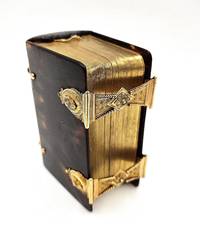
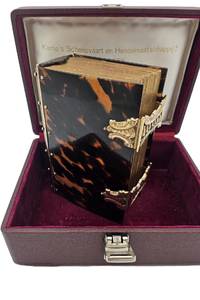
1777Best.-Nr. 126951777. Het Boek der Psalmen nevens de Gezangen bij de Hervormde Kerk van Nederland in gebruik. Door last van de Hoog Mogende Heeren Staaten Generaal der Vereenigde Nederlanden Uit drie Berijmingen In den jaare 1773 gekooren. Met de noodige daar in gemaakte veranderingen. With: Catechismus Gebeden en Formulieren. 2 werken in 1 band n.p. 68 p. Zeldzaam miniatuur psalmboekje in originele schildpadband met 2 filigrain zilveren sloten 4 filigrain zilveren scharnierstukken zilveren rug en goud op snede boekblok 32°. H. 82 x B. 55 x D. 2 cm. Een compleet en keurig exemplaar in een fraaie schildpadband met zilverbeslag. Kleine restauratie in de linkerbovenhoek van het voorplat. Het gebruik van het schild van de schildpad als bindmateriaal werd populair in de 17e en 18e eeuw en werd voornamelijk gebruikt voor het binden van religieuze geschriften kleine Bijbels gebedenboeken en geschenkboeken voor de gegoede burgerij. Het materiaal werd verkregen van uitheemse zeeschildpadden en was geliefd vanwege het uiterlijk de glans en de zeldzaamheid. Minder dan 4 procent van de luxere banden die in Nederland werden gebonden in de 18e eeuw werd in ander materiaal dan leer en perkament gebonden. Deze banden werden gezien als luxer en waren duurder. Dit geldt temeer voor schildpad aangezien de schilden niet op grote schaal werden geïmporteerd hierdoor bleef het materiaal kostbaar en alleen toegankelijk voor de rijken. 2 works in one binding engraved titlepage n.p. 68 p. Contemporary miniature Tortoiseshell binding with 2 silver clasps 4 silver hinges silver spine and gilt-edged text block 32° H. 82 x L.55 x W. 2 cm. Dutch church book containing the Psalms -with musical notation- and the Forms. Attractive binding bound in black with ochre coloured flamed tortoiseshell with silver double clasp 4 hinges and silver spine. The clasps hasps and joints on the spine are identically decorated with ornamental designs around a pattern of leaves. The use of tortoiseshell as a bookbinding material became popular in the 17th and 18th centuries. It was primarily used to bind religious texts small Bibles prayer books and gift books for the wealthy middle class. The material came from exotic marine turtles and was valued due to its beauty shine and rarity. -The name tortoiseshell can therefore be misleading because the material has nothing to do with land tortoises. Fewer than 4 percent of the luxury bindings made in the Netherlands in the 18th century were covered in materials other than leather and vellum. These bindings were regarded as richer and were more expensive. This is considered even more for tortoise shells since the shells were not imported in large amounts; due to this the material remained expensive and only available for the rich. Minor repair in the upper left corner of the front cover. A firm and excellent early tortoiseshell binding. Literature: Dijstelberge P. 2011. Papieren pracht uit de Amsterdamse Gouden Eeuw p. 69-71 / Noordwijk B. van 2006. Zondags Zilver. Drie eeuwen versierde kerkboekjes p. 209-217 / Rijkelijkhuizen M.J. 2010. Tortoiseshell in the 17th and 18th Century Dutch Republic p. 96-106. hardcover
1881Best.-Nr. 12630Amsterdam J. Brandt en Zoon 1884/1885/1881/1884. Het Nieuwe Testament of alle Boeken des Nieuwen Verbonds onzes Heeren Jezus Christus uit de Grieksche Taal in onze Nederlandsche Taal getrouwelijk overgezet. Op last van de Hoog- Mog. Heeren Staten Generaal der Vereenigde Nederlanden en volgens het besluit van de Synode Nationaal gehouden te Dordrecht in de jaren 1618 en 1619. Ingerigt overeenkomstig de thans meest gebruikelijke Taal en Spelling. WITH: Het Boek der Psalmen nevens de Gezangen bij de Hervormde Kerk van Nederland in gebruik. Door Last van de Hoog Mog. Heeren Staten Generaal der Vereenigde Nederlanden uit drie berijmingen in den jare 1773 gekozen met de noodige daarin gemaakte veranderingen. Ingerigt overeenkomstig de thans meest gebruikelijke Taal en Spelling. WITH: Vervolgbundel op de Evangelische Gezangen op last van de Algemeene Synode der Nederlandsche Hervormde Kerk uitgegeven ten voordeele van de algemeene fondsen dier kerk. With: Catechismus Gebeden en Formulieren. 4 werken in 1 band 592 311 286 112 53 p. Originele miniatuur Schildpadband met 2 gouden sloten 8 gouden schanierstukken 8 gouden nagels en goud op snede boekblok 16°. H. 10 x B. 75 x D. 45 cm. Nederlands kerkboek bevattende het Nieuwe Testament de Psalmen en Evangelische Gezangen. Aantrekkelijke band gebonden in zwart met okerkleurig gevlamd schildpad schild met twee 18-karaats gouden sloten voorzien van merktekens en inscripties op de klampen: M.H. Winter 1812. Het gebruik van het schild van de schildpad als bindmateriaal werd populair in de 17e en 18e eeuw en werd voornamelijk gebruikt voor het binden van religieuze geschriften kleine Bijbels gebedenboeken en geschenkboeken voor de gegoede burgerij. Het materiaal werd verkregen van uitheemse zeeschildpadden en was geliefd vanwege het uiterlijk de glans en de zeldzaamheid. Minder dan 4 procent van de luxere banden die in Nederland werden gebonden in de 18e eeuw werd in ander materiaal dan leer en perkament gebonden. Deze banden werden gezien als luxer en waren duurder. Dit geldt temeer voor schildpad aangezien de schilden niet op grote schaal werden geïmporteerd hierdoor bleef het materiaal kostbaar en alleen toegankelijk voor de rijken. 4 works in one binding 592 311 286 112 53 p. Contemporary miniature Tortoiseshell binding with 2 golden clasps 8 golden hinges 8 golden nails and gilt-edged text block 16° H. 10 x W. 75 x D. 45 cm. Miniature Dutch church book containing the New Testament 150 Psalms evangelical hymns followed by the Catechism and some Prayers. Attractive binding bound in black with ochre coloured flamed tortoiseshell with two 18-carat golden clasps marked and inscribed: M.H. Winter 1812. The clasps have straight catches and are cut out in a fleur-de-lys pattern. The use of tortoiseshell as a book binding material became popular in the 17th and 18th centuries and was mostly used for binding religious texts small Bibles prayer books and gift books for the wealthy middle class. The material came from exotic marine turtles and was valued due to its beauty shine and rarity. -The name tortoiseshell can therefore be misleading because the material has nothing to do with land tortoises-. Fewer than 4 percent of the luxury bindings made in the Netherlands in the 18th century were covered in materials other than leather and vellum. These bindings were regarded as richer and were more expensive. This is considered even more for tortoise shells since the shells were not imported in large amounts; due to this the material remained expensive and only available for the rich. Literature: Dijstelberge P. 2011. Papieren pracht uit de Amsterdamse Gouden Eeuw p. 69-71 / Noordwijk B. van 2006. Zondags Zilver. Drie eeuwen versierde kerkboekjes p. 209-217 / Noordwijk B. van n.d. Boek band en beslag p. 23 / Noordwijk B. van 2013. Zilver voor de Zondag. Boecxkens met Pragtigh Sluytwerck p. 177-189 / Rijkelijkhuizen M.J. 2010. Tortoiseshell in the 17th and 18th Century Dutch Republic p. 96-106 / Storm van Leeuwen J. 2006. Dutch Decorated Bookbinding in the Eighteenth Century Volume I p. 118 / Vidler K. 2005. Conservation of a tortoiseshell book cover in Conservation Journal Summer 2005 Issue 50 Amsterdam, J. Brandt en Zoon hardcover
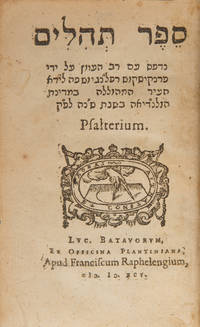
Best.-Nr. 122179Leiden Plantin Press 1595. . 24mo 12.5 x 8 cm; later vellum binding some browning but otherwise clean pages; text in Hebrew 126 ll. Scarce early edition of the Book of Psalms vocalised and with cantillation. Every fifth verse indicated with a letter. Ginzei Yisrael 1850; Vinograd Leiden 15. Leiden, Plantin Press, 1595. hardcover
1819Best.-Nr. 12694Haarlem Joh. Enschede & Zoonen 1819/1819/1824. Kerkboek met gouden boekslot vervaardigd door Hendrik Walter van Haasel Amsterdam ca. 1800. Het Nieuwe Testament of alle Boeken des Nieuwen Verbonds onzes Heeren Jezus Christus uit de Grieksche Taal in onze Nederlandsche Taal getrouwelijk overgezet. Op last van de Hoog Mog. Heeren Staten-Generaal der Vereenigde Nederlanden en volgens het besluit van de Synode Nationaal gehouden te Dordrecht in de jaren 1618 en 1619. Ingerigt overeenkomstig de thans meest gebruikelijke Taal en Spelling. WITH: Het Boek der Psalmen nevens de Gezangen bij de Hervormde Kerk van Nederland in gebruik. Door Last van de Hoog Mog. Heeren Staten-Generaal der Vereenigde Nederlanden uit drie berijmingen in den jare 1773 gekozen met de noodige daarin gemaakte veranderingen. Ingerigt overeenkomstig de thans meest gebruikelijke Taal en Spelling. WITH: Het Boek der Psalmen . WITH: Evangelische Gezangen . With: Catechismus Gebeden en Formulieren. 4 werken in 1 band 178 folio 408 244 80 p. Origineel Leren band met goud bestempeld. H. 155 x 87 x 55 cm. lengte slot 11.5 cm. In het boek is de opdracht geschreven: ""Overleden den 26 November 1869 Jan van Loon oud 73 jaar geboren in het jaar 1796."" Het slot is gemerkt met de provinciale leeuw en het meesterteken. Hendrik Walter van Haasel 17721846 was een Amsterdamse goudsmid zoon van goudsmid Albertus van Haasel en Johanna Maria ten Dam. Hij werd rond 1798 in het Amsterdamse goudsmidsgilde opgenomen en gebruikte vanaf 1807 het meesterteken VH. Four works bound in one volume 178 folio 408 244 80 pp. Original gold-stamped Leather binding H. 155 x W. 87 x D. 55 cm. length of the clasp 115 cm. The Church book contains the following inscription: Died on November 26 1869 Jan van Loon aged 73 born in 1796. The clasp is marked with the provincial lion and the maker's mark. The clasp arm consists of a cast and finely art work of flowers birds and grapes. Hendrik Walter van Haasel 17721846 was an Amsterdam goldsmith active from the late 18th to the early 19th century working from the family workshop on the Haarlemmerdijk. Recorded with makers marks VH sometimes accompanied by a hare or arrow after the guild period and later also using the retailers mark VAN HAASEL. Private collection The Netherlands 2010. Literature: H. Vreeken 2003 Goud en Zilver met Amsterdamse keuren Zwolle p. 479. Barend. J. van Benthem De werkmeesters van Bennewitz en Bonebakker Amsterdams grootzilver uit de eerste helft van de 19de eeuw Zwolle 2005 p. 49. Haarlem, Joh. Enschede & Zoonen hardcover
1673Best.-Nr. 12696Dordrecht Hendrick and Jacob Keur 1673/1673. gegraveerde titelpagina z.p. Originele Schildpadband met 2 zilveren sloten 4 zilveren schanierstukken 7 zilveren hoekstukken versierd met 120 'roosbriljanten' en goud op snede 8°. Nederlands Kerkboek bestaande uit het Nieuwe Testament in de Statenvertaling de Psalmen - met noten - van Petrus Dathenus en de Formulieren. Aantrekkelijke band gebonden in zwart met okerkleurig gevlamd schildpadschild. Het zilverbeslag is volledig versierd met in totaal 120 'roosbriljanten' gemaakt van geslepen glas. 10 briljanten ontbreken; er waren er dus totaal 130. Een klein stukje van de onderkant van de rug is weg evenals enkele minimale stukjes van de zijkant van de band. Het gebruik van het schild van de schildpad als bindmateriaal werd populair in de 17e en 18e eeuw en werd voornamelijk gebruikt voor het binden van religieuze geschriften kleine Bijbels gebedenboeken en geschenkboeken voor de gegoede burgerij. Het materiaal werd verkregen van uitheemse zeeschildpadden en was geliefd vanwege het uiterlijk de glans en de zeldzaamheid. Minder dan 4 procent van de luxere banden die in Nederland werden gebonden in de 18e eeuw werd in ander materiaal dan leer en perkament gebonden. Deze banden werden gezien als luxer en waren duurder. Dit geldt temeer voor schildpad aangezien de schilden niet op grote schaal werden geïmporteerd; hierdoor bleef het materiaal kostbaar en alleen toegankelijk voor de rijken. 2 works in one binding engraved titlepage n.p. Contemporary Tortoiseshell binding with 2 silver clasps 4 silver hinges 8 silver corner-pieces with rose-cut diamonds and gilt-edged text block 8°. Dutch church book containing the States Translation of the New Testament the Psalms -with musical notation- of Petrus Dathenus and the Forms. Attractive binding bound in black with ochre coloured flamed tortoiseshell. The silver fittings are completely decorated with 120 'rose-cut diamonds' made from cut glass. 10 pieces are missing so there were 130 in total. A small piece of the bottom of the spine is missing and some small pieces have been chipped off the sides of the binding otherwise fine. The use of tortoiseshell as a book-binding material became popular in the 17th and 18th centuries. It was mostly used for binding religious texts small Bibles prayer books and gift books for the wealthy middle class. The material came from exotic marine turtles and was valued due to its beauty shine and rarity. -The name tortoiseshell can therefore be misleading because the material has nothing to do with land tortoises. Fewer than 4 percent of the luxury bindings made in the Netherlands in the 18th century were covered in materials other than leather and vellum. These bindings were regarded as richer and were more expensive. This is considered even more for tortoise shells since the shells were not imported in large amounts; due to this the material remained expensive and only available for the rich. Literature: Dijstelberge P. 2011. Papieren pracht uit de Amsterdamse Gouden Eeuw p. 69-71 / Noordwijk B. van 2006. Zondags Zilver. Drie eeuwen versierde kerkboekjes p. 209-217 / Noordwijk B. van n.d. Boek band en beslag p. 23 / Rijkelijkhuizen M.J. 2010. Tortoiseshell in the 17th and 18th Century Dutch Republic p. 96-106. Dordrecht, Hendrick and Jacob Keur hardcover
1767Best.-Nr. WRCAM45554New York: James Parker 1767. 447991431pp. Antique-style three-quarter calf and marbled boards leather label. Titlepage neatly repaired at bottom not affecting text. Two contemporary signatures on titlepage. Light tanning and scattered foxing. A very good copy. The first book of music printed from type in America. "This is the First Edition in English of the Prayer-Book of the Reformed Dutch Church of New York. It is a translation of the old Holland liturgy. The translation of the book from the Dutch was made by the Rev. John Livingston D.D. The Psalms were rendered into English verse by Francis Hopkinson one of the signers of the Declaration of Independence. There are one hundred fifty Psalms in metre accompanied on every page by the printed music. The type for the music notes was ordered from Daniel Cromelin of Amsterdam in 1764. The Ten Commandments are also versified and supplied with music. These are followed by the Songs of Zacharias the Virgin Mary and Simeon. The same musical treatment is given to the Creed and the Lord's Prayer" - Church. EVANS 10561. ESTC W6234. CHURCH 1067. AMERICAN SACRED MUSIC IMPRINTS 398. James Parker hardcover books
Best.-Nr. 124312London Printed by John Field 1648. . 4to 24 x 18 cm; without the Apocrypha engraved general title slightly cropped at foot of engraved area with the sculpture's signature just cut through and re-margined later inscriptions in pen to margins letterpress NT title text block toned with some damp-staining to gutter margin of first 6 quires occasional spotting; 17th century dark brown goatskin the covers panelled in gilt with filets and a roll between the panels tooled in blind with fern fronds adorned with engraved-silver centre and corner pieces and clasps in full working order the upper centrepiece with monogram 'AA' the lower with engraved armorial device of three mullets of six points all pierced within a lozenge border rebacked preserving the original gilt spine which has been laid down all edges gilt the lower spine-side corner piece of the lower board loose from fitting a little rubbed overall an excellent example. The King James Version splendidly preserved in an English Restoration binding of gilt panelled dark brown morocco furnished in silver with engraved centrepieces bearing the monogram 'AA' and the armorial device of three mullets or six points pierces cornerpieces and clasps in full working order. Binding 'furniture' originally served a functional purpose with bosses and cornerpieces helping to protect the covers from wear and tear and clasps employed to prevent the parchment leaves of manuscript books from warping. The advent of paper and the movement away from wood to pasteboard had largely made these features redundant by the end of the seventeenth century. Instead as here metalwork survived as a decorative feature which enhanced the binding of important devotional works whilst also helping to keep these texts which were more likely to be carried about secure see David Pearson English Bookbinding Styles 1450-1800 pp26-30. Our example is bound without the Apocrypha. Darlow and Moule note that the Apocrypha in their example no. 469 is possibly supplied from another edition and that a different copy is lacking the Apocrypha. ESTC R37304; Herbert 605; DM 469; Wing B2225A. London, Printed by Joh[n] Field, 1648. unknown
1863Best.-Nr. 12726Amsterdam Metzler & Basting 1863. Het Nieuwe Testament of alle Boeken des Nieuwen Verbonds onzes Heeren Jezus Christus uit de Grieksche Taal in onze Nederlandsche Taal getrouwelijk overgezet . 4 works in one binding 542 508 364 94 1 p. Contemporary Tortoiseshell binding with two 18-carat gold clasps 24 18-carat golden nails and gilt-edged text block 8°. H. 6 x W. 410 x D. 2 inches. Dutch church book containing the New Testament 150 Psalms evangelical hymns followed by the Catechism and some Prayers. Attractive binding bound in brown with fine ochre coloured flamed tortoiseshell. The use of tortoiseshell as a book binding material became popular in the 17th and 18th centuries and was mostly used for binding religious texts small Bibles prayer books and gift books for the wealthy middle class. The material came from exotic marine turtles and was valued due to its beauty shine and rarity. -The name tortoiseshell can therefore be misleading because the material has nothing to do with land tortoises. Fewer than 4 percent of the luxury bindings made in the Netherlands in the 18th century were covered in materials other than leather and vellum. These bindings were regarded as richer and were more expensive. This is considered even more true for tortoise shells since the shells were not imported in large amounts; due to this the material remained expensive and only available for the rich. 4 werken in 1 band 542 508 364 94 1 p. Originele Schildpadband met twee 18-karaat gouden sloten 24 gouden nagels en goud op snede boekblok 8°. H. 15 x B. 105 x D. 5 cm. Nederlands kerkboek bevattende het Nieuwe Testament de Psalmen en Evangelische Gezangen. Aantrekkelijke band gebonden in bruin met zeer fraai okerkleurig gevlamd schildpadschild. Het gebruik van het schild van de schildpad als bindmateriaal werd populair in de 17e en 18e eeuw en werd voornamelijk gebruikt voor het binden van religieuze geschriften kleine Bijbels gebedenboeken en geschenkboeken voor de gegoede burgerij. Het materiaal werd verkregen van uitheemse zeeschildpadden en was geliefd vanwege het uiterlijk de glans en de zeldzaamheid. Minder dan 4 procent van de luxere banden die in Nederland werden gebonden in de 18e eeuw werd in ander materiaal dan leer en perkament gebonden. Deze banden werden gezien als luxer en waren duurder. Dit geldt temeer voor schildpad aangezien de schilden niet op grote schaal werden geïmporteerd; hierdoor bleef het materiaal kostbaar en alleen toegankelijk voor de rijken. Literature: Dijstelberge P. 2011. Papieren pracht uit de Amsterdamse Gouden Eeuw p. 69-71 / Noordwijk B. van 2006. Zondags Zilver. Drie eeuwen versierde kerkboekjes p. 209-217 / Noordwijk B. van n.d. Boek band en beslag p. 23 / Noordwijk B. van 2013. Zilver voor de Zondag. Boecxkens met Pragtigh Sluytwerck p. 177-189 / Rijkelijkhuizen M.J. 2010. Tortoiseshell in the 17th and 18th Century Dutch Republic p. 96-106 / Storm van Leeuwen J. 2006. Dutch Decorated Bookbinding in the Eighteenth Century Volume I p. 118 / Vidler K. 2005. Conservation of a tortoiseshell book cover in Conservation Journal Summer 2005 Issue 50 Amsterdam, Metzler & Basting hardcover
Best.-Nr. 124311London Printed at London by Robert Barker Printer to the Kings most excellent Majesttie and by the Assignes of John Bill 1632-1633. . Four works in 1 vol.; folio 35.5 x 23.5 cm; engraved general title signed 'Guilielmus Hole' partially burnished out as noted by ESTC with date in imprint altered to read '1633' on the plate engraved NT title dated 1632 full-page woodcut illustration of Adam & Eve to verso of A10 final f. of preliminaries note ff A7-8 with incorrect printed signatures as A6-7 woodcut initials head and tailpieces further illustrated with Speed's genealogies and double-page map of Canaan occasional toning final f. of Psalmes laid down title of Common Prayer affixed via stub Speed map with loss to central portion of design with final f. reinforced to verso at gutter margin and tape repair to margin A1 of Old Testament with closed tear crudely repaired lower margin of Adam & Eve woodcut with tape repair not affecting design some further closed repairs throughout later endpapers; contemporary calf gilt lozenge device to covers bisecting the initials 'I' and 'E' gilt faded upper brass clasp in working order remnants of the lower clasp joints and corners expertly restored very good. A very well preserved folio edition of the King James Bible complete in the original clasped calfskin binding with Speed's Genealogies including his double-page engraved map of Canaan The Book of Common Prayer and Sternhold & Hopkins' Psalmes. The elaborate title border is that engraved by William Hole d.1624 which had been used before in the folio Geneva Bible of 1607. 'As a copperplate-engraver Hole remained a specialist in engraving maps music and lettering. and he stands at the head of the seventeenth-century tradition of engravers who worked for writing-masters. He engraved the plates to Martin Billingsley's The Pens Excellencie or The Secretaries Delighte of 1618 the first important English engraved copybook dedicated to Charles as Prince of Wales and he was also responsible for the first engraved plates of music made outside Italy: the famous Parthenia of 161213 which contained music by William Byrd John Bull and Orlando Gibbons and Angelo Notari's Prime musiche nuove of 1613' ODNB. Our example a variant with the date in the imprint of the engraved general title altered on the plate to read '1633'. ESTC S122379 variant; Herbert 466; DM 359. London, Printed at London by Robert Barker, Printer to [the] Kings most excellent Ma[jes]ttie and by the Assignes of John Bill, unknown
1518Best.-Nr. 371799Cologne: Johann Soter 1518. Title within woodcut borders. Text in double columns in Latin Amharic not Chaldaean Greek and Hebrew types across double page spreads. Collation: a-y6 ç6 &6 ¶4 -&6 blank. 147 ff. 1 vols. 4to. Twentieth century red morocco and cloth. Some traces of rubbing to joints. GTS bookplate stamps on first and last leaves. Very good plus. Title within woodcut borders. Text in double columns in Latin Amharic not Chaldaean Greek and Hebrew types across double page spreads. Collation: a-y6 ç6 &6 ¶4 -&6 blank. 147 ff. 1 vols. 4to. The third polyglot Psalter edited by Johannes Potken who had edited an Ethiopic Psalter in 1513. The work is preceded only by the Genoa Psalter 1516 and the Complutensian Bible printed 1514-1517 but not published until 1522. The Introductiunculae in tres linguas externas: Hebraeam Graecam Chaldaeam sic introduction to three languages Greek Hebrew and Chaldaean i.e. Ethiopic is bound after the main text. Preserving an early binder's blank marked Duplum Bibliothecae Regiae Monacensis with ink inscription beneath The General Seminary of the Protestant Episcopal Church in the U States new York 10 December 1826 gift of John Pintard. This marks it as one of the earliest books donated to the newly established library. Pintard 1759-1844 was a prominent New Yorker of Huguenot origin patron of education and one of the earliest and staunchest advocates for the preservation and study of the history of New York and the United States. Pintard began to work towards the establishment of a historical society in the city in early 1804 and he was the leader in the organization of the New-York Historical Society in November 1804. He was also a patron of the old French Huguenot Church of St. Esprit and the General Theological Seminary. Important and early work. Darlow & Moule 1413; VD16 B 3101; Adams B-1371; Vinograd Cologne 1; D.S. Berkowitz In Remembrance of Creation 1968 no. 175; Fumagalli G. Bibliografia etiopica 1243 [Johann Soter] unknown
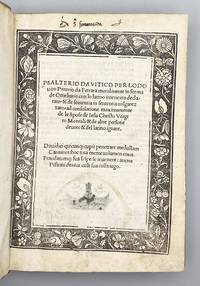
1524Best.-Nr. 12313Bologna: Heirs of B. Hector di Faelli 1524. 18th-century vellum over boards soiled flat spine gilt with gilt-lettered tan and blue morocco labels old gilt blue edges gauffered yellow silk marker. FIRST EDITION: THE FIRST PRINTED LATIN-ITALIAN PSALTER AND THE FIRST NEW ITALIAN TRANSLATION OF THE TEXT TO BE PUBLISHED SINCE NICOLÒ MALERMI'S 1471. The Ferrarese painter and poet Luigi Bigi called Pittorio; 1454-1525 presents each verse of the Latin Vulgate Psalms then paraphrases it in simple Italian. He frequently adds his own short vernacular commentary - from a few words to a few lines - to sharpen the reader's understanding and guide their private meditation. On the title and in the dedication BIGI EXPLICITLY ADDRESSES NON-LATIN LITERATE CONVENTUAL AND LAY WOMEN as well as the broader public. To forestall criticism of his vernacular text he sought and received the approval of the vice-inquisitor of Ferrara Father Domenico da Reggio. This luxury copy has the painted arms of its first owner who had the book block edges colored tooled and gilt. I have found two examples in U.S. libraries. In excellent condition early signature on the title of di Sa Simonetta bookplates of George Dunn Wooley Hall in Wm. Morris' "Golden Type" and of Arrighi Casmellani. ¶La Bibbia. Edizioni del XVI secolo ed. Lumini no. 164; Boillet "La Fortune du 'Psalterio Davitico' de Luigi Pittorio en Italie" in La Bibliofilia 115 2013 621-8; Darlow & Moule Historical Catalogue of the.Holy Scripture 5575n.; Sander Le Livre à figures italien 1018; EDIT16 CNCE 5884. Heirs of B. Hector di Faelli unknown
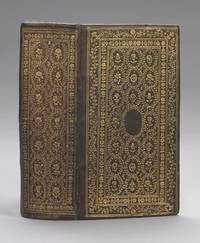
1586Best.-Nr. 08537Paris: A. L'Angelier 1586. CONTEMPORARY RICHLY GILT CALF DECORATED IN THE DUODO-STYLE WITH NINETEEN DIFFERENT TOOLS. The outer borders have three double-rules with olive branches trefoils curved rules and a floral roll between. Sewn with S fermés quatrefoils and open circles the central field has twenty ovals each with one of six small tools in it. A single compartment the flat spine presents the same decor but with additional tools its base and crown ruled on the bias; board edges ruled one slightly defective all edges gilt. THICK PAPER COPY. The binding by Clovis Ève adopts the design favored by the Venetian ambassador to Paris Pietro Duodo 1554-1611. The chic S fermé symbolizes love sage seul secret soucieux. Fresh inside and out one lower corner neatly restored. ¶Balsamo & Simonin A. L'Angelier 163; Delaveau & Hillard Bibles imprimées du XVe au XVIIIe siècle 3417; BnF Enrichissements 1961-1973 1974 1051; Brun Le Livre français illustré 130 & 278 "gravés très délicatement". For similar Duodo-style decor see Nixon's Sixteenth-Century Gold-Tooled Bookbindings 59 and Esmerian's Bibliothèque I 6.VI.1972 59-61 and Hobson & Culot's Italian and French 16th-Century Bookbindings 68-9. A. L'Angelier unknown
1480Best.-Nr. 254000Ulm: Johann Zainer 1480. 293 of 296 leaves; lacking first 2 leaves of the Calendar and final blank. •6 ••8 a-x8 y12 z8 A-L8 M3. 1 vols. 8vo; 111 x 90 mm. Bound in 18th-century paper boards with remnant of morocco spine label edges stained red. Spine defective and covers rubbed but binding is sound; several leaves bear stubs at outer edge from former index tabs; first leaf of Psalter extended at inner margin; final two leaves slightly waterstained; some browning and occasional stains; text block seriously trimmed but never into text. Notes on front endpapers and a presentation inscription in 1826 from a member of the German Methodist Episcopal Church U.S. In a custom half-morocco slipcase and chemise. 293 of 296 leaves; lacking first 2 leaves of the Calendar and final blank. •6 ••8 a-x8 y12 z8 A-L8 M3. 1 vols. 8vo; 111 x 90 mm. An Incunable of the Utmost Rarity. Johann Zainer the Elder fl. 1472-93 established the first printing press at Ulm where his first book is dated 1473. This pocket psalter by Zainer is undated; the colophon gives only the printer's name and the city in which it was printed. ISTC gives a conjectural date of around 1480. The book's handy but fragile format a thick octavo that would have been easily portable for late fifteenth-century users doubtless guaranteed a low survival rate. Indeed the few copies which have survived are often incomplete fragments or in poor condition. ISTC gives the following locations: France: Strasbourg BNU imperfect wanting Commune sanctorum; Germany: Bamberg SB; Berlin SB; Fulda HLB; Leipzig DB/Buch fragment missing; München BSB 2 imperfect; Stuttgart WLB 3; U.S.A: Washington DC Washington Cathedral Library this copy The present copy - the only copy in America - is complete save for the first two leaves of the Calendar and the blank leaf at the end. Goff Suppl. P1041a; H 13475; C 4927; GW M36206; ISTC No.: ip01041500 Johann Zainer unknown books
1480Best.-Nr. 254000Ulm: Johann Zainer 1480. 293 of 296 leaves; lacking first 2 leaves of the Calendar and final blank. •6 ••8 a-x8 y12 z8 A-L8 M3. 1 vols. 8vo; 111 x 90 mm. Bound in 18th-century paper boards with remnant of morocco spine label edges stained red. Spine defective and covers rubbed but binding is sound; several leaves bear stubs at outer edge from former index tabs; first leaf of Psalter extended at inner margin; final two leaves slightly waterstained; some browning and occasional stains; text block seriously trimmed but never into text. Notes on front endpapers and a presentation inscription in 1826 from a member of the German Methodist Episcopal Church U.S. In a custom half-morocco slipcase and chemise. 293 of 296 leaves; lacking first 2 leaves of the Calendar and final blank. •6 ••8 a-x8 y12 z8 A-L8 M3. 1 vols. 8vo; 111 x 90 mm. Johann Zainer the Elder fl. 1472-93 established the first printing press at Ulm where his first book is dated 1473. This pocket psalter by Zainer is undated; the colophon gives only the printer's name and the city in which it was printed. ISTC gives a conjectural date of around 1480. The book's handy but fragile format a thick octavo that would have been easily portable for late fifteenth-century users doubtless guaranteed a low survival rate. Indeed the few copies which have survived are often incomplete fragments or in poor condition. ISTC gives the following locations: France: Strasbourg BNU imperfect wanting Commune sanctorum; Germany: Bamberg SB; Berlin SB; Fulda HLB; Leipzig DB/Buch fragment missing; München BSB 2 imperfect; Stuttgart WLB 3; U.S.A: Washington DC Washington Cathedral Library this copy The present copy - the only copy in America - is complete save for the first two leaves of the Calendar and the blank leaf at the end. Goff Suppl. P1041a; H 13475; C 4927; GW M36206; ISTC No.: ip01041500 Johann Zainer unknown
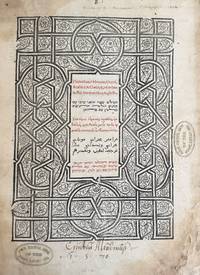
1516Best.-Nr. 371021Genoa: Petrus Paulus Porrus 1516. Title printed in red and black within woodcut arabesque border printer's device on final leaf. Parallel text in Hebrew Latin Greek Arabic and Chaldaean Aramaic 4 columns to a page 41 lines. 13 woodcut floriated initials. A10 B-Z8 &8 con6; 200 leaves complete. Folio 13-1/8 x 9-3/8 inches. Contemporary blind tooled pigskin over bevelled wooden boards boards with repeated roll of hound hunter and stag spine with floral tools. Clasps perished early repairs with vellum at lower corners; spine darkened with chip at foot joint starting wormholes to the covers. Toning throughout worm holes throughout but heavier to the preliminary and terminal leaves paper loss not affecting text at the lower outer corners of the first 3 leaves minor dampstaining at the lower corners of most leaves and extending from the top inner margin. Scattered early marginalia. Title printed in red and black within woodcut arabesque border printer's device on final leaf. Parallel text in Hebrew Latin Greek Arabic and Chaldaean Aramaic 4 columns to a page 41 lines. 13 woodcut floriated initials. A10 B-Z8 &8 con6; 200 leaves complete. Folio 13-1/8 x 9-3/8 inches. The Genoa Psalter also known as the Octaplum or Quadruplex Psalter was the first polyglot psalter to be published and the first polyglot edition of any part of the Bible. Financed by the Oriental language scholar Bishop Agostino Giustiniani and printed in Genoa in 1516 it presents the psalms laid out in eight columns i.e. four per page on double-page spreads: in Hebrew a Latin paraphrase the Vulgate Latin the Septuagint Greek Arabic Chaldean Aramaic a Latin paraphrase and the editor's notes. "A monument of Renaissance typography this Psalter was linguistically the most ambitious work attempted to date and the first Polyglot work ever published. It provides the Psalms in five languages as well as a marginal scholarship based largely on rabbinic sources. The Arabic text is one of the first two texts and the first biblical text ever printed in this language. The Hebrew types used in this book were apparently never used again" B. Sabin Hill Hebraica from the Valmadonna Trust The Piermont Morgan Library 1989 no. 18. Notably within a lengthy editor's note to Psalm XIX is what is considered the first printed biography of Christopher Columbus along with a very early description of his voyage. A native son of Genoa Giustiniani presents the discovery of the new world as a fulfilment of Biblical prophecy appropriately glossing verse four of Psalm XIX to include his biography of Columbus: "Their sound is gone out through all the earth and their words to the end of the world." The text of the biography of Columbus written a decade after his death includes a brief account of his childhood and continues at length on his discovery of America. Translated from the Latin it begins: "And so their words have reached unto the ends of the earth at least in our own times in which by the marvelous daring of Christopher Columbus of Genoa almost another world was discovered and joined to the community of Christians. And since Columbus often declared that he was chosen by God so that through him this prophecy would be fulfilled I did not consider it unsuitable to include his life here. Therefore Christopher surnamed Columbus a Genoese by birth . lived in our age and through his own efforts explored more lands and seas in a few months than almost all other mortals had done throughout all previous ages . More swiftly than the Portuguese had done he approached new lands and new peoples and at last penetrated regions unknown before now. The news of this matter quickly reached the King who - both out of rivalry with the Portuguese kings and a desire for such new marvels and glory that might accrue to him and his descendants - after long discussions with Columbus finally ordered two ships to be outfitted. With these Columbus set sail from the Fortunate Islands directing his course slightly off the western line . After many days of sailing they had covered great distances. While the others having lost all hope urged a change in course Columbus persisted asserting by reason and conjecture that continuing but a little longer might lead them to discover continents or islands. Nor was he wrong. On the following dawn they sighted land. From this event immense confidence arose in human minds. Later it was learned that these were islands and observations were made of certain peoples there uncultivated and prone to raids on their neighbors even devouring human flesh like wolves. There were violent encounters yet eventually some of these islanders were brought safely to Spain astonishing and delighting all who saw them because they were at first timid unfamiliar with approach easy to persuade and marveling at everything as new." An important and desirable work from a liturgical linguistic and historical perspective. Adams B1370; BM STC Italian p. 97; Darlow & Moule 1411; Sabin 66468; European Americana 516/4; Harrisse BAV 88; JCB 3 I:64; Smitskamp 236; Roper Early Arabic Printing in Europe in Sprachen des Nahen Ostens und die Druckrevolution p. 132; Vinograd Genoa 1. Provenance: Cenobii Alois 1570 inscription below title; Bibliotheca Regia Monacensi pencil inscription on the inside front board identifying it as a duplicate; General Theological Seminary ink and blindstamps and other markings Petrus Paulus Porrus unknown