29 869 résultats
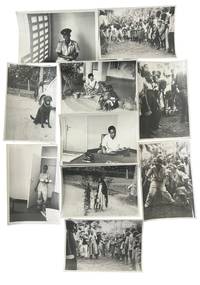
1950réf. 235491950. Southern Africa rural photo archive circa 1960s including social and celebratory scenes. Photographs also show children African men at work Western-style stucco buildings and a white woman seated with Black children on veranda steps. Several children and young adults wear largely western dress. Other scenes include a parked Western automobile stucco architecture and a large gathering of children and young adults enjoying music and play. Photo archive of 10 silver gelatin photographs 5 x 3 inches South Africa circa 1960s. The setting is a rural compound or mission setting with sandy roads palms stucco buildings shaded steps planted borders and a parked automobile. Several photographs include drumming and dancing with performers at the center of the road and children and adults watching from both sides. Other subjects include three children beside a landscaped path a white woman seated on veranda steps with Black children beside her a Black man seated at an office desk a uniformed Black man seated indoors beside a concrete ventilation screen and a Black man standing in a doorway with a tray or papers. The c. 1960s dating places the group in the years after the major apartheid statutes when South African policy sought to define African life through labor control residence education and administration. Within that context the rural compound or mission setting office interior uniformed portrait veranda scene children young adults drumming dancing and western dress give the archive historical value beyond its unidentified subjects. The uniformed portrait adds an official or institutional presence but its exact role remains unidentified. Printed on Agfa photographic paper and well preserved with light surface wear minor handling creases and slight curling. Overall very good condition. unknown books
1929réf. 231561929. Rufino José dos Santos. Gaza e Inhambane documents how the Portuguese colonial state in Mozambique presented administrative order transport development mission activity and Indigenous labor in the late interwar period through an official photographic publication. Rather than functioning as a neutral regional survey the volume arranges Gaza and Inhambane as governable colonial territory pairing town halls administrators' residences markets rail construction mission schools clinics and vocational classrooms with captions that identify Africans as subjects of supervision instruction and improvement. In that respect the book records the visual language of Portuguese imperial rule in East Africa at a moment when colonial governments increasingly relied on photographic albums to publicize infrastructure settlement and social control. Rufino José dos Santos. Albuns Fotograficos e Descriptivos da Colonia de Mocambique. Volume V. Gaza e Inhambane: Aspectos Gerais / General Views of Gazaland and Inhambane / Vues Generale de Gaza et Inhambane. Hamburg: Broschek & Co.; representatives Stuben & Co. Album No. 5 Volume V 1929. Rope-bound photographic and descriptive album measuring 8.5" x 11". Printed wrappers with cover text in Portuguese English and French. The title page identifies the work as part of the official series Albuns Fotograficos e Descriptivos da Colonia de Mocambique. The opening text describes the Gaza region as an agricultural zone of fertile soil palm groves and port access then shifts into statistics and claims for development potential. The illustrated pages shown here are heavily weighted toward colonial institutions and works projects: "A Camara Municipal da Vila de Joao Belo" and the "Residencia do Administrador"; the "Mercado Municipal de Vila de Joao Belo"; "Construction Gang at work on the Gazaland Railway"; the old administrative post of Chindinguela and newly finished rondavels; street and commercial views of Chibuto; the Chibuto Mission School; the Malaiça Mission offering "Free Treatment to Natives"; and classroom scenes captioned as teaching Africans trades including sewing carpentry and wood-work. Issued in 1929 the album belongs to a period when European colonial regimes used photo books to convert occupation into an image of planned administration and economic progress. Edge wear creasing and rubbing to the printed wrappers; dampstaining affecting several leaves; chipping and small losses to some page edges; rope binding intact with expected wear; interior images and captions generally clear. Overall good condition. A well-preserved example of Portuguese colonial state photography in book form with concrete evidence of how Gaza and Inhambane were framed for a western audience through colonial administration missionization transport and managed Indigenous labor. unknown books
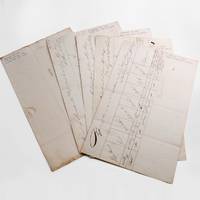
1824réf. 376899South Afrca 1824. Folio. Very Good a few margin tears 1 closed 2 with holes from seal generally sound some with postmarks. Folio. Report of Arrivals in Simons Bay Cape of Good Hope.which is l on the shores of Simon's Bay in False Bay on the eastern side of the Cape Peninsula. For more than two centuries it has been a naval base and harbour first for the British Royal Navy and now the South African Navy. The town is named after Simon van der Stel an early governor of the Cape Colony. 4 documents. 1823-24. Each SIGNED BY RICHARD WEATHERLEY HARBOR MASTER Report of Arrivals and Departures.Algoa Bay. Port Elizabeth. Eastern Cape SA 6 documents to Captain Francis Evatt important Commandant of Fort Frederick at Port Elizabeth. Each document signed by Evatt. 1824. unknown books
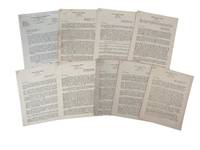
1946réf. 234091946. ColonialismReligion Archive of letters by Dr. John A. Reuling recording his 1946 missionary work in Africa across mid-century Portuguese Belgian British and South African colonial systems where evangelism was a tool of westernization and colonialism alongside education public health and agricultural training. Written during Reuling's first year as Africa Secretary for the American Board the letters track his movements through Elende Bailundo Currie Institute Chikore Mt. Silinda Mange Adams College Johannesburg McCord Hospital Groutville and other mission and colonial settings. Reuling criticizes mine compounds overcrowded townships migrant labor white settler indifference and extractive demand for "gold manganese copper diamonds etc." while also presenting mission schools and hospitals as tools for reshaping African society through Western medicine wage labor preparation and Christian discipline. Reuling calls for African church autonomy and African leadership yet his language remains paternal and administrative indicative of mid-century missionary attitudes towards development in Africa. John A. Reuling African Mission Letters. Angola Belgian Congo Southern Rhodesia Portuguese East Africa South Africa and Boston 1946. Archive of 10 typed letters 43 pages total including nine multi-page circular letters from Dr. John A. Reuling and one typed American Board Foreign Department letter to Rev. Henry A. Jessop. The letters are dated April 28 through December 17 1946 and include Reuling's sequential mission letters numbered 1 2 4 5 6 8 9 10 and 11 each circulated to "Dear Friends." The content covers colonial and mission administration in African schools hospitals mine labor township poverty public health and Christian churches. 1 Reuling John A. Letter #1. Elende Mission Station Cuma Angola Portuguese West Africa April 28 1946. Five-page typed circular letter tracing Reuling's route through London Lisbon Liberia Brazzaville Luanda Lobito Bay and inland Angola including his statement that correspondence between Galangue and Chilesso could require "over 400 miles of foot travel." 2 Reuling John A. Letter #2. Currie Institute Dondi Bela Vista Angola Portuguese West Africa June 10 1946. Seven-page typed circular letter describing Angola mission stations African pastoral ordination plantation and fishing labor and the economic damage caused when Western trade displaced earlier Ovimbundu caravan networks while "giving them nothing in return." 3 Reuling John A. Letter #4. Missao do Bailundo Teixeira de Silva Angola West Africa June 21 1946. Four-page typed circular letter on African schooling in Angola including overcrowded classes pupils walking 70 to 150 miles Currie Institute Means School for Girls Liceu fees and Reuling's statement that "the 20th century has caught up with the Ovimbundu." 4 Reuling John A. Letter #5. Chikore Mission Station Southern Rhodesia August 8 1946. Three-page typed circular letter assessing the Leopoldville Conference where mission and African delegates addressed urbanization industrial development mission-government relations education medicine African economic status and the claim that "Africa and Africans are subject to the same restlessness" affecting the postwar world. 5 Reuling John A. Letter #6. Mt. Silinda Institute Southern Rhodesia August 20 1946. Three-page typed circular letter on Mt. Silinda's industrial training teacher training hospital farm mahogany forest Association of Churches and African church responsibility for "full financial responsibility for its own work." 6 Reuling John A. Letter #8. Mange Mission Station Alto Maxixe Inhambane Portuguese East Africa September 6 1946. Four-page typed circular letter linking mission work in Mozambique to African church self-support South African General Mission cooperation coastal travel and mine recruitment that carried men from Mange to Johannesburg by ship and rail. 7 Reuling John A. Letter #9. Johannesburg Union of South Africa September 21 1946. Seven-page typed circular letter analyzing Johannesburg mining Orlando township mine compounds African teachers Bridgman Memorial Maternity Hospital and the colonial economy driven by American demand for "gold manganese copper diamonds etc." 8 Reuling John A. Letter #10. Adams M.S. Natal South Africa October 7 1946. Four-page typed circular letter on Adams Mission Station African nationalism Communist organizing McCord Hospital drought relief soil-cement housing and African leaders watching events in "Egypt Indonesia India." 9 Reuling John A. Letter #11. Groutville Mission Station Natal South Africa October 21 1946. Four-page typed circular letter on Adams College Inanda Seminary McCord Hospital South Coast churches Groutville Church Mr. Robbins Cuma and Chief Albert Luthuli. 10 Reuling John A. Typed letter to Rev. Henry A. Jessop. Boston Massachusetts December 17 1946. One-page typed American Board Foreign Department letter in which Reuling explains that he did not reach Umsunduze notes that he was preparing "to have my appendix out" and names American Board personnel including the Booths Sticks Bergsmans Kaetzels Rubensteins and his own children. The archive records missionary reform at the end of World War II through the lens of mid-century colonial development. Reuling's letters are especially strong coverage of African education and public health including operational details rarely present in formal mission reports such as pupils sleeping in adobe thatched houses pupils walking 25 to 30 miles to school a mission doctor being absent on furlough malaria treatment limited by quinine shortages and African nurses at McCord Hospital serving as "a positive demonstration" of African competence. They also preserve Reuling's paternal assumptions about African population including his his belief that mission intervention could guide African development and his insistence that Christian institutions could keep postwar unrest from turning violent. Original typed letters many stapled at upper left with fold lines scattered stains occasional edge wear. Overall good to very good condition. unknown books
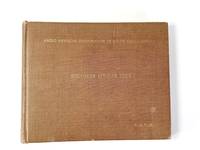
1955réf. 410891Johannesburg 1955. Foxing to prelims and postlims light spotting to text leaves photographs clean and well-preserved. 8 x 9.5 inches 203 x 242 mm. Preliminary text leaf: "Visit of British Educationists to Southern Africa December 28 1954––January 12 1955." 48 black-and-white photographic prints mounted back-to-back; interleaved with text leaves all mounted on guards. Light-brown cloth gilt-lettered on front cover. Provenance: G. H. G. Harris a member of the tour gilt initials on front cover pencil signature on title typed letter from the Harry Oppenheimer 27 June 1955 mounted on front pastedown. The letter on the pastedown from Harry Oppenheimer Deputy Chairman presents the volume to Mr. Harris: "After your visit to Southern Africa. it occurred to us that you might care to have some photographs to remind you of the places and people you encountered here. We have accordingly had a selection of photographs assembled in the form of an album. It is as you are aware our hope that as a result of your visit more young men from the British Isles may be interested in making their careers with us." The opening text describes the trip made during December 1954 and January 1955 on which "twenty educationists–University Professors Careers Masters and Headmasters from the United Kingdom–visited South Africa and the Rhodesias as guests of Anglo American Corporation of South Africa Limited." In South Africa they visited the gold mine of South African Land and Exploration Company Ltd.; the uranium and sulphuric acid plants of Daggafontein Mines Ltd.; the Orange Free State Goldfields Welkon and Allanridge; Premier diamond mine at Cullinan near Pretoria; the diamond mines at Kimberley; and the Cornelia Colliery near Vereeniging. They went to Victoria Falls and in the Rhodesias they visited the copper mines of Nchanga Consolidated Copper Mines Ltd and Rhokana Corporation; the research labs of Rhoanglo Mine Services Ltd at Kitwe; and the mining towns of Chingola and Nkana. The names of the twenty members of the party are listed on the preliminary text leaf. The photos start at the company's headquarters in Johannesburg and then follow the course of the trip. A number show The Ernest Oppenheimer Hospital at Welkom and others show the De Beers facilities including dogs trained to attack intruders. Each photo faces a printed caption detailing the subject in the image. The Anglo American Corporation of South Africa was founded in 1917 by Ernest Oppenheimer with financial backing from the American bank J.P. Morgan & Co. The AAC became the majority stakeholder in De Beers in 1926. In the late 1940s and 50s the AAC focused on the development of the Free State goldfields and the Vaal Reefs mine. Ernest Oppenheimer died in 1957 and the company continued under his son Harry the author of the letter to Mr. Harris that is found on the pastedown of this album. The company has at least one connection to the literary world: they loaned a diamond to artist Richard Chopping to use as a model for the paintings he made for Ian Fleming's James Bond series’ dust jackets. Rare: given the presentation of this volume it is likely that twenty albums were compiled and distributed to the educationists. We trace no copies in WorldCat/OCLC nor any at auction. A very scarce piece of corporate promotion. unknown books
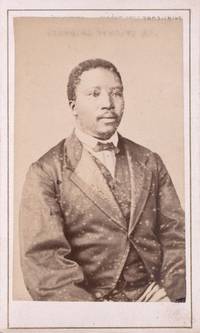
1870réf. 351805Paris 1870. Ink inscription on verso. Spotting in the image the image mounted upside down on the mount. Ink inscription on verso. unknown books
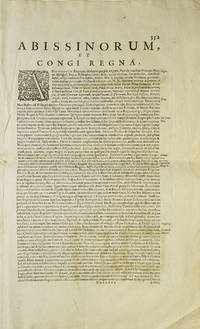
1638réf. 263796Amsterdam 1638. Copper engraved map colored in outline letterpress text on verso Abissinourm et Congi Regna Folios 352-353. 1 vols. Folio map 345 x 495 mm. Outline color. Small repairs to Nubia along old fold chiefly infill of blank areas. Very good. Copper engraved map colored in outline letterpress text on verso Abissinourm et Congi Regna Folios 352-353. 1 vols. Folio map 345 x 495 mm. Hand-colored map from the 1638 edition of the Mercator-Hondius Atlas. Includes frequent references to Amazons and locates "populi Antropophagi" just north of the Congo and Tritons and Sirens in Lake Victoria. Describes Nubia as "olim Christianam" and locates famous biblical queens of the time of Solomon along the banks of the Nile river. May locate the kingdom of Prester John on top of Amara Mons in the center of the map. A beautifully hand-colored map in excellent condition. Koeman I 8720:1A unknown books
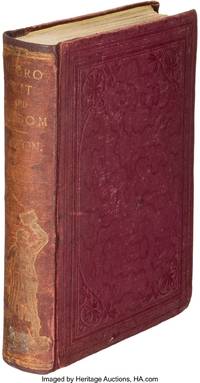
1865réf. 158421865. Burton Richard Francis. Wit and Wisdom from West Africa. Or a Book of Proverbial Philosophy Idioms Enigmas and Laconisms 1865 linguistic and cultural compilation assembled by the British explorer and scholar whose travels and writings contributed significantly to nineteenth century European knowledge of Africa and the Middle East. Burton's work records proverbs idioms and aphoristic expressions drawn from several West African languages reflecting a broader nineteenth century effort by travelers and linguists to document oral traditions and vernacular speech. By collecting proverbial literature from multiple language communities the book preserves elements of philosophical and rhetorical traditions transmitted through oral culture across West Africa. Burton Richard Francis. Wit and Wisdom from West Africa. Or a Book of Proverbial Philosophy Idioms Enigmas and Laconisms. London: Tinsley Brothers 1865. First edition. The text gathers sayings and proverbial expressions from a range of West African languages including Wolof Kanuri Oji Ga Yoruba Efik and Mpangwe presenting them as examples of moral reflection wit and philosophical thought embedded in everyday language. Burton's compilation reflects his interest in comparative language study and the intellectual traditions preserved in oral literature. Octavo volume containing preliminary pages and 455 pages of text. During the nineteenth century European scholars increasingly recognized the importance of recording oral traditions and vernacular expressions as sources of cultural and linguistic knowledge. Proverbs and idioms formed a particularly valued category of material because they condensed ethical teaching social norms and rhetorical style into concise expressions widely shared within communities. Burton's work belongs to this tradition of linguistic documentation and reflects the broader Victorian era interest in comparative philology and ethnographic study. Octavo volume bound in original purplish red publisher's cloth stamped in blind with gilt lettering on the spine all edges trimmed later endpapers and bookplate of Dwight Edwards Marvin on the front pastedown. Rebacked with original backstrip laid down; wear to edges and corners rubbing to boards discoloration to backstrip with partial loss of gilt faint yellowing to text block edges scattered foxing and light staining split between half title and title with possible loss of a leaf and repair at the inner margin of the final leaf with penciling to verso. Text block very good in a good binding. Penzer pp. 75-76. unknown books
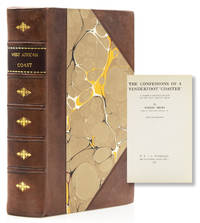
1927réf. 318085London: Witherby 1927. First edition. Illus. 280pp. 8vo. Bound in modern three quarter mottled calf and marbled boards Fine. First edition. Illus. 280pp. 8vo. Witherby unknown books
1590réf. 40297N.p. 1590. Image area 19-1/2" x 12-7/8" in 28" x 23" mat. 1 vols. Imperfectly colored along crease down center small and unobtrusive dampstain in one corner. Still a nice piece. Image area 19-1/2" x 12-7/8" in 28" x 23" mat. 1 vols. Abraham Ortelius 1527-98 was a Flemish geographer of German origin. His major work Theatrum Orbis Terrarum 1570 with later revisions and addendums was the first modern atlas. It was based on contemporary charts and maps and contained a collection of plates engraved by Frans Hagenberg in a uniform size and format. The Theatrum preceded the first atlas of Ortelius' good friend Gerardus Mercator. In fact popular sentimental legend has it that Mercator delayed publication of his own work so that his younger friend's would appear first. Although this simply isn't true Mercator wasn't ready the legendary cartographer did complement Ortelius for the "care and elegance" he had put into the Theatrum. unknown books
1879réf. 516731879. South Africa. Cape of Good Hope. Acts of the Parliament of the Colony of the Cape of Good Hope Sessions 1879 1880 1881 1882. Cape Town: Soul Salomon and Co 1879-1882. Four books in one with individual paginations. Octavo 6" x 9-1/2". Four books in printed wrappers bound into later quarter cloth over marbled boards with typewritten spine label. Some rubbing to spine ends with minor chip to head of spine. Ex-library. Location label to spine small inkstamp to title page. $125. The Cape Colony was established by the Dutch East India Company in 1652. After occupying the colony from 1795-1803 Great Britain assumed formal control in 1806. British possession was recognized by the Anglo-Dutch treaty of 1814. A parliament was established in 1854. It existed until the colony was incorporated into the Union of South Africa in 1910. South Africa became an independent republic in 1961. These volumes offer valuable insight into the administration of the colony in its final decades. No complete sets and few individual volumes listed on OCLC. Sweet & Maxwell A Legal Bibliography of the British Commonwealth 7:124. unknown books
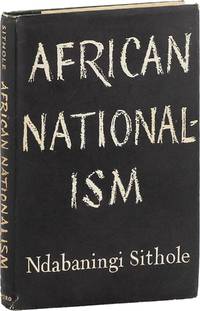
1959réf. 90443Cape Town & London: Oxford University Press 1959. First Edition. First Impression. Octavo 19cm; dark green cloth with titles stamped in gilt on spine; dustjacket; x174pp. Spine ends nudged lower corners bumped though still sharp; contents clean; Very Good or better. Dustjacket is unclipped priced 12s.6d. net edgeworn with gentle sunning to spine some toning and dust-soil to rear panel wrinkling to spine ends; Very Good. A volume explaining African nationalism to non-Africans by Sithole 1920-2000 founder and one of the chief architects of the Zimbabwe African National Union party ZANU a militant organization that opposed the Rhodesian government in 1963. Oxford University Press unknown books
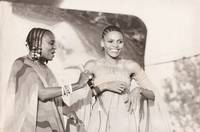
1978réf. 167648Paris: Sipa Press 1978. Vintage oversize borderless photograph of South African singer actress and civil rights activist Miriam Makeba onstage with her daughter Bongi circa 1978. Stamp of Sipa Press on the verso along with annotations in manuscript ink and pencil. Although Makeba was an outspoken civil rights activist even at the height of her popularity in the US her marriage to Black Panther Party leader Stokely Carmichael in 1968 led to decreased support from white Americans. Her visa was revoked by the US government shortly after her marriage forcing the couple to relocate to Guinea. 12 x 7.75 inches. Very Good with moderate toning on the recto. Sipa Press unknown books
1853réf. 65055London: The London Printing and Publishing Company n.d. 1853. First edition 4to pp. 11 1 208; text printed in double column engraved portrait frontispiece of Sir Ralph Abercrombie by W. Finden after Hoppner; 4 double-page Tallis maps hand-colored in outline with vignette illustrations of Cape Colony; Natal and Kaffraria; western Africa; and the islands of the Atlantic - Bermuda Madeira Azores and Cape Verde; tables in the text; bound in the publisher's original bright red blind-stamped florally decorated and textured cloth; gilt cover national symbol and title spine titles gilt and decorated. Binding with some edge wear; maps and text block in very good condition. Pages 1-12 consist of a list of subscribers and a "Home-Colonial Directory of Manufacturers Warehousemen &c." alphabetically organized and with description of good services on offer. The 4 maps are engraved by J. Rapkin. Maps are decorated with vignettes by H. Warren and H. Winkles engraved by J. Rogers W. Lacey G.R. Manwaring and W. Wrightson. A history and chronology of the British involvement in the British colonies as given in the title; OCLC notes that an illustrated and engraved title page appears only in Vol. 1 of this series of works by R. Montgomery Martin Esq. c. 1803-1868 the "late treasurer to the Queen at Hong Kong and member of Her Majesty's Legislative Council in China." Robert Montgomery Martin's History of the British Colonies was first published in 1834-5 and "occupies five volumes and slightly more than 3000 loosely-printed octavo pages. It offered the first comprehensive account of the globe-spanning version of the British empire which had taken shape in the course of the Napoleonic wars placing India and Canada under the same umbrella as Malta and Gozo." This "history" went through several iterations the last being The British Colonies issued in the 1850s which boasted a quite impressive list of subscribers including the Queen the Earl of Derby and the third Earl Grey" see Alex Middleton Robert Montgomery Martin and the origins of 'Greater Britain' at oradotoxdotacdotuk. The London Printing and Publishing Company, n.d. unknown books
1963réf. 63163London: Andre Deutsch 1963. First edition 8vo pp. 271 1; frontispiece plus 10 photographic illustrations on rectos and versos of 4 plates; light spotting on frontispiece and title page else a fine copy in a very good unclipped dust jacket. This copy inscribed by Mboya "To Mr. J. Wayne Fredericks with my personal best wishes and in expression of our appreciation for your interest and active support for Africa's freedom. T. Mboya. 4/3/64." Thomas Joseph Odhiambo Mboya 1930-1969 was "a Kenyan trade unionist educator Pan-Africanist author independence activist and statesman. He was one of the founding fathers of the Republic of Kenya" and he was the first Secretary-General of the Kenya African National Union. "Mboya's role in Kenya's politics and transformation is the subject of increasing interest especially with the prominence of American politician Barack Obama. Obama's father Barack Obama Sr. was a US-educated Kenyan who benefited from Mboya's scholarship program in the 1960s going on to get married during his stay there siring the future Illinois Senator and President. Obama Sr. had seen Mboya shortly before the assassination and testified at the ensuing trial. Obama Sr. believed he was later targeted in a hit-and-run incident as a result of this testimony" Wikipedia. Jacob Wayne Fredericks 1917-2004 was an American businessman and diplomat who served as the United States Deputy Assistant Secretary of State for African Affairs from 1961 until 1967 and often acted as a liaison with African liberation groups. Andre Deutsch unknown books
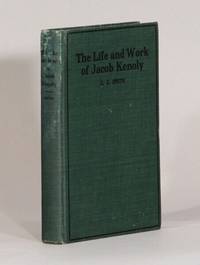
1912réf. 72979Cincinnati: Methodist Book Concern 1912. 8vo pp. viii 2 160; portrait frontispiece and 9 plates from photographs of the Liberian mission; original full green cloth; light rubbing and edgewear owner's signature on free endpaper near fine. Jacob Kenoly was a black American who set out head a mission in Liberia. Methodist Book Concern unknown books
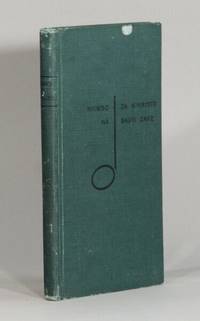
1959réf. 73264Soni: The Vuga Press 1959. 8vo pp. 304; 287 hymns with lyrics in Swahili; full original green cloth; edgewear dime-sized stain on upper board owner's signature on free endpaper text clean and sound; very good. Luther Seminary only in OCLC. The Vuga Press unknown books
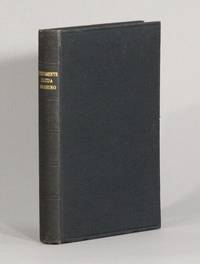
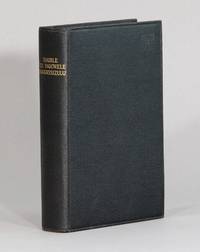
1960réf. 73352London: British and Foreign Bible Society 1960. 7" x 4½" pp. 382 2 133 3; original black cloth stamped in gilt on spine; very good sound and clean. On the verso of the title page: "The New Testament and Psalms in Sintebele Tabele." The Ndebele are a Bantu-speaking people of Zimbabwe and the Transvaal of South Africa. U. Cal and the BL only in OCLC. British and Foreign Bible Society unknown books
1931réf. 73360Londres: Société biblique britannique et étrangère 1931. 7" x 4½" pp. 47 1; original limp black cloth stamped in blind edges stained red; near fine. Mamvu is a Central Sudanic language of northeastern Congo. Eleven in OCLC only Stanford and the American Bible Society in the U.S. Société biblique britannique et étrangère unknown books
1956réf. 73351London: British and Foreign Bible Society 1956. 7" x 4½" pp. 456; original blue cloth stamped in gilt on upper cover and spine; very good sound and clean. The Gbagyi are an ethnic group in central Nigeria. British and Foreign Bible Society unknown books
1956réf. 73333London: British and Foreign Bible Society 1956. First edition of the New Testament in Ndau; 6¾" x 4½" pp. 707 1; text in Ndau throughout; a very good sound and clean copy in original black cloth stamped in gilt on upper cover and spine edges stained red. Nadu a Bantu language and ethnic group indigenous to south-eastern Zimbabwe. British and Foreign Bible Society unknown books
2006réf. 73332Harare: Bible Society of Zimbabwe 2006. 7½" x 5" pp. 856; 253 1; text in double column an in Shona throughout; generally fine throughout in original maroon cloth stamped in gilt on upper cover and spine. Bible Society of Zimbabwe unknown books
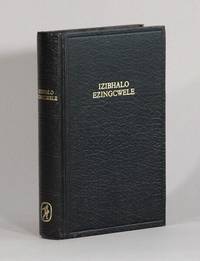
1999réf. 73354Cape Town: UMbutho weBhayibhile woMzantsi-Afrika 1999. Twenty-sixth printing; 7½" x 5¼" pp. 1234; textin double column; original black cloth stampped in gilt on upper cover andspine edges stained red; very good sound and clean. With a presentation from a South African priest dated May 2000 on front free endpaper and a second inscription on the verso undated. Xhosa is an indigenous ethnic group of the Bantu language family native to Southern Africa. UMbutho weBhayibhile woMzantsi-Afrika unknown books
1982réf. 73331Cape Town: Lekgotla la Baebele la Afrika Borwa 1982. Third South African Impression 7¼" x 4¾" pp. 4 7-1039 1; 321 1; text in double column and in Tswana throughout; original black leather stamped in gilt on spine edges stained red; very good sound and clean. The Batswana Tswana are a Bantu ethnic group native to Southern Africa. Lekgotla la Baebele la Afrika Borwa unknown books
1951réf. 73370London: British and Foreign Bible Society 1951. 7¾" x 5¼" pp. 4 797 3; 2 277 7; text in double column; near fine in original black cloth stamped in gilt on spine edges stained red. Small ownership signature at top of front free endpaper. Translated by missionaries of the American Board of Commissioners for Foreign Missions. About twenty people worked for the most part independently and the whole was edited by S.C. Pixley A.B.C.F.M. II Samuel chapter 18 vv. 24-33 which was omitted from the printing is supplied on p.797. Reprint of the 1883 edition see Darlow and Moule 9844. British and Foreign Bible Society unknown books