1 402 résultats
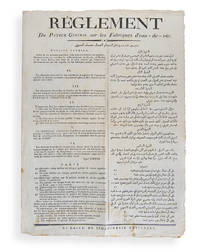
réf. 123044Cairo Egypt Impprimerie Nationale c. 1800. . Single broadside printed in parallel French and Arabic text 460 x 325 mm; type-set printed in dual French and Arabic presented in two columns leaf with wide margins uncut a little creased at outer edges and with fold lines along central horizontal and vertical folds light water-staining to lower edge overall very good condition. Napoleon Bonaparte's Egypt Campaign in 1798 lead to the establishment of the first printing press on the African continent preceding the well-known Egyptian Bulaq Press established by Muhammad Ali Pasha al-Mas'ud by over two decades. The press was predominantly formed to print proclamations and official statements in French with Arabic translations that were often poorly translated and rife with grammatical error for use as political propaganda for Napoleon's campaign in Egypt. The single-sheet documents were meant to be wall mounted and therefore are ephemeral in nature with very few copies surviving. The present example is a rare proclamation announcing the new tarifs and laws relating to the production of liquor in Egypt under Napoleonic rule. It was issued by Martin-Roch-Xavier Estève 1772-1852 the paymaster of Napoleon's Armée de l'Orient and contains six articles regulating the production and introducing tarifs of liquor production in the region. The broadside notes that distilleries need to be registered and needed to clearly distinguish themselves with large 'Fabrique d'Eau de Vie' lettering there is a stipulation that frequent inspections would be made and that the finished product needed to have a minimum of 18 percent alcohol content per volume. The raw materials listed in the proclamation include five qualities of fresh dates dried dates figs and raisins. Very scarce: No other copies located not in the Bibliotheque Nationale de France or any records showing in OCLC. Cairo, Egypt, Impprimerie Nationale, c. 1800. unknown
1800réf. 0008printed leaf 10 lines in Ottoman Turkish. Undated and without place of printing but apparently printed at the Imprimerie Nationale Cairo during the French Expedition to Egypt. The document is a proclamation concerning Napoleon Bonaparte's reply to a letter from the Ottoman Sultan Selim III stating that Napoleon and Selim are allies that no force can disturb their alliance and that all victories on both sides are the result of this alliance. Divan du Caire (the Napoleonic committee in Cairo)