18 706 résultats
1858réf. 139251858 Paris Hachette 1858. In-12, reliure de l'époque en demi chagrin vert, dos a nerfs orné, titre doré, tranches marbrées 2 feuillets non chiffrés VI-VII 2-378pp 1 feuillet non chiffré table. Bel exemplaire Edition originale de ce voyage sur le Nil, au départ de Khartoum en direction du Caire. Gay 1229.
réf. ROD0032660Compagie Universelle. 1866 ?. In-4. Relié. Bon état, Couv. défraîchie, Mors fendus, Intérieur frais. 500p. de souches certificats nominatifs. On y joint un volume de 36p. de renseignements concernant les titres de la Compagnie Universelle du canal de Suez édité en 1953, qui détaille l'histoire de la Société.. . . . Classification Dewey : 962-Egypte et Soudan
2000réf. R260185161NOV EDIT. 2000. In-Folio. Relié. Etat d'usage, Coins frottés, Dos abîmé, Intérieur frais. 592 pages augmentées de nombreuses illustrations en noir et blanc et couleur dans et hors texte, texte sur 3 colonnes.. . . . Classification Dewey : 962-Egypte et Soudan
réf. 22525Bruxelles, Ministère de l'Instruction Publique, 1960. 18 x 22, 45 pp + planches (97 figures en N/B), broché, bon état.
réf. 22526Bruxelles, Ministère de l'Instruction Publique, 1960. 18 x 22, 45 pp + planches (97 figures en N/B), broché, bon état.
réf. 22527Bruxelles, Ministère de l'Instruction Publique, 1960. 18 x 22, 45 pp + planches (97 figures en N/B), broché, bon état.
1983réf. 1219039IS-Edition; Nußloch, (1983). 143 Seiten; zahlr. Illustr. (auch farbig); 24 cm; kart.
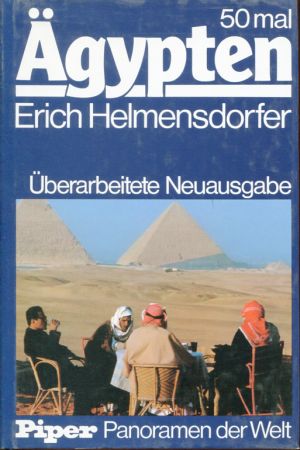
1979réf. 37340BBMünchen:, Piper, 1979. 8°. 338 S., sw-Abbildungen, gebunden [1. - 8. Tsd.]. (Besitzervermerk auf Schmutztitel; Einband leicht berieben; sonst gut erhalten) (=Piper-Panoramen der Welt)
réf. Jørgensen, MogensIn Pristine Condition. unknown
réf. Hopkins, Nicholas S., edIn Pristine Condition. unknown
20108vo., First Edition, with very numerous plates; original cloth, a near fine copy in the dustwrapper. This fine territorial unit went to Egypt in September 1914 and saw action at Gallipoli from May until the evacuation. It returned to Egypt in the spring of 1917 before transferring to France where it remained until the Armistice.
réf. 591413Mainz, Philipp von Zabern, 1982. In-4, reliure d’éditeur toile orange, 30 pp. (texte allemand), carte et 14 planches d’ill. photographiques en noir, et 41 pp. (texte arabe) (Sonderschrift, 12).
1998réf. 100059016Presses pocket 1998 poche. 1998. Broché. 9 volume(s). 9 romans: Pour L'amour De Philae + Maître Hiram et le roi Salomon + La Reine soleil + La sagesse égyptienne + Toutânkhamon l'ultime secret + L'affaire Toutânkhamon + Les Egyptiennes + Le moine et le vénérable + Imhotep l'inventeur de l'éternité
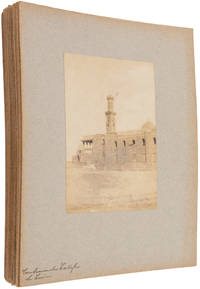
réf. 2112323Loose original gelatin silver photos measuring c. 11 x 16 cm mounted on card measuring c. 20 x 27. All photos with period pencil or ink captions in French on recto or verso of the mounts; most photos with period ink or pencil numbers on the mounts; two photos dated ""1905"" on the mounts. Several images mildly faded or with mild silvering several mounts with minor creases small tears or chipping on the extremities but overall a very good collection of interesting and unusual photos.Original large vernacular not commercial as more often encountered photos of Egypt taken by a French traveller in the early 20th century. Unlike most collections of Egyptian travel photos from this period these ones don't cover ancient temples and sites but instead focus on the life of contemporary Arabic Egypt. An unusual collection showing everyday life of Egypt with evocative street scenes in the early 20th century.Twenty-one photos depict Cairo and environs showing the Nile with feluccas and buildings on the banks narrow streets and shops of old Cairo the gate to the Delta Barrage Al-Rifa'I Mosque mausoleums and tombs of the Mamluks in Cairo Necropolis mud-brick buildings in Cairo environs and scenes with the local people. Four photos show native mud-brick houses in Memphis and local people; two photos depict Muslim inhabitants of Ismailia and their huts made of dried grass. Eight depict the beach at Attaka modern-day Suez Governorate of Egypt the Red Sea and steamers coming in or out of the Suez Canal and a native camel rider portrayed near Attaka. unknown
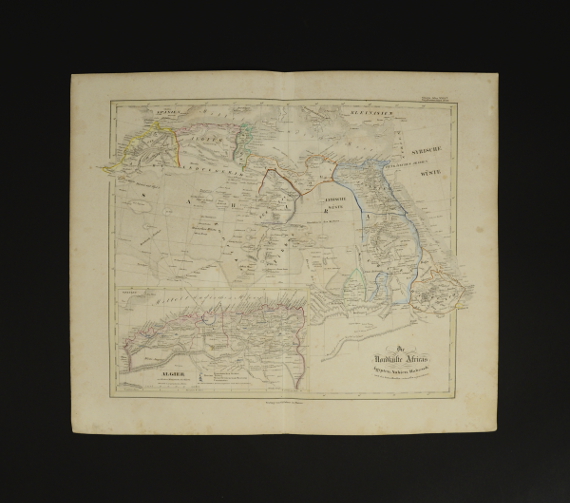
1840réf. 40826Mainz, G. Faber, um 1840. 39,5 x 48 cm. Mittig gefaltet (wie erschienen).
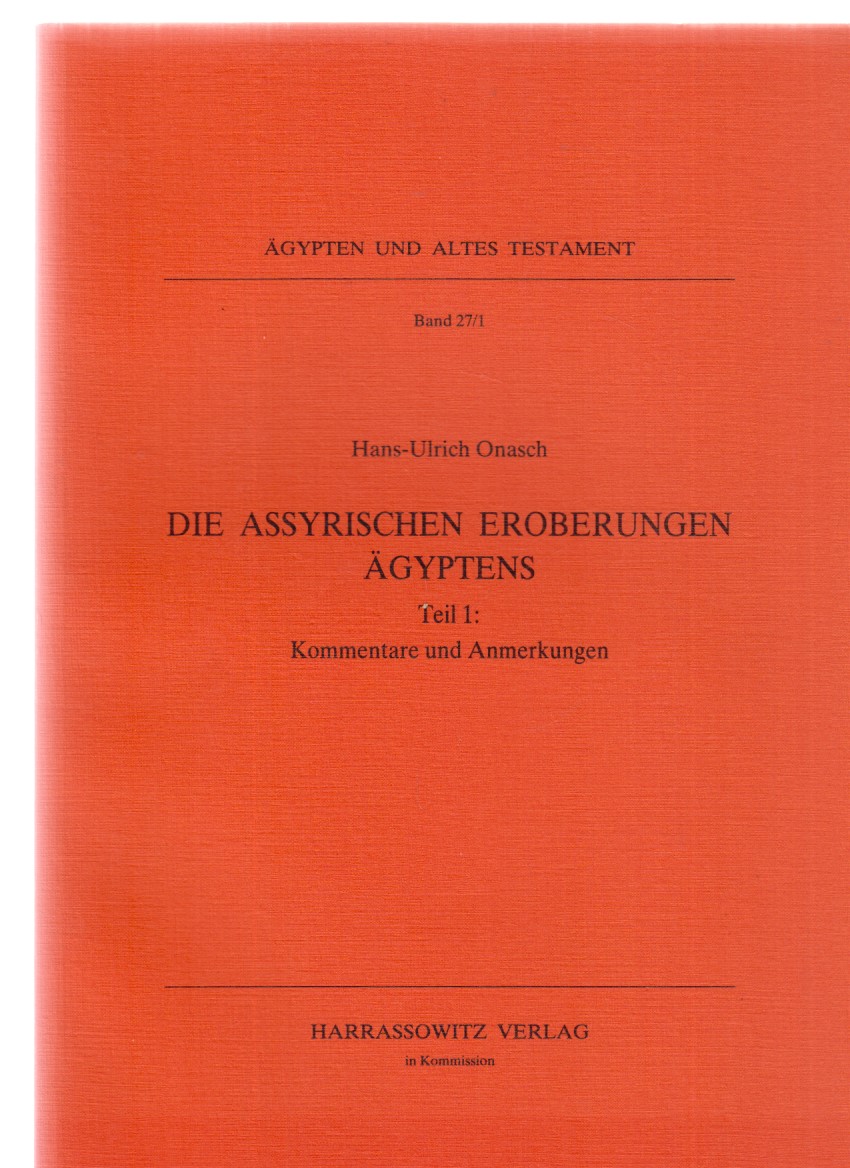
1994réf. 1222911Harrassowitz Verlag; Wiesbaden, 1994. XIX; 264 S. und Illustr. auf 10 Tafelseiten / VII; 191 S.; 30 cm; kart. / 2 Bde.
1904réf. 006452Berlin, Dietrich Reimer (Ernst Vohsen), 1904. II, 244 S. Orig.-Leinenband. Das Vordergelenk oben ca.5 cm aufgeplatzt und der Vorderdeckel etwas gewölbt sowie mit alten Feuchtigkeitsspuren, insgesamt handelt es sich jedoch um ein ordentliches, noch gut erhaltenes Exemplar mit nur leichten Gebrauchsspuren.
1832réf. 003879Weimar, Im Verlage des geographischen Instituts, 1832. V, 75 S., 11 (von 12) Karten. Etwas späterer Halblederband. Angebunden sind das lithographierte Titelblatt (Eduard Schuler nach Overbeck) und 21 Stahlstiche aus der Carlsruher Bibel von 1836. "This atlas has to be regarded as one of the oldest and most detailed works of its kind in German-speaking Europe. 18 copies have been identified in libraries and private collections" (Espenhorst: Petermann's Planet, Vol. I, p. 165). Der Einband berieben und der Vorderschnitt mit größerem altem Tintenfleck, der bis in den Seitenrand des Textteils hineinläuft. Durchgängig stockfleckig, insgesamt handelt es sich jedoch um ein noch ordentliches Exemplar dieses frühen Versuchs, sich der biblischen Realien mittels Landkarten zu versichern.
1795réf. 117067H. Agasse 1795 A Paris, Chez H. Agasse, An III de la République [1795], 1 volume in-4 de 195x250 mm environ,(1) f., 16 pages (Faux-titre, page de titre, Explication des planches) et 23 planches. Complet du frontispice (dessiné par Ducoudray et gravé par Pauquet) et des 22 planches sur double-pages. Pleine basane d'époque, dos lisse portant titres dorés sur pièces de cuir rouge et vert foncé, fers dorés, frise d'encadrement dorée sur les plats, roulette dorée sur les coupes, toutes tranches dorées, gardes de très beau papier marbré. Coiffe de queue et petites parties de cuir manquantes, reliure restaurée par endroits, quelques rousseurs au verso de certaines planches, sinon bon état général.
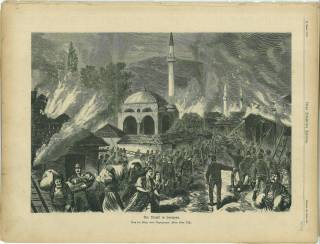
1879réf. 660AGWien - Leipzig, Neue Illustrirte Zeitung, 1879. OHolzstich. ca. 38 x 29 cm., Abbildung
1973Very Good Arabic Early edition of this critical edition of Saad Zagloul's memoirs prepared by Mustafa al-Nahhas Jabr Pasha. Zaghloul was an Egyptian revolutionary and statesman, who was the leader of Egypt's nationalist Wafd Party. He served as Prime Minister of Egypt from 26 January 1924 to 24 November 1924. By working as a Europeanized lawyer, Zaghloul gained both wealth and status in a traditional framework of upward mobility. Despite this, Zaghloul success can equally be attributed to his familiarity with the Egyptian countryside and its many idioms. In 1918, he became politically active, as the founding leader of the Wafd Party, for which he was later arrested. Zaghloul became increasingly active in nationalist movements, and in 1919 he led an official Egyptian delegation (or wafd, the name of the political party he would later form) to the Paris Peace Conference demanding that the United Kingdom formally recognize the independence and unity of Egypt and Sudan (which had been united as one country under Muhammad Ali Pasha). The British in turn demanded that Zaghloul end his political agitation. When he refused, they exiled him to Malta, and later to Seychelles. In 1922, he was moved from Seychelles and was taken to Gibraltar due to ill health arriving there onboard HMS Curlew and he was released in 1923. Zaghloul's absence caused disturbances in Egypt, ultimately leading to the Egyptian Revolution of 1919. Upon his return from exile, Zaghloul led the Egyptian nationalist forces. Mu??afâ al-Nahhâs Pasha, (1879-1965), a statesman who, as the leader of the nationalist Wafd party, was a dominant figure in Egyptian politics until the revolution of 1952. A lawyer by profession, Na??âs was appointed a judge in the National Court at ?an?â in 1914. Soon after World War I he joined the recently formed Wafd; he was exiled with Sa'd Zaghlul in the early 1920s, and assumed the chairmanship upon Zaghlul's death in 1927. An imitation leather bdg., Arabic lettered gilt on front board. Foolscap 8vo. (18 x 12 cm). In Arabic. 280, [2] p., a portrait of Zaghloul, b/w ills. Offset lithography. OCLC 23485313, 784459538, 1044672960.
1910Very Good Turkish, Ottoman (1500-1928) In modern aesthetic full leather bdg. in Ottoman style. Roy. 8vo. (24 x 17 cm). In Ottoman script (Old Turkish with Arabic letters). 184 p., numerous b/w plates. First and only edition of this scarce travelogue which was planned for fifteen days on January 19, 1909, but took about forty days, containing a first-hand travel account of Egypt in 1909, an Islamic country that began to modernize at the beginning of the 20th century, written by an Ottoman intellectual, one year after the Second Constitutional Regime. This rare book contains early descriptions of the Egyptian municipality, the Red Crescent, gardens and parks, urbanism, zoo, and botanic gardens, tramps, bridges, social life, folkloric customs, Mahmil Alays, cemeteries, music and history of art, hotels, Nile and many historical heritages, architecture, etc. Agop [or Agob] Matyosyan was one of the first Armenian printers to apply during the inspections of printing houses that were done in accordance with the Nizam-name-i Cedid (Jareeda-i Mahakim, No. 429 (13 Jamazia al-awwal 1305) in the late Imperial Ottoman period. Hegira: 1327 = Gregorian: 1910. Özege: 14459. OCLC: 476243661 / 16347814.
1844Very Good Turkish, Ottoman (1500-1928) n original cloth bdg. Large roy. 8vo. (25 x 17 cm). In Ottoman script. 90 p. Hegira: 1260 = Gregorian: 144. First, only and extremely rare Ottoman Turkish translation and 'Bulaq Edition' of this account of Napoleon described as 'Extrait du Memorial de Sainte-Helene. The Bulaq or El-Amiriya Press is the first official and governmental printing press to be established in Egypt, and function according to industrial printing basis, causing not just a qualitative but also a quantitative and knowledgeable leap in science throughout the Arab region. The Bulaq Press was part of Mohamed Aly's inclusive development plans for the modernization of Egypt. The Khedive first initiated his plans by establishing a strong Egyptian army; one that is capable of strengthening his grip on the country. It thus became essential that this army be provided with the necessary instructive and educational books and material, by which to learn military plans and techniques, as well as the different types of artillery and laws that define a soldier's duties and rights. A pressing need eventually developed for establishing a governmental press; one that should provide such material. By 1815 CE., Mohamed Aly initiated the process of bringing the art of printing to Egypt by sending the first official delegation, headed by Nicole El Masabki, to Milan in Italy, to learn the principles of printing. The same delegation was later able to return and establish the first official press in Egypt. This rare and unusual book published and printed in Bulaq Press shortly after the foundation of the printing house. After his final defeat at Waterloo and his subsequent second exile, Napoleon Bonaparte spent 10 weeks on board the HMS Northumberland as it sailed him to the far-flung reaches of the South Atlantic. His destination was St. Helena, a small and windswept island under British control. Almost 2000 kilometers west of Africa, St. Helena measured only 122 square kilometers (47 square miles) - half the size of his former home-in-exile, Elba. His intended home, Longwood, was not finished by the time he arrived and so Bonaparte stayed with a British family - the Balcombes- at their residence The Briars. He made a great friend of the family's younger daughter Betsy and the pair got on famously. Napoleon was given very few privileges. Once he met a slave and desired to free him, the English government denied his request on the grounds that he was trying to align with the slaves and start an insurrection. Napoleon spent most of his days dictating his memoirs to his generals, reading plays, novels, and the latest books from Europe that his captors would allow him. He spent six years there, though there are really only anecdotes to describe his life at the time, which, for the most part, carry expressions of loneliness and boredom. Extremely rare. Only six paper copies found in OCLC: 777091409. Cairo FKT 185.; Özege 10976. First Edition.
1967Very Good Arabic First book of three of the first edition of this early set on Egyptian working class and Arabian labour, printed in Cairo by one of the pioneer intellectual Amin Izz al-Din, (1921-2001). This rare book includes the formative period of the Egyptian working class especially between the years 1882-1919, from the British occupation of Egypt in 1882 which was crystallized many of the economic trends which had been maturing since the era of Muhammad Ali Pasha of Kavala (1769-1849), to Tawra [i.e. The Egyptian Revolution of 1919] which was a countrywide revolution against the British occupation of Egypt and Sudan. It was carried out by Egyptians from different walks of life in the wake of the British-ordered exile of the revolutionary Egyptian Nationalist leader Saad Zaghlul, and other members of the Wafd Party in 1919. Before the Revolution, by 1914 foreign capital represented 70 per cent of the total capital invested in Egypt. According to Izz al-Din, from 1899 to 1903 at least eight workers' associations were formed, mainly under Greek, Italian and Armenian leadership. But the steady expansion of capitalist relations of production in Egypt and the continuing British occupation provided the conditions which soon led to the appearance of native Egyptian working-class organization and leadership. The crash of 1907 produced a sharp rise in the cost of living and provided the economic incentive for another round of working-class struggle. At the same time, the Egyptian national movement was about to assert itself as a significant new political force. The conjuncture of these factors was the basis for sustained struggle and organization of native Egyptian workers. [.] The strike wave led to the formation of new and more soundly organized unions. There were 43 trade unions functioning in 1919-1920: 19 in Cairo, 18 in Alexandria, and 6 in Port Said, Damietta, Damanhour and Mahalla al-Kubra. [.] In the mid-1920s many enterprises fired workers and attempted, with some success, to disregard or revise agreements reached with trade unions in the first years after the 1919 uprising. There were series of strikes in 1927 in response to these actions - the Alexandria Water Company, Alexandria Tram Company, railway porters, silk weavers, Cairo cigarette workers and Suez Canal workers at Port Said. But by 1927 the number of trade unions had dropped to 62 with a total membership of somewhat more than 21,000. (Source: Formation of the Egyptian Working Class / MERIP). Amin Izz al-Din was a thinker and historian of the Egyptian trade union movement and a prominent historian of the Egyptian labour movement. He was one of the most prominent popular and labour leaders, and he has spent his life serving this movement. Izz al-Din held various leadership positions in the interest of workers and social security, as well as political organizations, as he previously worked in the Office of Arab Affairs at the Presidency of the Republic, and contributed to drafting labour legislation in 1970 and laying the foundations on which the Federation of Egyptian Workers was based. Bachelor of Arts from Cairo University, and a Masters degree from Oxford University British Labour Studies: A number of books have been written, foremost of which is "The History of the Egyptian Working Class", in 3 parts. Half leather bound in Egyptian style raised six bands to spine, Arabic lettered gilt in second and fourth. 'Abdelzehar Bnding' stamp on back endpaper. Demy 8vo. (21 x 14 cm). In Arabic. 213, [1] p. OCLC 23517320.
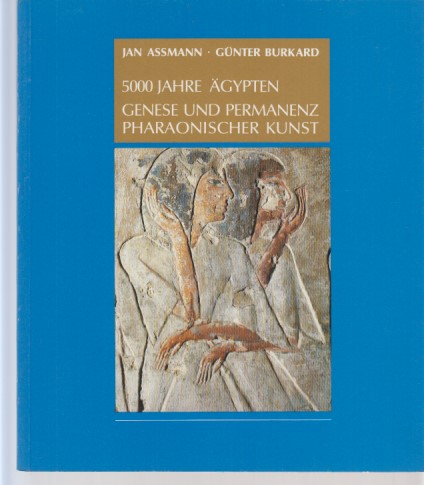
1887Very Good Turkish, Ottoman (1500-1928) First and only edition of this rare book on the history of Egyptian kings (pharaohs) by an Ottoman statesman and one of the most famous painting collectors in history. Halil Serif was educated in France, where his studies have primarily been on the realm of political science. Following his return to Egypt, he became for a brief period the second secretary of Abbas Pasha, the governor (1848-1854), and a member of the Council of Justice (Ahkam-i Misriye). Thereafter, he became the Director of the Office of Translation and of the Bureau of Correspondence within the body of Egyptian foreign affairs administration for five years -approximately between 1850 and 1855. Said Pasha (1854-1863), the successor of Abbas as governor of Egypt, then appointed Halil Serif as the commissioner in charge of Egyptian exhibits sent to Paris for the international exposition of 1855. Also known for his own great painting collection, Halil Serif must have stayed in Paris for about a year. He was still there in February and March, 1856, when the Congress of Paris had met to institute peace after the Crimean War. The Ottoman Empire was represented at that Congress by its Grand Vizier, Mehmed Emin Ali Pasha. While Halil Bey was in St. Petersburg, an article on Egyptian history which he had written appeared in Mecmua-i Fünun (the journal of the newly founded Cemiyet-i Ilmiye-i Osmaniye), which began its publication in 1862. 'Kudema-i mülûk-i Misriye Tarihi' (History of the Ancient Egyptian Kings) was published serially in volumes of 1 and 2. Later on, the articles were published by Ebüzziya's press in the form of a book. These articles also brought Halil Bey to the notice of Europeans. (Source: Halil Serif Pasha: Ottoman diplomat and statesman, by DAVISON, Roderic H.).