2 937 résultats
réf. 49247Tunis, Brami, sans date, grand in 8° oblong broché, 2 pages de texte suivies de 59 pages non chiffres d'illustrations photographiques ; couverture fanée.
Paris, Albert Méricant, (1922), in-16, br. edit., pp. IV, 286, (2). Ritratto fotografico dell'autore in antiporta, e suo invio autografo ad Amerigo Manzini.
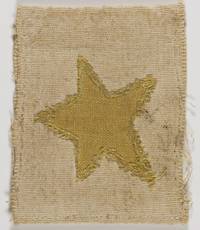
1943réf. 53630Tunisia 1943. Nearly Fine. Five-pointed yellow cloth star sewn onto plain beige cloth 7.3 by 9 cm. Yellow dye somewhat faded else in fine state of preservation. Specimen of the yellow star imposed on the Jewish population of Tunisia in March 1943 as a mark of the slave laboror. Tunisia was the only Islamic country to come under Nazi rule at first indirectly through the Vichy regime in France between 1940 and its liberation by Allied forces on May 7 1943. In response to the Allied invasion of Algeria and Morocco German and Italian forces invaded Tunisia on November 9 1942. By the end of November the Germans took the first anti-Jewish move by arresting four of the community leaders including Moïse Borgel the president of the Jewish congregation. "In addition to the governor-general's sympathetic attitude -- and in some degree to the pro-Jewish attitude of Bey Sidi Mohammed al-Mounsaf -- the Italians also in practice interfered with the application of the anti-Jewish laws" E.H. The dignitaries were released after a week following the intervention of the mayor of Tunis and the Italian consul. Because of objections by the Italians the edict to wear the star does not appear to have been generally enforced with rigor and was only formally imposed in two cities Sfax and Tunis. While 5000 Jews had originally been put on forced labor in thirty locations and camps along the front line "at the time of the collapse and surrenter in early May 1943 only sixteen hundred Jews were employed on forced labor" E.H. Given the relatively small labor force and the lack of zeal in imposing the anti-Jewish ordinances it is clear why so few of these yellow badges have survived. References: I. Gutman ed. Encyclopedia of the Holocaust vol. 4 pp. 1521-23. unknown
1943réf. 53630Tunisia 1943. Nearly Fine. Five-pointed yellow cloth star sewn onto plain beige cloth 7.3 by 9 cm. Yellow dye somewhat faded else in fine state of preservation. Specimen of the yellow star imposed on the Jewish population of Tunisia in March 1943 as a mark of the slave laboror. Tunisia was the only Islamic country to come under Nazi rule at first indirectly through the Vichy regime in France between 1940 and its liberation by Allied forces on May 7 1943. In response to the Allied invasion of Algeria and Morocco German and Italian forces invaded Tunisia on November 9 1942. By the end of November the Germans took the first anti-Jewish move by arresting four of the community leaders including Moïse Borgel the president of the Jewish congregation. "In addition to the governor-general's sympathetic attitude -- and in some degree to the pro-Jewish attitude of Bey Sidi Mohammed al-Mounsaf -- the Italians also in practice interfered with the application of the anti-Jewish laws" E.H. The dignitaries were released after a week following the intervention of the mayor of Tunis and the Italian consul. Because of objections by the Italians the edict to wear the star does not appear to have been generally enforced with rigor and was only formally imposed in two cities Sfax and Tunis. While 5000 Jews had originally been put on forced labor in thirty locations and camps along the front line "at the time of the collapse and surrenter in early May 1943 only sixteen hundred Jews were employed on forced labor" E.H. Given the relatively small labor force and the lack of zeal in imposing the anti-Jewish ordinances it is clear why so few of these yellow badges have survived. References: I. Gutman ed. Encyclopedia of the Holocaust vol. 4 pp. 1521-23. unknown books
1924réf. 49620Baillière 1924 2 volumes in-12 broché, 352- 390 pp. Figures dans le texte. Couverture du second volume déliée, dos fragile.
1975réf. 100149240Marabout 1975 in12. 1975. Broché. Ce guide de voyage de la collection Marabout explore les vestiges de la présence romaine en Afrique du Nord. Il propose un itinéraire à travers les anciennes provinces romaines de la Tunisie (Africa vetus et Africa nova) à l'Algérie (Numidie Maurétanie césarienne) et jusqu'au Maroc (Maurétanie tingitane) en s'appuyant sur des illustrations en noir et blanc
1903réf. 100152307F. R. de Rudeval Editeur 1903 in4. 1903. Broché. Ouvrage scientifique de Léon Pervinquière publié en 1903 dédié à l'étude géologique de la Tunisie centrale. Il décrit les formations géologiques notamment les argiles bariolées gypsifères et s'inscrit dans une politique de conservation patrimoniale avec la BNF
réf. 39020Tunis Publications de l'Université de Tunis 1974 in 8 (24x16) 1 fort volume broché, 322 pages [1]. Faculté des Lettres et Sciences Humaines de Tunis, Histoire, volume XV. Bon exemplaire ( Photographies sur demande / We can send pictures of this book on simple request )
1895réf. 64375Vve Ch. Dunod & P. Vicq, éditeurs 1895 In-8 14,5 x 22 cm, reliure de l’éditeur pleine toile verte, dos lisse, report auteur et titre sur le dos et le premier plat de couverture, 253 pp., 5 planches repliées in fine. Exemplaire en bon état.
réf. CZC-11334Œuvres complètes de Volney, précédées d'une notice sur la vie et les écrits de l'auteur. Contient: Les ruines ou méditations sur les révolutions des empires - Voyage en Égypte et en Syrie - Tableau du climat et du sol des États Unis d 'Amérique suivis d 'éclaircissements sur la Floride , sur la colonie française à Scioto , sur quelques colonies canadiennes et sur les sauvages - Recherches sur l'histoire ancienne - Leçons d' histoire , Histoire de Samuel ; État physique de la Corse - l'Alphabet européen appliqué aux langues asiatiques ; Simplification des langues orientales , L'Hébreu simplifié - Littérature et philosophie mêlée. Penseur et philosophe incroyablement fécond, on le considère à juste titre comme le père de l'anthropologie tellement son approche tant de l'Egypte, des Etats-Unis, que de la Corse était nouvelle, globale, précise et philosophique. Son oeuvre demeure un jalon déterminant de la pensée française, révolutionnaire dans sa manière d'aborder les choses. Fort vol in-4, relié demi cuir, 26x18, très bel état intérieur, 778 pages, toutes tranches jaspées, cartes et gravures ( trace de mouillures sèches). Paris, Firmin Didot 1852
1960Roma, 1960, 28 agosto, copertina illustrata a colori in fascicolo originale completo di, pp. 32 de "La Tribuna illustrata" .