3080 resultados
1899ref. 91742London: Her Majesty's Stationery Office 1899. Presumed First Edition First Printing. Wraps. Good. 9 1 pages and 36 pages. Tabular Data. This item has been disbound from a larger volume and now has a stiff blue cover protecting it. The British Central Africa Protectorate BCA was a British protectorate proclaimed in 1889 and ratified in 1891 that occupied the same area as present-day Malawi: it was renamed Nyasaland in 1907. British interest in the area arose from visits made by David Livingstone from 1858 onward during his exploration of the Zambezi area. This encouraged missionary activity that started in the 1860s undertaken by the Universities' Mission to Central Africa the Church of Scotland and the Free Church of Scotland and which was followed by a small number of settlers. The Portuguese government attempted to claim much of the area in which the missionaries and settlers operated but this was disputed by the British government. To forestall a Portuguese expedition claiming effective occupation a protectorate was proclaimed first over the south of this area then over the whole of it in 1889. After negotiations with the Portuguese and German governments on its boundaries the protectorate was formally ratified by the British government in May 1891. As late as 1888 the British Foreign Office declined to accept responsibility for protecting the rudimentary British settlements in the Shire Highlands despite unsubstantiated claims by the African Lakes Company of Portuguese interference with their trading activities. However it also declined to negotiate with the Portuguese government on their claim that the Shire Highlands should be considered part of Portuguese East Africa as it was not regarded by the Foreign Office as under effective Portuguese occupation. In order to prevent Portuguese occupation the British government sent Henry Hamilton Johnston as British consul to Mozambique and the Interior with instructions to report on the extent of Portuguese rule in the Zambezi and Shire valleys and the vicinity and to make conditional treaties with local rulers beyond Portuguese jurisdiction. These conditional treaties of friendship did not amount to the establishment of a British protectorate but prevented those rulers from accepting protection from another state. In response to a Portuguese incursion Johnston's deputy John Buchanan declared a Shire Highlands Protectorate in Johnston's absence despite the contrary Foreign Office instructions. It seems probable that Buchanan's action made without reference to the Foreign Office but following instructions that Johnston had left was to prevent any further advance by the Portuguese rather than to establish British rule in the area. Johnston's proclamation of a further protectorate the Nyasaland Districts Protectorate west of Lake Malawi was also contrary to Foreign Office instructions. However it was endorsed by the Foreign Office in May 1891. This was because the discovery of the Chinde channel in the Zambezi delta which was deep enough to allow sea-going ships to enter the Zambezi which was an international waterway without having to enter Portuguese territory whereas previously such ships had to use the port of Quelimane. There followed an Anglo-Portuguese Crisis in which a British refusal of arbitration was followed by the 1890 British Ultimatum of 11 January 1890. This demanded that the Portuguese give up all claims to territories beyond the Ruo River and west of Lake Malawi. The Portuguese government accepted under duress and ordered their troops in the Shire valley to withdraw to the south bank of the Ruo. This order was received by the commander at Katunga on 8 March 1890 and all Portuguese forces had evacuated Katunga and Chiromo by 12 March. An 1891 Anglo-Portuguese treaty fixed the southern borders of what had been renamed the British Central Africa Protectorate. The treaty also granted Britain a 99-year lease over Chinde a port at one of the Zambezi delta mouths where sea-going ships could transfer goods and passengers to river boats. The northern border of the protectorate was agreed at the Songwe River as part of the Anglo-German Convention in 1890. Its western border with Northern Rhodesia was fixed in 1891 at the drainage divide between Lake Malawi and the Luangwa River by agreement with the British South Africa Company which governed what is today Zambia under Royal Charter until 1924. After this until 1898 troops were used to assist the locally recruited police force to suppress the slave trade. The three main groups resisting British occupation were Yao chiefs in the south of the protectorate and Swahili groups around the center and north of Lake Nyasa both involved in the slave trade and Ngoni people who had formed two aggressively expansionists kingdoms in the west and north. As the northern Ngoni kingdom did not threaten European trading interests as it was far from European-owned estates and as the Scottish mission at Livingstonia was influential within the kingdom Johnston did not use force against it. It accepted British rule in 1904 on condition of retaining its own traditions. Its king was recognized as a paramount chief the only one in the protectorate at that time. Her Majesty's Stationery Office paperback
1978Mm 165x240 Brossura editoriale, 343 pagine con 200 documenti ed illustrazioni in nero e a colori. Opera in buone condizioni con solo tracce di pennarello al taglio maggiore.
Stanleyville [oggi Kisangani], [s.n.], 1909, una fotografia originale, mm. 177x254, raffigurante un battello a vapore ("La Flandre") sul fiume Congo. La foto è inserita entro un passepartout che reca la data e il luogo dell'evento manoscritti sul margine inferiore. Ottime condizioni.
Ireku, [s.n.], 1909, una fotografia originale, mm. 254x188, raffigurante un soldato indigeno africano. La foto è inserita entro un passepartout che reca la data e il luogo dell'evento manoscritti sul margine inferiore. Ottime condizioni.
ref. 13979773Tervuren: Musée royal de l'Afrique centrale, 1975 in-4, 52 pages, agrafé, bon état.
ref. 13980026Tervuren: Les Amis du Musée Royal d'Afrique Centrale, 1980 in-4, pp. 53-88 pp, illustrations, disque dans une pochette à la fin. Broché, bon état. Textes français et néerlandais.
ref. 13980027Tervuren: Les Amis du Musée Royal d'Afrique Centrale, 1981 in-4, 32 pages, illustrations. Agrafé.
ref. 13980028Tervuren: Les Amis du Musée Royal d'Afrique Centrale, 1981 in-4, pp. 33-56, illustrations. Agrafé, bon état. Articles sur l'Architecture au Mali et sur les masques africains.
1971ref. C37588Tervuren, 1971 vii + 307pp., br.orig., dans: "Musée Royal de l'Afrique centrale, Tervuren (Belgique). Annales Série in-8. Sciences humaines" vol.72, tranches peu tâchées, texte en bel état, C37588
1977ref. C44541Tervuren, 1977 vii + 396pp., br.orig., dans: "Musée Royal de l'Afrique centrale, Tervuren (Belgique). Annales Série in-8. Sciences humaines" vol.90, bel état, C44541
1980ref. C94459Tervuren, 1980 226pp., br.orig., dans la série "Musée Royal de l'Afrique centrale, Tervuren (Belgique). Annales Série in-8. Sciences humaines" volume 101, bon état, C94459
1970ref. C45257Brussel, Koninklijke Academie voor Overzeese Wetenschappen 1970 2 delen: 583 + 265pp., 26cm., (vol.II bevat "bijlagen"), bladranden wat bevlekt, teskt in mooie staat
ref. 69883Coll. "Terres Françaises" n° 5, Paris, éd. Société Française d'Editions, 1931, EDITION ORIGINALE sur papier ordinaire après 300 grands papiers, in-8, cartonnage souple, couv. ill. en noir avec texte en rouge et noir éd., 162 pp., 1 carte dépliable en rouge et noir, nb. dessins en noir de Paul Welsch, bibliographie, table des matières, non coupé, L'état des colonies françaises dans l'ouest de l'Afrique. L'histoire, les ressources économiques ainsi que le tourisme et la chasse. Très beaux dessins de Paul Welsch. Très bon état, quelques petites rousseurs sur la couverture
ref. 34646Paris, Albin Michel, 1969. 29 x 33, sans pagination, 136 photos pleine page en couleurs et en N/B, accompagnée chacune d'une importante légende, reliure d'édition pleine toile + jaquette, bon état (jaquette légèrement déchirée).
ref. 13976131Seattle and London / New York: University of Washinton Press / American Museum of Natural History, 1990 in-4, 272 pages, illustrations. Bibliographie, index. Broché, bon état.
1958ref. 9993748Folio Robert Delpire éditeur 1958, In-folio cartonnage illustré noir et blanc de l'éditeur, 133 photos noir et blanc et couleur de l'auteur. Avec un portrait du continent africain par Emile EGLI et le journal de voyage tenu par Otto LEHMANN, texte français d'Armel GUERNE. Cartonnage trés légérement sali, un coin émoussé.
ref. 13980705Bruxelles: Goemaere, 1922 in-8, 12 pages. Broché, couv. défr. Envoi. Extrait de la revue Congo.
in-8°, 259 pages, ill. hors texte N&B/b, carte, broche, couverture illustree Bon etat. [CA33-6]
2010Mm 170x240 Rivista semestrale, anno 14, numero 2, secondo semestre 2010. Brossura originale, paginazione da 129 a 288. Copia come nuova, spedizione in 24 ore dalla conferma dell'ordine.
196188pp., br.orig., dans la série "Académie royale des Sciences d'Outre-Mer. Classe des sciences naturelles et médicales. Mémoires in-8. Nouvelle série" Tome XII fasc.2, ex.bibl. (qqs.estampes), bon état
1961ref. C44517Bruxelles, 1961 88pp., br.orig., dans la série "Académie royale des Sciences d'Outre-Mer. Classe des sciences naturelles et médicales. Mémoires in-8. Nouvelle série" Tome XII fasc.2, ex.bibl. (qqs.estampes), bon état
1985In 8 (26x19) Legatura in tela con sovracopertina illustrata; pp 128 con immagini fotografiche a colori e illustrazioni; sovracopertina con lievi segni di usura ai bordi, per il resto ottimo
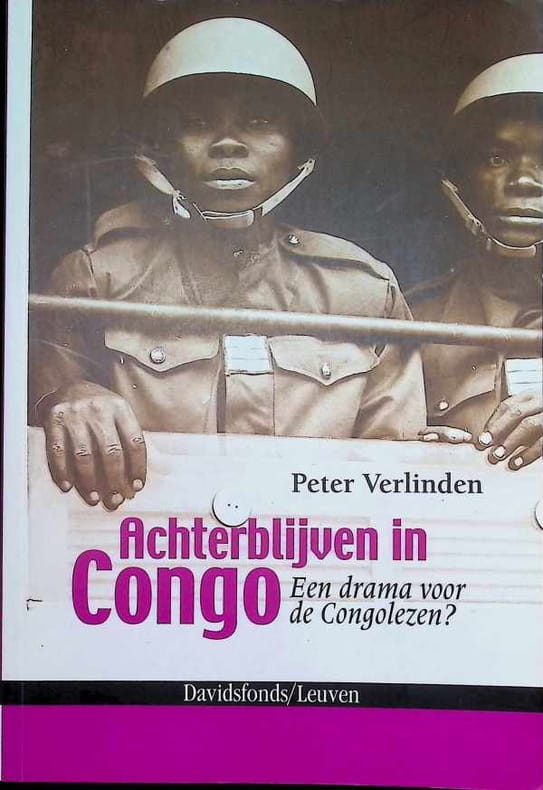
2008ref. 028272Leuven 2008 Davidsfonds Soft cover 1st Edition
ref. 13974131Bruxelles: Crédit Communal, 1986 in-4, [6]-206 pages, 3 cartes, illustré par 102 reproductions en couleurs, 15 en noir et blanc et un millier de dessins de la main de l'auteur. Bibliographie, lexique, index. Broché, jaquette, bon état. Edition originale. Ouvrage de référence sur les velours du Kasaï.
Album cartonné couleurs, grand format, 48 pages Bon exemplaire (coiffes et coins légèrement émoussés). [P-58]