53 risultati
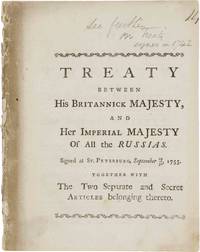
1755rif. 24182London. 1755. Detailed military alliance treaty between Great Britain and Russia setting forth the need for a capable defense force in case of attacks on dominions of both nations. One of the secret articles at the end stipulated that Great Britain shall pay Russia 100000 pounds a year to maintain a strong military force on the borders of Livonia. Quarto. Dbd. Titlepage and final leaf a bit tanned. Else quite good. unknown books
1921rif. 234513No place 1921. Printed broadside. 1 vols. Folio 375 x 285 mm. Fold mark across middle. Expertly backed with linen. Browned three short tears can be seen though repaired by the backing. Very good. Printed broadside. 1 vols. Folio 375 x 285 mm. This appeal printed above the names of A. Kerensky Victor Tchernoff Chernov and other Russian Social Revolutionaries for the 32 former members of the Russian Constituent Assembly protests the hardships inflicted upon Russia by communism. They accuse the Bolshevik government and its New Economic Policy of selling Russia's natural resources to the greed of international capitalism. The NEP was announced by Lenin in March 1921 and inaugurated an interim policy guaranteeing freedom of trade in internal commerce and a system of concessions for the investment of foreign capital. European states and busineses were pleased with the NEP and saw in it Lenin's capitulation to capitalism. However what they considered a weakness eventually turned out to be a mark of strength and flexibility of Bolshevik policy. unknown books
1833rif. 31422London: Seeley & Sons Hatchard & Son 1833. First edition. 8 handcolored lithgraphic plates of the people one spotted errata at the back. 1 vols. 4to. Later half roan red and black labels chipped. Joints and extremities rubbed short crack at top of upper joint some light browning of text else very good. First edition. 8 handcolored lithgraphic plates of the people one spotted errata at the back. 1 vols. 4to. He writes of the history of the country and its present state with comments on its religion customs and social life including slavery hospitals prisons the state of the Jews of Russia Freemasonry the army and navy its agriculture and commerce and manufacturing. One of the plates shows men playing Svalka another the village amusements and another a national dance.The appendix contains specimens of the style of preaching among the Russian clergy. Colas 2395; Abbey Travel 230; Hiler p. 712; Tooley 380 Seeley & Sons, Hatchard & Son unknown books
1871rif. 5818New York 1871. Good. 32pp. Original printed wrappers. Minor dust-soiling and spotting to wrappers. Some marginal insect damage to lower right corner not costing any text. Faint dampstain to upper margin of most leaves. A scarce work in which an "Evangelical Alliance" of American and British religious leaders petition Tsar Alexander II to grant religious freedom to Catholics and Protestants in 1871. The report begins with some background on the "Evangelical Alliance and Religious Liberty" religious persecution in the Baltic States some information on the penal laws in Russia and then the alliance's work in arguing for religious freedom beginning with their "Prepatory Labors" and "Meetings in London and Stuttgart" and ending with the "Final Promise of the Prime Minister" and "The Result." The latter included "partial relief" from religious persecution with hopes for "further improvements." The report is signed at the end by its President Samuel F.B. Morse. The report is followed by an Appendix printing "Prince Gortschakoff's Report to the Emperor of Russia" and three other memorials and interviews pertaining to the alliance's activities in Europe. An early example of religious diplomacy from American and British leaders. Ten copies in OCLC. unknown books
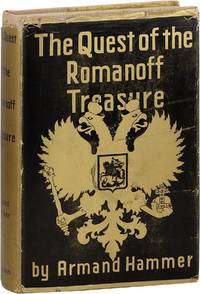
1936rif. 83612New York: The Paisley Press Inc. Succeeding William Farquhar Payson 1936. Stated Third Edition. Octavo. 21.5cm. Publisher's heavy grain pale grey cloth titled and decorated in gilt to spine and front board. Dustjacket. xi; 241pp. Some wear and discoloration to extremities very light it's a very solidly produced book so wear and tear is represented by darkening of the cloth at the edges and some softening of the spine ends rather than anything more drastic; internally clean ownership to front pastedown author's signature to front flyleaf; in a handsome example of the gold and black dustjacket with some chipping and shallow loss to the spine ends scuffing and rubbing to the gilt paper coating and some marginal creasing and soiling. A very good solid copy. Illustrated throughout with full page plates. For a man named by his father after the logo of the American Socialist Labor Party after slipping out of Odessa in the 1870's Armand Hammer's journey to become one of the world's most influential businessmen and "Lenin's Favorite Capitalist" must have been a dramatic one. His father Julius had spent much of the early 20th century consolidating his role at Allied Drug and Chemical which was essentially at times a smuggling front shipping embargoed goods to Russia during the US trade sanctions. After Julius was sentenced to 3 years in Sing Sing allegedly for a botched abortion that resulted in the death of a Russian woman from subsequent pneumonia although modern research suggests that Armand a medical student might have been the one who performed the abortion and Julius took responsibility as the qualified senior medical professional present Armand took over Allied Drug and Chemical and raised it to new heights of corporate success. During Prohibition Allied's largest seller was a essentially alcoholic ginger ale sold as a medicinal tonic to great profit. Acting under the instructions of his imprisoned father Armand began taking numerous business trips to the Soviet Union. A young J. Edgar Hoover at that point basically an analyst at the Justice Department very strongly believed that the equally youthful Hammer was a COMINTERN courier and essentially placed him under surveillance for the rest of his life. Hammer's trips to Russia were ostensibly to recoup bad debts but this quickly developed into a number of lucrative business deals not least of which was selling cheap wheat to starving famine hit areas of Russia. Hammer developed a close co-operative no pun intended relationship with Lenin which resulted in a number of very high status business contracts and deals ranging from medical import contracts to 25 year's worth of asbestos mining in the Urals; one of Hammer's greatest coups was arranging payment for various services in furs caviar jewellery and antiquities seized by the Party from its long tail of enemies making him essentially a conduit for looted and otherwise dubious art jewels and antiques. At the height of Lenin's New Economic Policy Armand Hammer was the sole trade liason between the enormity of Soviet Russia and 38 major US corporations seeking to build trade deals through him. His grasp of the downrange necessities of dealing with the Soviets; graft bribery corruption and palm greasing was legendary and by the 1970's when his methods were starting to be inspected more closely there was no doubt that Hammer's understanding of legitimate business was secondary to his instinctive abilities in the fields of corporate and beaurocratic bribery and manipulation. This book is one personal perspective on the empire of treasure that Hammer accumulated; there are others and the entangled ephemeral traces of looted artworks forged and unfinished Fabergé eggs specially manufactured jeweller's tools designed to copy Fabergé's style exactly and a wealth of other foggy rumors and suspicions ranging from Armand the KGB stooge to Armand the James Bond Villain bent on Soviet domination through capitalism will continue to follow in his wake whether he be considered a legitimate businessman or a highly successful 20th century robber baron of legendary proportions. The Paisley Press Inc. Succeeding William Farquhar Payson unknown books
1841rif. 306977Dresden und Leipzig: Arnold 1841. First edition. Lithographic title in each volume folding plan of St. Petersburg. xii 324; viii 392 pp. 2 vols. 8vo. Original green printed wrappers ads on back wrappers; uncut and unpressed. Wrappers toned losses to spine with old repairs some marginal chipping. Internally clean. About very good. First edition. Lithographic title in each volume folding plan of St. Petersburg. xii 324; viii 392 pp. 2 vols. 8vo. The standard guide to mid-century St. Petersburg with chapters on the palaces markets street life ice-sleds the Hermitage and the notable collections of the city including a descriptive tour of libraries and archives. Arnold unknown books
1775rif. 36879Moscow: Meisto Pechati first piece 1775. 2; 6 2 blank. 1 vols. Folio. The two pieces loosely stitched together. Some stains not affecting legibility stitchmarks light soiling else very good. 2; 6 2 blank. 1 vols. Folio. Decrees relating to the military issued by Catherine II. These were issued the year following the end of the Russo-Turkish wars and the treaty of Kuchuk Kainarji signed the 21st July 1774 and after the Cossack rebellion lead by Ymelyan Pugachev who claimed to be Peter III and who was finally captured and executed at Moscow the 11th of January 1775. As a result of the wars and the rebellion in 1775 Catherine seriously reformed the provincial and urban administrations giving greater control to the central government. The first decree lists eight numbered points perhaps officers for promotion or commendation it has the Royal titles as a caption title and commences citing the decree of 3 August 1744. The second piece bears no caption title or heading but lists 47 separately numbered points each a short paragraph imprint on final leaf of text. Meisto Pechati [first piece] unknown books
rif. 57309Second half of the 18th C. 12-1/2 x 17 inches. Bordered in green paper. Light rubbing and creasing some browning around the edges else Very Good. 12-1/2 x 17 inches. unknown books
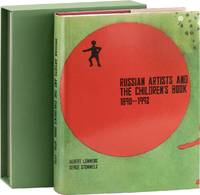
1990rif. 81719Nijmegen: LS 1990. First Limited Edition. Deluxe issue one of eleven copies in slipcase signed by both authors and issued with an original Soviet children's book in this case a copy of Kornei Chukovsky's Telefon Moscow: 1936 with illustrations by Vladimir Konashevich. Quarto 28cm; cloth hardcover dustjacket 511pp; illus. Supplemental DVD laid in as-issued. A fine copy in a crisp unworn dustwrapper and unworn slipcase. The included copy of Telefon is housed in a folding chemise designed to slip into the same slipcase as the main volume; staple-bound pictorial wrappers; 16pp light toning and wear to wrappers else Near Fine. A most desirable copy of what has become a standard English-language reference for Russian illustrated children's books. The deluxe issue is necessarily rare and seldom offered for sale. LS unknown books
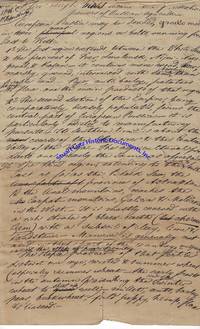
rif. 4678JOSEPH SLOCUM 1800-1853. Slocum was a merchant from Syracuse New York who attempted to sell farm equipment to Russia in the nineteenth century. He was unable to turn a profit from his endeavors and his family fell into financial hardship. His daughter Margaret Olivia Scolum Sage became an influential philanthropist and teacher. She endowed a building and a now-defunct agricultural school at Syracuse University both named after him.Archive. 9 pieces. 1830s-40s. An archive related to Joseph Slocum and his business with Russian agriculture. There are nine letters and documents predominately letters written to Slocum from various Americans and Russians. Highlights are listed below and the best piece is the first one the lengthy manuscript detailing Russian agriculture and natural resources:Handwritten document. 4pgs. September 12 1846. St. Petersburg Russia. The four page handwritten manuscript is entitled Some Rough Hints About the Productive Power of Russian Agriculture. It states in part: European Russia it may be divided grosso muto in three great regions or belts running from East to West. 1st - The first region extends between the White Sea and the provinces of Tver Smolensk Nijni-Novogorod & Kazan - it contains more wood low marshy ground intermixed the sand Baron then arable land. Rye oats barley potatoes hemp and flax are the main products of that region. 2nd - the second section of the Empire being comparatively densely populated forms a central part of the European Russia it is particularly addicted to manufacturing pursuits. It's Southern limits is about the course of the Oka River & the Central Valley of the Volga. The agricultural products are nearly the same as aforesaid. 3rd - the third region extending to the south and southeast as far as the Black Sea the provinces of Ashnaklan and the Ural Mountains reaches the Carpathian mountains Galicia & Moldavia in the West. It is mostly covered with a rich strata of black earth with a subsoil of clay lime & sandstone. Minoru is generally not used in this part of the country vulgarly called the step or prairie count the staple products of the fertile district are rye winter and summer wheat especially summer wheat - the summer frosts in the autumn preventing the seeds of the winter week to start up well millet oats barley peas buckwheat field poppy hemp flax & linseed. Cotton & Vine are raised merely in the most remote districts of the South such as Georgia Astrakhan the territory of the Cossacks of the Don Crimea & Bessarabia. Three other very important staples of Steph region are livestock & saltworks & fisheries. The stock consists mainly of horned cattle and horses grazing in large herds on the pastorate of the steps of the Black Sea As well as on both sides a lower Volga. Sheep both Merinos Saxon & form and main object of the agricultural industry of the step and owners. The Russian or common sheep is generally the property of the peasantry. The wool and tallow are usually sent overland in the winter to the manufacturing districts of the central belt of Russia Moscow. Or exported via Odessa Taganrog Riga & Petersburg to England and France. The saltworks are especially remarkable on the left sure the Volga on the verge of the province of Astrakhan as well as near the Ural River not far from the city of Orenburg. The Lake Elton alone of a circumference of nearly 180 miles is a solid mass of salt inexhaustible in its mineral riches. The stone saltworks of Gletznaia.As well as the saltworks a Crimea produce an immense quantity of that precious mineral. Besides that all the basin of the Caspian is full of an infinity of small salt lakes. The main fisheries are at the mouth of the Volga on the Caspian they produce an enormous quantity of fish of all kind. Besides that of the fisheries of the Ural River on the Don. The main fluvial artery of Russia is the Volga it is a Mississippi of our country. Its length is upwards 3000 miles. Unfortunately it is frozen up during nearly 6 months of the year. There are but very few steamboats in it. This year a large steam tow boat has been put into action on the Volga attended with great success. The manuscript continues extolling Russias natural resources. It is uncertain who wrote it and the condition is good with folds and fold separations. A partial typewritten transcript is included.LS. 1pg. August 1843. Russia. A letter signed L. Perovsky by Russian nobleman Lev Perovski 1792-1856 as Russian Minister of the Interior. Perovski thanked Slocum: The Directo fo the AgronomicalSchool having informed me that you presented to the museum of this Institution several agronomical instrument I feel myself much gratified to acknowledge. Agronomy is crop and soil science. The letter is in very good condition with folds and short fold separations.ALS. 4pg. 5 x 8 . November 7 1846. St. Peterburg Russia. An autograph letter signed by an American working for the United States Legation at St. Petersburg. He wrote in part to Slocum: The only reproach I ever heard from the Minister as I told you at that time and which certainly stands on a misunderstanding concerns the establishment of a cast iron fabrication. The Minister is in full belief you had spoken to him about ain the Union that as soon as a new colony any where is establishedThis seemed to His Excellency excellent means to introduce in Russia and toin this way thepossibility to the peasants to have their implements cheap & well one. The letter is in fine condition.ANS. 1pg. 1834. New York. A brief note acknowledging money received from Slocum signed Ja J Roosevelt by Jacobus James Roosevelt III 1760-1847 the New York state businessman and politician who was great-grandfather of FDR. In fine condition.ALS. 1pg. June 6 1834. New York. An autograph letter signed Jab J Roosevelt by Jacobus Roosevelt. Roosevelt wrote to Slocum requesting the return of an item. In very good condition.ALS. 3pgs. October 22 1846. St. Petersburg Russia. A lengthy letter to Slocum signed Chas Cramer to Slocum. Charles Cramer 1799-1879 was an important trader to Russian and his letter concerns finance: he gave you an order for the purchase of Implements for Agricultural purposes & that he assigned you a credit againstof the Government. He fully confirmed the contents of the letter you communicated to me & promised to reply to your letterMr. Clay stated when I asked him on your behalf that he could do nothing in the case to further your interest. Major Whistler whom I called on several time but missed has not yet returned my calls. I rather think he will not be able to serve you better than I can with the Government of this EmpireWe merchants often meet with heavy losses Do consider your Adventure to Russia misfortune & think no more about it for you will not gain anything. The penciled letter is in very good condition with a tear in the address leaf.Letter. 1pg. 5 x 8 . 1846. St. Petersburg. A contemporary copy of an 1846 letter by Rhesa Griffin a Syracuse area merchant: Received St. Petersburg 31 July 1846 of the Russian Imperial Departmentfive hundred thirty six silver rubles and sixteen seven coppers in full satisfaction of all and every claim or Demand on the above Department or if any other Department of the Russian Government and in full satisfaction of all and every agreement or understanding made by me with Joseph Slocum as an agent of the Russian Government. The document is wrinkled and in very good condition. unknown books
1769rif. 647731769. Early French-Language Edition of Catherine's Nakaz Catherine II 1762-1796 Empress of Russia. Landres J. Rodolphe Frey de Translator. Instructions Adressees par Sa Majeste L'Imperatrice de Toutes les Russies: A la Commission Etablie Pour Travailler a L'Execution du Projet d'un Nouveau Code de Lois. Traduit de l'Allemand. "A Petersbourg" i.e. Yverdon Switzerland: s.n. 1769. 286 pp. 12mo. 6" x 4". Early quarter vellum over marbled boards untrimmed edges a few unopenened signatures. Light soiling corners lightly bumped and worn. Moderate toning to interior somewhat heavier in places some leaves have light foxing a few have light dampstaining to margins internally clean. Ex-library with a small inkstamp to title page. A handsome copy. $1000. Reissue of the first edition in French published by the St. Petersburg Academy of Sciences for private distribution in 1769. This important text also known as the Nakaz or Instruction is a statement of legal principles written by Catherine II from 1764 and 1766. Permeated with the ideas of the French Enlightenment and copied mostly from the work of Voltaire Montesquieu and Beccaria it was compiled as a guide for the All-Russia Legislative Commission convened by the Empress in 1767 to create a new code to replace the 1649 Muscovite Code. Revised in consultation with Beccaria Frederick the Great and Voltaire the Instruction proclaimed the equality of all men before the law and disapproved of death penalty and torture. Unfortunately her proposed code was never completed. Catherine's manuscript was written in French and she later produced a Russian translation. Editions in German and Russian were published in Moscow in 1767. The book was initially banned in France because it was too liberal which is why the first French-language edition was produced in Switzerland with a false imprint. French and Latin editions were eventually published in 1770. OCLC locates 6 copies of this imprint in North American law libraries Columbia George Washington University Harvard Library of Congress UC-Berkeley Yale. Butler The Nakaz of Catherine the Great 531 Entry 40. unknown books
1769rif. 719841769. Lausanne: Francois Grasset & Comp. 1769. Lausanne: Francois Grasset & Comp. 1769. Early French Translation of an Important Document of the Enlightenment Catherine II 1762-1796 Empress of Russia. Balthasar Joseph Anton Felix von 1737-1810 Translator. Instruction Donnee par Catherine II. Imperatrice et Legislatrice de Toutes les Russies a la Commission Etablie par cette Souveraine pour Travailler ala Redaction d'un Nouveau Code de Loix Telle Qu'elle e ete Imprimee en Russe & en Allemand Dans l'Imprimerie Imperiale de Moscow. Nouvelle Edition Augmentee. Lausanne: Chez Francois Grasset & Comp. 1769. xiv 160 i.e. 204 pp. Lacking dedication leaf and copperplate portrait frontispiece. Quarto 7" x 4-3/4". Recent period-style three-quarter calf over marbled boards raised bands and red and black lettering pieces to spine marbled endpapers untrimmed edges. Light rubbing to extremities light fading to spine. Moderate toning light foxing in a few places. $1250. Third French-language edition. An important document of the Enlightenment the Nakaz or Instruction composed by Catherine the Great served to guide the assembly summoned in 1766 to draft a new code of laws for the Russian Empire. Drawn primarily from Montesquieu as well as Rousseau Beccaria and other Enlightenment thinkers the Nakaz condemned torture and capital punishment and endorsed such principles as the equality of all before the law. Published in the principal European tongues between 1767 and 1769 it proved to be a statement to the world as much as a practical legal text. Three editions in French were published in 1769 first in Moscow then in Yverdon with a false St. Petersburg imprint and Lausanne. In 1769 Duc de Choiseul added the "libertine" Nakaz to the list of books prohibited in France. Balthasar the translator of our edition was a Swiss historian and member of the Enlightenment's international "Republic of Letters." His introduction pp. iii-iv is a notable document of the early reception of the Nakaz in Western Europe. Graesse Tresor de Livres Rares et Precieux II:80. unknown books
1907rif. 653411907. The First Edition of the Nakaz Published in the Twentieth Century Catherine II 1762-1796 Empress of Russia. Chechulin Nikolai Dmitrevich 1863-1927 Editor. Nakaz Imperatritsy Ekateriny II Dannyi Kommissii o Sochinenii Proekta Novago Ulozheniia. St. Petersburg: Izd. Iurid. Knizhnago Sklada "Pravo" 1907. ii cliv 174 pp. Three folding plates of facsimile manuscript leaves. Text of Nakaz in Russian with parallel French translation. Contemporary pebbled cloth light rubbing to extremities with minor wear to spine ends and corners which are bumped. Light toning to text a few leaves have carefully repaired tears. Early inscription and owner inkstamp to title page interior otherwise clean. $1250. The first edition published in the twentieth century. Title two in the series Pamiatniki Russkago Zakonodatel'stva 1649-1832. The Nakaz or Instruction is a statement of legal principles written by Catherine II between 1764 and 1766. It was among her most ambitious and significant undertakings. Infused with the ideas of the French Enlightenment and copied mostly from the work of Voltaire Montesquieu and Beccaria it was compiled as a guide for the All- Russia Legislative Commission convened by the Empress in 1767 to create a new code to replace the 1649 Muscovite Code. Revised in consultation with Frederick the Great and Voltaire the Instruction proclaimed the equality of all men before the law and denounced torture and the death penalty. Unfortunately her proposed code was never completed. The first two editions one with parallel texts in Russian and German were published in 1767. Our 1907 edition may have been inspired by a spirit of reform fired by the Russian Revolution of 1905. OCLC locates 1 copy in a North American law library Columbia. Another copy located at Harvard Law School. Butler The Nakaz of Catherine the Great 526 Entry 19. unknown books
1771rif. 647971771. Amsterdam 1771. 2nd Dutch ed. Amsterdam 1771. 2nd Dutch ed. Scarce Early French-Language Edition of Catherine the Great's Landmark Legal Treatise Issued by Marc-Michel Rey The Premier Publisher of the Enlightenment Catherine II 1762-1796 Empress of Russia. Instruction de Sa Majeste Imperiale Catherine II. Pour la Commission Chargee de Dresser le Projet d'un Nouveau Code de Loix. Amsterdam: Chez Marc Michel Rey 1771. vii 229 pp. Frontispiece engraved copperplate medallion portrait of Catherine II by C.A. Boily. Octavo 7-3/4" x 4-3/4"; 19.68 x 12.06 cm. Contemporary mottled calf blind rules to boards gilt spine with lettering piece edges rouged marbled endpapers. A few minor scuffs to boards moderate rubbing to extremities spine ends worn front joint starting at ends corners bumped and somewhat worn. Light toning to text dampstaining and light foxing to a few leaves internally clean. An attractive copy. $1250. Second Dutch edition. Known universally as the Nakaz or Instruction this monument of legal philosophy was composed by Catherine II between 1764 and 1766 as a guiding manual for the All-Russia Legislative Commission convened in 1767. Intended to replace the outdated Sobornoye Ulozheniye 1649 Muscovite Code the treatise stands as one of the most prominent practical applications of Enlightenment jurisprudence in early modern Europe. Heavily influenced by Montesquieu's De l'Esprit des Lois and Beccaria's Dei Delitti e Delle Pene the text translates radical legal theories into imperial policy. It explicitly advocated for equal protection under the law for all citizens abolition of torture and strict limitation of the death penalty prevention of crime over retributive punishment and judicial proportion between crimes and penalties. Catherine drafted the original text in French and subsequently produced a Russian translation. Following the initial 1767 Moscow printings in Russian and German regional editions proliferated across Europe. The text was famously banned in France by Louis XV due to its radical political liberalism-a censorship event that only increased continental demand. The first Dutch edition was published in Dutch translation in 1769. This 1771 imprint by Marc-Michel Rey represents the first Dutch edition printed in the original French. Publishing from Amsterdam Rey was the principal printer for ra. unknown books
1771rif. 648601771. Amsterdam: Chez Marc Michel Rey 1771. Amsterdam: Chez Marc Michel Rey 1771. Attractive Early Amsterdam Edition of Catherine's Nakaz Catherine II 1762-1796 Empress of Russia. Instruction de Sa Majeste Imperiale Catherine II. Pour la Commission Chargee de Dresser le Projet d'un Nouveau Code de Loix. Amsterdam: Chez Marc Michel Rey 1771. vii 229 pp. Copperplate portrait frontispiece. Octavo 7-3/4" x 4-3/4". Later patterned-paper covered boards calf lettering piece to spine patterned endpapers. Minor wear to spine ends and corners front joint starting at ends. Negligible light toning to text dampstaining to bottom and fore-edges of text block very faint in most places in preliminaries somewhat darker. A nice copy. $1250. Second Dutch edition. This important text also known as the Nakaz or Instruction is a statement of legal principles written by Catherine II from 1764 and 1766. Permeated with the ideas of the French Enlightenment and copied mostly from the work of Voltaire Montesquieu and Beccaria it was compiled as a guide for the All-Russia Legislative Commission convened by the Empress in 1767 to create a new code to replace the 1649 Muscovite Code. Revised in consultation with Beccaria Frederick the Great and Voltaire the Nakaz proclaimed the equality of all men before the law and disapproved of the death penalty and torture. Unfortunately her proposed code was never completed. Catherine's manuscript was written in French and she later produced a Russian translation. Editions in German and Russian were published in Moscow in 1767. Several editions followed in nations ranging from Italy to Latvia. The first Dutch edition in Dutch translation was published in Amsterdam in 1769. The 1771 Amsterdam edition was the first Dutch edition in French. It is a scarce imprint. OCLC locates 2 copies in North American law libraries Library of Congress UC-Berkeley. Butler The Nakaz of Catherine the Great 528 entry 28. unknown books
rif. 18941137Borba mirov The War of The Worlds Large octavo 7 x 9.5 inches 91 pages; covers worn stamp of tsarist era Tbilisi High School and other library markings on title page pages toned and brittle one leaf detached but present. Translation by K.K Tolstoy. Off-print from Novyi Zhurnal Innostrannoi Literatury where the novel was printed serially earlier in 1898. Later in 1898 this translation was published by Novyi Zhurnal in a smaller more conventional book format. At the end of 1898 a different translation was published in a different periodical and then in book format. WorldCat locates this translation only in the smaller format a single copy in Poland. War of the Worlds has possibly had more influence on Russian literature and culture than any other novel in the English language. At the time of the Revolution Wells was among the most popular foreign writers in Russia -- second only to Verne. Planetary invasion is a perennial theme in Russian science fiction with War of the Worlds firmly at the root. hardcover books
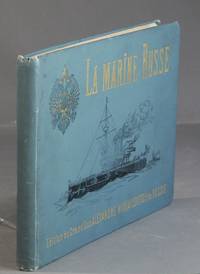
1892rif. 58067St. Pétersbourg: Stadler & Pattinote 1892. Oblong folio 3 p.l. plus 56 chromolithograph plates each with descriptive text on the verso of the preceding plate 1 leaf of index; original pictorial blue cloth stamped in gilt and black on the upper cover; front hinge reglued the contents slightly shaken otherwise on the whole very good the plates clean. With explanatory letter-press in Russian and French. Four copies in OCLC only the U.S. Navy and Miami University in the U.S. Stadler & Pattinote unknown books
1880rif. 53786Moscow 1880. 10 hand-colored albumenprints some captioned in type in French and Russian. Oblong 4to. Contemporary quarter maroon morocco and boards cover titled in gilt "Photographs." Front joint cracked photographs in fine condition. 10 hand-colored albumenprints some captioned in type in French and Russian. Oblong 4to. Beautifully and finely hand-colored photographs of Moscow and St. Petersburg. Provenance: Baldur Bookshop Richmond Surrey receipt laid-in unknown books
1855rif. 820251855. 15" x 9-3/4" broadside text in three columns. 15" x 9-3/4" broadside text in three columns. Unrecorded Broadside Marking the Death of Nicholas I Broadside. Nicholas I 1796-1855 Emperor of Russia. Biography of the Emperor Nicholas and Sudden Deaths of the Romanoff Family! Nottingham: Printed and Published by Thomas Stevenson 1855. 15" x 9-3/4" broadside text in three columns below headline and large woodcut vignette depicting the death of Nicholas I. Moderate toning very light edgewear faint fold lines and creases to corners light foxing to lower right corner a few faint stains. Rare. $1500. This broadside was published after the death of Nicholas I from pneumonia on March 2 1855. His death occurred during the Crimean War and the Siege of Sevastopol which had been ongoing since October 1854 and ended in September 1855 six months after Nicholas's death. The broadside is mostly dedicated to a brief biographical history of the Romanov dynasty. It ends with a section headed "Latest Intelligence" containing dispatches from Berlin Warsaw Sevastopol and Marseilles. No copies located on OCLC or Library Hub. Not at the British Library. unknown books
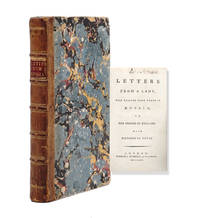
1775rif. 318234London: J. Dodsley 1775. First edition. viii 207pp 1p. table. 1 vols. 8vo. Quarter contemporary brown calf and blue marbled boards red label on spine. Red speckled edges. Some wear to the spine and boards text block in otherwise excellent shape. Bookplate of E. H. Greenly. Very good. First edition. viii 207pp 1p. table. 1 vols. 8vo. Jane Vigor née Goodwin b. 1699 d. 1783 was born to a clergyman in Yorkshire. Her first husband was Thomas Ward Esq Consul General to Russia and it was through that marriage that she embarked upon her experiences in Russia and wrote the passages for this volume some forty years later. She was married twice more to Claudius Rondeau Esq. and to William Vigor Esq. whom she survived. Mrs. Vigor inherited her father's fortune after her brother died and she then married Ward. Both her first and second husband who was Ward's secretary were stationed in St. Petersburg which is where she lived throughout her first two marriages. She returned to England after her second husband's death: frail pregnant and accompanied by William Vigor a Quaker minister who became her third husband. These first "Letters from a Lady" were followed posthumously by "Eleven Additional Letters" which provided a biography of Vigor. Errata printed on verso of title page. ESTC T64790 J. Dodsley unknown books
1893rif. 653421893. St. Petersburg: Izd. L.F. Pantelieeva 1893. St. Petersburg: Izd. L.F. Pantelieeva 1893. The Last Edition of the Nakaz Published in the Nineteenth Century Catherine II 1762-1796 Empress of Russia. Bezgin Il'ia Grigor'evich Editor. Nakaz Eja Imperatorskago Velicestva Ekateriny Vtoryja Samoderzicy Vserossijskija Dannyj Kommissii o Socinenii Proekta Novago Ulozenija. St. Petersburg: Izd. L.F. Pantelieeva 1893. 53 201 pp. Text of Nakaz in Russian with parallel French translation. Original printed stiff wrappers bound into recent quarter calf over cloth gilt fillets and lettering piece to spine endpapers renewed. Gilding mostly rubbed away from lettering piece light soiling and edgewear to wrappers moderate toning to text faint dampspotting to a few leaves. Small early owner label to front free endpaper internally clean. $1750. The last edition published in the nineteenth century. The Nakaz or Instruction is a statement of legal principles written by Catherine II between 1764 and 1766. It was among her most ambitious and significant undertakings. Infused with the ideas of the French Enlightenment and copied mostly from the work of Voltaire Montesquieu and Beccaria it was compiled as a guide for the All- Russia Legislative Commission convened by the Empress in 1767 to create a new code to replace the 1649 Muscovite Code. Revised in consultation with Frederick the Great and Voltaire the Instruction proclaimed the equality of all men before the law and denounced torture and the death penalty. Unfortunately her proposed code was never completed. The first two editions one with parallel texts in Russian and German were published in 1767. OCLC locates 1 copy in a North American law library Columbia. Another copy located at Harvard Law School. Butler The Nakaz of Catherine the Great 526 Entry 18. unknown books
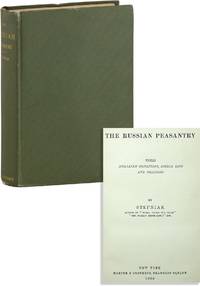
1888rif. 84805New York: Harper and Brothers 1888. First Edition. Octavo. 17.5cm. Publisher's green pebble grain cloth titled in gilt to spine. vi; 1; 401pp.6pp. ads to rear. Light rubbing to corners slight scuffing and some minor bumping to spine ends with a small spot stain at the very head of the spine small dent to upper edges of the boards; internally clean with some superficial soiling to the page edges ownership of Pennsylvania historian Gertrude Bosler Biddle to front flyleaf. A very good clean and handsome copy. WITH London: 1890-93. Three ALS autograph letters signed on folded stationery sheets as follows: 1. Dated "March 31" without year; from context ca. 1888-1890. 2pp ca. 250 words in black ink; datemarked St. John's Wood March 31. Requesting the publisher's permission to commission a German translation of his Russian Peasantry which first appeared in 1888 with a second edition in 1890. Stepniak proposes 50/50 division of royalties and identifies the translator as Victor Adler who has just been sentenced to three months in prison and thus now has "ample leisure" for undertaking the translation. Adler 1852-1918 was founder and first chairman of the Austrian Socialist Democratic Workers Party in 1888. Signed at close "S. Stepniak." Near Fine. 2. Dated November 6 1890. 1pp ca. 75 words in blue ink. Declines a request from his publisher to undertake a book on the Jewish Question: ".it is impossible for me to write upon any question upon Jews or anything else for I am quite full with preparing a series of American lectures." Signed at close "S. Stepniak." Slight smudging final two lines and left margin not affecting legibility. Very Good. 3. Dated May 15 1893. 2pp ca. 120 words in black ink. Addressed to "Dear Mrs i.e. messieurs Sonnenschein" accepting an invitation to visit but stating he cannot arrive early. Signed at close "S. Stepniak." Light soil; Near FIne. Sergei Stepniak aka Sergius; aka Sergey Stepnyak-Kravchinskii 1851-1895 made his revolutionary bones during the Narodnik Rebellion of 1877-78 by openly assassinating Nikolai Mezentsov the head of the Czar's secret police on the streets of St. Petersburg. Kravchinskii committed the act in broad daylight and made no attempt to disavow his guilt living publicly if dangerously for several months before finally escaping to Switzerland. He arrived in London around 1880 and quickly became the center of a lively Russian revolutionary exile scene. He founded the Society of Friends of Russian Freedom in 1891 and wrote a number of well-received books on revolutionary Russia including Underground Russia which had in fact been published in translation prior to his exile The Russian Peasantry 1888; and a fictionalized account of his own exploits The Career of a Nihilist 1889. He was killed somewhat mysteriously we think by an onrushing train in December of 1895 depriving him of any opportunity to witness the fruit of his labors in the Revolutions of 1905 and 1917. Dying young Stepniak did not leave a great body of manuscript material behind him and relatively few letters with good content have appeared in commerce. Harper and Brothers unknown books
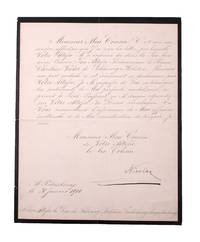
1901rif. 346384St. Petersburg 1901. One-page secretarial letter in French on mourning stationery with a secretarial copy marked in ink Copie . signé Nicolas. 1 vols. 10 x 8 inches. Old folds generally fine. With transcription and translation. One-page secretarial letter in French on mourning stationery with a secretarial copy marked in ink Copie . signé Nicolas. 1 vols. 10 x 8 inches. A formal note of condolence from Nicholas II Emperor of all the Russias styled "le bon Cousin" in the closing addressed to Ernst Gunther II 1863-1921 third Duke of Schleswig-Holstein "Monsieur Mon Cousin!" after learning of the death of Prince Christian Victor of Schleswig-Holstein a grandson of Queen Victoria and British officer who died of malaria in Pretoria on 29 October 1900. A somber and attractive autograph documenting the close connections between the royal and imperial household of prewar Europe. Provenance: Dr. Herbert Ernest Klingelhofer 1915-2015 collector and former President of the Manuscript Society bought from Karl Faber 1957 unknown books
rif. WB16908Paris. Hardcover. Near Fine. 1764-1774 but circa 1820 paper watermarked 18181 4to 280 x 222 mm comprising 87 engraved or aquatint plates including engraved titles modern morocco backed boards minor foxing. In 1758 Le Prince journeyed to Russia to work for Catherine the Great at the Imperial Palace St Petersburg. He remained in Russia for five years and also travelled extensively throughout Finland Lithuania and Siberia When Le Prince returned to Pans in December 1763 he brought with him an extensive collection of drawings which served as the source material for the present suites. As usual the present album contains plates from several of Le Prince's suites not necessarily bound in order including the following Divers Ajustements et Usages de Russie; Divers Habillements des Femmes de Moscovie lie. Suitte d'Habiliement des Femmes de Moscovie Divers Habillements des Pretres de Russie- Les Strelits Premier Suite de Cris et Divers Marchands de Petersbourg et de Moscou- 2me Suitte de Divers Cns de Marchands de Russie- Ille Suitte de Divers Cns de Marchands de Russie- Habillements de Diverses Nations; Suite de divers Habillements des Peuples du Nord Vue des Environs de St Peterbourg Diverses Vues de Livonte and Ile Suitte d'Habillements de Diverses Nations Cf. Colas 1838-1850 cf Hiler p539; cf Cohen/de Ricci 625-626. hardcover books
1669rif. 3916London: printed for John Starkey 1669. FIRST ENGLISH EDITION A French-language version appeared at Amsterdam in the same year. Hardcover. Fine. Bound in contemporary polished calf rebacked preserving original spine corners bumped light wear. Complete with the two engraved portraits of Charles Howard First Earl of Carlisle 1628-1685 and Tzar Aleksey Mikhaylovich 1629-1676 just shaved at fore-edge. Title a little dusty clean tear to margin of Z1 not entering the text. Fine. First edition of this eyewitness account of the official English embassy to Russia written by Guy Miege under-secretary to the English ambassador Charles Howard Earl of Carlisle. The book provides a fascinating window on the intricacies of Russian diplomatic protocols ceremonial customs and the hospitality bestowed upon high-ranking foreign dignitaries at the Russian court. "Carlisle's main responsibilities were to reciprocate the honor that Tzar Aleksey Mikhaylovich had shown to King Charles II in sending his diplomats to London as well as to build the promising momentum in their relationship by negotiating the trade privileges that the English hoped to restore. It can safely be concluded that Carlisle's diplomatic mission resulted in a great failure. Ceremonial disputes and diverging economic interests precipitated a decline in Anglo-Russian relations and left the two monarchies in a state of mutual resentment."Hennings Guy Miege obtained appointment as under-secretary to Charles Howard Earl of Carlisle in his embassy to Muscovy Sweden and Denmark and in July 1663 joined an entourage that included Andrew Marvell as chief secretary. With Carlisle's express permission Miege wrote an account of the journey subsequently published as 'A Relation of Three Embassies' 1669 which is both an attempted vindication of the ambassador's conduct in the face of Russian criticism and a lively source of impressions of Russian society and culture. He considered Muscovy a beautiful country but found its inhabitants in contrast to the Swedes coarse austere and ignorant of learning. Exhibiting a characteristic commitment to Protestantism and to constitutional monarchy he was not impressed by a religion 'that obliges its Professors to severe mortification' or by icons 'very ill-drawn and in flat painting' and dismissed a monarchy that was 'despotical and absolute' But like most 17th c. Englishmen Miege respected Russian military prowess." ODNB For a detailed account and analysis of the embassy and its repercussions see Hennings "Russia and Courtly Europe" p. 139-159. For another discussion see Dukes Herd and Kotilaine "Stuarts and Romanovs" p. 105-113. printed for John Starkey hardcover books