19 613 résultats
1767réf. KNY2678911767. 200 pp. Format: 26 x 20 cm. Hardcover. Language: Russian. Condition: not graded in detail, please see the photos. Restored. Black-and-white illustrations. The photos show the actual copy offered. Ships from Ukraine by Nova Post with tracking after receipt of payment (bank transfer or PayPal); delivery time 12–28 business days including customs clearance. Shipping for this book (up to 1 kg): Netherlands €24.70, Belgium €29.60, Germany €19.90, France €29.10, Austria €29.10, Switzerland €46.00; other countries on request. The exact amount is confirmed when we accept your order. The parcel is sent from outside the EU/UK/Switzerland. Import VAT on books (e.g. Netherlands 9 %, Germany 7 %, Belgium 6 %, France 5.5 %, Switzerland 2.6 %, UK 0 %) and a customs handling fee of the carrier may be charged to the buyer on delivery; they are not included in the price. Antiquarian book (1767). Export from Ukraine of books older than 50 years may require a cultural-goods export certificate; we obtain it before shipping, which can add several weeks. Please ask before ordering if you need a firm delivery date. Consumers in the EU have the statutory 14-day right of withdrawal (see the seller terms). If the book does not match the description or is damaged in transit, please contact us right after receipt.
réf. 88415aafParis, de l’imprimerie de J. P. Jacob à Paris chez Deterville et à la Librairie Economique, 1805, gr. in-4to (oblong), page de titre poussiéreuse et renforcée + au total 55 planches gravées, sur le titre pt. timbre rouge ‘Cabinet Topographique du Roi’ et cote ms. (E. 5 / 48), cartonnage du XIXe s. couvert de papier marbré, pièce de titre maroquin rouge au dos. Bel exemplaire.
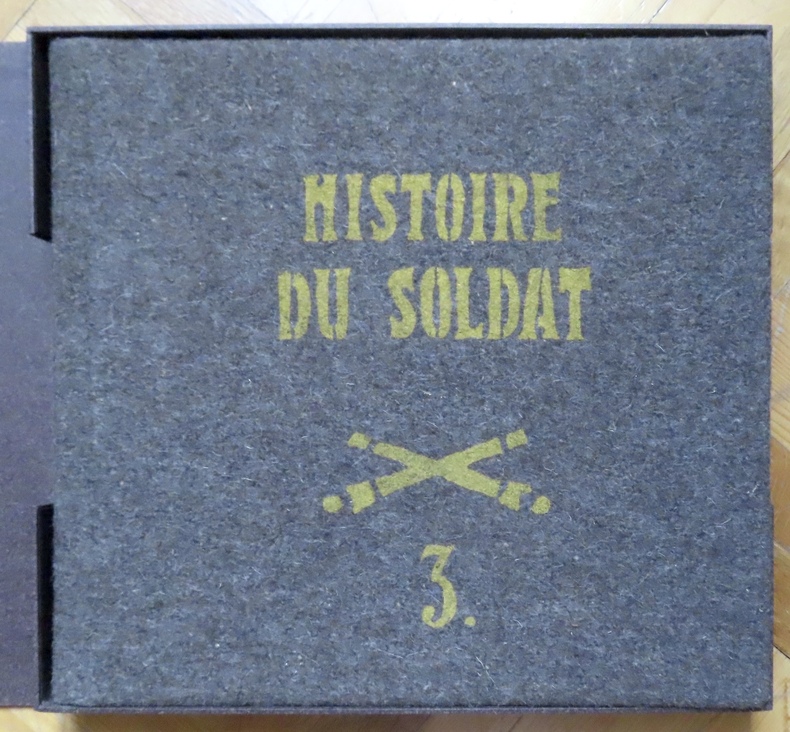
2005réf. 26362Saint-Pétersbourg / Lausanne, Chez l'artiste / Oh 7e Ciel, 2005. In-folio non paginé, imprimé en sérigraphie, relié dans une authentique veste de soldat russe (!), titre au pochoir au premier plat, présenté dans son étui assorti à pièce de titre manuscrite. A l'état de neuf. Illustré par l'artiste russe Yuri Shtapakov d'un portrait de Ramuz en frontispice, d'un autorportrait au justificatif et de 14 très belles linogravures réhaussées à la main par l'artiste.
1852réf. KNY2344671852. Language: Ukrainian. Condition: good. No illustrations. The photos show the actual copy offered. Ships from Ukraine by Nova Post with tracking after receipt of payment (bank transfer or PayPal); delivery time 12–28 business days including customs clearance. Shipping for this book (up to 1 kg): Netherlands €24.70, Belgium €29.60, Germany €19.90, France €29.10, Austria €29.10, Switzerland €46.00; other countries on request. The exact amount is confirmed when we accept your order. The parcel is sent from outside the EU/UK/Switzerland. Import VAT on books (e.g. Netherlands 9 %, Germany 7 %, Belgium 6 %, France 5.5 %, Switzerland 2.6 %, UK 0 %) and a customs handling fee of the carrier may be charged to the buyer on delivery; they are not included in the price. Antiquarian book (1852). Export from Ukraine of books older than 50 years may require a cultural-goods export certificate; we obtain it before shipping, which can add several weeks. Please ask before ordering if you need a firm delivery date. Consumers in the EU have the statutory 14-day right of withdrawal (see the seller terms). If the book does not match the description or is damaged in transit, please contact us right after receipt.
réf. 110201The second edition corrected. London Printed for John Starkey and Thomas Basset 1669. Folio. 20 316 6 232 9 1 blank pp. Additional engraved title-page. 2 engraved portraits. 6 engraved folding maps 2 with neatly repaired tear. Contemporary vellum. Red labels. Joints skilfully repaired. New endpapers. . Originally published in 1662. This is the second English edition. hardcover
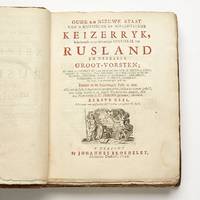
réf. 110601Utrecht Johannes Broedelet 1744. 4to. 16 1-296 2 1-200 2 blank 2 201-501 1 blank 2 503-830 2 blank pp. 4 title-pages printed in red and black with engraved vignette. 3 folding engraved maps. 1 folding engraved plan. 1 folding table. 3 folding engraved plates. Contemporary half calf with five raised bands. Gilt spines. Occasional minor spotting and dampstaing. . Provenance: Gösta Nobel 1886-1955 was the youngest son of Ludvig and Edla Nobel. He took over as Branobel`s Managing Director at the time of the Russian Revolution and had to flee Russia in 1918. Branobel or The Nobel Brothers Petroleum Company was founded by Robert and Ludvig Nobel in Baku in 1876. hardcover
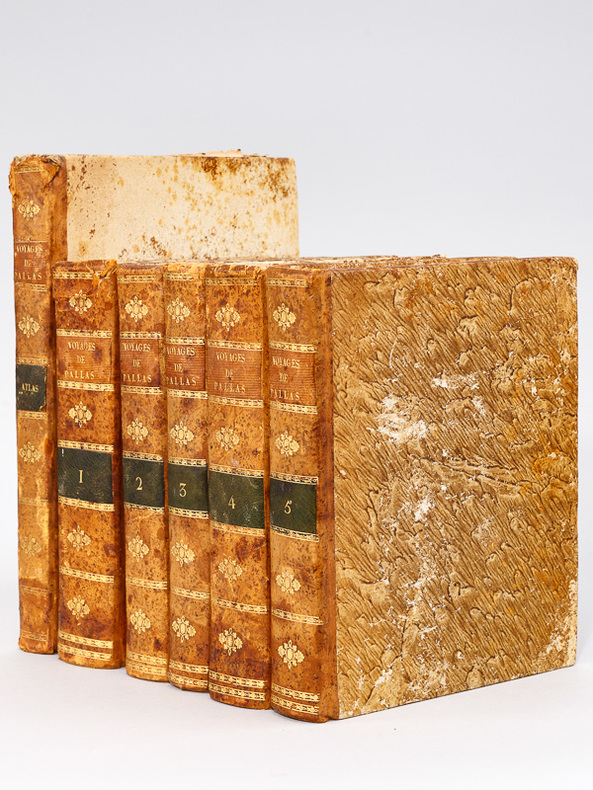
17885 vol. in-4 et un atlas in-folio, reliure de l'époque demi-basane marron, Chez Lagrange, Libraire [ puis : ] Chez Maradan, 1788-1793, Tome I : 2 ff., xxxij-773 pp. et 1 f. (errata) ; Tome II : 2 ff., 550 pp. et 1 f. ; Tome III : 2 ff., 491 pp. avec ; Tome IV : 2 ff., 722 pp. et 1 f. (errata) ; Tome V : 2 ff., 559 pp. ; VI (Atlas format en marges 30,8 x 23,8 cm) : 121 planches en 105 feuillets, ainsi décomposées : pour le tome I, 27 planches sur 29 (manquent les planches 1 et 3) dont carte dépliante de la Contrée qui s'étend le long de la Soka, carte dépliante des Landes situées entre le Volga et l'Oural et carte dépliante du Cours du Jaïk au-dessous de Gourief ; pour le tome II, 16 planches sur 17 (manque planche 1, la planche 3 est en double) dont carte dépliante minéralogique des Monts Ouralsks et carte dépliante de la Contrée qui s'étend le long de la Soka ; pour le tome III, 22 planches sur 22 dont carte dépliante des Monts Altaisk ; pour le tome IV, 35 planches (ou 36, selon la manière dont l'on peut compter, car présence des planches 8-9 et 9-10) dont carte dépliante d'une partie des gouvernements de Tobolsk et d'Irkoutsk ; pour le tome V, 21 planches sur 21 dont carte dépliante des Colonies allemandes sur le Volga dans le territoire de Saratof Rare exemplaire de l'édition originale en reliure d'époque, avec son bel atlas, contenant 121 planches (sur 124) en 105 feuillets (sur 108), dont 8 cartes dépliantes. Intéressant exemplaire en reliure d'époque (accrocs avec petits mq. en coiffes et dos, mq. en coiff à l'atlas, reliure de l'atlas faible, restauration n'affectant pas le texte à un f. d'errata, bon état intérieur) relatant les pérégrinations en Russie du zoologiste et botaniste prussien Peter Simon Pallas (1741-1811). Nommé par l'impératrice Catherine II à la tête d'une expédition en Sibérie dans la région d'Orenbourg, Pallas quitte Saint-Pétersbourg en juin 1768 ; il ne rentrera qu'en juin 1774, ayant parcouru plus de 29000 kilomètres dans les conditions les plus éprouvantes. Nissen, 3076 (qui indique 16 planches pour le tome second, mais notre exemplaire contient une planche 17) ; Cohen, II, 781 ; Chadenat, 4792 Français
1788réf. 585455 vol. in-4 et un atlas in-folio, reliure de l'époque demi-basane marron, Chez Lagrange, Libraire [ puis : ] Chez Maradan, 1788-1793, Tome I : 2 ff., xxxij-773 pp. et 1 f. (errata) ; Tome II : 2 ff., 550 pp. et 1 f. ; Tome III : 2 ff., 491 pp. avec ; Tome IV : 2 ff., 722 pp. et 1 f. (errata) ; Tome V : 2 ff., 559 pp. ; VI (Atlas format en marges 30,8 x 23,8 cm) : 121 planches en 105 feuillets, ainsi décomposées : pour le tome I, 27 planches sur 29 (manquent les planches 1 et 3) dont carte dépliante de la Contrée qui s'étend le long de la Soka, carte dépliante des Landes situées entre le Volga et l'Oural et carte dépliante du Cours du Jaïk au-dessous de Gourief ; pour le tome II, 16 planches sur 17 (manque planche 1, la planche 3 est en double) dont carte dépliante minéralogique des Monts Ouralsks et carte dépliante de la Contrée qui s'étend le long de la Soka ; pour le tome III, 22 planches sur 22 dont carte dépliante des Monts Altaisk ; pour le tome IV, 35 planches (ou 36, selon la manière dont l'on peut compter, car présence des planches 8-9 et 9-10) dont carte dépliante d'une partie des gouvernements de Tobolsk et d'Irkoutsk ; pour le tome V, 21 planches sur 21 dont carte dépliante des Colonies allemandes sur le Volga dans le territoire de Saratof
1919réf. 223031919. Photographs measuring 6 x 4 inches and smaller. 1 vols. Oblong 8vo 8 3/4 x 6 1/2 inches. Contemporary gray cloth ms. title to upper board upper joint wearing but holding nicely. Photographs measuring 6 x 4 inches and smaller. 1 vols. Oblong 8vo 8 3/4 x 6 1/2 inches. A rare survival from a distinguished World War One veteran. Born in India Nightingale was educated at Rugby and Sandhurst and joined the Royal Fusiliers in 1910. He survived the landing on V beach Cape Helles Gallipoli April 25th 1915 and the following year he was awarded both the Military Cross and the Legion D'Honneur for his services. Nightingale subsequently served with the 46th Battalion Royal Fusiliers in the North Russian Relief Force part of the invasion of Russia by the English Irish and the Americans. The operation was conducted under the command of General H. de V. Sadleir-Jackson. Arriving in Archangel on 5 June 1919 the 46th proceeded along the Dvina River to Osinova where preparations were made for an attack on rail and river transport. The objective was to repel the Red Army from their established positions and generally improve the position of the White Russian forces. The hope was that the NRRF would be able to subsequently withdraw without significant casualties. In addition smaller raids on Red Army positions were carried out to the south partly to destabilize them partly as reconnaissance. Nightingale was in command of the Borok Column on the right bank of the Dvina River for the August 10 offensive. The first photos are of the H.M.T. "War Summit" & H.M.T. "Pretorian" chugging through the Arctic Ocean and White Sea in Midsummer June 1919 on its way to Archangel. They were billeted at Troitsa and among the many images of the town and its surroundings is one of where the mutiny of Dyer's Battalion took place. Equally there are shots of Russian batteries Allied defenses company headquarters and regimental aid posts as well as images of the Dvina River Yaroslovskoe and Selso. A page is devoted to "Col. Davies Headquarters at Commencement of Action Aug 10th" and shows how the British troops organized themselves in the Selmenga Forest namely with three shots of "Piccadilly Circus Selmenga Forest with Shaftesbury Avenue and Regent Street." The attack commenced at noon and despite the difficulty of the terrain was successful. We know that Borok Nightingale's objective was reported captured along with 80 POWs by eleven o'clock that evening. Nightingale was evacuated in late September. This is not only a record of the battle but includes many poignant personal touches too. Namely there are several shots of men with whom he served and the Russians with whom he stayed. The captions not only name the men in each photograph but in many cases reveal their fate: "Lt Taylor killed Aug 10th Lt Grant wounded Aug 1st Capt. Driver killed Aug 10th." The album also includes a typed order - dated September 9 1919 - which is a reminder that despite the success of the August attack the Russian Civil War was ongoing and would ultimately be won by the Bolsheviks. "You will send one platoon to SELMENGA to hold the SELMENGA BRIDGE and the beach road to GORODOK. The enemy are known to be in force in the vicinity of BOROK and GORODOK and may attempt an outflanking movement . The platoon remain in position there and will withdraw when Captain de Miremont with the GORODOK Infantry comes through there tonight . The Platoon should form a right flank guard to Captain de Miremont from SALMENGA to PLESS." The photographs of Russia occupy the first half of the album the rest is devoted to Nightingale's time in Ireland with the 7th Cadet Battalion. Despite his distinguished service in the military Nightingale's fate was a melancholy one. He died in 1935 reportedly either by suicide using his own revolver of from alcoholism. unknown
1919réf. 223031919. Photographs measuring 6 x 4 inches and smaller. 1 vols. Oblong 8vo 8 3/4 x 6 1/2 inches. Contemporary gray cloth ms. title to upper board upper joint wearing but holding nicely. Photographs measuring 6 x 4 inches and smaller. 1 vols. Oblong 8vo 8 3/4 x 6 1/2 inches. A rare survival from a distinguished World War One veteran. Born in India Nightingale was educated at Rugby and Sandhurst and joined the Royal Fusiliers in 1910. He survived the landing on V beach Cape Helles Gallipoli April 25th 1915 and the following year he was awarded both the Military Cross and the Legion D'Honneur for his services. Nightingale subsequently served with the 46th Battalion Royal Fusiliers in the North Russian Relief Force part of the invasion of Russia by the English Irish and the Americans. The operation was conducted under the command of General H. de V. Sadleir-Jackson. Arriving in Archangel on 5 June 1919 the 46th proceeded along the Dvina River to Osinova where preparations were made for an attack on rail and river transport. The objective was to repel the Red Army from their established positions and generally improve the position of the White Russian forces. The hope was that the NRRF would be able to subsequently withdraw without significant casualties. In addition smaller raids on Red Army positions were carried out to the south partly to destabilize them partly as reconnaissance. Nightingale was in command of the Borok Column on the right bank of the Dvina River for the August 10 offensive. The first photos are of the H.M.T. "War Summit" & H.M.T. "Pretorian" chugging through the Arctic Ocean and White Sea in Midsummer June 1919 on its way to Archangel. They were billeted at Troitsa and among the many images of the town and its surroundings is one of where the mutiny of Dyer's Battalion took place. Equally there are shots of Russian batteries Allied defenses company headquarters and regimental aid posts as well as images of the Dvina River Yaroslovskoe and Selso. A page is devoted to "Col. Davies Headquarters at Commencement of Action Aug 10th" and shows how the British troops organized themselves in the Selmenga Forest namely with three shots of "Piccadilly Circus Selmenga Forest with Shaftesbury Avenue and Regent Street." The attack commenced at noon and despite the difficulty of the terrain was successful. We know that Borok Nightingale's objective was reported captured along with 80 POWs by eleven o'clock that evening. Nightingale was evacuated in late September. This is not only a record of the battle but includes many poignant personal touches too. Namely there are several shots of men with whom he served and the Russians with whom he stayed. The captions not only name the men in each photograph but in many cases reveal their fate: "Lt Taylor killed Aug 10th Lt Grant wounded Aug 1st Capt. Driver killed Aug 10th." The album also includes a typed order - dated September 9 1919 - which is a reminder that despite the success of the August attack the Russian Civil War was ongoing and would ultimately be won by the Bolsheviks. "You will send one platoon to SELMENGA to hold the SELMENGA BRIDGE and the beach road to GORODOK. The enemy are known to be in force in the vicinity of BOROK and GORODOK and may attempt an outflanking movement . The platoon remain in position there and will withdraw when Captain de Miremont with the GORODOK Infantry comes through there tonight . The Platoon should form a right flank guard to Captain de Miremont from SALMENGA to PLESS." The photographs of Russia occupy the first half of the album the rest is devoted to Nightingale's time in Ireland with the 7th Cadet Battalion. Despite his distinguished service in the military Nightingale's fate was a melancholy one. He died in 1935 reportedly either by suicide using his own revolver of from alcoholism. unknown books
1861Nikolayevsk-on-Amur, Chita, Sretensk, Blagoveshchensk, TransBaikal villages, 17 May 1861 - 23 September 1880. Two manuscript journals of an English Engineer in Russian Far East, contracted to test and repair some of the pioneering steamships on the Rivers Amur and Shilka, and other important works in the Trans-Baikal region, beginning his work some 24 years before the founding of the Eastern Siberian Inland Navigation Company, and interacting several notables who were involved in the development projects. 8vo. The earliest volume comprises 113 pages of manuscript entries dating from 17 May 1861 to 22 July 1861 and then a few pages from and then from 1 January 1868 to 22 May 1870, with a tipped-in folding map of the Amur River. The subsequent volume contains 135 pages in manuscript and dates from 14 August 1876 to 23 September 1880. Cloth over marbled boards. Volumes measure approximately 19 x 24 cm and 17 x 20 cm, respectively. Map measures approximately 46 x 20 cm. Wear to boards, hinges loose, otherwise internally clean, an exceedingly scarce and early primary source account of early developments of steam navigation in the Far East of Russia. This account is very early for the region, particularly the inner reaches of the Amur river and its tributaries, where there were scarce inhabitants or even visitors, and thus are even fewer surviving manuscript accounts. It pre-dates the founding of the important "Eastern Siberian Inland Navigation Company" which would be founded in 1885, twenty-four years after the writer began his pioneering work. It also pre-dates the Trans-Siberian Railway which would be built between 1891 and 1916 under the supervision of Russian government ministers personally appointed by Tsar Alexander III and his son, the Tsarevich Nicholas (later Tsar Nicholas II). The writer's arrival occurs only three years after the Aigun Treaty in 1858, through which the area north of the Amur belonging to the Manchu Qing dynasty since the 1689 Treaty of Nerchinsk was suddenly ceded to Russia. The Amur River has formed Russia's border with China since the 1858 Aigun Treaty and the 1860 Treaty of Peking. A folding map compiled in 1858 according to contemporary Russian sources, delineates the winding route of the Amur River throughout the Russian-Chinese borderlands, from Lake Baikal, to the mountainous Transbaikal region, to the Sea of Okhotsk snd the Strait of Tartary. Manuscript
1869réf. KNY3228841869. Hardcover. Language: Russian. Condition: fine. Defects: signs of age. No illustrations. The photos show the actual copy offered. Ships from Ukraine by Nova Post with tracking after receipt of payment (bank transfer or PayPal); delivery time 12–28 business days including customs clearance. Shipping for this book (up to 1 kg): Netherlands €24.70, Belgium €29.60, Germany €19.90, France €29.10, Austria €29.10, Switzerland €46.00; other countries on request. The exact amount is confirmed when we accept your order. The parcel is sent from outside the EU/UK/Switzerland. Import VAT on books (e.g. Netherlands 9 %, Germany 7 %, Belgium 6 %, France 5.5 %, Switzerland 2.6 %, UK 0 %) and a customs handling fee of the carrier may be charged to the buyer on delivery; they are not included in the price. Antiquarian book (1869). Export from Ukraine of books older than 50 years may require a cultural-goods export certificate; we obtain it before shipping, which can add several weeks. Please ask before ordering if you need a firm delivery date. Consumers in the EU have the statutory 14-day right of withdrawal (see the seller terms). If the book does not match the description or is damaged in transit, please contact us right after receipt.
1669réf. 3916London: printed for John Starkey 1669. FIRST ENGLISH EDITION A French-language version appeared at Amsterdam in the same year. Hardcover. Fine. Bound in contemporary polished calf rebacked preserving original spine corners bumped light wear. Complete with the two engraved portraits of Charles Howard First Earl of Carlisle 1628-1685 and Tzar Aleksey Mikhaylovich 1629-1676 just shaved at fore-edge. Title a little dusty clean tear to margin of Z1 not entering the text. Fine. First edition of this eyewitness account of the official English embassy to Russia written by Guy Miege under-secretary to the English ambassador Charles Howard Earl of Carlisle. The book provides a fascinating window on the intricacies of Russian diplomatic protocols ceremonial customs and the hospitality bestowed upon high-ranking foreign dignitaries at the Russian court. "Carlisle's main responsibilities were to reciprocate the honor that Tzar Aleksey Mikhaylovich had shown to King Charles II in sending his diplomats to London as well as to build the promising momentum in their relationship by negotiating the trade privileges that the English hoped to restore. It can safely be concluded that Carlisle's diplomatic mission resulted in a great failure. Ceremonial disputes and diverging economic interests precipitated a decline in Anglo-Russian relations and left the two monarchies in a state of mutual resentment."Hennings Guy Miege obtained appointment as under-secretary to Charles Howard Earl of Carlisle in his embassy to Muscovy Sweden and Denmark and in July 1663 joined an entourage that included Andrew Marvell as chief secretary. With Carlisle's express permission Miege wrote an account of the journey subsequently published as 'A Relation of Three Embassies' 1669 which is both an attempted vindication of the ambassador's conduct in the face of Russian criticism and a lively source of impressions of Russian society and culture. He considered Muscovy a beautiful country but found its inhabitants in contrast to the Swedes coarse austere and ignorant of learning. Exhibiting a characteristic commitment to Protestantism and to constitutional monarchy he was not impressed by a religion 'that obliges its Professors to severe mortification' or by icons 'very ill-drawn and in flat painting' and dismissed a monarchy that was 'despotical and absolute' But like most 17th c. Englishmen Miege respected Russian military prowess." ODNB For a detailed account and analysis of the embassy and its repercussions see Hennings "Russia and Courtly Europe" p. 139-159. For another discussion see Dukes Herd and Kotilaine "Stuarts and Romanovs" p. 105-113. printed for John Starkey hardcover
1669réf. 3916London: printed for John Starkey 1669. FIRST ENGLISH EDITION A French-language version appeared at Amsterdam in the same year. Hardcover. Fine. Bound in contemporary polished calf rebacked preserving original spine corners bumped light wear. Complete with the two engraved portraits of Charles Howard First Earl of Carlisle 1628-1685 and Tzar Aleksey Mikhaylovich 1629-1676 just shaved at fore-edge. Title a little dusty clean tear to margin of Z1 not entering the text. Fine. First edition of this eyewitness account of the official English embassy to Russia written by Guy Miege under-secretary to the English ambassador Charles Howard Earl of Carlisle. The book provides a fascinating window on the intricacies of Russian diplomatic protocols ceremonial customs and the hospitality bestowed upon high-ranking foreign dignitaries at the Russian court. "Carlisle's main responsibilities were to reciprocate the honor that Tzar Aleksey Mikhaylovich had shown to King Charles II in sending his diplomats to London as well as to build the promising momentum in their relationship by negotiating the trade privileges that the English hoped to restore. It can safely be concluded that Carlisle's diplomatic mission resulted in a great failure. Ceremonial disputes and diverging economic interests precipitated a decline in Anglo-Russian relations and left the two monarchies in a state of mutual resentment."Hennings Guy Miege obtained appointment as under-secretary to Charles Howard Earl of Carlisle in his embassy to Muscovy Sweden and Denmark and in July 1663 joined an entourage that included Andrew Marvell as chief secretary. With Carlisle's express permission Miege wrote an account of the journey subsequently published as 'A Relation of Three Embassies' 1669 which is both an attempted vindication of the ambassador's conduct in the face of Russian criticism and a lively source of impressions of Russian society and culture. He considered Muscovy a beautiful country but found its inhabitants in contrast to the Swedes coarse austere and ignorant of learning. Exhibiting a characteristic commitment to Protestantism and to constitutional monarchy he was not impressed by a religion 'that obliges its Professors to severe mortification' or by icons 'very ill-drawn and in flat painting' and dismissed a monarchy that was 'despotical and absolute' But like most 17th c. Englishmen Miege respected Russian military prowess." ODNB For a detailed account and analysis of the embassy and its repercussions see Hennings "Russia and Courtly Europe" p. 139-159. For another discussion see Dukes Herd and Kotilaine "Stuarts and Romanovs" p. 105-113. printed for John Starkey hardcover books
1913réf. KNY203971Kyiv: V. S. Kulzhenko, 1913. Hardcover. Language: Russian. Condition: good. Defects: soiling (pages), spots, foxing; restored. Colour illustrations. The photos show the actual copy offered. Ships from Ukraine by Nova Post with tracking after receipt of payment (bank transfer or PayPal); delivery time 12–28 business days including customs clearance. Shipping for this book (up to 3 kg): Netherlands €27.70, Belgium €33.70, Germany €27.90, France €33.20, Austria €33.20, Switzerland €49.20; other countries on request. The exact amount is confirmed when we accept your order. The parcel is sent from outside the EU/UK/Switzerland. Import VAT on books (e.g. Netherlands 9 %, Germany 7 %, Belgium 6 %, France 5.5 %, Switzerland 2.6 %, UK 0 %) and a customs handling fee of the carrier may be charged to the buyer on delivery; they are not included in the price. Antiquarian book (1913). Export from Ukraine of books older than 50 years may require a cultural-goods export certificate; we obtain it before shipping, which can add several weeks. Please ask before ordering if you need a firm delivery date. Consumers in the EU have the statutory 14-day right of withdrawal (see the seller terms). If the book does not match the description or is damaged in transit, please contact us right after receipt.
1868réf. KNY201867Odesa: Vydannia Emilia Berndta, 1868. Hardcover. Language: Russian. Condition: good. Defects: rubbing (binding), soiling (binding), spots, foxing, soiling (pages). Engravings. Original title: Albom vsekh luchshikh i samykh vydayushchikhsya vidov Yuzhnogo Berega Kryma. The photos show the actual copy offered. Ships from Ukraine by Nova Post with tracking after receipt of payment (bank transfer or PayPal); delivery time 12–28 business days including customs clearance. Shipping for this book (up to 1 kg): Netherlands €24.70, Belgium €29.60, Germany €19.90, France €29.10, Austria €29.10, Switzerland €46.00; other countries on request. The exact amount is confirmed when we accept your order. The parcel is sent from outside the EU/UK/Switzerland. Import VAT on books (e.g. Netherlands 9 %, Germany 7 %, Belgium 6 %, France 5.5 %, Switzerland 2.6 %, UK 0 %) and a customs handling fee of the carrier may be charged to the buyer on delivery; they are not included in the price. Antiquarian book (1868). Export from Ukraine of books older than 50 years may require a cultural-goods export certificate; we obtain it before shipping, which can add several weeks. Please ask before ordering if you need a firm delivery date. Consumers in the EU have the statutory 14-day right of withdrawal (see the seller terms). If the book does not match the description or is damaged in transit, please contact us right after receipt.
1826réf. KNY87874Saint Petersburg: Drukarnia Ivana Hlazunova, 1826. 253 pp. Hardcover. Language: Russian. Condition: good. Defects: rubbing (binding), soiling (binding), spots, foxing, stamps; restored. No illustrations. The photos show the actual copy offered. Ships from Ukraine by Nova Post with tracking after receipt of payment (bank transfer or PayPal); delivery time 12–28 business days including customs clearance. Shipping for this book (up to 1 kg): Netherlands €24.70, Belgium €29.60, Germany €19.90, France €29.10, Austria €29.10, Switzerland €46.00; other countries on request. The exact amount is confirmed when we accept your order. The parcel is sent from outside the EU/UK/Switzerland. Import VAT on books (e.g. Netherlands 9 %, Germany 7 %, Belgium 6 %, France 5.5 %, Switzerland 2.6 %, UK 0 %) and a customs handling fee of the carrier may be charged to the buyer on delivery; they are not included in the price. Antiquarian book (1826). Export from Ukraine of books older than 50 years may require a cultural-goods export certificate; we obtain it before shipping, which can add several weeks. Please ask before ordering if you need a firm delivery date. Consumers in the EU have the statutory 14-day right of withdrawal (see the seller terms). If the book does not match the description or is damaged in transit, please contact us right after receipt.
1803réf. 19922London: for William Miller by Howlett and Brimmer 1803. First edition. Illustrated with 73 hand-colored stipple engravings text in both English and French. Folio bound in contemporary full blue straight-grain morocco gilt lettered in two panels richly decorated in gilt in the remaining three and on the bands; the covers with a fine gilt dentelle border enclosing a blind-tooled border gilt turn-ins a.e.g. 73 plates and 73 text leaves the text is in English on the recto and French on the verso. A very handsome copy with just light rubbing to the binding. The plates are fine and clean. With the engraved bookplate of Hugh Cecil Earl of Lonsdale. A BEAUTIFUL BOOK AND SCARCE NOW. Abbey records a copy printed for Miller by S. Gosnell and states that "the Cat. Russica records what it calls another edition in 1803 and an edition printed by Howlett and Brimmer in 1803 but other references to these have not been found" The others in the series were THE PUNISHMENTS OF CHINA THE COSTUME OF TURKEY THE COSTUME OF AUSTRIA and THE COSTUME OF GREAT BRITAIN. For a full account of the series see Abbey Travel 533. The plates for this book are closely copies but somewhat enlarged from a book by J. G. Georgi published by Müller in St. Petersburg four volumes quarto in 1776-80 under the patronage of the Empress. for William Miller by Howlett and Brimmer unknown
1761réf. KNY1921771761. Hardcover. Language: Church Slavonic. Condition: very good. Black-and-white illustrations. Original title: Arkhiepiskop Slova i Rechi. The photos show the actual copy offered. Ships from Ukraine by Nova Post with tracking after receipt of payment (bank transfer or PayPal); delivery time 12–28 business days including customs clearance. Shipping for this book (up to 1 kg): Netherlands €24.70, Belgium €29.60, Germany €19.90, France €29.10, Austria €29.10, Switzerland €46.00; other countries on request. The exact amount is confirmed when we accept your order. The parcel is sent from outside the EU/UK/Switzerland. Import VAT on books (e.g. Netherlands 9 %, Germany 7 %, Belgium 6 %, France 5.5 %, Switzerland 2.6 %, UK 0 %) and a customs handling fee of the carrier may be charged to the buyer on delivery; they are not included in the price. Antiquarian book (1761). Export from Ukraine of books older than 50 years may require a cultural-goods export certificate; we obtain it before shipping, which can add several weeks. Please ask before ordering if you need a firm delivery date. Consumers in the EU have the statutory 14-day right of withdrawal (see the seller terms). If the book does not match the description or is damaged in transit, please contact us right after receipt.
réf. 207971S.l., s.d. (1865) in-8, titre, 262 pp., couvertes d'une écriture fine, soignée et très lisible (environ 20 lignes par page), quelques biffures, demi-cuir de Russie vert modeste à coins, dos lisse muet, tranches mouchetées (reliure de l'époque). Coupes et coins très frottés.
1916Very Good Turkish, Ottoman (1500-1928) Contemporary quarter brown morocco. Red boards. Staining on the red cloth. Roy. 8vo. (25 x 17 cm). In Ottoman script (Turkish with Arabic letters). 64 p. Extremely rare first and only edition of this Turkish guide to the Turkish delegation of intelligence officers formed within the Niedermayer-Hentig Expedition, also known as the Kabul Mission to carry out counter-activities in the region against the British and Russian alliance, to return from India, through Russia, Afghanistan, and Iran, published after the expedition failed in 1916. This work both in very rare institutional holdings and market rarity is probably printed in no more than 100 copies. It was expected from the Turkish delegation, organized by Ömer Fevzi Bey, who was in charge of the Eastern Branch of the Turkish Intelligence (Teskilât-i Mahsûsa), by reaching Afghanistan through Iran and bringing "Jihad-i Akbar" to this country, to provide an important ally on the Indian border and to support the pro-independence Indian committees and an uprising against the British rule in India and the region. This book was prepared by the Ottoman Army Headquarters-General Intelligence Branch in 1916, during the First World War. In its introduction, the commission described their purpose of publishing this book, which is providing secret information to officers and other staff of the Ottoman army who will travel to Iran, Afghanistan, and Russia, telling them which roads to use, how to use their passports, where and how much food they need to take with them, etc., otherwise being a very comprehensive and detailed guide to the officers. The first chapter includes Iran and its environment, and the second chapter includes Russia and its environment. The first addendum contains detailed passport information, and the second part consists of the routes and towns requiring passports. According to the introduction, references of this book are some early British sources and reports by "Kralliik siyasi ve sehbenderhane zâbitâni, sabik müsahid atasemiliteri" H. Smith, "Harbiye Nezâreti Erkân-i Harbiye-i Ummiyesinden" A. D. Geddesi and "Istihbarat Subesinden" Captain S. M. Gibbon. Additionally, they are Foreign Ministry's 'tahrirât' documents, Intelligence Branch's 'kuyudâti', and a Russian railways guide printed in 1909. The Niedermayer-Hentig Expedition was a diplomatic mission to Afghanistan sent by the Central Powers in 1915-1916. The purpose was to encourage Afghanistan to declare full independence from the British Empire, enter World War I on the side of the Central Powers, and attack British India. The expedition was part of the Hindu-German Conspiracy, a series of Indo-German efforts to provoke a nationalist revolution in India. Nominally headed by the exiled Indian prince Raja Mahendra Pratap, the expedition was a joint operation of Germany and Turkey and was led by the German Army officers Oskar Niedermayer and Werner Otto von Hentig. Other participants included members of an Indian nationalist organization called the Berlin Committee, including Maulavi Barkatullah and Chempakaraman Pillai, while the Turks were represented by Kazim Bey, a close confidante of Enver Pasha. The mission failed in its main task of rallying Afghanistan, under Emir Habibullah Khan, to the German and Turkish war effort, but it influenced other major events. In Afghanistan, the expedition triggered reforms and drove political turmoil that culminated in the assassination of the Emir in 1919, which in turn precipitated the Third Anglo-Afghan War. It influenced the Kalmyk Project of nascent Bolshevik Russia to propagate socialist revolution in Asia, with one goal being the overthrow of the British Raj. Other consequences included the formation of the Rowlatt Committee to investigate sedition in India TBTK 13568.; Not in OCLC.
1813réf. 15666Nepveu Paris 1813 6 vol. 6 volumes in-12 (15 x 9 cm, grandes marges) de XXXII 163 pp. 1 f.n.ch. (table), 2 ff.n.ch. 186 pp. 1 f.n.ch. (table), 2 ff.n.ch. 190 pp. 1 f.n.ch. (table), 2 ff.n.ch. 196 pp. 1 f.n.ch. (table), 2 ff.n.ch. 192 pp. 1 f.n.ch. (table) et 2 ff.n.ch. 198 pp. 1 f.n.ch. (table), plein cartonnage illustré de l'époque, dos lisse orné.
1802réf. KNY1921781802. Hardcover. Language: Russian. Condition: very good. Black-and-white illustrations. Original title: Filosofskaya i politicheskaya perepiska s Volterom. The photos show the actual copy offered. Ships from Ukraine by Nova Post with tracking after receipt of payment (bank transfer or PayPal); delivery time 12–28 business days including customs clearance. Shipping for this book (up to 1 kg): Netherlands €24.70, Belgium €29.60, Germany €19.90, France €29.10, Austria €29.10, Switzerland €46.00; other countries on request. The exact amount is confirmed when we accept your order. The parcel is sent from outside the EU/UK/Switzerland. Import VAT on books (e.g. Netherlands 9 %, Germany 7 %, Belgium 6 %, France 5.5 %, Switzerland 2.6 %, UK 0 %) and a customs handling fee of the carrier may be charged to the buyer on delivery; they are not included in the price. Antiquarian book (1802). Export from Ukraine of books older than 50 years may require a cultural-goods export certificate; we obtain it before shipping, which can add several weeks. Please ask before ordering if you need a firm delivery date. Consumers in the EU have the statutory 14-day right of withdrawal (see the seller terms). If the book does not match the description or is damaged in transit, please contact us right after receipt.
1895réf. KNY160804Gorodskogo Obshchestvennogo Upravleniya, 1895. 836 pp. Hardcover. Language: Russian. Condition: good. Defects: tears (pages). Black-and-white illustrations. Original title: 1895 g. Odessa. The photos show the actual copy offered. Ships from Ukraine by Nova Post with tracking after receipt of payment (bank transfer or PayPal); delivery time 12–28 business days including customs clearance. Shipping for this book (up to 1 kg): Netherlands €24.70, Belgium €29.60, Germany €19.90, France €29.10, Austria €29.10, Switzerland €46.00; other countries on request. The exact amount is confirmed when we accept your order. The parcel is sent from outside the EU/UK/Switzerland. Import VAT on books (e.g. Netherlands 9 %, Germany 7 %, Belgium 6 %, France 5.5 %, Switzerland 2.6 %, UK 0 %) and a customs handling fee of the carrier may be charged to the buyer on delivery; they are not included in the price. Antiquarian book (1895). Export from Ukraine of books older than 50 years may require a cultural-goods export certificate; we obtain it before shipping, which can add several weeks. Please ask before ordering if you need a firm delivery date. Consumers in the EU have the statutory 14-day right of withdrawal (see the seller terms). If the book does not match the description or is damaged in transit, please contact us right after receipt.
1769réf. 6640Lausanne, François Grasset & comp., 1769. In-8 de (2)-XIV pp. 1 f.bl. 204 pp. (mal chiffré 160), 2 feuillets manuscrits reliés respectivement entres les pages 44-45 et 48-49, maroquin citron, dos lisse orné, pièce de titre en maroquin noir, filet et frise dorés d'encadrement sur les plats, tranches dorées (reliure de la fin du XVIIIe siècle).