[Russia]. PINKERTON, RobertBiblio.com
20 492 résultats
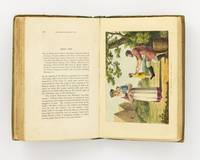
1833réf. 143387London: Seeley & Sons 1833. First Edition. Hardcover. Very Good. London Seeley & Sons 1833 first edition. Large octavo xii 486 2 plate list and errata pages plus 8 hand-coloured lithographs. Original quarter pebble-grained green cloth and plain papered boards with a black paper title-label on the spine; all edges uncut; cloth a little worn and unevenly stained; boards rubbed marked and worn at the extremities; early ownership signature 'Francis Marriage' on the front free endpaper; scattered light foxing; minor signs of age and use; a very good copy. Seeley & Sons hardcover
réf. MD18Elephant Folio broadside ca. 45x33 cm with the additional leaf for border officers’ entries attached to the bottom ca. 205x33 cm. 1 p. Official woodcut passport form filled in brown ink. With over a dozen officials’ entries and stamps on verso. Fold marks paper age toned worn on extremities but overall a very good document. Interesting example of a 19th century European travel passport. It was given to a “portrait maker and photographer” Friedrich Karl August Kühnemann a native and resident of Berlin for his work in Russia and was valid for one year. There is an interesting description of Kühnemann’s appearance: “26 years old of medium height hair and eyebrows fair eyes brown nose and mouth ordinary chin and face oblong”. The notes left by consular or border officials range from 29 January/10 February to 25 October/3 November 1857. According to them Kühnemann travelled via Austria and Breslau crossed the Russian border at Brody and proceeded to Husiatin Kamenets-Podolsky and Odessa. unknown
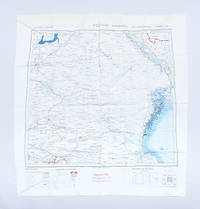
1952réf. 183941London: Ordnance Survey 1952. Later editions marked "restricted" revised from those produced by the War Office in 1919 and 1916 with isogonals correct to 1953. These maps were issued in the early years of the Cold War only a decade after the region was ravaged in the Battle of Stalingrad. Stepnoy now Elista was renamed only five years after this map's publication. In the early years of the Cold War the CIA attempted to gather information on the Soviet Union through aerial spying missions flown with the co-operation of the British government. "The RAF formed a top-secret reconnaissance outfit in the spring of 1951. Churchill approved the RAF overflight program knowing that if one of the planes came down on Russian territory Labour MPs in an embarrassed and angered House of Commons undoubtedly would force a vote of confidence to bring down his government. But he balanced that possibility against the desperate need for radar pictures of Soviet military targets that would held SAC and RAF bombers in the event of war" Burrows pp. 131-33. In 1952 John Crampton flew a high-speed high-altitude test run over the Berlin corridor which Bomber Command followed with three simultaneous sorties reaching as far as Moscow itself. After a ten-hour mission that triggered the Soviet air defences "All three planes made it back to Sculthorpe with their radar imagery and without a scratch" Burrows p. 134 angering the Kremlin and prompting a review of the nation's air warning systems. The map of Stalingrad is the fourth edition and the map of Stepnoy is the fifth. Single sheet of cloth 605 x 554 mm colour maps with key on each side pale border on Stalingrad side lettered in red blue and black. Map bright sometime folded and creased edges a little frayed: a very good copy. William Burrows By Any Means Necessary: America's secret air war in the Cold War 2001. hardcover
1955réf. 83663New York: Henry Holt 1955. First Edition. Octavo. 21.5cm. Publisher's red cloth spine over grey paper covered boards titled in gilt to spine. Dustjacket. 315pp. Some very light soiling to the paler portions of the boards minor bumping to spine ends internally clean with some offsetting to pastedowns and a very few discrete pencil marks to margins of the prelims in a bright sharp dustjacket with some minor wear to extremities. A very good copy. A rather alarmist but for the time rational analysis of the breadth of Soviet intelligence attempts to maintain and utilize a global espionage network; covers the Atom Spy frenzy The Rosenbergs Alger Hiss etc. Henry Holt unknown
1946réf. 83794Stanford CA: Stanford University Press for The Hoover Library on War Revolution and Peace 1946. First American Edition. Octavo. 23cm. Publisher's black cloth titled and decorated in gilt to spine. Dustjacket. xv; 658pp. Very light wear to the cloth mostly confined to some shallow cosmetic bumping to spine ends; internally clean; in a clean strong price-clipped dustjacket with some marginal fraying and isolated shallow loss to edges some toning of the spine panel and some largely unnecessary tape reinforcement to the verso of the jacket. A very good copy in a dustjacket with some light wear. A sizeable biography of the life of Ipatieff who managed to be a respected scientific figure before the Revolution and an even more respected one afterwards. It can have been no mean feat to have been head of Imperial Russian chemical warfare research during WW1 and then post-revolution to be held responsible for the revitalization of the chemical industry of the newly minted USSR. A joint memoir of the last days of Imperial Russia and the early days of the USSR with all the turbulence fear and uncertainty that must have engendered. Stanford University Press for The Hoover Library on War, Revolution and Peace unknown
1855réf. 820251855. 15" x 9-3/4" broadside text in three columns. 15" x 9-3/4" broadside text in three columns. Unrecorded Broadside Marking the Death of Nicholas I Broadside. Nicholas I 1796-1855 Emperor of Russia. Biography of the Emperor Nicholas and Sudden Deaths of the Romanoff Family! Nottingham: Printed and Published by Thomas Stevenson 1855. 15" x 9-3/4" broadside text in three columns below headline and large woodcut vignette depicting the death of Nicholas I. Moderate toning very light edgewear faint fold lines and creases to corners light foxing to lower right corner a few faint stains. Rare. $1500. This broadside was published after the death of Nicholas I from pneumonia on March 2 1855. His death occurred during the Crimean War and the Siege of Sevastopol which had been ongoing since October 1854 and ended in September 1855 six months after Nicholas's death. The broadside is mostly dedicated to a brief biographical history of the Romanov dynasty. It ends with a section headed "Latest Intelligence" containing dispatches from Berlin Warsaw Sevastopol and Marseilles. No copies located on OCLC or Library Hub. Not at the British Library. unknown
1982réf. 84404New York: Crane Russak 1982. First Thus. Octavo. 23cm. Publisher's bright red cloth titled in black to spine. Dustjacket. xxvi; 398pp. Light bumping to spine ends some very light wear to the extremities of the cloth; internally clean; in a clean sharp example of the dustjacket. A near fine copy. A study produced under the auspices of the RAND Corporation a military adjacent think-tank and research institution originally created to research and protect against future methods of warfare but later expanding into the civilian sector. Coinciding with the opening of Soviet hostilities against Afghanistan but working from a body of knowledge accumulated since the end of WW2 and the commencement of the Cold War this is an attempt to predict and understand Soviet military and strategic thinking and behavior in time of conflict. Crane Russak unknown
1980réf. 81760Moscow: Tushino Machine Building Plant 1980's. Pasteboard box 44cm x 23cm. Name printed in stark black and white onto a stereotypically minimalist Soviet box all the more susrprising considering this is a toy for children. Light inoffensive wear to the extremities a little rubbing and scuffing to the corners clean and complete. The verso of the box lid contains a plan of the contents with item numbers and small illustrations. Inside the box liner is moulded polystyrene with spaces for the individual components ranging from pressed steel baseboards and wall/hull sections to a set of rubber tyres woven string to simulate hawsers and cables pulleys connecting rods all the necessary tools a bag of nuts bolts and other connector pieces; all mass produced in a fashion that would have even a cursory modern day child safety inspection shutting down the whole plant and issuing a warning that if your children get this for Christmas you might need to count their fingers on Boxing Day. Miraculously complete as far as can be ascertained and with very little sign of use including the plans and construction book which is complex enough to count as aggressively educational and has the original warranty sheet with inspection stamps hand stamped and dated 1992 although the slip dates the set to the 1980's laid in. The introduction to the set in the 62 page instruction book states: "The 'Yunost' contruction set is a game designed in 1944 to introduce children aged 10-15 years to the principles of technical design and construction engineering. Each set of the 'Yunost' construction set contains the most intricate parts intnded for assembling models of various mechanisms machines and industrial structures." Clearly designed as a controlled Soviet alternative to Western toys like Erector Sets Meccano and the like the principles are identical whilst the delivery is rather more tailored to a deliberately educational USSR approach to entertaining children. "Nothing without purpose" seems to have been the guiding tenet of USSR toy production approaches which became notorious for taking an existing Western temptation like Meccano or Lego or GI-Joe and adapting them to the requirements of collective adherence to the improvement of the USSR. To Western eyes a lot of this material looks like the physical representation of the "We have McDonalds at home." meme but whilst Western toy design was aimed as much at keeping kids quiet and out of the way with a side of education the Soviet philosophy seems to have been 'if a child is building a toy crane then he should be learning the principles of load bearing members understanding pulleys and getting an idea of where crane operators fit into the process of industrial engineering' whilst this approach seems to take some of the joy out of play time it also contributed to the Western paranoia that the USSR was basically a cradle to grave enemy factory. Tushino Machine Building Plant unknown
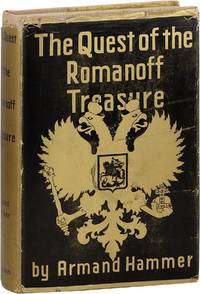
1936réf. 83612New York: The Paisley Press Inc. Succeeding William Farquhar Payson 1936. Stated Third Edition. Octavo. 21.5cm. Publisher's heavy grain pale grey cloth titled and decorated in gilt to spine and front board. Dustjacket. xi; 241pp. Some wear and discoloration to extremities very light it's a very solidly produced book so wear and tear is represented by darkening of the cloth at the edges and some softening of the spine ends rather than anything more drastic; internally clean ownership to front pastedown author's signature to front flyleaf; in a handsome example of the gold and black dustjacket with some chipping and shallow loss to the spine ends scuffing and rubbing to the gilt paper coating and some marginal creasing and soiling. A very good solid copy. Illustrated throughout with full page plates. For a man named by his father after the logo of the American Socialist Labor Party after slipping out of Odessa in the 1870's Armand Hammer's journey to become one of the world's most influential businessmen and "Lenin's Favorite Capitalist" must have been a dramatic one. His father Julius had spent much of the early 20th century consolidating his role at Allied Drug and Chemical which was essentially at times a smuggling front shipping embargoed goods to Russia during the US trade sanctions. After Julius was sentenced to 3 years in Sing Sing allegedly for a botched abortion that resulted in the death of a Russian woman from subsequent pneumonia although modern research suggests that Armand a medical student might have been the one who performed the abortion and Julius took responsibility as the qualified senior medical professional present Armand took over Allied Drug and Chemical and raised it to new heights of corporate success. During Prohibition Allied's largest seller was a essentially alcoholic ginger ale sold as a medicinal tonic to great profit. Acting under the instructions of his imprisoned father Armand began taking numerous business trips to the Soviet Union. A young J. Edgar Hoover at that point basically an analyst at the Justice Department very strongly believed that the equally youthful Hammer was a COMINTERN courier and essentially placed him under surveillance for the rest of his life. Hammer's trips to Russia were ostensibly to recoup bad debts but this quickly developed into a number of lucrative business deals not least of which was selling cheap wheat to starving famine hit areas of Russia. Hammer developed a close co-operative no pun intended relationship with Lenin which resulted in a number of very high status business contracts and deals ranging from medical import contracts to 25 year's worth of asbestos mining in the Urals; one of Hammer's greatest coups was arranging payment for various services in furs caviar jewellery and antiquities seized by the Party from its long tail of enemies making him essentially a conduit for looted and otherwise dubious art jewels and antiques. At the height of Lenin's New Economic Policy Armand Hammer was the sole trade liason between the enormity of Soviet Russia and 38 major US corporations seeking to build trade deals through him. His grasp of the downrange necessities of dealing with the Soviets; graft bribery corruption and palm greasing was legendary and by the 1970's when his methods were starting to be inspected more closely there was no doubt that Hammer's understanding of legitimate business was secondary to his instinctive abilities in the fields of corporate and beaurocratic bribery and manipulation. This book is one personal perspective on the empire of treasure that Hammer accumulated; there are others and the entangled ephemeral traces of looted artworks forged and unfinished Fabergé eggs specially manufactured jeweller's tools designed to copy Fabergé's style exactly and a wealth of other foggy rumors and suspicions ranging from Armand the KGB stooge to Armand the James Bond Villain bent on Soviet domination through capitalism will continue to follow in his wake whether he be considered a legitimate businessman or a highly successful 20th century robber baron of legendary proportions. The Paisley Press Inc. Succeeding William Farquhar Payson unknown
réf. DADAX1602231400New unknown
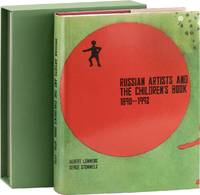
1990réf. 81719Nijmegen: LS 1990. First Limited Edition. Deluxe issue one of eleven copies in slipcase signed by both authors and issued with an original Soviet children's book in this case a copy of Kornei Chukovsky's Telefon Moscow: 1936 with illustrations by Vladimir Konashevich. Quarto 28cm; cloth hardcover dustjacket 511pp; illus. Supplemental DVD laid in as-issued. A fine copy in a crisp unworn dustwrapper and unworn slipcase. The included copy of Telefon is housed in a folding chemise designed to slip into the same slipcase as the main volume; staple-bound pictorial wrappers; 16pp light toning and wear to wrappers else Near Fine. A most desirable copy of what has become a standard English-language reference for Russian illustrated children's books. The deluxe issue is necessarily rare and seldom offered for sale. LS unknown
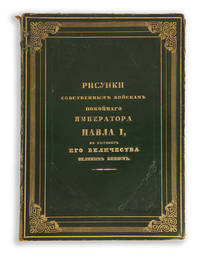
réf. 109898St. Petersburg Lithographic Department of the Military Settlement 1835. . First edition small folio 31 x 22 cm; lithographic title and 10 unnumbered coloured by contemporary hand title soiled at foot where mark of ownership erased bottom corners of leaves with very light staining pl. 7 with printed Russian caption and early manuscript German translation; contemporary green Russian morocco upper cover lettered in gilt both covers with elaborate panelling in gilt and blind flat spine in gilt panels gilt turn-ins blue endpapers gilt edges extremities rubbed tiny split in joint at head of spine a fine copy. Remarkably fine series of hand-coloured prints of military costumes after Paul I in an exceptional contemporary Russian binding. The book was printed at the personal bequest of his son Tsar Nicholas I in an incredibly small edition. The short reign of Paul I ended with his murder in 1801 and was marked by his obsession with dress uniforms. All ten of the figures in this rare suite are drawn in the same posture at attention with arms firmly clasped to sides and though this gives them a slightly doll-like quality they are painstakingly and beautifully coloured by a contemporary hand. Nicholas I viewed his father with deep reverence and also admired the pomp and order of the Imperial army this publication was an attempt to honour his father's legacy. [St. Petersburg], Lithographic Department of the Military Settlement, 1835. unknown
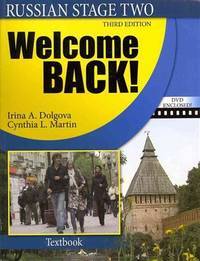
2009réf. 1-0757563430Kendall Hunt Publishing 2009. Paperback. New. 3rd edition. 277 pages. Russian language. 10.80x8.40x2.80 inches. Kendall Hunt Publishing paperback
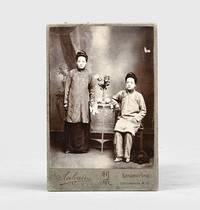
1890réf. 154515Vladivostok: Livay Studio No. 11 Svetlanskaya Street c. 1890. A scarce late 19th-century record of styles of clothing and foot-binding followed by well-to-do Chinese women in the Russian border city of Vladivostok. The Livay photographic studio catered specifically to Chinese residents and visitors and we have not been able to trace any other surviving examples of its work. Following China's transfer of the Haishenwei region to the Tsar in 1860 Vladivostok became a thriving centre of economic activity and cultural interchange between Russians and Chinese with both of these communities served by the Livay studio based on the city's main boulevard. This photograph is a pleasing corrective to the many surviving photographs of late-imperial Chinese women often produced in cities such as Shanghai which adopt an orientalizing gaze. While photography was introduced into Russia soon after its invention it remained a preserve of the very wealthy until the 1860s when technological changes fuelled an explosion in the number of photographic studios in major cities. "In the hands of commercial studio photographers the medium retained its original social function namely "to solemnize and to immortalize" the portrayed subject. The studio photograph was an index and a means of communicating one's status; it indicated the sitter's place in the social hierarchy both as a commodity object and as information. But more importantly photography dominated the market for portraiture and democratized visual self-representation. It captured people from across the social spectrum and brought about a visual levelling whereby the social benefits and drawbacks of this type of publicity was showered equally on kings nobles lawyers merchants and cobblers. Photography as a mechanized medium of self-representation pulled members of different social class onto the same visual level in the public sphere" Stolarski pp. 4-5. Cabinet card 164 x 108 mm mounted gelatine photograph 140 x 103 mm with glossy finish card lettered in red in Russian and Chinese. Small scuff to upper right corner of photograph image substantially unaffected couple of faint stains to card verso skinned where sometime mounted. A very good example. Christopher Stolarski "The Rise of Photojournalism in Russia and the Soviet Union 1900-1931" PhD Diss. 2013. hardcover
réf. SONG019064558XUsed: Good unknown
réf. DADAX0415786967New unknown
réf. DADAX0198852983New unknown
réf. DADAX0198734832New unknown
réf. DADAX1541768620New unknown
réf. SONG1682472833Used: Good unknown
réf. SONG1788312392Used: Good unknown
réf. DADAX1538114267New unknown
réf. DADAX0199324352New unknown
réf. DADAX1138465933New unknown
réf. DADAX1626164886New unknown