[RUSSIA] [MILITARIA] LEITES, NathanBiblio.com

20.295 risultati
1982rif. 84404New York: Crane Russak 1982. First Thus. Octavo. 23cm. Publisher's bright red cloth titled in black to spine. Dustjacket. xxvi; 398pp. Light bumping to spine ends some very light wear to the extremities of the cloth; internally clean; in a clean sharp example of the dustjacket. A near fine copy. A study produced under the auspices of the RAND Corporation a military adjacent think-tank and research institution originally created to research and protect against future methods of warfare but later expanding into the civilian sector. Coinciding with the opening of Soviet hostilities against Afghanistan but working from a body of knowledge accumulated since the end of WW2 and the commencement of the Cold War this is an attempt to predict and understand Soviet military and strategic thinking and behavior in time of conflict. Crane Russak unknown
1994rif. 725869London: HarperCollins 1994-06-06. First Edition. hardcover. Very Good/Very Good. 6x1x9. Gift inscription to title page. Slight fading to D/J. HarperCollins hardcover
1980rif. 81760Moscow: Tushino Machine Building Plant 1980's. Pasteboard box 44cm x 23cm. Name printed in stark black and white onto a stereotypically minimalist Soviet box all the more susrprising considering this is a toy for children. Light inoffensive wear to the extremities a little rubbing and scuffing to the corners clean and complete. The verso of the box lid contains a plan of the contents with item numbers and small illustrations. Inside the box liner is moulded polystyrene with spaces for the individual components ranging from pressed steel baseboards and wall/hull sections to a set of rubber tyres woven string to simulate hawsers and cables pulleys connecting rods all the necessary tools a bag of nuts bolts and other connector pieces; all mass produced in a fashion that would have even a cursory modern day child safety inspection shutting down the whole plant and issuing a warning that if your children get this for Christmas you might need to count their fingers on Boxing Day. Miraculously complete as far as can be ascertained and with very little sign of use including the plans and construction book which is complex enough to count as aggressively educational and has the original warranty sheet with inspection stamps hand stamped and dated 1992 although the slip dates the set to the 1980's laid in. The introduction to the set in the 62 page instruction book states: "The 'Yunost' contruction set is a game designed in 1944 to introduce children aged 10-15 years to the principles of technical design and construction engineering. Each set of the 'Yunost' construction set contains the most intricate parts intnded for assembling models of various mechanisms machines and industrial structures." Clearly designed as a controlled Soviet alternative to Western toys like Erector Sets Meccano and the like the principles are identical whilst the delivery is rather more tailored to a deliberately educational USSR approach to entertaining children. "Nothing without purpose" seems to have been the guiding tenet of USSR toy production approaches which became notorious for taking an existing Western temptation like Meccano or Lego or GI-Joe and adapting them to the requirements of collective adherence to the improvement of the USSR. To Western eyes a lot of this material looks like the physical representation of the "We have McDonalds at home." meme but whilst Western toy design was aimed as much at keeping kids quiet and out of the way with a side of education the Soviet philosophy seems to have been 'if a child is building a toy crane then he should be learning the principles of load bearing members understanding pulleys and getting an idea of where crane operators fit into the process of industrial engineering' whilst this approach seems to take some of the joy out of play time it also contributed to the Western paranoia that the USSR was basically a cradle to grave enemy factory. Tushino Machine Building Plant unknown
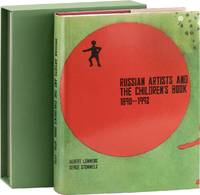
1990rif. 81719Nijmegen: LS 1990. First Limited Edition. Deluxe issue one of eleven copies in slipcase signed by both authors and issued with an original Soviet children's book in this case a copy of Kornei Chukovsky's Telefon Moscow: 1936 with illustrations by Vladimir Konashevich. Quarto 28cm; cloth hardcover dustjacket 511pp; illus. Supplemental DVD laid in as-issued. A fine copy in a crisp unworn dustwrapper and unworn slipcase. The included copy of Telefon is housed in a folding chemise designed to slip into the same slipcase as the main volume; staple-bound pictorial wrappers; 16pp light toning and wear to wrappers else Near Fine. A most desirable copy of what has become a standard English-language reference for Russian illustrated children's books. The deluxe issue is necessarily rare and seldom offered for sale. LS unknown
1929rif. 505546Paris: Editions J. Oliven 1929. Book. Good / État Satisfaisant. Soft cover. Signed and inscribed by the Author. Inscribed to previous owner and signed in English by the Grand Duke Alexander of Russia. Text in French. A good copy. . Editions J. Oliven Paperback
rif. 61006261Northern Illinois University Press . Hardback. New. pp. liv 421 Maps Index Northern Illinois University Press hardcover
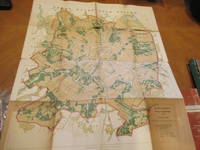
1935rif. 029571Moscow 1935. 1st Edition . No Binding. Good. Color Map Of Moscow In 1935. Single Sheet Approximately 26" X 30" Printed On One Side In Black Text Green Parks Tan Public Areas/0 And Brown City Blocks Red Outlines For City Limits Red Dotted Lines For Administrative Security Area. Scale 1:50000. An Important Map Of Moscow Showing All Streets And Depicting The New General Plan For The City. 1935. Light Wear Torn Along Many Folds Browning To Exposed Lower Right Panel. One Of 50000 Copies Printed But Now Scarce. unknown
rif. DADAX0875981259Brand: Pierpont Morgan Library 0000-00-00. hardcover. New. 0.00x0.00x0.00. Buy with confidence. Excellent Customer Service & Return policy. Brand: Pierpont Morgan Library hardcover
rif. 62195510Northern Illinois University Press . Papeback. New. pp. 475 Northern Illinois University Press unknown
1905rif. 64112New York: Harper & Brothers 1905. Tall 8vo. 505 1 pp. With 100’s of text woodcuts & engravings maps on endpapers. Brick-red decorated publisher’s cloth black & gilt lettering front cover gilt lettering on spine w/ d.j. chipping & loss to spine minor chipping to fore-edges closed tears still NF/G- copy. Later printing of this fairly scarce installment in the Boy Travellers series set against the backdrop of a follow-up to the Far East and Americas adventures with Frank Bassett & Fred Bronson journeying from Vienna to Warsaw & St. Petersburg Moscow the great fair in Nijni Novgorod the Caspian Sea and across Central Asia. Knox 1835-1896 famed Civil War correspondent for the New York Herald later worked for the Russo-American Telegraph Company which inspired his Boy Travellers series featuring an industrialist father and two sons traveling the world. Exceedingly rare in dustjacket. Harper & Brothers, hardcover
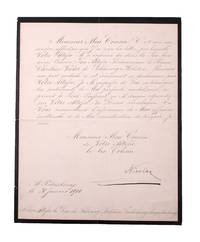
1901rif. 346384St. Petersburg 1901. One-page secretarial letter in French on mourning stationery with a secretarial copy marked in ink Copie . signé Nicolas. 1 vols. 10 x 8 inches. Old folds generally fine. With transcription and translation. One-page secretarial letter in French on mourning stationery with a secretarial copy marked in ink Copie . signé Nicolas. 1 vols. 10 x 8 inches. A formal note of condolence from Nicholas II Emperor of all the Russias styled "le bon Cousin" in the closing addressed to Ernst Gunther II 1863-1921 third Duke of Schleswig-Holstein "Monsieur Mon Cousin!" after learning of the death of Prince Christian Victor of Schleswig-Holstein a grandson of Queen Victoria and British officer who died of malaria in Pretoria on 29 October 1900. A somber and attractive autograph documenting the close connections between the royal and imperial household of prewar Europe. Provenance: Dr. Herbert Ernest Klingelhofer 1915-2015 collector and former President of the Manuscript Society bought from Karl Faber 1957 unknown
rif. 55202Irkutsk or Vladivostok: Litografie Inf.-osv. odboru Äsl. vojska na Rusi 1919 or 1920. Postcard 14.3 × 9.5 cm with chromolithograph illustration signed "P" and text "Dopisnice/Pochtovaia kartochka" in Czech and Russian. Unused; very light crease to corner; else very good. Lithographed postcard by Vojtěch Preissig 1873-1944 issued by Czechoslovak Legion soldiers who fought alongside the White Army in Siberia after WWI and controlled large stretches of the Transsiberian Railroad from 1918-19. By 1919 the Legion soldiers retreated further eastward alongside Kolchak's army while transporting the bulk of the Imperial gold reserves for the Whites. In 1920 the Czechoslovak Legion was gradually evacuated by ship from Vladivostok and over 60.000 soldiers returned to the Czechoslovak Republic. Despite the precarious conditions the Legion issued a daily newspaper using a printing press on board the train as well as numerous brochures books as well as handwritten lithographed bulletins printed in small print runs. During longer stops such as during their time in Vladivostok a printer's shop was set up outside the train and the operations significantly expanded. Preissig was an important Secessionist painter graphic artist and book designer who worked with Alfons Mucha among others. In the 1910s he taught art in the United States at the Art Students' League and Columbia University as well in Boston. While still abroad Preissig met future Czechoslovak president T. G. Masaryk and became involved in the independence movement which he supported graphically by designing posters and postcards. He returned to Prague in 1931 establishing himself not only as a leading typographer and book designer but also as a pioneering abstract artist. Following the German Occupation of Czechoslovakia Preissig became involved in the resistance editing and designing an illegal journal. He was arrested and died at Dachau in 1944. unknown
rif. 55203Irkutsk or Vladivostok: Litografie Inf.-osv. odboru Äsl. vojska na Rusi 1919 or 1920. Postcard 14.3 × 9.5 cm with chromolithograph illustration signed "P" and text "Dopisnice/Pochtovaia kartochka" in Czech and Russian. Unused; very light crease to corner; else very good. Lithographed postcard by Vojtěch Preissig 1873-1944 issued by Czechoslovak Legion soldiers who fought alongside the White Army in Siberia after WWI and controlled large stretches of the Transsiberian Railroad from 1918-19. By 1919 the Legion soldiers retreated further eastward alongside Kolchak's army while transporting the bulk of the Imperial gold reserves for the Whites. In 1920 the Czechoslovak Legion was gradually evacuated by ship from Vladivostok and over 60.000 soldiers returned to the Czechoslovak Republic. Despite the precarious conditions the Legion issued a daily newspaper using a printing press on board the train as well as numerous brochures books as well as handwritten lithographed bulletins printed in small print runs. During longer stops such as during their time in Vladivostok a printer's shop was set up outside the train and the operations significantly expanded. Preissig was an important Secessionist painter graphic artist and book designer who worked with Alfons Mucha among others. In the 1910s he taught art in the United States at the Art Students' League and Columbia University as well in Boston. While still abroad Preissig met future Czechoslovak president T. G. Masaryk and became involved in the independence movement which he supported graphically by designing posters and postcards. He returned to Prague in 1931 establishing himself not only as a leading typographer and book designer but also as a pioneering abstract artist. Following the German Occupation of Czechoslovakia Preissig became involved in the resistance editing and designing an illegal journal. He was arrested and died at Dachau in 1944. unknown
1974rif. 21120Winnipeg MB: A. Giesinger. Very Good in Very Good dust jacket. First Edition. Hardcover. DJ shows light shelfwear with a couple of short tears - boards show light shelf wear date printed in ink on FFEP previous owner's name inked out on FFEP.; A tight solid book hinges intact. Dust jacket in Mylar jacket protector. Extensive bibliography notes and index at back.; 8vo 8" - 9" tall; 443 pages; This is a very thorough history of how groups of German Mennonites decided to relocate to a number of colonies in Russia how they were treated there and how many of them decided in later years to find new homes around the world. Many of them from the late 1800s to the mid 1900s settled in the the US and Canadian Prairies as well as the West Coast and to South America. The German Mennonites who decided to stay in Russia were not treated well. They were relocated from the choice farming areas of the south to Siberia. . 1974. A. Giesinger hardcover
1926rif. 59234Washington D.C.: Government Printing Office Hydrographic Office U.S. Navy 1926; 1930. Two vols. 8vo.viii 478 pp.; 1 22; 1 leaves. With 1 large folding colour map. First vol. in tan publisher’s buckram black lettering front cover & spine minor soiling spotting fore-edges of covers darkening to spine very slight uniform interior toning; 2nd. vol. w/ self-printed softcovers toning to fore-edges minor chipping still VG set. Second edition stated of vol. I and 1st edition of Supplement. These uncommon coast pilot guides to Eastern Mediterranean waters the Black Sea and the Sea of Azov draw upon British Royal Navy Ottoman Empire & Turkish coast pilots Russian & U.S. Navy reports. Prior to modern GPS systems and satellite navigation these regularly updated and revised navigation handbooks provided key sailing instructions. The maps outlines the available charts for the designated areas surrounding the Black Sea as well as detailing those for the extensive set of the Mediterranean Sea. Government Printing Office, Hydrographic Office, U.S. Navy, paperback
1719rif. 59230Washington D.C.: Government Printing Office Hydrographic Office U.S. Navy 1917; 1930. Two vols. 8vo. ix 1 4 364 pp.; 19 mimeograph leaves. With 2 large folding colour map. First vol. in black publisher’s buckram silver lettering stamped on front cover & spine minor shelfwear slight interior toning shelfwear 2nd vol. mimeographed typescript & stapled at gutter margin minor dustsoiling edgewear predation to lower fore-edge tear to last leaf of blank lower portion still a VG set. First editions of these coast pilot guides to Arctic waters during and after World War I issued about the time of the Russian Revolution and offered key navigational guides for Naval forces during the ill-fated White Russia Revolution and over 13000 troops in the Polar Bear Expedition. Prior to modern GPS systems and satellite navigation these regularly updated and revised navigation handbooks provided key sailing instructions often drawing not only from Russian & British sources but also sailing reports from U.S. Navy vessels and those from merchant ships. The two maps serve as indexes to sailing charts to be ordered from the Hydrographic Office and keyed to sailing instructions within the coast pilots. The supplement is uncommon no copies located in Worldcat. Government Printing Office, Hydrographic Office, U.S. Navy, hardcover
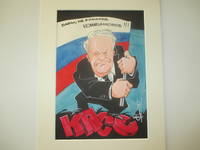
1989rif. 15638AB1989. Moscow 1989 - 1991. 38 : 265 cm. Original water-colour on stiff cardboard. This was made in the so calles 'Arbat Street Artistery' where after the end of communism artists sold their art to the first 'est tourists". unknown
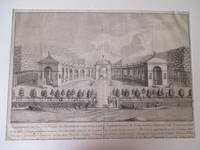
1750rif. 14523AB1750. Sta. Petersburg Academie Imp. des Scien et des Arts ca. 1750 48 : 69 cm Original engraving with text in Russien and Frenche below the image. Rare engraving of the Amphitheatre near St. Petersburg. unknown
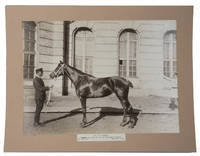
1900rif. L7NBLF1PS3N8Russia 1900. Each photo ca. 27 x 37 cm. Pasted on cardboard. Series of 12 fine large and sharp photographs of Russian race horses. Pasted below each photo a slip with text written in cyrillic script names the horse owner pedigree and breed of horse in the photograph. Each horse is accompanied by a man holding the reins dressed in possibly a matching costume. They were all photographed at the same track in the yard of what seems to be a palace. The names of the horses are: Prezes Jako Velizarij Fanfara Taran Lenta Mon Barry Karina Lusty Nord-Ost Lena and Forteca.With a blind stamped signature of the photographer unidentified by us. Paperboard supports slightly warped. One photo with a minor tear otherwise all in very good condition. unknown
1917rif. 318401Philadelphia: J.B. Lippincott. London : Chapman & Hall 1917. First edition. With numerous Illustrations. xi 1 232 pp. 8vo. Bound in light tan mottled modern three quarters polished calf brown leather title label and marbled boards. Fine. First edition. With numerous Illustrations. xi 1 232 pp. 8vo. J.B. Lippincott. London : Chapman & Hall unknown
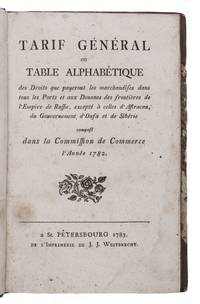
1783rif. 18774St. Petersburg: J.J. Weitbrecht 1783. Contemporary half calf marbled sides sprinkled edges. 8vo. Second known copy of a commercial publication of statutes promulgated in French by the Russian Empress Catharine the Great concerning import duties for commercial merchandise in Russian ports and at other frontiers of the Russian Empire as they were determined and accepted in 1782. There is an exception for Astrakhan a major port and market city in southern Russia at the head of the Volga river which was under the government of Siberia which apparently maintained its own commercial regulations.This publication is very rare WorldCat lists only 1 copy Kress Library of Business and Economics Harvard University. Other libraries worldwide have only the microfilm of the Kress copy.A faint stain and one tiny hole in the margin of the first 20 pp. Cover slightly rubbed. Otherwise in good condition.l Goldsmiths'-Kress 12431.16. J.J. Weitbrecht, unknown
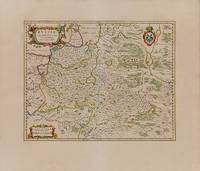
1664rif. 200038AG1664. Amsterdam Blaeu c.1664. Original hand-coloured engraving. Plate Size: 48.7 cm x 38.6 cm. Sheet Size: 65.2 cm x 55.7 cm. Original map. In very good clean condition. Wide margins. Latin text on reverse. Koeman II 1803:2. From: J. Blaeus Grooten Atlas oft Werelt- Beschryving in welcke 't Aerdryck de Zee en Hemel wort vertoont en beschreven. Amsterdam J. Blaeu 1664. Van der Krogt 2 621. Beautiful map of mid-17th Century Russia published during the reign of Tsar Alexis of Russia of the Romanov Dynasty as Moscow vied for regional hegemony with the PolishLithuanian Commonwealth and Sweden. 'Mosqua' Moscow is in the lower right corner. Smolesnsk is just squeezed in within the maps lower border. Novogorod can be seen just below the outflow of Lake Ilmen. In the upper left lies Estonia and the Gulf of Finland. Below this is the 'Livonia' region which is now between Latvia and Estonia. The regions listed as 'Ingria' and 'Careliae Pars' on the map were then under the control of the Swedes. The Russians would eventually seize this territory and dominance of the Baltic and build their new capital St. Petersburg there. This lay in the future. The map's political delineation shows the westward extent of Moscow's reach. 'Lithva' in the lower left of the map was then within the territory of Polish-Lithuanian Commonwealth. This region is now modern-day Belarus: 'Witespk' is now the Belarussian city of Viciebsk. Relief depicted pictorially and the historic place-names are in Latin. The cathedral cities such as Pereslaw Pereslavl-Zalessky and Ieroslaw Yaroslavl and Pseskow/Pskouwa Pskov are depicted. With numerous deers and foxes seen across the map the mapmaker indicates that this is a vast region still untamed. In the 'Megrina' province the mapmaker shows a bear-hunt at its deadly denouement. The map is covered with forested areas and vast waterways such as the Volga and Volkhov and Daugava/Dvina 'Duna flu' Dnieper Boristenis Flu rivers and a patchwork of lakes such as Lake Peipus and 'Biela Osera' Rybinsk Reservoir. Large decorative title cartouche accompanied with busts of moose and deer in the left top corner of the map. The eagles of the Russian coat of arms look east and west from the top right corner of the map. In the lower left corner an ornate cartouche contains two milliaria bar scales. Blaeu as it is noted on the cartouche based the map on the travels and maps of Isaac Massa. Isaac Abrahamszoon Massa 1586 - 1643 was a Dutch grain trader traveller and diplomat the envoy to Muscovy. He wrote memoirs related to the Time of Troubles and created some of the earliest maps of Eastern Europe and Siberia. Massa in Moscow witnessed the second half of Boris Godunov's reign during which a civil war broke out now known as the Time of Troubles. He survived the capture of Moscow by False Dmitriy I and left Russia in 1609 before the fall of Tsar Vasily Shuysky. Massa compiled an account of the 16011609 events Dutch: Een cort Verhael van Begin en Oorspronk deser tegenwoordighe Oorloogen en troeblen in Moscovia totten jare 1610 which he presented to Stadtholder Maurice. In 16121613 Massa published two articles on Russian events and the geography of the Land of Samoyeds accompanied by a map of Russia which were published in an almanac edited by Hessel Gerritsz. His notes on his various travels have been published in conjunction with maps made by the explorer Henry Hudson. Massa is credited with five published maps of Russia and its provinces the last ones compiled around 1633 and two maps of Moscow city including the schematic account of the 1606 battle between Vasily Shuysky and Ivan Bolotnikov's armies. He returned to Russia in 1614 and became an active agent in a myriad of diplomatic and commercial schemes and endeavours between Western states and companies and Moscow. Massa a wealthy and prominent man of the world has been the subject of several portraits by Dutch painter Frans Hals. Wikipedia Willem Janszoon Blaeu 1571-1638 was a Dutch cartographer atlas maker and publisher. Along with his son Johannes Blaeu Willem is considered one of the notable figures of the Netherlandish/Dutch school of cartography in its golden age the 16th and 17th centuries. Blaeu set up his mapmaking and publishing business in Amsterdam where he sold instruments and globes published maps and edited the works of intellectuals like Descartes and Hugo Grotius. In 1633 he was appointed map-maker of the Dutch East India Company. In 1635 he released his atlas Theatrum Orbis Terrarum sive Atlas novus. Willem died in 1638. He had two sons Cornelis 1610-1648 and Johannes 1596-1673. Joan trained as a lawyer but joined his father's business rather than practice. After his father's death the brothers took over their father's shop and Joan took on his work as hydrographer to the Dutch East India Company. Later in life Joan would modify and greatly expand his father's Atlas novus eventually releasing his masterpiece the Atlas maior between 1662 and 1672. Wikipedia unknown
1907rif. 318271London: Morgan and Scott 1907. Illus. 223pp. 8vo. Full brown calf. VG. Illus. 223pp. 8vo. Morgan and Scott unknown
1930rif. 317605London: Herbert Jenkins 1930. First Printing. Illus. 320pp. 8vo. Bound in modern three quarters mottled brown calf marbled sides leather title label. Fine. First Printing. Illus. 320pp. 8vo. Herbert Jenkins unknown
1880rif. 53786Moscow 1880. 10 hand-colored albumenprints some captioned in type in French and Russian. Oblong 4to. Contemporary quarter maroon morocco and boards cover titled in gilt "Photographs." Front joint cracked photographs in fine condition. 10 hand-colored albumenprints some captioned in type in French and Russian. Oblong 4to. Beautifully and finely hand-colored photographs of Moscow and St. Petersburg. Provenance: Baldur Bookshop Richmond Surrey receipt laid-in unknown