Stravinsky, IgorBiblio.com

416 résultats
2003réf. 44016AB2003. Cambridge Massachusetts / London Harvard University Press 2003. 12.5 cm x 18 cm. XIII 142 pages. Original softcover. Excellent as new condition with only very minor signs of external wear. Includes the following chapters:- Getting Acquainted / The Phenomenon of Music / The Composition of Music / Musical Typology / The Avatars of Russian Music / The Performance of Music etc. "One of the greatest of contemporary composers has here set down in delightfully personal fashion his general ideas about music and some accounts of his own experience as a composer. Every concert-goer and lover of music will take keen pleasure in his notes about the essential features of music the process of musical composition inspiration musical types and musical execution. Throughout the volume are to he found trenchant comments on such subjects as Wagnerism the operas of Verdi musical taste musical snobbery the influence of political ideas on Russian music under the Soviets musical improvisation as opposed to musical construction the nature of melody and the function of the critic of music. Musical people of every sort will welcome this first presentation in English of an unusually interesting book". Amazon. paperback
1947réf. 004697Cambridge: Harvard University Press 1947. First Edition. Original Cloth. Very Good. Harvard University Press Hardcover
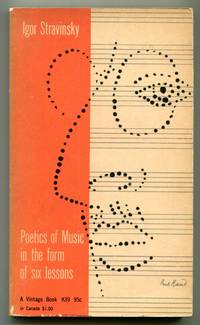
1956réf. 625594New York: Vintage 1956. Softcover. Very Good. First Vintage edition. Trade paperback. English translations by Arthur Knodel and Ingolf Dahl. Preface by Darius Milhaud. 146 4pp. Text in English. Illustrated wrappers by Paul Rand a bit rubbed and toned else very good or a little better. The poet Geoffrey Hill's copy with his ownership signature. Vintage unknown books
1942réf. 0089563Cambridge: Harvard University Press 1942. First printing. Hardcover. Very Good/Good. Cloth in dust jacket frontispiece clean unmarked text very good copy in good price-clipped dust jacket some soiling or discoloration to the outer pages and the page-edges some soiling to the dust jacket edgewear to the dust jacket including some tearing and loss. Dust jacket housed in archival dust jacket protector. Text in French. Uncommon. Harvard University Press hardcover
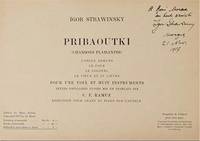
réf. 16-4193Genève: Edition Ad. Henn 1917. . Oblong 4to. 19 x 27.7 cm. 2 14pp. Original wraps. . Signed at Morges Switzerland and dated 21 Nov. 1917 and inscribed .The poet and playwright René Morax founded his Théâtre du Jorat near Mézières Switzerland in 1903. Made entirely of wood so as to be integrated into the barns of the surrounding countryside it was described this way in an early account: “A theater decidedly unlike any other. A sort of vast chalet a kind of huge barn smelling of resin dried hay fresh fruit and on days when there was a performance Sunday clothes but retaining the rustic dignity of a shrine. A large stage descending in broad steps toward the orchestra pit …”The theater was closed for several years during the Great War and Morax conceived a drama on the subject of King David to reopen it in 1921. When he turned to his wealthy friend Werner Reinhart who incidentally had recently funded the creation of Stravinsky’s Soldier’s Tale telling him that he was taking inspiration from Hindu theater for this work his patron offered to lend rare Hindu drums in addition to financial assistance. The text is drawn from the Hebrew Bible I and II Samuel I Kings in addition to the Huguenot Psalter which includes poetry by Clément Marot. The poet’s brother Jean Morax set to work designing costumes and sets. After several more established composers turned him down René on the advice of Stravinsky and the distinguished conductor Ernest Ansermet chose the then unknown twenty-eight year old Arthur Honegger. “When Swiss poet Rene Morax 1873-1963 was looking for a composer for his new King David libretto Stravinsky recommended the twenty-nine-year-old Arthur Honegger a composer who just six years later creating the film score for Abel Gance’s Napoleon would reveal himself as a master of music’s ability to translate epics into sweeping evocative sound. In 1921 right on the cusp of his first successes Honegger wrote the David score in a flush of creative energy.”. Provenance from the estate of René Morax. Expertise by Claire PIGUET Geneva Genève: Edition Ad. Henn, 1917. paperback
2014réf. 54617Analogue Productions, 2014. CAPC 2150 SA CD CD
réf. 1784543195.Gpaperback. Good. Access codes and supplements are not guaranteed with used items. May be an ex-library book. paperback
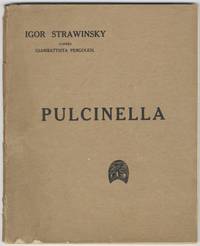
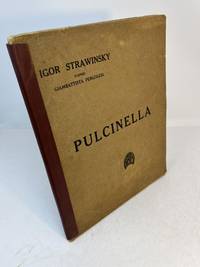
1920réf. 41305London Genève: J. & W. Chester Ltd. PN J. & W. C. 9707 1920. Folio. Original publisher's printed dark ivory wrappers with decorative device to upper and publisher's details within decorative border to lower. 1f. recto title verso printed notice regarding first performance with named cast list and scenario 86 pp. Named cast includes Massine Pulcinella Thamar Karsavina Pimpinella Tchernicheva Prudenza Nemtchinova Rosetta Novac Fourbo Idzikowky Caviello Zverew Florindo Cecchetti Il Dottore Kostetsky Tartaglia and Bourman Okimowsky Micholaitchik and Loukin Petits Pulcinella. Wrappers somewhat worn and soiled; torn at spine with minor loss; partially detached. Minor internal wear; two small chips to blank lower margin of title and upper wrapper. First Edition. Scarce. Kirchmeyer 34-1. White p. 282. De Lerma P60. CPM Vol. 54 p. 440. Pulcinella commissioned by the Russian impresario and founder of the Ballets Russes Sergei Diaghilev 1872-1929 was first performed in Paris at the Opéra on 15 May 1920 with Ernest Ansermet conducting. The libretto and choreography were by Léonide Massine with costumes and sets designed by Pablo Picasso. J. & W. Chester, Ltd. [PN J. & W. C. 9707] unknown
1920réf. CE236960London: J & W Chester Ltd 1920. 1st ed. thus. Paperback. Good. large quarto tan wraps 1st thus 1920 86 pages text in French. Spine covered with maroon cloth tape Exterior lightly soiled & edgeworn bumped corners owners names inside one is Reba Paeff; text clean / unmarked but slight soil / edgewear to final page. SHEET MUSIC.- Piano - vocal. J & W Chester, Ltd paperback
1920réf. 41305London Genève: J. & W. Chester Ltd. PN J. & W. C. 9707 1920. Folio. Original publisher's printed dark ivory wrappers with decorative device to upper and publisher's details within decorative border to lower. 1f. recto title verso printed notice regarding first performance with named cast list and scenario 86 pp. Named cast includes Massine Pulcinella Thamar Karsavina Pimpinella Tchernicheva Prudenza Nemtchinova Rosetta Novac Fourbo Idzikowky Caviello Zverew Florindo Cecchetti Il Dottore Kostetsky Tartaglia and Bourman Okimowsky Micholaitchik and Loukin Petits Pulcinella. Wrappers somewhat worn and soiled; torn at spine with minor loss; partially detached. Minor internal wear; two small chips to blank lower margin of title and upper wrapper. First Edition. Scarce. Kirchmeyer 34-1. White p. 282. De Lerma P60. CPM Vol. 54 p. 440. Pulcinella commissioned by the Russian impresario and founder of the Ballets Russes Sergei Diaghilev 1872-1929 was first performed in Paris at the Opéra on 15 May 1920 with Ernest Ansermet conducting. The libretto and choreography were by Léonide Massine with costumes and sets designed by Pablo Picasso. J. & W. Chester, Ltd. [PN J. & W. C. 9707] unknown books
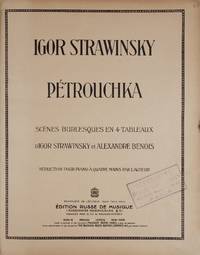
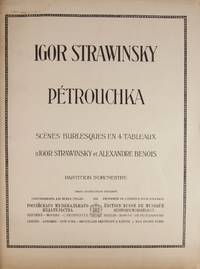
1912réf. 41390Berlin Moscou Leipzig New-York: Édition Russe de Musique PN R.M.V. 150 1912. Folio. Contemporary half black calf with marbled boards label of the Parisian music rental firm Rouart-Lerolle to upper marbled endpapers. 1f. recto title verso blank i named cast list referring to first production of 1911 in French i synopsis in Russian and French i "general remarks" in Russian and French i blank i dedication to A. Benois i blank 7-84 ii blank pp. Photographic transfer from engraved plates. With "ROME MAI 1911" and printer's note "Imp. C. G. Röder Leipzig." to lower outer corner of p. 84. Rouart Lerolle and "5" handstamps to title and first four leaves. Binding worn rubbed bumped and abraded; hinges split; small label with "143" in manuscript to upper board. First Edition first issue. Kirchmeyer 12-4. De Lerma P17. Crawford p. 533. Distinguishing imprint to title below crest found in the first issue is as follows: PROPRIÉTÉ DE L'ÉDITEUR POUR TOUS PAYS / ÉDITION RUSSE DE MUSIQUE / RUSSISCHER MUSIKVERLAG G.M. above BH below/ FONDÉE PAR S. ET N. KOUSSEWITZKY / BERLIN MOSCOU LEIPZIG NEW-YORK / POUR LA FRANCE ET SES COLONIES: MUSIQUE RUSSE PARIS 3 RUE DE MOSCOU / POUR L'ANGLETERRE ET SES COLONIES; THE RUSSIAN MUSIC AGENCY LONDRES W.I 34 PERCY STREET "The emergence of Stravinsky as a modernist with an individual manner unlike any other can be dated with some precision to his early work on Petrushka. In March 1910 during the later stages of composing The Firebird he had experienced the famous 'fleeting vision' out of which The Rite of Spring was to grow. But when Diaghilev and Nijinsky visited him in Lausanne in September 1910 they found him at work on something quite different a concert piece for piano and orchestra called 'Petrushka's Cry'. Together with a 'Russian Dance' composed soon afterwards this music was to form the basis of the ballet which Diaghilev instinctively urged him to write instead. . It is from the systematic attempt to render the particular flavour of traditional Russian life into music that Petrushka derives many of its freshest and most original qualities. . Looked at in general terms the opening sequence of Petrushka is a prototype of later Stravinskian form. Its underlying rhythmic design may not be complex in the same way as that of The Rite of Spring or the later Russian works but its intricacy of rhythmic detailing and its mixture of a highly fluid pattern of melodic stress with an inert background harmony laid the groundwork for a technique which through many changes of superficial style was to serve him for the rest of his life." Walsh: The Music of Stravinsky pp. 24-29. "Petroushka proved just as successful with the public and critics as The Firebird had been; but it was undoubtedly a more original work. In the first place Stravinsky had been able to play a leading part in the construction of the scenario which had not been the case with The Firebird. Secondly whereas the music of The Firebird showed that the pupil had learnt all that his master had had to teach him in Petrushka for the first time the authentic voice of the new master is heard." TNG Vol. 18 pp. 244-245. Petrushka one of Stravinsky's best-known and loved works represents the essence of Diaghilev's monumental Ballets Russes era. The ballet received its first performance with the incomparable Nijinsky in the title role at the Théâtre du Châtelet on 13 June 1911 conducted by Pierre Monteux with choreography by Fokine and designs by Alexandre Benois. Édition Russe de Musique [PN R.M.V. 150] unknown books
1912réf. 41313Berlin Moscou St. Pétersbourg .: Édition Russe de Musique PN R.M.V. 127 1912. Folio. Newly bound in quarter dark green cloth with mid-brown paper boards dark red title label gilt to upper and spine. 1f. recto title verso blank i named cast list ii synopsis i orchestration i recto dedication "À Alexandre Benois" verso blank 7-156 pp. 1f. errata tipped in to rear pastedown. With text in Russian and French. Named cast for the first performance by Diaghilev's Ballets Russes at the Théâtre du Chatelet in Paris on 13 June 1911 includes Tamar Karsavina Le Ballerine Vaslav Nijinsky Petrushka Orlow Le Maure and Enrico Ceccheti Le vieux Charlatan; the performance was conducted by Monteux with maître du ballet Fokine and sets and costumes designed by Benois and executed by Anisfeld sets and Caffi and Worobiew costumes. Small area of faint dampstaining and minor cockling to upper inner margins. An attractive copy. First Edition first issue. Rare. Kirchmeyer 12-1. Hirsch II 905. De Lerma P15. White p. 193. Crawford p. 533. "The emergence of Stravinsky as a modernist with an individual manner unlike any other can be dated with some precision to his early work on Petrushka. In March 1910 during the later stages of composing The Firebird he had experienced the famous 'fleeting vision' out of which The Rite of Spring was to grow. But when Diaghilev and Nijinsky visited him in Lausanne in September 1910 they found him at work on something quite different a concert piece for piano and orchestra called 'Petrushka's Cry'. Together with a 'Russian Dance' composed soon afterwards this music was to form the basis of the ballet which Diaghilev instinctively urged him to write instead. . It is from the systematic attempt to render the particular flavour of traditional Russian life into music that Petrushka derives many of its freshest and most original qualities. . Looked at in general terms the opening sequence of Petrushka is a prototype of later Stravinskian form. Its underlying rhythmic design may not be complex in the same way as that of The Rite of Spring or the later Russian works but its intricacy of rhythmic detailing and its mixture of a highly fluid pattern of melodic stress with an inert background harmony laid the groundwork for a technique which through many changes of superficial style was to serve him for the rest of his life." Walsh: The Music of Stravinsky pp. 24-29. "Petroushka proved just as successful with the public and critics as The Firebird had been; but it was undoubtedly a more original work. In the first place Stravinsky had been able to play a leading part in the construction of the scenario which had not been the case with The Firebird. Secondly whereas the music of The Firebird showed that the pupil had learnt all that his master had had to teach him in Petrushka for the first time the authentic voice of the new master is heard." TNG Vol. 18 pp. 244-245. The rare first edition first issue of Stravinsky's colorful and well-loved ballet inspired by the St. Petersburg Shrove-tide Fair. Édition Russe de Musique [PN R.M.V. 127] unknown books
réf. B9781019567791Hardback. New. hardcover
1912réf. 41390Berlin Moscou Leipzig New-York: Édition Russe de Musique PN R.M.V. 150 1912. Folio. Contemporary half black calf with marbled boards label of the Parisian music rental firm Rouart-Lerolle to upper marbled endpapers. 1f. recto title verso blank i named cast list referring to first production of 1911 in French i synopsis in Russian and French i "general remarks" in Russian and French i blank i dedication to A. Benois i blank 7-84 ii blank pp. Photographic transfer from engraved plates. With "ROME MAI 1911" and printer's note "Imp. C. G. Röder Leipzig." to lower outer corner of p. 84. Rouart Lerolle and "5" handstamps to title and first four leaves. Binding worn rubbed bumped and abraded; hinges split; small label with "143" in manuscript to upper board. First Edition first issue. Kirchmeyer 12-4. De Lerma P17. Crawford p. 533. Distinguishing imprint to title below crest found in the first issue is as follows: PROPRIÉTÉ DE L'ÉDITEUR POUR TOUS PAYS / ÉDITION RUSSE DE MUSIQUE / RUSSISCHER MUSIKVERLAG G.M. above BH below/ FONDÉE PAR S. ET N. KOUSSEWITZKY / BERLIN MOSCOU LEIPZIG NEW-YORK / POUR LA FRANCE ET SES COLONIES: MUSIQUE RUSSE PARIS 3 RUE DE MOSCOU / POUR L'ANGLETERRE ET SES COLONIES; THE RUSSIAN MUSIC AGENCY LONDRES W.I 34 PERCY STREET "The emergence of Stravinsky as a modernist with an individual manner unlike any other can be dated with some precision to his early work on Petrushka. In March 1910 during the later stages of composing The Firebird he had experienced the famous 'fleeting vision' out of which The Rite of Spring was to grow. But when Diaghilev and Nijinsky visited him in Lausanne in September 1910 they found him at work on something quite different a concert piece for piano and orchestra called 'Petrushka's Cry'. Together with a 'Russian Dance' composed soon afterwards this music was to form the basis of the ballet which Diaghilev instinctively urged him to write instead. . It is from the systematic attempt to render the particular flavour of traditional Russian life into music that Petrushka derives many of its freshest and most original qualities. . Looked at in general terms the opening sequence of Petrushka is a prototype of later Stravinskian form. Its underlying rhythmic design may not be complex in the same way as that of The Rite of Spring or the later Russian works but its intricacy of rhythmic detailing and its mixture of a highly fluid pattern of melodic stress with an inert background harmony laid the groundwork for a technique which through many changes of superficial style was to serve him for the rest of his life." Walsh: The Music of Stravinsky pp. 24-29. "Petroushka proved just as successful with the public and critics as The Firebird had been; but it was undoubtedly a more original work. In the first place Stravinsky had been able to play a leading part in the construction of the scenario which had not been the case with The Firebird. Secondly whereas the music of The Firebird showed that the pupil had learnt all that his master had had to teach him in Petrushka for the first time the authentic voice of the new master is heard." TNG Vol. 18 pp. 244-245. Petrushka one of Stravinsky's best-known and loved works represents the essence of Diaghilev's monumental Ballets Russes era. The ballet received its first performance with the incomparable Nijinsky in the title role at the Théâtre du Châtelet on 13 June 1911 conducted by Pierre Monteux with choreography by Fokine and designs by Alexandre Benois. Édition Russe de Musique [PN R.M.V. 150] unknown
1912réf. 41313Berlin Moscou St. Pétersbourg .: Édition Russe de Musique PN R.M.V. 127 1912. Folio. Newly bound in quarter dark green cloth with mid-brown paper boards dark red title label gilt to upper and spine. 1f. recto title verso blank i named cast list ii synopsis i orchestration i recto dedication "À Alexandre Benois" verso blank 7-156 pp. 1f. errata tipped in to rear pastedown. With text in Russian and French. Named cast for the first performance by Diaghilev's Ballets Russes at the Théâtre du Chatelet in Paris on 13 June 1911 includes Tamar Karsavina Le Ballerine Vaslav Nijinsky Petrushka Orlow Le Maure and Enrico Ceccheti Le vieux Charlatan; the performance was conducted by Monteux with maître du ballet Fokine and sets and costumes designed by Benois and executed by Anisfeld sets and Caffi and Worobiew costumes. Small area of faint dampstaining and minor cockling to upper inner margins. An attractive copy. First Edition first issue. Rare. Kirchmeyer 12-1. Hirsch II 905. De Lerma P15. White p. 193. Crawford p. 533. "The emergence of Stravinsky as a modernist with an individual manner unlike any other can be dated with some precision to his early work on Petrushka. In March 1910 during the later stages of composing The Firebird he had experienced the famous 'fleeting vision' out of which The Rite of Spring was to grow. But when Diaghilev and Nijinsky visited him in Lausanne in September 1910 they found him at work on something quite different a concert piece for piano and orchestra called 'Petrushka's Cry'. Together with a 'Russian Dance' composed soon afterwards this music was to form the basis of the ballet which Diaghilev instinctively urged him to write instead. . It is from the systematic attempt to render the particular flavour of traditional Russian life into music that Petrushka derives many of its freshest and most original qualities. . Looked at in general terms the opening sequence of Petrushka is a prototype of later Stravinskian form. Its underlying rhythmic design may not be complex in the same way as that of The Rite of Spring or the later Russian works but its intricacy of rhythmic detailing and its mixture of a highly fluid pattern of melodic stress with an inert background harmony laid the groundwork for a technique which through many changes of superficial style was to serve him for the rest of his life." Walsh: The Music of Stravinsky pp. 24-29. "Petroushka proved just as successful with the public and critics as The Firebird had been; but it was undoubtedly a more original work. In the first place Stravinsky had been able to play a leading part in the construction of the scenario which had not been the case with The Firebird. Secondly whereas the music of The Firebird showed that the pupil had learnt all that his master had had to teach him in Petrushka for the first time the authentic voice of the new master is heard." TNG Vol. 18 pp. 244-245. The rare first edition first issue of Stravinsky's colorful and well-loved ballet inspired by the St. Petersburg Shrove-tide Fair. Édition Russe de Musique [PN R.M.V. 127] unknown
réf. 1019567791.Ghardcover. Good. Access codes and supplements are not guaranteed with used items. May be an ex-library book. hardcover
réf. 236694Editions De La Sirène Paris 1919 In-4 de 12 pages, broché sous couverture illustrée de Pablo PICASSO et coffret au premier plat ajourée d'une fenêtre de plexiglass laissant voir l'illustration de la couverture, dos titré au palladium ( Présentation signée de Yves RAMEAU ). EDITION ORIGINALE et PREMIER TIRAGE de la couverture de PICASSO. Rousseurs éparses sur la couverture avec légères usures. Bon exemplaire magnifié par l'élégante présentation de Yves RAMEAU. Très rare.Colophon: "Le ragtime d'Igor STRAVINSKY a ete tire a
2004réf. 017162New York: HarperCollins 2004. Book. Fine. Hardcover. Signed by Contributor. First Edition. Signed by Pete Dexter and Martin Amis on their short story. A First edition First printing. Book is in Fine condition. Boards are clean not bumped. Fore edges have a tiny bit of shelf wear. Interior is clean and legible. Not remaindered. Dust Jacket is in Fine condition. Not chipped or crinkled. Not price clipped. Dust Jacket is covered by Mylar Brodart. All-ways well boxed All-ways fast service. Thanks. HarperCollins Hardcover
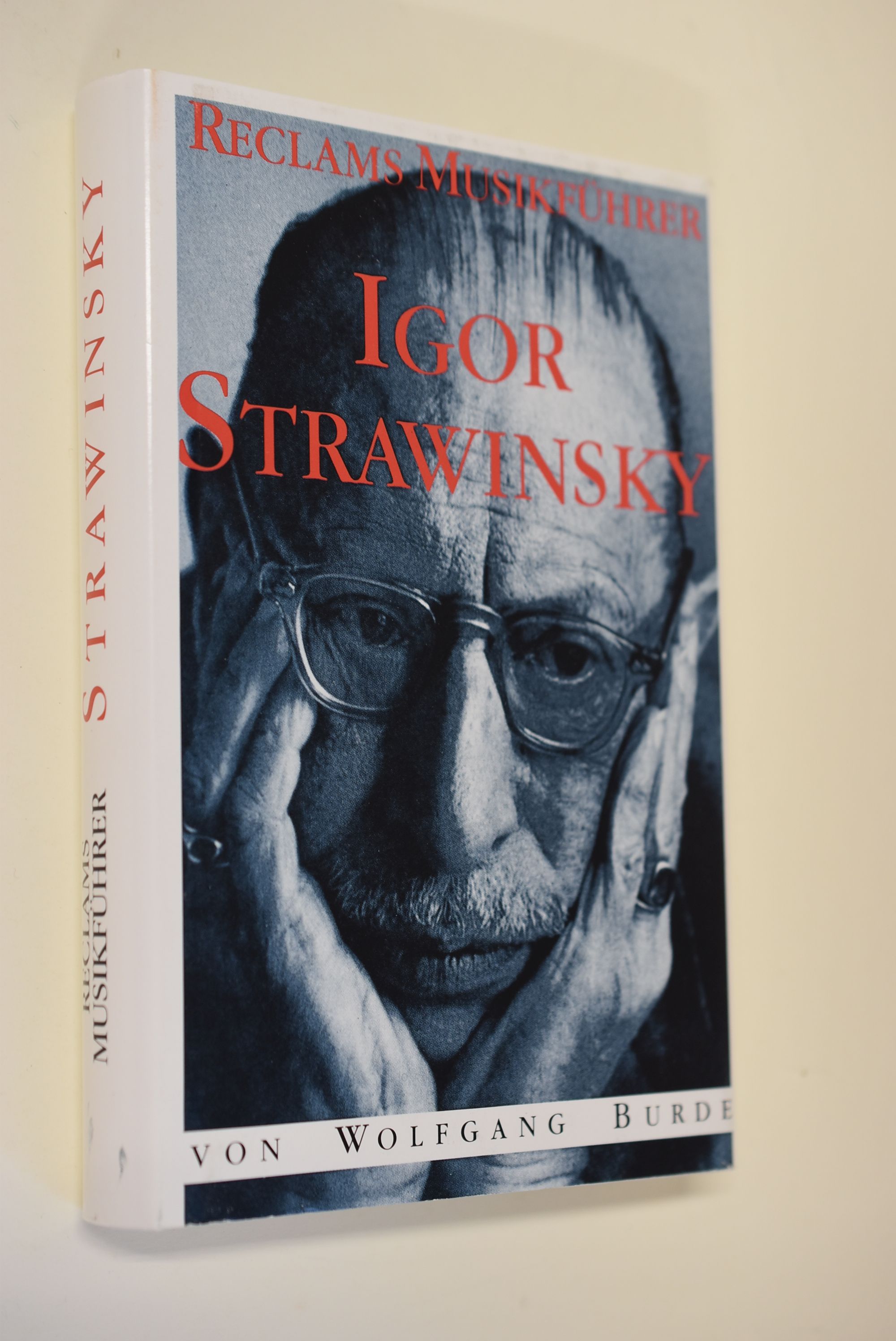
1995réf. 73788Stuttgart : Reclam 1995. 337 S. : Ill., Noten ; 19 cm Pappe 0
réf. 16-4191Genève Edition Ad. Henn 1917. . 4to. 28 x 19.8 cm. 8 64pp. Original wraps. Front cover mainly detached. Signed at Morges Switzerland and dated 1918 and inscribed .The poet and playwright René Morax founded his Théâtre du Jorat near Mézières Switzerland in 1903. Made entirely of wood so as to be integrated into the barns of the surrounding countryside it was described this way in an early account: “A theater decidedly unlike any other. A sort of vast chalet a kind of huge barn smelling of resin dried hay fresh fruit and on days when there was a performance Sunday clothes but retaining the rustic dignity of a shrine. A large stage descending in broad steps toward the orchestra pit …”The theater was closed for several years during the Great War and Morax conceived a drama on the subject of King David to reopen it in 1921. When he turned to his wealthy friend Werner Reinhart who incidentally had recently funded the creation of Stravinsky’s Soldier’s Tale telling him that he was taking inspiration from Hindu theater for this work his patron offered to lend rare Hindu drums in addition to financial assistance. The text is drawn from the Hebrew Bible I and II Samuel I Kings in addition to the Huguenot Psalter which includes poetry by Clément Marot. The poet’s brother Jean Morax set to work designing costumes and sets. After several more established composers turned him down René on the advice of Stravinsky and the distinguished conductor Ernest Ansermet chose the then unknown twenty-eight year old Arthur Honegger. “When Swiss poet Rene Morax 1873-1963 was looking for a composer for his new King David libretto Stravinsky recommended the twenty-nine-year-old Arthur Honegger a composer who just six years later creating the film score for Abel Gance’s Napoleon would reveal himself as a master of music’s ability to translate epics into sweeping evocative sound. In 1921 right on the cusp of his first successes Honegger wrote the David score in a flush of creative energy.”. Provenance from the estate of René Morax. Expertise by Claire PIGUET Geneva Genève, Edition Ad. Henn, 1917. paperback
1917réf. 13961917 Genève, Éditions Ad. Henn, 1917. In-4 relié, demi-basane rouge, couverture conservée (63 pp.). Partition originale pour chant et piano. Dos un peu frotté, petit manque sur un plat de la reliure. Rare.
1969réf. 1iCh0056New York: Alfred A. Knopf/A Borzoi Book/Published by Alfred A. Knopf Inc. 1969. Book. Illus. by Anita Karl Jacket Design; Stravinsky on His Eighty-Six Birthday by Bobby Klein Back Cover Photo. Very Good. Hardcover. 1st Edition. 8vo or 8° Medium Octavo: 7¾" x 9¾" tall. 350 ix xi pp. Stated first edition! A rare hard-to-find out-of-print scarce true collectible gem! An excellent addition to any collection! A great almost spotlessly clean copy! Solidly and tightly bound essentially and nearly flawless copy with minimal internal and external wear and use. Copy with crisp pages spotlessly clean text and light shelf wear. Smooth covers. Dust jacket suffers some cuts and tears around places. Price inside front flap cut out. Edges of dust jacket taped with adhesive tape for reinforcement. Pictures of actual copy -not displayed here!- available upon request. . Alfred A. Knopf/A Borzoi Book/Published by Alfred A. Knopf, Inc. Hardcover
1969réf. 256031New York: Alfred A Knopf 1969. First edition. ix i 350 xi pp. 8vo. Publisher's green cloth faded at edges in very good edge-worn dustjacket. First edition. ix i 350 xi pp. 8vo. Signed on the flyleaf "Igor Stravinksy / 1.30.70" and inscribed by co-author Robert Craft. The recipient was Miranda "Mirandi" Massoco Levy 1914-2011 the doyenne of Sante Fe cultural life instumental in the success of the Sante Fe Opera and a close friend of Stravinsky. Alfred A Knopf unknown
1969réf. 224807New York: Knopf 1969. First. hardcover. very good/very good. 350pp. index xi. 8vo cloth d.w.; a few small chips to dust wrapper small ink ownership stamp on front and rear free endpapers. New York: Alfred A. Knopf 1969. First edition. A very good copy in a very good dust wrapper. Knopf unknown books