2 836 résultats
1953
2007réf. 6M-JKZF-UA522007. New. New book. unknown
Barcelona, 1868. Dos volúmenes en 4to.; 2 hs., IV-494 pp. + 499 pp. Ejemplar de salida, sin desbarbar ni abrir. Cubiertas originales, con ligeras pérdidas de papel.
Lérida, Instituto de Estudios Ilerdenses, 1962. 4to. mayor; 26 pp. Cubiertas originales.
B., por F. Granada y Cía., 1907, 15'5 x 11 cm., dedicatoria del autor, 94 págs. - 1 h. (Falto de cubiertas originales y con varias hojas sueltas).
B., La Ibérica, 1949, 14 x 12 cm., 101 págs. - 1 h.
Sin lugar de impresión, impresor, ni año, pero: hacia 1680. Folio; 11 páginas. Pequeña pérdida de papel en el márgen blanco de las seis primeras páginas. Cubiertas mudas en cartulina.
Sin lugar de impresión, impresor ni año, pero: Barcelona, hacia 1687. Folio; 20 páginas, numeradas. Cubiertas mudas en cartulina.
Sin lugar de impresión, impresor ni año, pero: Barcelona, 1674. Folio; 4 hojas sin foliar. Cubiertas mudas en cartulina.
Sin lugar de impresión, impresor ni año, pero: Barcelona, hacia 1690. Folio; 5 hojas sin paginar. Cubiertas mudas en cartulina.
réf. 057234Perpignan Charles Latrobe, imprimeur-libraire 1874 in 4 (25,5x20) 1 volume reliure demi basane verte, dos à nerfs, couverture conservée, III et 348 pages. Bernard Alart, 1824-1880. Première partie, seule parue. Edition originale rare. Bon exemplaire ( Photographies sur demande / We can send pictures of this book on simple request )
Paris, Albin Michel, Editeur, 1929. 4to.; 294., 1 h. Primera edición. Cubiertas originales
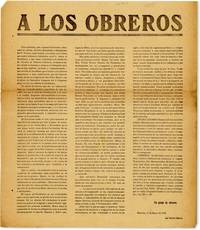
1919réf. 61972Manresa: Imp. Boixeda 1919. Printed broadside on newsprint; 37cm x 32cm approx; text in three columns beneath headline; signed in type "Un grupo de obreros" with printer's identification lower right. Old folds; slight toning but just slight wear; Very Good. A Spanish-language broadside addressed to "los obreros manresas" workers in the Catalonian industrial centre of Manresa promoting the work of the anarcho-syndicalist "Sindicatos Obreros" and denigrating the Church and the organization of Catholic worker's movements which the authors characterize as designed: "para instruye y prepara al trabajador para que se deje explotar paciente y resignadamente" "instruct and prepare the workers to accept their exploitation with patience and resignation". The text provides a brief history of Socialism extending back to early Christianity then presents the systems of Marx and Kropotkin as the "purest expression" of socialism in the modern world. The text concludes with a rally cry to workers to join the syndicalist movement: "El Sindicato es el arma más eficaz para hacer valer nuestros derechos.Y si alguien aunque sea jesuita para desviaros de vuestro camino os habla de mansedumbre de derechos adquiridos por los poderosos de ciertos privilegios del clero y otras monsergas por el estilo volvedle le espalda y limitaos a responderle estas palabras del apostol San Pablo: 'El que no quiera trabajar que no coma' The Syndicate is the most effective weapon to assert our rights. and if someone even a Jesuit to divert you from your path speaks to you of meekness of rights acquired by the powerful of certain privileges of the clergy and other nonsense of that kind turn your back on him and consider these words of the Apostle Saint Paul: 'He who does not want to work should not eat." A rare labor broadside from a formative period of the Spanish anarcho-syndicalist movement highlighting the class and religious divisions that a decade and a half later would lead to the violent fracture of the Civil War. Not located in OCLC KVK or COPAC; not in the catalog of the BNE. Imp. Boixeda unknown books
1919réf. 61972Manresa: Imp. Boixeda 1919. Printed broadside on newsprint; 37cm x 32cm approx; text in three columns beneath headline; signed in type "Un grupo de obreros" with printer's identification lower right. Old folds; slight toning but just slight wear; Very Good. A Spanish-language broadside addressed to "los obreros manresas" workers in the Catalonian industrial centre of Manresa promoting the work of the anarcho-syndicalist "Sindicatos Obreros" and denigrating the Church and the organization of Catholic worker's movements which the authors characterize as designed: "para instruye y prepara al trabajador para que se deje explotar paciente y resignadamente" "instruct and prepare the workers to accept their exploitation with patience and resignation". The text provides a brief history of Socialism extending back to early Christianity then presents the systems of Marx and Kropotkin as the "purest expression" of socialism in the modern world. The text concludes with a rally cry to workers to join the syndicalist movement: "El Sindicato es el arma más eficaz para hacer valer nuestros derechos.Y si alguien aunque sea jesuita para desviaros de vuestro camino os habla de mansedumbre de derechos adquiridos por los poderosos de ciertos privilegios del clero y otras monsergas por el estilo volvedle le espalda y limitaos a responderle estas palabras del apostol San Pablo: 'El que no quiera trabajar que no coma' The Syndicate is the most effective weapon to assert our rights. and if someone even a Jesuit to divert you from your path speaks to you of meekness of rights acquired by the powerful of certain privileges of the clergy and other nonsense of that kind turn your back on him and consider these words of the Apostle Saint Paul: 'He who does not want to work should not eat." A rare labor broadside from a formative period of the Spanish anarcho-syndicalist movement highlighting the class and religious divisions that a decade and a half later would lead to the violent fracture of the Civil War. Not located in OCLC KVK or COPAC; not in the catalog of the BNE. Imp. Boixeda unknown
B., Viuda e Hijos de J. Subirana, 1882, 24'5 x 16'5 cm., 41 págs. (Falto de cubiertas originales).