494 Ergebnisse
1896Best.-Nr. 316680London: Charles H. Kelly 2 Castle St. City Road.; and 66 Paternoster Row E.C. 1896. First edition. Illus Photograph frontispiece portrait tipped in folding map. ii 240pp. 8vo. Bound in modern mottled brown calf and marbled boards green title label. Fine. First edition. Illus Photograph frontispiece portrait tipped in folding map. ii 240pp. 8vo. Signed. Signed by author beloe portrait frontsipece. Charles H. Kelly 2, Castle St., City Road.; and 66, Paternoster Row, E.C. unknown books
1903Best.-Nr. 316679London: Willianm Heinemann 1903. First edition. Illustrated with 63 plates. pp. xiii i 1- 317pp. 8vo. Bound in modern mottled brown calf and marbled boards green title label. Fine. First edition. Illustrated with 63 plates. pp. xiii i 1- 317pp. 8vo. Willianm Heinemann unknown books
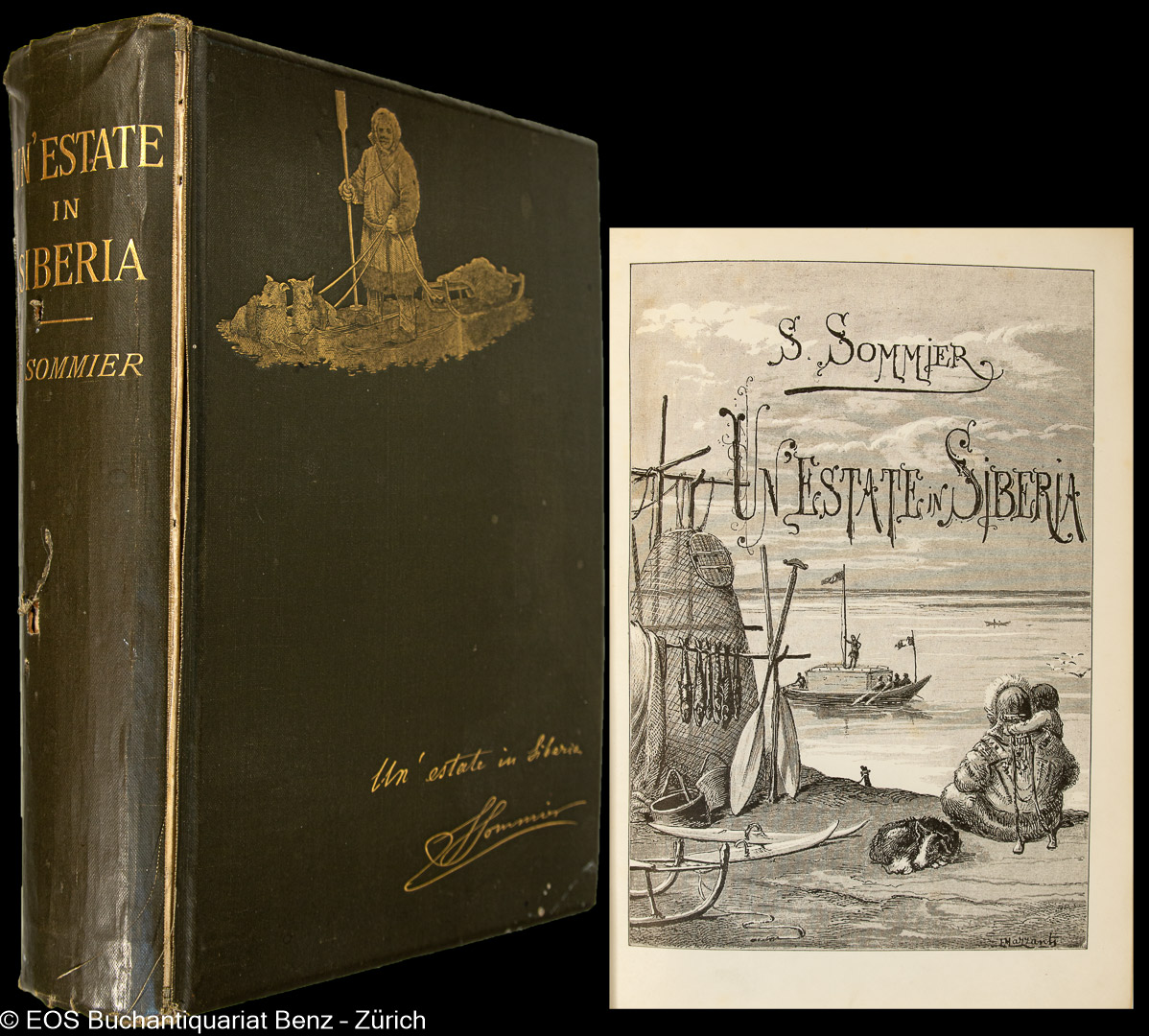
1885Best.-Nr. 4912DBFirenze, Toriono und Roma, Ermanno Loescher, 1885. Gross-8°. VIII, 634 S. Mit 28 Tafeln, 3 Karten (davon 1 mehrfach gef.) und zahlr. Textillustrationen. Orig.-Leinenband der Zeit. + Wichtig: Für unsere Kunden in der EU erfolgt der Versand alle 14 Tage verzollt ab Deutschland / Postbank-Konto in Deutschland vorhanden +, 4912DB|4912DB_2 [2 Warenabbildungen]
1891Best.-Nr. ED2-163Leipzig, Reclam Verlag, [1891]. 3 B?nde in 1 Band, Halbleinenband der Zeit, 12?, 228 Seiten 1 Blat / 183 Seiten / 323 Seiten; Zustand: Titelblatt des 1. Bandes mit kleiner Fehlstelle , gutes Exemplar
1899Best.-Nr. F0313Krasnojarsk Axelrodt 1899. 124 Textillustrationen auf Tafeln in Autotypie, 1 Bl., 124 S. Farbig illustrierter Leinenband. Zustand 1, tadellos!
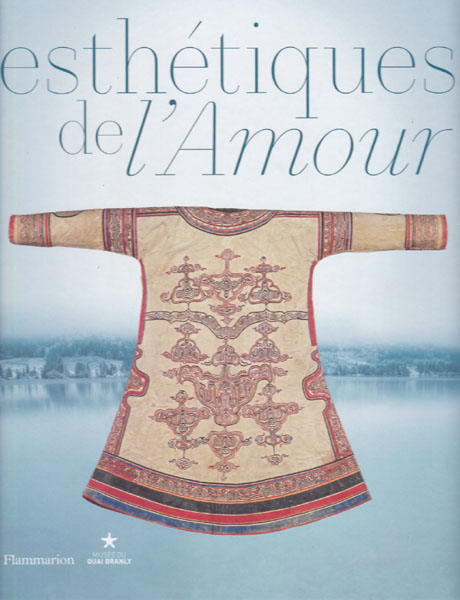
2015Best.-Nr. 14053DBParis., Flammarion. Musee du Quai Branly., 2015. 28,5 x 25,5 cm. 175 S. Illustrierter OPappband., 14053D Erste Auflage. Einbandkanten minimal berieben. Sonst sehr gutes Exemplar.
1854Best.-Nr. 1205884Leipzig, C. B. Lorck, 1854. 8, 215 S. (Hausbibl. für Länder- u. Völkerkunde 2). Ppbd d. Zeit (berieben, bestoßen, Rückensign., braunfleckig, Stempel auf Titel).
1901Best.-Nr. 1310365Dresden, Minden, (1901). 2 Bl., 323, (1) S., 1 Porträt. OBr. (Kopf m. Einriß, unbeschnitten).
1883Best.-Nr. 10188281883. 3 Bl., 450 S. m. 27 (statt 28) meist ganzseit. Textabb. u. 3 Karten, davon 1 mehrfach gefaltet. Hlwd (Gelenke locker, stellenw. braunfl.- Frontisp. fehlt).
1903Best.-Nr. 316679London: Willianm Heinemann 1903. First edition. Illustrated with 63 plates. pp. xiii i 1- 317pp. 8vo. Bound in modern mottled brown calf and marbled boards green title label. Fine. First edition. Illustrated with 63 plates. pp. xiii i 1- 317pp. 8vo. Mill/Back/ Table Willianm Heinemann unknown
1896Best.-Nr. 316680London: Charles H. Kelly 2 Castle St. City Road.; and 66 Paternoster Row E.C. 1896. First edition. Illus Photograph frontispiece portrait tipped in folding map. ii 240pp. 8vo. Bound in modern mottled brown calf and marbled boards green title label. Fine. First edition. Illus Photograph frontispiece portrait tipped in folding map. ii 240pp. 8vo. Signed by author beloe portrait frontsipece. Charles H. Kelly 2, Castle St., City Road.; and 66, Paternoster Row, E.C. unknown
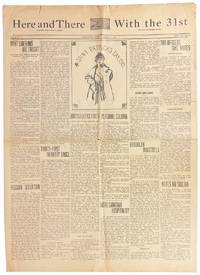
1919Best.-Nr. 47912Vladivostok Siberia: 31st Infantry Regiment 1919. Very Good -. Vladivostok Siberia: 31st Infantry Regiment 1919. First Edition. Oversized tabloid 59.5cm; 6pp. Folds chips and a few splits along edges; paper toned and a bit brittle; Good to Very Good. Quite scarce publication from the 31st Infantry Regiment published "Every Once In A While" "Wherever We Happen To Be." This issue was published during the Russian Civil War and the United States' failed Siberian Intervention. The paper itself is full of local and international news and leads with an article "What Siberians Are Taught: One Paper Says America Treats the Russians in the Same Way as Negroes." We find three holdings in OCLC at the Hoover Institution Montana State and U.S. Army War College. 31st Infantry Regiment unknown
1899Best.-Nr. 020522New York: Frederick A. Stokes Company 1899. Second Edition . Hardcover. Good. Second Edition with a map. Hinges cracked edge wear. Blue boards with gilt title and artwork. "Compliments of JW Bookwalter New York Feb 5 1904". Expedited or International shipping may cost more. Frederick A. Stokes Company hardcover
1937Best.-Nr. 64691London UK: Constable & Co. Ltd. 1937. 8vo. xii 307 1 pp. Photo frontisp. 31 photo plates 1 large folding colour map. Blue publisher’s cloth gilt lettering on spine blue topstain as issued slight foxing to front fore-edge of textblock w/ d.j. photo cover art of Hudson’s adventures 1 minor chip & small closed tear lower fore-edge front cover minor dustsoiling still a VG/VG copy. First edition 1st printing stated of this excellent memoir of the noted Pacific Northwest photographer and cameraman for the Seattle Post-Intelligencer who began shooting his own silent films in 1912 for the International News accompanied the Harvard-Smithsonian Expedition to the Arctic on board the Polar Bear under Captain Louis Lane filming the trip. The trip was unsuccessful as the Polar Bear became trapped in the ice and they had to hike out to safety at the same time reporting on the safety of the crew of the Karluk which had also gone missing. His account of the expedition with photo made the New York Times front page. Hudson 1877-1945 was also well-known for his photographs in china photographic studio in Pullman WA as well as the earliest known surviving moving picture footage of the 1909 Alaska-Yukon-Pacific Exposition in Seattle. See: The Will Hudson Collection Will E. Hudson: Dean of Newsreel Men Whatcom Museum 2004; Ebbert Webber Dora Orlett Lobaugh Hudson Papers 1877-1959 WSU Libraries Manuscripts Archives & Spec. Coll. Cage 100 Finding Aid 2012. Constable & Co., Ltd., hardcover
1907Best.-Nr. 137343London: His Majesty's Stationary Office 1907. Undetermined. very good. Original broadside. 13.25" X 8.25". A few small chips and closed tears to edges not touching text. Ink of a few words slightly smudged. Three old horizontal folds else a bright and clean broadside. very good A scarce piece of postal ephemera advertising the new mail route through Siberia to the "Far East". The mail took a circuitous route leaving London and arriving in Vladivostok via express train from Moscow. The mail was then sent through the Siberian wilderness aboard Russian steamers "as opportunities offered" to destinations such as Hong Kong Shanghai and Canton. An interesting broadside only hinting at what must have been a harrowing journey for the First Class Mails through the wild watercourses of Siberia. 1907 His Majesty's Stationary Office unknown
1918Best.-Nr. 140212Washington: Governemnt Printing Office 1918. Hardcover. very good. 1st Edition. 103xv; 180xv; 121xv; 162xvpp. Four volumes. 16mo. Original green cloth with fold over right hand board and button snap. Title imprinted on spine and front board. Minor wear and soiling to exterior. Russian alphabet tipped onto pastedown in each volume. 33 Figures in Vol. 1; 106 figures in Vol. 2; 49 figures in Vol. 3 and 24 figures in Vol. 4. The figures consist of black and white illustrations and maps many folding. Each volume has a section of blanck pages for notes with a number of the pages filled at an early date. Limitation page unused on the reverse of the title page. very good A very interesting publication marked "Confidential for Official Use Only" on the top of the title page. The limitation page states there wer 3000 copies printed and each were assigned to a specific individual of which this set seems not to have been named. The general use would have been intended for military purposes and thus many were probably destroyed after the First World War. Each volume was given a copy no. On the front board with this being a mixed set with the numbers 429 211 143 and 143. A great set filled with information about Russia before World War I. 1918 Governemnt Printing Office hardcover
Best.-Nr. Lehtinen, Ildikó, edIn Pristine Condition. unknown
Best.-Nr. 049902Hutchinson c. 1929. missing front endpaper; half title page contains inscription from Elsa Branstrom . Very Good. Hardcover. 1st Edition. Hutchinson, c. 1929 hardcover
1775Best.-Nr. 21554Paris 1775. Very good condition. Large detailed copper engraved map centering on Siberia from Nouvelle Zemle and the Arctic Circle down to Mer Caspiene Caspian Sea and Mer d'Aral. The map with captions above and below the neat lines stating that it shows the tracks of Johann Georg Gmelin and Louis Delisle from "Moskow a Berezow". Gmelin 1709 - 1755 and Delisle 1690-1741 were taking part in the Great Northern Expedition a huge exploring endeavor organized by the Russian emperor Peter the Great. The expedition resulted in the mapping of most of the Arctic coast of Siberia. With decorative cartouche. From Prevost's "L'Histoire Generale des Voyages". Bellin 1703 - 1772 one of the most noted French mapmakers of the 18th century was named the hydrographer chief cartographer to the French Navy and later the Official Hydrographer to the French King. Folding 19 x 12 1/4" with ample margins. Strong impression very clean. unknown
2018ill., br. «La caccia, in Siberia, è una questione di vita o di morte, uno scontro inesorabile tra l'uomo e le potenze invisibili che dominano le immense distese ghiacciate, le foreste, i monti, i laghi, e a cui appartengono gli animali. In un mondo dove tutto è pieno di dèi, popolato da spiriti di ogni sorta con le loro gerarchie e antipatie reciproche, il cacciatore che si addentra nella foresta o s'avventura per mare "deve trovarsi in uno stato di grazia, come il sacerdote che si accosta al sacrificio". Si muove dunque con circospezione, protetto solo dalla magia, mediante la quale stipula un patto con l'"altro lato", perché "il diritto di uccidere si paga, come un permesso di caccia rilasciato da potenze superiori", e in cambio dei sacrifici le divinità concederanno selvaggina in abbondanza. L'esito dell'impresa, pertanto, non dipende solo dall'abilità dei cacciatori, ma dallo scrupolo con cui si atterranno alle innumerevoli prescrizioni e interdizioni rituali che accompagnano dal principio alla fine la battuta di caccia. Dovranno, soprattutto, conciliarsi la preda - far sì che acconsenta alla propria uccisione - e placarne l'anima dopo la morte, affinché non torni a perseguitarli. Con questo saggio, Éveline Lot-Falck, uno dei più grandi studiosi dello sciamanismo siberiano, riesce a restituirci "nella sua atmosfera, nella sua profusione, nelle sue variazioni, un fenomeno a un tempo poetico, magico e religioso".» (Claudio Rugafiori)
2019br. L'impresa che Simone Moro ha portato a termine nell'inverno del 2018 è emblematica di tutta la sua eccezionale carriera e, allo stesso tempo, segna una svolta. In oltre trent'anni di alpinismo, infatti, Moro ha scelto di non concentrarsi sul cosa - vetta, quota, record... - ma sul come. Ovvero sul senso di confrontarsi con la Natura. Un senso che ha trovato in due parole: "freddo" ed "esplorazione". Le ascensioni in invernale gli hanno sempre consentito di inoltrarsi, oltre che nei luoghi, anzitutto nell'intimo di se stesso. Si spiega così perché Moro, scoprendo per caso che la Yakutia, in Siberia, è la regione abitata in cui si raggiungono le temperature più basse del pianeta, abbia deciso d'impulso di andare a conoscerla per poi salire sulla sua cima più alta, il Pic (o Gora) Pobeda. In questo libro si dipana il suo racconto che ha il sapore di un'avventura di Jules Verne o delle cronache di un grande esploratore. Non è banale preparare il viaggio in questa terra remotissima e mal collegata, per penetrare nella quale occorrono compagni motivati, una particolare attrezzatura per difendersi dal gelo e una guida che conosca le popolazioni locali. Ma arrivandovi le sorprese superano la fantasia: distese di ghiaccio percorse da camionisti solitari, immense foreste, e anche tanta vita - cercatori d'oro e cacciatori di pellicce -, tanta "gelida normalità" - chi vende al mercato pesce che si congela direttamente sul banco, chi non avendo un box riscaldato tiene il motore dell'auto acceso per tre mesi consecutivi - e tanta Storia, come quella dei gulag e della orrorosa Strada delle ossa. Naturalmente, con Simone Moro e Tamara Lunger, non può mancare infine la conquista mozzafiato del Pic Pobeda, una vetta di 3003 metri che, tra il freddo e la difficoltà, li mette più alla prova di alcuni ottomila himalayani, coronando magnificamente un'impresa che è una grande esplorazione del mondo e anche di sé.
2020br. Con l'esattezza di uno storico e la tensione di un narratore, Jurji Semenov ci fa rivivere l'epico e appassionante racconto della conquista della Siberia. Dai primi cacciatori di pellicce alla famiglia Stroganov, che aprì le porte di questo immenso paese pieno di ricchezze; dai massacri degli indigeni alla dura colonizzazione, pagata con la fatica dei deportati; dalle eroiche spedizioni che scoprirono nuovi territori alla formazione della Grande Russia, si snoda l'epopea di quattro secoli di storia. Attraverso la conquista della Siberia ripercorriamo la storia russa, con le passioni e le idee che l'hanno caratterizzata: la formazione del granducato di Mosca, la lotta di Ivan il Terribile contro i boiari, la vittoria sui tartari, l'Impero di Pietro il Grande, la rivolta polacca, la grande illusione decabrista... Senza risparmiarci i dettagli più cruenti e impressionanti, l'autore ci trascina in un'epoca di interminabili viaggi e indicibili torture, rivelandoci una logica di conquista e inserimento coloniale retta da un rispetto assoluto del rigore e al di sopra di qualsiasi altro interesse, umano o economico che fosse. Tante le vicende coinvolgenti qui raccontate: dai ribelli che tentarono di sottrarsi alle rigide regole, alle donne, di qualsiasi estrazione sociale, che affrontarono ghiacci e inumane fatiche per ricongiungersi ai propri uomini, condannati ai lavori forzati. Il lungo cammino dell'Impero russo verso la conquista di un territorio sconosciuto, tra vittorie e sconfitte, un racconto che è una vera e propria avventura su terre ghiacciate, rivelatesi nel tempo fondamentali miniere di materie prime e ricchezze.
2020brossura
2012ill., br. Meridiani guarda al mondo con occhi curiosi. E più che descriverlo, lo interroga lasciando che siano i luoghi a raccontarsi attraverso la natura, i monumenti, i paesaggi urbani, i volti e le storie della gente, le espressioni artistiche e culturali, la moda e lo sport. Ogni numero è un viaggio non convenzionale in città e paesi che pagina dopo pagina, attraverso reportage giornalistici, servizi fotografici, racconti di famosi scrittori svelano la loro anima più profonda.
2014br. La Siberia, terra desolata, di smisurata grandezza e di selvaggia bellezza, con l'apertura dei confini dell'ex Unione Sovietica è diventata territorio accessibile agli stranieri. In questa regione estrema Colin Thubron si è buttato a capofitto, percorrendola con ogni mezzo, sfidando temperature impossibili e macinando qualcosa come 24.000 chilometri. Ha viaggiato sulla mitica Transiberiana; si è spinto in aereo sino al Circolo Polare Artico, nell'ex città-lager di Vorkuta, e ha raggiunto a nord-est la regione della Kolyma, terra dell'oro e dell'uranio, tristemente famosa per i due milioni di vittime sotto la dittatura stalinista. A piedi, zaino in spalla, si è inoltrato nei monti Altaj tra le tombe antiche degli sciiti e ha navigato in piroscafo lungo il fiume Enisej per fermarsi nel piccolo villaggio enzi di Potalovo.