543 résultats
réf. DADAX0521029074New unknown
réf. DADAX006447027XNew unknown
réf. DADAX034097124XNew unknown
1808réf. 365162Netherlands 1808. Six watercolors on individual sheets measuring approx. 10-1/2 x 16-1/4 inches. Five of the six watercolors titled in manuscript below the image and with extensive Dutch-language notes on the verso of each sheet. Oblong folio. Bound into modern half morocco and marbled boards oblong quarto in size gilt morocco label on front board reading: KAMTSCHATKA ET SIBERIE ALBUM DE DESSINS. Very minor wear or soiling in the edges of the margins else fine. Six watercolors on individual sheets measuring approx. 10-1/2 x 16-1/4 inches. Five of the six watercolors titled in manuscript below the image and with extensive Dutch-language notes on the verso of each sheet. Oblong folio. An atlas of splendid watercolors by an unknown artist showing scenes in Kamchatka and Siberia in the late 18th century. The paintings are quite well done. While the artist's facility for drawing human figures is not of the highest magnitude his ability in rendering places topography and villages is excellent. The identity of the artist is unknown but it seems likely that he was a Dutchman of some means who owned or had access to a collection of the most important accounts of 18th-century travel in eastern Russia and the Kamchatka peninsula. The watercolors show scenes of village and seaside life as originally depicted in the plates to the travels of Cook Sarychev and Chappe D'Auteroche which all took place between 1760 and 1795. Though undated a manuscript note on the verso of the final watercolor carries the date of 1808 and likely indicates when one or all of these images were painted. The images contained in this atlas are faithful detailed and accomplished watercolor renderings of printed plates from the atlas to James Cook's third voyage; the atlas to the voyage of Gavrila Sarychev; and the account of Jean Chappe D'Auteroche's travels to Siberia in the early 1760s. The artist has taken great care to retain interesting ethnographic details from the original sources showing details of clothing and decoration as well as animals dwellings from thatched huts to wooden structures buildings churches sleds and local boats and canoes. Two of the images feature fishing scenes and all but one of them shows a locations near a river or the sea. The interest and usefulness of the album is further heightened by the extensive manuscript notes in Dutch on the verso of each view. In some cases the notes give details of the source of an illustration but they also provide information about the region depicted the people who live there the natural resources and topography and much more. Further study of the album could lead to more information about the artist and the circumstances of its creation. The illustrations with their original manuscript captions are as follows: 1 "Gericht der stad Bolcheretskoi in Kamtschatka en ein Man Reirende in en Winter." This winter scene in Kamchatka is a combination of two plates from the atlas to Cook's voyages "A Man of Kamtschatka Travelling in Winter" and "A View at Bolcheretzkoi in Kamtschatka." It shows a small village of wooden buildings with thatched roofs while a family of natives bundled against the cold stand in the foreground. Two cows are shown in a pen and farm dogs and sled dogs mill about. 2 "Gerigt van de Stad en Haven van St. Petrus en St. Paulus aan Kamtschatka." This image copies a plate from the atlas to Cook's voyages entitled "A View of the Town and Harbour at St. Peter and St. Paul in Kamtschatka." An interesting scene of a small fishing village featuring a group of men casting large nets and other groups in canoes. Larger sailing vessels are in the water in the background and snow-capped peaks are seen in the distance. In the left foreground are a native husband and wife with an infant strapped to the woman's back. 3 "Gericht der Stad Tobolsk in Siberien." Copies a plate from Chappe D'Auteroche's VOYAGE EN SIBERIE Paris 1768. A very nice and well-done scene of a largish seaside town with several whitewashed buildings with tall spires along the waterfront and on a cliff. Workers are shown storing casks of goods by the waterside. 4 "Gericht der Vesting auf Sterkte Sueden - Kolymsk en der Rivier Kolyma." This image copies a plate from the atlas to Sarychev's voyage PUTESHESTVIE FLOTA KAPITANA SARYCHEVA. St. Petersburg 1802. An attractive scene of a small village of wooden buildings in a waterside setting. This scene is most interesting for the details of the structures including a Russian Orthodox Church. 5 Untitled. This is a version of the Cook atlas plate titled "Summer and Winter Habitations in Kamtschatka." This interesting scene gives great details of the dwellings used in Kamchatka. Located along a river they are built on stilts so as to withstand floods. 6 "Gericht van de Sterkte of Vesting Werchue - Koymsk en van de Rivier Jasjaschna." This image copies a plate from the atlas to Sarychev's voyage PUTESHESTVIE FLOTA KAPITANA SARYCHEVA. St. Petersburg 1802. Another view of a small fishing village with men casting nets at the shoreline a mid-size sailing ship in the water and a small group of one- and two-story buildings on the shore opposite. A very interesting suite of watercolors showing evocative scenes of village life in Siberia and Kamchatka at the time when European explorers were first visiting that remote area. unknown
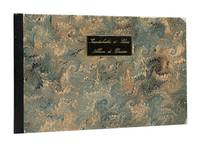
1903réf. 316679London: Willianm Heinemann 1903. First edition. Illustrated with 63 plates. pp. xiii i 1- 317pp. 8vo. Bound in modern mottled brown calf and marbled boards green title label. Fine. First edition. Illustrated with 63 plates. pp. xiii i 1- 317pp. 8vo. Mill/Back/ Table Willianm Heinemann unknown
1896réf. 316680London: Charles H. Kelly 2 Castle St. City Road.; and 66 Paternoster Row E.C. 1896. First edition. Illus Photograph frontispiece portrait tipped in folding map. ii 240pp. 8vo. Bound in modern mottled brown calf and marbled boards green title label. Fine. First edition. Illus Photograph frontispiece portrait tipped in folding map. ii 240pp. 8vo. Signed by author beloe portrait frontsipece. Charles H. Kelly 2, Castle St., City Road.; and 66, Paternoster Row, E.C. unknown
1907réf. 137343London: His Majesty's Stationary Office 1907. Undetermined. very good. Original broadside. 13.25" X 8.25". A few small chips and closed tears to edges not touching text. Ink of a few words slightly smudged. Three old horizontal folds else a bright and clean broadside. very good A scarce piece of postal ephemera advertising the new mail route through Siberia to the "Far East". The mail took a circuitous route leaving London and arriving in Vladivostok via express train from Moscow. The mail was then sent through the Siberian wilderness aboard Russian steamers "as opportunities offered" to destinations such as Hong Kong Shanghai and Canton. An interesting broadside only hinting at what must have been a harrowing journey for the First Class Mails through the wild watercourses of Siberia. 1907 His Majesty's Stationary Office unknown
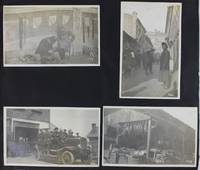
1922réf. 3735Mainly Vladivostok 1922. Very good. 261 images about half real photo postcards and half vernacular photographs between 2.5 x 1.5 inches and 3.5 x 5.5 inches. Oblong folio. Contemporary brown leather photograph album string-tied. Lacking fore-edge flap spine chipped moderate rubbing and scuffing to boards. Minor occasional wear to photographs. A unique collection of photographs documenting the joint military expedition by Allied Forces into Vladivostok in southeastern Russia after the conclusion of World War I the October Revolution and the Russian Civil War most likely assembled by an American soldier serving there at the time. The American contingent of the incursion was called the American Expeditionary Force Siberia which partnered with nine other countries to attempt to bring stability to the region rescue 40000 members of the Czechoslovakian Legion being held up by Bolsheviks outside Vladivostok protect and retrieve American supplies in eastern Russia and stem the early spread of Communism. A similar expedition to northern Russia now known as the Polar Bear Expedition was attempted in Archangel. By practically every standard the joint missions failed and in fact damaged relations between the Allied Forces and Russia especially for the United States for decades to come. The present collection of photographs and real-photo postcards opens with several photo postcards with printed captions showing parades of the military forces of the various Allied countries who participated in the expedition to Vladivostok as they arrived in the city. These include the British Army landing in Vladivostok the Imperial Japanese Expedition marching in front of the Czech Headquarters the Japanese Vanguard relieving the Imperial Japanese Naval Party the French Army landing in the city the Allied Naval Fleet in the Vladivostok harbor and two views of the landing of the American Army. Two additional captioned postcards show the Czech forces joining the French Army and a rather shocking image of about ten dead Czech soldiers with the image captioned "Czech victims in vicinity of Nicholoske former Bolshevik Head-quarters at Vladivostok." The remainder of the photo postcards and photographs capture additional parades numerous street scenes but also scores of images showing the outskirts and countryside around Vladivostok ships from various countries anchored in the harbor or trying to navigate the icy conditions military patrols often carrying weapons American and other soldiers interacting with the locals scenes along the railway views of refugees fleeing the region and much more. Upon arriving in Vladivostok American soldiers were tasked with guarding segments of the rail lines of the Trans-Siberian Railroad running into and out of Vladivostok. American forces are seen here performing those duties but also overseeing a temporary dormitory of beds in an evacuation hospital patrolling the area around the city as well as the refugees along the railway hanging out in their makeshift barracks and more with one image even showing a group of American soldiers posing in baseball uniforms. Particularly striking are the images of the indigenous refugees posed near the railroad and in other locations. Some of the subjects appear to be Siberian nomads but others traveling along the rail line are almost certainly Czech refugees fleeing Russia after their role in fighting for their own freedom against the new Russian regime. Several photos here capture groups of people obviously en route to somewhere else along the railroad at train depots and resting in makeshift encampments or tent cities overseen by military personnel. Historical material from the Vladivostok expedition is exceedingly rare especially images of soldiers with boots on the ground. The present collection provides a fascinating glimpse of life in Vladivostok during this volatile moment in Russian history as well as a notable instance when American and Allied gunboat diplomacy utterly failed. unknown
réf. 139046895X.Gpaperback. Good. Access codes and supplements are not guaranteed with used items. May be an ex-library book. paperback
réf. 0282348743.Gpaperback. Good. Access codes and supplements are not guaranteed with used items. May be an ex-library book. paperback
1918réf. 140212Washington: Governemnt Printing Office 1918. Hardcover. very good. 1st Edition. 103xv; 180xv; 121xv; 162xvpp. Four volumes. 16mo. Original green cloth with fold over right hand board and button snap. Title imprinted on spine and front board. Minor wear and soiling to exterior. Russian alphabet tipped onto pastedown in each volume. 33 Figures in Vol. 1; 106 figures in Vol. 2; 49 figures in Vol. 3 and 24 figures in Vol. 4. The figures consist of black and white illustrations and maps many folding. Each volume has a section of blanck pages for notes with a number of the pages filled at an early date. Limitation page unused on the reverse of the title page. very good A very interesting publication marked "Confidential for Official Use Only" on the top of the title page. The limitation page states there wer 3000 copies printed and each were assigned to a specific individual of which this set seems not to have been named. The general use would have been intended for military purposes and thus many were probably destroyed after the First World War. Each volume was given a copy no. On the front board with this being a mixed set with the numbers 429 211 143 and 143. A great set filled with information about Russia before World War I. 1918 Governemnt Printing Office hardcover
réf. Lehtinen, Ildikó, edIn Pristine Condition. unknown
réf. 1390464806.Gpaperback. Good. Access codes and supplements are not guaranteed with used items. May be an ex-library book. paperback
réf. 1332226582.Gpaperback. Good. Access codes and supplements are not guaranteed with used items. May be an ex-library book. paperback
réf. 049902Hutchinson c. 1929. missing front endpaper; half title page contains inscription from Elsa Branstrom . Very Good. Hardcover. 1st Edition. Hutchinson, c. 1929 hardcover
1775réf. 21554Paris 1775. Very good condition. Large detailed copper engraved map centering on Siberia from Nouvelle Zemle and the Arctic Circle down to Mer Caspiene Caspian Sea and Mer d'Aral. The map with captions above and below the neat lines stating that it shows the tracks of Johann Georg Gmelin and Louis Delisle from "Moskow a Berezow". Gmelin 1709 - 1755 and Delisle 1690-1741 were taking part in the Great Northern Expedition a huge exploring endeavor organized by the Russian emperor Peter the Great. The expedition resulted in the mapping of most of the Arctic coast of Siberia. With decorative cartouche. From Prevost's "L'Histoire Generale des Voyages". Bellin 1703 - 1772 one of the most noted French mapmakers of the 18th century was named the hydrographer chief cartographer to the French Navy and later the Official Hydrographer to the French King. Folding 19 x 12 1/4" with ample margins. Strong impression very clean. unknown
1951réf. 2092902137401544Shingo Shimbun Publishing Center 1951. Soft Cover. Fine. Number of books: 1 book Shingo Shimbun Publishing Center paperback
1935réf. 2092902137303861Shunchokai 1935. Soft Cover. Fine. The book is in fine condition. Shunchokai paperback
1990réf. 2091502133700708Not Available 1990. Soft Cover. Fine. The book is in fine condition. Not Available paperback
1981réf. 2090202120807144Not Available 1981. Soft Cover. Fine. Volume: 1 Not Available paperback
1989réf. 2090202120809472Not Available 1989. Soft Cover. Fine. Volume: 1 Not Available paperback
2018ill., br. «La caccia, in Siberia, è una questione di vita o di morte, uno scontro inesorabile tra l'uomo e le potenze invisibili che dominano le immense distese ghiacciate, le foreste, i monti, i laghi, e a cui appartengono gli animali. In un mondo dove tutto è pieno di dèi, popolato da spiriti di ogni sorta con le loro gerarchie e antipatie reciproche, il cacciatore che si addentra nella foresta o s'avventura per mare "deve trovarsi in uno stato di grazia, come il sacerdote che si accosta al sacrificio". Si muove dunque con circospezione, protetto solo dalla magia, mediante la quale stipula un patto con l'"altro lato", perché "il diritto di uccidere si paga, come un permesso di caccia rilasciato da potenze superiori", e in cambio dei sacrifici le divinità concederanno selvaggina in abbondanza. L'esito dell'impresa, pertanto, non dipende solo dall'abilità dei cacciatori, ma dallo scrupolo con cui si atterranno alle innumerevoli prescrizioni e interdizioni rituali che accompagnano dal principio alla fine la battuta di caccia. Dovranno, soprattutto, conciliarsi la preda - far sì che acconsenta alla propria uccisione - e placarne l'anima dopo la morte, affinché non torni a perseguitarli. Con questo saggio, Éveline Lot-Falck, uno dei più grandi studiosi dello sciamanismo siberiano, riesce a restituirci "nella sua atmosfera, nella sua profusione, nelle sue variazioni, un fenomeno a un tempo poetico, magico e religioso".» (Claudio Rugafiori)
2019br. L'impresa che Simone Moro ha portato a termine nell'inverno del 2018 è emblematica di tutta la sua eccezionale carriera e, allo stesso tempo, segna una svolta. In oltre trent'anni di alpinismo, infatti, Moro ha scelto di non concentrarsi sul cosa - vetta, quota, record... - ma sul come. Ovvero sul senso di confrontarsi con la Natura. Un senso che ha trovato in due parole: "freddo" ed "esplorazione". Le ascensioni in invernale gli hanno sempre consentito di inoltrarsi, oltre che nei luoghi, anzitutto nell'intimo di se stesso. Si spiega così perché Moro, scoprendo per caso che la Yakutia, in Siberia, è la regione abitata in cui si raggiungono le temperature più basse del pianeta, abbia deciso d'impulso di andare a conoscerla per poi salire sulla sua cima più alta, il Pic (o Gora) Pobeda. In questo libro si dipana il suo racconto che ha il sapore di un'avventura di Jules Verne o delle cronache di un grande esploratore. Non è banale preparare il viaggio in questa terra remotissima e mal collegata, per penetrare nella quale occorrono compagni motivati, una particolare attrezzatura per difendersi dal gelo e una guida che conosca le popolazioni locali. Ma arrivandovi le sorprese superano la fantasia: distese di ghiaccio percorse da camionisti solitari, immense foreste, e anche tanta vita - cercatori d'oro e cacciatori di pellicce -, tanta "gelida normalità" - chi vende al mercato pesce che si congela direttamente sul banco, chi non avendo un box riscaldato tiene il motore dell'auto acceso per tre mesi consecutivi - e tanta Storia, come quella dei gulag e della orrorosa Strada delle ossa. Naturalmente, con Simone Moro e Tamara Lunger, non può mancare infine la conquista mozzafiato del Pic Pobeda, una vetta di 3003 metri che, tra il freddo e la difficoltà, li mette più alla prova di alcuni ottomila himalayani, coronando magnificamente un'impresa che è una grande esplorazione del mondo e anche di sé.
2020br. Con l'esattezza di uno storico e la tensione di un narratore, Jurji Semenov ci fa rivivere l'epico e appassionante racconto della conquista della Siberia. Dai primi cacciatori di pellicce alla famiglia Stroganov, che aprì le porte di questo immenso paese pieno di ricchezze; dai massacri degli indigeni alla dura colonizzazione, pagata con la fatica dei deportati; dalle eroiche spedizioni che scoprirono nuovi territori alla formazione della Grande Russia, si snoda l'epopea di quattro secoli di storia. Attraverso la conquista della Siberia ripercorriamo la storia russa, con le passioni e le idee che l'hanno caratterizzata: la formazione del granducato di Mosca, la lotta di Ivan il Terribile contro i boiari, la vittoria sui tartari, l'Impero di Pietro il Grande, la rivolta polacca, la grande illusione decabrista... Senza risparmiarci i dettagli più cruenti e impressionanti, l'autore ci trascina in un'epoca di interminabili viaggi e indicibili torture, rivelandoci una logica di conquista e inserimento coloniale retta da un rispetto assoluto del rigore e al di sopra di qualsiasi altro interesse, umano o economico che fosse. Tante le vicende coinvolgenti qui raccontate: dai ribelli che tentarono di sottrarsi alle rigide regole, alle donne, di qualsiasi estrazione sociale, che affrontarono ghiacci e inumane fatiche per ricongiungersi ai propri uomini, condannati ai lavori forzati. Il lungo cammino dell'Impero russo verso la conquista di un territorio sconosciuto, tra vittorie e sconfitte, un racconto che è una vera e propria avventura su terre ghiacciate, rivelatesi nel tempo fondamentali miniere di materie prime e ricchezze.
2020brossura