3.200 Ergebnisse
Best.-Nr. 1841733-nnew. unknown
Best.-Nr. 5005579-nnew. unknown
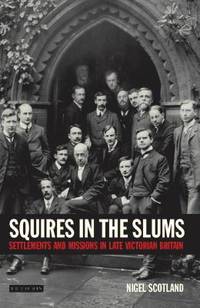
2007Best.-Nr. DADAX1845113365I. B. Tauris & Company 2007-06-29. hardcover. New. 5.50x0.69x8.50. Buy with confidence. Excellent Customer Service & Return policy. I. B. Tauris & Company hardcover
Best.-Nr. 684799like new. unknown
1785Best.-Nr. 52817Genève, Paul Barde, Imprimeur-Libraire 1785 In-8. Reliure de l’époque pleine basane, dos lisse orné de roulette et de fleurons dorés, XV + 374 pp., 5 planches dépliantes hors texte. Manque à la coiffe de tête, sinon ouvrage en assez bon état.
Best.-Nr. 14033Six of the fourteen from Dollar Mains Clackmannanshire Scotland; one from 'Mrs. Fisher's Drummond Street' Edinburgh. Dating from 1799 3 1802 5 1803 5 1804. Totalling: 32pp. 4to; 3pp. foolscap 8vo; 3pp. 12mo. Each letter a bifolium addressed on the reverse of the second leaf with various postmarks wafers and seals and each docketted by the Williamson. The collection in good condition on lightly-aged paper. The fourteen letters addressed by 'E. Williamson' to 'Alexr. Williamson Esqr of Balgray' at the following addresses: six to 'St Leonard by Cross Castle'; three to Lauristone Lauriestone Loristone Street 'back of the medow' and 'North Side of the Medow'; two to 'Lexingtone Michel Cort sic'; and the earliest three addressed to him at 'St Catherine'. Each of the letters addresses him as 'My Dear Father' and is signed by Mrs Williamson as his 'Daughter' but they are each also docketted by Williamson as sent by 'Mrs. Williamson' and from the context and the semi-literate style of the writing it is clear that the writer is Williamson's daughter-in-law rather than his daughter and of French extraction. The letters also indicate that Mrs Williamson's husband was named Charles. The correspondence reveals a foreign lady in a dependent and vulnerable position in Georgian Scotland. It is largely concerned with refurbishments at Dollar Maine for which Williamson is paying letters are docketted by him 'sent her five Guinea Notes' 'sent her two Twenty Shilling Notes' and 'sent her two Guinea Notes' with Mrs Williamson making various requests complaining of lack of funds and justifying her expenditure against suggestions that she is being 'extravagante'. There are clearly tensions between the two parties: one letter is docketted by Williamson: 'Ansd 31st. March 1802 - That I would give no further Directions about the House except the putting in the new Window that I had agreed to allow formerly - That Chas. when he arrives might do as he thought proper'. Williamson's patience has clearly snapped by the time of the last letter. Four of letters are jointly written by Williamson's granddaughter Ann the niece of Mrs Williamson. Mrs Williamson's earliest letter 13 March 1799 sets the tone. In it she writes that she is 'better to have come to Town I am positively sure if I have stay at dollar in the severe wather I will not be in this world now - I was excidingly well receive by Servants People of Consequence & always engage in good Company My Skem is to go from here in the beginning of the nix week as I can not have all I want just now - I have ordre & was myself for my Gardin Seed I have Intention to Land tomorrow some by the Carrier - the Early Seeds you was so good to offer me some suply of money I will accept with gread pleasure what you please to give me but I never will fix how much as I will owe to your generosity'. A week later 30 March 1799 she explains her reasons for not returning to Dollar from Edinburgh: 'I was ready at 8 o Clock in the morning yesterday - but oblige to send an other exxpres to my Servant for he go back to Dollar as it was a terrible Day & so stormed no batots can pass the Ferry without danger . I hope you do not desaprove my Conduct - I do not believe it was possible to do in an other manner - no woman body can expose semself on the watre & in a Cart with such day yestreday & today specially with bad Health'. On 29 March 1802 she writes: 'I supose you will alow me to send for a masson for have the Thing of the chimney Pot properly I have done nothing yet & I have not a Room to go In as the window are to be put Tomorrow'. On 9 May 1802: 'Now my house is ready for receive you & Mr Charle now my dear Father it is Pretty I wish you come for see it - I am sure Mr Charle will be very surprize but I am very wex about my good & Pretty gates - My Dear Father the Country is full of Blargard every Day some Drink Dull mad mans come to the Door my Dear Lion is a gread Saffety it fear them all - but <.> Poor fellow is chut at night For my Roomm he can not privint to Breck the gates & no body lake to go at 12 o Clock at night out see what it is'. On 29 May 1802 she refers to the troubles in her homeland: 'I had some letter from France Saturday & I hope I shall not loss at all If the Peace continue - but it is says all have Soufer very much by the revolution the letter come from Paris In 9 days'. On 20 December 1802: 'Certainly My dear Father I will not be so extravagante to kept Horses for Town after a days reste all must come back twice - let me know how you like my Small Chees & If you think of some things I can bring with me for you - & also If your Batty lake the Ketchen chees If it is agreable to you I shall send more'. On 3 December 1803: 'I have ranged the house In a way to make us Comfortable but not extravagante - as you had allow me to do I shall send the Carpenter with his account to Mr Jamson - an old gate from here is to be minded for a <> at law hill - it was all roted In each side but the Midle it seem can Serve at lawhill - & James shall take it & put it - I have made also greadeal In my Jardin of my one money I hope pay peoples for work & myself I was working very hard for Six weeks - I have done also a gravel walk rong the Jardin In the Planting & make a kind of wood & what kind wether it is we can walk dry In it'. The last letter 1 January 1804 begins: I had yourr yestrenight & I can not Endestand what can have put you angre as I am sure I have always done my dutty - to my Husband to you & to my nice - it is very Inconvenient for me to go Just now but as you Insist upon her doing I shall bring away with me & Set of Tomorrow as soon it is possible In a Post Chaise tho' I am very Short of money In this Instant'. Mrs Williamson's niece Ann's letter of 14 November 1803 is typical: 'My dear Grand Papa I receved with much peasure sic your Letter of 8 Nover and return the most grateful thanks for you fine presant it is very purty My Aunt thinks it purty too - It is very cold here there has been snow upon the hils here but not much yet - I supose Papa has nearly got to America by this time for he has been more than a month away - Lyon plays with me every day and we are grate friends'. Six of the fourteen from Dollar Mains, Clackmannanshire, Scotland; one from 'Mrs. Fisher's Drummond Street', Edinburgh. Dating f unknown
Best.-Nr. 11784Melvill House 14 June 1800. One page 8vo edges sunned mainly good condition. "My LOrd Having retired tot her Country after dissolving the General Assembly of the Church of Scotland I only had yesterday the Honour of receiving your Grace's Letter of the 7th informing me of His Majesty's Gracious Acception of their Address on the present Situation of publick affairs. I immediately forwarded it to the 1st. Clerk of the Asembly as a farther Record and Testimony of His Majestys benevolent Disposition towards the Church of Scotland. ." Melvill House, 14 June 1800. unknown
Best.-Nr. 12179All three from Dalmahoy House near Edinburgh. Dated 3 March 1828 June 1841 and June 1852. 1828: 2pp. 4to. 'Dalmahoy nr Edinburgh March 3d 1828'. Signed 'Morton'. In fair condition lightly-aged and with a short closed tear along one fold. The draft begins: 'I had the honor a short time agao of announcing to your Lordship my intention of offering myself as a candidate for the high honor of becoming a Representative Peer of Scotland and I now venture on the score of our near neighbourhood in this country and in the hope I entertain that your Lordship will allow that circumstance to plead my excuse for being thus troublesome to solicit earnestly your kind support at the ensuing election. Should I have the good fortune to obtain this favor at Your Lordship's hands it will always be remembered by me with the most sincere gratitude'. 1841: Two drafts one on each side of a piece of 4to paper. Both from 'Dalmahoy near Edinbro June 1841'. In good condition lightly-aged. One side headed by Morton: 'Eighty copies of this letter will be required'. He solicits the vote as a dissolution of Parliament has taken place and the 'Election of the Representative Peers of Scotland' approaches. The other side headed 'Twelve copies of thsi letter will be required'. Apparently identical to that on the other side of the paper; neither signed. 1852: 'Dalmahoy Edinburgh June 1852'. 1p. 4to. Signed 'Morton'. 'It is my intention to offer myself as a candidate for the honor of re-election as one of the Representative Peers of the Scottish Peerage in Parliament and therefore venture sic to solicit the honor of Your Grace's vote and support at the approaching Election'. All three from Dalmahoy House, near Edinburgh. Dated 3 March 1828, June 1841 and June 1852. unknown
Best.-Nr. 19212Edinburgh Scotland 'Monday afternoon'. 12 June 1843. . 2pp. 12mo. In fair condition aged and worn. On a bifolium docketed with the date on the second leaf. He writes that he has 'taken Trinity Grove' and that he has 'looked at your grass at Denham Green - and found it has been so neglected that it is scarcely good for any thing - We will see how it looks by the time we go down'. His daughter 'thinks she will try to keep the cow on the lawn of Trinity Grove assisted by cabbage leaves &ct from the Garden'. [ Edinburgh, Scotland? ] 'Monday afternoon'. [ 12 June 1843. ] unknown
1914Best.-Nr. 63715Edinburgh: His Majesty's Stationery Office. 1914. Half-Leather. Very Good. Lvi 291pp illustrated with plates text drawings large folding col map at rear bound in half leather/marbled boards raised bands/ gilt leather spine label ex Uni library with original grey card covers bound in nice looking book; Large Octavo . His Majesty's Stationery Office hardcover
1999Best.-Nr. x-0748409203Taylor & Francis 1999. Hardcover. New. 1st edition. 217 pages. 9.75x7.00x1.00 inches. Taylor & Francis hardcover
2019Best.-Nr. Gyan-9789368377726Facsimile Publisher 2019. Vol. 1889-93. Hardcover. New. 25.13 x 18.78 x 11.06 cm. English Facsimile Publisher hardcover
2019Best.-Nr. Gyan-9789368377726Facsimile Publisher 2019. Vol. 1889-93. Hardcover. New. 25.13 x 18.78 x 11.06 cm. English Facsimile Publisher hardcover
1971Best.-Nr. 130797Encyclopaedia Britannica 1971. Hardcover. Fine/No Jacket as issued. L 4to 9.75 - 12'' tall. Hardcover. Book Condition: Fine. Jacket Condition: No Jacket as issued. Encyclopaedia Britannica 1971. 698 1011 954 pages. Three volumes complete. Facsimile edition. Faux leather. Nice Firm Clean copies ! Slip laid in describing the original condition with 160 copperlate engravings. Size: L 4to 9.75 - 12'' tall. Simulated foxing age spots on this facsimile. Language/Reference::Reference Works Classics/Collectors Series::Classics Modern 6179L 6179L Encyclopaedia Britannica hardcover
Best.-Nr. 61296695I.B. Tauris & Company Limited . Hardback. New. I.B. Tauris & Company, Limited hardcover
1821Best.-Nr. 221500Edinburgh: William Blackwood 1821. First Editions of both First and Second Series. 2 vols. 8vo. Original boards paper spine labels. Spine chipped joints shaky else Very Good. First Editions of both First and Second Series. 2 vols. 8vo. William Blackwood unknown
1821Best.-Nr. 221500Edinburgh: William Blackwood 1821. First Editions of both First and Second Series. 2 vols. 8vo. Original boards paper spine labels. Spine chipped joints shaky else Very Good. First Editions of both First and Second Series. 2 vols. 8vo. William Blackwood unknown books
1743Best.-Nr. 111111113499Printed by Robert Urie and Company 1743. Hardcover. Good. Printed by Robert Urie and Company; Glasgow 1743. Hardcover. A Good full leather binding with title label on spine binding intact but a bit fragile with starting hinges some handling/scuffing to boards bit of cracking to leather spine and rear board some loss to board corners rubbing along joints chip top spine edge ink markings front free endpaper few dog-eared pages pulpy text block edges age toned text block mild bookworm damage to first approx. 37 pages faint moisture staining to pastedowns and front/back matters creases to rear free endpaper few dents with holes to mid front board some soiled specks to text block edges and pastedowns. Overall in a good antiquarian condition. 16mosextodecimo or approx. 4.5 x 7 inches. 567pp. We pack securely and ship daily with delivery confirmation on every book. The picture on the listing page is of the actual book for sale. Additional Scans are available for any item please inquire. Printed by Robert Urie and Company hardcover
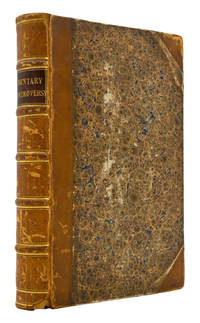
1835Best.-Nr. 8487Edinburgh: Various publishers 1835. 9 works in one vol. 8vo various paginations. Bound in near-contemporary half calf marbled boards spine divided by raised bands between gilt rules red morocco label titled ‘Voluntary Controversy’ edges sprinkled red and blue. Somewhat rubbed small chip to foot of spine. Ownership inscriptions of James Blackadder to some title-pages most trimmed or shaved manuscript contents list to flyleaf. A collection of pamphlets from the mid-1830s dealing with theological and presbyterical disputes within the Church of Scotland prior to the Great Disruption of 1843 which led to the formation of the Free Church of Scotland. Thomas Chalmers who authored the first three tracts here went on to be the first moderator in the Free Church. The full contents are: Chalmers Thomas. On The Evils which the Established Church in Edinburgh has Already Suffered and Suffers Still in Virtue of The Seat-Letting being in The Hands of the Magistrates; with Remarks on the Unjust and Injurious Tendency of a Late Document Published by their Authority on the Subject of the Unlet Sittings. Edinburgh: John Anderson Jun. 1835. 8vo pp. 88 1 folding table. Chalmers Thomas. The Right Ecclesiastical Economy of A Large Town. Edinburgh: John Anderson Jun. 1835. 8vo pp. 39 1. Chalmers Thomas. An Attempt to point out The Duty which The Church Owes to The People of Scotland; and more especially to settle the question of precedency between these two objects The Work That Should Be Done and The Payment That Should be Made for The Doing of It; being An Argument on Chapel Bonds. Edinburgh: John Anderson Jun. 1836. 8vo pp. 43 3. ‘A Churchman’. A Letter to The Right Honourable The Lord Provost of the City of Edinburgh on the Question of Church Accommodation and the Necessity of an Official Document to satisfy The Public on The Subject. Edinburgh: John Anderson Jun. 1835. 8vo pp. 12. Macgregor S. Report of Speeches delivered at A Public Meeting of the Friends of the Established Church of Scotland Desirous of Obtaining through the Aid of the State an Extension of the Means of Religious Instruction and Parochial Superintendence Held in the Assembly Rooms. Wednesday April 15. 1835. Taken in Short-Hand by My S. Macgregor. Edinburgh: Fraser & Co. 1835. 8vo pp. ii 44. Clason Patrick. Strictures on the Statement of the Central Board of Scottish Dissenters in a Series of Letters to Bailie M’Laren. Letter 1. Edinburgh: Published by Fraser and Co. 1835. 8vo pp. 43 1. Edinburgh Young Men’s Association for Promoting the Interests of the Church of Scotland. Drop-head title: General Statement of Principles and Objects. Edinburgh: J. Johnstone Printer 1834. 8vo pp. 11 1. Welsh David. Drop-head Title: A Letter to the Author of a Tract entitled ‘State of The Edinburgh Churches - Tory Church Building Scheme.’. Edinburgh: J. Johnstone Printer 1835. 8vo pp. 16. Maclaren Duncan. History of The Resistance to the Annuity Tax under each of The Four Church Establishments for which it has been levied; with a Statement of its Annual Produce since 1690. From Authentic Documents. Edinburgh: Adam & Charles Black 1836. 8vo pp. 96. [Various publishers] hardcover
1827Best.-Nr. 14557Perth; Printed by Crerar and son 1827. 1827. Duodecimo pp. 295. Full calf border of blind rolls and gilt double fillets to boards; ornamented and titled in gilt to spine; marbled end-papers. Contemporary ownership inscription in ink to title-page and in pencil to end free end-paper. Soiling to upper board rubbing to joints continuing to spine and upper edge of lower board shelf-wear to extremities edges evenly toned. Occasional spots of toning to contents but generally clean. A very good copy. A study of Scottish poetry and music from antiquity to the eighteenth century including discussion of Ossian Alan Ramsay and traditional folk song with two further works on Scottish poetry and dialect. WorldCat locates copies at Harvard Cincinnatti Michigan South Carolina; National Library of Australia; Leipzig; in the UK Copac locates copies at BL National Library of Wales Manchester and Newcastle. Perth; Printed by Crerar and son, 1827. hardcover
1712In 8°; (8), 176 pp. Magnifica marca con emblema sul frontespizio "Sul mare in tempesta il sole fa scudo contro le saette. In ovale in basso monogramma del tipogr. Defendo benigne". Esemplare in barbe. Pagine con leggerissima ed ininfluente brunitura causata dalla qualità della carta (come in tutti gli esemplari conosciuti) ma nel complesso, esemplare in buone-ottime condizioni di conservazione. A carta C4 con proprio front. datato 1711, "Tractatus de febre miliari…". Bella legatura. Piatti originali foderati con carta color caffè mentre il dorso è abilmente e modernamente rifatto in pelle scura, con fregi e titolo in oro impressi al dorso. Testatine, finalini e iniziali riccamente ornati. Seconda rara edizione (la prima uscì nel 1710), tre soli esemplari censiti in ICCU, di questo importante studio del celebre medico e fisico scozzese, Sir David Hamilton. Laureatosi a Reims nel 1686, fu ammesso nel 1708 al London College of Physicians. Divenuto uno dei più celebri ostetrici del suo tempo venne scelto dalla Regina Anna, che lo nominò anche cavaliere, come suo medico e fisico personale. I suoi studi medici furono molto apprezzati per l'attenzione sperimentale e per le osservazioni pratiche. Nel volume qui presentato di particolare è la seconda opera nella quale l'autore analizza le cure e le diverse cause di febbri miliari, termine anticamente usato per indicare una malattia infettiva che provocava febbre acuta e prolungata, associata a eruzioni cutanee simili alla granella del cereale miglio, da cui miliare, e che poteva portare alla morte. Anche Mozart morì per una febbre miliare. Esemplare rara ed in buone-ottime condizioni di conservazione. Bibl: ICCU IT\ICCU\RMLE\028481.
1870Best.-Nr. 5358CB2 Bde. London und Edinburgh, A. Fullarton; New York, Fullarton, Macnab & Co., o.J. (ca. 1870?). Gr.-8°. LXVIII, 816 S.; 872 S. Mit 59 Karten (teilw. farbig) und Stahlstichtafeln. Halbleder d. Zt. mit Rückenvergoldung.
FIRST AND ONLY EDITION of this groundbreaking study of Scottish language and culture. Edition limited to 500 numbered copies, all printed on fine laid paper. 4to. Bound in publisher's quarter morocco and cloth. Some wear to binding (especially backstrip and extremities), but holding firm. Internally uncut, FINE AND BRIGHT. Very scarce. Francisque Michel (1809-1887) was one of the towering intellectuals of the 19th century: he is remembered for editing many of the most important Old French texts, an activity he commenced at the age of 21! During the second half of his life he became fascinated woith Scotland, particularly the relationship between Scottish and French culture, language, and history.
1851Best.-Nr. 200128AG1851. London & New York John Tallis & Company 1851. Original steel engraving / Vintage map. Drawn and engraved by John Rapkin. Illustrated and Engraved by H. Winkles. Plate Size: 33 cm x 25 cm. Sheet Size: 37.5 cm x 27 cm. Vintage 19th century map in very good condition. Published in the Illustrated Atlas And Modern History Of The World Geographical Political Commercial & Statistical Edited By R. Montgomery Martin. Handsome town-plan of Perth in central Scotland bordered to the south by the River Tay. Railway street and district areas of the city are also included. Decorative scrolling and title cartouche around the edges of the image. The project of 'The Illustrated Atlas' was designed to be finished just in time for the anxiously awaited "Great Exhibition of the Works of Industry of All Nations" or The Great Exhibition sometimes referred to as the Crystal Palace Exhibition in reference to the temporary structure in which it was held was an international exhibition that took place in Hyde Park London from 1 May to 11 October 1851. It was the first in a series of World's Fairs exhibitions of culture and industry that became popular in the 19th century and it was a much-anticipated event. The Great Exhibition was organized by Henry Cole and Prince Albert husband of the reigning monarch Queen Victoria. It was attended by numerous notable figures of the time including Charles Darwin Samuel Colt members of the Orléanist Royal Family and the writers Charlotte Brontë Charles Dickens Lewis Carroll George Eliot and Alfred Tennyson. Music for the opening was under the direction of Sir George Thomas Smart and the continuous music from the exhibited organs for the Queen's procession was "under the superintendence of William Sterndale Bennett". Wikipedia unknown
1851Best.-Nr. 200053AG1851. London Edinburgh & Dublin J & F. Tallis 1851. Original steel engraving / Vintage map. Drawn and engraved by John Rapkin. Partly hand-coloured. Vignettes by N. Whitlock and Engraved by J. Rogers. Plate Size: 25 cm x 35.5 cm. Sheet Size : 27.1 cm x 37.4 cm. Vintage 19th century map in very good condition. Published in the Illustrated Atlas And Modern History Of The World Geographical Political Commercial & Statistical Edited By R. Montgomery Martin. The last great illustrated map of Scotland in the manner of early tourism maps dedicated for the being a souvenir for visitors abroad Hunters etc. Beautiful and interesting map of Scotland including its islands- the Hebrides or Western Isles Orkney Isles and the more distant Shetland Islands pictured in inset box in the tope right corner. The northern part of Ireland England and the Isle of Man are also shown. Scotland's counties from Wigton in the south to Caithness in the north are delineated. Rivers and lakes are also shown and relief shown through hachuring. Bar- scale shown in lower right corner. Ornate bordering. John Tallis 7 November 1817 3 June 1876 was an English cartographic publisher. His company John Tallis and Company published views maps and atlases in London from roughly 1838 to 1851. Tallis set up as a publisher with Frederick Tallis in Cripplegate in 1842; the business moved to Smithfield in 1846 and was dissolved in 1849. From 1851 to 1854 Tallis operated as John Tallis and Company. He started The illustrated news of the world and national portrait gallery of eminent personages in 1858 selling it for £1370 in 1861; it folded in 1863. Wikipedia The most important project John Tallis undertook was the 'Illustrated Atlas' from 1851. The original map we offer here was part of this exceptional Atlas and all the maps it contained are still today considered as the last reminder of an era of lavish map production. Tallis worked the project together with John Rapkin 1815-1876 and it was Rapkin's style and talent that we have to thank for when we marvel at these maps today. What makes these maps so special is the detail of engraved vignettes that surround the map and often show indigenous scenes people in their environment and even more so historical buildings or historical views of towns and cities architecture and landscape. The project of 'The Illustrated Atlas' was designed to be finished just in time for the anxiously awaited "Great Exhibition of the Works of Industry of All Nations" or The Great Exhibition sometimes referred to as the Crystal Palace Exhibition in reference to the temporary structure in which it was held was an international exhibition that took place in Hyde Park London from 1 May to 11 October 1851. It was the first in a series of World's Fairs exhibitions of culture and industry that became popular in the 19th century and it was a much-anticipated event. The Great Exhibition was organized by Henry Cole and Prince Albert husband of the reigning monarch Queen Victoria. It was attended by numerous notable figures of the time including Charles Darwin Samuel Colt members of the Orléanist Royal Family and the writers Charlotte Brontë Charles Dickens Lewis Carroll George Eliot and Alfred Tennyson. Music for the opening was under the direction of Sir George Thomas Smart and the continuous music from the exhibited organs for the Queen's procession was "under the superintendence of William Sterndale Bennett". Wikipedia unknown