[Church of Scotland]Biblio.com
2 840 résultats
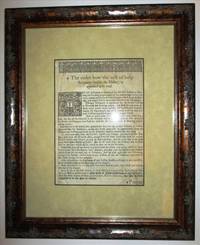
1636réf. 2189Loose-leaf. Good -/Fair. Archivally matted and framed decorated page from a damaged copy of the 1636 Scottish Book of Common Prayer which was influential on the American Book of Common Prayer. The decorated page is very fragile and shows evidence of minor tears in the upper left corner and the bottom right. As is evidenced in the photo the page is decorated by an elaborate header more than 1" high. After the page title follows a delicately illustrated capital T. The text gives instructions on how the Old and New Testaments are to be read throughout the year. Accompanied by a certificate of authenticity. A very nice portion of the scarce first edition of the Scottish Book of Common Prayer. Makes an excellent gift. Edinburgh: Printed by Robert Young 1636. First edition. #2189 Printed by Robert Young hardcover
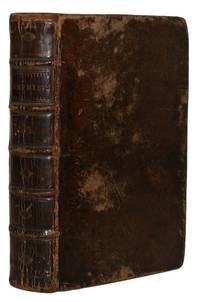
1739réf. AQ19694Edinburgh: Printed by T. Lumisden and J. Robertson for J. Jaffray Book-seller in Stirling 1739. xviii 19-331pp 3. ESTC T79910. Bound with: Acts and Proceedings of the Associate Presbytery Met at Edinburgh May 1739. Edinburgh. Printed for J. Jaffray 1739. First edition. vi 7-60pp. ESTC T79917. And: ERSKINE Ebenezer. The sovereignty of Zion's King; in some discourses upon psalm ii. 6. Edinburgh. Printed by Alexander Alison for David Duncan 1739. First edition. 84pp. ESTC T75161. Copies recorded at four locations in the British Isles BL Edinburgh Oxford and St. Andrews and one further in Australia Melbourne. And: GUTHRIE James. The great danger of backsliding and Defection From Covenanted Reformation-Principles. In a sermon on Isaiah lvii. 13 14. Edinburgh. Printed by Thomas Lumisden and John Robertson for George Paton 1739. First edition 22pp. ESTC T76485. Copies recorded at five locations in the British Isles BL Edinburgh Glasgow Mitchell and NLS none elsewhere. And: HEUGH Hugh. Shaftsbury's Ghost conjur'd: or a letter to Mr. Francis Hutcheson Professor of Moral Philosophy in the University of Glasgow. Edinburgh s.i. 1738. First edition. 42pp. ESTC T180801. Copies recorded at three locations in the British Isles Edinburgh Glasgow and NLS and a further three in North America Newberry Presbyterian College and Princeton. And: SEWARD William. Drop-head title: Copy of a letter from Mr. William Seward in answer to a letter sent him by his Brother the Reverend Mr. Thomas Seward at Genoa. London s.n. 1739. First edition. 7pp 1. ESTC N67249. Copies recorded at two locations in the British Isles Lambeth and Wesley and a further two in North America Michigan and New York Historical Society. And: A vindication of the Church and Kingdom of scotland from any accession to the murder of King Charles I. Edinburgh. Printed for James Forest 1718. First edition. 27pp 1. ESTC T178779. Copies recorded at four locations in the British Isles BL Edinburgh Glasgow and NLS and a further three in North America Duke Folger and Yale. 8vo. Contemporary calf contrasting red morocco lettering-piece. Extremities heavily rubbed. Pen-trials to front endpapers occasional spotting and light dust-soiling damp-staining throughout second mentioned work with closed horizontal tear to final leaf. A sammelband of seven works predominantly printed at Edinburgh in the first half of the eighteenth-century and concerned with Presbyterianism in Scotland. Highlights include: Two remarkably scarce sermons one by influential dissenting minister and a founder of the Secession church Ebenezer Erskine 1680-1754; the other by James Guthrie c.1612- 1661 a Church of Scotland minister exempted from general pardon following the Restoration and subsequently executed on charges of high treason in part for being complicit in issuing a public testimony against religious toleration and regulations previously agreed to by Church and State. The first published work of Hugh Heugh son of John Heugh 1688-1731 minister of Kingoldrum criticising the teaching methods of moral philosopher Francis Hutcheson 1694-1746 during his tenure at the University of Glasgow. . First edition. Printed by T. Lumisden and J. Robertson, for J. Jaffray Book-seller in Stirling unknown
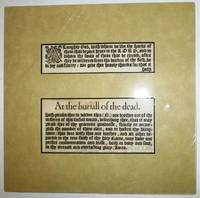
1636réf. 2185First edition. Loose-leaf PORTION of a page from a damaged 1636 edition of the Scottish Prayer Book. With archival quality mat the item measures 9.25" x 9.5". Please view photograph to see two windows of text that displays the beginning of the prayer as it appeared at the bottom of one page and the remainder of the text from the beginning of the subsequent page. The prayer begins with an elaborately decorated capital A. The prayer shows a distinct Calvinist tendency and though intended for the Burial service is suitable for every day. The complete text is as follows: "Almighty God with whom do the spirits of them that depart hence in the LORD and in whom the souls of them that be elected after they be delivered from the burden of the flesh be in joy and felicity: We give thee hearty thanks for that it hath" beginning of the next page which has this large headline: "At the buriall of the dead." "hath pleased thee to deliver this N. our brother out of the miseries of this sinfull world beseeching thee that it may please thee of thy gracious goodness shortly to accomplish the number of thine elect and to hasten thy Kingdome: that wee with this our brother andall other departed in the true faith of thy holy Name may have our perfect consummation and blisse both in body and soul in thy eternall and everlasting glory. Amen." Very Good . Archivally matted from the scarce first printing of the Scottish Book of Common Prayer which was influential on the American Book of Common Prayer. Accompanied by a certificate of authenticity. Makes an excellent gift. Edinburgh: Printed by Robert Young 1636. Printed by Robert Young
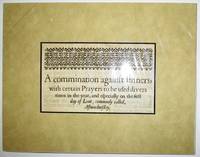
1636réf. 2190A portion of a leaf from a damaged 1636 Scottish book of Common Prayer. This portion of a page includes a heavily decorated band that is 1 and 1/16th" tall above the following text starting as a large headline and decreasing in size: "A commination against sinners with certain Prayers to be used divers times in the year and especially on the first day of Lent commonly called Ashwednesday." Including the archive quality mat the entire item measures 10" x 7.25". This page is in Very Good condition from the very scarece first printing of the Scottish Book of Common Prayer which was influential on the American Book of Common Prayer. Accompanied by a certificate of authenticity. Edinburgh: Printed by Robert Young 1636. Printed by Robert Young
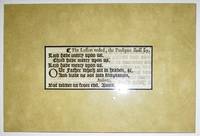
1636réf. 2184Edinburgh: Printed by Robert Young 1636. First edition. Loose-leaf. Very Good . Archivally matted instructions from the first printing of the Scottish Book of Common Prayer which was influential on the American Book of Common Prayer. Accompanied by a certificate of authenticity. A very nice copy of this service standard from the very scarce first edition of the Scottish Book of Common Prayer. Printed by Robert Young
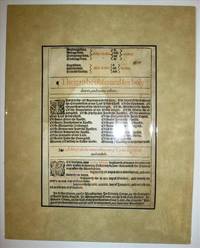
1636réf. 2192Loose-leaf: "These to be observed for holy dayes and none other." Fair. Individual leaf from a 1636 book for the Church of Scotland that contained "Usage Instructions from The Booke of Common Prayer and Administration of the Sacraments." The page is in good condition considering its age. The top third and right side have a water stain that does not impede reading of the text. Two decorated capitals and red ink interspersed with the black most pages of this edition are black text only. There is also at least one small bookworm hole. These indications of age confirm the authenticity of the leaf and enhance its aesthetics and uniqueness. Each leaf is accompanied by a certificate of authenticity. Archivally matted for framing and accompanied by a certificate of authenticity. Makes an excellent gift. Edinburgh: Printed by Robert Young 1636. Robert Young hardcover
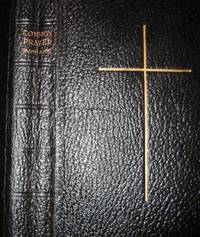
1912réf. 717Edinburgh: Cambridge University Press 1912. First edition. Leather Bound. Near Fine. 5 x 7 1/4 inches. lvi 698 numbered pages a 4 leaves lacking a1 initial blank b 16 leaves C 8 leaves 1-21 in 16s 22 14 leaves. All page edges rouged and gilt. An interesting unrecorded variant of Griffiths 1912/2 and 1912/3. Bound in full flexible black leather with gilt cross on front cover and gilt "Common Prayer Scotland / Cambridge" on spine. Pasted inside the rear cover is a manuscript letter dated 18th March 1913 from E.H. Dowden the niece of the noted Irish poet professor and literary critic Edward Dowden whose brother was Bishop of Edinburgh addressed "Dear Dr. Hart" regarding the new Scottish BCP and the effect of the printer's strike upon it and the Scottish Chronicle noting "how useful your American Revision Reports have been" and the current state of revision of the Lectionary among other related subjects also included is a letter from James Pott American agent for Cambridge Univ. Press notifying Dr. Hart of the forwarding of the New Scottish BCP. From the library of Samuel Hart which experienced a fire that damaged a number of books. As a result items from Hart's library are extremely rare. Samuel Hart 1845-1917 was dean of the Berkeley Divinity School the unofficial "middle way" seminary of the Episcopal Church at Middletown Connecticut. In 1886 he became the third custodian of the Standard Book of Common Prayer. In 1892 he became secretary of the House of Bishops. In 1898 he became the fourth historiographer of the Episcopal Church. He served in all three of these offices until his death. In 1893 he was elected Bishop of Vermont but he declined the office. A unique association copy with related correspondence. Cambridge University Press unknown
1636réf. 2204Single leaf from a damaged 1636 edition of the Book of Common Prayer Church of Scotland. Archivally matted page that gives instruction regarding the reading of the Psalms including precise instructions for leap years. Heavily decorated with a wide top border and delicately illustrated capital T. An historic leaf from the first printing of the Scottish Book of Common Prayer which was infulential on the American Book of Common Prayer. Accompanied by a certificate of authenticity. Very good. Loose-leaf with mat. A nice leaf from the very scarce first edition of the Scottish Book of Common Prayer. Makes an excellent gift. #2204 Robert Young
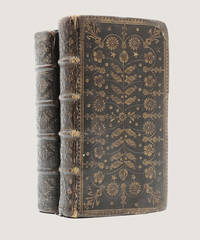
1716réf. 14942Edinburgh; Printed by James Watson One of His Majesty's Printers 1716. 1716. Two imprints in two volumes the Bible divided across both volumes and signed continuously the Psalms bound to end of volume two and signed independently. Duodecimo n. p. sig. A-Y12 Z1-2; Z3-12 2A-2S12 2T10 A-C12. The New Testament has a letterpress title-page. This copy lacks the two engraved title-pages to the Old and New Testaments reported by some institutional cataloguers otherwise complete. We locate both one volume and two volume copies in institutional libraries and copies with and without the Psalms. Both volumes bound in near-uniform black full morocco Scottish herringbone bindings. Volume one on four raised bands star and thistle ornaments within triple fillets to compartments; central herringbone panel in star thistle and wheel design within fleur-de-lis and pyramid roll borders to boards; pyramid rolls to turn-ins; marbled end-papers; all edges gilt; olive-green silk place-marker mounted to headband. Volume two on four raised bands; gilt floral tooling within triple fillets to compartments; thistle star and wheel herringbone panel surrounded by thistles stars and fleur-de-lis within fillet and pyramid roll border; floral rolls to board edges and turn-ins; marbled end-papers. Elaborate calligraphic bookplate in black green and red ink of Sarah McKie 'written at Edinburgh the XIIIth August 1735' to front free end-paper of volume one; pencil ownership inscription of one 'J. S. Muir 1888' to verso. Neat ownership inscription of one 'Stewart' dated December 5 1721 to front free end-paper of volume two. Later pencil annotation to foot of volume one T8v. Corners bumped slight rubbing to joints of raised bands on volume one shelf-wear to edges of boards but bindings otherwise bright neat and very solid. A few spots of occasional toning to contents of both volumes text-blocks very occasionally frayed and nicked to edges; one end-leaf of volume one repaired sympathetically with like paper; slight loss to corner of C1 affecting catchword only loss to corner of A2 A5 of Psalms affecting text; spots of ink to N1 of Bible ink stains to title-page B1v B2r of Psalms; 2R gathering of Bible and B C gatherings of Psalms cut close to fore-edge affecting text. Contents used but serviceable bindings both well-preserved examples. A curious pair of volumes bound in very similar herringbone style perhaps even from the same workshop but with no tools in common. The division of the volumes midway through the Psalms at Z2 is such an unusual choice which appears to differ from institutional copies in two volumes that this bookseller concludes they must be intended as a pair. Herringbone bindings were the dominant form of decorative binding in early eighteenth-century Scotland evolving from late-seventeenth century panel bindings. The thistle and pyramid tools on display here are peculiarly Scottish features. An excellent example of fine Scottish binding of the early eighteenth-century. ESTC T91732; T91831. Edinburgh; Printed by James Watson, One of His Majesty's Printers, 1716. hardcover
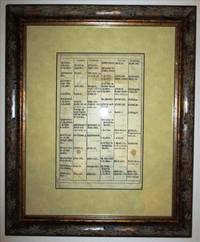
1636réf. 2188Edinburgh: Printed by Robert Young 1636. First edition. Loose-leaf. Very Good . Archivally matted and framed from the first printing of the Scottish Book of Common Prayer which was influential on the American Book of Common Prayer. Accompanied by a certificate of authenticity. A very nice portion of the scarce first edition of the Scottish Book of Common Prayer. Makes an excellent gift. Printed by Robert Young unknown
réf. 200816819Paris, Libraire grund - collection scotland yard, s.d. ; in-12, 223 pp., broché, couverture illustr (plis au dos mais semble etre une marque de fabrique). Traduit de l'anglais par Jeanne Fournier-Pargoire.
réf. 14009Without place or date but with reference to 'George Salmond Writer Glasgow'. Early nineteenth-century. 2pp. 4to. On leaf untidily torn from an album resulting in a ragged edge with minor loss of text a few parts of words. On aged and chipped paper. The document is headed 'Forgery of the Commercial Bank of Scotlands Guinea Note' and begins: As a few off these Forged Notes have made their appearance in Glasgow e following directions are given to enable the public to distinguish the forged from the genuine Notes.' A detailed description follows with small illustrations given of the shapes of the letter 'B' in forgery and genuine note with other illustrations of a thistle both with and 'without prickles'. The document ends: 'It is requested that if any of these forged Notes are presented the same and those offering them may be detained and proceeded with according to the Law and that notice may be immediately sent to George Salmond Writer Glasgow who will pay the expenses and liberally remunerate those giving any information which may be of Service or may lead to Conviction of offenders.' No other copy traced either on COPAC or WorldCat. The Scottish guinea note was introduced in 1758 and discontinued in 1828. The book 'Rambling Recollections of Old Glasgow' by 'Nestor' contains a reference to 'Mr. George Salmond long Procurator-Fiscal at Glasgow' who 'kept an album or rather nigrum containing a collection of forged notes with notices of the results to the persons implicated in their forgery or issue. There seldom was a Circuit in Glasgow where there were not several men or women sentenced to death for such crimes and several expiated their offences on the scaffold'. Salmond was Procurator-Fiscal by 1826 so this item would appear to date from before then. Without place or date, but with reference to 'George Salmond, Writer, Glasgow'. Early nineteenth-century. unknown
1784réf. AQ21445London: Printed for T. Becket 1784. 23pp 1. Disbound. Spotted and a trifle stained. Later manuscript date to foot of p.23. The first edition of a pamphlet issued by members of the Church of Scotland calling for the removal of legislation that required them when swearing upon a Bible in a court of law to kiss the book rather than merely raise a hand. ESTC T162178. First edition. 8vo. Printed for T. Becket unknown
1785réf. 11154A Genève et se trouve à Paris, chez Paul Barde / chez Moutard, chez Mérigot le jeune, 1785. 2 volumes in-8 de XV-375-[2] et VI-[2]-328-[2] pages, demi-veau brun à coins, dos lisses ornés de filets, intiales, roulette, titre ("Voyages au Nord") et tomaison dorés.
réf. 005679[Droit - Ecosse], Recueil des pièces présentées à sa Majesté très-chrétienne, à la Tournelle du Parlement de Paris, & à M. de Sartine, Lieutenant Général de Police ; En conséquence de deux Jugemens portés par la Cour de Session en Ecosse ; le premier daté du 27 Juillet, & le second du 11 Août présente année 1763 [etc.]. Paris, Michel Lambert, 1763. In-4, [2]-51p. Intéressant document autour d'une des plus importantes affaires du XVIIIe siècle. La sour du dernier duc de Douglas (1694-1761), Lady Jane Douglas (1698-1753) se serait mariée en secret au chevalier John Stewart de Grandtully (1687-1764), sympathisant jacobite réfugié en France. En 1748, Jane informe son frère de la naissance de jumeaux, Archibald et Sholto. Ce dernier mourra comme sa mère en 1753. Le duc refusa de reconnaître cette naissance et coupa les vivres à sa sour. Suite à son mariage avec Margaret Douglas de Mains, le duc accepta de reconnaître la naissance de son neveu. Après la mort du duc, les Hamilton contestèrent l'héritage. Bien que la cour statuât contre le neveu en 1767, la Chambre des Lords inversa la décision, sans appel possible. Les deux jugements reproduits ici indiquent que toute la procédure faite en France n'a aucune valeur en Ecosse. Une des conséquences est que les témoins des Hamilton ne pourraient pas répondre en Ecosse car, selon l'usage écossais, un témoin ne peut comparaître qu'une seule fois. Reliure bradel demi-parchemin (début XXe), titre manuscrit. Intéressant document.
réf. 63541Lausanne, Rencontre (L'Atlas des Voyages), 1968, grand in 8° cartonnage illustré de l'éditeur, 192 pages.
1890réf. 10281890 Londres, The Religious Tract Society, sans date (vers 1890), grand in 8°, cartonnage toile décorée de l'éditeur, tranches dorées, XVI-208 pages et 8 pages de catalogue ; très nombreuses gravures sur bois in et hors-texte.
réf. 201206542Paris, Les editions braun, 1969 ; in-4, 197 pp., cartonnage de l'éditeur. Avec jaquette.
réf. 10224Edin. 1822. 37pp. 8vo disbound sewn trimmed with loss to manuscript annotations damage and staining final free ep foxing otherwise fair. Second half entitles "Miscellaneous Rules Regulations & Bye-Laws for the Police of the City of Edinburgh and adjoining districts". The manusscript annotations in ink and pencil adds further instruction or information for example p.9 about "a book shall be kept at the Police Office ." adds "examine state of this" AND p.30 on the numbering of houses and premises adds "Committee should be charged with this duty". Scarce: COPAC lists copy at NLS only. [Edin., 1822] unknown
First edition, 4to (185 x 135mm), [12], 118, [2]pp., the first leaf is blank except for marginal rules and signature-mark "A", the last leaf is blank except for marginal rules, woodcut devices on title, new endpapers, recent full calf, gilt lettered red morocco label to spine. "On the accession of James I, Egerton was reappointed lord keeper and advanced to the peerage on 21 July 1603 as Baron Ellesmere, of Ellesmere in Shropshire (where he was given a large estate), but at the king's behest relinquished the rolls in favour of the Scottish lawyer Edward Bruce. On 24 July Egerton was appointed lord chancellor, relinquishing his position as lord keeper. He presided over the chancery and Star Chamber for another fourteen years, and also conducted a number of state trials, notably those of Sir Walter Ralegh (1603), and the gunpowder plotters (1605)."?(ODNB.) This speech took four hours to deliver and concerns the rights of Scots born after the accession of James I, the case concerns 'Robert Calvine, sonne and heire apparant of James L. Calvine of Colcrosse in the realme of Scotland.' - (pp.4-5). Provenance: Early signature of Davenport Talbot on A1. STC, 7540.
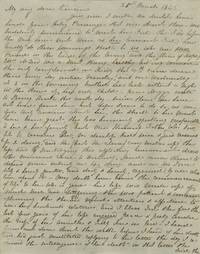
1845réf. BK0036Isle of Mull Scotland 1845. Autograph letter signed by a female member of the MacLeod family with an additional message signed "Mary McLeod" to the Rev. John Neil MacLeod in New York. 4pp measuring 9 x 7 inches. Addressed to "The Rev'd J. N. Macleod D.D. Presbyterian Minister New York United States North America." Postmarked at Tobermory prepaid "1/-" with London transit markings and intact black wax seal. Folded with very small holes at folds; excellent. A Scottish family and ecclesiastical letter containing an early direct condemnation of the Free Church of Scotland's acceptance of donations from slaveholding Presbyterians in the American South. Written in March 1845 the letter predates Frederick Douglass's arrival in Scotland and the public campaign urging the Free Church to "Send Back the Money." It demonstrates that criticism of the church's American fundraising was already circulating privately within Scottish Presbyterian networks before Douglass helped transform the controversy into a major transatlantic abolitionist cause. Following the Disruption of 1843 the newly established Free Church sent representatives to the United States to raise money. Contributions from southern churches and slaveholding ministers generated growing criticism particularly because the Free Church presented itself as a purer and more principled form of Presbyterianism. The writer identifies what she regarded as the central contradiction: the church refused communion with ministers who remained in the established Church of Scotland while recognizing slaveholding American ministers as Christian brethren and accepting their money. She writes: "What can you think now of their disclaiming to hold communion with any of their Bretheren in the Establishment and avowedly & publicly countenancing and holding communion with the Slave holding Ministers in your Southern States. Their coffers have been largely augmented by donations from these States and the leaders of the Free recognize them as Bretheren and write and speak of them with the greatest respect." Her criticism is directed as much at the church's financial expediency as at its inconsistency: "This has opened the eyes of some as to what they will resort to get money-this Church that professed to be a pure Church. Oh does it not clearly show the inconsistencies of man nay even of Christians what a different view these leaders may take of Slavery from what your respected Father had." Douglass began his Scottish campaign the following year when he and other abolitionists repeatedly challenged the Free Church to return the money received from American slaveholders. Writing to William Lloyd Garrison in April 1846 Douglass declared "Scotland is a blaze of anti-slavery agitation-the Free Church and Slavery are the all-engrossing topics."1 The present letter records essentially the same moral argument a year earlier made from within the church's own extended religious and family networks: that accepting southern funds compromised the Free Church's authority and exposed the limits of its professed purity. Addressed to the Rev. John Neil MacLeod in New York the letter places the dispute within a transatlantic Presbyterian context. The writer invokes the antislavery views of MacLeod's father and questions whether the recipient understood that a minister whom he had permitted to preach from his pulpit "advocated the course of the Southern Slave State Ministers so much" remarking "I should think not." The letter also contains news of a bereavement and other family and church news about Scotland and America. An important private response to the Free Church's American fundraising campaign written before the controversy reached its fullest public expression through Frederick Douglass's "Send Back the Money" campaign. The letter documents the early moral opposition of Scottish Presbyterians who believed that a church claiming spiritual independence and purity had compromised both by accepting the support of American slaveholders. . unknown
1845réf. BK0036Isle of Mull Scotland 1845. Autograph letter signed by a female member of the MacLeod family with an additional message signed "Mary McLeod" to the Rev. John Neil MacLeod in New York. 4pp measuring 9 x 7 inches. Addressed to "The Rev'd J. N. Macleod D.D. Presbyterian Minister New York United States North America." Postmarked at Tobermory prepaid "1/-" with London transit markings and intact black wax seal. Folded with very small holes at folds; excellent. A Scottish family and ecclesiastical letter containing an early direct condemnation of the Free Church of Scotland's acceptance of donations from slaveholding Presbyterians in the American South. Written in March 1845 the letter predates Frederick Douglass's arrival in Scotland and the public campaign urging the Free Church to "Send Back the Money." It demonstrates that criticism of the church's American fundraising was already circulating privately within Scottish Presbyterian networks before Douglass helped transform the controversy into a major transatlantic abolitionist cause. Following the Disruption of 1843 the newly established Free Church sent representatives to the United States to raise money. Contributions from southern churches and slaveholding ministers generated growing criticism particularly because the Free Church presented itself as a purer and more principled form of Presbyterianism. The writer identifies what she regarded as the central contradiction: the church refused communion with ministers who remained in the established Church of Scotland while recognizing slaveholding American ministers as Christian brethren and accepting their money. She writes: "What can you think now of their disclaiming to hold communion with any of their Bretheren in the Establishment and avowedly & publicly countenancing and holding communion with the Slave holding Ministers in your Southern States. Their coffers have been largely augmented by donations from these States and the leaders of the Free recognize them as Bretheren and write and speak of them with the greatest respect." Her criticism is directed as much at the church's financial expediency as at its inconsistency: "This has opened the eyes of some as to what they will resort to get money-this Church that professed to be a pure Church. Oh does it not clearly show the inconsistencies of man nay even of Christians what a different view these leaders may take of Slavery from what your respected Father had." Douglass began his Scottish campaign the following year when he and other abolitionists repeatedly challenged the Free Church to return the money received from American slaveholders. Writing to William Lloyd Garrison in April 1846 Douglass declared "Scotland is a blaze of anti-slavery agitation-the Free Church and Slavery are the all-engrossing topics."1 The present letter records essentially the same moral argument a year earlier made from within the church's own extended religious and family networks: that accepting southern funds compromised the Free Church's authority and exposed the limits of its professed purity. Addressed to the Rev. John Neil MacLeod in New York the letter places the dispute within a transatlantic Presbyterian context. The writer invokes the antislavery views of MacLeod's father and questions whether the recipient understood that a minister whom he had permitted to preach from his pulpit "advocated the course of the Southern Slave State Ministers so much" remarking "I should think not." The letter also contains news of a bereavement and other family and church news about Scotland and America. An important private response to the Free Church's American fundraising campaign written before the controversy reached its fullest public expression through Frederick Douglass's "Send Back the Money" campaign. The letter documents the early moral opposition of Scottish Presbyterians who believed that a church claiming spiritual independence and purity had compromised both by accepting the support of American slaveholders. . unknown books
1775réf. AQ33308Edinburgh: s.n. 1775. 32pp. Uncut. Stitched as issued. Single old vertical fold. Very occasional marginal spotting. The sole edition in original state of an anonymous address concerning the Bill for altering the laws which regulate the qualifications of freeholders entitled to vote in the election of Members of Parliament for Scotland. ESTC records copies at 10 locations BL California Duke Huntington Kansas NLS Oxford Queen's Syracuse and Yale. ESTC T38311. First edition. 8vo. [s.n.] unknown
First edition, 4to, 125pp., foreword signed by the author in ink, numerous illustrs., orig. publishers quarter blue morocco, blue cloth boards, gilt, spine faded otherwise a nice copy. Provenance: With a tipped-in A.L.s of presentation from the author to Mr. Harris, "I send you a copy of the centenary history of the Q.O.R.G.Y.... It was a very restricted edition and very few libraries have a copy..."
réf. 22983Leith Links 3 John's Place Tuesday 4 Jany docketed adding "1848". Two pages 12mo bifolium formerly in an album tipped onto strip of album page as is the addressed envelope no postal marks good condition. "My dear Sir If as I hope you are disengaged on Friday underlined next come and partake of a quiet family dinner with us at 5 o'clock you will confer much pleasure on us and will I trust meet honest David Scott with whom we will discuss high & important matters. As an inducement to him to do me that favour I have ventured to tell him that I hope he will meet you. Prytheee then let us not be disappointed. " Postscript asking "What of Mr Black" Notes: "David Scott was the son of Robert Scott and brother of William Bell Scott both involved in contributions for George Thomson’s publications. Like William Bell he also wrote poetry although he requested many of his verses to be destroyed after his death." Leith Links, 3 John's Place, Tuesday 4 Jany (docketed, adding "1848"). unknown