3.205 Ergebnisse
Best.-Nr. 10224Edin. 1822. 37pp. 8vo disbound sewn trimmed with loss to manuscript annotations damage and staining final free ep foxing otherwise fair. Second half entitles "Miscellaneous Rules Regulations & Bye-Laws for the Police of the City of Edinburgh and adjoining districts". The manusscript annotations in ink and pencil adds further instruction or information for example p.9 about "a book shall be kept at the Police Office ." adds "examine state of this" AND p.30 on the numbering of houses and premises adds "Committee should be charged with this duty". Scarce: COPAC lists copy at NLS only. [Edin., 1822] unknown
First edition, 4to (185 x 135mm), [12], 118, [2]pp., the first leaf is blank except for marginal rules and signature-mark "A", the last leaf is blank except for marginal rules, woodcut devices on title, new endpapers, recent full calf, gilt lettered red morocco label to spine. "On the accession of James I, Egerton was reappointed lord keeper and advanced to the peerage on 21 July 1603 as Baron Ellesmere, of Ellesmere in Shropshire (where he was given a large estate), but at the king's behest relinquished the rolls in favour of the Scottish lawyer Edward Bruce. On 24 July Egerton was appointed lord chancellor, relinquishing his position as lord keeper. He presided over the chancery and Star Chamber for another fourteen years, and also conducted a number of state trials, notably those of Sir Walter Ralegh (1603), and the gunpowder plotters (1605)."?(ODNB.) This speech took four hours to deliver and concerns the rights of Scots born after the accession of James I, the case concerns 'Robert Calvine, sonne and heire apparant of James L. Calvine of Colcrosse in the realme of Scotland.' - (pp.4-5). Provenance: Early signature of Davenport Talbot on A1. STC, 7540.
1845Best.-Nr. BK0036Isle of Mull Scotland 1845. Autograph letter signed by a female member of the MacLeod family with an additional message signed "Mary McLeod" to the Rev. John Neil MacLeod in New York. 4pp measuring 9 x 7 inches. Addressed to "The Rev'd J. N. Macleod D.D. Presbyterian Minister New York United States North America." Postmarked at Tobermory prepaid "1/-" with London transit markings and intact black wax seal. Folded with very small holes at folds; excellent. A Scottish family and ecclesiastical letter containing an early direct condemnation of the Free Church of Scotland's acceptance of donations from slaveholding Presbyterians in the American South. Written in March 1845 the letter predates Frederick Douglass's arrival in Scotland and the public campaign urging the Free Church to "Send Back the Money." It demonstrates that criticism of the church's American fundraising was already circulating privately within Scottish Presbyterian networks before Douglass helped transform the controversy into a major transatlantic abolitionist cause. Following the Disruption of 1843 the newly established Free Church sent representatives to the United States to raise money. Contributions from southern churches and slaveholding ministers generated growing criticism particularly because the Free Church presented itself as a purer and more principled form of Presbyterianism. The writer identifies what she regarded as the central contradiction: the church refused communion with ministers who remained in the established Church of Scotland while recognizing slaveholding American ministers as Christian brethren and accepting their money. She writes: "What can you think now of their disclaiming to hold communion with any of their Bretheren in the Establishment and avowedly & publicly countenancing and holding communion with the Slave holding Ministers in your Southern States. Their coffers have been largely augmented by donations from these States and the leaders of the Free recognize them as Bretheren and write and speak of them with the greatest respect." Her criticism is directed as much at the church's financial expediency as at its inconsistency: "This has opened the eyes of some as to what they will resort to get money-this Church that professed to be a pure Church. Oh does it not clearly show the inconsistencies of man nay even of Christians what a different view these leaders may take of Slavery from what your respected Father had." Douglass began his Scottish campaign the following year when he and other abolitionists repeatedly challenged the Free Church to return the money received from American slaveholders. Writing to William Lloyd Garrison in April 1846 Douglass declared "Scotland is a blaze of anti-slavery agitation-the Free Church and Slavery are the all-engrossing topics."1 The present letter records essentially the same moral argument a year earlier made from within the church's own extended religious and family networks: that accepting southern funds compromised the Free Church's authority and exposed the limits of its professed purity. Addressed to the Rev. John Neil MacLeod in New York the letter places the dispute within a transatlantic Presbyterian context. The writer invokes the antislavery views of MacLeod's father and questions whether the recipient understood that a minister whom he had permitted to preach from his pulpit "advocated the course of the Southern Slave State Ministers so much" remarking "I should think not." The letter also contains news of a bereavement and other family and church news about Scotland and America. An important private response to the Free Church's American fundraising campaign written before the controversy reached its fullest public expression through Frederick Douglass's "Send Back the Money" campaign. The letter documents the early moral opposition of Scottish Presbyterians who believed that a church claiming spiritual independence and purity had compromised both by accepting the support of American slaveholders. . unknown
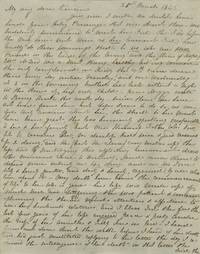
1845Best.-Nr. BK0036Isle of Mull Scotland 1845. Autograph letter signed by a female member of the MacLeod family with an additional message signed "Mary McLeod" to the Rev. John Neil MacLeod in New York. 4pp measuring 9 x 7 inches. Addressed to "The Rev'd J. N. Macleod D.D. Presbyterian Minister New York United States North America." Postmarked at Tobermory prepaid "1/-" with London transit markings and intact black wax seal. Folded with very small holes at folds; excellent. A Scottish family and ecclesiastical letter containing an early direct condemnation of the Free Church of Scotland's acceptance of donations from slaveholding Presbyterians in the American South. Written in March 1845 the letter predates Frederick Douglass's arrival in Scotland and the public campaign urging the Free Church to "Send Back the Money." It demonstrates that criticism of the church's American fundraising was already circulating privately within Scottish Presbyterian networks before Douglass helped transform the controversy into a major transatlantic abolitionist cause. Following the Disruption of 1843 the newly established Free Church sent representatives to the United States to raise money. Contributions from southern churches and slaveholding ministers generated growing criticism particularly because the Free Church presented itself as a purer and more principled form of Presbyterianism. The writer identifies what she regarded as the central contradiction: the church refused communion with ministers who remained in the established Church of Scotland while recognizing slaveholding American ministers as Christian brethren and accepting their money. She writes: "What can you think now of their disclaiming to hold communion with any of their Bretheren in the Establishment and avowedly & publicly countenancing and holding communion with the Slave holding Ministers in your Southern States. Their coffers have been largely augmented by donations from these States and the leaders of the Free recognize them as Bretheren and write and speak of them with the greatest respect." Her criticism is directed as much at the church's financial expediency as at its inconsistency: "This has opened the eyes of some as to what they will resort to get money-this Church that professed to be a pure Church. Oh does it not clearly show the inconsistencies of man nay even of Christians what a different view these leaders may take of Slavery from what your respected Father had." Douglass began his Scottish campaign the following year when he and other abolitionists repeatedly challenged the Free Church to return the money received from American slaveholders. Writing to William Lloyd Garrison in April 1846 Douglass declared "Scotland is a blaze of anti-slavery agitation-the Free Church and Slavery are the all-engrossing topics."1 The present letter records essentially the same moral argument a year earlier made from within the church's own extended religious and family networks: that accepting southern funds compromised the Free Church's authority and exposed the limits of its professed purity. Addressed to the Rev. John Neil MacLeod in New York the letter places the dispute within a transatlantic Presbyterian context. The writer invokes the antislavery views of MacLeod's father and questions whether the recipient understood that a minister whom he had permitted to preach from his pulpit "advocated the course of the Southern Slave State Ministers so much" remarking "I should think not." The letter also contains news of a bereavement and other family and church news about Scotland and America. An important private response to the Free Church's American fundraising campaign written before the controversy reached its fullest public expression through Frederick Douglass's "Send Back the Money" campaign. The letter documents the early moral opposition of Scottish Presbyterians who believed that a church claiming spiritual independence and purity had compromised both by accepting the support of American slaveholders. . unknown books
1775Best.-Nr. AQ33308Edinburgh: s.n. 1775. 32pp. Uncut. Stitched as issued. Single old vertical fold. Very occasional marginal spotting. The sole edition in original state of an anonymous address concerning the Bill for altering the laws which regulate the qualifications of freeholders entitled to vote in the election of Members of Parliament for Scotland. ESTC records copies at 10 locations BL California Duke Huntington Kansas NLS Oxford Queen's Syracuse and Yale. ESTC T38311. First edition. 8vo. [s.n.] unknown
First edition, 4to, 125pp., foreword signed by the author in ink, numerous illustrs., orig. publishers quarter blue morocco, blue cloth boards, gilt, spine faded otherwise a nice copy. Provenance: With a tipped-in A.L.s of presentation from the author to Mr. Harris, "I send you a copy of the centenary history of the Q.O.R.G.Y.... It was a very restricted edition and very few libraries have a copy..."
Best.-Nr. 22983Leith Links 3 John's Place Tuesday 4 Jany docketed adding "1848". Two pages 12mo bifolium formerly in an album tipped onto strip of album page as is the addressed envelope no postal marks good condition. "My dear Sir If as I hope you are disengaged on Friday underlined next come and partake of a quiet family dinner with us at 5 o'clock you will confer much pleasure on us and will I trust meet honest David Scott with whom we will discuss high & important matters. As an inducement to him to do me that favour I have ventured to tell him that I hope he will meet you. Prytheee then let us not be disappointed. " Postscript asking "What of Mr Black" Notes: "David Scott was the son of Robert Scott and brother of William Bell Scott both involved in contributions for George Thomson’s publications. Like William Bell he also wrote poetry although he requested many of his verses to be destroyed after his death." Leith Links, 3 John's Place, Tuesday 4 Jany (docketed, adding "1848"). unknown
First edition, viii, 40pp., orig. wrappers. Freeman, 1359; Simpson, p. 349; Not in Hall & Rickard.
1834Best.-Nr. 24462Glasgow 1834. Very good overall. An illustrated advertising sheet with 3 columns of Glasgow shipping advertisements which serves as writing paper for a half penny hand written letter. The letter is from Gilkison & Brown to Messrs. Davidson & Syme lawyers and comments that there are no vessels from Clyde to New York at present "nor will there be any for some weeks". It quotes the cabin and steerage passage rates also. Gilkison & Brown were maritime agents for the Canada Company in Glasgow; they acted as ship and insurance brokers and commission agents. Emigration from Scotland to Canada and other destinations was in response to tenant congestion and starvation as well as land owner bankruptcy. In the 1830s 20000 highlanders emigrated to Canada. The maritime advertising printed in 3 columns is for: the Royal Exchange Assurance of London; individual ads for 10 ships all out of Glasgow and bound for ports all over the world including New York; Calcutta; Trinidad; the Cape of Good Hope; Trieste Italy Genoa Kingston Jamaica and Honduras; and St. Thomas. Each ad is accompanied with an engraved sailing ship. The letter is addressed to Messrs. Davidson & Syme Charlotte Street Edinburgh and franked also with a stamped 24 Oct 1834. "COCLK PM" is stamped in 2 sections due to the letter fold. 15 3/4 x 9 3/4"; folds to 7 7/8 x 9 3/4". Wax seal caused small hole affecting some words in manuscript text. A lovely example of a used letter sheet. unknown
Best.-Nr. 14216The 'Note of Fees' dated November 1814. Horne's receipt from Edinburgh 18 November 1814. Both items in good condition on lightly-aged paper. The 'Note of Fees' is 1p. 4to and comprises 11 charges totalling £44 2s 0d. Docketted on reverse. Among the charges are: 'Herald Painter for painting writing and Emblazoning Arms in Patent £2 2s 0d' 'Herald Painter's Charge for Sketches both of the Arms of Lord Balgray and Miss Robertson: - one in colour given to his Lordship Seven in pen and Ink sent to him at Ormiston Hall and one given to Learmouth & Co. Coachmakers £2 2s 0d' together with 'Lyon Clerk for Extra Trouble £6 6s 0d'. The receipt is 1p. 12mo and is docketted on the reverse 'Note of Fees of Arms For Miss William Boyd Robertson of Lawers Novr. 1814.' It carries two embossed four pence tax stamps is signed by 'James Horne Lyon dept.' and reads: 'Edinburgh 18th. November 1814 Received from Mrs. Robertson Williamson by the hands of Messrs. Dundas & Rollo W.S. Forty four pounds two shillings Stg being in full payment of the annexed note of the Fees of her Patent of Armorial Bearings.' The 'Note of Fees' dated November 1814. Horne's receipt from Edinburgh, 18 November 1814. unknown
1922Best.-Nr. 509114Oxford University Press 1922. Leather. VERY GOOD. Church Hymnary d. 1922 Bible and Psalms undated but assumably therabouts. 2323 pp. Metric Psalms and Hymns. Small-format 32mo bound in full-yapp black cowhide leather with pronounced grain gilt stamped lettering to spine and front cover all edges art gilt black place ribbon color maps. Some modest rubbing to the leather around the tips binding remains entirely sound inscription to FFEP verso otherwise text clean and unmarked with little sign of use or wear. Oxford University Press unknown
1995Best.-Nr. LFA-126746690N° 15 (Octobre 1995) : revue de 66 pages, format 215 x 285 mm, illustrée, brochée couverture couleurs, bon état
1998Best.-Nr. LFA-126746737N° 34 (Février-Mars 1998) : revue de 66 pages, format 215 x 285 mm, illustrée, brochée couverture couleurs, bon état
1994Best.-Nr. LFA-126741868Revue de 130 pages, format 230 x 300 mm, illustrée, brochée couverture couleurs, bon état
First Edition, [6], 97, [1], xxxpp., with half-title, engraved title with an engraved vignette drawn and engraved by W. H. Lizars, inscription on title "Jas. Hay 16 April 1821", date shaved from the imprint, large folding pedigree, disbound. "It will be seen, involves the question of the Male Representationship of the ancient Sovereigns and Princes of the isles; for whoever is Heir Male of Ranald of the Isles Founder of Clanranald, is also the Male Representative of his remote Ancestor Donald of the Isles, Grandson and Heir of Somerled first King of the Isles, after whom the Macdonalds are surnamed at the present day. It is well known that the descendants of Somerled (who lived in the 12th century) were Sovereign Princes, and treated as such by Foreign Powers."
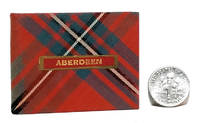
Best.-Nr. 32481Dundee: Valentine & Sons Ltd N.D. First Edition. Hardcover. 1920s. 18 pages of plates. MacGregor Tartan cloth with red leather label lettered in gold affixed to the front panel and red label on rear pastedown endpaper. The views include Queen's Cross the General Post Office Wallace Statue the Old Machar Cathedral Aberdeen University and more. Light fading to spine else a fine copy. ; 5.2 x 4 cm. Valentine & Sons, Ltd hardcover
1891Best.-Nr. 2638Various locations in Missouri: May to June 1891. Very good. 54pp. rectos only. Small quarto. Contemporary limp dark brown leather thin gilt borders and gilt lining on spine. Minor wear spine head a bit tender. Clean internally. An interesting collection of observations on American business politics and more from the standpoint of a Scottish lawyer and businessman working in the American Midwest in 1891. According to an 1891 Scottish directory George D. Ballingall was one of three partners in Fraser Stodart and Ballingall of 16 Castle Street in Edinburgh which matches the address he records on the front free endpaper of the present diary. Ballingall and his partners were managing secretaries for a few companies including the Missouri Land and Live Stock Company Limited which provides easy justification for why he was visiting Missouri here. Ballingall himself is listed in the same directory as a member of the Society of Writers to Her Majesty's Signet a private society of notable Scottish solicitors. The present diary covers Ballingall's time in various locations in Missouri in May and June 1891. He discusses politics real estate farming mining prospects and most intensely the law. He records his experiences in St. Louis Joplin Pierce City and other locations visiting mines taking meetings and providing consultations gathering his own legal advice and more. Ballingall devotes the last several pages of the diary to various legal acts in the Missouri legislature and ponders how they will affect his business interests in the state the affairs of corporations foreign reporting requirements and so forth. He also discusses the evergreen topic involving the struggle between federal and state powers. He concludes by discussing how Missouri farmers organized as did the farmers in Kansas and how this new faction of the "people's party" controls the legislature now. May to June unknown
1891Best.-Nr. 2638Various locations in Missouri: May to June 1891. Very good. 54pp. rectos only. Small quarto. Contemporary limp dark brown leather thin gilt borders and gilt lining on spine. Minor wear spine head a bit tender. Clean internally. An interesting collection of observations on American business politics and more from the standpoint of a Scottish lawyer and businessman working in the American Midwest in 1891. According to an 1891 Scottish directory George D. Ballingall was one of three partners in Fraser Stodart and Ballingall of 16 Castle Street in Edinburgh which matches the address he records on the front free endpaper of the present diary. Ballingall and his partners were managing secretaries for a few companies including the Missouri Land and Live Stock Company Limited which provides easy justification for why he was visiting Missouri here. Ballingall himself is listed in the same directory as a member of the Society of Writers to Her Majesty's Signet a private society of notable Scottish solicitors. The present diary covers Ballingall's time in various locations in Missouri in May and June 1891. He discusses politics real estate farming mining prospects and most intensely the law. He records his experiences in St. Louis Joplin Pierce City and other locations visiting mines taking meetings and providing consultations gathering his own legal advice and more. Ballingall devotes the last several pages of the diary to various legal acts in the Missouri legislature and ponders how they will affect his business interests in the state the affairs of corporations foreign reporting requirements and so forth. He also discusses the evergreen topic involving the struggle between federal and state powers. He concludes by discussing how Missouri farmers organized as did the farmers in Kansas and how this new faction of the "people's party" controls the legislature now. May to June unknown books
21, [1]pp., a little soiled, later wrappers.
1860Best.-Nr. 61757Glasgow Edingburgh & London: Morison Kyle 108 Queen Street ca. 1860. 16mo. 5.2 x 6.25 in. viii 280 pp. all w/ printed ruled borders musical scores printed throughout. Crimson-coloured Victorian publisher’s cloth gilt lettering on front cover & spine t.e.g. minor edgewear rubbing inner hinges neatly repaired still a VG copy from the library of James Grahamslaw 1833-1872 a Scottish farmer who emigrated to Vancouver Island British Columbia in 1866 helped found Victoria Lodge No. 1 of the Freemasons in 1871 and a year later died in the British Virgin Islands whose widow Violet Kerr Grahamslaw b. 1833 moved to Portland OR w/ note in MS dated April 18th 1866 from John Black. First edition of this very scarce Victorian collection of Scottish songs & music in dialect including many published here for the first time as well as musical scores published for the first time. Not to be confused with the John Cameron series published contemporaneously this volume was preceded by the “First Series” in 1856. No copies in Worldcat. Morison Kyle, 108 Queen Street, hardcover
1723Best.-Nr. 23751723 London: Printed by C. Meere, and sold by A. Bettefworth, 1723-1725. Deux vol. in-16: 8 x 13 cm. 5ème édition pour le Ier vol. [Nobility of England], deuxième édition pour le 2ème vol. [Origin of the Scots]. I/ 1 fr., 1 f. [Titre], 2 ff. n. ch. [Preface], pp. 1-120 [armoiries gravées], pp. 3-541[1], 4 ff. [Index & Addenda]. II/ 1 fr., VIII pp., pp. 1-86 [armoiries gravées], 511[1] pp., 13 ff. de planches gravées hors-texte. Reliures d'époque en plein veau marron, dos à quatre nerfs. Couvertures fortement frottées, le t. II a les coiffes arasées, les mors abîmés, les coins émoussés et le premier plat détaché du reste de l'ouvrage. Quelques feuillets déchirés dans les deux volumes, sans manque. Mouillures et rousseurs éparses. Ex-libris manuscrits au début de chacun des volumes. Assemblage d'époque complet de toutes ses planches. Exemplaire captivant de ce classique de l'héraldique britannique du XVIIIe siècle.
1987Best.-Nr. LFA-126739807N° 33 (Avril 1987) 66 pages, format 205 x 285 mm, illustré, broché couverture couleurs, bon état
1854Best.-Nr. 81635Edinburgh:: W. H. Lizars 1854-1855. First edition. publisher's green cloth with printed paper labels on spines. Light foxing to the first few and last few leaves in each volume; the cloth of one volume quite faded; moderate use to both bindings but both are tight and sound. . Folio. Two large folding maps. Additional postage particularly international applicable. W. H. Lizars, hardcover
Best.-Nr. GF9970Photographie 7,5x4 cm - collée sur carton - vers 1900 -