Fishery Board for ScotlandBiblio.com

2 840 résultats
réf. A9781343825017Hardback. New. hardcover
réf. A9781344065931Hardback. New. hardcover
réf. A9781344989572Hardback. New. hardcover
réf. A9781345431018Hardback. New. hardcover
réf. A9781344066303Hardback. New. hardcover
réf. A9781344044172Hardback. New. hardcover
2000réf. 19915EMI (Universal Music), 28.02.2000. 1 CD CD
réf. 0243215525.Gpaperback. Good. Access codes and supplements are not guaranteed with used items. May be an ex-library book. paperback
réf. 0484295268.Ghardcover. Good. Access codes and supplements are not guaranteed with used items. May be an ex-library book. hardcover
2009réf. x-1498255221Wipf & Stock Publishers 2009. Hardcover. New. 264 pages. 6.00x0.63x9.00 inches. Wipf & Stock Publishers hardcover
2009réf. SONG1608991660Wipf & Stock Publishers 2009-11-01. paperback. Used: Good. 6.00x0.60x9.00. Buy with confidence. Excellent Customer Service & Return policy. Wipf & Stock Publishers paperback
réf. 1396177884.Ghardcover. Good. Access codes and supplements are not guaranteed with used items. May be an ex-library book. hardcover
réf. 1390372286.Gpaperback. Good. Access codes and supplements are not guaranteed with used items. May be an ex-library book. paperback
1983réf. 165121983. Softcover. VG sticker on spine very slight wear. Color wraps. 96 pp. 9 bw 22 color plates. paperback books
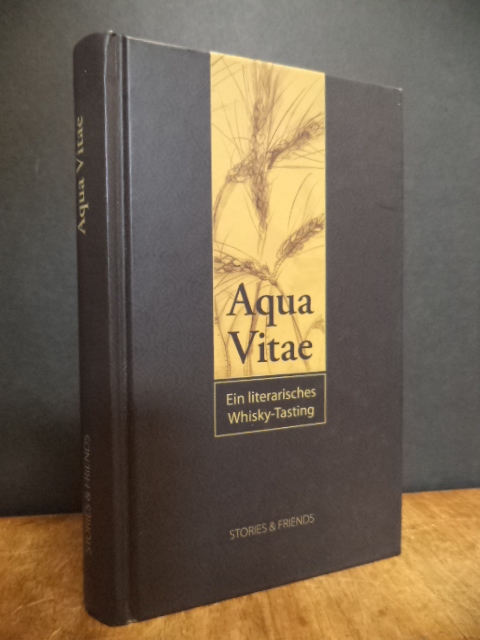
2009réf. 38420ABLehrensteinsfeld bei Heilbronn, Stories & Friends, 2009. 8°, 267 S. mit einigen s/w-Illustr., illustr. original Pappband (Hardcover), Erstausgabe der mattschwarze Einband minimal berieben (unvermeidlich), sonst ein schönes, sauberes Exemplar
réf. 1334399611.Gpaperback. Good. Access codes and supplements are not guaranteed with used items. May be an ex-library book. paperback
1792réf. 948F44Edinburgh: Printed for the Society 1792-1890 . First edition. Leather. Very Good. 11.5" by 9.5". Not Stated. A scarce complete first edition set of the Society of Antiquaries of Scotland's 'Archaeologia Scotica' illustrated throughout and in signed calf bindings from Andrew Grieve. The scarce complete five volume set of the Transactions of the Society of Antiquaries of Scotland a publication containing essays articles and illustrations related to Scottish antiquities focussing upon archaeological discoveries historical analyses and discussions of ancient manuscripts and artefacts.Following the completion of volume V in 1890 this publication was absorbed by the Proceedings of the Society of Antiquaries of Scotland which had been in publication since 1850.Volume I 1792 illustrated with seven plates one folding.Volume II 1822 illustrated with nineteen plates one folding and a folding table.Volume III 1831 illustrated with eleven plates.Volume IV 1857 illustrated with thirty-two plates of which sixteen are folding and three in colour. Volume V 1890 illustrated with seventy-one platesWith further vignette illustrations throughout each volume. Collated complete.In full calf signed bindings by Andrew Grieve. In a full calf signed binding with gilt detailing to back strip. Externally very smart. Rubbing to tail of volume I rear board. Tail of volume I joint starting with board firmly held. Rear hinge of volume II strained with board firmly held. Internally firmly bound. Instances of handling marks to volume I. Offsetting to pages facing plates of volume II. Pages otherwise clean and bright. Very Good Printed for the Society hardcover
réf. 0484242873.Ghardcover. Good. Access codes and supplements are not guaranteed with used items. May be an ex-library book. hardcover
1999réf. 59176Editions Anthèse 1999 In-12 reliure éd. sous jaquette 19,9 cm sur 17,5. 80 pages. Très bon état d’occasion.
2003266 pages. Features: Hotels Around the World - The Roxburghe in Scotland, The Ritz-Carlton in Sarasota, Hotel Royal in Evian-les-Bains, France, Kersefontein Guest Farm in South Africa, Maison Place Royal in Montreal, Udaivilas in India; Penthouse in Key Biscayne; Charles Gwathmey - complex volumes in Bel Air; Faith Popcorn's weekend cabin on Georgica Pond, Long Island; Complex environment in a Chicago high-rise; English country style in the midwest; Chilly minimalist rooms thaw out by the East River; Japanese Fusion - east and west meet in an Okayama compound; Photographer Ellen Graham goes Anglo-Indian in Palm Beach. Light wear. Unmarked. A quality copy. Magazine
1903réf. List2990Dover and Chatham Ontario; Edinburgh and Blairgowrie Scotland 1903. Seventy-eight pieces: seven 2.5 x 4" photographs mounted on heavy cardstock; with seventeen letters from Alexander to James Macfarlane fifty-two from James to Alexander Macfarlane and two from others to Alexander Macfarlane. Fourteen from 1853-1882; eleven from 1883-1885; thirteen from 1886; twelve from 1887; thirteen from 1888; eight from 1889-1903. Sorted chronologically. Envelopes good to very good; letters generally near fine. Alexander Macfarlane 1851-1913 was a Scottish physicist mathematician and logician. He earned a D.Sc. from the University of Edinburgh in 1878; following this he would teach at the University of St. Andrews the University of Edinburgh the University of Texas at Austin and Lehigh University. Macfarlane earned a number of accolades including elections to many scientific and mathematical societies and an honorary doctorate from the University of Michigan. After his retirement in 1894 Alexander Macfarlane moved to a farm in Ontario left to him by his uncle James who is his correspondent herein. Much less is known about James Macfarlane; born in Scotland in 1806 he immigrated to North America by way of New York in 1835. He purchased land in Dover Township now Chatham Ontario in 1853 and was elected the town's reeve in 1879. At the time of this correspondence he was a farmer by occupation. The photographs in the collection-portraits of unknown individuals-are likely his as they are from photography studios in the Brantford and Toronto area and seem to date from before Alexander Macfarlane's arrival in the colony. James Macfarlane's letters to his nephew mainly written between 1886 and 1889 give detailed descriptions of farm life and logistics in 19th-century Ontario. He grew corn wheat beans clover and hay raised pigs and cows and kept a number of workhorses alongside a few seasonal employees. The elder Macfarlane describes the state of his crops the health of his animals and especially his finances taxes and employees' wages; he writes of "a constant fear of running aground" March 17 1887. However he also occasionally discusses academic or political affairs - it is unclear what education Macfarlane had or what political experience besides his reeveship but from his writing it seems not insignificant. One prohibition-related incident in 1887 especially stands out: "During the night between last Saturday & Sunday there was a dynamite explosion in front of the handsome residence of H. Cummings Esq. of Chatham - damage but no one hurt. It is believed it was the doing of the Chatham grogocracy - Mr. C. favours prohibition - Tories do not". August 10 1887 This letter dates the incident to late on the 6th or early on the 7th of August 1887; we do not find the explosion mentioned in local newspapers from the time. Alexander Macfarlane's letters which comprise most of the earlier letters in the group focus on his burgeoning academic career. In 1882 when the majority of his letters were written he had applied and was waiting to hear about a position as Chair of Mathematics at University College Dundee now the University of Dundee which was then just being formed. Besides occasional discussions of work in which he is currently engaged Macfarlane writes about his tactics for bettering his chances at the Chair; for example: "I have just received some information which indicates that I shall have an excellent chance of being successful. Rev. Mr. Tait who was our minister before he left Blairgowrie for Newport opposite Dundee happens to be a very intimate friend of the founder of the College Miss Baxter of Balgavies. I saw from the first that it would be important to secure his cooperation; he has been very active in his support. Recently he was staying at Balgavies and when the College was discussed he spoke highly in my favour. He has persuaded Miss Baxter to take some active steps in my favour. Copies of all the applications etc. are sent to her which seems to indicate that a proposed appointment is submitted to her for approval." September 19 1882 The wait is difficult for Macfarlane and he frequently comments with displeasure on related workplace politics. For instance he is upset by the choice of William Peterson-whom he describes as "a fop" October 3 1882-for Principal of the new university: "Peterson had this advantage that many of the electors had a bias in favour of a Classical man for the office of Principal. He got only a second class at Oxford. I say nothing on the subject but I have heard others express an opinion that a mistake has been made." August 13 1882 And later: "Most people express themselves as greatly surprised at the choice the Dundee Council made of a Principal. My theory of the matter is that Professor Donaldson with the view of furthering his own candidature wished to ingratiate himself with Professor Sellars after he saw that Mr Porter would not be accepted by the Council. I feel that the Council may do anything as they seem nearly incapable of forming an independent opinion." September 27 1882 When he does not receive the Chair Macfarlane shares his thoughts with his uncle about the state of Scottish Universities especially that they "have no reputation for scholarship" and that the Scottish people "need not expect learning to flourish at their Universities" November 23 1882. Of course Macfarlane's career turned out fine despite this setback; in 1895 he tells James not unfairly that "I am considered one of the foremost thinkers of the day in the field of exact science" March 21. Overall a look at the lives and activities of an uncle and nephew with extremely different careers; of interest both to scholars of Ontario history and farming and to historians of science and higher education. unknown
1903réf. List2990Dover and Chatham Ontario; Edinburgh and Blairgowrie Scotland 1903. Seventy-eight pieces: seven 2.5 x 4" photographs mounted on heavy cardstock; with seventeen letters from Alexander to James Macfarlane fifty-two from James to Alexander Macfarlane and two from others to Alexander Macfarlane. Fourteen from 1853-1882; eleven from 1883-1885; thirteen from 1886; twelve from 1887; thirteen from 1888; eight from 1889-1903. Sorted chronologically. Envelopes good to very good; letters generally near fine. Alexander Macfarlane 1851-1913 was a Scottish physicist mathematician and logician. He earned a D.Sc. from the University of Edinburgh in 1878; following this he would teach at the University of St. Andrews the University of Edinburgh the University of Texas at Austin and Lehigh University. Macfarlane earned a number of accolades including elections to many scientific and mathematical societies and an honorary doctorate from the University of Michigan. After his retirement in 1894 Alexander Macfarlane moved to a farm in Ontario left to him by his uncle James who is his correspondent herein. Much less is known about James Macfarlane; born in Scotland in 1806 he immigrated to North America by way of New York in 1835. He purchased land in Dover Township now Chatham Ontario in 1853 and was elected the town's reeve in 1879. At the time of this correspondence he was a farmer by occupation. The photographs in the collection-portraits of unknown individuals-are likely his as they are from photography studios in the Brantford and Toronto area and seem to date from before Alexander Macfarlane's arrival in the colony. James Macfarlane's letters to his nephew mainly written between 1886 and 1889 give detailed descriptions of farm life and logistics in 19th-century Ontario. He grew corn wheat beans clover and hay raised pigs and cows and kept a number of workhorses alongside a few seasonal employees. The elder Macfarlane describes the state of his crops the health of his animals and especially his finances taxes and employees' wages; he writes of "a constant fear of running aground" March 17 1887. However he also occasionally discusses academic or political affairs - it is unclear what education Macfarlane had or what political experience besides his reeveship but from his writing it seems not insignificant. One prohibition-related incident in 1887 especially stands out: "During the night between last Saturday & Sunday there was a dynamite explosion in front of the handsome residence of H. Cummings Esq. of Chatham - damage but no one hurt. It is believed it was the doing of the Chatham grogocracy - Mr. C. favours prohibition - Tories do not". August 10 1887 This letter dates the incident to late on the 6th or early on the 7th of August 1887; we do not find the explosion mentioned in local newspapers from the time. Alexander Macfarlane's letters which comprise most of the earlier letters in the group focus on his burgeoning academic career. In 1882 when the majority of his letters were written he had applied and was waiting to hear about a position as Chair of Mathematics at University College Dundee now the University of Dundee which was then just being formed. Besides occasional discussions of work in which he is currently engaged Macfarlane writes about his tactics for bettering his chances at the Chair; for example: "I have just received some information which indicates that I shall have an excellent chance of being successful. Rev. Mr. Tait who was our minister before he left Blairgowrie for Newport opposite Dundee happens to be a very intimate friend of the founder of the College Miss Baxter of Balgavies. I saw from the first that it would be important to secure his cooperation; he has been very active in his support. Recently he was staying at Balgavies and when the College was discussed he spoke highly in my favour. He has persuaded Miss Baxter to take some active steps in my favour. Copies of all the applications etc. are sent to her which seems to indicate that a proposed appointment is submitted to her for approval." September 19 1882 The wait is difficult for Macfarlane and he frequently comments with displeasure on related workplace politics. For instance he is upset by the choice of William Peterson-whom he describes as "a fop" October 3 1882-for Principal of the new university: "Peterson had this advantage that many of the electors had a bias in favour of a Classical man for the office of Principal. He got only a second class at Oxford. I say nothing on the subject but I have heard others express an opinion that a mistake has been made." August 13 1882 And later: "Most people express themselves as greatly surprised at the choice the Dundee Council made of a Principal. My theory of the matter is that Professor Donaldson with the view of furthering his own candidature wished to ingratiate himself with Professor Sellars after he saw that Mr Porter would not be accepted by the Council. I feel that the Council may do anything as they seem nearly incapable of forming an independent opinion." September 27 1882 When he does not receive the Chair Macfarlane shares his thoughts with his uncle about the state of Scottish Universities especially that they "have no reputation for scholarship" and that the Scottish people "need not expect learning to flourish at their Universities" November 23 1882. Of course Macfarlane's career turned out fine despite this setback; in 1895 he tells James not unfairly that "I am considered one of the foremost thinkers of the day in the field of exact science" March 21. Overall a look at the lives and activities of an uncle and nephew with extremely different careers; of interest both to scholars of Ontario history and farming and to historians of science and higher education. unknown books
1975réf. 60317HMSO - RCHMS Edinburgh 1975. 1st edition. Hardback. Cloth dj F/G. xlviii325pp 120pp b/w plates 248 b/w plans & text figs some folding folding map at the rear metric conversion table index a nice fine copy in a spine faded & edge worn dustjacket. Detailed & comprehensive survey of the monuments & archaeological remains in the Lorn district of Scotland an area to the Esat of Oban almost as far East as Crianlarich. HMSO - RCHMS, Edinburgh hardcover
réf. 14216The 'Note of Fees' dated November 1814. Horne's receipt from Edinburgh 18 November 1814. Both items in good condition on lightly-aged paper. The 'Note of Fees' is 1p. 4to and comprises 11 charges totalling £44 2s 0d. Docketted on reverse. Among the charges are: 'Herald Painter for painting writing and Emblazoning Arms in Patent £2 2s 0d' 'Herald Painter's Charge for Sketches both of the Arms of Lord Balgray and Miss Robertson: - one in colour given to his Lordship Seven in pen and Ink sent to him at Ormiston Hall and one given to Learmouth & Co. Coachmakers £2 2s 0d' together with 'Lyon Clerk for Extra Trouble £6 6s 0d'. The receipt is 1p. 12mo and is docketted on the reverse 'Note of Fees of Arms For Miss William Boyd Robertson of Lawers Novr. 1814.' It carries two embossed four pence tax stamps is signed by 'James Horne Lyon dept.' and reads: 'Edinburgh 18th. November 1814 Received from Mrs. Robertson Williamson by the hands of Messrs. Dundas & Rollo W.S. Forty four pounds two shillings Stg being in full payment of the annexed note of the Fees of her Patent of Armorial Bearings.' The 'Note of Fees' dated November 1814. Horne's receipt from Edinburgh, 18 November 1814. unknown
19678vo., with photographs and large folding map; pictorial wrappers, wire-stitched as issued, a near fine copy.