(Church of Scotland)Biblio.com

2.840 resultados
1777ref. 303387Aberdeen: Printed for and sold by J. Boyle 1777. 395 1 pp. 12mo. Contemp. sheep covers off. 395 1 pp. 12mo. with at end: Translations and Paraphrases of Several Passages of Sacred Scripture.Edinburgh: Printed in 1774 incomplete only 1-36 of 40 pp ESTC T208251 2 copies Nat. Lib. Scotland; Aberdeen Univ. Library. Not in ESTC Printed for, and sold by J. Boyle unknown
1777ref. 303387Aberdeen: Printed for and sold by J. Boyle 1777. 395 1 pp. 12mo. Contemp. sheep covers off. 395 1 pp. 12mo. with at end: Translations and Paraphrases of Several Passages of Sacred Scripture.Edinburgh: Printed in 1774 incomplete only 1-36 of 40 pp ESTC T208251 2 copies Nat. Lib. Scotland; Aberdeen Univ. Library. Not in ESTC Printed for, and sold by J. Boyle unknown books
1723ref. 23751723 London: Printed by C. Meere, and sold by A. Bettefworth, 1723-1725. Deux vol. in-16: 8 x 13 cm. 5ème édition pour le Ier vol. [Nobility of England], deuxième édition pour le 2ème vol. [Origin of the Scots]. I/ 1 fr., 1 f. [Titre], 2 ff. n. ch. [Preface], pp. 1-120 [armoiries gravées], pp. 3-541[1], 4 ff. [Index & Addenda]. II/ 1 fr., VIII pp., pp. 1-86 [armoiries gravées], 511[1] pp., 13 ff. de planches gravées hors-texte. Reliures d'époque en plein veau marron, dos à quatre nerfs. Couvertures fortement frottées, le t. II a les coiffes arasées, les mors abîmés, les coins émoussés et le premier plat détaché du reste de l'ouvrage. Quelques feuillets déchirés dans les deux volumes, sans manque. Mouillures et rousseurs éparses. Ex-libris manuscrits au début de chacun des volumes. Assemblage d'époque complet de toutes ses planches. Exemplaire captivant de ce classique de l'héraldique britannique du XVIIIe siècle.
ref. Z1-G-020-00987Education Dept. Used - Good. Ships from UK in 48 hours or less usually same day. Your purchase helps support Sri Lankan Children's Charity 'The Rainbow Centre'. Ex-library so some stamps and wear and may have sticker on cover but in good overall condition. 100% money back guarantee. We are a world class secondhand bookstore based in Hertfordshire United Kingdom and specialize in high quality textbooks across an enormous variety of subjects. We aim to provide a vast range of textbooks rare and collectible books at a great price. Our donations to The Rainbow Centre have helped provide an education and a safe haven to hundreds of children who live in appalling conditions. We provide a 100% money back guarantee and are dedicated to providing our customers with the highest standards of service in the bookselling industry. Education Dept unknown
ref. Z1-F-022-01782Rarebooksclub.com. Used - Like New. Used - Like New. This is a reproduction of an out of print title. This book may have occasional imperfections such as missing or blurred pages poor pictures errant marks etc. that were either part of the original artifact or were introduced by the scanning process. Ships from UK in 48 hours or less usually same day. Your purchase helps support Sri Lankan Children's Charity 'The Rainbow Centre'. 100% money back guarantee. We are a world class secondhand bookstore based in Hertfordshire United Kingdom and specialize in high quality textbooks across an enormous variety of subjects. We aim to provide a vast range of textbooks rare and collectible books at a great price. Our donations to The Rainbow Centre have helped provide an education and a safe haven to hundreds of children who live in appalling conditions. We provide a 100% money back guarantee and are dedicated to providing our customers with the highest standards of service in the bookselling industry. Rarebooksclub.com unknown
1693ref. 16116(No place, no date(1693)). Very large engraved seechart, measuring 60 x 86,5 cm. in original outline colouring. The chart showing the Northern part of England from Lancaster to Banf, of Ireland from Blackrock to Carlingford and all the Islands to the north: Shetland, Orkney, Faroe etc. etc. A fine impression on good thick paper with the watermark: BYCOLUMBIER. Folded down the center.
1693ref. 16116No place no date1693. Very large engraved seechart measuring 60 x 865 cm. in original outline colouring. The chart showing the Northern part of England from Lancaster to Banf of Ireland from Blackrock to Carlingford and all the Islands to the north: Shetland Orkney Faroe etc. etc. A fine impression on good thick paper with the watermark: BYCOLUMBIER. Folded down the center. The "Neptune Francois" was published in 1693 and its charts are larger and more lavishly decorated than those of any preceding book of its kind. The chart is without year place and "par Ordre du Roi" pointing to a later impression but issued from the original copperplate. It is also without "Imprimerie Royale" belonging to the imprints from 1792. Koeman IV425:9. unknown
1701Sm. 8vo., First Edition, eighteenth century inscription on title, title and several following leaves age-stained, title neatly mounted without loss of text, final leaf of Appendix mounted with loss of half text; strongly and attractively bound in half calf, marbled boards, back with five flat gilt bands, second compartment with red leather label lettered and ruled in gilt, a most attractive copy. This copy was formerly in the McIntosh Library, Dunkeld, and carries the MS press-mark A8.51 and bookplate (numbered 493) on front paste-down. A sound and complete (save last leaf) copy of the first dedicated published account of Orkney and Zetland. RARE. Anderson, p.402.
1838ref. 23272Edinburgh, Hugh Paton and London, Smith, Elder & Co., 1838. XIX, II, 430, IX SS., 170 Radierungen; Titel, 472, IV, XI SS. und 160 Radierungen. Alle 330 Radierungen von den Original-Platten mit Plattenrändern und tls. Plattenschmutz. Die Abzüge sauber und kräftig, auf stärkerem Papier. 4° (ca. 21 x 27 cm), Halbleder der Zeit, ornamentale Rückenvergoldung und goldgepr. Rückentitel. Marmorierte Deckelbezüge, Goldschnitt. - Ecken und Kanten berieben und tls. bestoßen, Deckel stärker berieben.
ref. 74479c.1920. . Silver gelatin print. Very good tonal range and in good condition pasted on card. [c.1920]. unknown
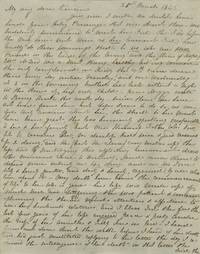
1845ref. BK0036Isle of Mull Scotland 1845. Autograph letter signed by a female member of the MacLeod family with an additional message signed "Mary McLeod" to the Rev. John Neil MacLeod in New York. 4pp measuring 9 x 7 inches. Addressed to "The Rev'd J. N. Macleod D.D. Presbyterian Minister New York United States North America." Postmarked at Tobermory prepaid "1/-" with London transit markings and intact black wax seal. Folded with very small holes at folds; excellent. A Scottish family and ecclesiastical letter containing an early direct condemnation of the Free Church of Scotland's acceptance of donations from slaveholding Presbyterians in the American South. Written in March 1845 the letter predates Frederick Douglass's arrival in Scotland and the public campaign urging the Free Church to "Send Back the Money." It demonstrates that criticism of the church's American fundraising was already circulating privately within Scottish Presbyterian networks before Douglass helped transform the controversy into a major transatlantic abolitionist cause. Following the Disruption of 1843 the newly established Free Church sent representatives to the United States to raise money. Contributions from southern churches and slaveholding ministers generated growing criticism particularly because the Free Church presented itself as a purer and more principled form of Presbyterianism. The writer identifies what she regarded as the central contradiction: the church refused communion with ministers who remained in the established Church of Scotland while recognizing slaveholding American ministers as Christian brethren and accepting their money. She writes: "What can you think now of their disclaiming to hold communion with any of their Bretheren in the Establishment and avowedly & publicly countenancing and holding communion with the Slave holding Ministers in your Southern States. Their coffers have been largely augmented by donations from these States and the leaders of the Free recognize them as Bretheren and write and speak of them with the greatest respect." Her criticism is directed as much at the church's financial expediency as at its inconsistency: "This has opened the eyes of some as to what they will resort to get money-this Church that professed to be a pure Church. Oh does it not clearly show the inconsistencies of man nay even of Christians what a different view these leaders may take of Slavery from what your respected Father had." Douglass began his Scottish campaign the following year when he and other abolitionists repeatedly challenged the Free Church to return the money received from American slaveholders. Writing to William Lloyd Garrison in April 1846 Douglass declared "Scotland is a blaze of anti-slavery agitation-the Free Church and Slavery are the all-engrossing topics."1 The present letter records essentially the same moral argument a year earlier made from within the church's own extended religious and family networks: that accepting southern funds compromised the Free Church's authority and exposed the limits of its professed purity. Addressed to the Rev. John Neil MacLeod in New York the letter places the dispute within a transatlantic Presbyterian context. The writer invokes the antislavery views of MacLeod's father and questions whether the recipient understood that a minister whom he had permitted to preach from his pulpit "advocated the course of the Southern Slave State Ministers so much" remarking "I should think not." The letter also contains news of a bereavement and other family and church news about Scotland and America. An important private response to the Free Church's American fundraising campaign written before the controversy reached its fullest public expression through Frederick Douglass's "Send Back the Money" campaign. The letter documents the early moral opposition of Scottish Presbyterians who believed that a church claiming spiritual independence and purity had compromised both by accepting the support of American slaveholders. . unknown
1845ref. BK0036Isle of Mull Scotland 1845. Autograph letter signed by a female member of the MacLeod family with an additional message signed "Mary McLeod" to the Rev. John Neil MacLeod in New York. 4pp measuring 9 x 7 inches. Addressed to "The Rev'd J. N. Macleod D.D. Presbyterian Minister New York United States North America." Postmarked at Tobermory prepaid "1/-" with London transit markings and intact black wax seal. Folded with very small holes at folds; excellent. A Scottish family and ecclesiastical letter containing an early direct condemnation of the Free Church of Scotland's acceptance of donations from slaveholding Presbyterians in the American South. Written in March 1845 the letter predates Frederick Douglass's arrival in Scotland and the public campaign urging the Free Church to "Send Back the Money." It demonstrates that criticism of the church's American fundraising was already circulating privately within Scottish Presbyterian networks before Douglass helped transform the controversy into a major transatlantic abolitionist cause. Following the Disruption of 1843 the newly established Free Church sent representatives to the United States to raise money. Contributions from southern churches and slaveholding ministers generated growing criticism particularly because the Free Church presented itself as a purer and more principled form of Presbyterianism. The writer identifies what she regarded as the central contradiction: the church refused communion with ministers who remained in the established Church of Scotland while recognizing slaveholding American ministers as Christian brethren and accepting their money. She writes: "What can you think now of their disclaiming to hold communion with any of their Bretheren in the Establishment and avowedly & publicly countenancing and holding communion with the Slave holding Ministers in your Southern States. Their coffers have been largely augmented by donations from these States and the leaders of the Free recognize them as Bretheren and write and speak of them with the greatest respect." Her criticism is directed as much at the church's financial expediency as at its inconsistency: "This has opened the eyes of some as to what they will resort to get money-this Church that professed to be a pure Church. Oh does it not clearly show the inconsistencies of man nay even of Christians what a different view these leaders may take of Slavery from what your respected Father had." Douglass began his Scottish campaign the following year when he and other abolitionists repeatedly challenged the Free Church to return the money received from American slaveholders. Writing to William Lloyd Garrison in April 1846 Douglass declared "Scotland is a blaze of anti-slavery agitation-the Free Church and Slavery are the all-engrossing topics."1 The present letter records essentially the same moral argument a year earlier made from within the church's own extended religious and family networks: that accepting southern funds compromised the Free Church's authority and exposed the limits of its professed purity. Addressed to the Rev. John Neil MacLeod in New York the letter places the dispute within a transatlantic Presbyterian context. The writer invokes the antislavery views of MacLeod's father and questions whether the recipient understood that a minister whom he had permitted to preach from his pulpit "advocated the course of the Southern Slave State Ministers so much" remarking "I should think not." The letter also contains news of a bereavement and other family and church news about Scotland and America. An important private response to the Free Church's American fundraising campaign written before the controversy reached its fullest public expression through Frederick Douglass's "Send Back the Money" campaign. The letter documents the early moral opposition of Scottish Presbyterians who believed that a church claiming spiritual independence and purity had compromised both by accepting the support of American slaveholders. . unknown books
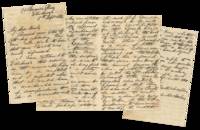
1903ref. List2990Dover and Chatham Ontario; Edinburgh and Blairgowrie Scotland 1903. Seventy-eight pieces: seven 2.5 x 4" photographs mounted on heavy cardstock; with seventeen letters from Alexander to James Macfarlane fifty-two from James to Alexander Macfarlane and two from others to Alexander Macfarlane. Fourteen from 1853-1882; eleven from 1883-1885; thirteen from 1886; twelve from 1887; thirteen from 1888; eight from 1889-1903. Sorted chronologically. Envelopes good to very good; letters generally near fine. Alexander Macfarlane 1851-1913 was a Scottish physicist mathematician and logician. He earned a D.Sc. from the University of Edinburgh in 1878; following this he would teach at the University of St. Andrews the University of Edinburgh the University of Texas at Austin and Lehigh University. Macfarlane earned a number of accolades including elections to many scientific and mathematical societies and an honorary doctorate from the University of Michigan. After his retirement in 1894 Alexander Macfarlane moved to a farm in Ontario left to him by his uncle James who is his correspondent herein. Much less is known about James Macfarlane; born in Scotland in 1806 he immigrated to North America by way of New York in 1835. He purchased land in Dover Township now Chatham Ontario in 1853 and was elected the town's reeve in 1879. At the time of this correspondence he was a farmer by occupation. The photographs in the collection-portraits of unknown individuals-are likely his as they are from photography studios in the Brantford and Toronto area and seem to date from before Alexander Macfarlane's arrival in the colony. James Macfarlane's letters to his nephew mainly written between 1886 and 1889 give detailed descriptions of farm life and logistics in 19th-century Ontario. He grew corn wheat beans clover and hay raised pigs and cows and kept a number of workhorses alongside a few seasonal employees. The elder Macfarlane describes the state of his crops the health of his animals and especially his finances taxes and employees' wages; he writes of "a constant fear of running aground" March 17 1887. However he also occasionally discusses academic or political affairs - it is unclear what education Macfarlane had or what political experience besides his reeveship but from his writing it seems not insignificant. One prohibition-related incident in 1887 especially stands out: "During the night between last Saturday & Sunday there was a dynamite explosion in front of the handsome residence of H. Cummings Esq. of Chatham - damage but no one hurt. It is believed it was the doing of the Chatham grogocracy - Mr. C. favours prohibition - Tories do not". August 10 1887 This letter dates the incident to late on the 6th or early on the 7th of August 1887; we do not find the explosion mentioned in local newspapers from the time. Alexander Macfarlane's letters which comprise most of the earlier letters in the group focus on his burgeoning academic career. In 1882 when the majority of his letters were written he had applied and was waiting to hear about a position as Chair of Mathematics at University College Dundee now the University of Dundee which was then just being formed. Besides occasional discussions of work in which he is currently engaged Macfarlane writes about his tactics for bettering his chances at the Chair; for example: "I have just received some information which indicates that I shall have an excellent chance of being successful. Rev. Mr. Tait who was our minister before he left Blairgowrie for Newport opposite Dundee happens to be a very intimate friend of the founder of the College Miss Baxter of Balgavies. I saw from the first that it would be important to secure his cooperation; he has been very active in his support. Recently he was staying at Balgavies and when the College was discussed he spoke highly in my favour. He has persuaded Miss Baxter to take some active steps in my favour. Copies of all the applications etc. are sent to her which seems to indicate that a proposed appointment is submitted to her for approval." September 19 1882 The wait is difficult for Macfarlane and he frequently comments with displeasure on related workplace politics. For instance he is upset by the choice of William Peterson-whom he describes as "a fop" October 3 1882-for Principal of the new university: "Peterson had this advantage that many of the electors had a bias in favour of a Classical man for the office of Principal. He got only a second class at Oxford. I say nothing on the subject but I have heard others express an opinion that a mistake has been made." August 13 1882 And later: "Most people express themselves as greatly surprised at the choice the Dundee Council made of a Principal. My theory of the matter is that Professor Donaldson with the view of furthering his own candidature wished to ingratiate himself with Professor Sellars after he saw that Mr Porter would not be accepted by the Council. I feel that the Council may do anything as they seem nearly incapable of forming an independent opinion." September 27 1882 When he does not receive the Chair Macfarlane shares his thoughts with his uncle about the state of Scottish Universities especially that they "have no reputation for scholarship" and that the Scottish people "need not expect learning to flourish at their Universities" November 23 1882. Of course Macfarlane's career turned out fine despite this setback; in 1895 he tells James not unfairly that "I am considered one of the foremost thinkers of the day in the field of exact science" March 21. Overall a look at the lives and activities of an uncle and nephew with extremely different careers; of interest both to scholars of Ontario history and farming and to historians of science and higher education. unknown
1903ref. List2990Dover and Chatham Ontario; Edinburgh and Blairgowrie Scotland 1903. Seventy-eight pieces: seven 2.5 x 4" photographs mounted on heavy cardstock; with seventeen letters from Alexander to James Macfarlane fifty-two from James to Alexander Macfarlane and two from others to Alexander Macfarlane. Fourteen from 1853-1882; eleven from 1883-1885; thirteen from 1886; twelve from 1887; thirteen from 1888; eight from 1889-1903. Sorted chronologically. Envelopes good to very good; letters generally near fine. Alexander Macfarlane 1851-1913 was a Scottish physicist mathematician and logician. He earned a D.Sc. from the University of Edinburgh in 1878; following this he would teach at the University of St. Andrews the University of Edinburgh the University of Texas at Austin and Lehigh University. Macfarlane earned a number of accolades including elections to many scientific and mathematical societies and an honorary doctorate from the University of Michigan. After his retirement in 1894 Alexander Macfarlane moved to a farm in Ontario left to him by his uncle James who is his correspondent herein. Much less is known about James Macfarlane; born in Scotland in 1806 he immigrated to North America by way of New York in 1835. He purchased land in Dover Township now Chatham Ontario in 1853 and was elected the town's reeve in 1879. At the time of this correspondence he was a farmer by occupation. The photographs in the collection-portraits of unknown individuals-are likely his as they are from photography studios in the Brantford and Toronto area and seem to date from before Alexander Macfarlane's arrival in the colony. James Macfarlane's letters to his nephew mainly written between 1886 and 1889 give detailed descriptions of farm life and logistics in 19th-century Ontario. He grew corn wheat beans clover and hay raised pigs and cows and kept a number of workhorses alongside a few seasonal employees. The elder Macfarlane describes the state of his crops the health of his animals and especially his finances taxes and employees' wages; he writes of "a constant fear of running aground" March 17 1887. However he also occasionally discusses academic or political affairs - it is unclear what education Macfarlane had or what political experience besides his reeveship but from his writing it seems not insignificant. One prohibition-related incident in 1887 especially stands out: "During the night between last Saturday & Sunday there was a dynamite explosion in front of the handsome residence of H. Cummings Esq. of Chatham - damage but no one hurt. It is believed it was the doing of the Chatham grogocracy - Mr. C. favours prohibition - Tories do not". August 10 1887 This letter dates the incident to late on the 6th or early on the 7th of August 1887; we do not find the explosion mentioned in local newspapers from the time. Alexander Macfarlane's letters which comprise most of the earlier letters in the group focus on his burgeoning academic career. In 1882 when the majority of his letters were written he had applied and was waiting to hear about a position as Chair of Mathematics at University College Dundee now the University of Dundee which was then just being formed. Besides occasional discussions of work in which he is currently engaged Macfarlane writes about his tactics for bettering his chances at the Chair; for example: "I have just received some information which indicates that I shall have an excellent chance of being successful. Rev. Mr. Tait who was our minister before he left Blairgowrie for Newport opposite Dundee happens to be a very intimate friend of the founder of the College Miss Baxter of Balgavies. I saw from the first that it would be important to secure his cooperation; he has been very active in his support. Recently he was staying at Balgavies and when the College was discussed he spoke highly in my favour. He has persuaded Miss Baxter to take some active steps in my favour. Copies of all the applications etc. are sent to her which seems to indicate that a proposed appointment is submitted to her for approval." September 19 1882 The wait is difficult for Macfarlane and he frequently comments with displeasure on related workplace politics. For instance he is upset by the choice of William Peterson-whom he describes as "a fop" October 3 1882-for Principal of the new university: "Peterson had this advantage that many of the electors had a bias in favour of a Classical man for the office of Principal. He got only a second class at Oxford. I say nothing on the subject but I have heard others express an opinion that a mistake has been made." August 13 1882 And later: "Most people express themselves as greatly surprised at the choice the Dundee Council made of a Principal. My theory of the matter is that Professor Donaldson with the view of furthering his own candidature wished to ingratiate himself with Professor Sellars after he saw that Mr Porter would not be accepted by the Council. I feel that the Council may do anything as they seem nearly incapable of forming an independent opinion." September 27 1882 When he does not receive the Chair Macfarlane shares his thoughts with his uncle about the state of Scottish Universities especially that they "have no reputation for scholarship" and that the Scottish people "need not expect learning to flourish at their Universities" November 23 1882. Of course Macfarlane's career turned out fine despite this setback; in 1895 he tells James not unfairly that "I am considered one of the foremost thinkers of the day in the field of exact science" March 21. Overall a look at the lives and activities of an uncle and nephew with extremely different careers; of interest both to scholars of Ontario history and farming and to historians of science and higher education. unknown books
18832 vols., [of 3], roy. 8vo., First Edition, HEAVILY CORRECTED AND ANNOTATED IN MS THROUGHOUT; red faux-morocco cloth, sides framed and lettered 'PRESS COPY' in gilt, gilt backs, green endpapers, expertly rebacked to style with old backstrips laid down, both very good, bright, clean copies. EDITION LIMITED TO 150 NUMBERED COPIES (THIS COPY NO. 47). WITH THE AUTHOR'S SEPARATE PRESENTATION CERTIFICATE NUMBERED AND COMPLETED IN MS (Certificate lightly frayed at edges). THIS COPY IS PRESENTED BY THE EARL OF SEAFIELD [the author's son] TO THE HON. JAMES OGILVIE GRANT OF GRANT. Tragically, this copy is wanting the first volume. It is unclear whether the copious amendments were made before or after presentation, but given the volume of revision it seems likely that they were made after scrutiny by the recipient. RARE AND POSSIBLY UNIQUE. Thomson p.73.
ref. Z1-U-023-01741HM Inspectorate of Education. Used - Good. Ships from UK in 48 hours or less usually same day. Your purchase helps support Sri Lankan Children's Charity 'The Rainbow Centre'. Ex-library so some stamps and wear but in good overall condition. 100% money back guarantee. We are a world class secondhand bookstore based in Hertfordshire United Kingdom and specialize in high quality textbooks across an enormous variety of subjects. We aim to provide a vast range of textbooks rare and collectible books at a great price. Our donations to The Rainbow Centre have helped provide an education and a safe haven to hundreds of children who live in appalling conditions. We provide a 100% money back guarantee and are dedicated to providing our customers with the highest standards of service in the bookselling industry. HM Inspectorate of Education unknown
ref. Z1-C-036-02383Scottish Executive. Used - Good. Ships from UK in 48 hours or less usually same day. Your purchase helps support Sri Lankan Children's Charity 'The Rainbow Centre'. Ex-library so some stamps and wear but in good overall condition. 100% money back guarantee. We are a world class secondhand bookstore based in Hertfordshire United Kingdom and specialize in high quality textbooks across an enormous variety of subjects. We aim to provide a vast range of textbooks rare and collectible books at a great price. Our donations to The Rainbow Centre have helped provide an education and a safe haven to hundreds of children who live in appalling conditions. We provide a 100% money back guarantee and are dedicated to providing our customers with the highest standards of service in the bookselling industry. Scottish Executive unknown
ref. Z1-C-036-02384Scottish Executive. Used - Good. Ships from UK in 48 hours or less usually same day. Your purchase helps support Sri Lankan Children's Charity 'The Rainbow Centre'. Ex-library so some stamps and wear but in good overall condition. 100% money back guarantee. We are a world class secondhand bookstore based in Hertfordshire United Kingdom and specialize in high quality textbooks across an enormous variety of subjects. We aim to provide a vast range of textbooks rare and collectible books at a great price. Our donations to The Rainbow Centre have helped provide an education and a safe haven to hundreds of children who live in appalling conditions. We provide a 100% money back guarantee and are dedicated to providing our customers with the highest standards of service in the bookselling industry. Scottish Executive unknown
1987ref. 12570Scotland: Christie's. New. Paperback. FREE UPGRADE to Courier/Priority Shipping Upon Request - IN STOCK AND IMMEDIATELY AVAILABLE FOR SHIPMENT - AVOID WEEKS OF DELAY ELSEWHERE. -- 112 pages; 101 lots with no writing or markings to the text. Included are works by and thumbnail biographical sketches of David Gauld Edward Walton and Edward Hornel. -- with a bonus offer--; 012570 . 1987. Christie's paperback
1965ref. 59061Edinburgh Scotland: National Gallery. of Scotland. As New. Paperback. FREE UPGRADE to Courier/Priority Shipping Upon Request – – IN STOCK AND IMMEDIATELY AVAILABLE FOR SHIPMENT - AS NEW THE TEXT BLOCK IS PRISTINE CLEAN UNMARKED AND IN EXCELLENT CONDITION - - 44 pp. With 8 ills. 24 x 16 cm. -- with a bonus offer-- . 1965. National Gallery. of Scotland paperback
1958ref. 58805Edinburgh Scotland: National Gallery of Scotland. As New. Paperback. FREE UPGRADE to Courier/Priority Shipping Upon Request – – IN STOCK AND IMMEDIATELY AVAILABLE FOR SHIPMENT - AS NEW THE TEXT BLOCK IS PRISTINE CLEAN UNMARKED AND IN EXCELLENT CONDITION - - 64 pp. With 60 ills. 25 x 19 cm. -- with a bonus offer-- . 1958. National Gallery of Scotland paperback
1963ref. 58748Edinburgh Scotland: National Gallery of Scotland. As New. Paperback. FREE UPGRADE to Courier/Priority Shipping Upon Request – – IN STOCK AND IMMEDIATELY AVAILABLE FOR SHIPMENT - AS NEW THE TEXT BLOCK IS PRISTINE CLEAN UNMARKED AND IN EXCELLENT CONDITION - - 56 pp. With 38 ills. 11 col. . 25 x 19 cm. -- with a bonus offer-- . 1963. National Gallery of Scotland paperback
1963ref. 28410Edinburgh Scotland: Trustees of the National Galleries of Scotland. As New. Paperback. FREE UPGRADE to Courier/Priority Shipping Upon Request - IN STOCK AND IMMEDIATELY AVAILABLE FOR SHIPMENT - AS NEW THE TEXT BLOCK IS PRISTINE CLEAN UNMARKED AND IN EXCELLENT CONDITION - -- with a bonus offer--; T-Maitl . 1963. Trustees of the National Galleries of Scotland paperback
1968ref. 58875Edinburgh Scotland: Royal Scottish Academy. As New. Paperback. FREE UPGRADE to Courier/Priority Shipping Upon Request – – IN STOCK AND IMMEDIATELY AVAILABLE FOR SHIPMENT - AS NEW THE TEXT BLOCK IS PRISTINE CLEAN UNMARKED AND IN EXCELLENT CONDITION - - 44 pp. With 42 ills. 16 col. . 25 x 19 cm. -- with a bonus offer-- . 1968. Royal Scottish Academy paperback
1597ref. D16825Edinburgh: Robert Walde-Grave 1597. Second edition. Hardcover. Very Good. Folding genealogical table. 4 of 5 162; 178; 100 leaves; lacks the engraved additional title and folding genealogical table. Folio 269x182 mm old calf rebacked endpapers renewed; preliminaries heavily soiled and rehinged with marginal restoration not affecting text mostly marginal soiling elsewhere. Repair in blank outer margin of f4-6 and g4 final 2 leaves toned and stained with blank lower half of last leaf excised and restored. Early marginalia enhances this volume the second edition revised of a collection originally published in 1566. STC 21877. Bound with: The Lawes and Acts of Parliament made by the most Excellent and Mighty King and Monarch James . . . Since His Majesties XV. Parliament the XIX. of December 1597. 2 105 1 pages. Edinburgh: Evan Tyler 1647. Wing S1264A. and: The XXIII Parliament of our most High and Dread Soveraine James . . . halden at Edinburgh the 4. Day of August 1621. Edinburgh: Thomas Finlason 1621. Woodcut portrait of James I on title verso. 2 34 leaves. STC 21900. A fine sammelband. Robert Walde-Grave hardcover