1 062 résultats
réf. a94227Moscow 1936 first edition. One large octavo hardcover volume. Black cloth . No owner marks. 741p. Advertisements at end. One foldout map of transportation lines Entirely in Russian. Lists soviet institutions hairdressers human resources etc. Entire text is dense listing of charts and statistics. Errata slip bound in. A sort of census or city directory Very Scarce. . hardcover
1630n 12° (11,4×6 cm); 327, (9) pp. Legatura coeva in piena pergamena floscia. Titolo manoscritto al dorso, in parte sbiadito. Alcuni difetti alla legatura nel margine basso del dorso e ai piatti (leggeri), mentre, all’interno a parte un leggerissimo alone al margine alto del volume, praticamente invisibile ed ininfluente, il volume si presenta in buone-ottime condizioni di conservazione. Prima edizione di questa elzeviriana dedicata agli sconfinati territori della Russia. L’opera è una dettagliata descrizione ella situazione storica, geografica, folklorica, politica, militare, economica, religiosa, della Russia, di Mosca e della Tartaria nei primi decenni del diciassettesimo secolo. Lo studio è normalmente attribuita al noto studioso olandese, Marc Zuerius Von Boxhorn (28 agosto 1612 – 3 ottobre 1653) che fu a lungo professore all’Univeristà di Leida. Studioso di linguistica, trovò un collegamento fra le lingue indoeuropee arrivando a definire una comune radice linguistica in una lingua che von Boxhorn chiamò “scita”. La sua ipotesi vedeva come facenti parte dello stesso ceppo linguisitco l’olandese, il greco, il latino, il persiano e il tedesco, aggiungendo in seguito le lingue slave, celtiche e baltiche. In modo alquanto curioso escluse altre lingue da queste comuni origini, come ad esempio, l’ebraico. Rif. Bibl.: IT\ICCU\TO0E\008429; Rahir, 312; Berghman, 1890; Goldsmith, III, 37; Rostenberg, 128; Cat. Russica, II, 233. Manca al Brunet e al Graesse. Coquebert de Taizy, nella voce da lui scritta sul Boxhorn per la “Biographie Universelle” del Michaud (V, 416-417), non conosce questo scritto, forse in ragione della sua anonimia.
1939réf. mon0000573959State Art P 1939T. hardcover. Acceptable. in x in x in. Ex-library REFERENCE book usual marking. Clean copy in good condition. Library re-bind. Cover faded with some staining. Some marking due to age on pages but overall book remains in good condition considering age. State Art P hardcover
2022réf. x-9814968021Jenny Stanford Pub 2022. Hardcover. New. 600 pages. 9.00x6.00x1.00 inches. Jenny Stanford Pub hardcover
1955réf. 007408Paris Gallimard 1955 In-12 Broché
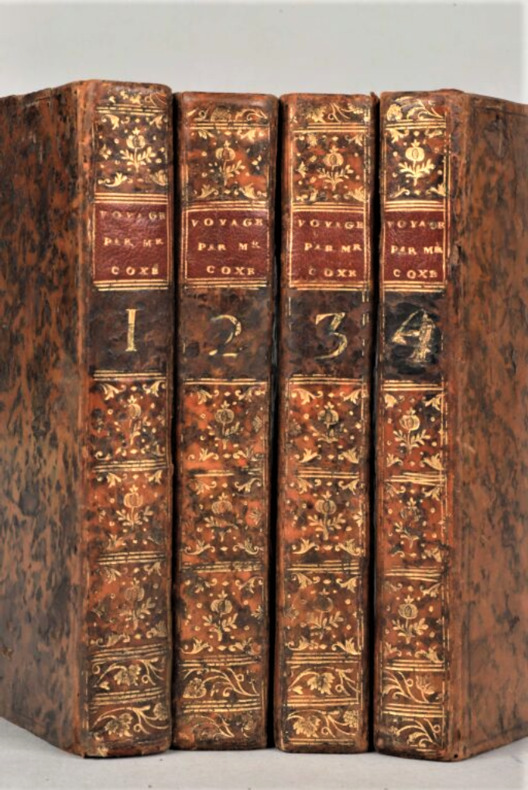
1787réf. PHO-1232À Genève, chez Barde, Manget & Cie, 1787. 4 vol. in-8, veau havane moucheté époque, dos lisse orné avec pièce de titre rouge , pièce de titre rouge, tomaison dorée, tranches rouges (qq. défauts aux reliures dont épid. et des coins usés ,mouillures claires, etc ; 1 pl. en déficit).
réf. P6161Moscow: Informatsionnyi Tsentr Moskovskogo Narodnogo Fronta 1988. Octavo 19 × 14 cm. Original side-stapled blind card wrappers: 123 pp. Wrappers lightly soiled; some rust to staples. Internally very good or better. This samizdat directory of "amateur socio-political organizations" published by the Moscow People's Front is a remarkable record of the burgeoning civil society in the late Soviet period as well as such phenomena as environmentalism and urban conservation. The Moscow People's Front MNF was founded in June 1988 when members of some forty amateur organizations convened to draft a ratification document and elect a governing body. According to this document "The objective of MNF is to aid in the democratic self-organization of the masses and to fight for socialist renewal of society for a democratic socialism." While the group advocated democracy "freedom of press and speech freedom of public protest" as well as for "a democratic planning of the economy" they saw this reform happening within the framework of socialism and "respect for the principles of socialism" was discussed as being of key significance. MNF further advocated for all government to be given over to "democratically elected Soviets" for labor unions to exist outside of government control and for ecological concerns to be taken seriously in the management of country's natural resources. The organization held weekly protests at Pushkinskaia Square in Moscow throughout the summer of 1988 to draw attention to its goals. This directory of socio-political organizations throughout the Soviet Union was created by MNF in the same year for internal use. The first "amateur organisations" sprang up in the Soviet Union in the 1960s during the Thaw. However these were mostly non-political in nature cultural literary scientific or sports clubs. Emboldened by Mikhail Gorbachev's policies of Glasnost and Perestroika Transparency and Rebuilding the amateur organisations took on an increasingly political bent. In 1986 a new decree "Regulations on Amateur Associations" legalised the registration and functioning of amateur or "informal" associations in the Soviet Union. Observing this movement in 1990 Lyudmila Alekseeva wrote for the Helsinky Watch Committee: "The emergence of so many spontaneous free associations since 1986 is working a fundamental change in Soviet life. What was for so long a grey and mute mass is now speaking out in a chorus of vigorous dissonant voices. A society that was atomized by Stalinist terror has begun to restructure itself. . Nicknamed by the Soviet press as neformaly or "informals" to distingush them from participants in officially organised and controlled bodies these millions of historic preservationists environmentalists political activists nationalists human rights campaigners body-builders pacifists sports fans Afghan war veterans hippies rock-music devotees and others are the grassroots activsts and sometimes the strategists of the new social movements" Neformaly: Civil Society in the USSR. New York: Helsinki Watch 1990. Despite the publicaton of this report the burgeoning of civil society in the late Soviet period was quickly forgotten. It comes to light in this directory. The directory is organized by republic and city and each entry gives the name of the organization the organization's focus and objectives as well as a brief history of its formation closing with contact information. Nearly 200 socialist anarchist nature and historical preservation organizations are listed all across the country each ranging in size from just a dozen to hundreds of members. The primary purpose of many of the associations listed in the directory is a kind of whistleblowing. For example the Moscow based "press-club" Glasnost defined its mission as "helping the individuals whose rights are being trampled by local authorities. . The aid is provided by publishing their story in the eponymous journal printed and distributed by the organization." Demokraticheskii Soiuz Democratic Union defined its mission as "opposition to totalitarianism" by organizing events and protests "promoting pluralism." Another Moscow based organization "Narodnyi arkhiv" People's Archive was actively compiling an archive of all manner of Samizdat self-published materials. The Leningrad based Demokratizatsiia profsoiuzov Democratization of Worker's Unions advocated "the creation of worker's unions that would be independent from the state." Arkhangelsk based "Ekologiia severa" Ecology of the north is one of many environmental organizations listed in the directory. The volume closes with organizations with a nationwide presence such as "Memorial" а group for the "preservation of memory of victims of Stalinism" and "providing aid to the victims of Stalinism" headed by the Soviet scientist and dissident activist Andrei Sakharov. Together the organizations in the directory provide a broad overview of the social concerns of Soviet citizens as well as the mechanisms that were available for their organizing. The volume is a remarkable time capsule of the burgeoning civil society in the last years of the Soviet state. Many of the organizations went on to achieve significant results often on the regional level and some of their initiators were to be elected to political positions. KVK OCLC show various copies of the first part suggesting that no further issues were published. Scarce in the trade. unknown
réf. 90577A Paris, chez Treuttel et Wütz, Libraires, A Strasbourg, même Maison de Commerce, 1824/ Londres, Chez Treuttel, Würtz Treuttel Fils, et Richter, 1827, 2 textes reliés dans un volume in-8 de 130x210 mm environ, (1) un portrait de l'auteur en frontispice, dessiné d'après nature et sur pierre par C. Carbonnier, Lith. de G. Engelmann, viij-440-80 pages, (1) f., cartonnage moderne. Avec un envoi de l'auteur sur la première garde du premier texte. Des rousseurs et petites mouillures claires dans les marges du premier texte, sinon bon état.
195968 pages. Features: Schools should teach religion as a subject, not a faith; Macmillan's 30 fateful minutes in Moscow; *Fantastic* two-page colour ad for International trucks shows five different models; Gorgeous colour photo ad for the 1959 Buick Le Sabre convertible; How Dangerous is Natural Gas? - some people are concerned; Can the University of Toronto (U of T) survive sheer size? - article with photos; The hectic scramble for the class of 1959 - courted by hundreds of company recruiters; Canada needs a lobby in Washington; The Sleuths who probe our air disasters - with photo of the remains of a DC-4 which crashed in Quebec in 1957, killing 79 people; James Wilson Morrice - the painter we weren't ready for - article with colour illustrations; Nice Canadian Pacific centrefold ad for Canadian Pacific shows a large map of the world and their various transporations services; Nice Black Label beer ad shows massive glass of beer in the wilderness; Two-page black and white photo ad for Toro lawn mowers; Nice colour photo ad for Old Vienna beer inside back cover; Colour ad on back cover for S.O.S. pads and how they can be used to clean white wall tires; and more. Average wear. Unmarked. A sound vintage copy. Book
réf. 12049P., Emile Testard, 1892 ; in-4. 3ff.-362 pp.-2ff. - 5 planches hors-texte. Nombreuses illustrations in-texte en noir. Demi-chagrin vert -dos insolé devenu blond), dos à nerfs, titre doré, caissons dorés timbrés d'un petit fer doré : fleur de pensée dont les pétales sont mosaïquées en cuire rouge, tête doré, non rogné. Bel exemplaire bien relié.
1897Very Good Russian Original cloth. Cr. 8vo. (20 x 14 cm). In Russian. Apprx. 1200 p., many lithographic plates. Almanakh-ejegodnik, 1897 god. Almanac - yearbook for 1897. A calendar and a collection of information useful to everyone in daily life. On the front cover with colored embossing: the title of the publication in the ornamental frame and the annual calendar with the indication of the shrines. The back cover is embossed with black: a multiplication table and a list of provinces, regions and counties with major cities. On the spine there is a color embossing: a geometric ornament, the name of the publication and the year. The third year of the publication of the almanac, the last one was published in 1902. The purpose of the almanac was to create for the reader a permanent desk book containing all possible indications of various cases from everyday life. The publication contains an image of the family tree and the Family Chronicle, in which it is necessary to fill in the columns (they're not signed, not written on paper, empty): "Birthday", "Epiphany", "Otkrytie from the chest", "1st tooth", "1st word", " Step "," Smallpox vaccination "," Family holidays ", etc. Special sections include a civil, eternal, hunting, photographic, financial calendar, characteristics of the zodiac signs. A large number of tables, diagrams, advertisements, information, useful for each - in the field of astronomy, geography, history, statistics, medicine, usual recipes, book reviews, obituaries; theaters, opera buildings, circuses, many maps, hospitals, all banks, government buildings, passport info for citizens, times for transportation, railways, economy, architecture, history of the art, special days and religious holidays and calendars of all minorities such Rabbanic Jews, Muslims, Armanien Gregorians, Evangelic Lutherans, Rimski Catholics, etc. and many advertisements. For bibliographers and historians, this calendar is of great interest. "Almanac" won popularity in the Russian society and at the first all-Russian exhibition of printing business in 1895 in St. Petersburg was awarded the Great Silver Medal. The book contains historical and geographical essays in Moscow and St. Petersburg. And also address-calendar and reference department On these cities. There are no portraits of Nikolai and Alexandra Feodorovna.
2000réf. Star-9783540663102Springer 2000. Hardcover. New. Springer hardcover
1955Cartier-Bresson's personal impressions of the people of Moscow. 163 pictures in photogravure. Hessian covers with blue title on spine. Dust jacket worn to edges, 20mm tear to lower front edge and small loss to lower back edge.
réf. P6161Moscow: Informatsionnyi Tsentr Moskovskogo Narodnogo Fronta 1988. Octavo 19 × 14 cm. Original side-stapled blind card wrappers: 123 pp. Wrappers lightly soiled; some rust to staples. Internally very good or better. This samizdat directory of "amateur socio-political organizations" published by the Moscow People's Front is a remarkable record of the burgeoning civil society in the late Soviet period as well as such phenomena as environmentalism and urban conservation. The Moscow People's Front MNF was founded in June 1988 when members of some forty amateur organizations convened to draft a ratification document and elect a governing body. According to this document "The objective of MNF is to aid in the democratic self-organization of the masses and to fight for socialist renewal of society for a democratic socialism." While the group advocated democracy "freedom of press and speech freedom of public protest" as well as for "a democratic planning of the economy" they saw this reform happening within the framework of socialism and "respect for the principles of socialism" was discussed as being of key significance. MNF further advocated for all government to be given over to "democratically elected Soviets" for labor unions to exist outside of government control and for ecological concerns to be taken seriously in the management of country's natural resources. The organization held weekly protests at Pushkinskaia Square in Moscow throughout the summer of 1988 to draw attention to its goals. This directory of socio-political organizations throughout the Soviet Union was created by MNF in the same year for internal use. The first "amateur organisations" sprang up in the Soviet Union in the 1960s during the Thaw. However these were mostly non-political in nature cultural literary scientific or sports clubs. Emboldened by Mikhail Gorbachev's policies of Glasnost and Perestroika Transparency and Rebuilding the amateur organisations took on an increasingly political bent. In 1986 a new decree "Regulations on Amateur Associations" legalised the registration and functioning of amateur or "informal" associations in the Soviet Union. Observing this movement in 1990 Lyudmila Alekseeva wrote for the Helsinky Watch Committee: "The emergence of so many spontaneous free associations since 1986 is working a fundamental change in Soviet life. What was for so long a grey and mute mass is now speaking out in a chorus of vigorous dissonant voices. A society that was atomized by Stalinist terror has begun to restructure itself. . Nicknamed by the Soviet press as neformaly or "informals" to distingush them from participants in officially organised and controlled bodies these millions of historic preservationists environmentalists political activists nationalists human rights campaigners body-builders pacifists sports fans Afghan war veterans hippies rock-music devotees and others are the grassroots activsts and sometimes the strategists of the new social movements" Neformaly: Civil Society in the USSR. New York: Helsinki Watch 1990. Despite the publicaton of this report the burgeoning of civil society in the late Soviet period was quickly forgotten. It comes to light in this directory. The directory is organized by republic and city and each entry gives the name of the organization the organization's focus and objectives as well as a brief history of its formation closing with contact information. Nearly 200 socialist anarchist nature and historical preservation organizations are listed all across the country each ranging in size from just a dozen to hundreds of members. The primary purpose of many of the associations listed in the directory is a kind of whistleblowing. For example the Moscow based "press-club" Glasnost defined its mission as "helping the individuals whose rights are being trampled by local authorities. . The aid is provided by publishing their story in the eponymous journal printed and distributed by the organization." Demokraticheskii Soiuz Democratic Union defined its mission as "opposition to totalitarianism" by organizing events and protests "promoting pluralism." Another Moscow based organization "Narodnyi arkhiv" People's Archive was actively compiling an archive of all manner of Samizdat self-published materials. The Leningrad based Demokratizatsiia profsoiuzov Democratization of Worker's Unions advocated "the creation of worker's unions that would be independent from the state." Arkhangelsk based "Ekologiia severa" Ecology of the north is one of many environmental organizations listed in the directory. The volume closes with organizations with a nationwide presence such as "Memorial" а group for the "preservation of memory of victims of Stalinism" and "providing aid to the victims of Stalinism" headed by the Soviet scientist and dissident activist Andrei Sakharov. Together the organizations in the directory provide a broad overview of the social concerns of Soviet citizens as well as the mechanisms that were available for their organizing. The volume is a remarkable time capsule of the burgeoning civil society in the last years of the Soviet state. Many of the organizations went on to achieve significant results often on the regional level and some of their initiators were to be elected to political positions. KVK OCLC show various copies of the first part suggesting that no further issues were published. Scarce in the trade. unknown books
196482 pages. Features: Excellent cover photo of Premier Ernest Manning in front of the Alberta Legislature Building; Nice colour photo ad for 1965 Mercury Park Lane convertible; Big Canadian Push to Analyze Easter Island before civilization spoils the place; Why Canadians are practically the only diplomats that Washington trusts; How Sault Ste. Marie built the biggest little medicare scheme in Canada; Britain issues booklet "Treachery Is Their Trade" as required reading for civil servants vulnerable to attacks by Soviet spies; Editorial - Let's make friends, not enemies, with the mainland Chinese; How Arthur Hailey turned Reporter in Manning's Alberta; Ordeal by Rumor - The Skeletons in (Ernest) Manning's Cabinet, by Arthur Hailey - long, informative article including photos of cabinet ministers under clouds; Is the Family Doctor Vanishing?, by Claude P. Gendron, MD; How I Found Out the Toronto Argonauts Don't Really Lose Games on Purpose, by Peter N. Allison; Canada's 1967 Centennial celebration preparations - Will we be late for our own birthday parth? - a 'non'-progress report by Hal Tennant; When Mama Cooked Solomon Grundy, by Helen Wilson; The Killer That Could be Hiding in your car - Ray Stapley warns of the danger of metal fatigue in autos; The Many Worlds of Soviet Russia - Kenneth Bagnell reports on his five weeks in Russia, traveling from Moscow to Siberia to Central Asia; Nice colour-illustrated ad for the 1965 Ford Mustang Hardtop; Magnificent colour photo ad for the Lincoln Continental - featuring a white model with suicide doors; Nice colour-illustrated ad for the 1965 Ford Galaxie 500/XL Convertible (red); How Talk Show Host Pat Burns Won Fame and Fortune by Talking on the World's Biggest Party Line (CJOR) - article with photo; Quebec censor board censors La Terre a Boire; John Bradshaw - the man who got rich by making gardening sound easy; Colour photo ad for Coke on back cover. Average wear. Unmarked. Binding intact. A sound copy of this excellent vintage issue. Book
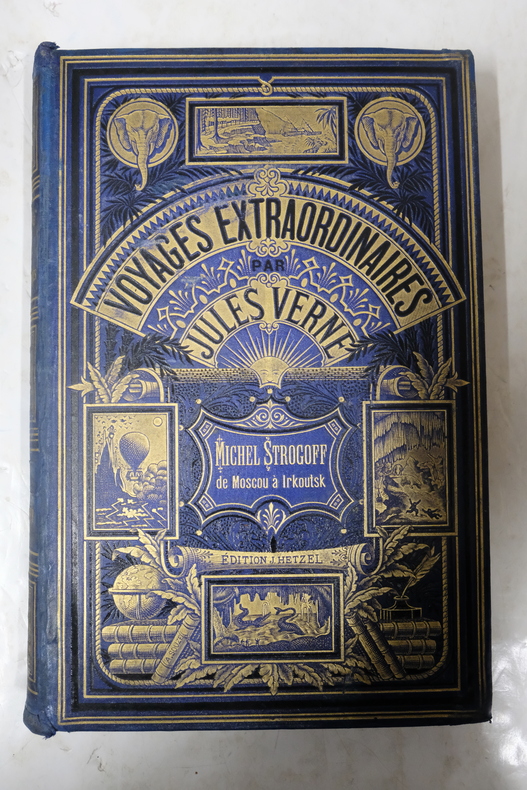
réf. LIT9660MNon daté. J. Hetzel & Cie. Reliure bleu nuit, deux éléphants, difficulté à s'ouvrir suite à des restaurations hasardeuses, dos assez usé, la tranche de face a perdu sa dorure, reste en bon état général, l'intérieur est frais.
réf. 16-2678Moscow Russia: Moskovskij Dramaticheskij Teatr Na Maloj Bronnoj 1967. Folio. 112 x 79 cm. Wove Paper with Color Lithograph. Signed by set-designer/artist Viktor Durgin. Marginal tears. Moscow, Russia: Moskovskij Dramaticheskij Teatr Na Maloj Bronnoj, 1967. unknown
2000réf. mon0000011881Phaidon Press 4/1/2020 12:00:01 AM. hardcover. Very Good. 1.1417 in x 10.8661 in x 8.3465 in. 1st edition. Hardcover issued without dust-jacket. Fading to front board. Otherwise clean and solid. No tears stains or odors. NOT a book club edition. NOT ex-library. Hand-wrapped and packaged in cardboard. Phaidon Press hardcover
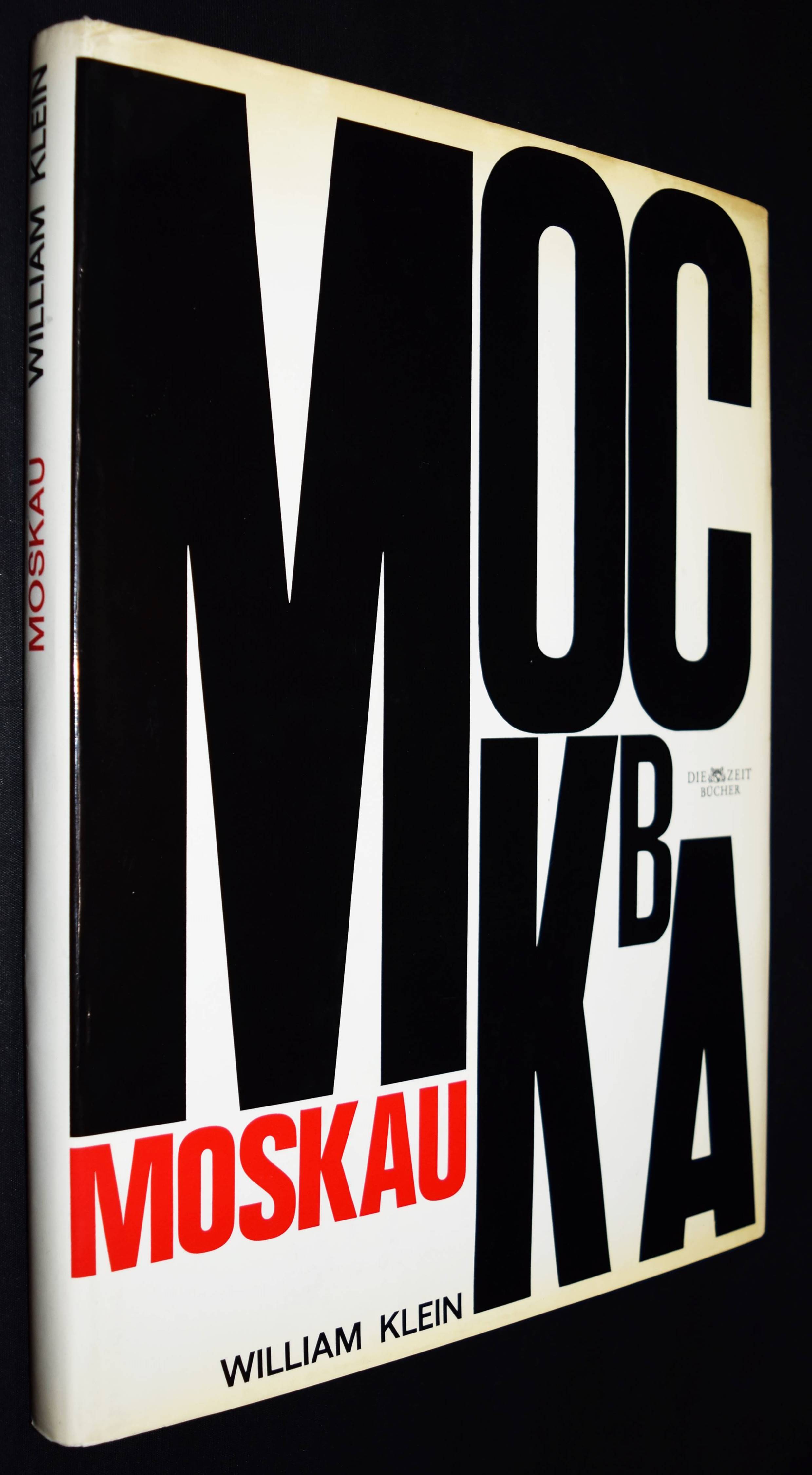
1965réf. 104109BBHamburg, Nannen, 1965. 4°. 184 S. mit 169 Tafeln. OLn. mit OU. [8 Warenabbildungen] ("Die Zeit" Bücher).
1968réf. mon0000077741Prentice-Hall 1968-01-01. Hardcover. Like New. 1.1000 in x 9.0000 in x 6.2000 in. Prentice-Hall hardcover
réf. DADAX0448120194Grosset & Dunlap 0000-00-00. 1. hardcover. New. 0.00x0.00x0.00. Buy with confidence. Excellent Customer Service & Return policy. Grosset & Dunlap hardcover
1812réf. 137[Paris, Ponthieu, 1822], in-8°, 3 feuillets non chiffrés, 236 pages (à partir de la page 160 il y a une erreur de pagination, on passe de la page 160 à la page 141 alors qu'il devrait être imprimé 161; à la fin la dernière page est numérotée 216 alors qu'il s'agit en fait de la page 236), cartonnage rouge de l'époque, dos lisse orné de filets dorés, coiffe inférieure abimée (voir photo).
1630In-12°; pp. (16), 565 (i.e. 555), (5), bel frontespizio calcografico inciso da Crispin de Pas, che tra l’altro ritrae il “magnus moscovia dux”; legatura in piena pergamena coeva rigida con titolo manoscritto al dorso, tagli spruzzati, buon esemplare. Edizione orginale di questo interessante compendio su Mosca e la Russia, suddiviso in parte corografica, ossia la descrizione del paese, politica e storica.
1933réf. 016313Paris Vincent Fréal 1933 In-4 En feuilles, portfolio éditeur