REMIGIO FIORENTINO (Remigi Nannini, dit).Livre Rare Book

2.140 resultados
1614ref. 0006781614 Venetia [Venise], Appresso Nicolo Misserini, 1614. Petit in-quarto (174 X 233) vélin rigide à petits rabats, dos quatre nerfs (reliure de l'époque) ; (3) ff. blancs, titre, (11) ff., 496 pp. & relié à la suite 44 pp. ("Sermoni sopra l'Oratione"), (3) ff. blancs. Petite restauration au dos. Manque la pièce de titre.
FIRST EDITION of this extremely important book on Jewish culture, customs, and rituals. [52], 300, [8] pp, complete. Partially a translation of Leon of Modena's Storia degli Riti Hebraici (1637), but largely Simon's own work. Small 8vo. Attractively bound in contemporary calf, spine gilt in six compartments with raised bands. Wear to edges of boards and a ltiny bit of leather lost from tail of spine, but the binding is structurally solid and the joints are strong. Internally very clean, printed on very good paper. Sauvy 337; Barbier I, 553d (later edition); Querard III, 349d. Reprinted many times, but this first edition is very rare.
ref. 31071S. e. Cuir S. l.
1797ref. 1504061797. ZANETTI Anton Maria and Marco BOSCHINI. Della pittura veneziana trattato in cui osservasi l'ordine del Busching e si conserva la dottrina e le definizioni del Zanetti. Two volumes. viii 145 i.e. 245 3 including final blank pp.; 256 i.e. 272 pp. each volume illustrated with an engraved frontispiece. 8vo 165 x 110 mm. bound alike in contemporary paste paper decorated with red flowers against a striped ground later glassine wrappers. Venice: Presso Francesco Tosi 1797. First edition based on Boschini's Le Minere della pittura 1664 and Zanetti's Della Pittura Veneziana 1771 with additions by the publisher Tosi. Both Boschini and Zanetti were of fundamental importance to the history of art in Venice. Schlosser-Magnino calls Boschini's guide "the first true artistic guide to Venice" and Zanetti's inventory of Venetian painting "one of the best in its genre" p. 548. This handy set combines their work into a comprehensive practical guide to monuments of Venetian art and architecture including a final section Istoria della Pittura Veniziana sic with biographies of artists; and an addition made in 1797 identifying paintings that were transported out of Venice by military force the same year. Marco Boschini 1613-1678 was a Venetian painter engraver and art dealer whose most important client Cardinal Leopoldo de' Medici commissioned him to purchase Venetian paintings for the Medici collection. Zanetti 1706-1778 was the librarian to the famed Marciana Library in Venice for forty years and his familiarity with the art and artists of his city and his access to library records helped to produce his remarkable books. On Zanetti's guide Cicognara adds: "This is the best of the works which deal with Venetian painting and if every principal city possessed a book so arranged and executed we should have gathered together the materials for the best general history of art". Fossati-Bellani 2339. Cicogna 4661. Schlosser-Magnino pp. 548-549. Cicognara 2412 Zanetti & 4350 Boschini. unknown
1797ref. 1504061797. ZANETTI Anton Maria and Marco BOSCHINI. Della pittura veneziana trattato in cui osservasi l'ordine del Busching e si conserva la dottrina e le definizioni del Zanetti. Two volumes. viii 145 i.e. 245 3 including final blank pp.; 256 i.e. 272 pp. each volume illustrated with an engraved frontispiece. 8vo 165 x 110 mm. bound alike in contemporary paste paper decorated with red flowers against a striped ground later glassine wrappers. Venice: Presso Francesco Tosi 1797. First edition based on Boschini's Le Minere della pittura 1664 and Zanetti's Della Pittura Veneziana 1771 with additions by the publisher Tosi. Both Boschini and Zanetti were of fundamental importance to the history of art in Venice. Schlosser-Magnino calls Boschini's guide "the first true artistic guide to Venice" and Zanetti's inventory of Venetian painting "one of the best in its genre" p. 548. This handy set combines their work into a comprehensive practical guide to monuments of Venetian art and architecture including a final section Istoria della Pittura Veniziana sic with biographies of artists; and an addition made in 1797 identifying paintings that were transported out of Venice by military force the same year. Marco Boschini 1613-1678 was a Venetian painter engraver and art dealer whose most important client Cardinal Leopoldo de' Medici commissioned him to purchase Venetian paintings for the Medici collection. Zanetti 1706-1778 was the librarian to the famed Marciana Library in Venice for forty years and his familiarity with the art and artists of his city and his access to library records helped to produce his remarkable books. On Zanetti's guide Cicognara adds: "This is the best of the works which deal with Venetian painting and if every principal city possessed a book so arranged and executed we should have gathered together the materials for the best general history of art". Fossati-Bellani 2339. Cicogna 4661. Schlosser-Magnino pp. 548-549. Cicognara 2412 Zanetti & 4350 Boschini. unknown books
1588ref. 0048811588 In Venetia [Venise], Appresso gli Heredi di Marchiò Sessa, 1588. Petit in-folio (212 X 304 mm) vélin rigide ivoire à coutures apparentes, lettre «V » peinte et dorée, dans un cadre peint et doré, en tête du dos (reliure de l'époque) ; (1) f. blanc, (100) ff. dont titre. Pointes de taches noires au dos, quelques petits trous de vers sur les mors de la reliure, infime travail de ver dans la marge latérale gauche et petit manque en lisière de la marge de tête du feuillet de titre, petit travail de ver aux trois derniers feuillets avec perte de quelques lettres, tampon encré en grande partie illisible sur le premier feuillet blanc, petite mouillure brune en lisière de la marge latérale des feuillets 38 à 54 avec quelques petits manques de papier ; ex-libris et mention manuscrits à l'encre brune en marge du titre.
1790ref. 000261Paris Veuve Duchesne et Fils, de l'Imprimerie de Monsieur 1790
1873In -4°, tre voll., pp. XXI, (1), 400 + 21 tavv; VI, 394 + 21 tavv; (4), 362 + 12 tavv.; legatura in mezza pelle con nervi, fregi e titoli al dorso; molte delle tavole litografiche sono colorate a mano. Copia firmata della seconda edizione del noto e fortunato capolavoro di Ruskin (la prima era del 1853, qualificata come “a revolutionary success”, Pmm). A signed copy of the second edition of the notorius work by Ruskin (the first, of 1853, is qualified by Pmm as a “revolutionary success”).
1540ref. 6505Venetia (Venezia), Marchia Sessa, 1540 ; in-8 ; plein vélin vieil ivoire (reliure de l'époque) ; (32) ff., 224 ff., le dernier verso blanc ; grand bois gravé (88 x 78 mm) en page de titre représentant Sainte Catherine recevant les stigmates et marque d'imprimeur à la suite du collophon, achevé d'imprimer du 29 avril 1540, date anniversaire de la mort de la Sainte (29 avril 1380).
1861ref. 21393Lyon, Imprimerie de Louis Perrin, 1861 ; in-4° oblong (270 x 360 mm), demie-percaline vert-foncé à coins, dos lisse à faux nerfs dorés, fleurons et titre dorés (reliure de l’époque) ; [3] ff. (Faux-titre, Titre illustré gravé par I. Séon, dédicace à Auguste Caristie), 15 planches gravées par Dubouchet (9), I. Séon (5) et Thomassin (1), comportant chacune une serpente légendée d’un feuillet ; [1] f. de Table.
1606In-4°, (2cc), Clemens papae V. Monitorium, & declaratio excommunicationis, interdicti, & aliarum poenarum ecclesiasticarum contra Venetos ... 12cc; Sixti papae IV. Declaratio & promulgatio excommunicationis, interdicti, & aliarum censurarum contra Venetos ...(10cc); Iulii papae II. Monitorium, & declaratio excommunicationis, interdicti, & aliarum censurarum ecclesiasticarum contra Venetos ...(10cc) + Mandata Reipub. Venetae ad concordandum cum Iulio II (8cc)+ Absolutio Venetorum ab excommunicatione & anathemate per Iulium II (2cc) La ripresa dell'economia veneziana fu accompagnata, negli anni a cavallo tra Cinquecento e Seicento, dalla ricerca di un'autonomia dalla Spagna e dal papato. La ricerca dell'autonomia – che spinse Venezia a stabilire accordi diplomatici con i principi protestanti, con l'Inghilterra e la Francia di Enrico IV – condusse la Repubblica a crescenti tensioni e poi allo scontro con la chiesa romana, guidata all'epoca da papa Paolo V. La fase più acuta della contrapposizione si verificò con la vicenda dell'"interdetto" (1606-1607). In questa occasione, Venezia non si piegò alle richieste del papa di abrogare alcune leggi che regolavano la proprietà ecclesiastica nel territorio della Repubblica, rifiutandosi anche di consegnare due sacerdoti veneziani, accusati di delitti comuni, che l'autorità religiosa pretendeva di giudicare secondo i propri codici e di sottrarre così alla giurisdizione civile. Di fronte all'"interdetto", cioè alla scomunica comminatale da Roma, la Serenissima reagì con vigore: furono tra l'altro espulsi da Venezia i gesuiti, il potente ordine religioso identificato come strumento delle interferenze papali nella vita della Repubblica. Dopo una fase di tensioni crescenti, in cui Venezia ottenne l'appoggio degli stati protestanti, la vicenda si avviò alla sua conclusione grazie a un compromesso, favorito dal re di Francia. The recovery of the Venetian economy was accompanied, in the years between the sixteenth and seventeenth centuries, by the search for autonomy from Spain and the papacy. The search for autonomy - which led Venice to establish diplomatic agreements with the Protestant princes, with England and the France of Henry IV - led the Republic to growing tensions and then to the clash with the Roman church, led at the time by Pope Paul V. The most acute phase of the opposition occurred with the "interdetto" (1606-1607). On this occasion, Venice did not bow to the pope's requests to repeal some laws that regulated ecclesiastical property in the territory of the Republic, also refusing to hand over two Venetian priests, accused of common crimes, which the religious authority claimed to judge according to their own codes and thus remove from civil jurisdiction. Faced with the "interdict", that is the excommunication imposed by Rome, the Serenissima reacted vigorously: among other things, the Jesuits, the powerful religious order identified as an instrument of papal interference in the life of the Republic, were expelled from Venice. After a phase of growing tensions, in which Venice obtained the support of the Protestant states, the affair was drawn to its conclusion thanks to a compromise, favored by the King of France.
1606In-4°, 48pp, frontespizio con marca editoriale e motto In te Domino speravi non confundar in aeternum, capolettera xilografico. Lo scritto di Bernardo Giusti si inserisce nella polemica seguita alla cosiddetta ‘guerra dell’interdetto’, in cui Venezia non si piegò alle richieste del papa di abrogare alcune leggi che regolavano la proprietà ecclesiastica nel territorio della Repubblica, rifiutandosi anche di consegnare due sacerdoti veneziani, accusati di delitti comuni, che l'autorità religiosa pretendeva di giudicare secondo i propri codici e di sottrarre così alla giurisdizione civile. Bernardo Giusti condanna i sostenitori dell’indipendenza veneziana equiparandoli a Wycliff e Marsilio da Padova. In-4 °, 48pp, title page with printers mark and motto In te Domino speravi non confundar in aeternum, wood engraved initial. Bernardo Giusti's writing is part of the controversy following the so-called 'guerra dell’interdetto', in which Venice did not bow to the pope's requests to repeal some laws that regulated ecclesiastical property in the territory of the Republic, also refusing to hand over two Venetian priests , accused of common crimes, which the religious authority claimed to judge according to their own codes and thus to remove from civil jurisdiction. Bernardo Giusti condemns the supporters of Venetian independence comparing them with Wycliff and Marsilio of Padua.
1793In-8°; pp. (8), 312, 11 tavole; pp. 408 (piccoli fori di tarlo alle ultime carte), tavole 7. Piccola marginale integrazione alle prime due carte del tomo primo e alla prima del secondo. LEgature in cartonato coevo, dorso restaurato al secondo volume. Completo delle 18 tavole fuori testo incise su rame, alcune più volte ripiegate.
1540ref. 003398Gaetano, in Venetia In-12 (15,5 x 11 cm), 1 bl., titre avec encadrement, 2 ff., 4 ff., 1 bl., 87 ff. numérotés, 1 bl., reliure demi-vélin crème, titre manuscrit au dos (reliure ancienne).
1771ref. 13273Venezia Giovambattista Albrizzi 1771 fort vol in 12 de 16 ff.n.ch. et 490 pages et 1 ff de privilège demi basane contemporaine avec étiquette et plats papier dominoté .(manque pages de texte 259 à 270)
1656In -4°, 2-120 cc., (8 cc.), 4 pp., (12 cc.), cb.; piena pergamena con titolo ms. al dorso. Manca la carta A1, un’antiporta con figura allegorica. Il testo è in italiano e in latino, incorniciato pagina per pagina in fregi xilografici, con anche le iniziali figurate e finalini. “I consoli dei comuni italiani giuravano, all'atto di assumere il potere, certi capitoli nei quali erano comprese da un lato regole riguardanti la condotta politica, dall'altro norme concernenti l'esercizio della giurisdizione. [...] Così a Venezia vediamo il doge giurare le "promissioni", delle quali la più celebre, quella che si mantenne sino alla caduta, è di natura politica; accanto però ad una riguardante la giurisdizione criminale. [...] La promissione ducale di natura politica contiene [...] una serie di promesse di governare e giudicare rettamente, di serbare il segreto sugli affari di stato, di eseguire le deliberazioni del consiglio e così via; ma, sin dalla prima che ci è conservata, cioè quella del doge Enrico Dandolo, del 1193, contiene pure una serie di restrizioni al potere ducale, come quella di non corrispondere direttamente col papa né con altri principi, di non intromettersi nella nomina del patriarca, di non disporre dei beni del comune, ecc.” (Treccani). Le promissioni sono cinque e seicentesche: la più recente fra tutte porta la data del 1656. L’insieme di queste regole, oltre a chiarire i precetti ducali, costituisce un interessante punto di vista su diversi aspetti della cultura e dell’economia veneziana in questi due secoli. Le indicazioni contenute sono infatti di vario genere e comprendono i campi più disparati, come per esempio l’abbigliamento, la vita coniugale e il nepotismo (negli anni si intensificano le regole per prevenire un esito di ereditarietà della carica ducale - che era notoriamente elettiva), i commerci, arredi e competenze urbanistiche, politiche monetarie, ecc. Questa copia non è conforme a quelle presenti nelle biblioteche italiane: manca la carta A1, come premesso, ma fuori segnatura ci sono pagine di testo non descritte nei cataloghi, e peraltro non numerate né indicizzate (l’indice si trova alla fine). Full vellum, leaf A1 missing. The text, in Italian and Latin, is framed at every page in xilographic ornaments. The “promissioni” were the collection of rules and laws that the Venetian Dukes had to swear on, when put in charge. The most recent of the “promissioni” here gathered is from 1656; this text, beyond the importance about Venice government, is an important and original point of view about many aspects of the venitian culture and economy. The directions include many fields, from the clothing to married life and nepotism (during these years the rules to prevent the heredity of Duke’s office are enhanced), commerce, furnitures, architecture, politics, money, etc. This copy is different from the ones preserved in Italian libraries: there are text pages off the signature and numbering, and not indexed (the index is in the final part of book).
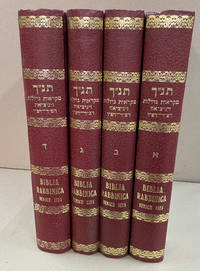
ref. N4183fJerusalem: Makor 1972. Original Half Leather. Near Fine. Folio. 4 volumes 20pp separate Introduction brochure in English by Moshe Goschen-Gottstein." THE FIRST AND THE MOST IMPORTANT EDITION OF THE BIBLE Mikraot Gedolot which includes the Targum the traditional commentaries and the Massora as published by the renowned press of DANIEL BOMBERG. Based on manuscripts partly lost this is the prototype of all later Rabbinic Bibles." - A SUPERB FACSIMILE EDITION. Truly minimal wear on head of spine of vol.1. A FINE AND CLEAN COPY IN THE ORIGINAL HAND BOUND HALF LEATHER. - Due to the heavy weight of these four big volumes additional shipping cost above the indicated fees will apply $ 100 to Europe $ 180 to the USA - shipping with EMS airmail courier Makor hardcover
199226 vols., 8vo., First Edition; cloth, gilt backs, a near fine run in unclipped dustwrapper. The set comprises: Death at La Fenice (SIGNED BY THE AUTHOR ON TITLE) (Chapmans, 1992); Death in a Strange Country (Chapmans, 1993); The Anonymous Venetian (Macmillan, 1994); A Venetian Reckoning (Macmillan, 1995); Acqua Alta (Macmillan, 1996); The Death of Faith (Macmillan, 1997); A Noble Radiance (Heinemann, 1998); Fatal Remedies (Heinemann, 1999); Friends in High Places (Heinemann, 2000); A Sea of Troubles (Heinemann, 2001); Wilful Behaviour (Heinemann, 2002); Uniform Justice (Heinemann, 2003); Doctored Evidence (Heinemann, 2004); Blood from a Stone (Heinemann, 2005); Through a Glass Darkly (Heinemann, 2006); Suffer the Little Children (Heinemann, 2007); The Girl of his Dreams (Heinemann,2008); About Face (Heinemann, 2009); A Question of Belief (Heinemann, 2010); Drawing Conclusions (Heinemann, 2011); Beastly Things (Heinemann, 2012); The Golden Egg (Heinemann, 2013); By its Cover (Heinemann, 2014); Falling in Love (Heinemann, 2015); The Waters of Eternal Youth (Heinemann, 2016; SIGNED BY THE AUTHOR ON TITLE); Earthly Remains (Heinemann, 2017; SIGNED BY THE AUTHOR ON TITLE). A SPLENDID RUN, COMPLETE TO DATE, WITH THE FIRST AND MOST ELUSIVE VOLUME (TOGETHER WITH TWO OTHERS) SIGNED BY LEON ON TITLE.
1729ref. ST16379-042Venezia Venice: Appresso Carlo Buonarrigo 1729. FIRST EDITION. 155 x 105 mm. 6 1/8 x 4 1/8. 1 p.l. extra engraved title 122 pp. Original cream-colored wrapper of heavy paper silk ribbon stitching remnants of old shelf label at foot of spine. Extra engraved title page depicting the Bucinotoro in all its glory surmounted by the Lion of St. Mark emblem of Venice. Front pastedown with bookplate of the duke of Arenberg Castle Nordkirchen. Cicognara 4369. Binding lightly soiled front pastedown lifting occasional faint yellowing to margins other trivial imperfections but still A VERY FINE COPY--clean bright and especially fresh in its remarkably well-preserved fragile binding. This is a detailed account of the magnificent Bucintoro—a ceremonial ship used in the annual ritual in which the Doge of Venice was symbolically wedded to the sea— unveiled in 1729. The city known as La Serenissima had long been a major port for trade between Europe and points East and the people honored the role played by the Mediterranean Sea in the Republic's prosperity. Beginning in 1311 the head of state sailed forth each year on Ascension Day to be "married" to the sea aboard a boat called the Bucintoro. The wooden ship was restored or rebuilt from time to time through the centuries and in 1719 the Venetian Senate commissioned a brand new vessel to be richly ornamented and even bedecked with gold. Our volume describes the process by which the finest artists and artisans of the day--from shipbuilders to sculptors and painters--created the largest and most lavish Bucintoro in history. The engraved title page shows the stately craft in full rig banners flying as Doge Alvise Mocenigo is rowed out to meet his marine bride. Cicognara notes the volume's value in preserving for posteriority these memories of Italian greatness--and that greatness lasted only a relatively short time because after the fall of the Venetian Republic in 1797 Napoleon had the Bucintoro stripped of its finery. The denuded and humiliated ship was then used by the Austrian navy until 1824 sailing under the name "Hydra." The presence of a binding identical to ours on several copies in sales records suggests that these may have been the publisher's original wrappers which have weathered the years surprisingly well. The text here is deeply impressed on thick paper upholding the fine tradition of Venetian printing. Appresso Carlo Buonarrigo unknown
1729ref. ST16379-042Venezia Venice: Appresso Carlo Buonarrigo 1729. FIRST EDITION. 155 x 105 mm. 6 1/8 x 4 1/8. 1 p.l. extra engraved title 122 pp. Original cream-colored wrapper of heavy paper silk ribbon stitching remnants of old shelf label at foot of spine. Extra engraved title page depicting the Bucinotoro in all its glory surmounted by the Lion of St. Mark emblem of Venice. Front pastedown with bookplate of the duke of Arenberg Castle Nordkirchen. Cicognara 4369. Binding lightly soiled front pastedown lifting occasional faint yellowing to margins other trivial imperfections but still A VERY FINE COPY--clean bright and especially fresh in its remarkably well-preserved fragile binding. This is a detailed account of the magnificent Bucintoro—a ceremonial ship used in the annual ritual in which the Doge of Venice was symbolically wedded to the sea— unveiled in 1729. The city known as La Serenissima had long been a major port for trade between Europe and points East and the people honored the role played by the Mediterranean Sea in the Republic's prosperity. Beginning in 1311 the head of state sailed forth each year on Ascension Day to be "married" to the sea aboard a boat called the Bucintoro. The wooden ship was restored or rebuilt from time to time through the centuries and in 1719 the Venetian Senate commissioned a brand new vessel to be richly ornamented and even bedecked with gold. Our volume describes the process by which the finest artists and artisans of the day--from shipbuilders to sculptors and painters--created the largest and most lavish Bucintoro in history. The engraved title page shows the stately craft in full rig banners flying as Doge Alvise Mocenigo is rowed out to meet his marine bride. Cicognara notes the volume's value in preserving for posteriority these memories of Italian greatness--and that greatness lasted only a relatively short time because after the fall of the Venetian Republic in 1797 Napoleon had the Bucintoro stripped of its finery. The denuded and humiliated ship was then used by the Austrian navy until 1824 sailing under the name "Hydra." The presence of a binding identical to ours on several copies in sales records suggests that these may have been the publisher's original wrappers which have weathered the years surprisingly well. The text here is deeply impressed on thick paper upholding the fine tradition of Venetian printing. Appresso Carlo Buonarrigo unknown books
1960ref. 238001960 Pastel signé en bas à droite, (1960), 16 x 23.5 cm., cadre doré.
1967ref. 59059Venice Italy: Alfieri Edizioni D'Arte. As New. Paperback. FREE UPGRADE to Courier/Priority Shipping Upon Request – – IN STOCK AND IMMEDIATELY AVAILABLE FOR SHIPMENT - AS NEW THE TEXT BLOCK IS PRISTINE CLEAN UNMARKED AND IN EXCELLENT CONDITION - - Text in Italian with sections on artists in English French and German. 164 pp. With 105 ills. 3 col. . 23 x 24 cm. -- with a bonus offer-- . 1967. Alfieri Edizioni D'Arte paperback
1961ref. 58611Venice Italy: Neri Pozza Editore. As New. Paperback. FREE UPGRADE to Courier/Priority Shipping Upon Request – – IN STOCK AND IMMEDIATELY AVAILABLE FOR SHIPMENT - AS NEW THE TEXT BLOCK IS PRISTINE CLEAN UNMARKED AND IN EXCELLENT CONDITION - - Text in Italian. 222 pp. With 128 ills. 22 x 16 cm. -- with a bonus offer-- . 1961. Neri Pozza Editore paperback
1968ref. 58883Venice Italy: Palazzo Della Biennale. As New. Paperback. FREE UPGRADE to Courier/Priority Shipping Upon Request – – IN STOCK AND IMMEDIATELY AVAILABLE FOR SHIPMENT - AS NEW THE TEXT BLOCK IS PRISTINE CLEAN UNMARKED AND IN EXCELLENT CONDITION - - Text in Italian. 400 pp. With 196 ills. 23 x 16 cm. -- with a bonus offer-- . 1968. Palazzo Della Biennale paperback
1964ref. 58610Venice Italy: Neri Pozza Editore. As New. Paperback. FREE UPGRADE to Courier/Priority Shipping Upon Request – – IN STOCK AND IMMEDIATELY AVAILABLE FOR SHIPMENT - AS NEW THE TEXT BLOCK IS PRISTINE CLEAN UNMARKED AND IN EXCELLENT CONDITION - - Text in Italian. 214 pp. With 120 ills. 20 x 15 cm. -- with a bonus offer-- . 1964. Neri Pozza Editore paperback