1 259 résultats
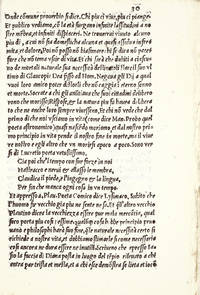
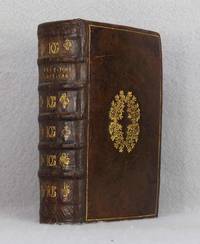
1583réf. ST15026Paris: Arnold Sittart 1584; Heidelberg: Peter Santandrea 1583. 178 x 111 mm. 7 x 4 3/8". 14 p.l. cccix pp. 13 leaves last blank; lxxv 10 ccxvi 22 pp.; 2 leaves 84 pp.; 1 1-196 18 pp.; 62 pp. Two works in several parts bound in one volume. With annotations and commentary by Antonio Augustin Joseph Scaliger and Fulvio Orsini. Pleasing contemporary calf covers with central gilt wreath of olive branches raised bands spine panels gilt with cipher "D C G" at center flanked by a palmette and a vegetal trefoil gilt titling bottom panel with "OD" and "I8" on either side of the cipher. Printers' devices on the title pages decorative woodcut initials and headpieces. Front pastedown with what appear to be early library shelf markings; one page with neat early marginalia. Adams V-590 and F-390. Covers slightly marked spine with a bit of superficial crackling and with one short crack in the middle of bottom panel the text with faint browning and isolated minor soiling a few leaves with long shallow creases not affecting legibility otherwise in excellent condition the binding solid and without significant wear and the leaves generally clean fresh and smooth. This glossary of recondite Latin words and phrases was no doubt bound for a contemporary bibliophile with an extensive library. The "OD" and "I8" at the bottom of the spine appear to be the indication of a shelf location--not something frequently encountered on spines of this period. This designation and the location notation on the front pastedown that clearly relates to it "Arm. 0. Tab 4. Loc. 18" suggest a library of some complexity and an educated owner who believed in careful organization. While we have not been able to identify "D C G" she would seem also to have been a person of taste and good sense. The binding is attractively decorated while still being practical for scholarly use. The work itself has gone through a number of changes of fortune. The story begins when Verrius who lived in the time of Augustus compiled a valuable work full of information on everything from grammar to mythology. Unfortunately his text has been largely lost; the authentic fragments fill only the first few leaves of our volume. His work was epitomized by Festus a ca. third century scholar but Festus was not a very good epitomizer and to make matters worse all of his entries have been lost up to the letter "M." Luckily an epitome of the epitome from "A" to "Z" had been made by Paul the Deacon in the eighth century. Valuing the handbook for its information on the writing of correct Latin Renaissance scholars went to work on this puzzle in the 15th century and a first version of Paul was published by Zarotus in Milan in 1471. Later scholars published Festus and the great French classicist Joseph Scaliger 1540-1609 was largely responsible for bringing definitive order out of chaos. His scholarly edition reconstructs the work of Festus as far as one can filling in the gaps caused by missing pages in the manuscript with conjectures and rectified material from Paul. Peter Santandrea unknown books
1543réf. 888° mm 151x104; cc. 32. Marca tipografica al frontespizio. Margine superiore un poco rifilato. Pergamena posteriore. Seconda edizione del dialogo albertiano - meglio conosciuto sotto il titolo di Theogenius - dopo quella che priva di dati tipografici ISTC cataloga come: "Florence 1500" cfr. L.B. Alberti Opere volgari II Rime e trattati morali a cura di C. Grayson Bari 1966 p. 409. Il Theogenius rappresenta un capitolo poco noto della fortuna e dell'influsso dell'epicureismo nel Quattrocento. In questo dialogo infatti l'Alberti illustra diversi temi dell'etica epicurea e traduce alcuni versi del De rerum natura di Lucrezio S. Gambino Alberti lettore di Lucrezio: motivi lucreziani nel "Theogenius" "Albertiana" IV 2001 pp. 69-84. Leon Battista Alberti's Theogenius revived and revised the ancient view developed in the Hellenistic age according to which philosophy aims to form rather than inform people showing them how to cultivate a specific attitude towards existence through a rational comprehension of the nature of humanity and its place in the cosmos. This view of philosophy as a way of life was challenged by the development of scholastic philosophy seen as a body of speculative doctrines and professional skills ancillary to the superior wisdom of theology. Nevertheless it survived thanks to Renaissance humanists like Petrarch Alberti Erasmus and Montaigne. On the influence of Lucretius on Italian Humanism after Poggio Bracciolini's discovery of the only surviving manuscript of De rerum natura 1417 cf. A. Brown The Return of Lucretius to Renaissance Florence Harvard University Press 2010 and S. Greenblatt The Swerve: How the Renaissance Began London 2011. Appresso Paulo Girardo, [colophon:] per Venturino Rosinello
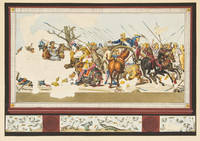
1850réf. 56925Italian 1850. Each plate 8-1/2 x 10-1/2 in. and smaller is tipped to a larger sheet; two are entirely uncolored another only partially. 1 vols. Folio. Bound together in three quarter red morocco by Pawson & Nicholson Philadelphia with their ticket. Rebacked in goatskin original spine laid down inner hinges reinforced with period cloth. Each plate 8-1/2 x 10-1/2 in. and smaller is tipped to a larger sheet; two are entirely uncolored another only partially. 1 vols. Folio. A superb collection of lovely lithographed images which in many instances are so delicately and minutely colored as to be indistinguishable from watercolor drawings - and indeed several of them we believe to be entirely original drawings - each in the style of the ancient art of Pompeii in its frescoes geometric mosaics and ceramics. There are scenes of mythological figures e.g. a satyr cavorting with a goat; scenes of purely decorative nature suggestive of Pompeian vase art against a black gloss background; domestic scenes of husband wife and children; cupids; pastoral scenes; fish and game; and several images of an openly erotic nature suggestive of the relaxed style of Pompeiian attitudes toward nudity. unknown
1850réf. 56925Italian 1850. Each plate 8-1/2 x 10-1/2 in. and smaller is tipped to a larger sheet; two are entirely uncolored another only partially. 1 vols. Folio. Bound together in three quarter red morocco by Pawson & Nicholson Philadelphia with their ticket. Rebacked in goatskin original spine laid down inner hinges reinforced with period cloth. Each plate 8-1/2 x 10-1/2 in. and smaller is tipped to a larger sheet; two are entirely uncolored another only partially. 1 vols. Folio. A superb collection of lovely lithographed images which in many instances are so delicately and minutely colored as to be indistinguishable from watercolor drawings - and indeed several of them we believe to be entirely original drawings - each in the style of the ancient art of Pompeii in its frescoes geometric mosaics and ceramics. There are scenes of mythological figures e.g. a satyr cavorting with a goat; scenes of purely decorative nature suggestive of Pompeian vase art against a black gloss background; domestic scenes of husband wife and children; cupids; pastoral scenes; fish and game; and several images of an openly erotic nature suggestive of the relaxed style of Pompeiian attitudes toward nudity. unknown books
1832réf. 15317Zürich, Fuessli, 1824 (- 1832). 28 Bll. 24 Aquatinta-Tafeln. Fol. Pp. des 19. Jahrhunderts mit Rückenschild (bestoßen).
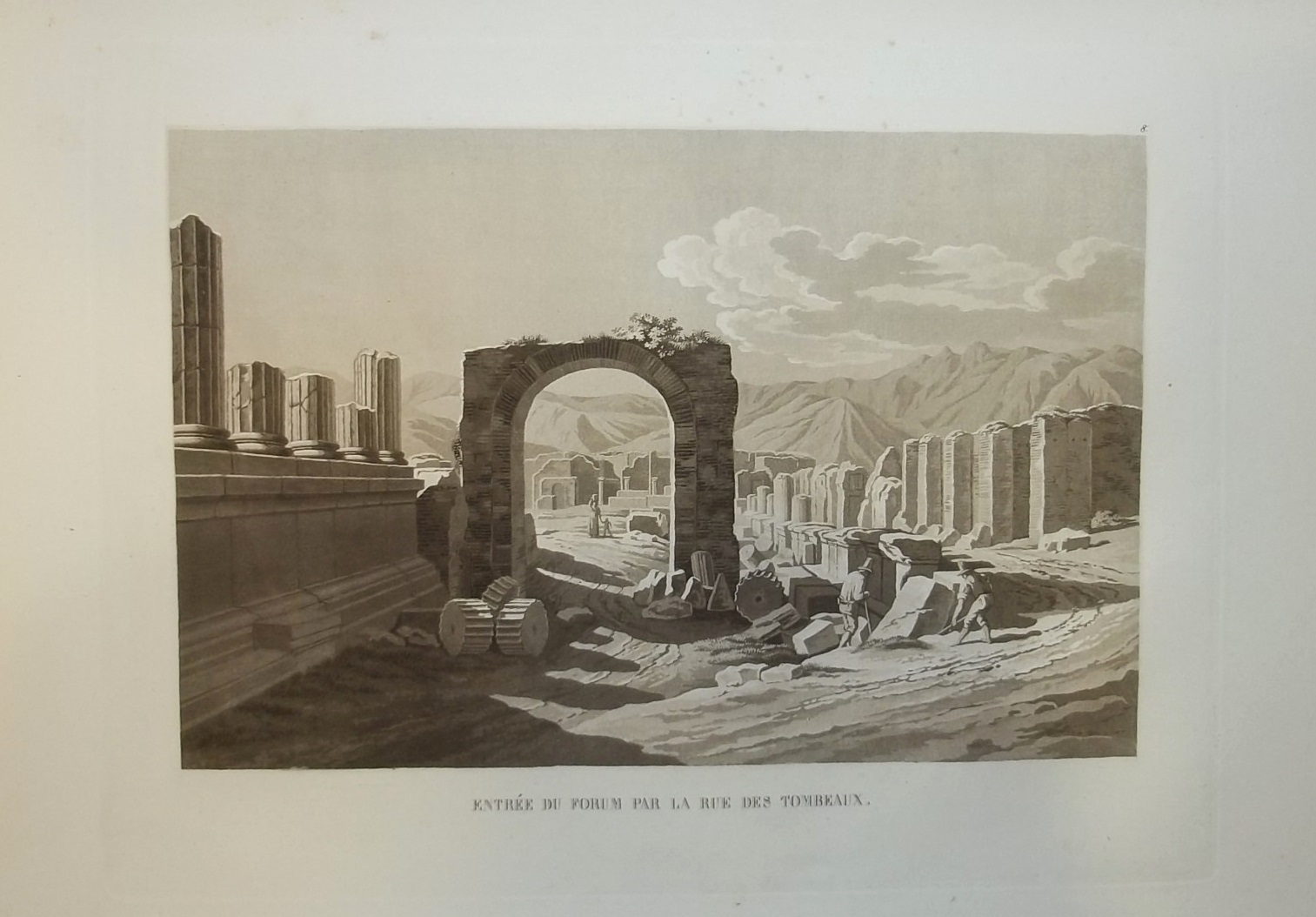
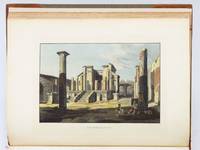
1824réf. ST17496-014Zurich: by the author and Henry Fuessli and Comp 1824-25. FIRST EDITION. 445 x 325 mm. 17 1/2 x 12 3/4". 26 leaves of descriptive text. Lacking title page and dedication.Commentary by art historian Johann Jacob Horner. Modern tan half morocco over olive green buckram raised bands spine panels with gilt ornament red morocco label. 24 FINE AQUATINT VIEWS COLORED BY A CONTEMPORARY HAND. Brunet III 357. Text pages variably foxed from a little to very but somehow THE LOVELY PLATES IN FINE CLEAN CONDITION--fresh and bright with pleasing coloring in an unworn sympathetic binding. This is a rare complete colored set of Hüber's famed views of Pompeii much sought-after by armchair travellers after excavations uncovered that urban time capsule in the late 18th century. The German-born Hüber 1787-1871 settled in Naples in his early 20s studying landscape painting with Dutch émigré painter Jacob Philipp Hackert 1737-1807 who was known for his lush scenes often featuring ruins. His arrival in the region coincided with the occupation of Naples by the French who accelerated the excavations underway at Pomepii which had been buried by the eruption of Vesuvius in 79 A.D. The rapid burial of the city in volcanic ash had captured a moment in time and the opportunity to see a well-preserved example of life in the ancient Roman Empire caught in medias res drew eager travellers on the Grand Tour of the Continent. Hüber's well-executed views often picture these tourists and their contemporary dress contrasts sharply with the classical ruins. Lord Napier in his "Notes on Modern Painting at Naples" 1855 credits Hüber for introducing the use of watercolors to the meticulously drawn landscapes then being produced. This innovation is displayed in the hand-colored plates here which were also issued in uncolored state. Napier was correct to appreciate the value of adding colors which increases both the drama of the views and the pleasure of the viewer. Because the attractive sets with color were often broken up complete volumes of the colored plates are rarely seen for sale: we could trace just three such copies sold at auction as listed in RBH and ABPC the two best ones were the Feltrinelli copy which sold for $14330 in 2001 and the Donaueschingen copy fetching $13750 in 2014. Ours does not have the distinguished provenance attached to those copies and it lacks two preliminary leaves but the text is present and most important the lovely colored plates are in fine condition. by the author and Henry Fuessli and Comp unknown books
1893“Pompei di diciotto secoli fa Pompei attuale” è il titolo di una mostra di venticinque gouaches di notevoli dimensioni, 800x1000 mm l’una, di cui oggi si è riusciti a preservarne diciannove (più due manifesti che la pubblicizzavano). Esse furono presentate all’Esposizione Nazionale del 1893 sul tema del raffronto fra “com’era e com’è”. (*)Nelle vedute di Antonio Coppola sono raffigurati scorci della città di Pompei così come si presentava ai suoi occhi, e gli stessi luoghi come li immaginava, secondo un’attenta e studiata ricostruzione, prima della devastante eruzione del Vesuvio nel 79 dc.Dopo l’eruzione Pompei divenne un luogo senza tempo. Ne “Il Mattino” (30 Aprile 1 maggio 1893) si legge “E’ strano questo sentimento di infinito diletto che la città sepolta e la sciagura sua, sempre presente, produce in noi. Ed è strano come la fantasia competi facilmente, in Pompei, quel che vede, come supplisca quel che le fa difetto, come ricostruisca, anche da pochi ruderi… La vita di quel piccolo centro vi viene tutta innanzi… Perisca chi non sa amare e due volte perisca chi vieta di amare. E’ questa la nota costante di Pompei, che pare gridata da tutta quell’arte e che fa interamente dimenticare la sciagura che l’incolse, non appena un raggio di sole, illumina le sue rovine”. Scoperto a partire dal 1738, il diciottesimo sarà il secolo d’oro dedicato agli scavi, alle scoperte archeologiche e di conseguenza alle importanti pubblicazioni, si veda ad esempio il ruolo svolto dai volumi dell’Accademia Ercolanese straordinariamente efficace nel diffondere la conoscenza delle scoperte vesuviane, dalle quali derivò il gusto, prima, e la cultura, poi, del neoclassico.Luogo quasi dimenticato per diverso tempo… diventerà di prorompente attualità proprio negli ultimi anni del XIX secolo, quando gli scavi della Va Regione, all’inizio del 1892, incominciarono a portare alla luce una grandiosa casa, che l’anno successivo, in occasione dell’anniversario delle nozze d’argento di Umberto I e Margherita di Savoia, prenderà il nome di “Casa delle nozze d’argento”. L’anniversario dei reali fu un’occasione importante per la città di Napoli, che vide il loro arrivo il giorno 27 aprile 1893 per un soggiorno di tre giorni; il 29 fu dedicato al sito di Pompei, dove in onore di Umberto e Margherita, erano stati organizzati degli scavi presso la “Casa delle Nozze d’argento”. Il quotidiano dell’epoca, ”Il Mattino”, nel numero del 27-28 aprile 1893, così riporta “Oggi, il gran giorno. Questa grande festa alla quale la popolazione prende si gran parte, ha sollevato gli animi, ha sparso una grande attività febbrile nella città tutta quanta… Fino a tarda ora, iersera, i treni delle provincie riversarono nella nostra città una fiumana di gente d’ogni ceto, d’ogni colore: quasi dodicimila persone, che appena fuori dal recinto della stazione prendevano d’assalto vetture, alberghi, trattorie, già rigurgitanti di altri passeggieri giunti precedentemente. Lungo le strade che il corteo reale ed imperiale percorrerà, ferveva il lavoro per l’addobbo definitivo de’ balconi, de’ palchi, e per l’ornamentazione delle strade. Toledo brulicava di una folla ansiosa e variopinta…Nella Galleria Umberto I, poi, non si poteva addirittura muovere un passo. Nel Caffè Starace era un pigiarsi straordinario, un chiamarsi a vicenda, in tutti i dialetti del Mezzogiorno. Un pandemonio. In piazza Municipio non si poteva circolare, Piazza Plebiscito sembrava un mare in burrasca. Dovunque, dovunque un’animazione eccezionale, una festa delle più gaie e delle più caratteristiche.”. La febbrile attività vissuta dalla città di Napoli contagiò tutti i campi, anche quello artistico-culturale in cui va inserita la magnifica mostra di gouaches realizzata appositamente da Antonio Coppola, pubblicizzata dai manifesti stampati in litografia dallo Stabilimento Italo Germanico Fratelli Starace di Napoli. In queste opere, di imponenti dimensioni, emerge con delicata forza tutta l’abilità del Coppola nella padronanza del disegno, nella resa dei colori e delle atmosfere dei luoghi. Importante sottolineare la cura posta nell’immaginaria ricostruzione degli ambienti, sempre attenta, meticolosa, studiata e mai improvvisata. Incredibile come dopo più di un secolo il corpus centrale di una mostra sia ancora preservato nella sua interezza, o, comunque, in una totalità capace di trasmettere il motivo di esistere di un’opera di questa levatura.Elenco delle vedute, (i titoli, scritti a matita, sono riportati al retro dell’opera):1. Tempio di Venere ultimo giorno la scarica di pepite di zolfo; 2. Pompei quale era; 3. Pompei attuale; 4. Via delle Rampe – Baccanale; 5. Via delle Rampe attuale; 6. La Suburra qual’era; 7. Interno della Suburra com’è; 8. La Casa del Fauno qual’era. 9. Interno della Casa del Fauno; 10. Le terme qual’erano; 11. Le terme attuali – interno; 12 Interno del Foro; 13. Interno Panteon; 14. Esterno del Panteon; 15. Tempio di Giove – Arco di Caligola; 16. Corsa delle bighe al Teatro Tragico. 17. Anfiteatro stato attuale; 18. Interno Anfiteatro – Teatro tragico attuale; 19. Arco di Caligola. Alcune di queste opere, negli scorsi anni, sono state esposte in importanti musei tra i quali il MANN (Museo Archeologico Nazionale di Napoli), si veda il volume “Ercolano e Pompei visioni di una scoperta” edito da Skira nel febbraio del 2018. ANTONIO COPPOLA - Nato a Napoli il 14 febbraio 1850, o secondo il Servolini, il 21 gennaio 1839 da una nobile famiglia napoletana, Antonio Coppola si dedicò fin da giovane alla pittura compiendo i suoi studi all’Istituto di Belle Arti di Napoli. Autore di molte litografie ma, soprattutto, abile paesaggista, utilizzò prevalentemente la tecnica a tempera che seppe padroneggiare con grande maestria e raffinatezza. Rientrato nella sua città natale dopo un lungo soggiorno in Grecia durato quasi due anni, si dedicò inizialmente a scene di genere di soggetto greco che, tuttavia, abbandonò presto preferendo dedicarsi completamente a marine e vedute di Napoli e dei suoi dintorni che ottennero un immediato successo soprattutto tra i forestieri e viaggiatori desiderosi di portare con sé un “ricordo” dei loro viaggi. Molte delle sue opere sono state riprodotte in numerose cartoline dedicate a Pompei com’era e com’è oggi. Di indole schiva, partecipò a pochissime esposizioni: figurò nel 1883 all’ Esposizione di Roma con Al beveraggio, Magra colazione e Un sorcio nel vaso e, nello stesso anno, fu presente anche all’Esposizione della Promotrice “Salvator Rosa” di Napoli con Il pasto dei conigli e Stanchezza. Nel 1890 espose nuovamente nella sua città natale, alla Promotrice, con Paesaggio presso Solofra. Diffuse in tutto il mondo e molto ricercate da collezionisti e amanti del genere, le sue tempere di piccole dimensioni si accompagnano a più ampie, e più rare, vedute di grandezza maggiore nelle quali la padronanza tecnica e la cura dei dettagli evidenziano come la produzione pittorica del Coppola sia tecnicamente superiore e non assimilabile in alcun modo alla sterminata produzione di anonime gouaches napoletane dell’epoca. Riferimenti: (*) “Ercolano e Pompei visioni di una scoperta” edito da Skira; De Gubernatis, Dizionario degli artisti italiani viventi, Roma 1889; Thieme-Becker, Künsterlex, VII, 1912; E. Giannelli, Artisti napoletani viventi. Pittori, scultori ed architetti, Napoli 1916; G. Ceci, Bibliografia per una storia delle arti figurative, Napoli 1937; L. Servolini, Dizionario illustrato degli incisori italiani moderni e contemporanei, Milano 1955; A.M. Comanducci, Dizionario illustrato dei Pittori, Disegnatori e Incisori italiani moderni e contemporanei, I,II,III, IV ed., Milano 1970; E. Benezit, Dictionnaire des Peintres, Sculpteurs, Dessinateurs et Graveurs, III, ed., Parigi 1976 ; G.L. Marini, Il valore dei dipinti dell’Ottocento e del primo novecento, XIX ed., Torino 2001
Archeologia
Archeologia